





About this worksheet
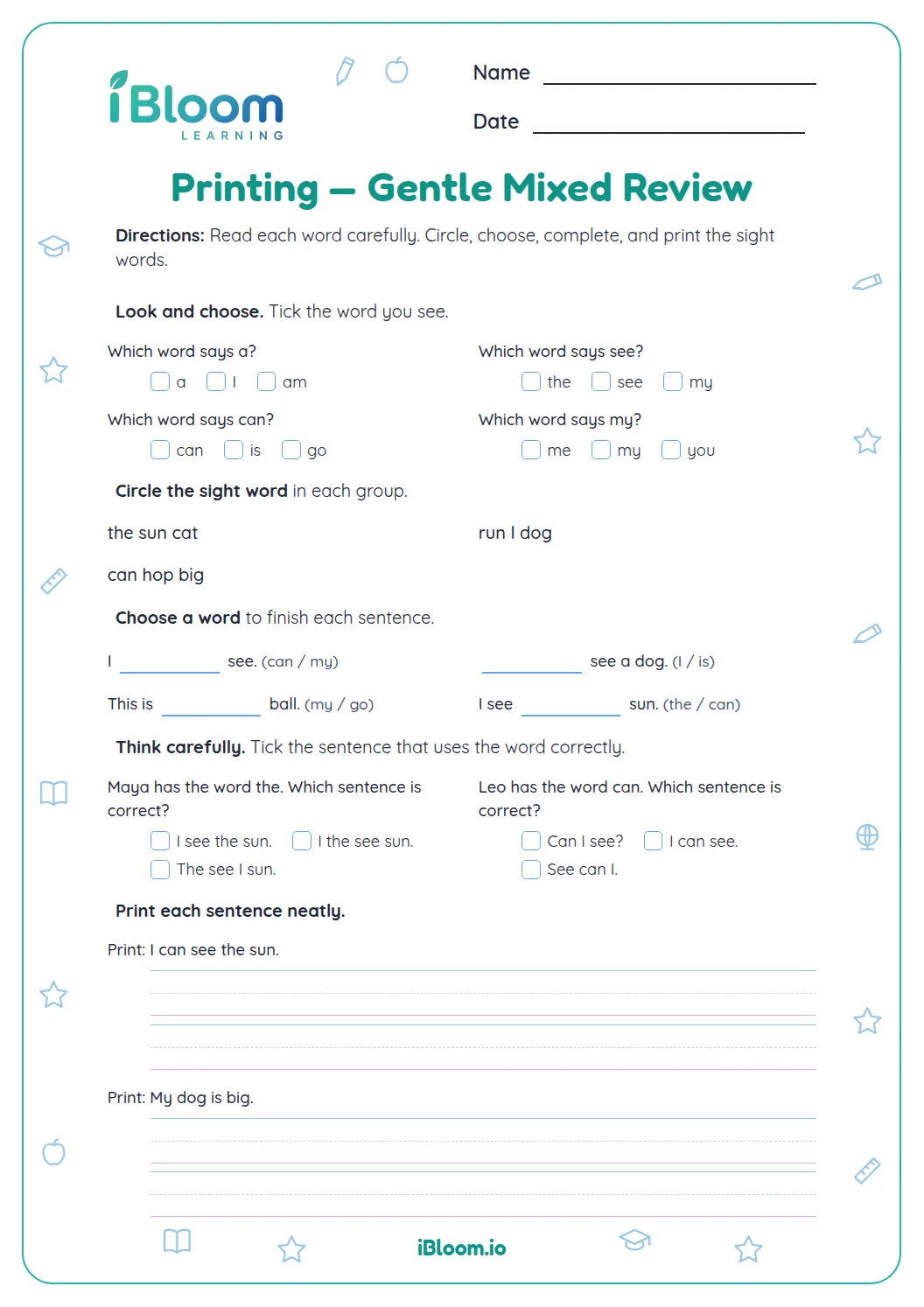
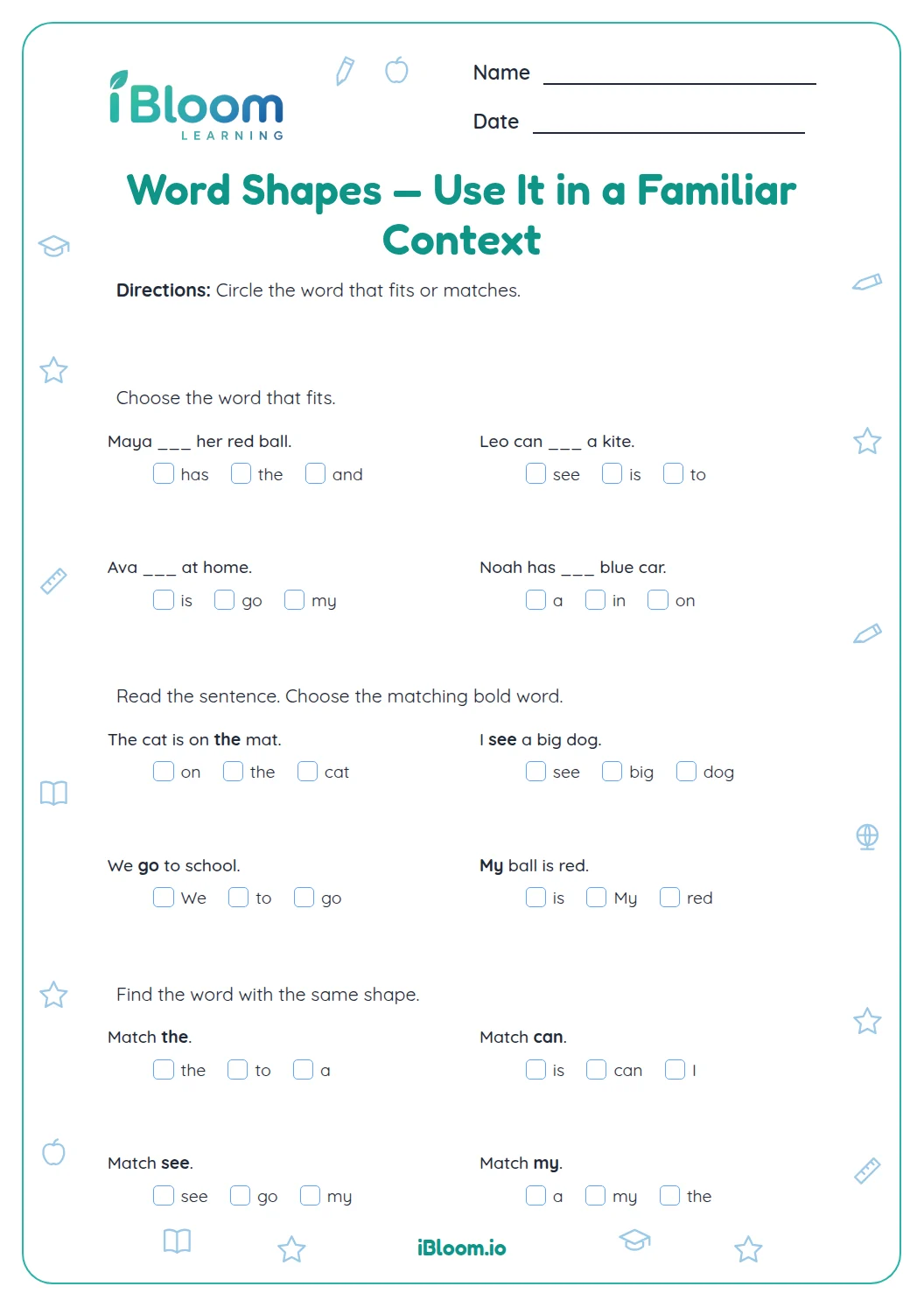
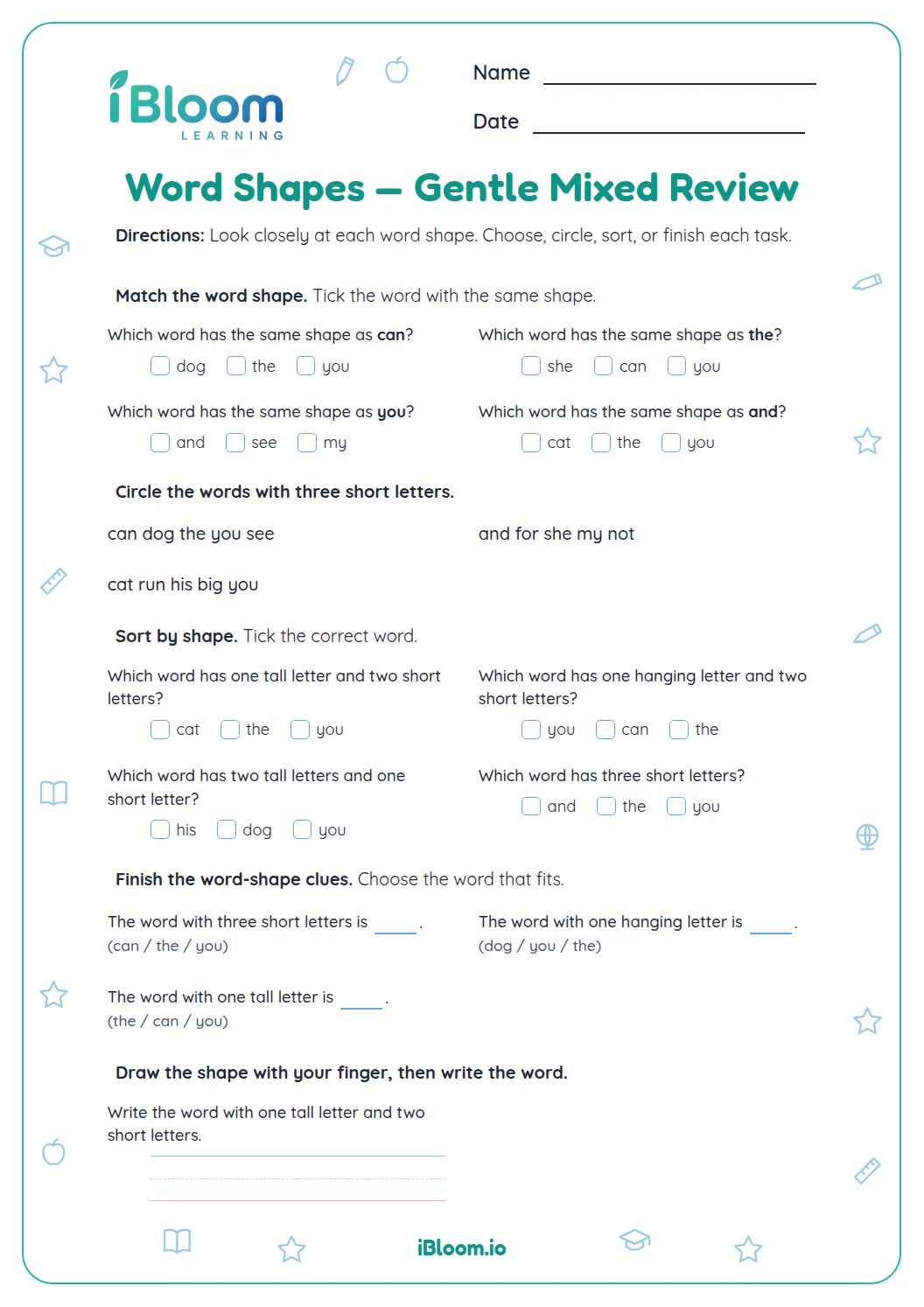
This free printable gives preschool and kindergarten learners several ways to recognize common sight words. Children search an eight-word grid, choose words that complete short picture-supported sentences, and trace six familiar words. The answer key lists the words in the grid and the intended sentence choices. It practices Common Core RF.K.3c through repeated recognition of high-frequency words.
Aligned to RF.K.3.c
How does the word search work?
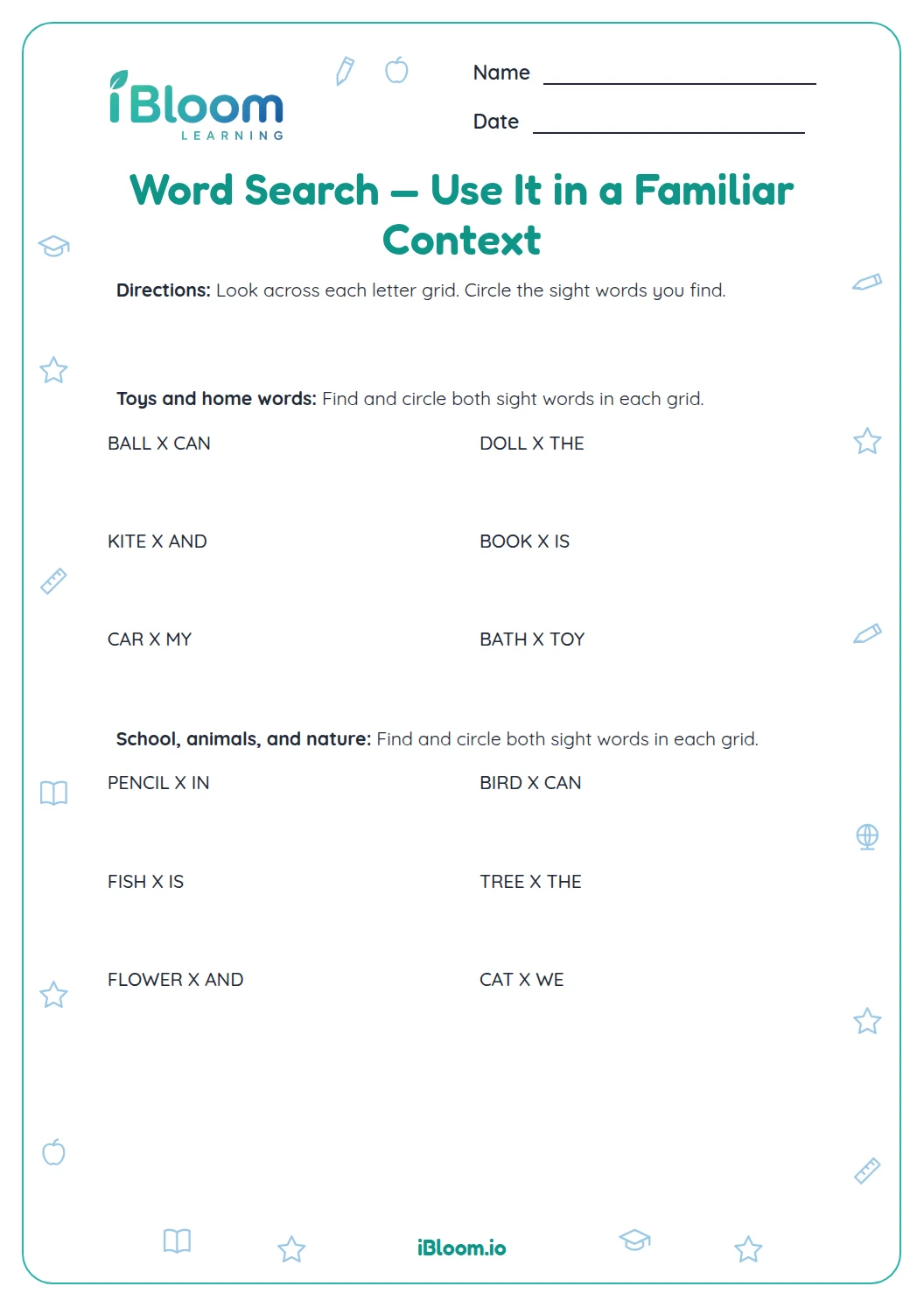
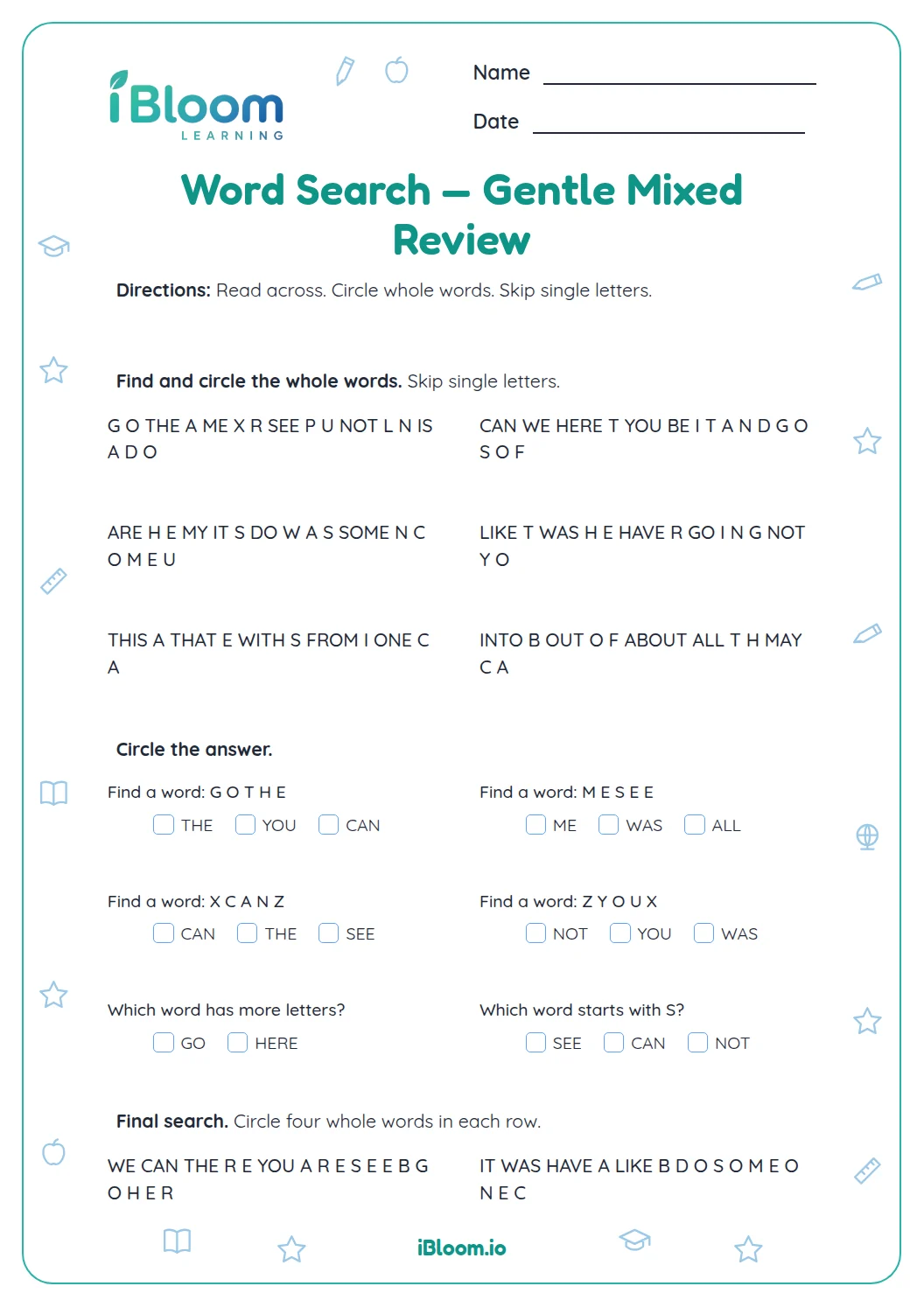
Children search across and down for eight familiar words, then circle each complete spelling.
- 1Find the letters T-H-E in order and circle the whole word.
How do the sentences practice sight words?
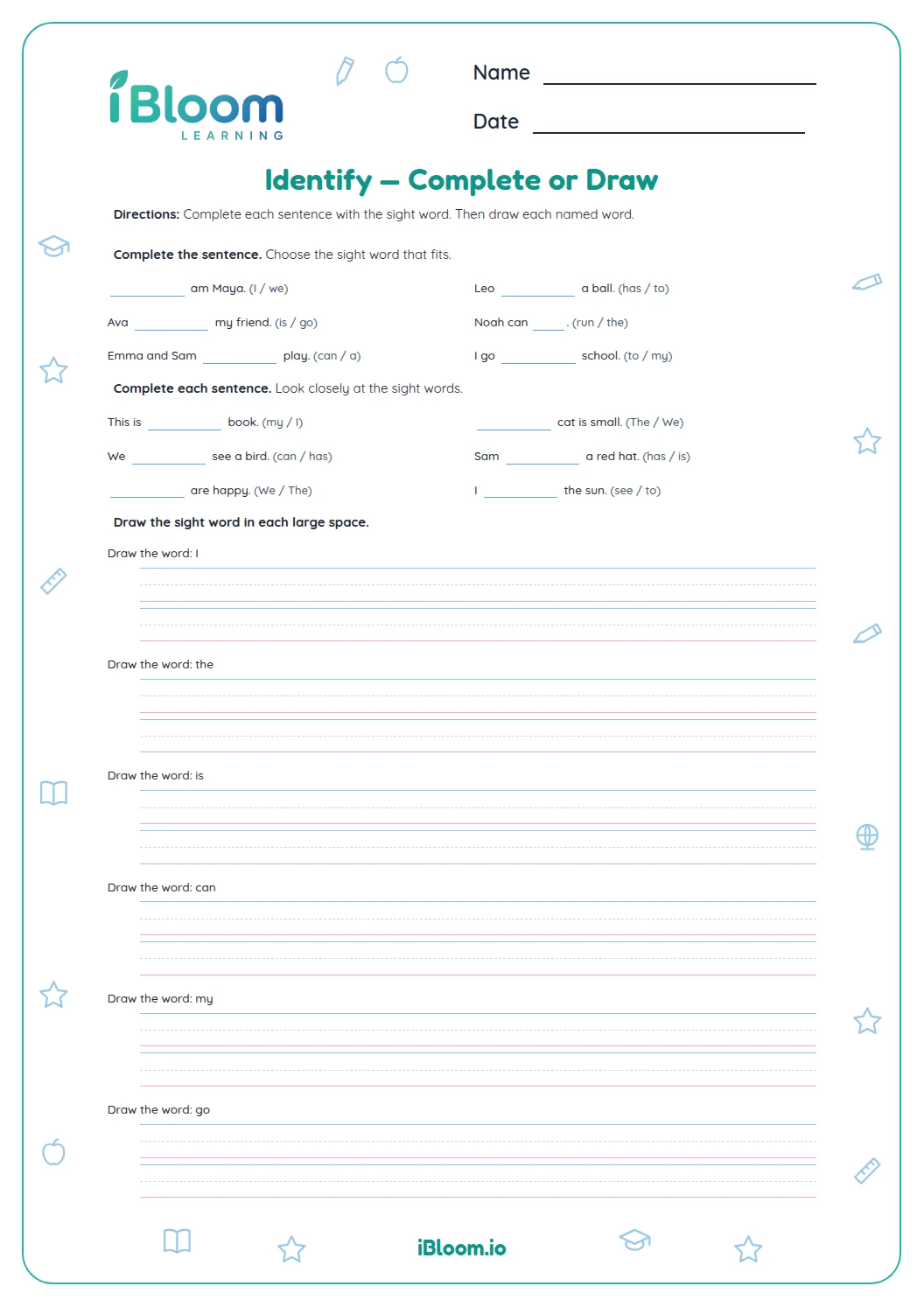
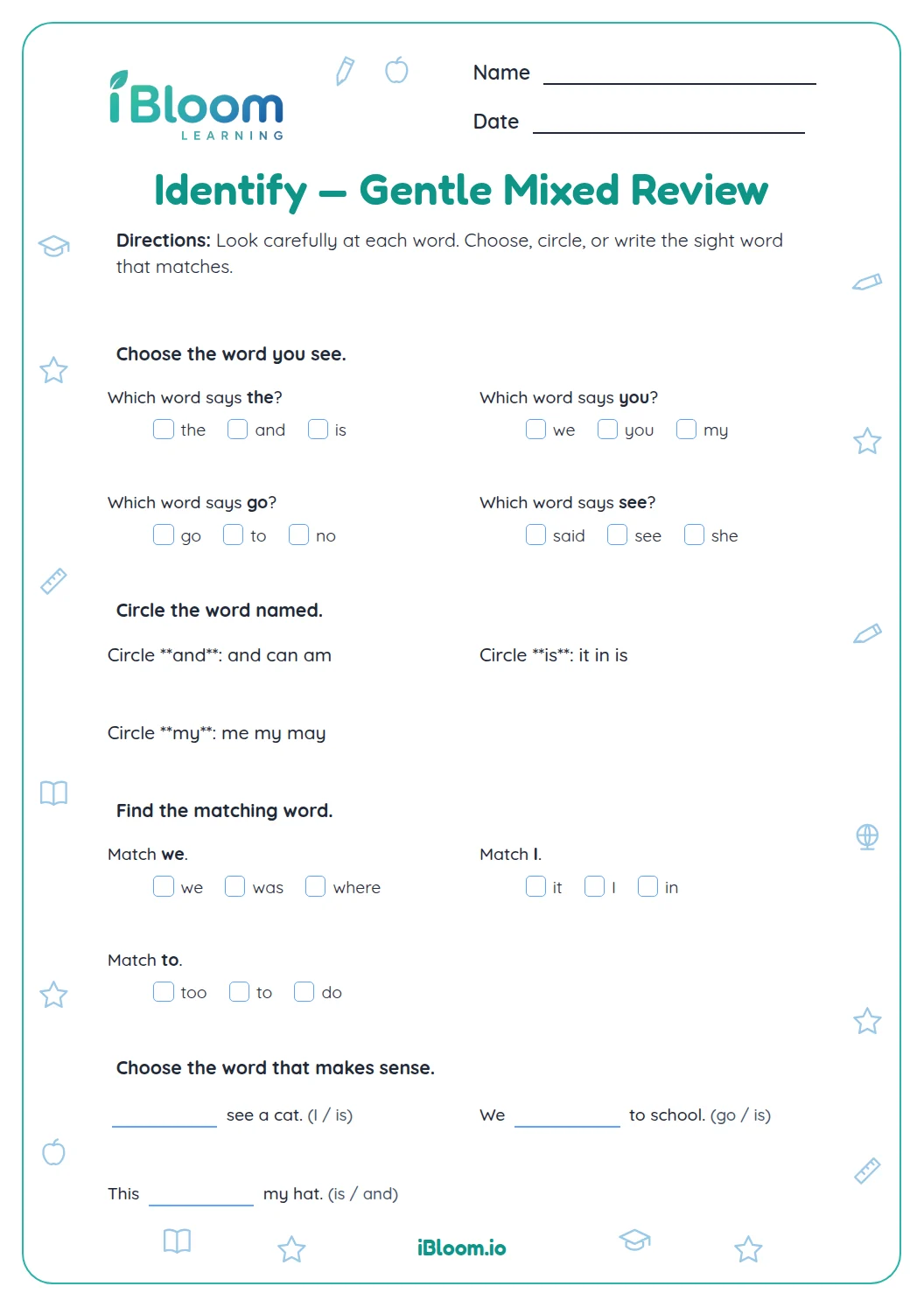
Six short sentence frames pair familiar words with pictures or simple actions. Children read the whole line and choose the word that completes it.
Why trace familiar words?
Tracing the, you, and, see, we, go, and my connects seeing each word with saying and writing it.
How to use this worksheet
- 1Read the eight target words aloud before beginning.
- 2Search the grid across and down for each spelling.
- 3Read each sentence aloud and choose the word that makes sense.
- 4Trace each word while saying it.
- 5Check the grid and choices with the answer key.
Common slips and quick fixes
The mistake
Skipping a letter in the grid.
The fix
Match each letter in order before circling.
The mistake
Choosing a word without rereading the sentence.
The fix
Read the full line with the choice in place.
The mistake
Tracing without saying the word.
The fix
Say the word as you follow its letters.
Common Core alignment
Children recognize high-frequency words by sight in the grid and sentence choices.
Recognize common high-frequency words by sight in this word search and sentences.
On this sheet: Children find and read common high-frequency words across the grid and sentence items.
Show the official wordingHide the official wording
Read common high-frequency words by sight (e.g., the, of, to, you, she, my, is, are, do, does).
What to practice next
Make more practice
Further reading
Questions parents and teachers ask
Which words are hidden in the grid?
The grid includes the, you, and, see, we, go, my, and can. Children can look across or down, checking each letter in order before circling a word. The key lists all eight target words so an adult can help check the search.
How many activities are on the sheet?
There are 14 activities: one word search and 13 sentence choices. Children can work through the sections in order, pausing between finding the target words and reading each short sentence with its choices aloud together. Parents can read directions aloud if needed.
Can I read the prompts aloud?
Yes. Read each sentence and its choices aloud, then let the child point to the word that fits. Saying the complete sentence with the chosen word supports meaning and recognition while keeping the printed sight words visible on the page.
How can a child check the word search?
Compare the circled spellings with the eight words in the key. A word counts when every letter appears in the correct order and the full word is circled. Check sentence choices separately against the answer key after finishing the page.
Can I read the prompts aloud?
Yes. Read each sentence and its choices aloud, then let the child point to the word that fits. Saying the complete sentence with the chosen word supports meaning and recognition while keeping the printed sight words visible on the page.