



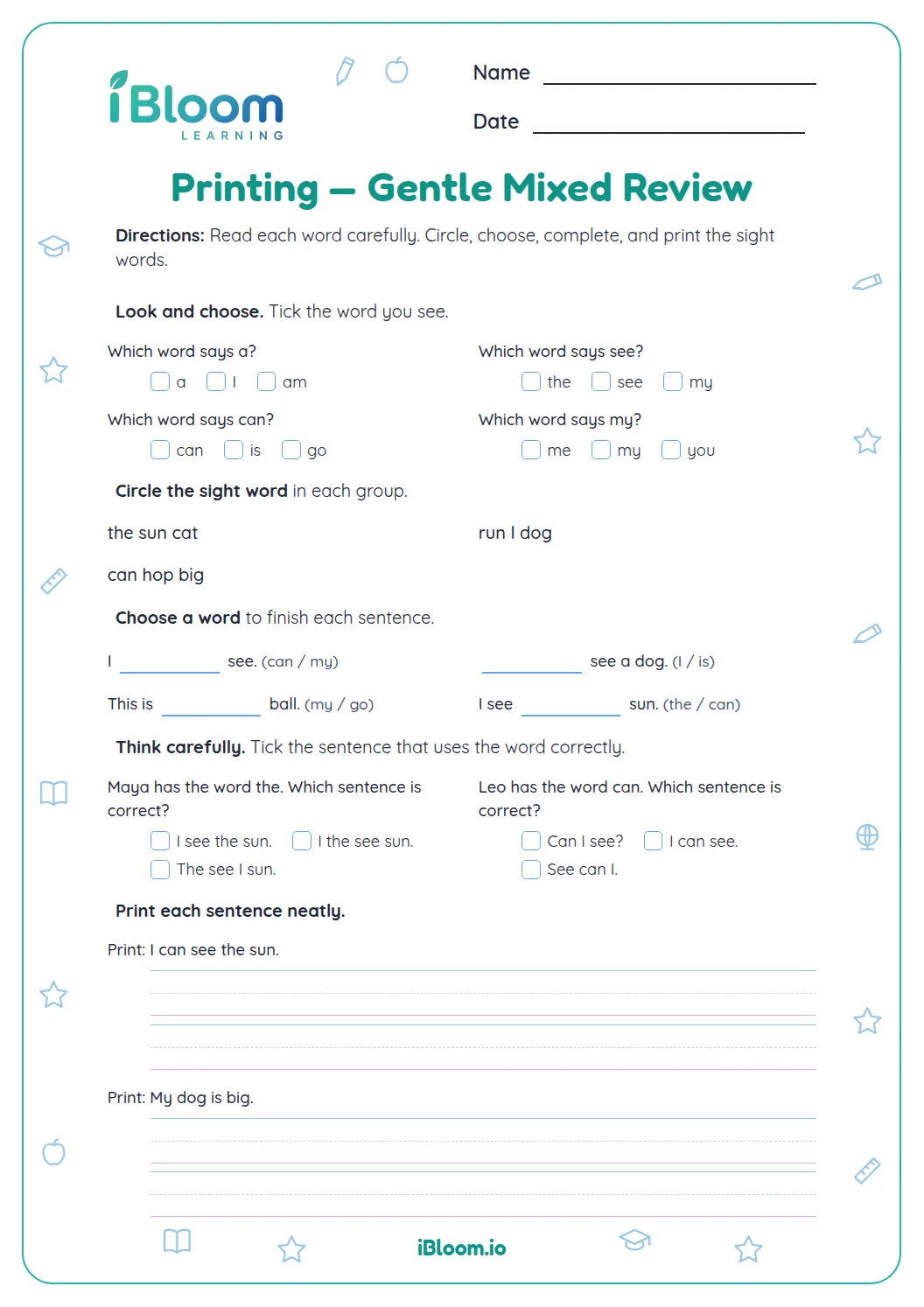


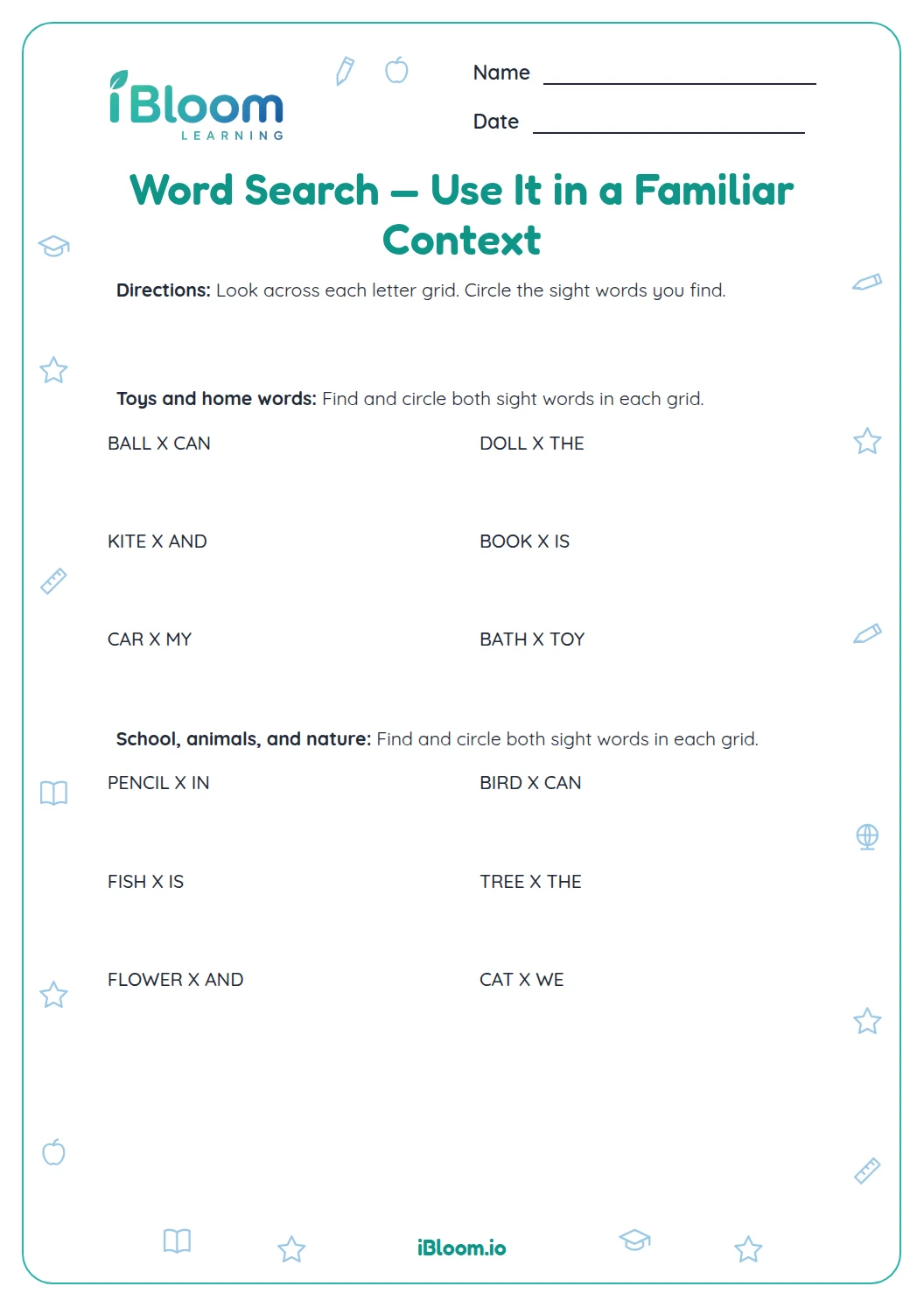
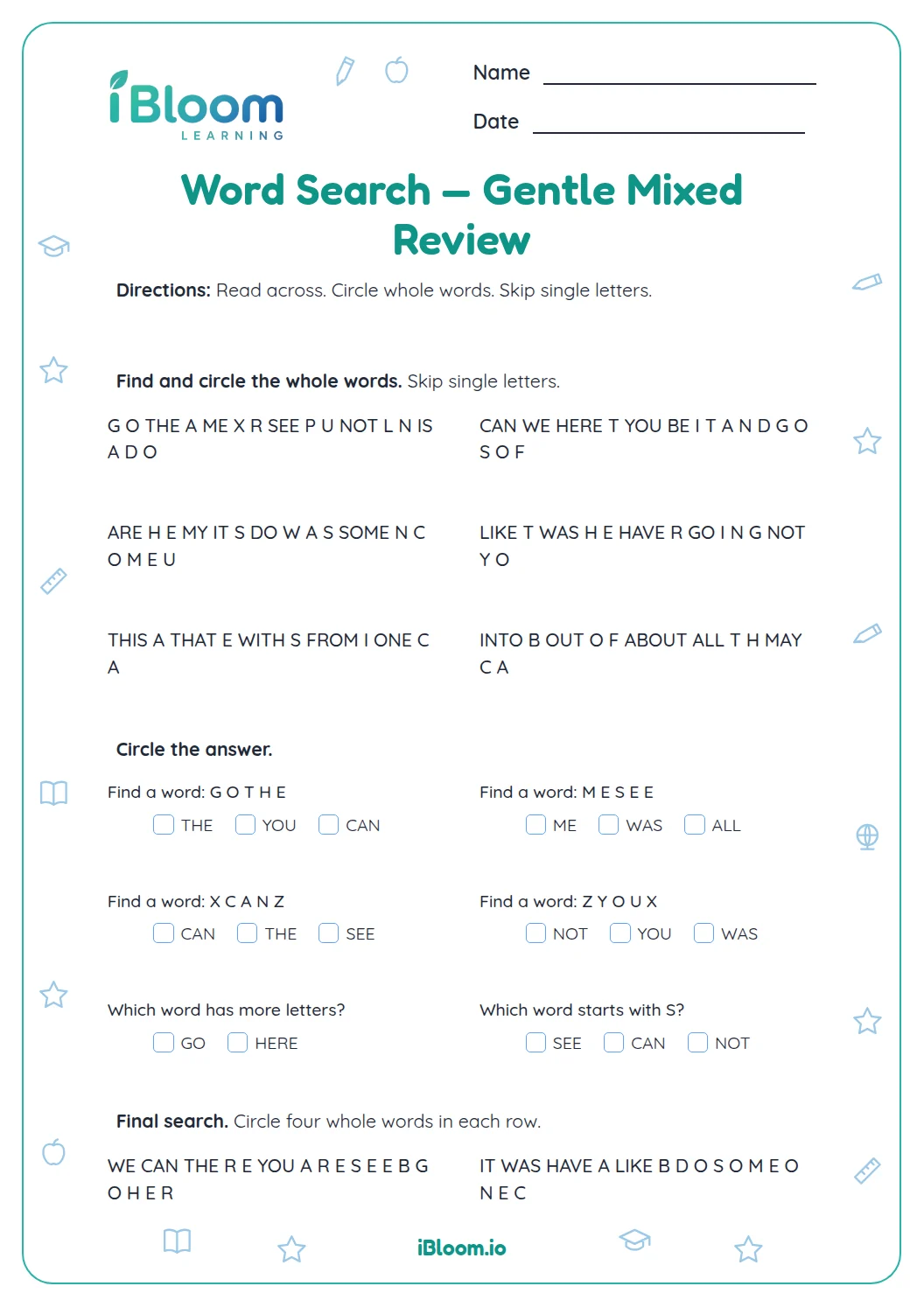
About this worksheet
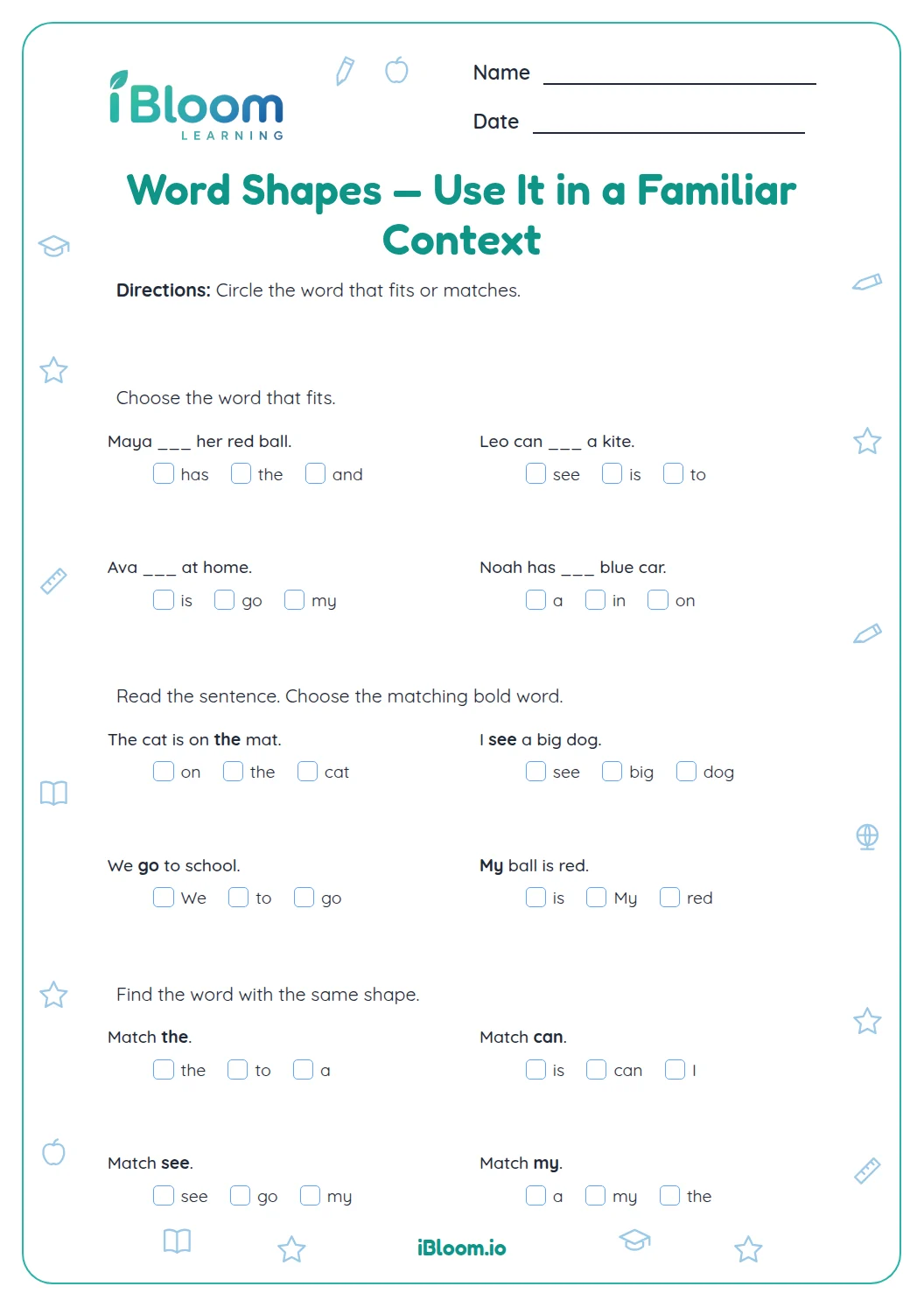
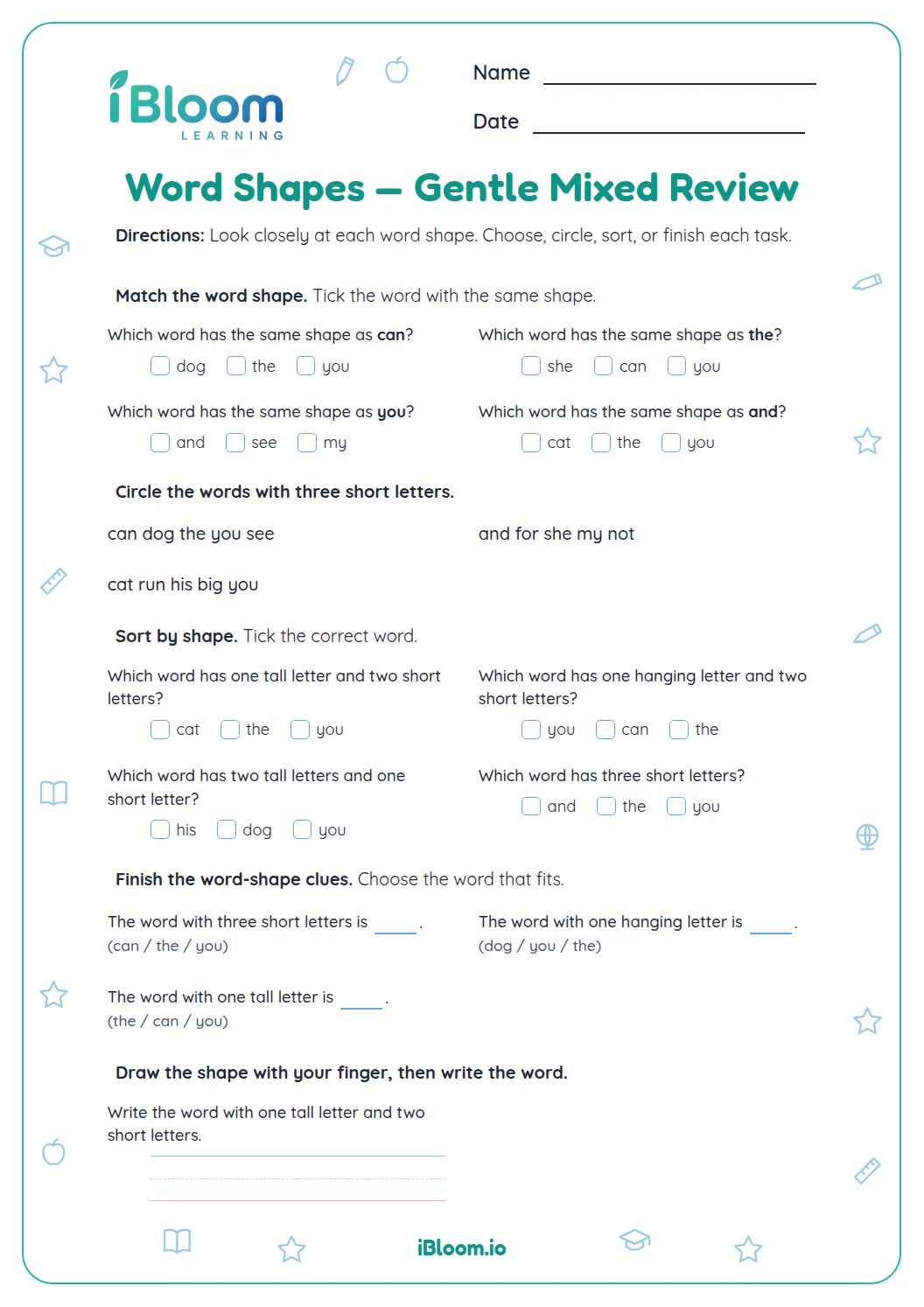
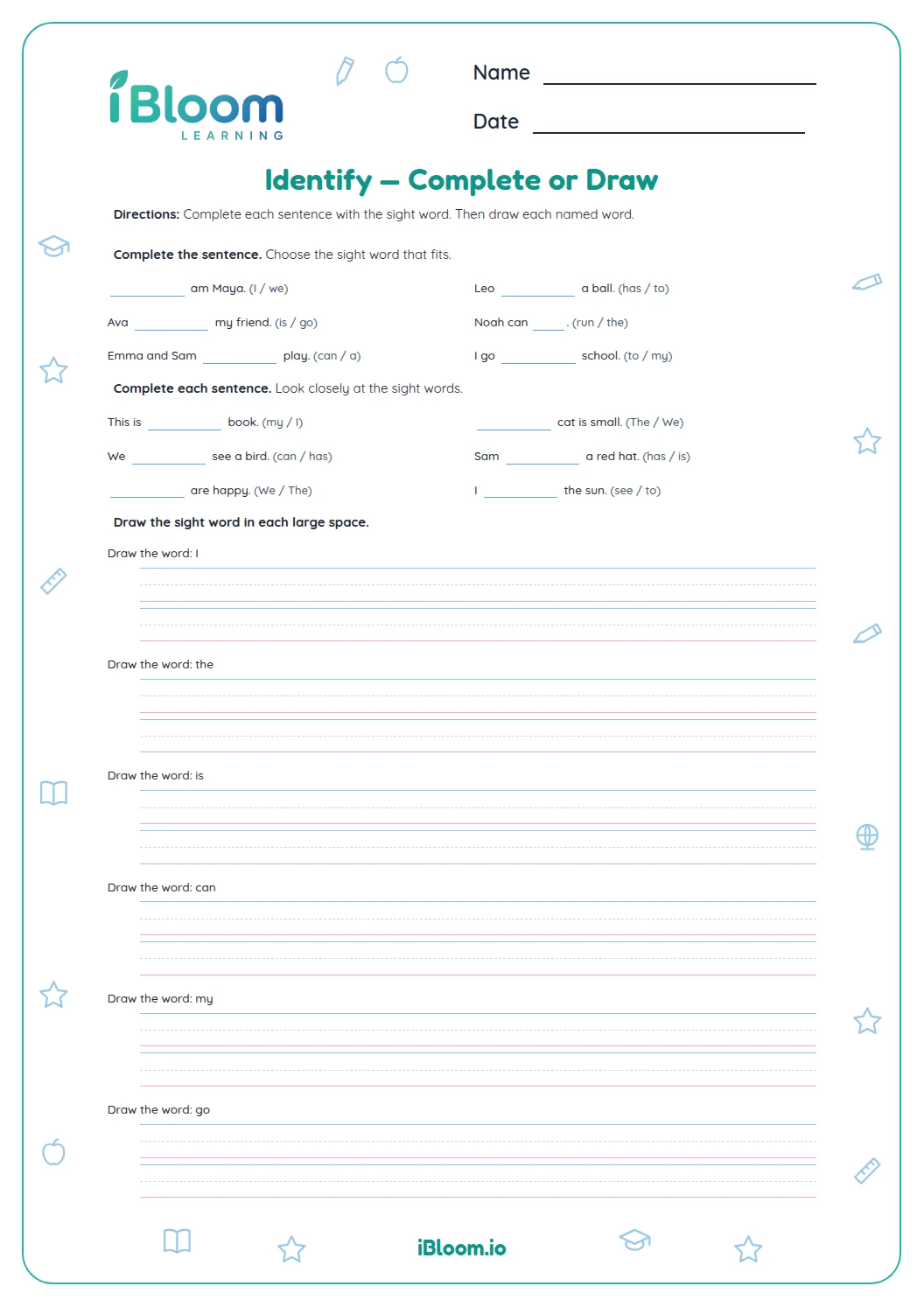
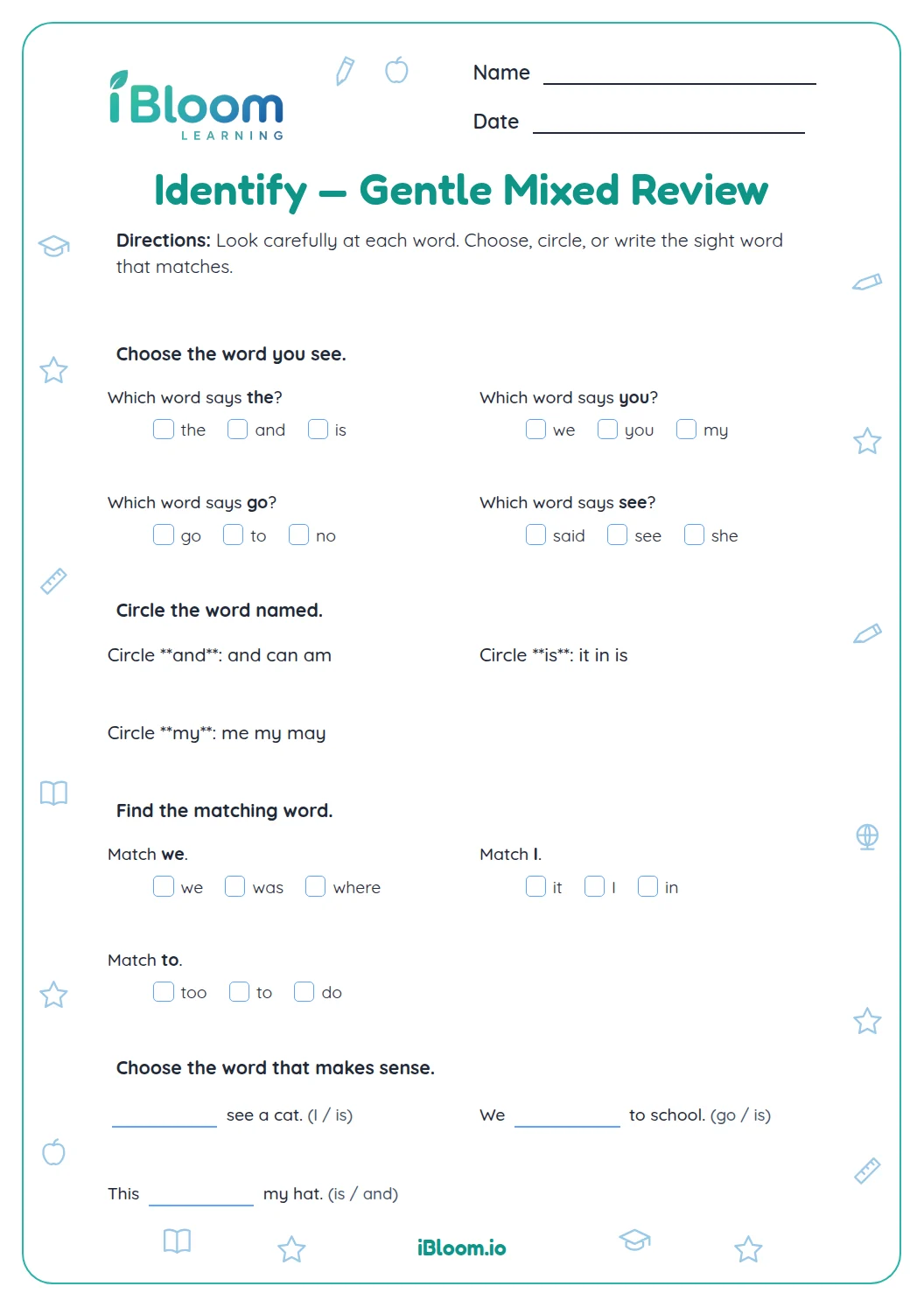
This preschool and Kindergarten worksheet practices six familiar words: the, and, is, to, you, and we. Children complete partial words, use letter-height clues to recognize words, count letters, and draw all six lowercase word shapes on writing lines. The answer key shows the target words.
Aligned to RF.K.3c
Which words appear on this page?
The worksheet practices the, and, is, to, you, and we. Children complete partial spellings, choose a word from a letter clue, and draw the lowercase word shapes.
What makes each word shape different?
Words differ in length and in letters that rise above or drop below the writing line. For example, the has tall t and h, while you ends with a descending y.
How does drawing the words help?
Drawing the six words gives children a chance to attend to the letters in each familiar word. On q14, draw the, and, is, to, you, and we in order.
How to use this worksheet
- 1Read the directions and the worked example together.
- 2Complete each part in order, returning to the story or number clues as needed.
- 3Check one answer by pointing to the matching detail or recalculating both sides.
- 4Use the answer key to review any item that needs another try.
Common mistakes and quick fixes
The mistake
Choose a word by length alone.
The fix
Check the letters as well as the number of letters.
The mistake
Treat a descending letter as a tall letter.
The fix
Notice that y drops below the writing line in you.
The mistake
Draw uppercase letters when asked for a word shape.
The fix
Use lowercase letters to match the familiar word forms on the page.
Early literacy alignment
This activity supports early recognition of common words and letter patterns as children build foundational reading skills.
Recognize and read common high-frequency words by sight.
On this sheet: Children complete and recognize six familiar high-frequency words, then practice their written shapes.
Show the official wordingHide the official wording
Read common high-frequency words by sight (e.g., the, of, to, you, she, my, is, are, do, does).
What to practice next
Make more practice
Further reading
Questions parents and teachers ask
What are word shapes in early reading?
Word shapes are the patterns made by a word’s letters. Children can notice how many letters a word has and which letters rise above or drop below the writing line. These visual clues can help them distinguish familiar words when they are learning to read.
How can I help a child notice sight word shapes?
Ask the child to compare how many letters each word has and notice which letters rise above or drop below the writing line. Point out one clue at a time, then let the child choose a word that matches. Saying the word aloud connects its shape and sound.
Can an adult help with this preschool and Kindergarten page?
Yes. An adult can read the word clues aloud and help a child notice tall or descending letters. Children may point to the matching choice, complete a word with letter choices, or draw the word shape with support. Keep the activity relaxed and brief.
Why does the worksheet ask children to complete familiar words?
Completing a word focuses attention on its letter sequence. A child sees the beginning or ending letters and chooses the missing part. This provides a bridge from recognizing a whole word to noticing the letters that make it. Saying the finished word reinforces its sound.
How can a child practice word shapes?
Look at the word’s lowercase letters and notice its length and letter heights. Then say the word and draw it on the lines; this page practices the, and, is, to, you, and we. The target words are printed on the worksheet for a clear check.