


About this worksheet
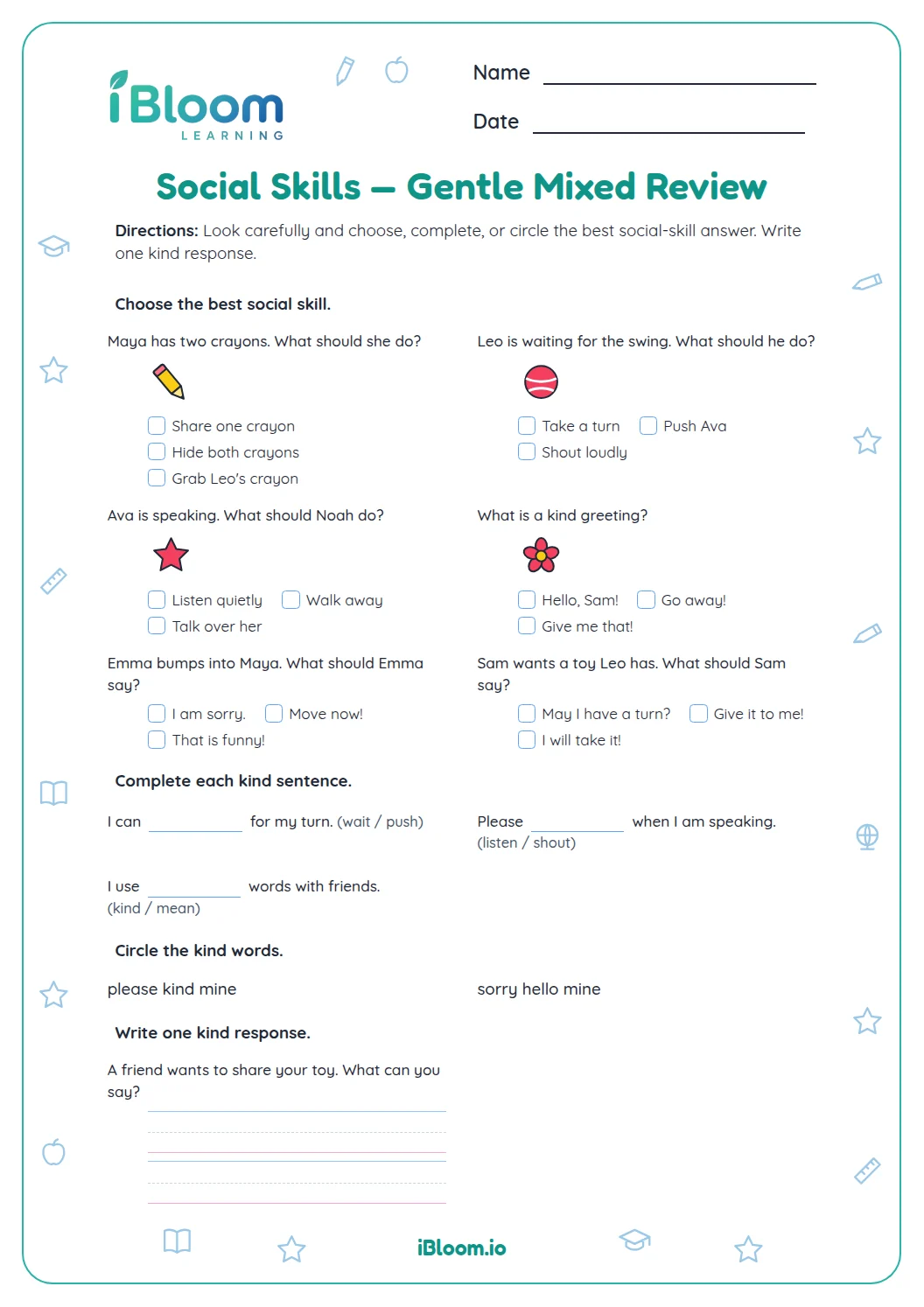
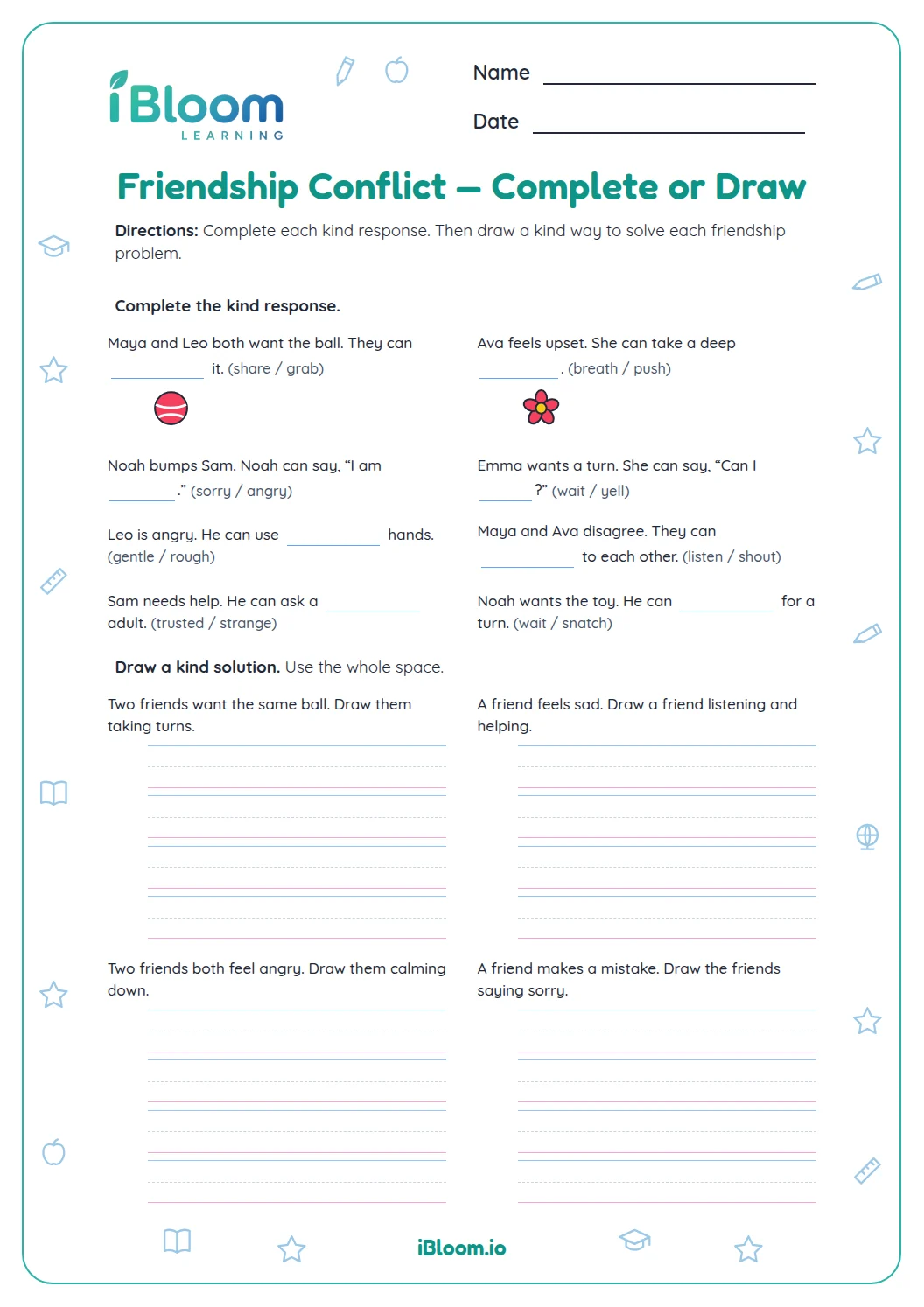
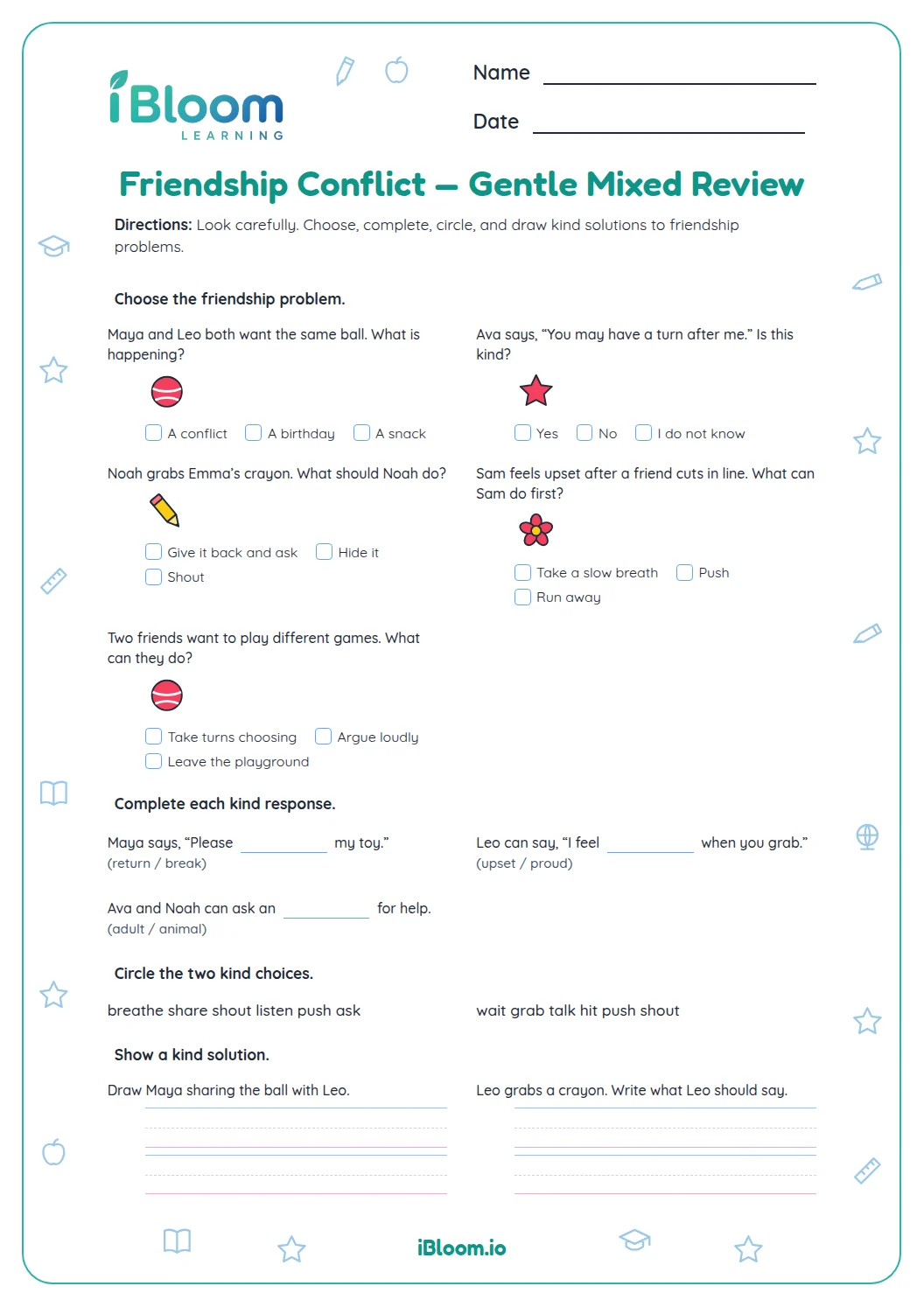
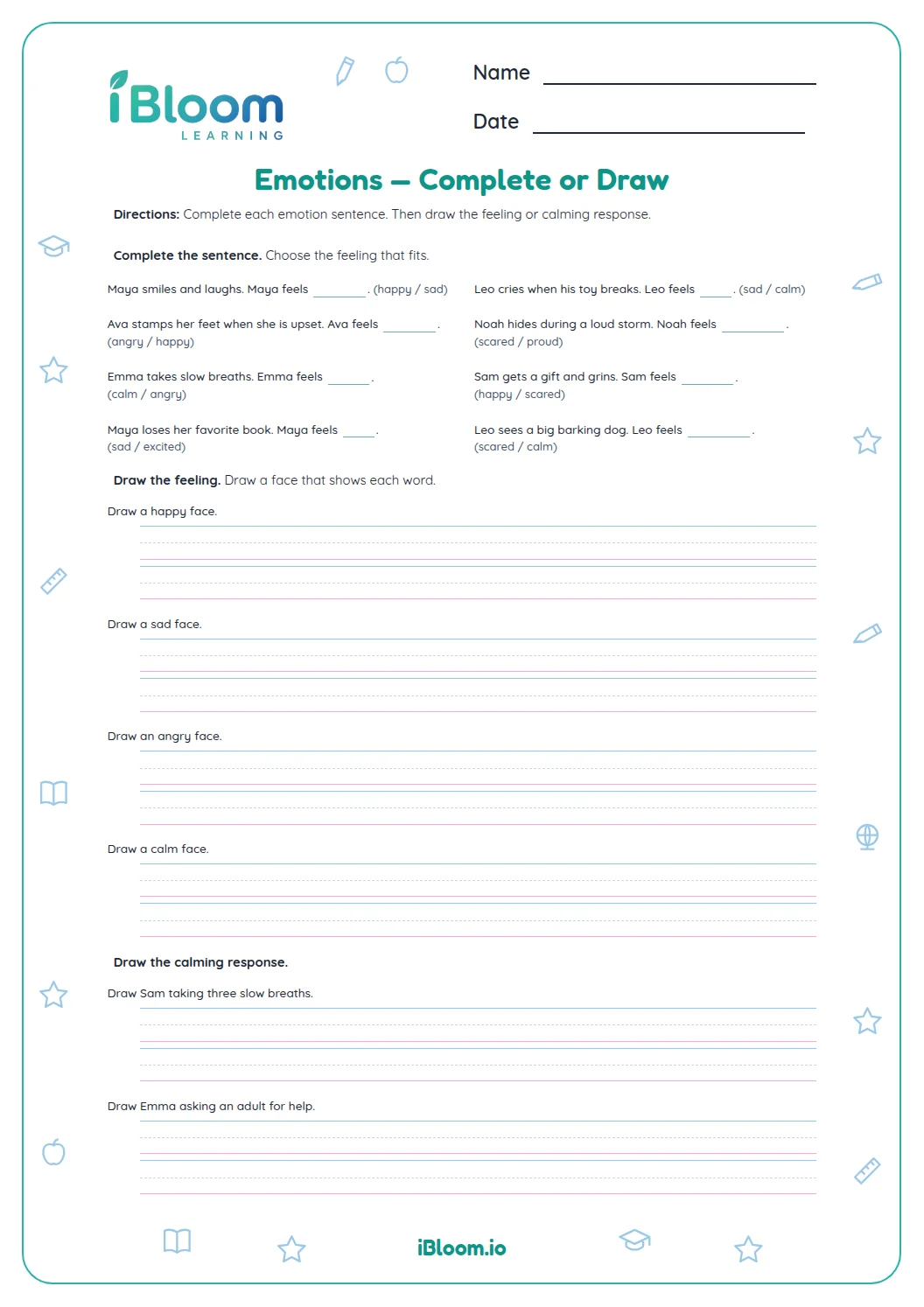
This printable Good Manners worksheet is for preschool and kindergarten learners who are practicing how to speak and act kindly with others. Each of the 14 questions pairs a short familiar situation with a picture or clear choice between two responses. Children choose words for thanking, asking, apologizing, and joining in, then consider listening, sharing, and helping. A separate answer key makes review straightforward. Adults can read the choices aloud and invite children to practice the kind phrase or helpful action.
Which kind words can children practice?
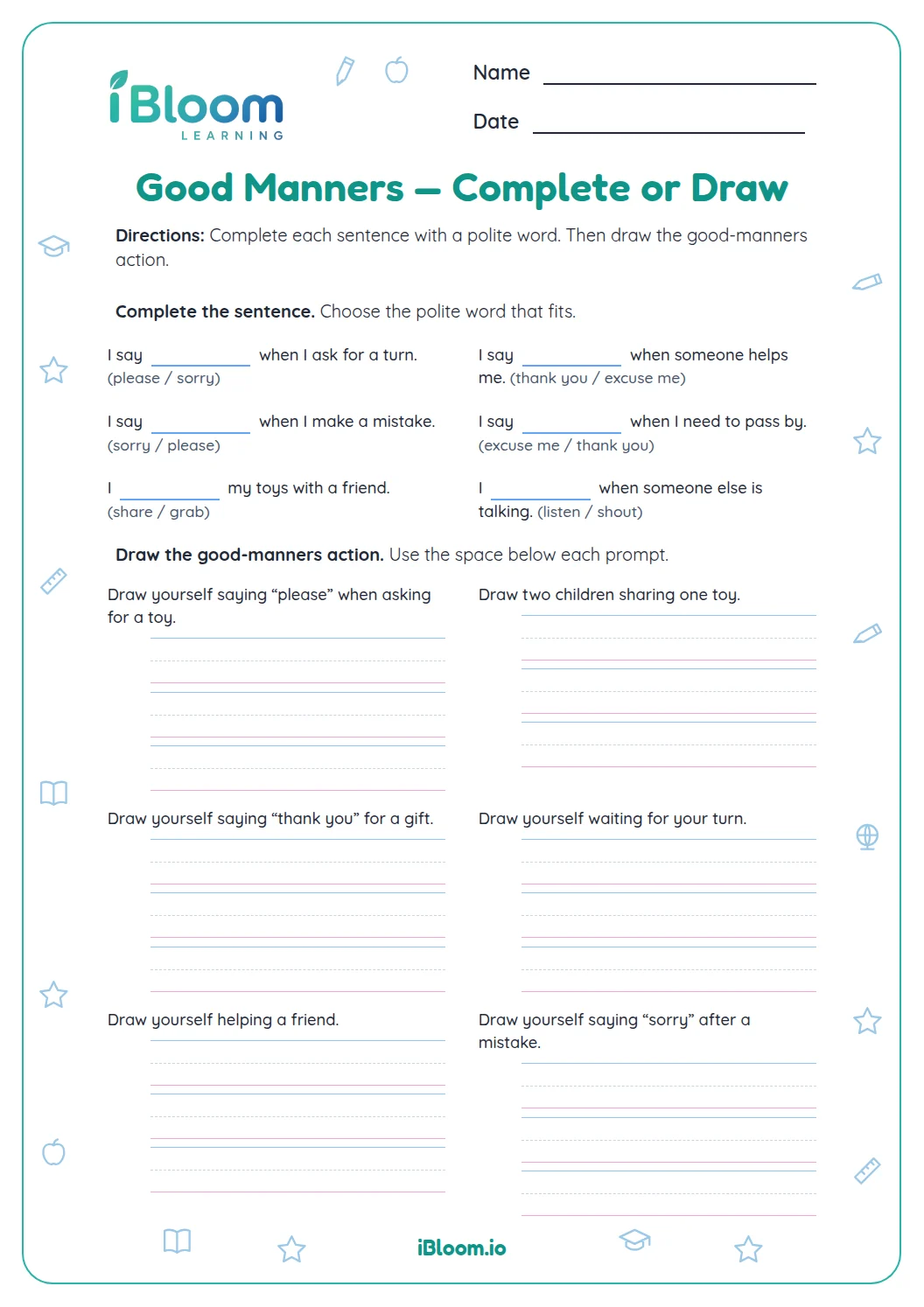
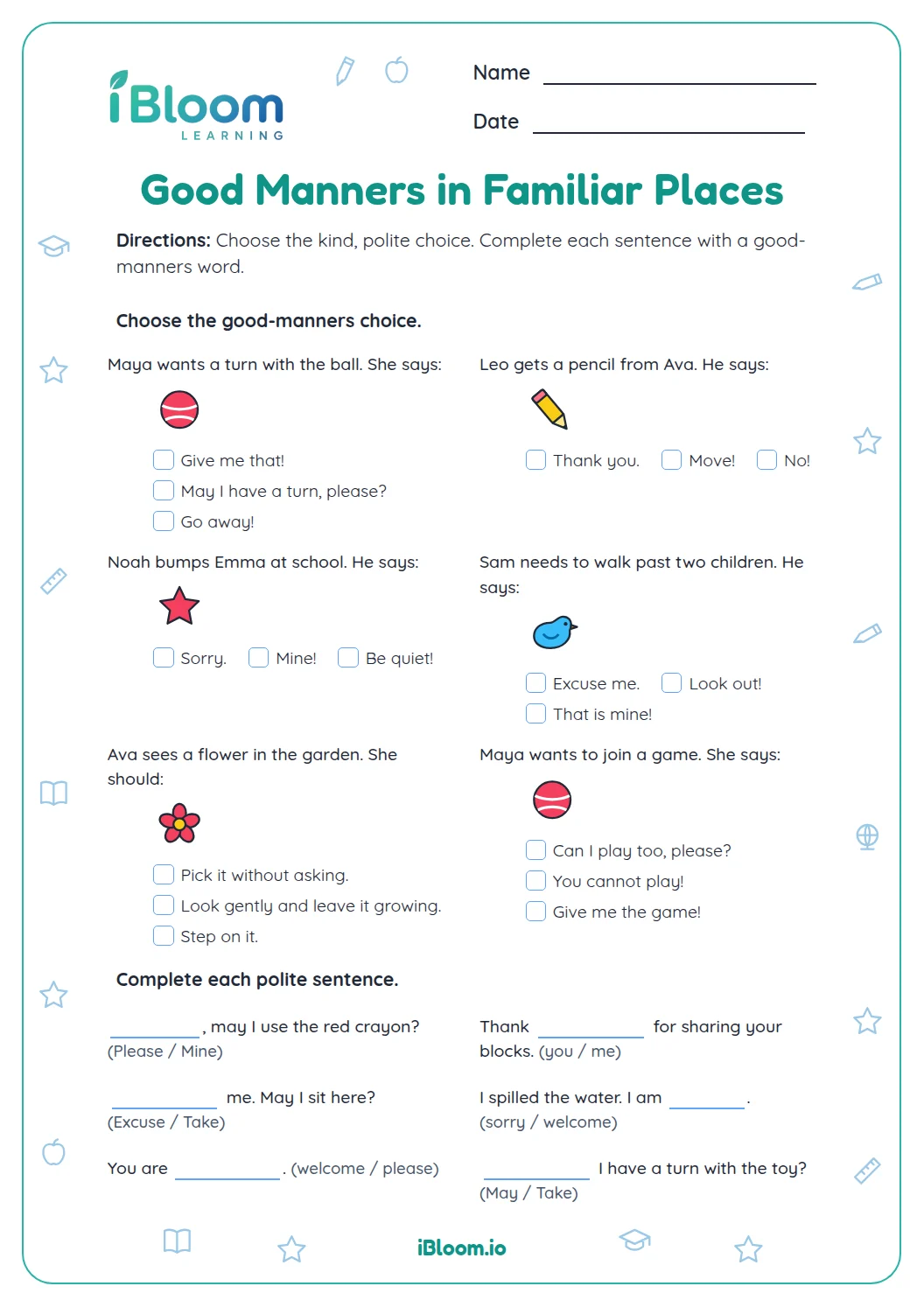
The first four choices cover thanking, asking for a turn, apologizing, and responding to a friend. Children then circle polite words such as please, thank, excuse, and sorry in short sentences. An adult can read each line aloud.
- 1You want a turn with a ball. What can you ask?
- 2“May I have a turn?” asks clearly and politely.
How can children finish a manners sentence?
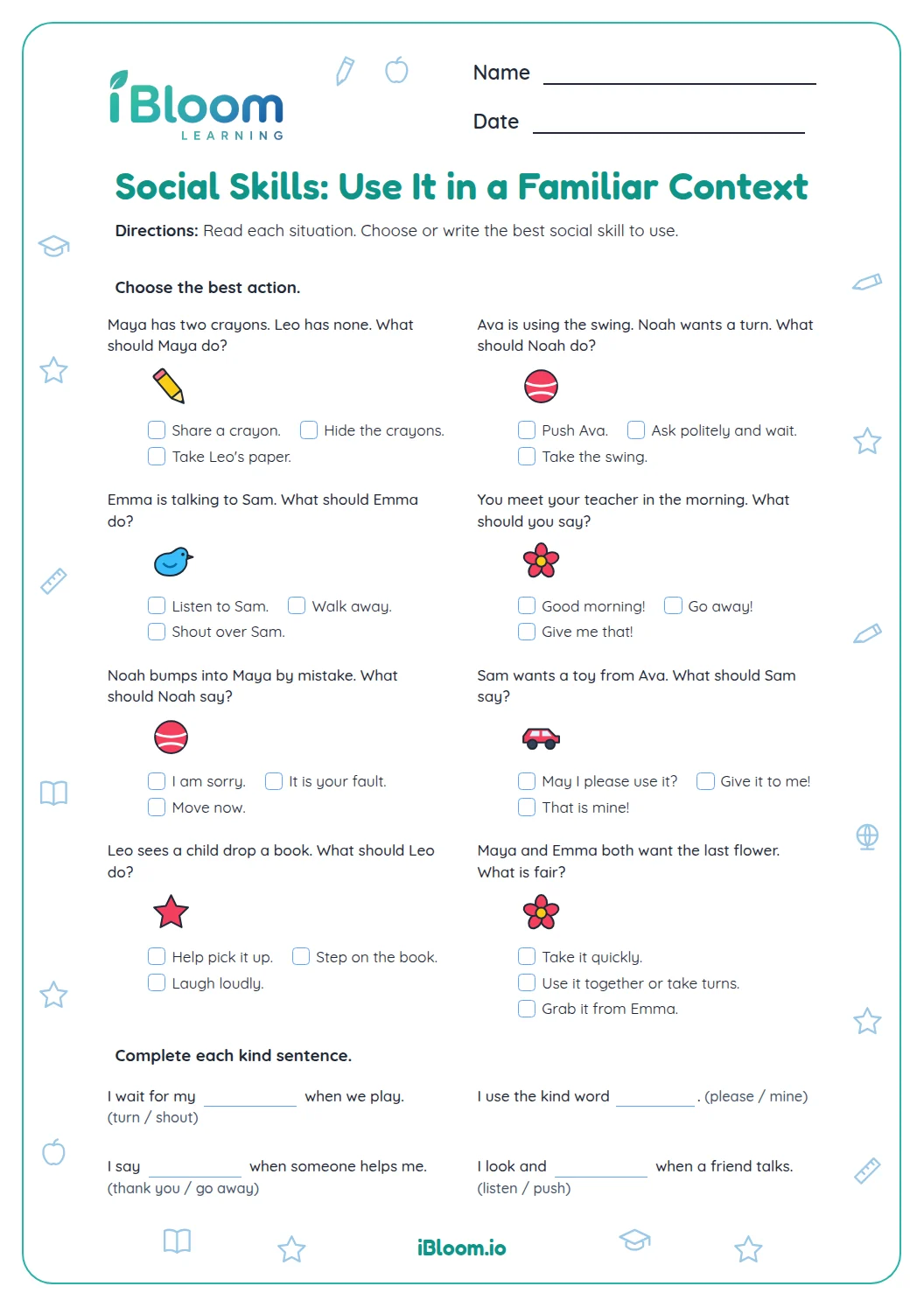
Questions 9–12 ask children to complete sentences with words and actions such as please, thank you, share, and cover. The final two choices return to helpful actions: taking turns with a book and checking on a friend who falls.
- 1Good friends ___ with others.
- 2The word share completes the sentence.
How can an adult make this a gentle review?
Read each situation without rushing, name the feeling or need involved, and let the child choose or supply a word. If the child gives another respectful response, talk about why it works in that moment.
How to use this worksheet
- 1Read the instruction and name the pictured object or situation.
- 2Read both response choices in a calm voice.
- 3Let the child point, say the answer, or mark a choice.
- 4Practice saying the helpful phrase aloud.
- 5Use the key to review and talk about alternate kind responses.
Common mistakes and quick fixes
The mistake
Expecting every child to use the same exact phrase.
The fix
Accept another respectful phrase that meets the need in the situation.
The mistake
Thinking manners are only words.
The fix
Talk about listening, waiting, covering a sneeze, and helping too.
The mistake
Treating a wrong choice as bad behavior.
The fix
Model the kinder response and invite a calm retry.
What to practice next
Make more practice
Questions parents and teachers ask
What manners does this page practice?
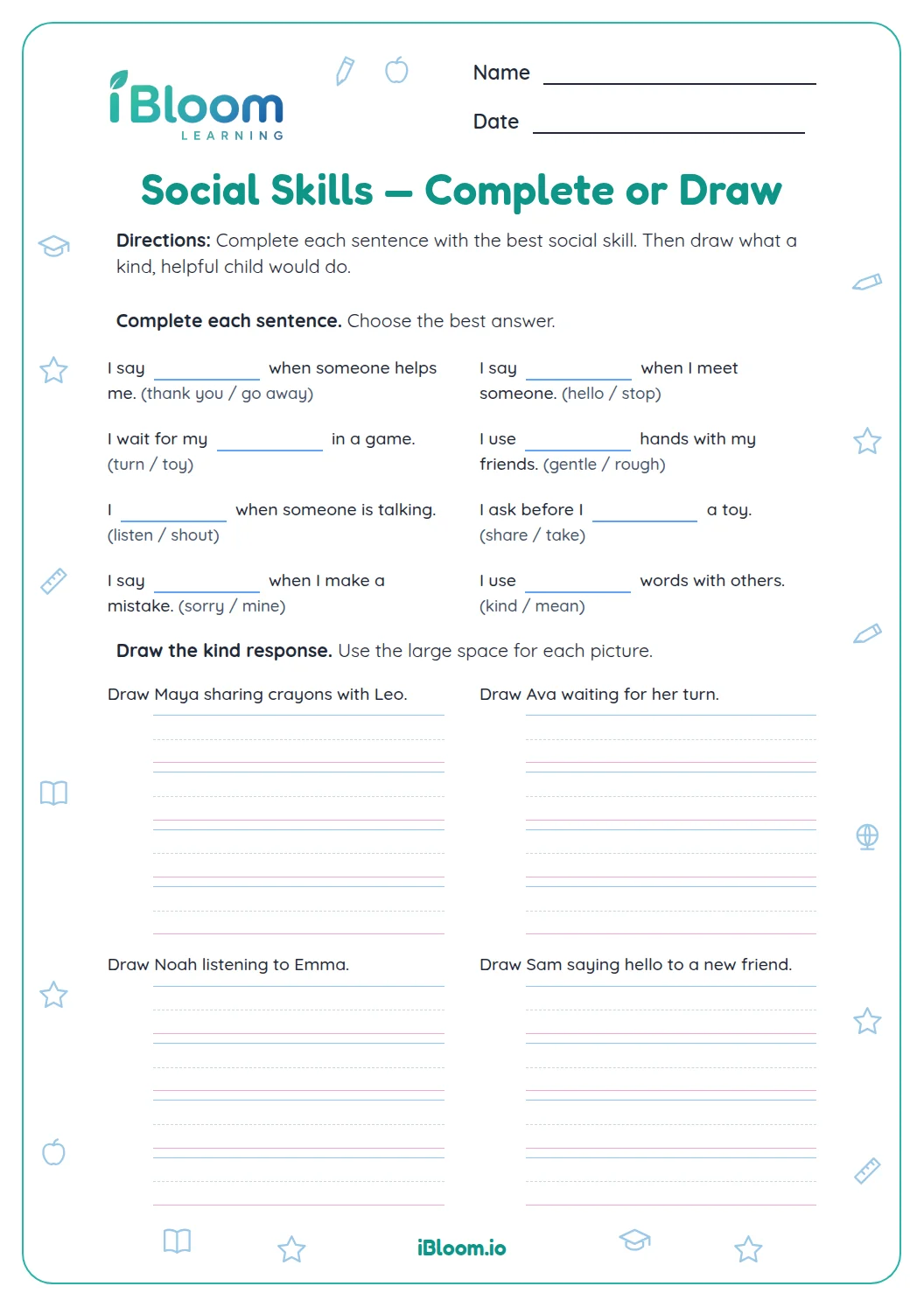
Children choose words and actions for everyday moments: receiving something, asking for a turn, apologizing, listening, sharing, and helping. The 14 picture-supported questions keep each situation concrete and give young learners a chance to notice what a kind response sounds like.
Should a child memorize one exact polite phrase?
No. The answer key shows one clear response for each situation, but families can discuss other kind phrases that fit. For example, “May I play too?” and “Can I join the game?” both ask to join respectfully. Families can accept any respectful wording that fits the moment, even when it differs from the printed choice.
How can a preschooler use the worksheet?
Read each short question aloud, point to its picture, and let the child choose between the two responses. A child can answer by pointing, naming the words, or marking the choice with help. Young learners may need a little help holding the page or marking their answer, and that support is fine.
What should I do if my child picks an unkind response?
Treat it as a chance to practice the words. Briefly explain how the other person might feel, model a helpful phrase, and let the child try it aloud. The worksheet is gentle practice rather than a score of a child’s character.
Why are pictures included with the questions?
Pictures give young learners a concrete cue for each social situation. They can connect a familiar object or person with words for asking, thanking, apologizing, listening, and taking turns. The pictures are simple cues, while the words explain the specific social choice to make.
How can we practice manners beyond the page?
Choose one phrase from the sheet to try during a real routine, such as saying “please” when asking for help or waiting while another person speaks. Adults can model the phrase and notice when everyone uses it. Repeating a phrase during calm moments can make it easier for a child to use when the need comes up.