






About this worksheet
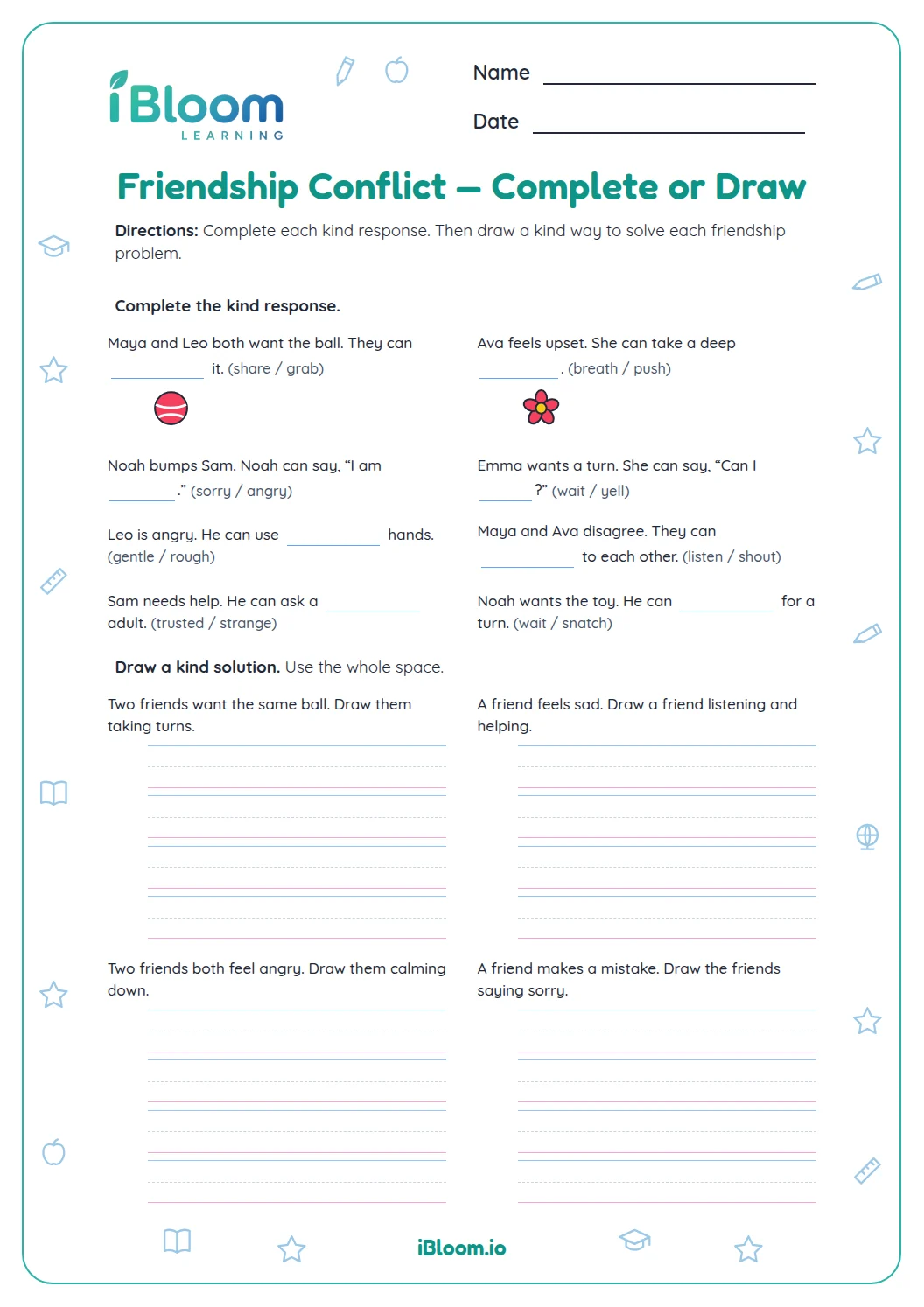
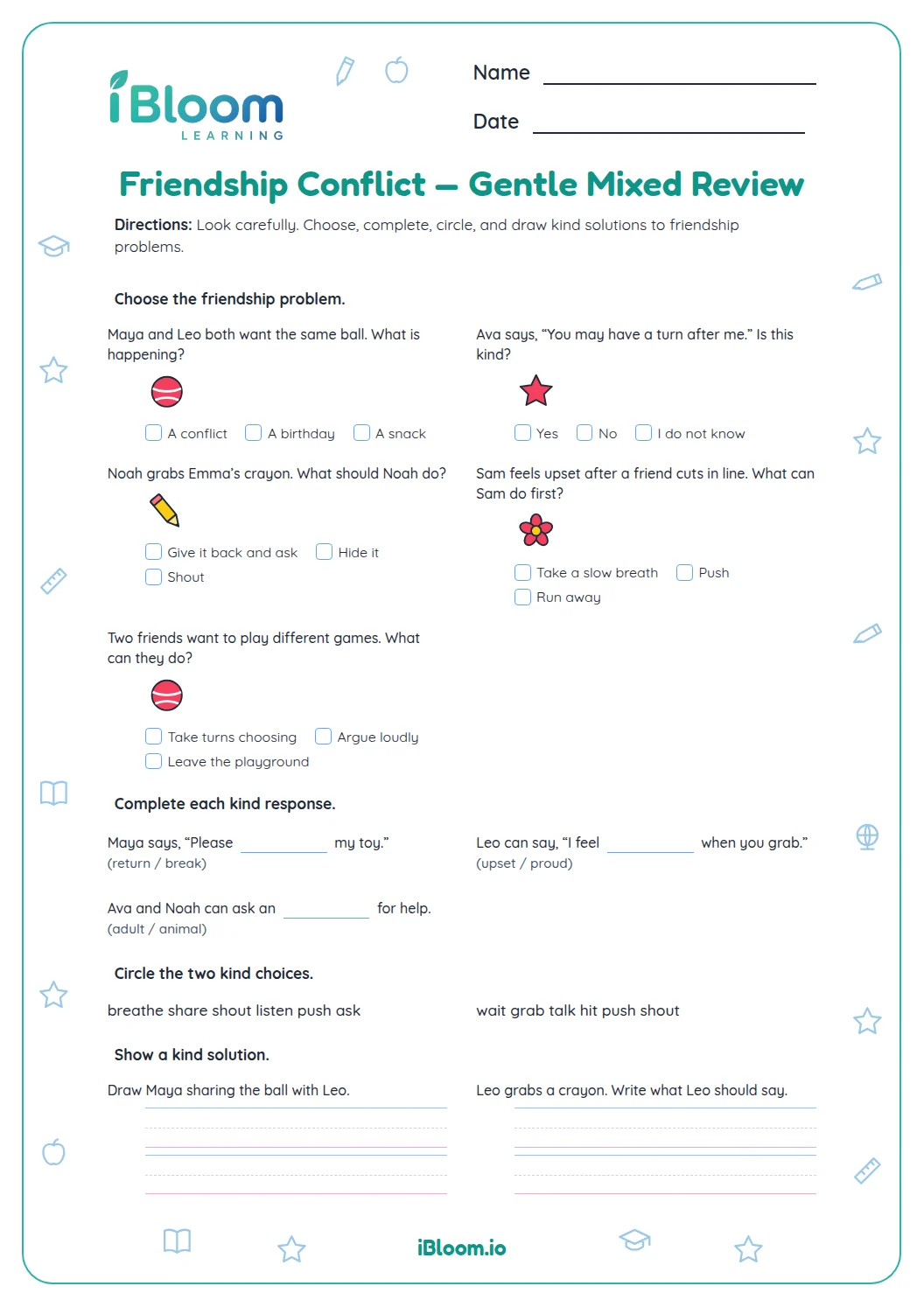
This free printable worksheet is for Preschool and Kindergarten learners practicing kind responses to familiar friendship conflicts. It has 14 questions in 2 parts and a separate answer key. Learners choose words and actions for sharing, taking turns, listening, handling strong feelings, and asking a trusted adult for help. The prompts follow the same skill focus as the original sheet, with clear steps for independent practice.
How does this worksheet practice kind responses to familiar friendship conflicts?
Learners choose words and actions for sharing, taking turns, listening, handling strong feelings, and asking a trusted adult for help. The questions are arranged from try kind words toward independent use of the skill.
- 1Both friends want the ball. What can they ask? (Ask for a turn; Grab it; Yell)
- 2Answer: Ask for a turn
- 3For example, when both friends want the ball, asking for a turn gives each child a fair way to play.
What is in each part?
The 14 questions are grouped into 2 parts: Try kind words: 7; Pause and choose: 7.
How can I use the answer key?
For example, when both friends want the ball, asking for a turn gives each child a fair way to play. Check the answer after attempting the item. If it differs, return to the exact clue or operation and try again; for questions with more than one reasonable response, compare the child’s reasoning with the model answer.
How to use this worksheet
- 1Read each short situation together.
- 2Name what each friend may want or feel.
- 3Choose the response that is kind and safe.
- 4For the last question, look for both a feeling and its reason.
- 5Talk about why the choice could help.
Common mistakes and quick fixes
The mistake
Grabbing when both children want a toy.
The fix
Suggest turns or ask for a timer so each child gets a chance.
The mistake
Yelling before naming a feeling.
The fix
Pause, take a slow breath, then use a calm sentence.
The mistake
Trying to solve an unsafe or stuck problem alone.
The fix
Ask a trusted teacher or caregiver for help.
What to practice next
Make more practice
Questions parents and teachers ask
What skills does this worksheet practice?
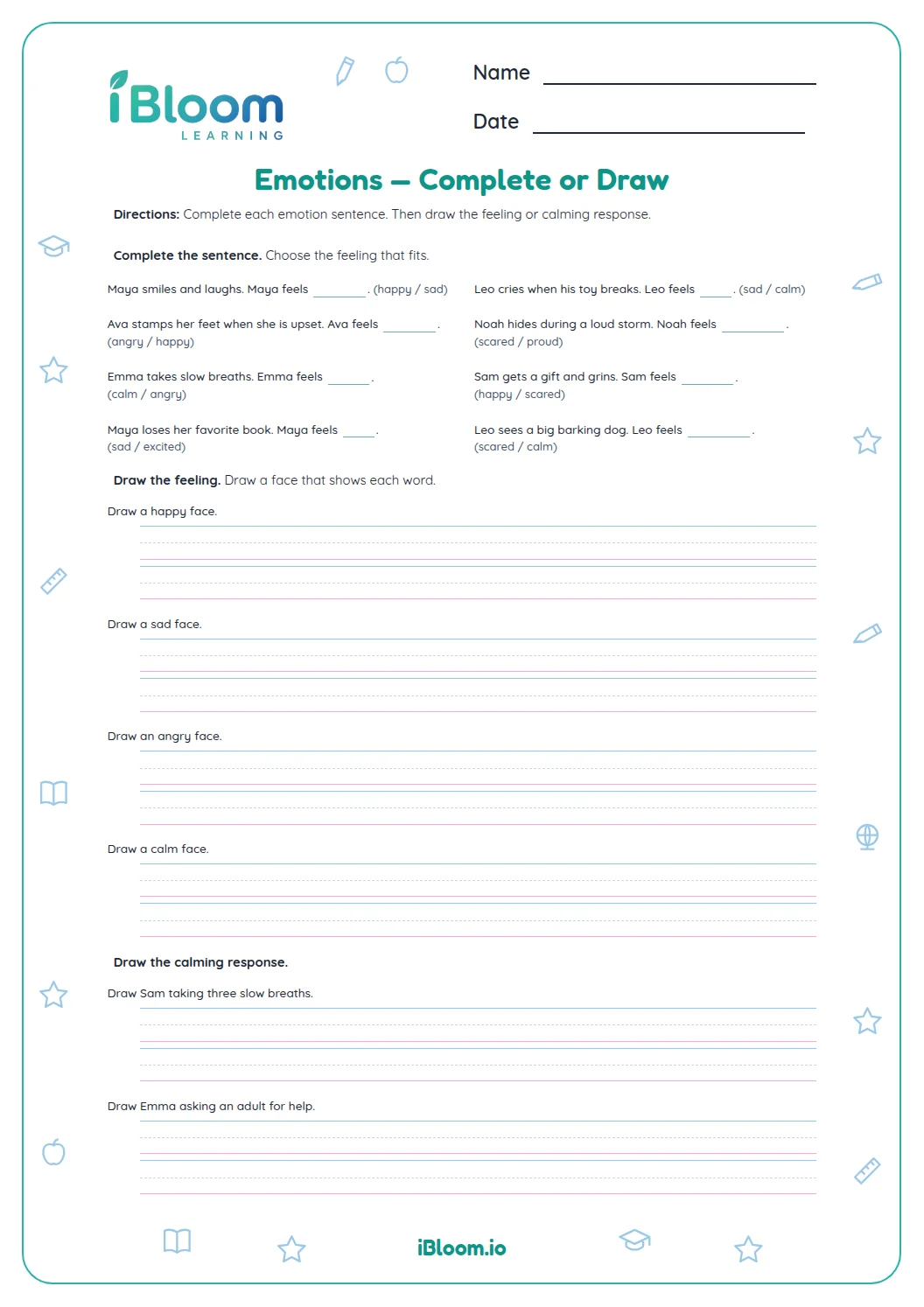
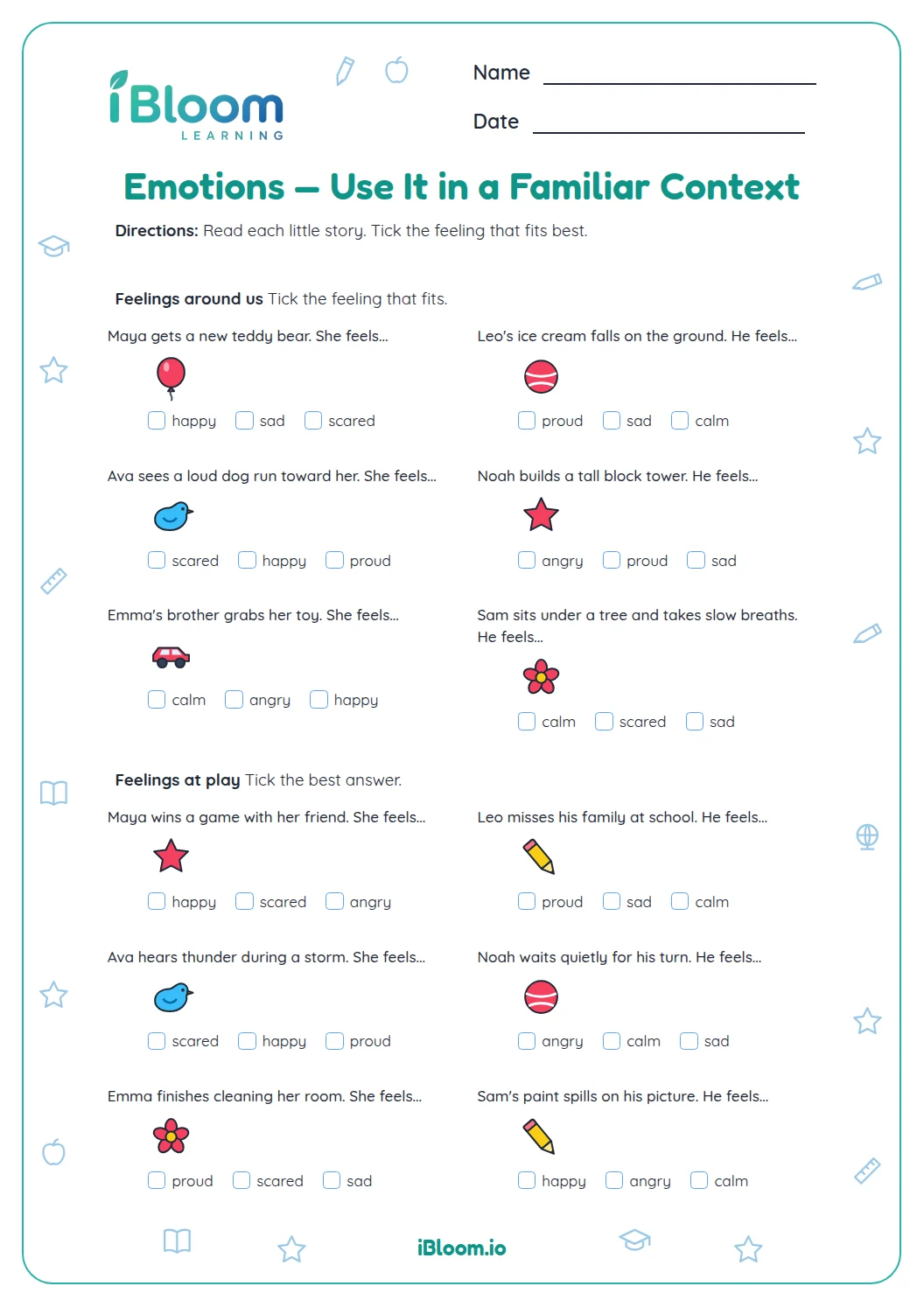
Children consider sharing, taking turns, listening, noticing feelings, and asking a trusted adult for help. The situations use familiar classroom and play conflicts. After a choice, invite the learner to explain what makes it fair or kind, rather than treating the answer key as a script for every real friendship situation.
Is there an answer key?
Yes. A separate answer key gives the intended choice for each question. Friendship situations can have more than one thoughtful response in real life, so use the listed answer to discuss the skill and accept another safe, respectful idea when the child can explain it.
How can I support a preschool learner?
Read each short prompt aloud and point to the picture clue before discussing the choices. Give the child time to answer in their own words. If the written options are unfamiliar, briefly explain them, then ask which choice helps both friends feel safe and included.
What does the final question ask?
The last item asks the learner to choose a sentence that names both a feeling and a reason. “I feel sad when alone” includes the feeling, sad, and the reason, being alone. The other options leave out one of those parts.
How long should practice take?
Plan for about 14 minutes, with time to talk through a few situations. Younger learners may benefit from completing one part at a time. The page is useful for discussion, so there is no need to rush through the choices.