




About this worksheet
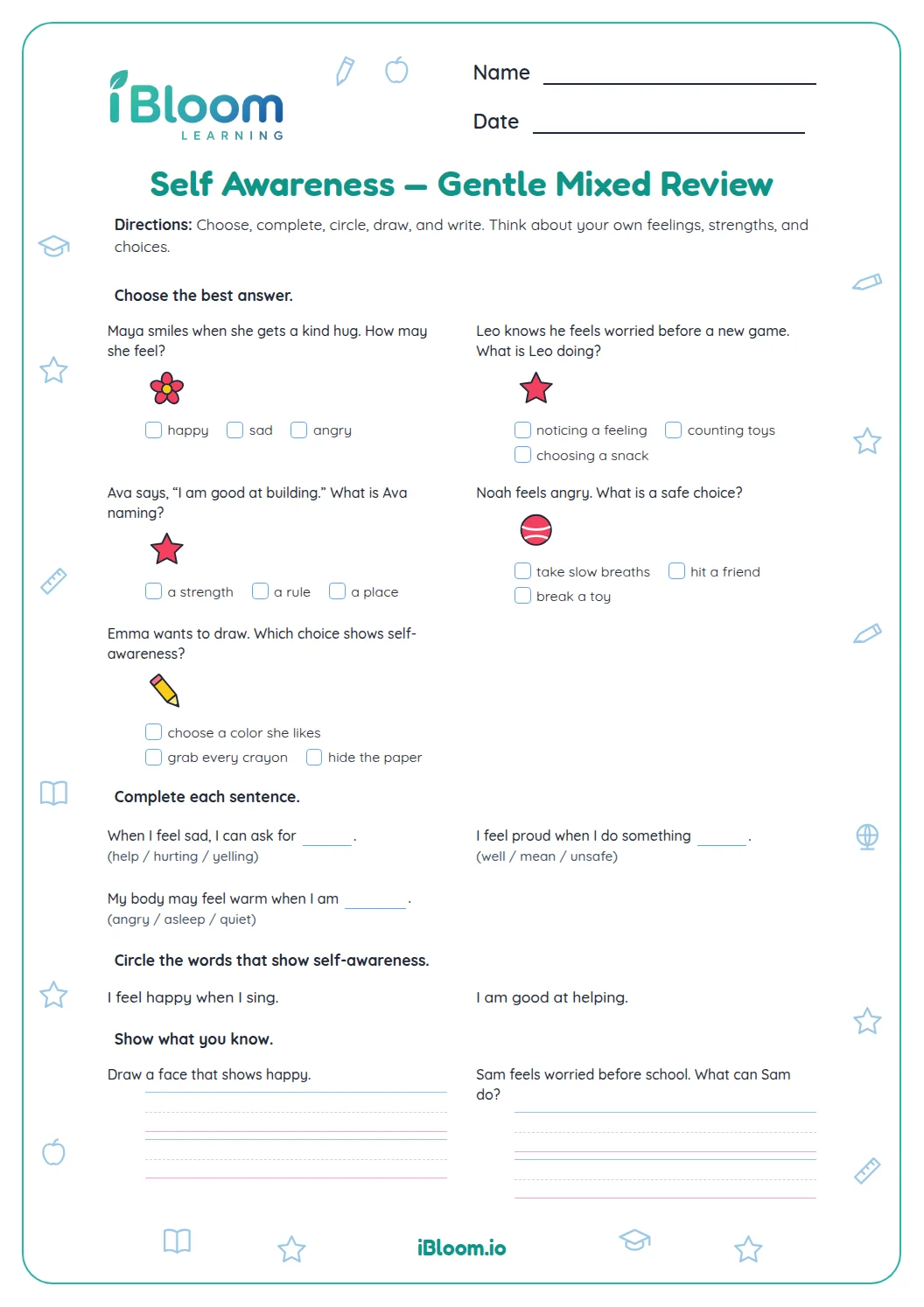
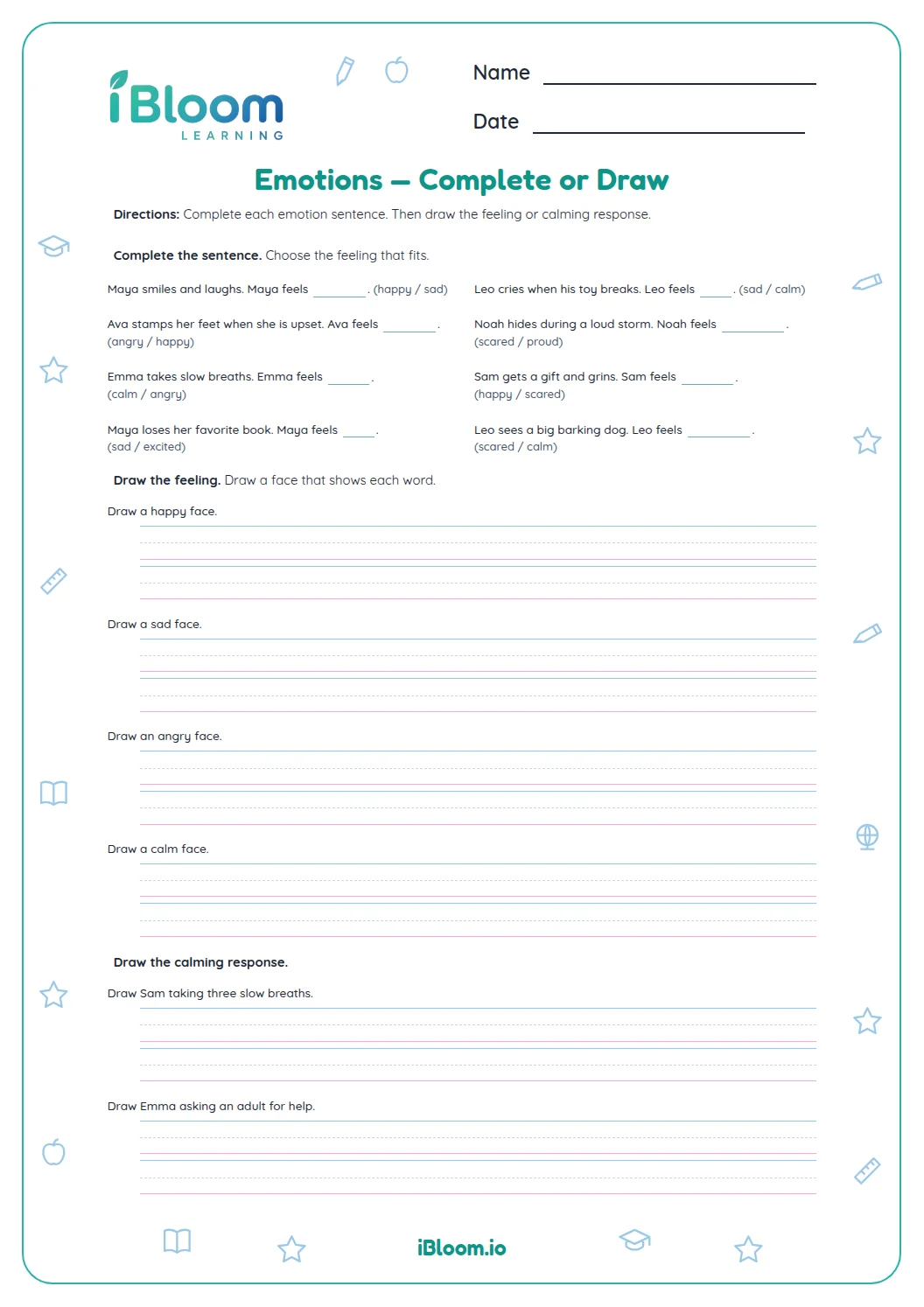
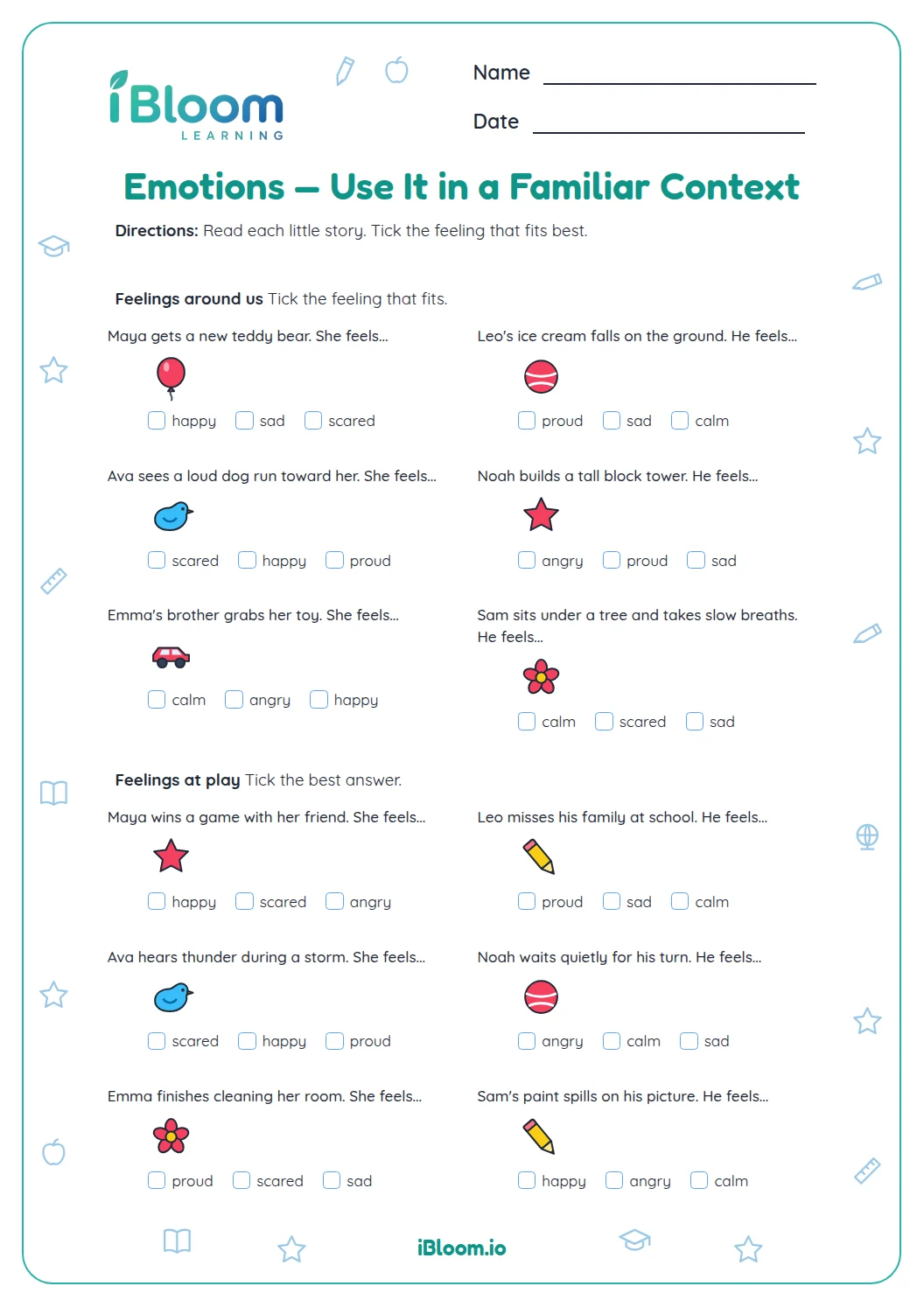
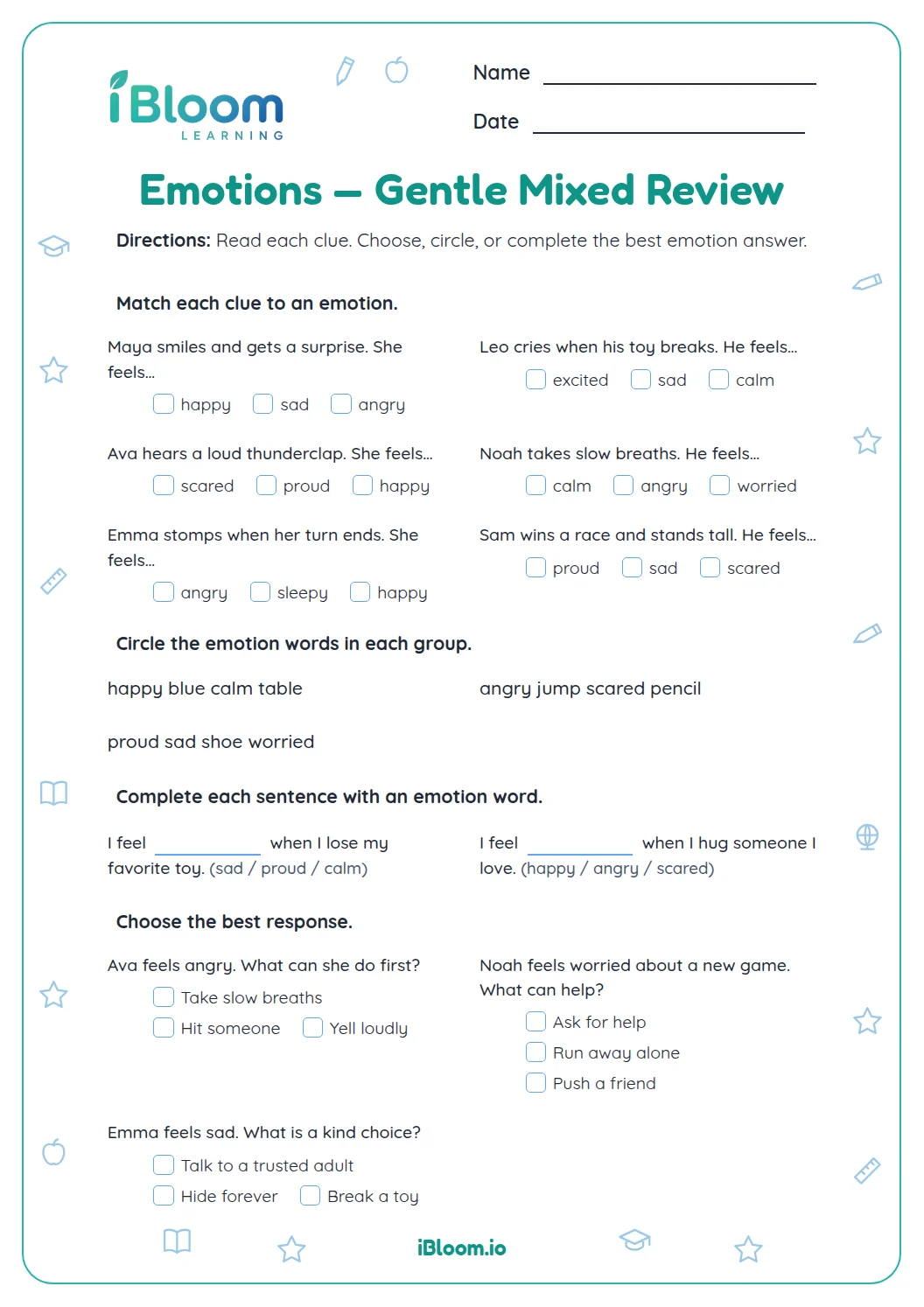
This Pre-K–Kindergarten worksheet uses familiar pictures and situations to help children name possible feelings, recognize strengths and needs, and complete sentences about preferences and calming choices. It has 14 picture-supported prompts. Sample answers show one possible response; children may feel or choose differently.
How can a child name a feeling?
The first four picture-supported situations invite children to choose a feeling that could fit. Feelings can differ from child to child, so use the choices to start a conversation rather than to require one response.
What can children notice about themselves?
Part B names a strength, preference, need, or feeling in a familiar sentence. For example, drawing a star shape is a strength because it names something Emma can do.
- 1Question 5: Emma can stack blocks tall.
- 2Choose strength.
- 3A strength is something a person can do well.
How do the sentence prompts support personal answers?
Children finish short sentences about feelings, asking for help, favorite activities, and calming strategies. Each prompt includes choices and a picture cue. Use the key as a model, and accept a different response when it fits the child.
How to use this worksheet
- 1Read each situation and look at its inline picture cue.
- 2Invite the child to choose a feeling that could fit.
- 3Talk about whether a sentence names a strength, preference, need, or feeling.
- 4Read each sentence completion aloud and choose a fitting word.
- 5Ask the child to explain a choice in their own words.
Mistakes to notice and how to help
The mistake
Treating a sample feeling as the only correct answer.
The fix
Use the child’s own feeling, even when it differs from the sample.
The mistake
Answering for the child immediately.
The fix
Pause after reading and let the child speak, point, or gesture first.
The mistake
Judging the drawings by neatness.
The fix
Ask what the marks show and add the child’s explanation as a caption.
What to practice next
Make more practice
Further reading
Questions parents and teachers ask
Does my child need to read or write independently?
An adult can read the short prompts aloud and point to the inline picture cue. The child chooses a response or completes a sentence with one of the printed choices. The sheet does not require independent reading; children can explain their choices aloud.
Are there right and wrong feelings on the answer key?
The fourteen picture-supported prompts include four feeling choices, four self-knowledge choices, and six sentence completions. The answer key shows sample choices for the fixed items. Children can discuss why a feeling or choice fits their own experience and offer a different response when it makes sense.
Do all children need to choose the same feeling?
No. The feelings in the key are examples of responses that could fit each situation. A child may have a different feeling or may want to explain why. Use the picture and prompt to invite discussion, and accept a sincere answer that fits the child’s experience.
What should I do if my child says “I don’t know”?
Give the child time and offer a familiar example without choosing an answer for them. You might recall arriving home after a busy outing and ask how their body felt then. A gesture or a few words are enough. Return to the question later if needed.
How should I talk about answers that differ from the key?
The feeling and preference answers are examples, not rules for how a child should respond. Ask the child to explain what fits their own experience. The answer key helps with the fixed choices, while personal reactions can differ and still be valid.