

About this worksheet
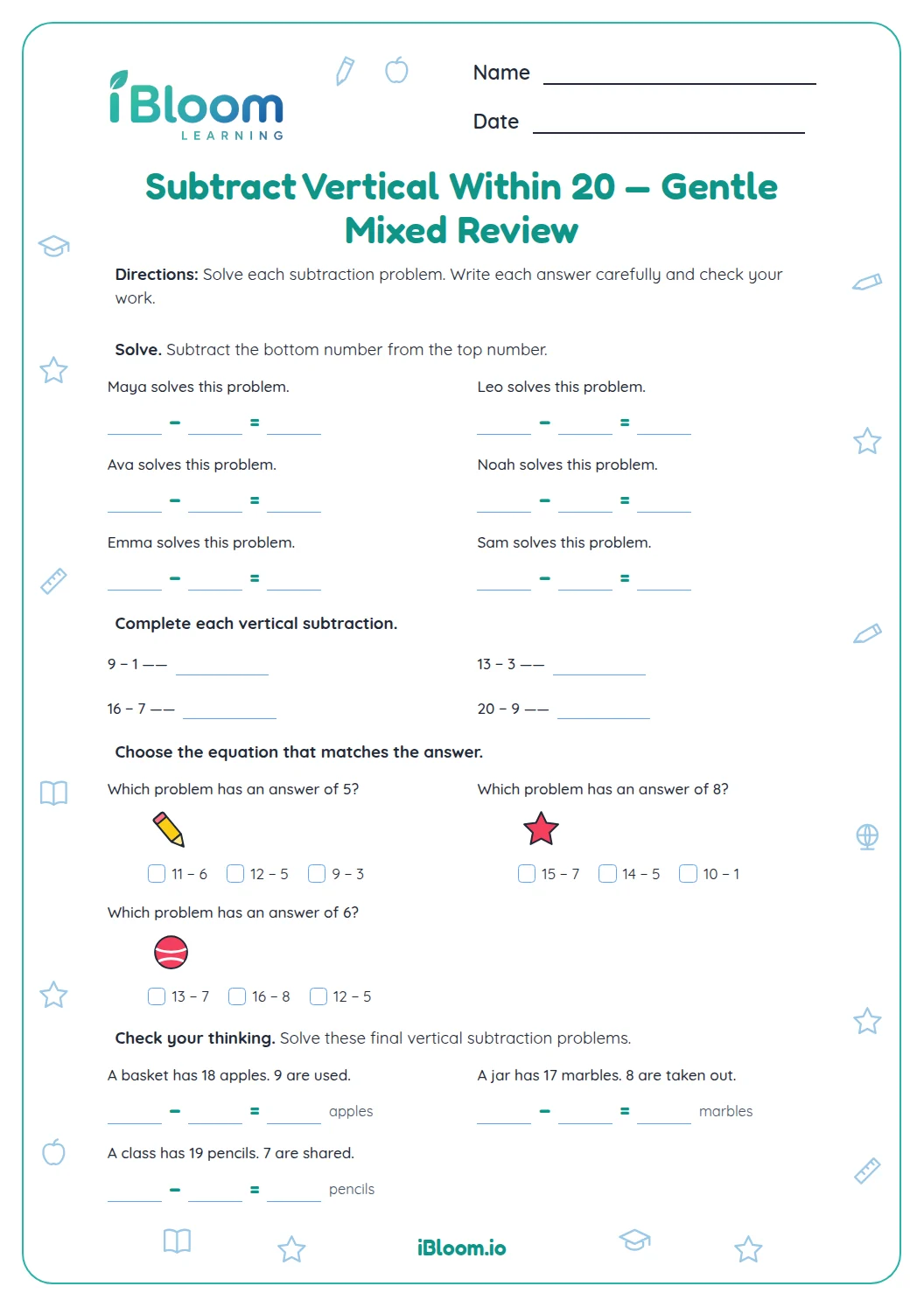
This kindergarten worksheet practices take-away subtraction within 20. Students solve number sentences, including facts within 10 and teen-number differences, then answer short stories. Each item asks for the amount left after subtracting. The answer key lists the difference for each equation and story.
Aligned to K.OA.A.2
What subtraction practice is included?
The worksheet begins with subtraction facts within 10 and continues with teen-number facts. Four short stories ask how many objects remain after some are taken away.
The printed problems are horizontal subtraction sentences and short stories. Students can use counters or draw their own marks while working, then record the difference.
How can children check a subtraction fact?
For 14 − 6, start at 14 and count back six steps, or make 14 counters and move six aside. Eight remain, so the difference is 8.
Standards alignment
This worksheet gives students practice with the skill named below.
Models take-away stories and subtracts within 10 in the opening facts.
On this sheet: The opening six equations practice subtraction within 10; pictured teen-number questions extend the same take-away method.
Show the official wordingHide the official wording
Solve addition and subtraction word problems, and add and subtract within 10, e.g., by using objects or drawings to represent the problem.
What to practice next
Further reading
Questions parents and teachers ask
Is this worksheet for preschool or kindergarten?
The sheet is labeled Kindergarten and includes subtraction facts within 20. The first group stays within 10; later picture-supported items and stories extend the practice to teen numbers. An adult can read each story aloud and help count.
Can children use objects to solve the questions?
Yes. Although the printable does not include picture groups, children can use counters, fingers, or quick marks to represent the starting amount and remove the number being subtracted. Then they count what remains, write the difference, and compare it with the answer key.
Are answers above 10 included?
Yes. Several starting amounts and differences reach the teen numbers. These items use the same take-away idea as the smaller facts, with countable pictures to help children track the objects and check what remains. An adult can help point to each object as it is removed.
What does subtraction mean?
Subtraction can show how many remain after some are taken away. Start with the first number, remove the second amount, and count what is left. Objects, fingers, or the printed pictures can model the action clearly. For example, 5 − 2 leaves 3.
What is in the answer key?
The key lists the differences for the number sentences and story questions. For a story, check that the answer tells how many are left after the stated amount is taken away. Counters or child-drawn marks can provide a second check.