






About this worksheet
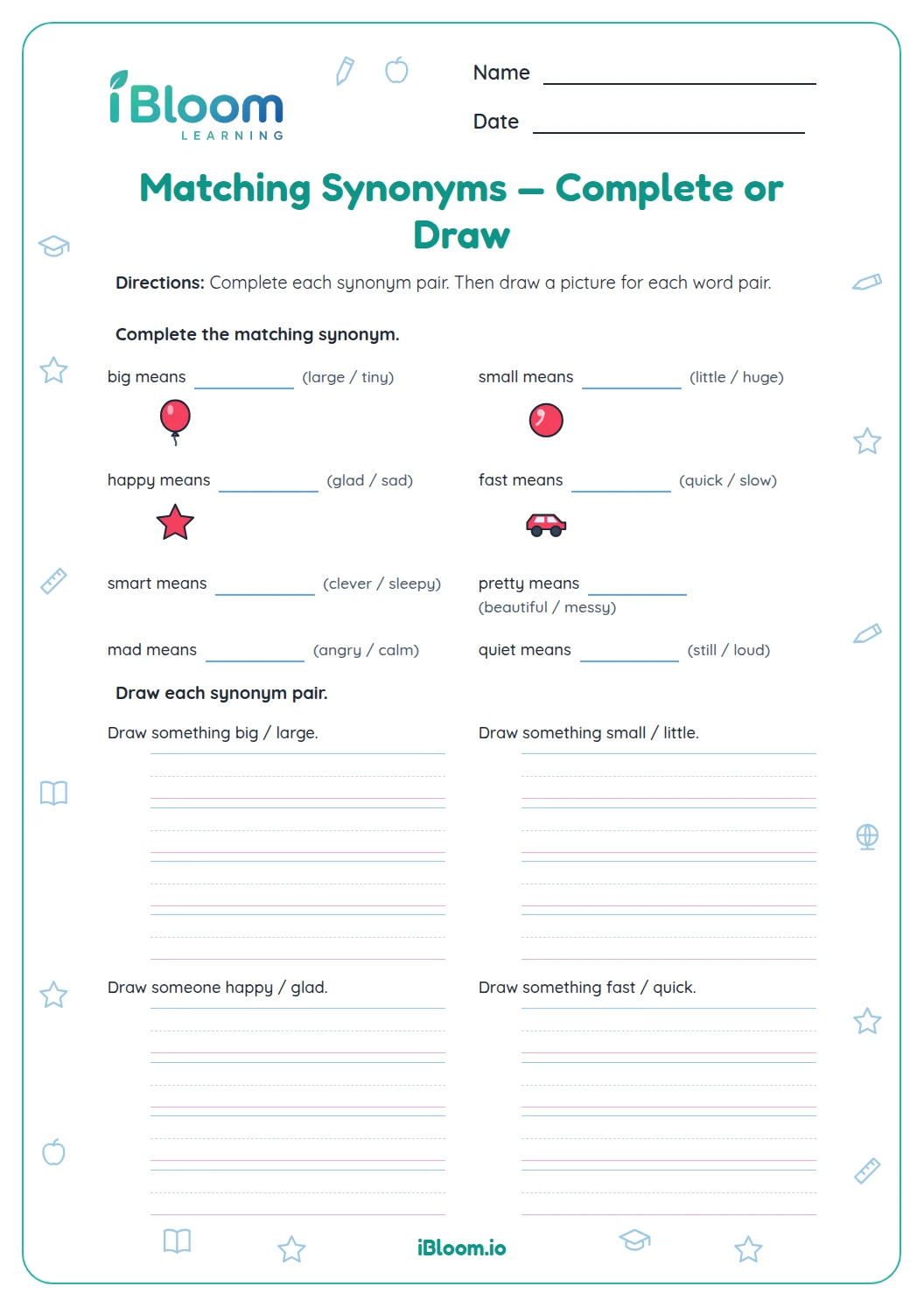
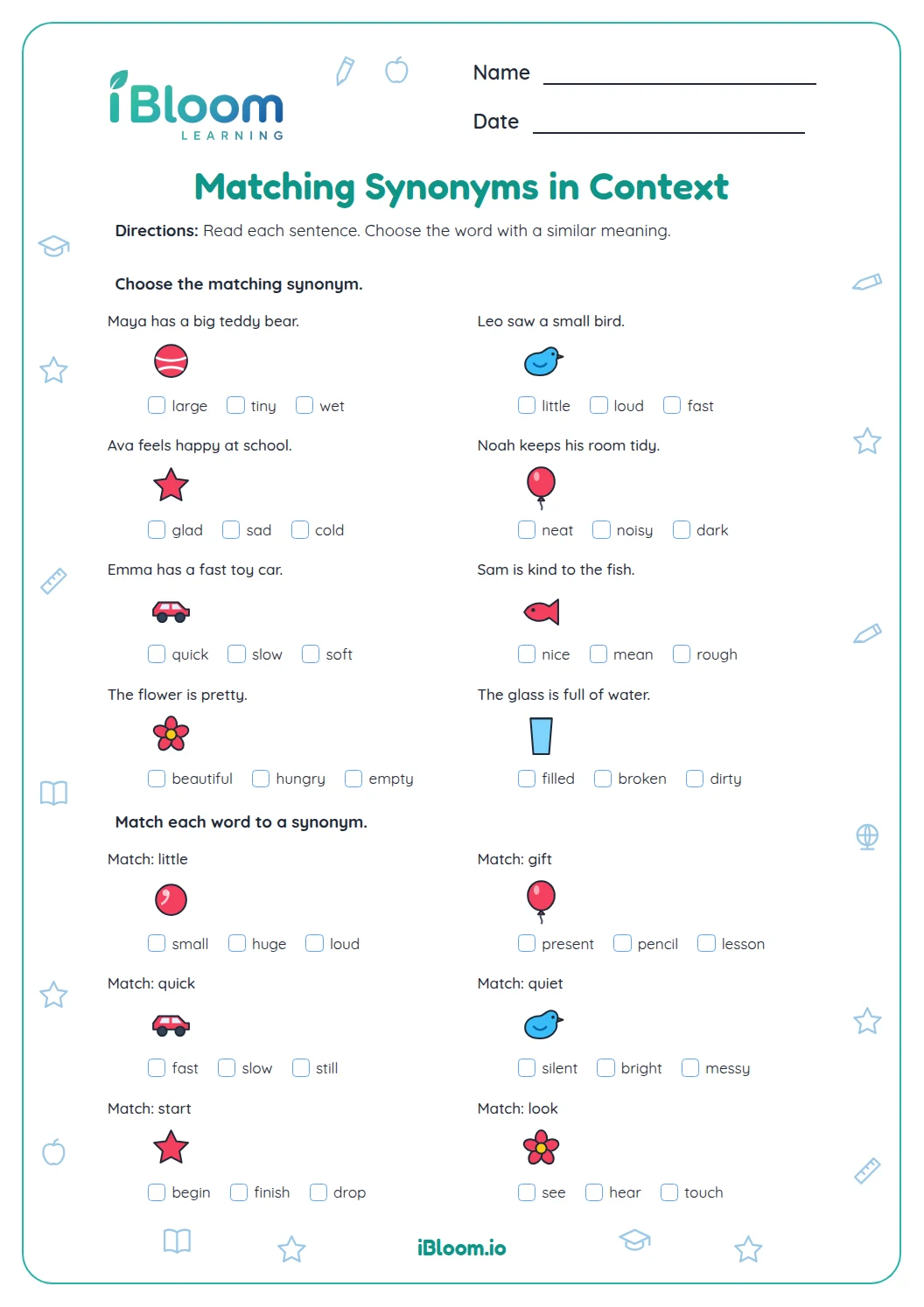
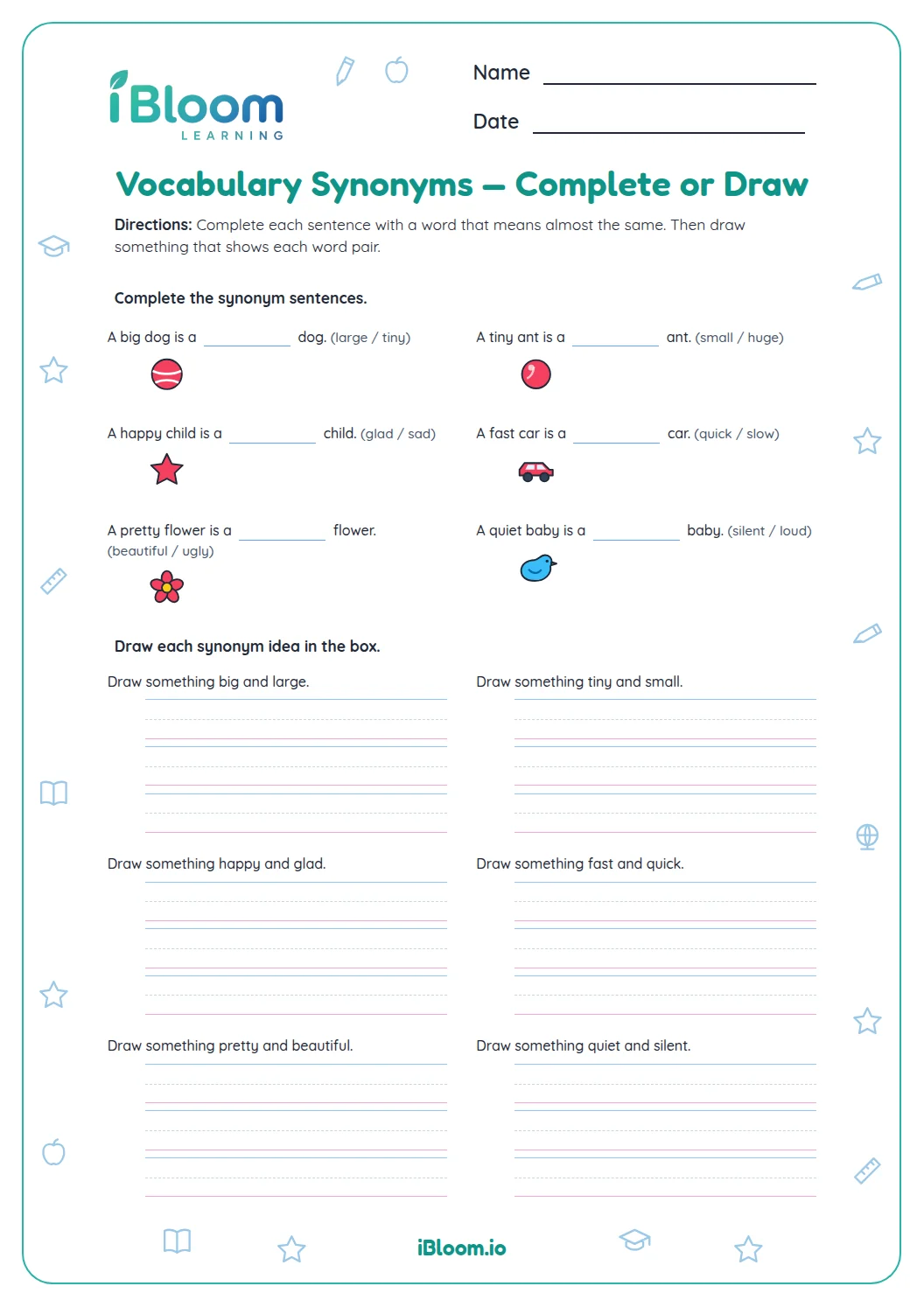
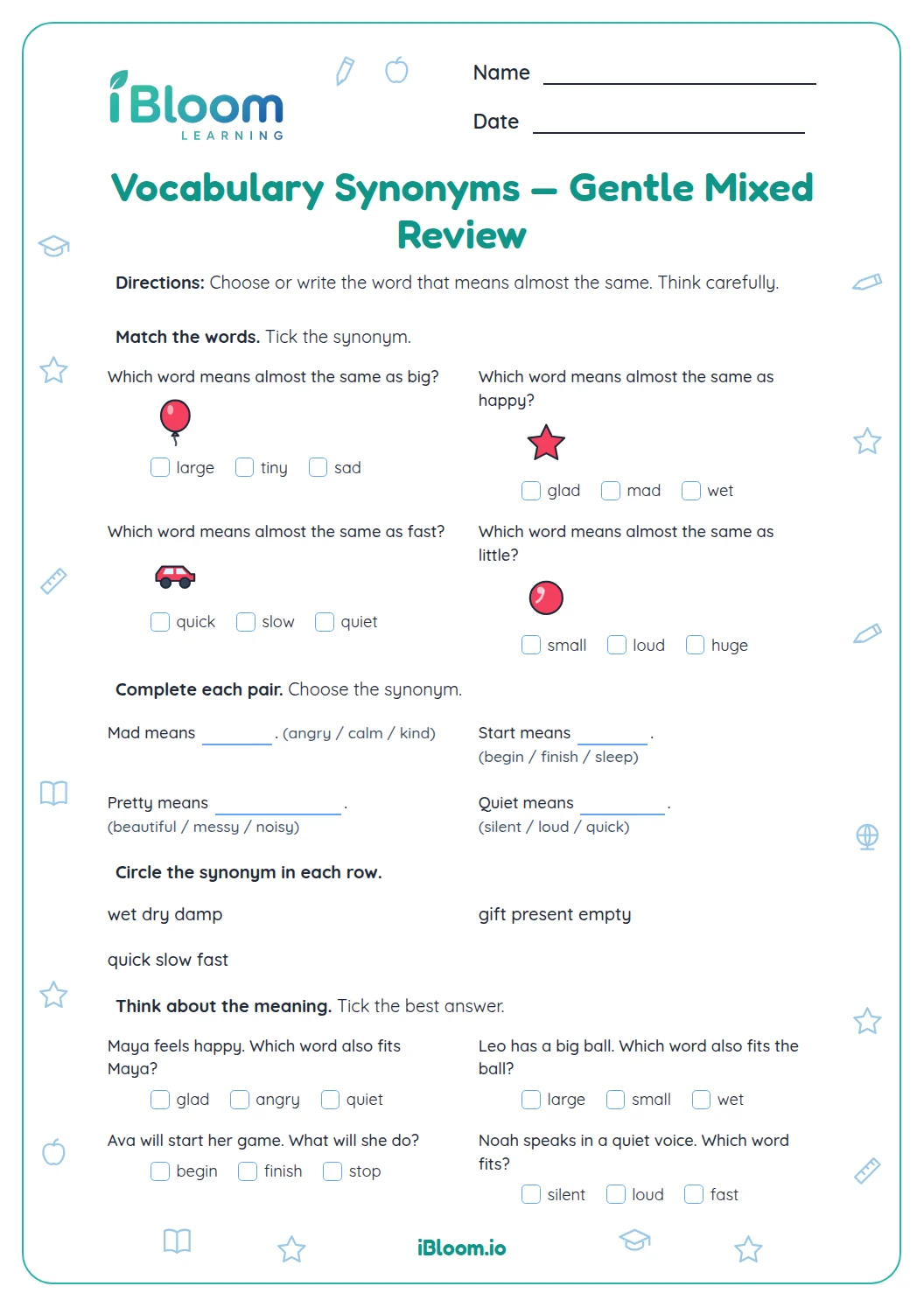
This printable gives preschool and kindergarten learners gentle practice choosing words with similar meanings. The worksheet begins with four picture-supported synonym choices, asks children to spot matching word pairs, and ends with sentence clues. The 15 questions move from familiar words to choosing a synonym that makes sense in context. The answer key identifies the intended choice for each item.
How can children recognize a synonym?
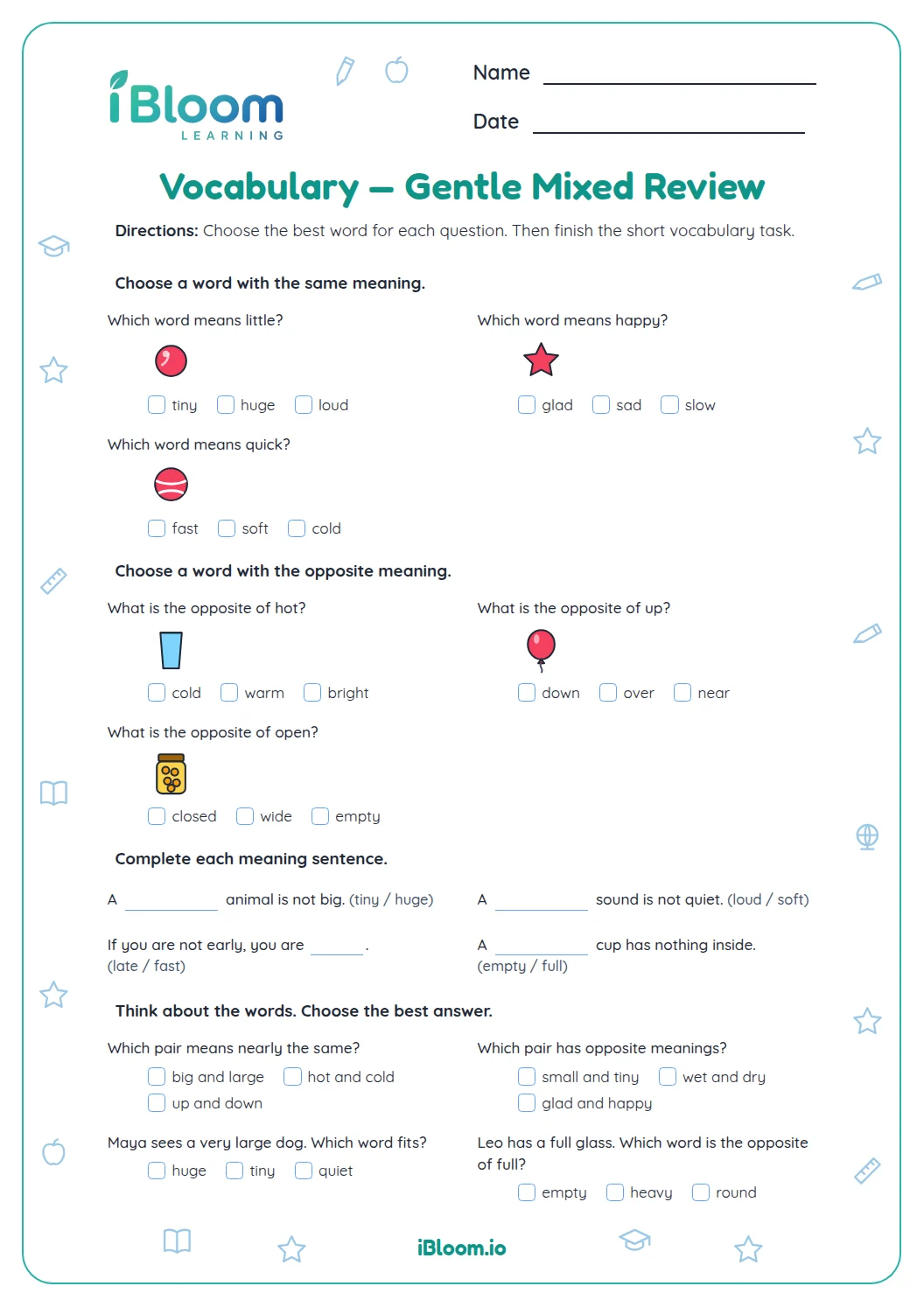
The first part has four picture-supported questions. Children choose a familiar word with a similar meaning to sunny, big, quick, or little.
- 1The clue asks for another word for happy.
- 2Glad names a similar feeling.
- 3Sad and mad do not match as closely.
Which familiar word pairs appear?
Compare the meanings of both words in a pair. Begin and start name the same action, while begin and stop name opposite actions.
How can an adult support the practice?
The final five items place a word in a sentence clue. For example, “Maya is not sad. She feels ___.” Glad completes the thought with a similar meaning.
How to use this worksheet
- 1Look at the picture clue.
- 2Listen to or read the target word.
- 3Say each answer choice aloud.
- 4Choose the word with a similar meaning.
- 5Check that the other choices do not name an opposite or unrelated idea.
- 6Review matches with the answer key.
Common mistakes and quick fixes
The mistake
Choosing an opposite, such as sad for happy.
The fix
Say both words and check whether they describe similar feelings.
The mistake
Choosing a word connected to the picture but not to the target word.
The fix
Compare each choice with the target word, not only with the picture.
The mistake
Thinking synonyms must sound alike.
The fix
Focus on what the words mean; glad and happy sound different but are similar in meaning.
What to practice next
Make more practice
Further reading
Questions parents and teachers ask
What does synonym mean?
The page has fifteen questions in three formats: picture clues, word pairs, and sentence clues. Children choose a word that means the same or nearly the same as another word, such as glad for not sad. The answer key lists the intended choice for each item.
Are there pictures on the worksheet?
A synonym is a word with the same or nearly the same meaning. In the word-pair part, children compare options such as begin and start with pairs that name different or opposite meanings, then choose the matching pair.
How many questions are included?
The first four multiple-choice questions include picture clues for familiar words. Five more questions ask children to select a synonym pair, and the final five use sentence clues. The answer key shows one intended answer for every question.
Should an adult read the words aloud?
Read the whole prompt and say each choice aloud. For the sentence “Maya is not sad. She feels ___,” glad keeps the meaning clear. The word-pair questions work the same way: choose words that name similar ideas or actions.