


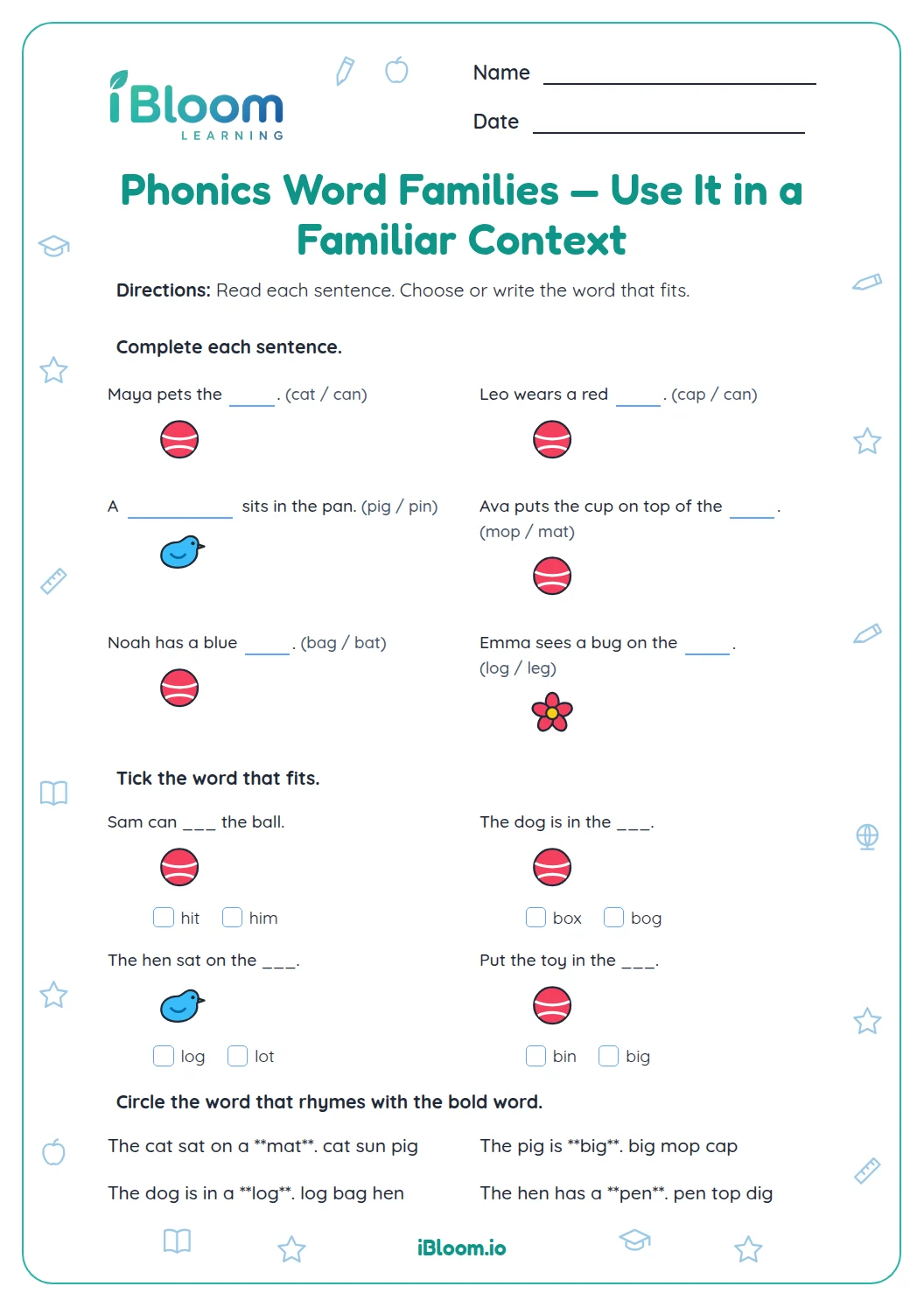
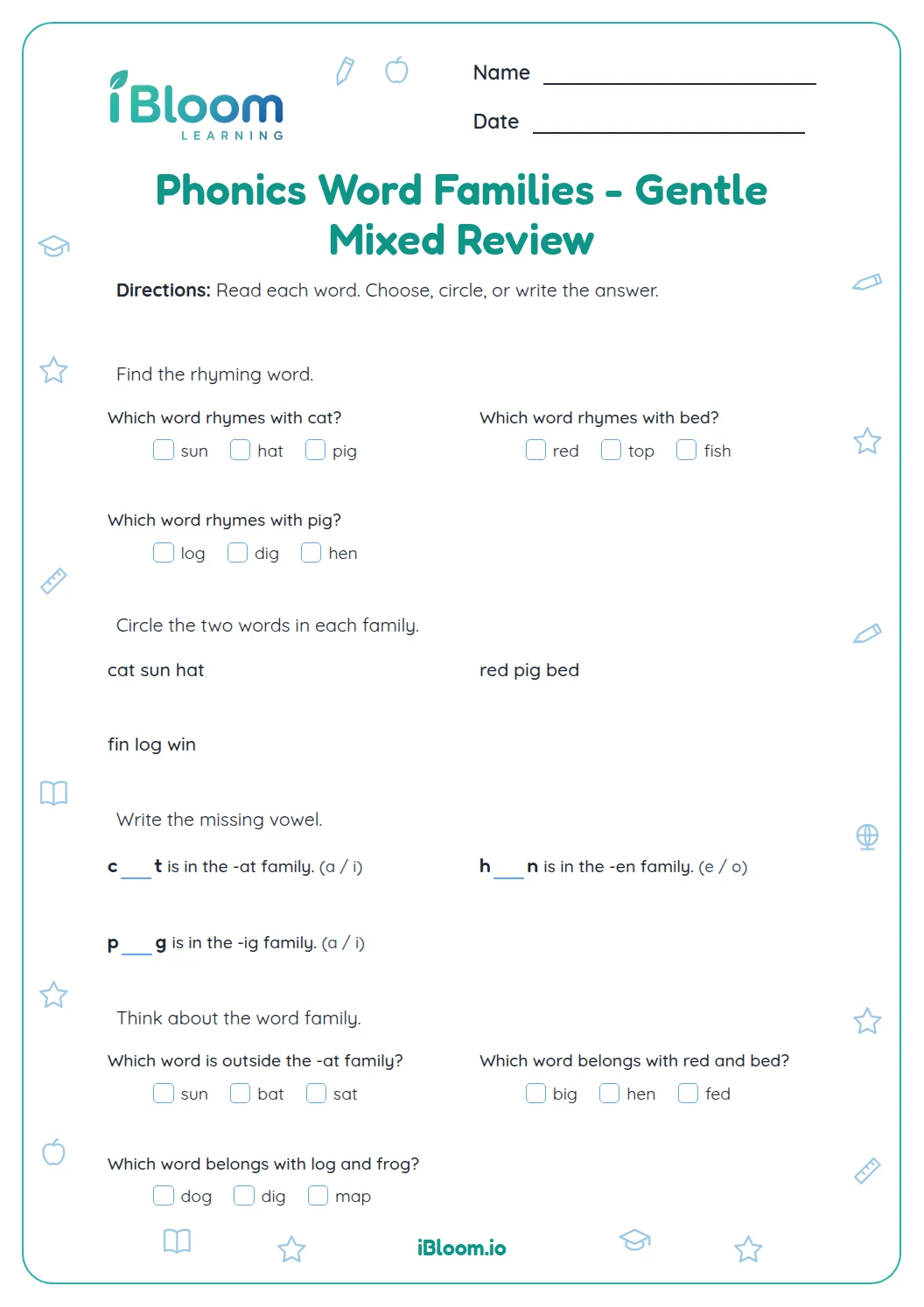


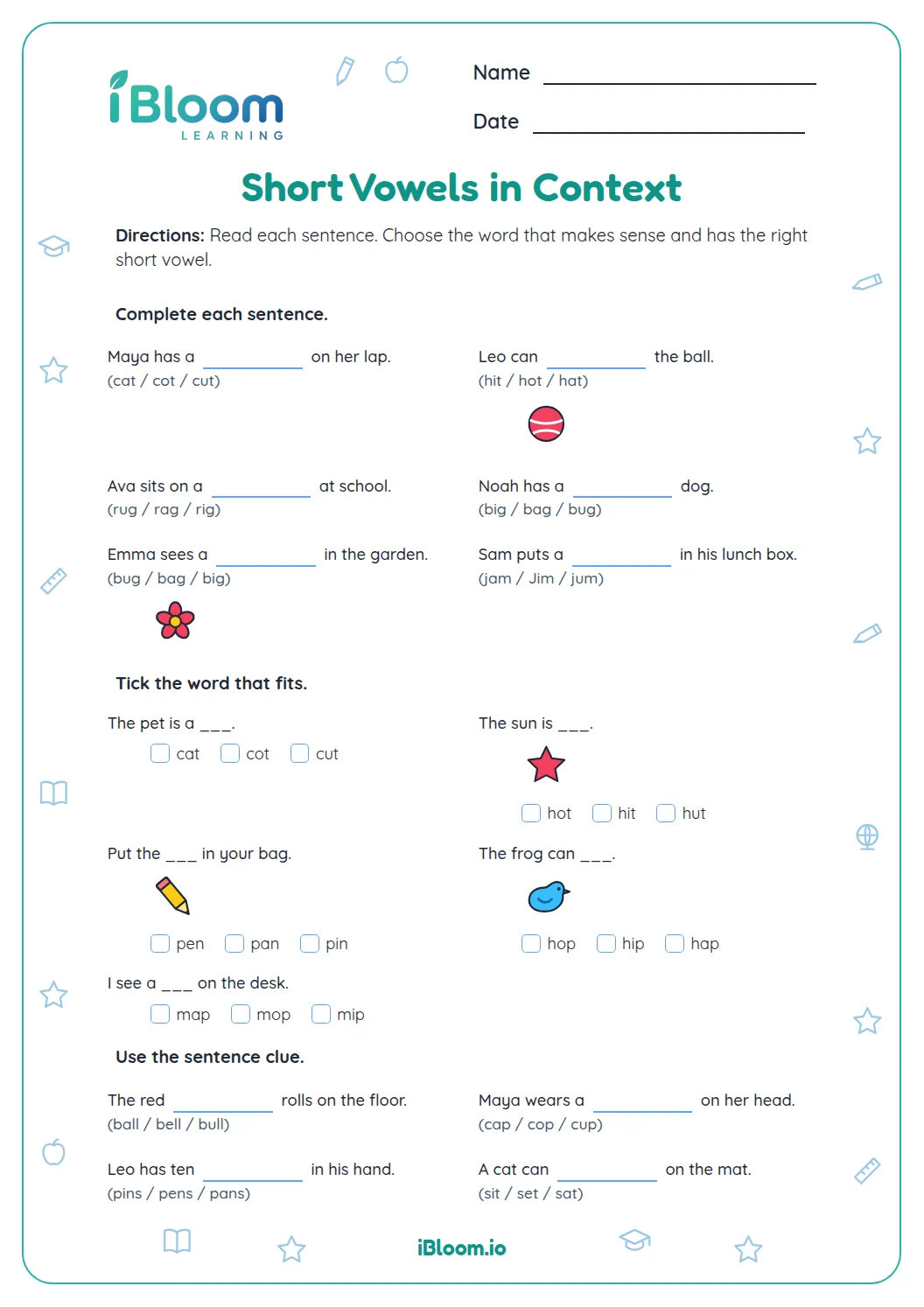
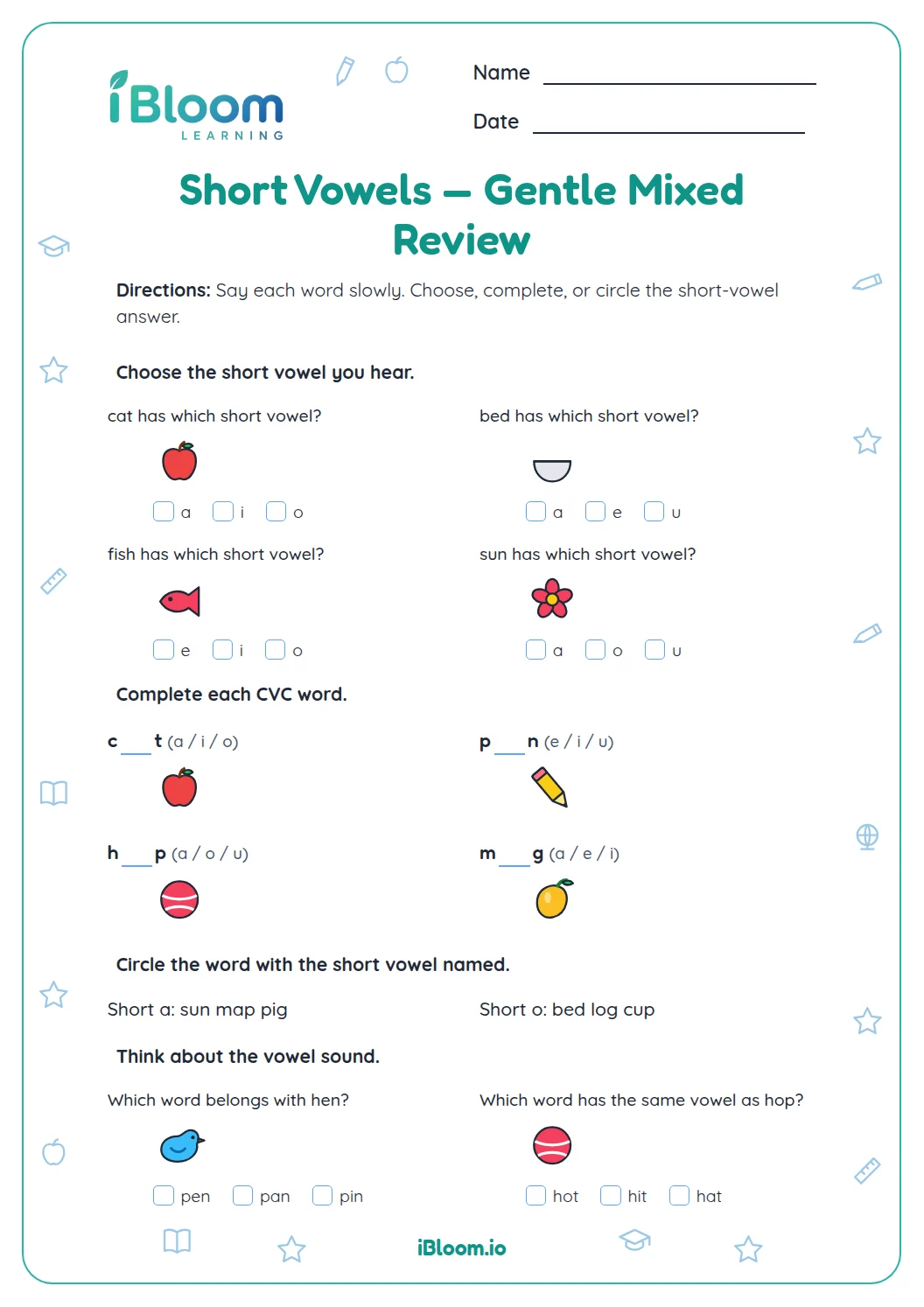
About this worksheet
This free printable beginning blends worksheet is for preschool and kindergarten children who are learning that some words start with two consonant sounds side by side. Part A shows six pictures, such as a crab, a drum and grapes, and children choose the blend each word begins with. Part B shows three pictures with a missing blend, as in ___ail for snail. Part C asks children to draw a flower, a glove and a broom, each one starting with a blend. It supports CCSS RF.K.3.a and L.K.2.d. A short answer key follows the sheet.
Aligned to RF.K.3.a and L.K.2.d
What is a consonant blend?
A consonant blend is two or more consonant letters at the start of a word that each keep their own sound. In crab, you hear /k/ and then /r/. In star, you hear /s/ and then /t/. This is different from a digraph such as sh or ch, where two letters make one new sound.
Beginning blends are everywhere in words children already say, like frog, drum, clock and snail. The sheet uses those words so children can match the sounds they know to the letters they see.
- 1Look at the picture: a crab.
- 2Say the word slowly: c-r-ab.
- 3The first two sounds are /k/ and /r/.
- 4The blend that makes them is cr.
How can I help my child hear both sounds?
Say the word slowly, like pulling a rubber band: sssnnnail. Then say only the beginning, sn, and ask your child to say it with you. Clap or tap once for each sound at the start.
If your child says only one sound, such as "sail" for snail, say the word again slowly and ask, "What sound comes between the s and the ail?" Pointing to the letters while you say them helps children connect sound and letter.
What is on this blends worksheet?
Twelve questions in three parts, from choosing to writing to drawing.
- Part A, Pick the blend: a picture and three choices for crab, drum, clock, star, frog and grapes (questions 1 to 6)
- Part B, Finish the word: write the missing blend for snail, tree and sled (questions 7 to 9)
- Part C, Draw a blend word: a flower, a glove and a broom, each in its own drawing box (questions 10 to 12)
- A matching answer key
Why does the sheet ask children to draw?
Drawing makes children say the word and think about it, which is the same work as hearing the blend. A child who draws a flower while saying "fl-fl-flower" is practicing the sound and the word together. Drawing is also a gentle way to finish a sheet for children whose writing is still developing.
Any clear drawing counts. Ask your child to tell you the first two sounds of the word they drew, and write the blend next to the picture if they want to.
How to use this worksheet at home or in class
- 1Warm up by saying a few blend words aloud, such as frog, drum and star, and clapping the first two sounds.
- 2Read question 1 with your child. Say the picture's name together and point to each choice while you say its sounds.
- 3Let your child finish Part A, saying each word quietly before choosing.
- 4In Part B, say the missing blend aloud before writing it. Accept any letter formation that you can read.
- 5For Part C, say each word and its blend together, then let your child draw. Ask them to tell you about the drawing.
- 6Check with the answer key, and say any missed word again slowly so your child can hear the blend.
Common mistakes and quick fixes
The mistake
Mixing up dr and tr in question 2, because both sound similar at the start of drum and tree.
The fix
Say drum and tree one after the other. Show that the d in drum is a voiced sound, and have your child feel their throat.
The mistake
Writing only one letter in Part B, such as s for snail or t for tree.
The fix
Say the word slowly to find the second sound: s-n-ail, t-r-ee. Remind your child that a blend needs two letters.
The mistake
Choosing a blend that shares the first letter, such as fl for frog in question 5.
The fix
Say the second sound slowly: fr-og. Compare frog with flag, and let your child hear the different second sound.
Common Core alignment
The sheet practices the two standards below.
Match letters to the sounds they make.
On this sheet: Each blend question asks children to connect the first two sounds of a pictured word to the consonant letters that make them.
Show the official wordingHide the official wording
Demonstrate basic knowledge of one-to-one letter-sound correspondences by producing the primary sound or many of the most frequent sounds for each consonant.
Spell simple words by listening for their sounds.
On this sheet: In Part B children write the blend that completes snail, tree and sled by listening for the first two sounds.
Show the official wordingHide the official wording
Spell simple words phonetically, drawing on knowledge of sound-letter relationships.
What to practice next
Make more practice
Further reading
Questions parents and teachers ask
What age is this blends worksheet for?
It is made for preschool and kindergarten children who know most consonant sounds and are ready to hear two sounds at the start of a word. A grown-up can read the instructions and words aloud, and children do the choosing, writing and drawing.
What is the difference between a blend and a digraph?
In a blend, each consonant keeps its own sound, as in the /s/ and /t/ of star. In a digraph, two letters make one new sound, as in the sh of ship. This sheet covers blends only. The digraph sheet is a good next step.
My child cannot write the letters yet. Can we still use it?
Yes. Part A needs only a mark, and Part C is drawing. For Part B, let your child say the blend aloud while you write it, or help them trace it. Any readable letters count, and the key shows the blend for each word.
Why are there pictures instead of written words?
Young children are still learning to read, so a picture lets them hear the word without having to decode it first. The sounds come from the word they say aloud, and the letters are what they learn to connect to those sounds.
What should my child draw in Part C?
A flower, a glove and a broom, one in each box. Any clear picture is fine, even a simple one. The goal is to say the word, hear its first two sounds, and think about the object. The answer key describes what a good drawing shows.
How long does it take, and is there an answer key?
Most children finish in about 15 minutes. Yes, an answer key follows the worksheet with the blend for each picture and a note on what each drawing should show. Print the sheet alone for your child, then add the key page for your own checking.