


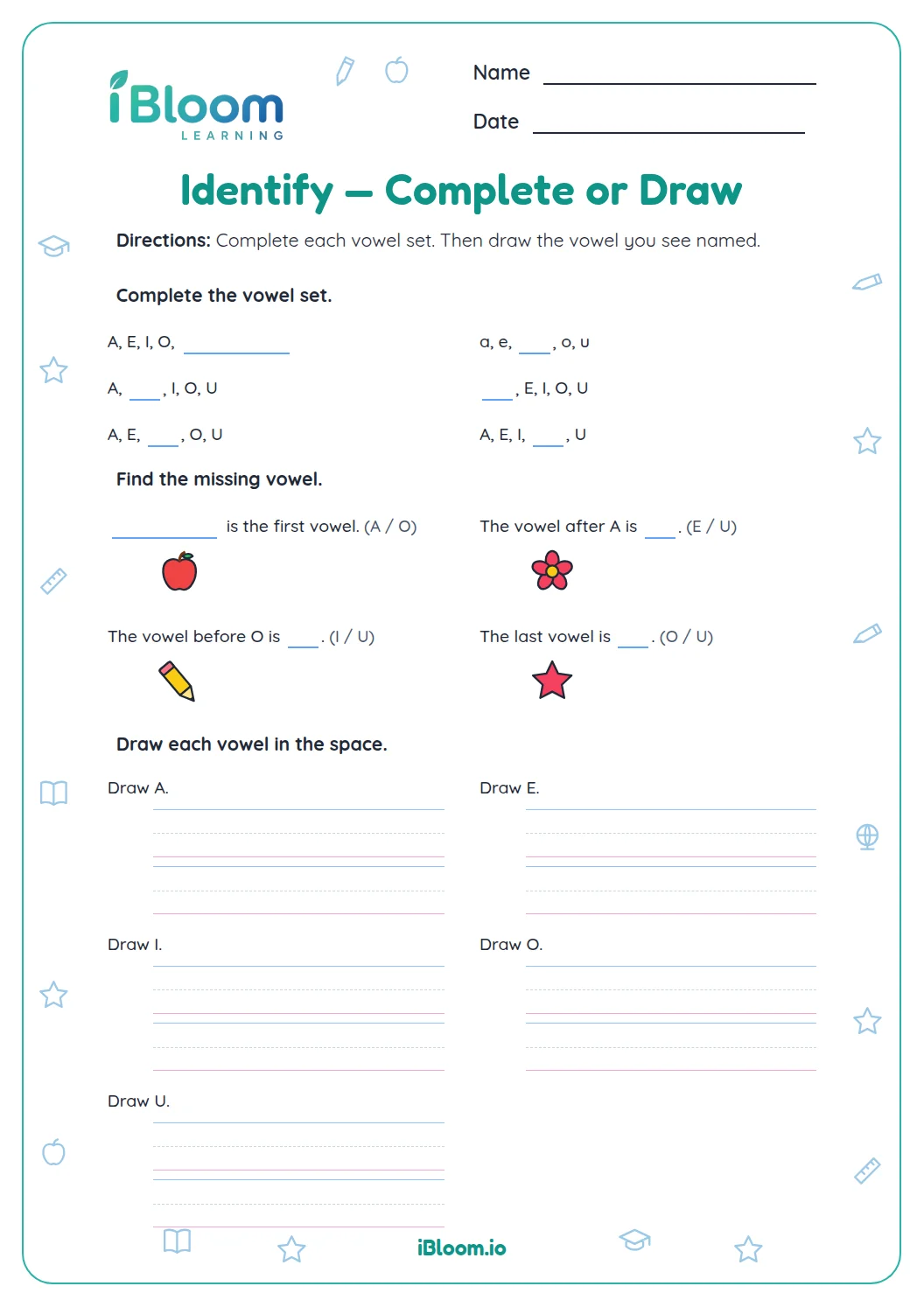
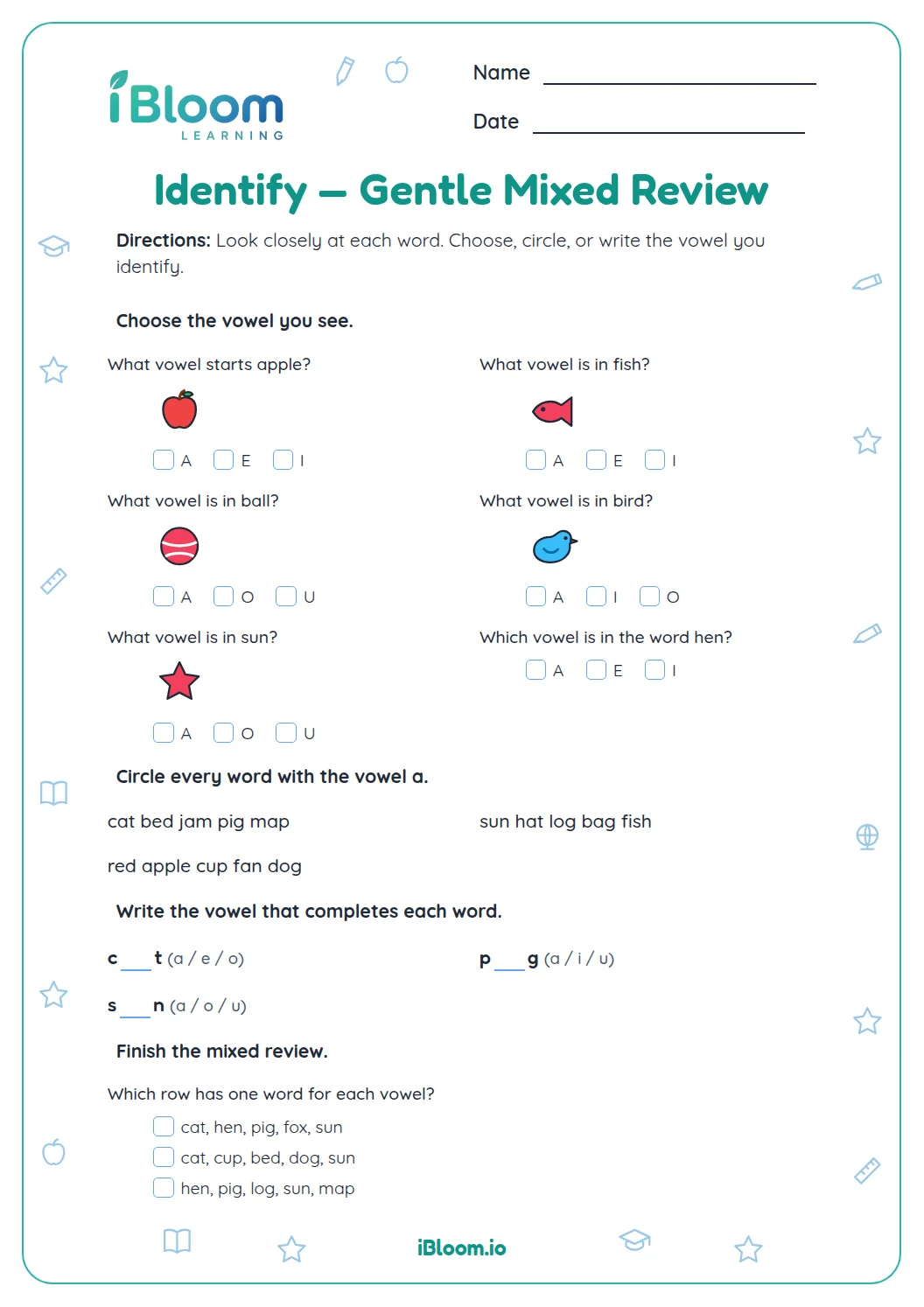
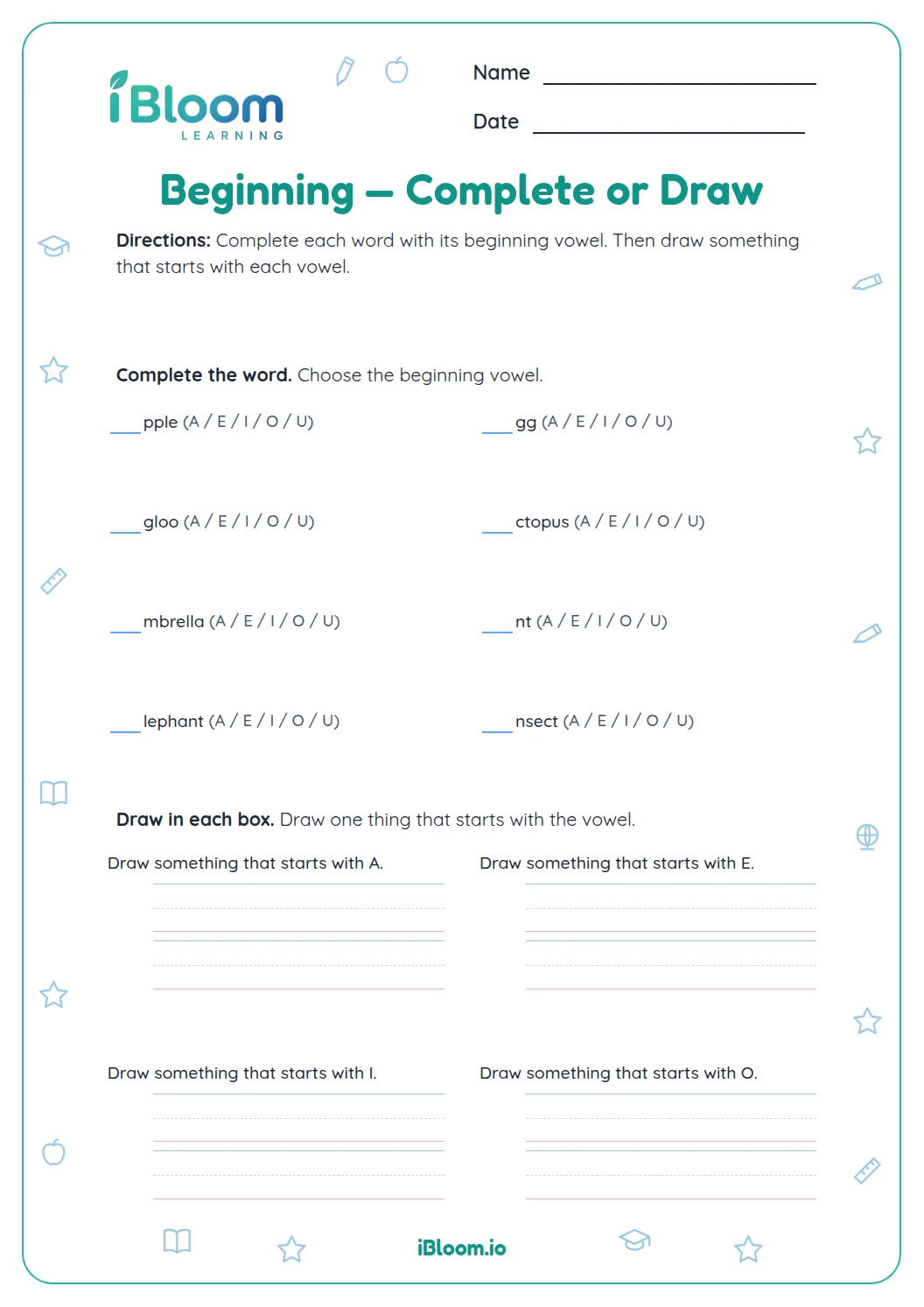
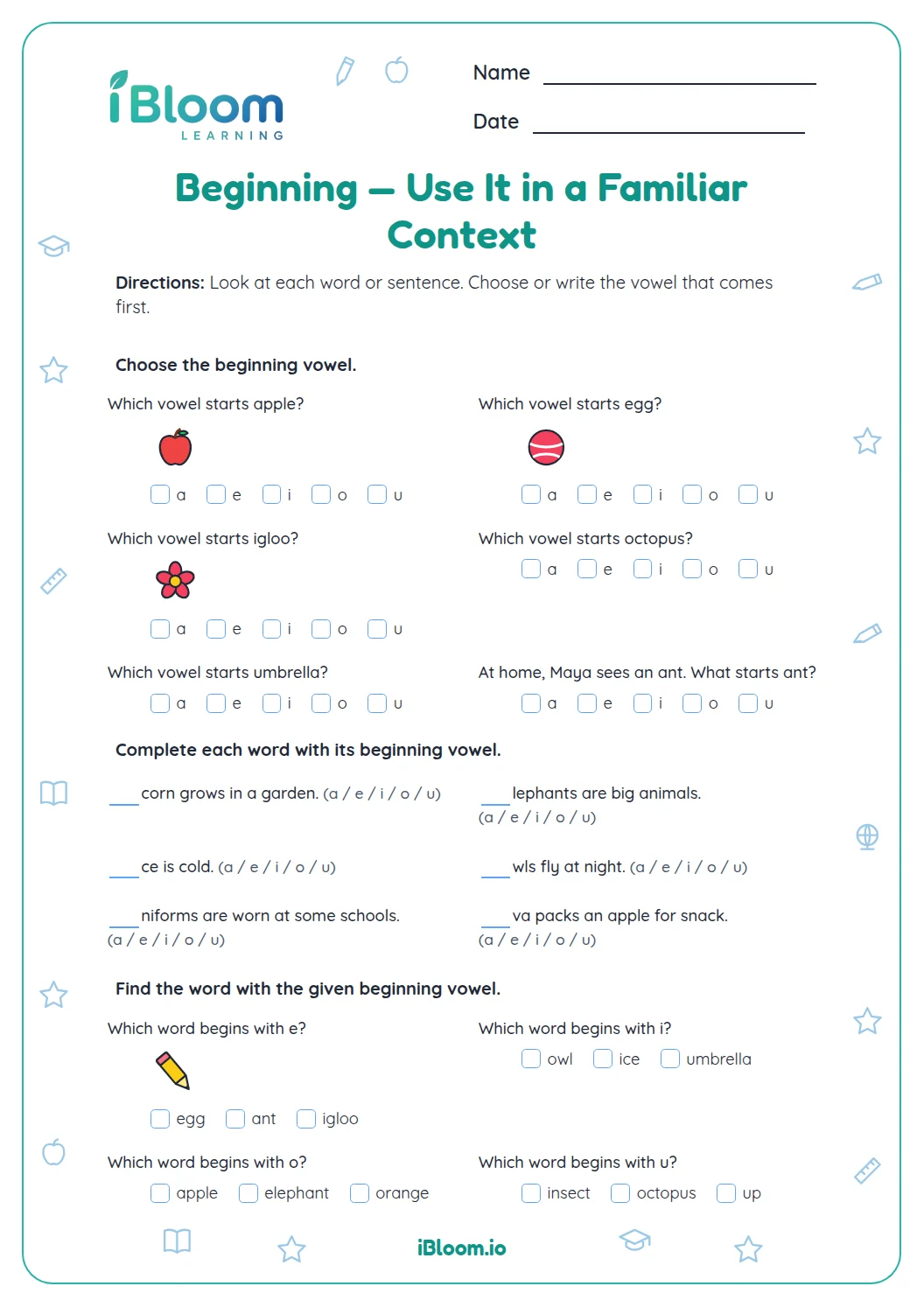



About this worksheet
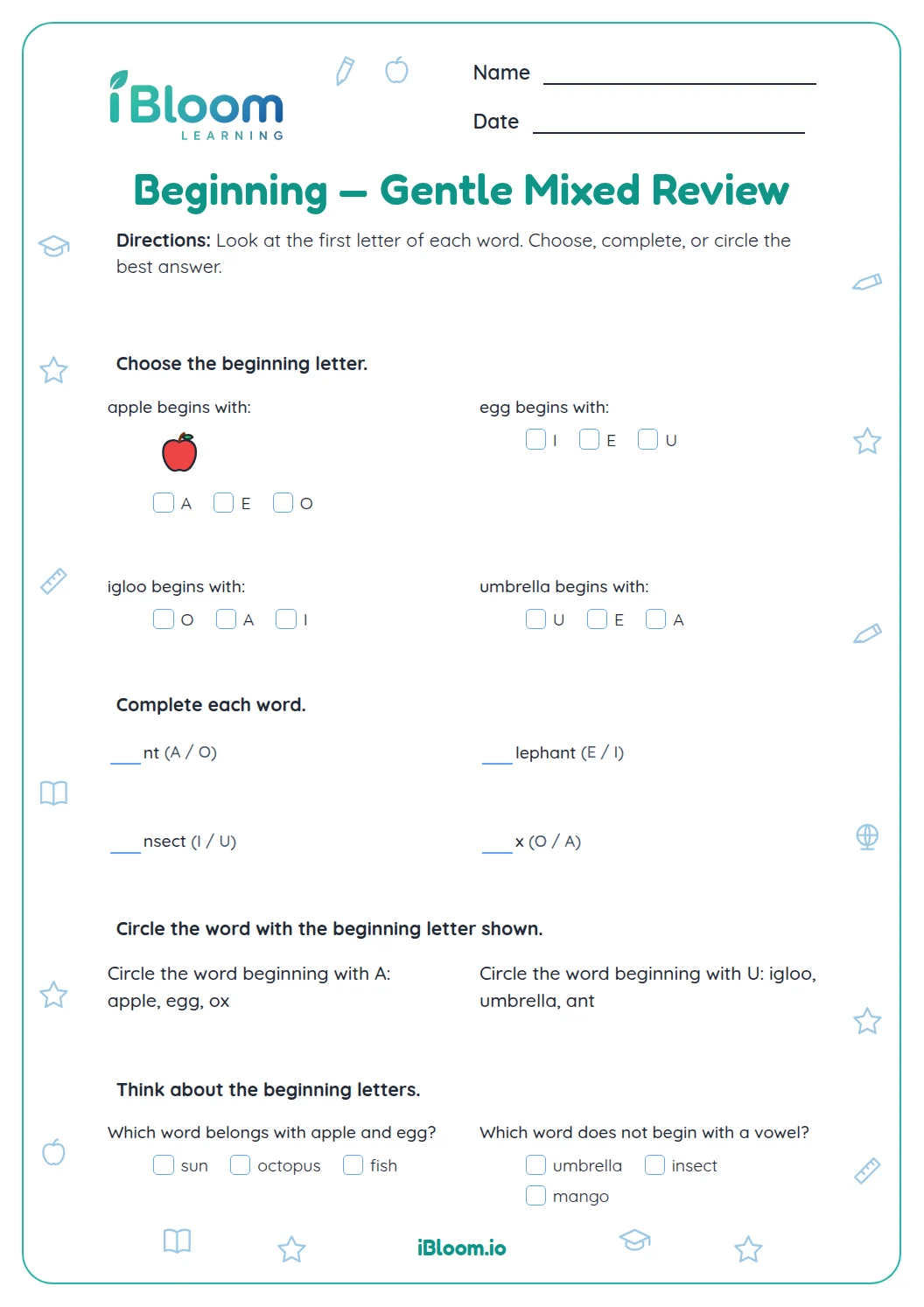
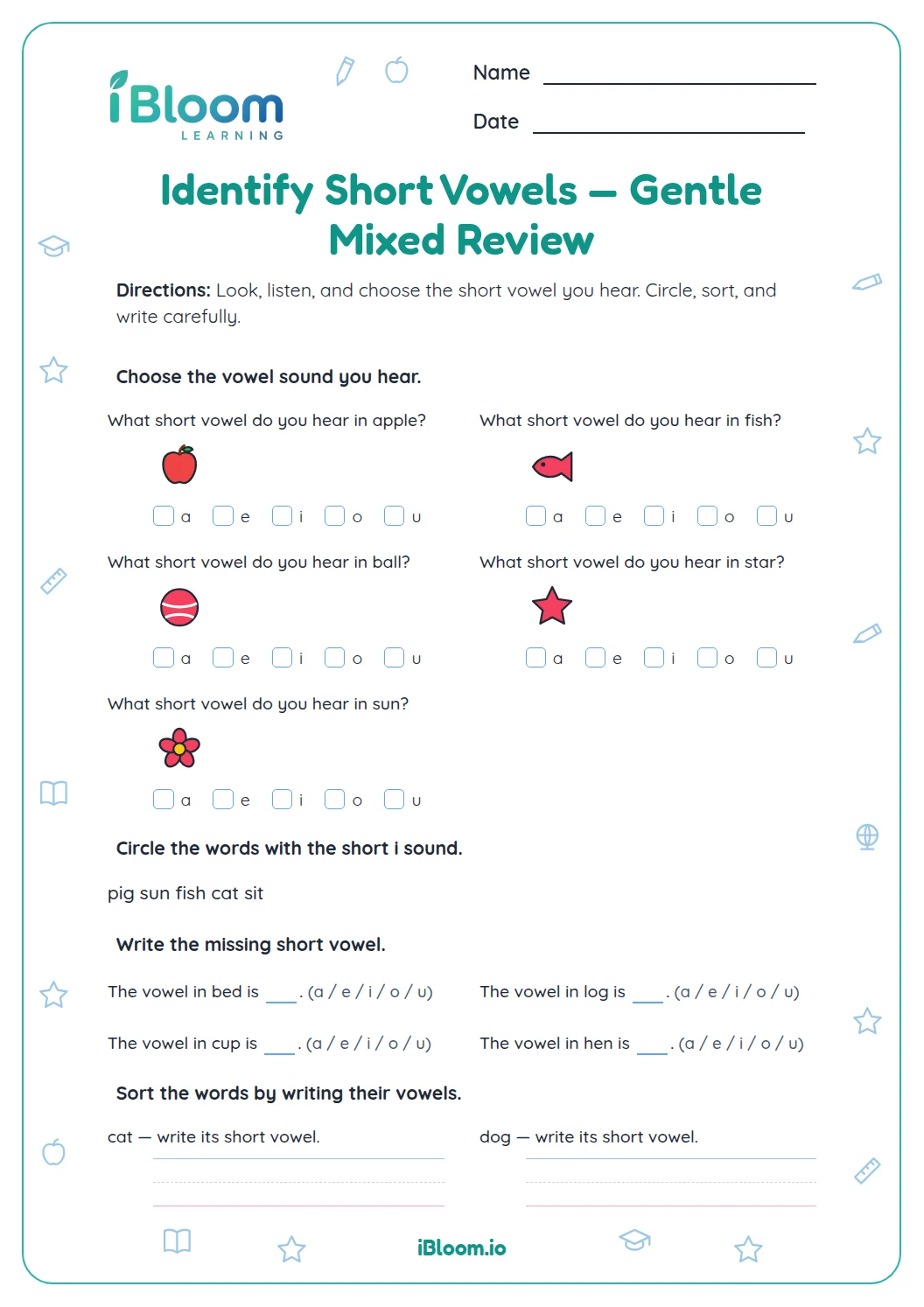
This picture-based worksheet helps preschool and kindergarten learners say familiar names and listen for the first sound. Children choose pictures beginning with vowel sounds, compare vowel and consonant starts, and share a word of their own. The practice focuses on hearing initial sounds in spoken words. A separate key identifies the picture choices.
Aligned to RF.K.2.d
How can a child hear a vowel at the start of a word?
Say the picture name aloud and listen to its first sound. For apple, the first sound is a vowel; for ball, it is a consonant.
- 1Say each name. Which begins with a vowel sound? → apple
How do picture choices help with vowel sounds?
Comparing two names makes the first sound easier to notice. Say both words before choosing, and focus on the sound rather than the picture’s color or shape.
- 1Which picture begins with /e/? → egg
What can a child do after choosing a picture?
The final items invite children to circle a picture or name a new word that starts with a vowel sound. They can say the answer aloud before writing it.
- 1Say a word that begins with a vowel sound. → Sample: apple
How to use this worksheet
- 1Name each picture aloud.
- 2Stretch the first sound gently.
- 3Listen for a, e, i, o, or u.
- 4Compare both choices.
- 5Say the selected word again.
Common mistakes and quick fixes
The mistake
Mistake.
The fix
Choosing by the picture’s color. Fix: say its name and listen to the first sound.
The mistake
Mistake.
The fix
Listening to the last sound. Fix: say the word slowly from its beginning.
The mistake
Mistake.
The fix
Treating every vowel letter as the same sound. Fix: focus on the first sound in the spoken word.
Common Core alignment
This page connects the worksheet practice to a Common Core skill.
Listen for and identify the initial vowel sound in familiar picture names.
On this sheet:
Show the official wordingHide the official wording
Isolate and pronounce the initial, medial vowel, and final sounds (phonemes) in three-phoneme (consonant-vowel-consonant, or CVC) words.
What to practice next
Further reading
Questions parents and teachers ask
What does this vowel worksheet ask children to listen for?
Children say familiar picture names and identify words that begin with vowel sounds. They also compare vowel starts with consonant starts and name a vowel-starting word. Picture names are part of the sound task, so say them aloud first.
Should a child name each picture aloud?
Yes. The picture is a clue to a spoken word, so naming it first is part of the task. If a child calls a picture by another name, use the intended familiar name and listen to that first sound. The choices include clear examples such as egg, island, and umbrella.
Does the sheet cover long and short vowel spellings?
The prompts focus on the first sound heard in each picture name. Children listen to spoken words such as egg, island, and umbrella, then identify their initial vowel sounds. Saying each word aloud helps connect the picture to the sound.
How can I help without giving away an answer?
Ask the child to say both picture names slowly. Then ask what sound comes first in each word and let the child choose the one that starts with a vowel. Naming both pictures helps children compare their initial sounds.
Can the final answer be spoken instead of written?
Yes. The last prompt accepts an oral response, and its key entry is a sample word. Children may give another familiar word that begins with a vowel sound. The answer key identifies the intended name for each picture.