






About this worksheet
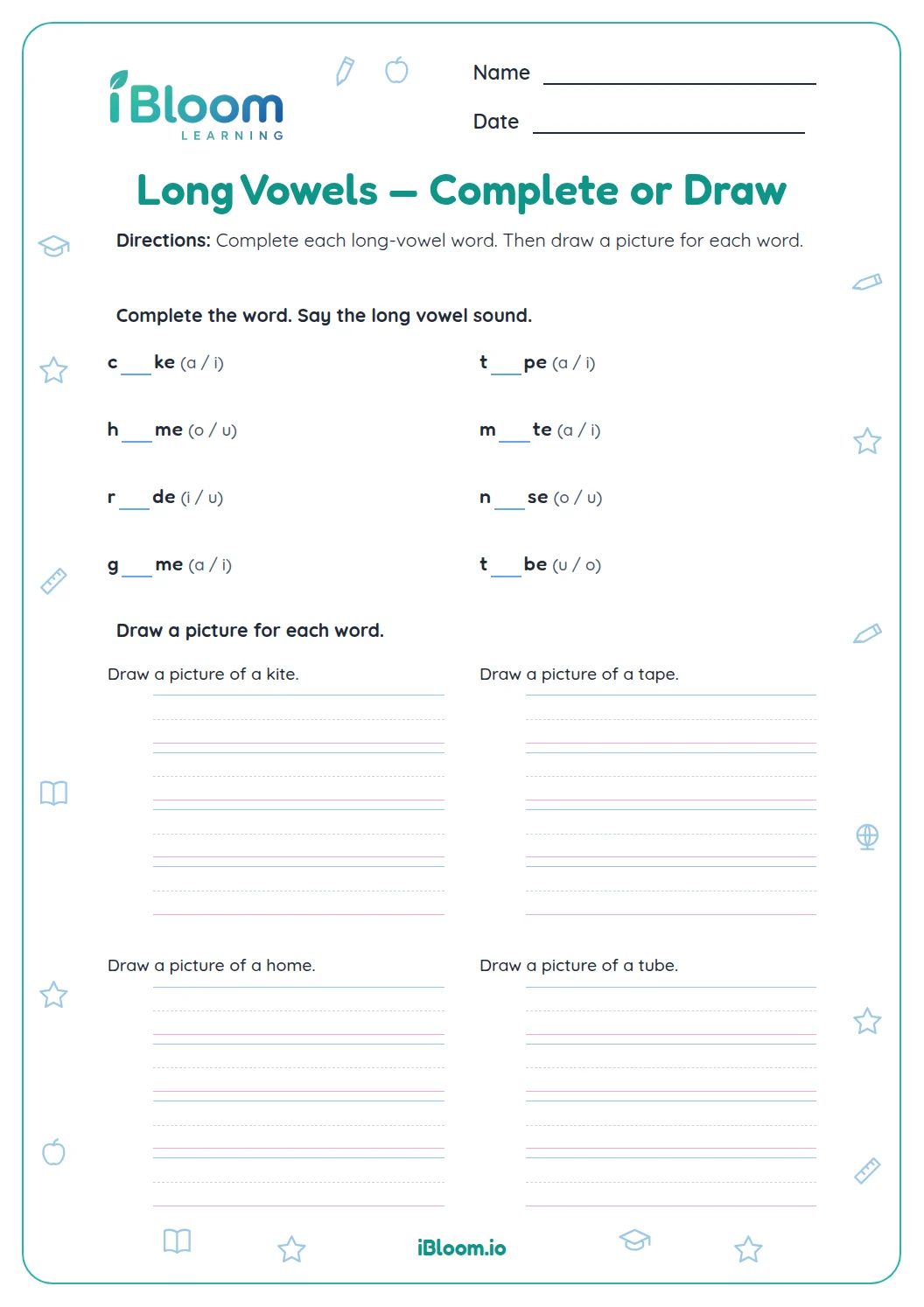
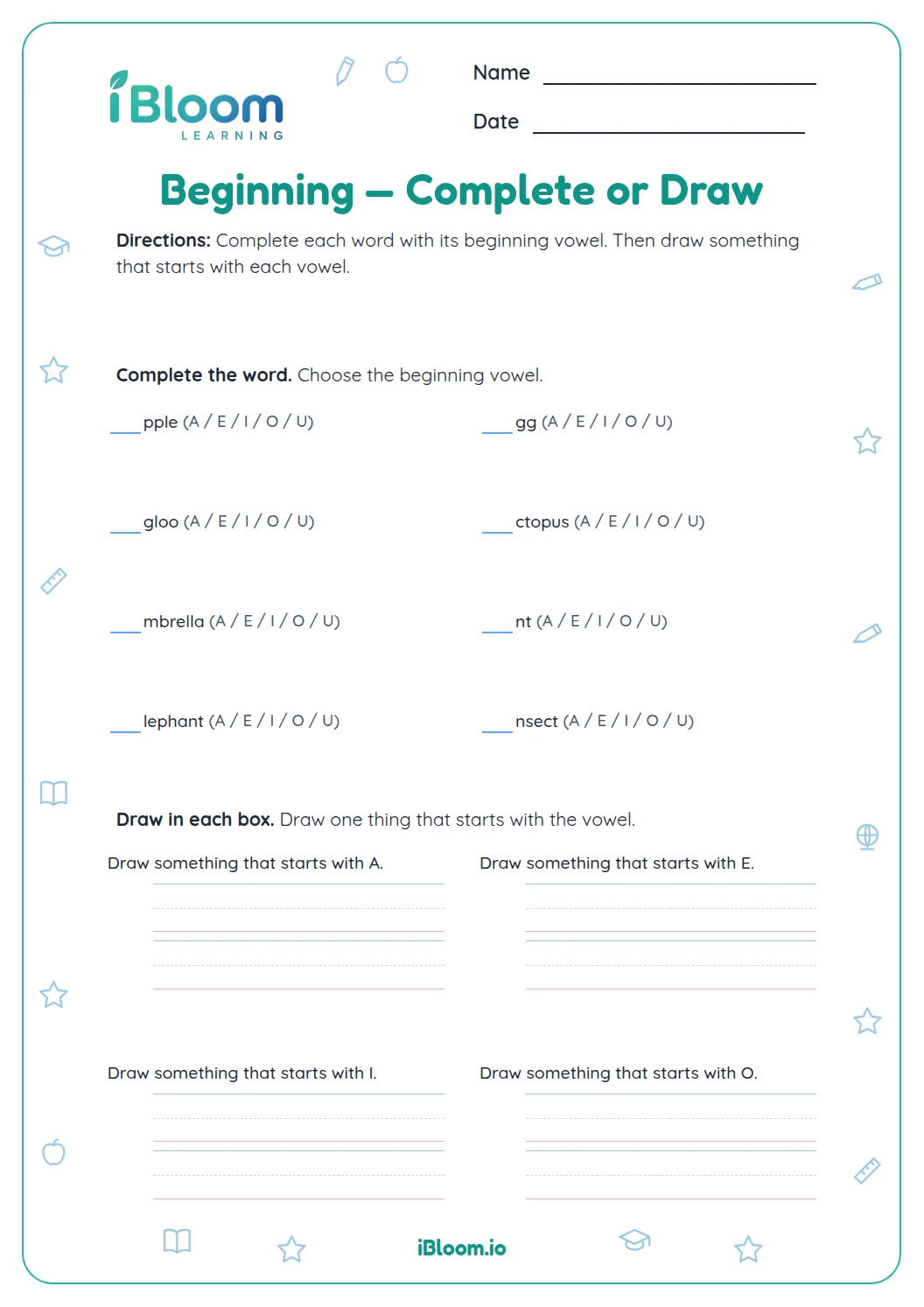
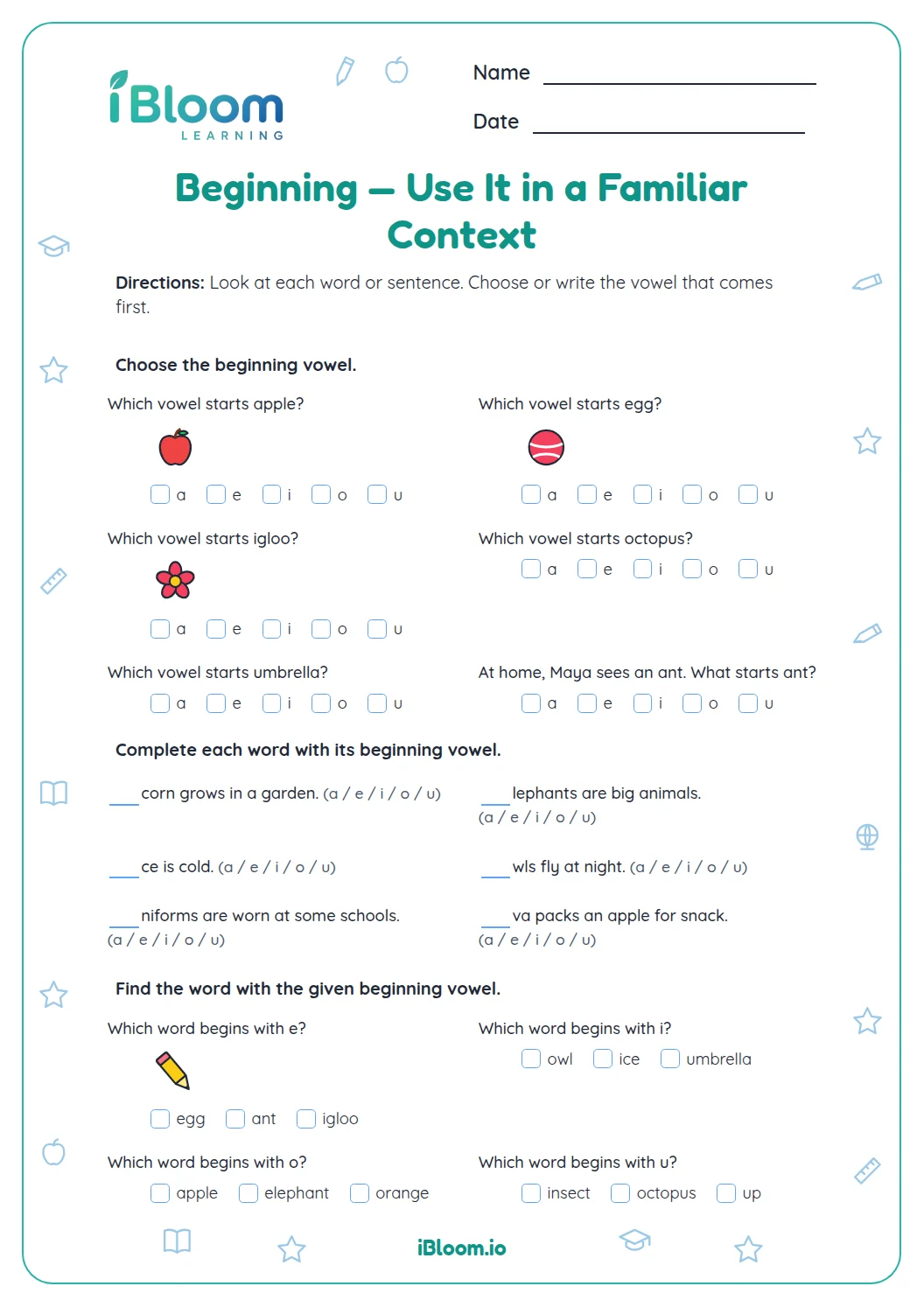
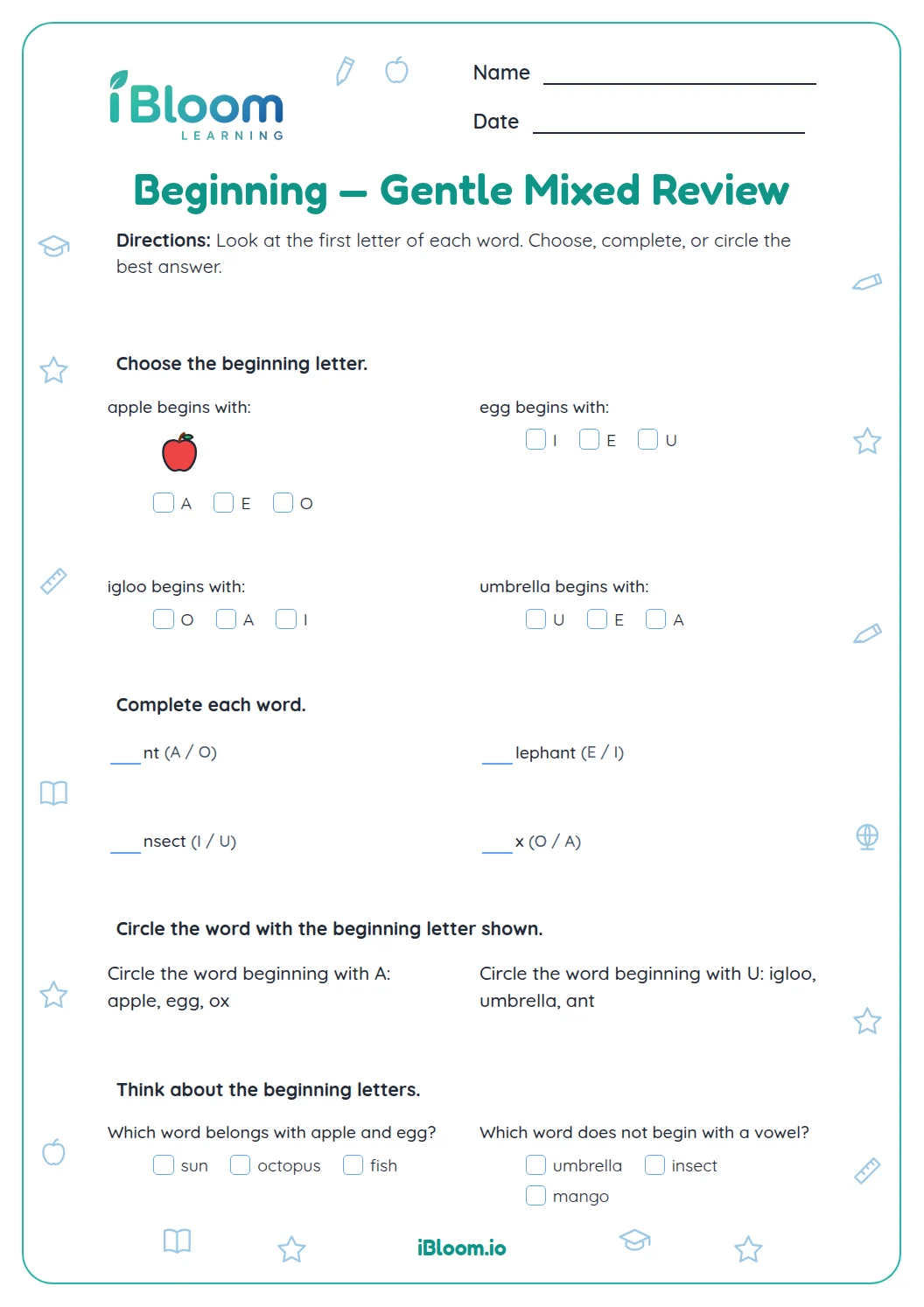
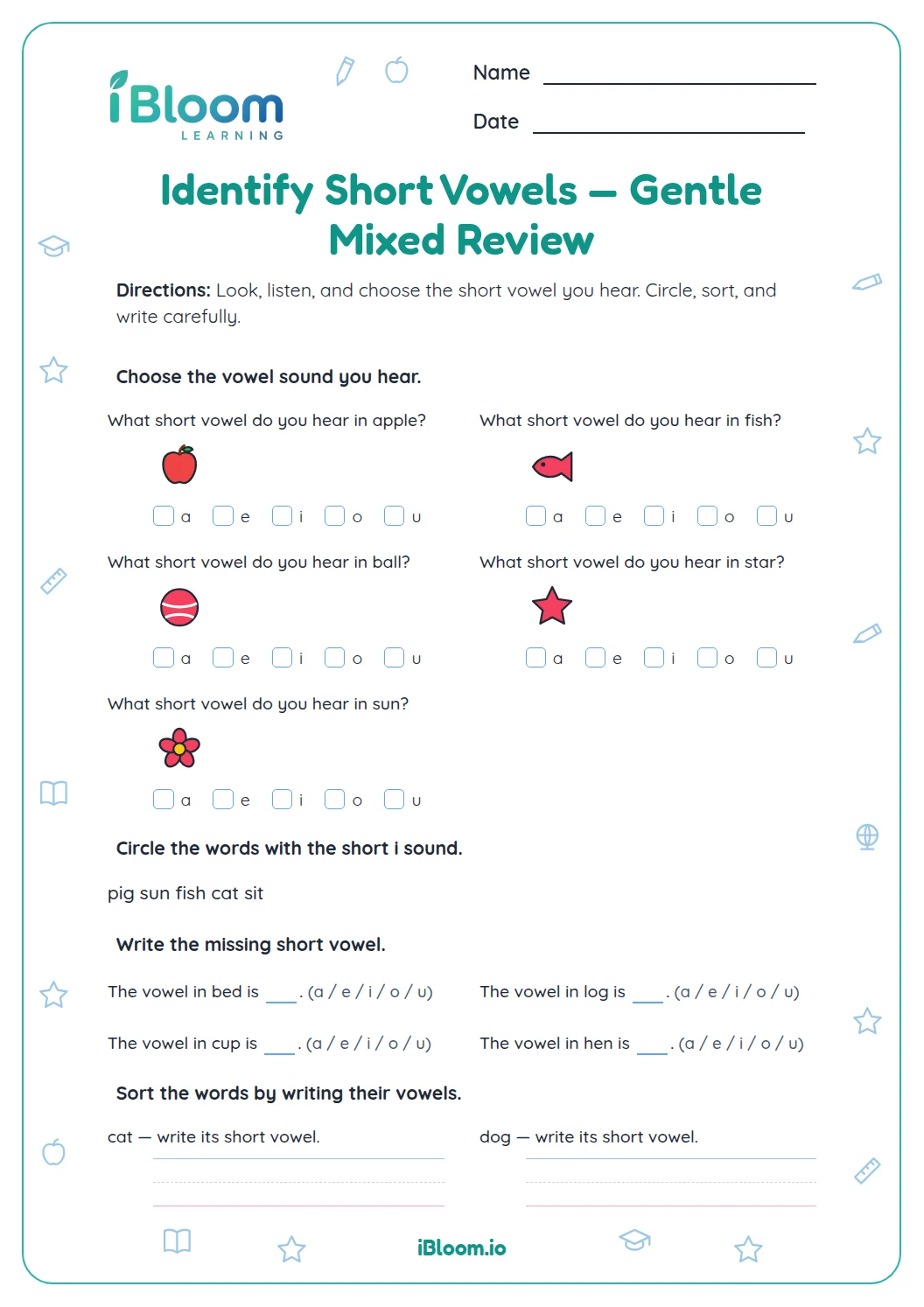
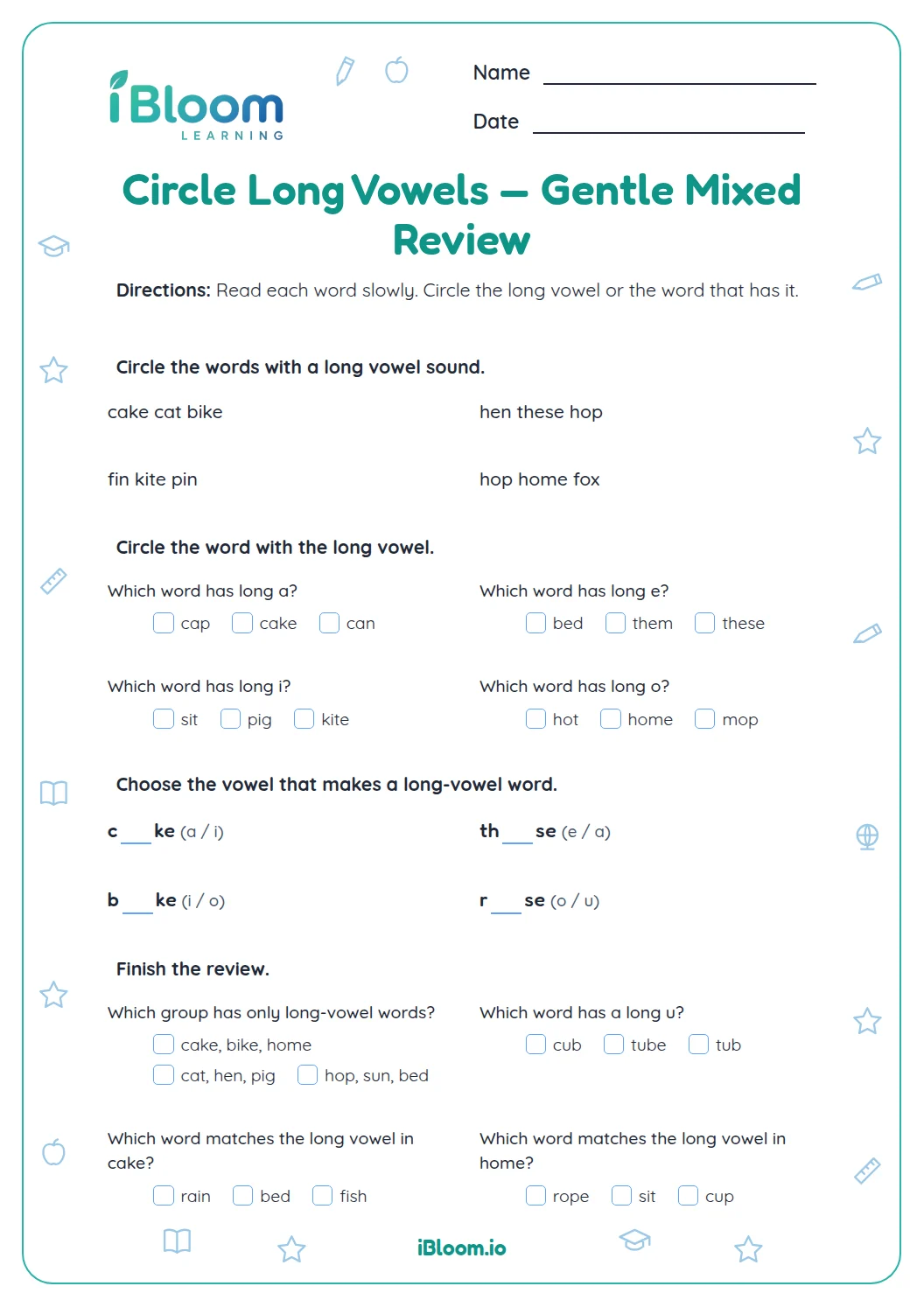
This free printable is for preschool and kindergarten learners practicing long vowels. Children name picture clues, choose words with long a, e, i, o and u, and identify the vowel sound in familiar words. It practices Common Core RF.K.3b by connecting long vowel sounds with common spellings. The sheet has 14 items with picture support and a separate answer key.
Aligned to RF.K.3b
How can children listen for a long vowel?
Say cake slowly and say the vowel sound: /ā/. Then say seed, bike, rose, and cube. Each word has a vowel that says its name. The picture clues help children connect a familiar object with its spoken word.
Question 1 asks children to name the long vowel heard in the pictured word cake. The answer is a.
- 1Name the picture: cake
- 2Say it slowly: c-ā-ke
- 3The long vowel sound is a.
Why are picture names part of the practice?
A picture gives a young learner a concrete word to say before deciding which sound to listen for. If the name is unfamiliar, an adult can say it first and invite the child to repeat it.
How does the review build confidence?
The worksheet begins with picture-supported vowel choices, then asks learners to select among picture names and identify vowels in familiar short words. Keep the pace relaxed and say the words aloud together.
How to use this worksheet
- 1Name each picture aloud.
- 2Say the vowel sound in the word.
- 3Choose the vowel sound that matches.
- 4For picture choices, say every option before deciding.
- 5Review missed items by modeling the word slowly.
Common mistakes and quick fixes
The mistake
Choosing the first vowel letter seen rather than the long sound.
The fix
Say the whole word and listen for the vowel that says its name.
The mistake
Mixing up the picture name.
The fix
Have an adult model the printed word, then let the child repeat it.
The mistake
Guessing from the last letter.
The fix
Stretch the vowel sound in the spoken word before choosing.
Common Core alignment
This page links spoken long-vowel sounds to familiar printed words and picture names.
Connect common long-vowel sounds with their spellings.
On this sheet: Learners hear the long vowel in familiar picture names and identify the vowel that represents it.
Show the official wordingHide the official wording
Associate the long and short sounds with the common spellings (graphemes) for the five major vowels.
What to practice next
Make more practice
Further reading
Questions parents and teachers ask
What is a long vowel sound?
A long vowel sound is the vowel’s name, as in the a sound in cake or the i sound in bike. Say each familiar picture name slowly and listen for the vowel sound. The practice connects hearing the sound with choosing or naming its letter.
How does the worksheet use pictures?
The first questions show picture clues such as cake, bee, bicycle, rose, and unicorn. Another part offers picture choices for each long-vowel sound. An adult can say each pictured word aloud so the child can listen before choosing. Naming the picture first helps make the sound clear.
What if a child names a picture differently?
Say the intended word together and point to the picture. If the child uses another valid name, accept the response only when that spoken word has the target long-vowel sound. Otherwise, model the word printed in the prompt and listen again.
Why include both listening and letter choices?
Listening helps children hear the vowel sound in a spoken word. Choosing or naming the vowel connects that sound to a letter. Moving between picture names, word choices, and short responses gives a gentle review of sound and spelling. The learner can say the word, hear the sound, and then name the letter.
Is this suitable for preschool and kindergarten?
Yes. The practice uses familiar picture names, simple choices, and short word prompts. An adult can read directions aloud and help a preschool learner name each picture. A kindergarten learner can try the choices and vowel responses more independently. Short prompts leave room for an adult to model the sound.
Is there an answer key?
Yes. The separate key lists the expected vowel choices and short responses. For picture items, it identifies the intended pictured word; for the last part, it gives the vowel that says its name in each word. The final five prompts name the target word directly.