






About this worksheet
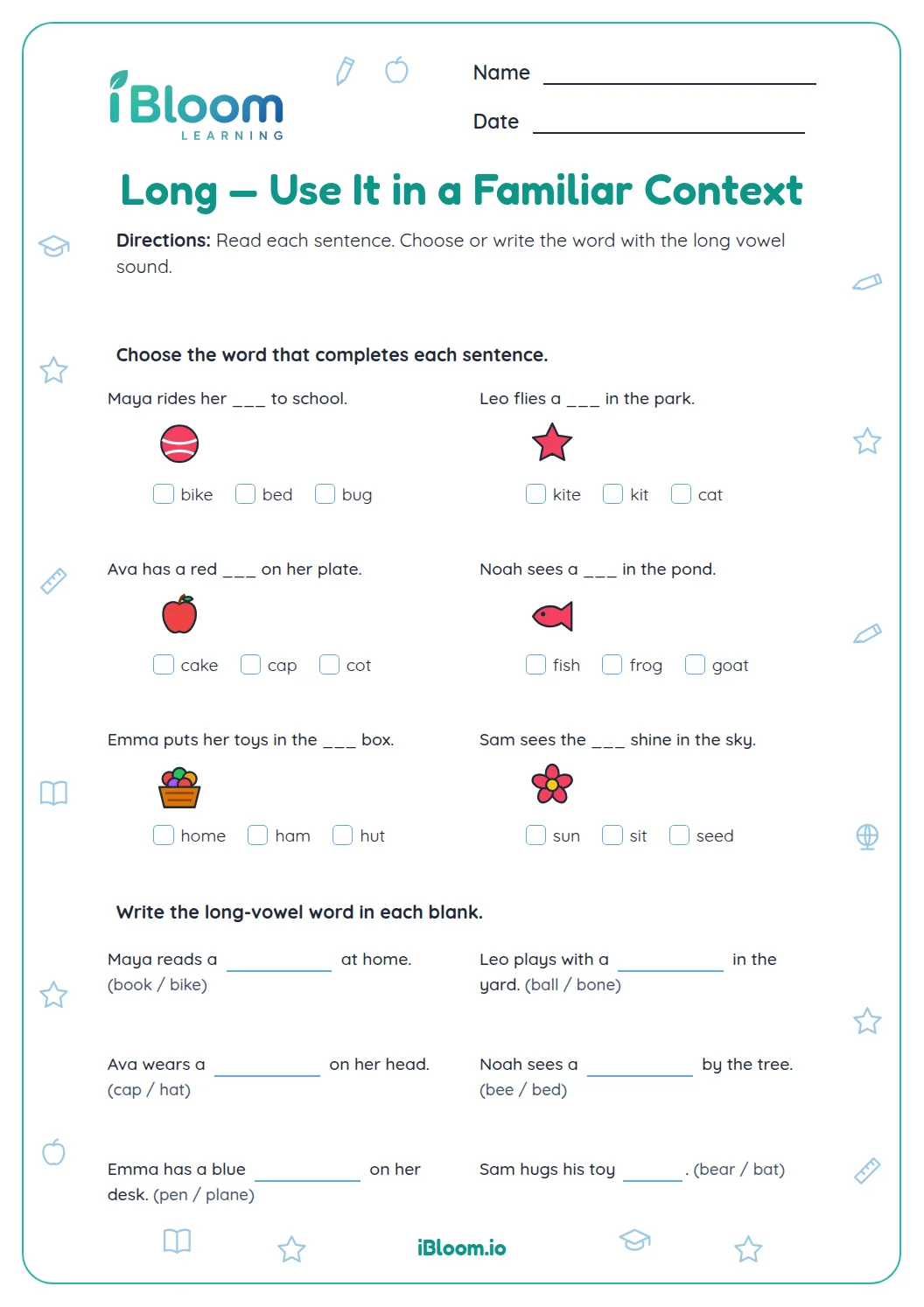
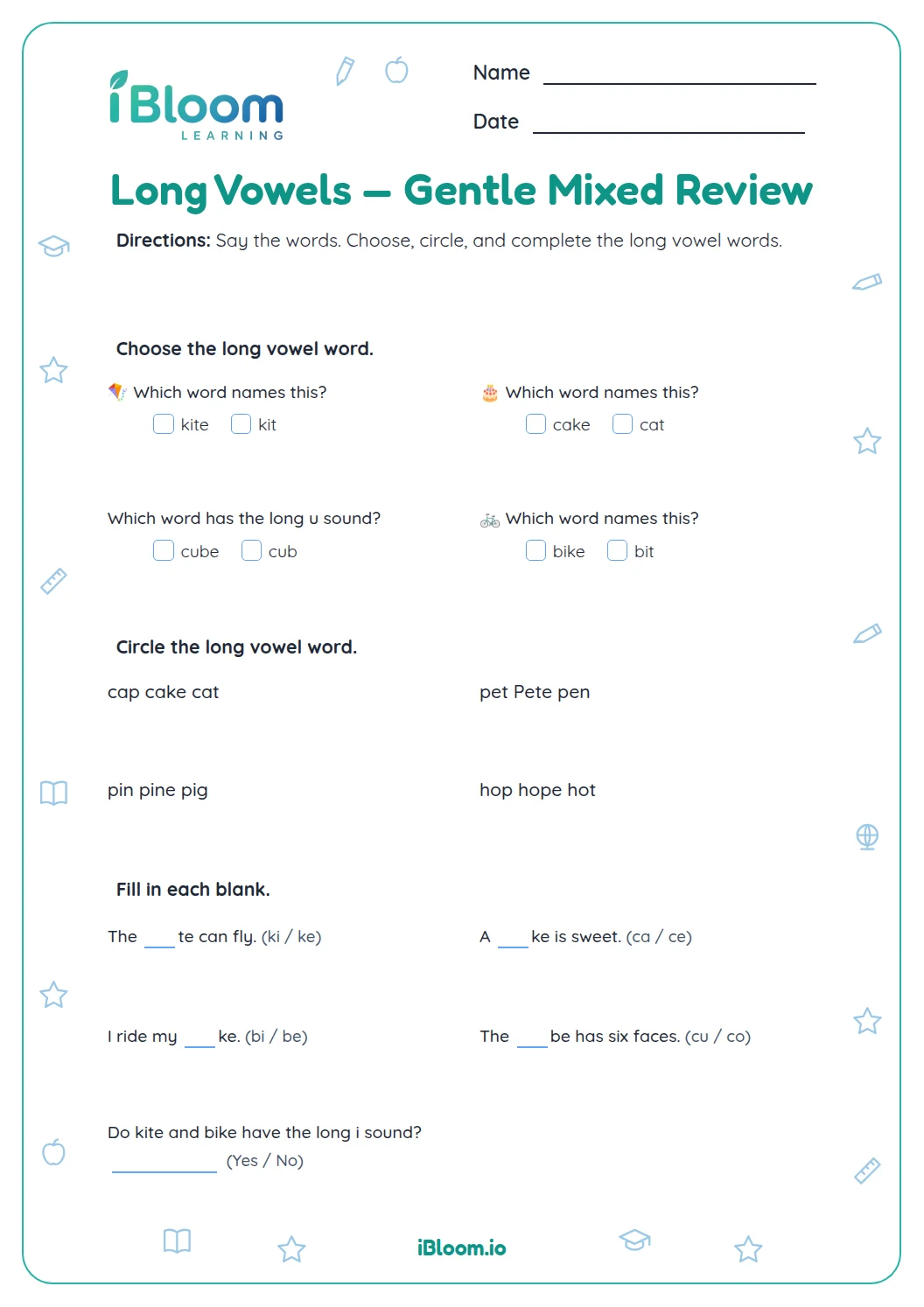
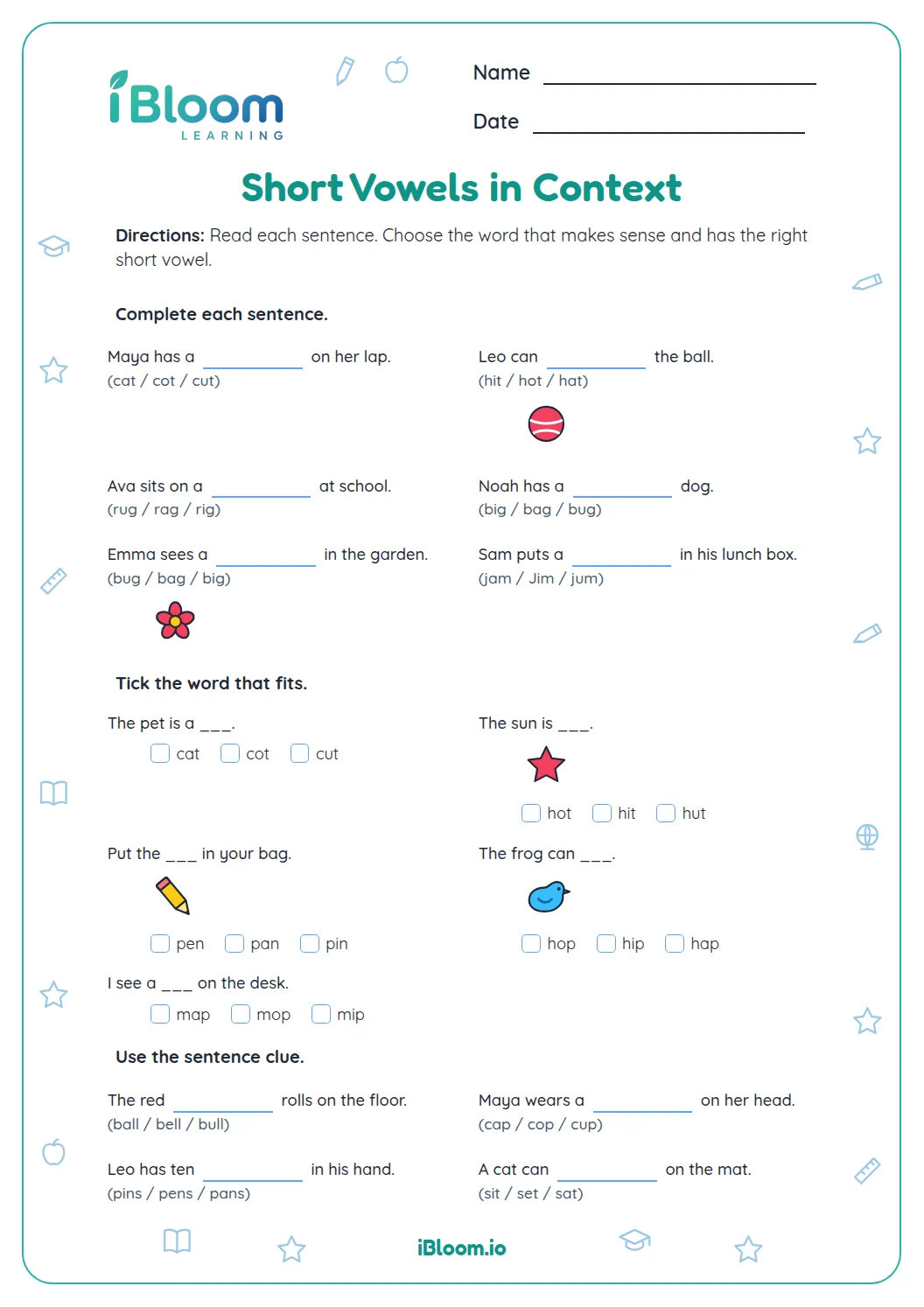
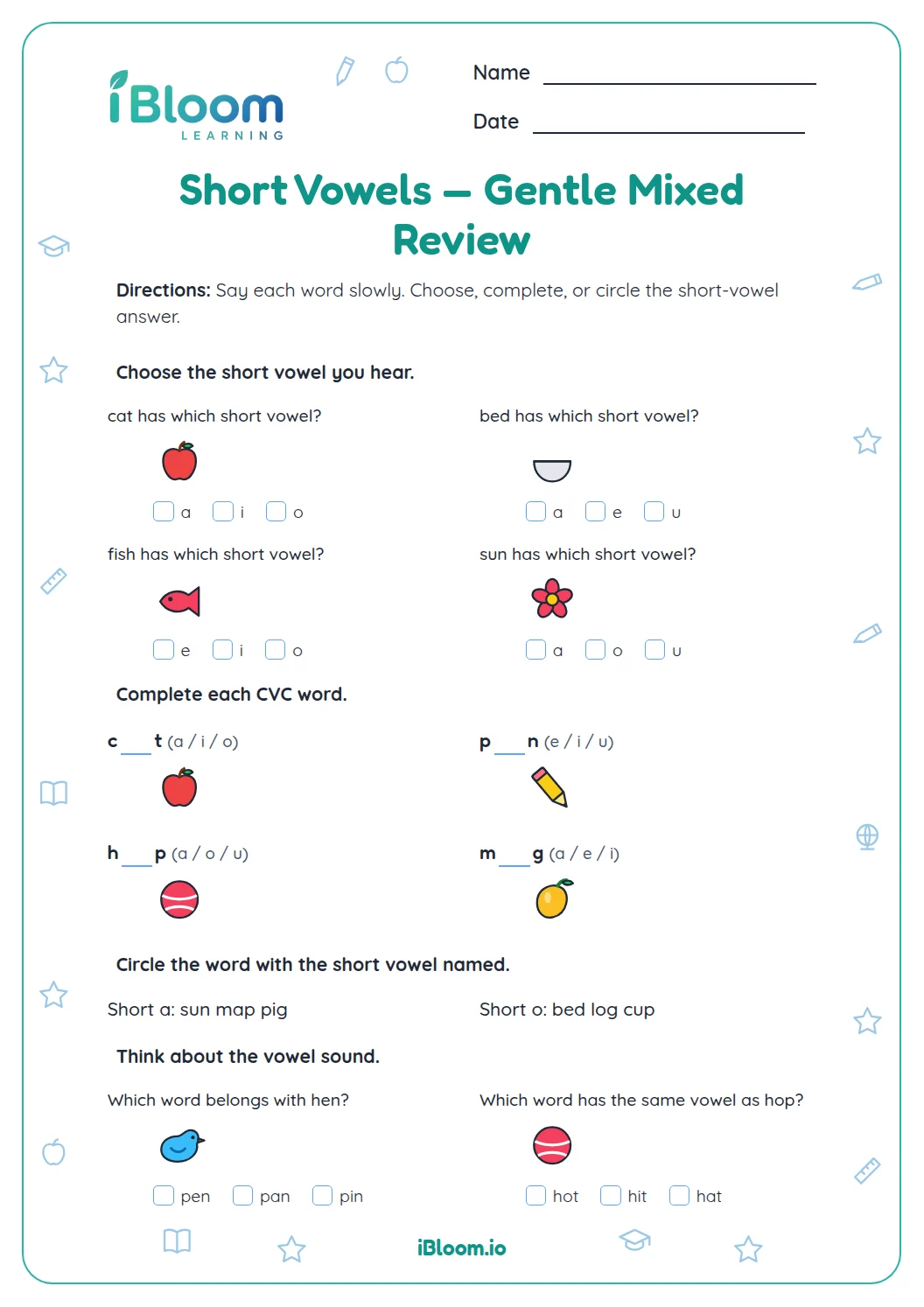
This printable long-vowel worksheet is designed for preschool and kindergarten learners. Each of its 16 items pairs a familiar sentence with a picture clue and three word choices, such as riding a bike, flying a kite, or eating pie. Children choose the word that names the pictured object and completes the sentence. The answer key lists the target words. This connects long vowel sounds with common spellings, as described in CCSS RF.K.3.b.
Aligned to RF.K.3.b
What is a long vowel sound?
A long vowel says the vowel’s name, as in the a in cake or the i in kite. Each worksheet item pairs a picture with a familiar sentence and three word choices.
- 1Maya rides a ___ at the park. The bike picture points to bike, which completes the sentence.
How should a child use the picture clue?
First name the pictured object aloud. Then compare the choices and read the sentence with the matching word. The sentence context and picture work together to identify the word.
What is a helpful way to check the choice?
Say the word slowly and listen for the vowel sound. Then look at the letters and read the full sentence. The printed key lists the target word for each of the 16 pictures.
How to work through this page
- 1Name the object in the picture.
- 2Say the word and listen for the vowel sound.
- 3Read each choice and find the pictured word.
- 4Read the completed sentence aloud.
- 5Check the target word in the answer key.
Common mistakes and quick checks
The mistake
Choosing a word because it starts with the same sound.
The fix
Check that it names the picture and completes the sentence.
The mistake
Listening to only the first sound.
The fix
Say the whole word and listen to its vowel sound.
The mistake
Guessing from the picture without checking the letters.
The fix
Read the word choices and match the pictured name.
Common Core alignment
This worksheet practices the following Common Core skill.
Connect long vowel sounds with their common spellings.
On this sheet: Picture clues prompt children to choose words with the matching long vowel sound.
Show the official wordingHide the official wording
Associate the long and short sounds with the common spellings (graphemes) for the five major vowels.
What to practice next
Make more practice
Further reading
Questions parents and teachers ask
What is a long vowel sound?
A long vowel sound says the vowel’s name, as in the a in cake or the i in kite. Each item on this page pairs a picture with a short sentence and three written choices. Children select the word that names the pictured object and completes the sentence.
How should my child use the picture clue?
First name the pictured object aloud. Then read each choice and see which word names that object. Finally, place the word in the sentence and read it aloud. The picture and sentence context support the word choice while the spelling shows the vowel pattern.
Are the choices words or sounds?
The choices are complete words, not isolated sounds. Children match a pictured object such as a bike, rose, or goat to its written name in a sentence. An adult may read the choices aloud while the child listens for the long vowel sound.
What if my child chooses a short-vowel word?
Say both the pictured word and the selected word slowly. Listen for whether the vowel says its name, then check that the word actually names the picture and fits the sentence. Looking at the letters after listening helps connect the sound to its common spelling.
What should we practice next?
Try the related long-vowel page to identify the sound in more words, then compare a long-vowel set with short-vowel examples. Keep asking your child to say the word before choosing so the sound, picture, and spelling stay connected. That keeps the next step connected to this page.