
About this worksheet
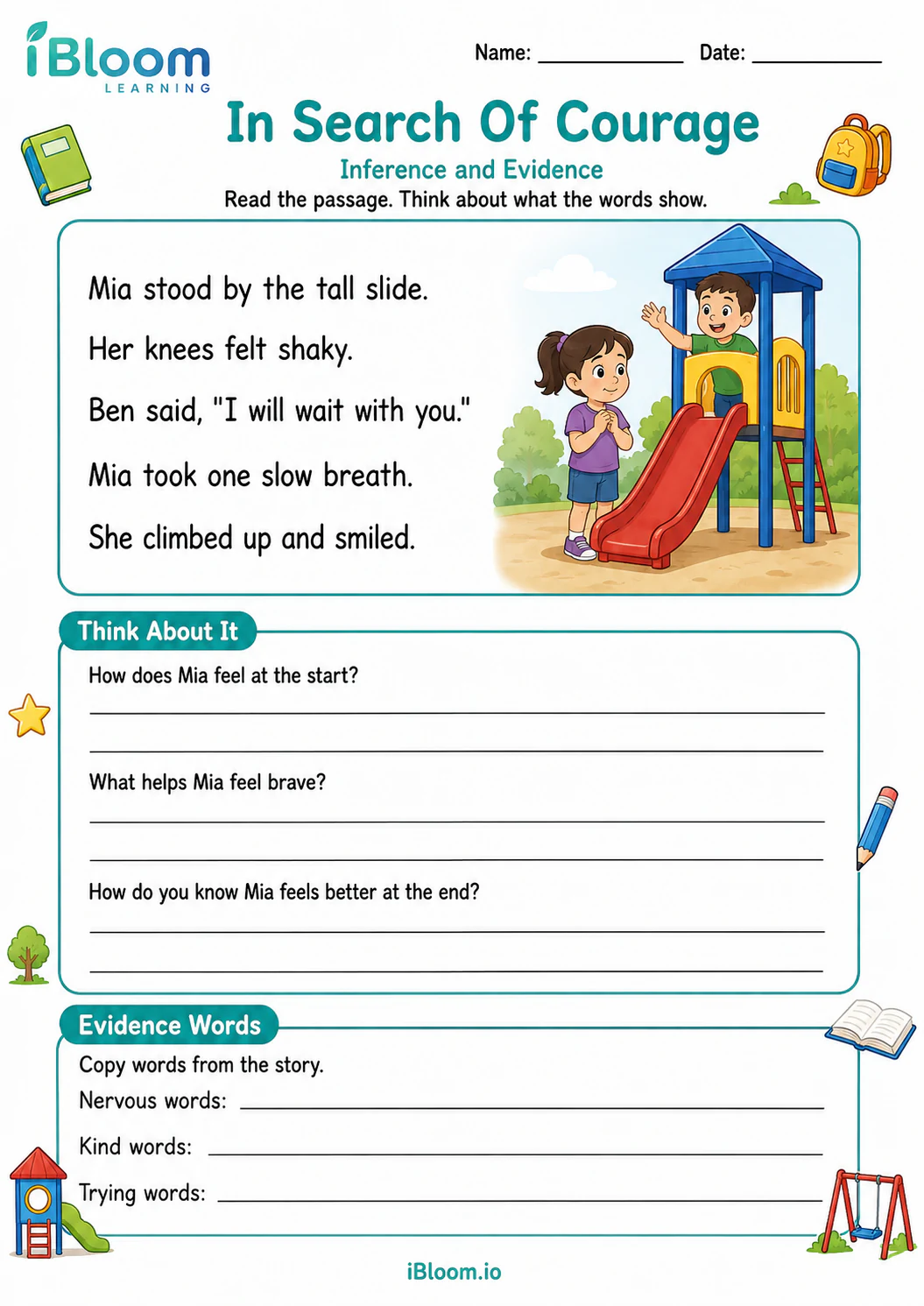
This free Grade 1 reading worksheet pairs an original 79-word story, “A Visit to the Water Park,” with ten written questions. Maya visits with Dad, enjoys the splash pool and tries a slide even though she feels scared. Part A presents the story. Part B asks for four brief details, and Part C asks for six short sentences about events, feelings and evidence. The final questions connect Maya’s actions and words to her feelings about the visit. Common Core RL.1.1 supports answering questions about key details. A separate answer key provides details and sample responses.
Aligned to RL.1.1
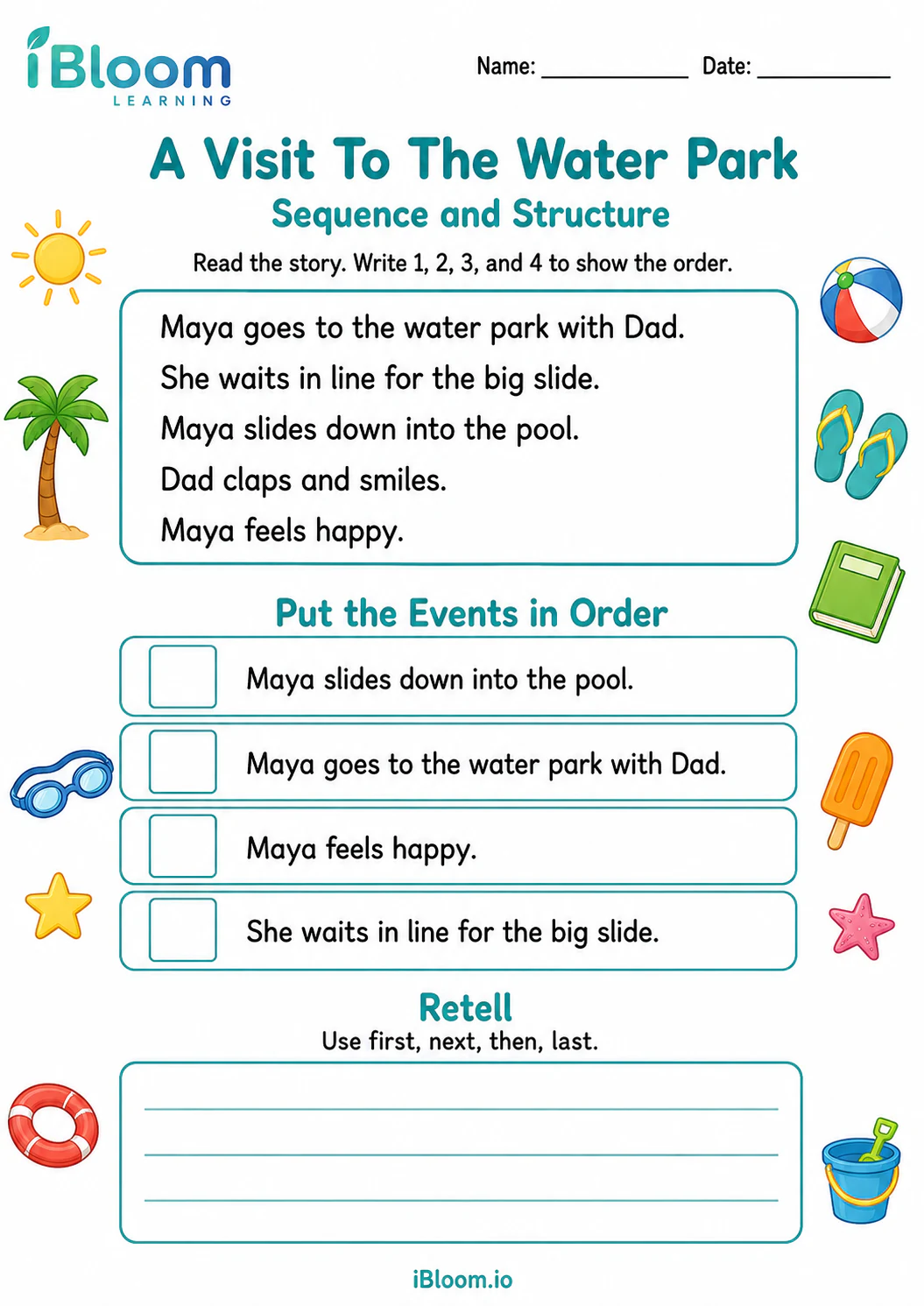
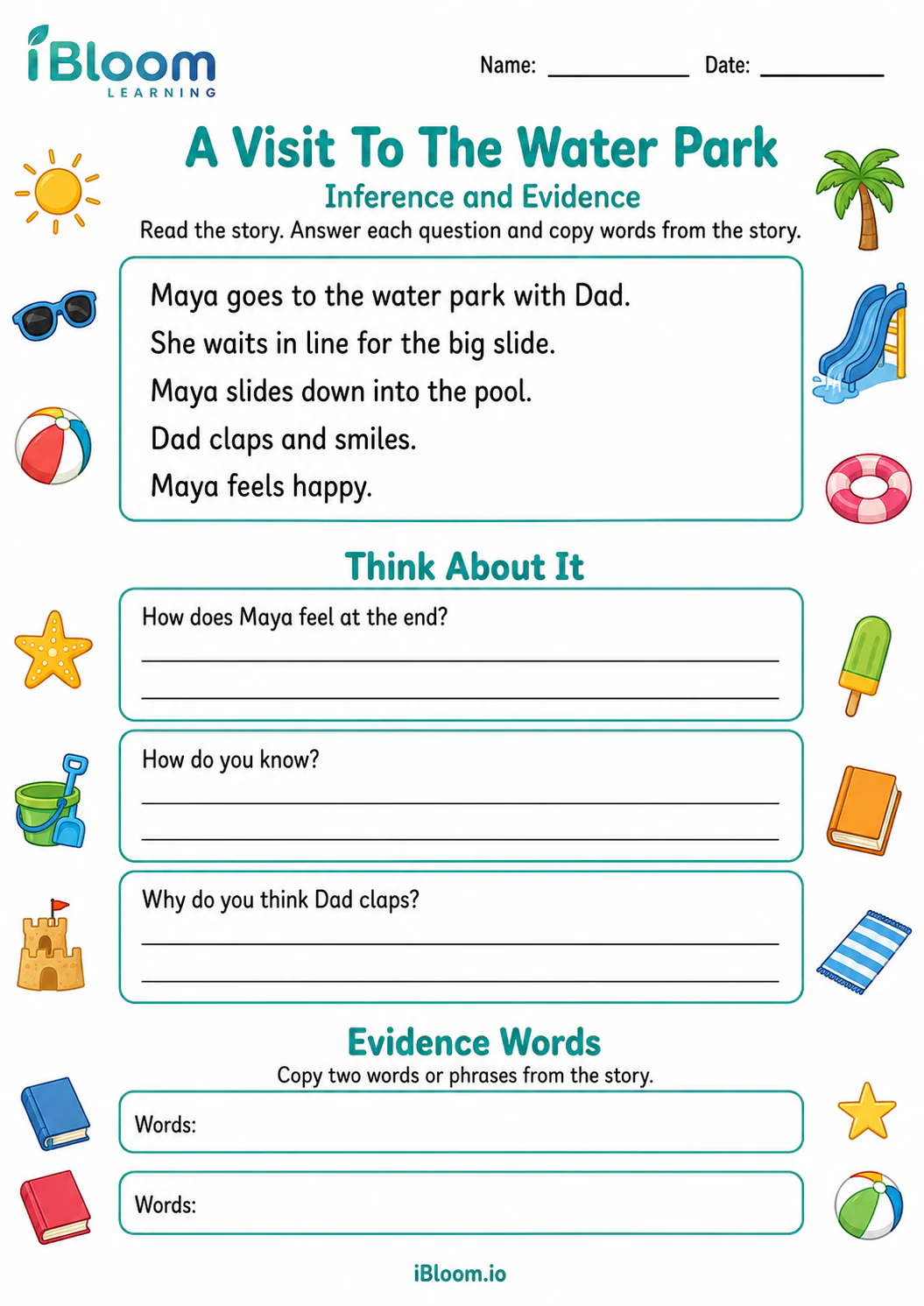
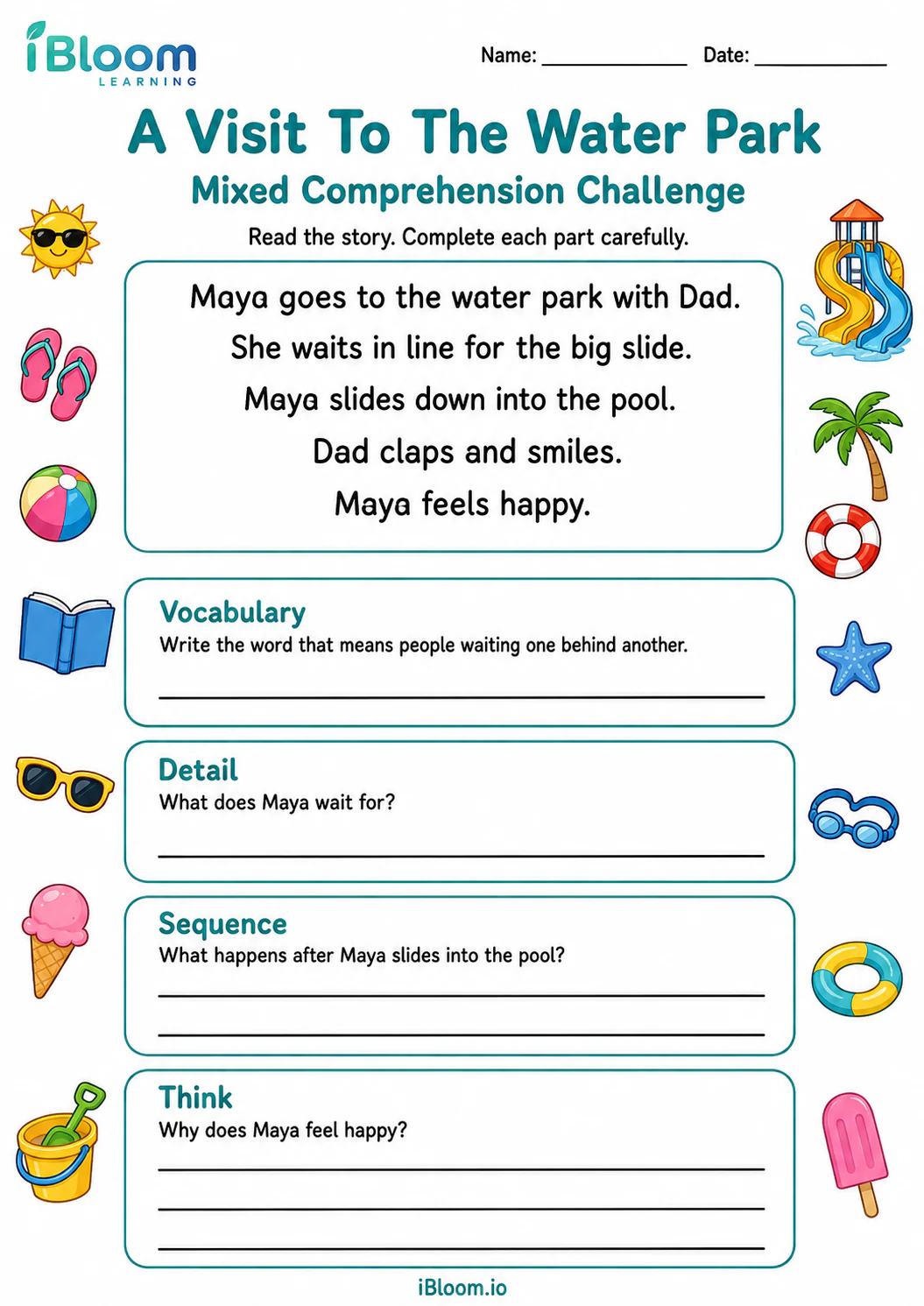
What happens in the water-park story?
Maya visits the water park with Dad. After enjoying the splash pool, she sees a small slide and feels scared. Dad waits at the bottom while she takes a deep breath and gives it a try.
The story ends after a second slide ride, when Dad gives Maya an apple under a tree and she asks to come back. Its three short paragraphs give children places to revisit as they answer the questions.
How do children explain Maya’s bravery?
Question 9 asks why Maya says she was brave. To answer, connect her feeling before the ride with her action: she was scared, but she went down the slide. Simply writing “She was brave” repeats the question without explaining it.
- 1Story clue: She felt scared.
- 2Story action: Maya took a deep breath and slid down.
- 3Possible response: She went down the slide even though she was scared.
How much writing does each part need?
Part B has four short-answer lines. A word or phrase such as “Dad” or “the splash pool” is enough. Part C has six questions with space for short sentences. Children can use the names and words in the passage to help with spelling.
For the final question, Maya’s words “Can we come back?” support a yes answer. A child can quote those words or explain that Maya asked to return. Check the connection to the story before focusing on punctuation.
How to use this worksheet
- 1Read the story once together for meaning.
- 2Reread the first paragraph to answer the four Part B questions.
- 3Have the child say each Part C answer aloud before writing it.
- 4For question 9, find both the scared feeling and the slide action.
- 5For question 10, find Maya’s final question and explain what it tells the reader.
- 6Compare answers with the key, accepting different wording that keeps the story details accurate.
Mistakes to check and fix
The mistake
Writing that Maya was happy when she first saw the slide.
The fix
Find “She felt scared” and separate that first feeling from her grin after the ride.
The mistake
Explaining bravery by repeating “She was brave.”
The fix
Add what she did despite feeling scared: she went down the slide.
The mistake
Saying Maya wants to return only because water parks are fun.
The fix
Use Maya’s own final question, “Can we come back?”, as the evidence.
Common Core alignment
Answer questions about Maya’s visit using key details from the story.
On this sheet: Children return to the passage for who, what, where and why answers and support conclusions with story details.
Show the official wordingHide the official wording
Ask and answer questions about key details in a text.
What to practice next
Make more practice
Further reading
Questions parents and teachers ask
Can an adult read this story aloud?
Yes, an adult can read the passage while the child follows along. Reread a paragraph when a question requires it, and let the child point to the supporting words. Have the child say an answer aloud before writing so the written response grows from an understood story detail.
Do all ten answers need complete sentences?
No, Part B asks for a word or short phrase for each of its four questions. Part C asks for six short sentences. This progression lets children begin with easy-to-find details before explaining events and feelings. A brief accurate sentence is enough for each Part C response.
What answer shows that Maya was brave?
An answer should connect Maya’s fear with her decision to slide down. For example, “She went down the slide even though she was scared” uses both details. A child may phrase that differently, but repeating “She was brave” alone does not explain the action behind her claim.
How do we know Maya wanted to come back?
Maya asks, “Can we come back?” at the end of the story. That question directly supports a yes answer. Children can quote her words or write that she asked to visit again. Encourage them to use this evidence instead of guessing from their own feelings about water parks.
What does the answer key include?
The key includes the four brief detail answers and sample sentences for the six longer responses. Use it to check meaning and story evidence. Different wording is welcome when it answers the question accurately; a child can write that Dad waited at the slide’s bottom without copying the sample exactly.