
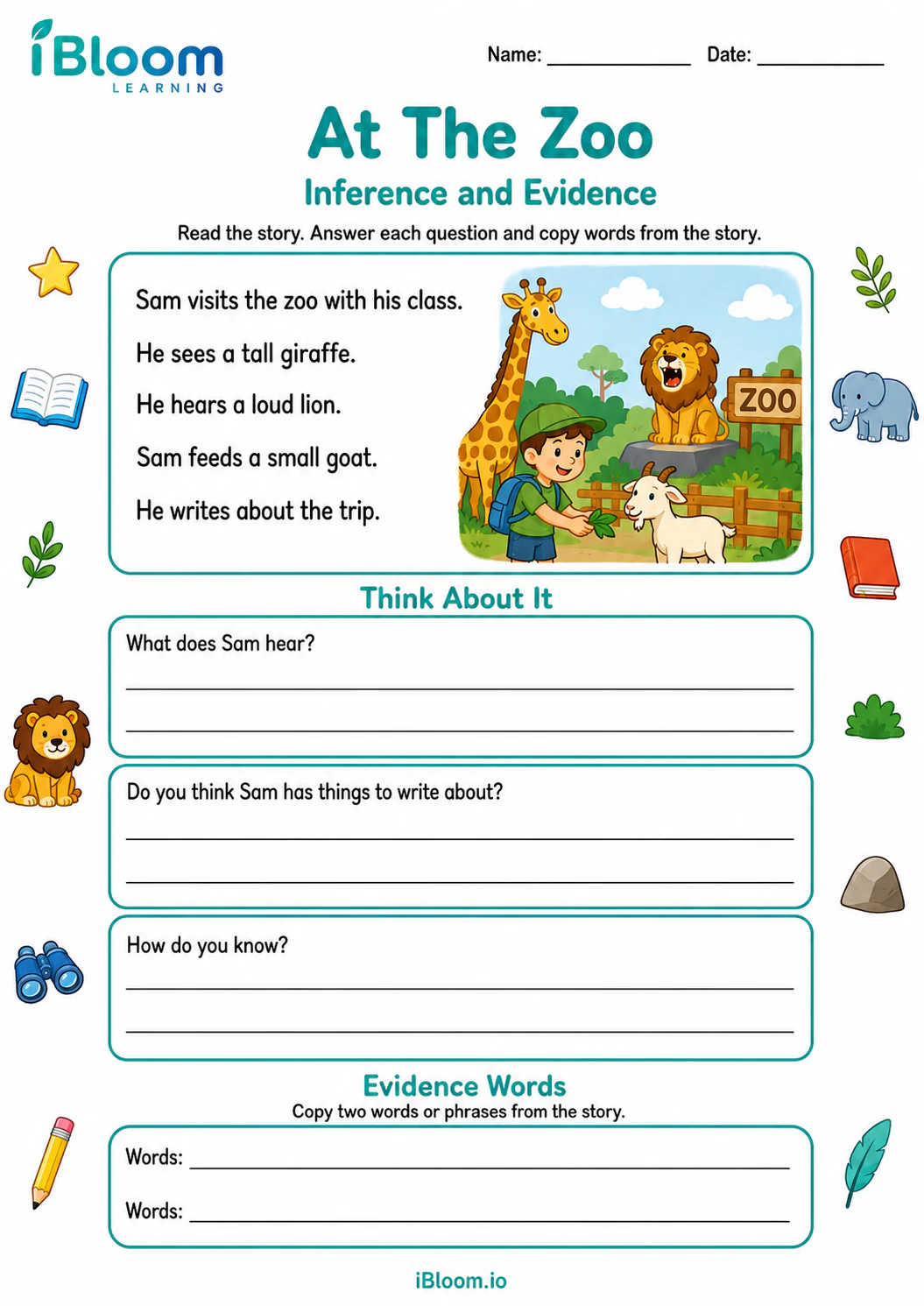
About this worksheet
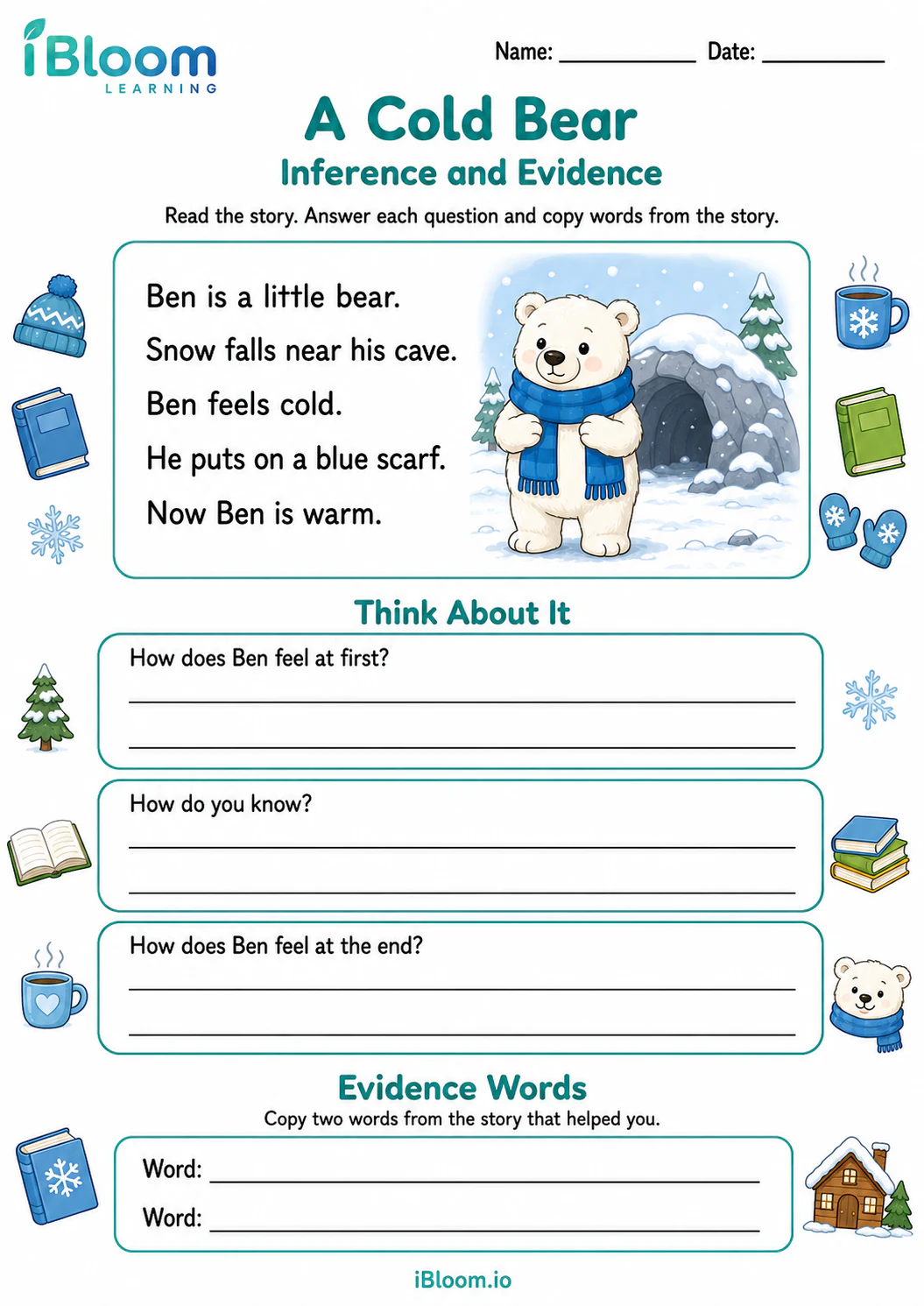
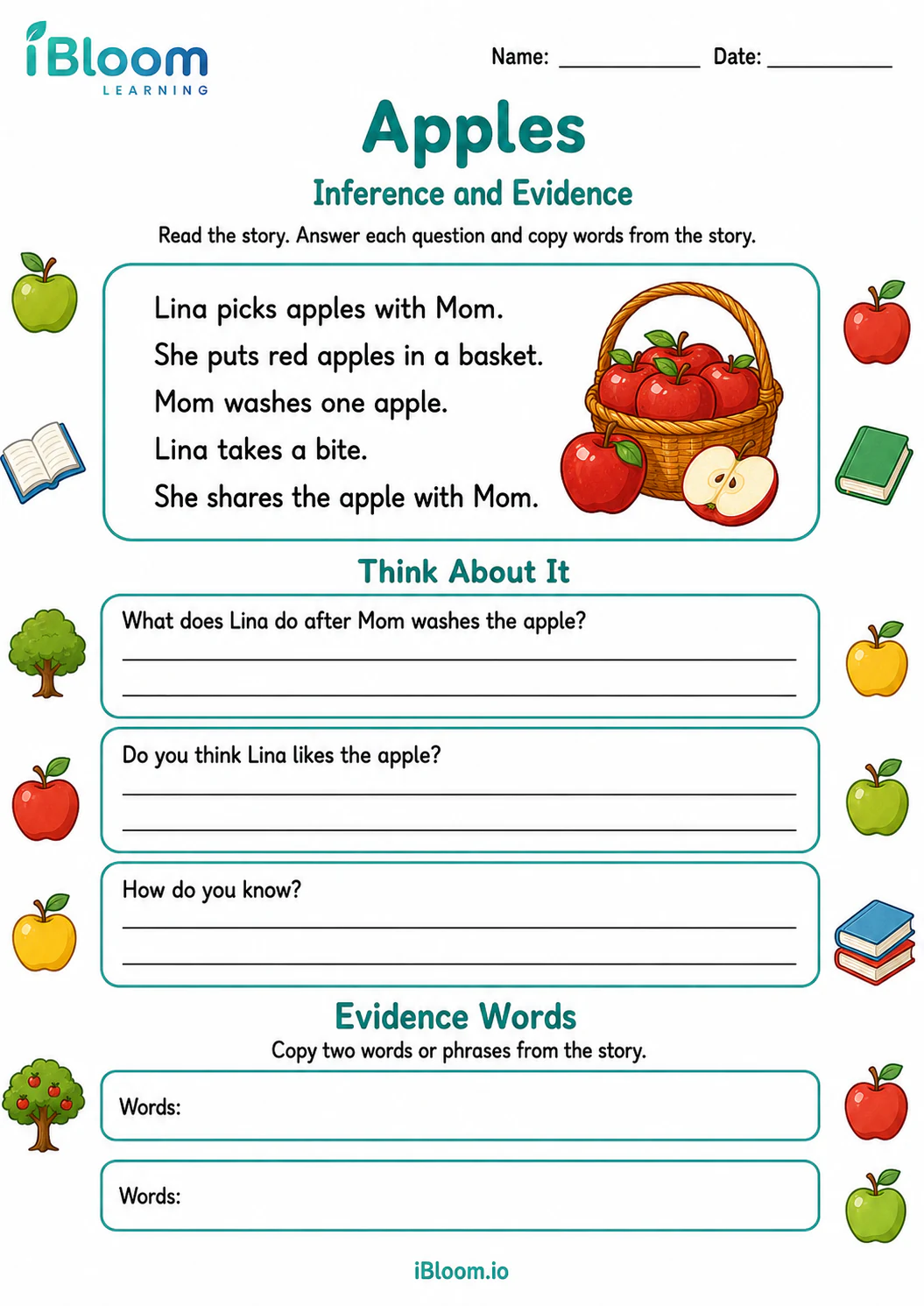
This free printable Grade 1 worksheet gives children focused practice with inference and evidence. It replaces the old mixed or placeholder activity with questions built around the named skill. It practices Grade 1 CCSS RL.1.1. The sheet has 9 questions across short parts, with a separate answer key for checking work.
Aligned to RL.1.1
What does inference and evidence mean?
An inference is an idea supported by clues in a story. Readers combine what the text says with what those details suggest.
How does a story clue support an inference?
For q2, the story says the boat returned safely and Ben smiled. Those details support the inference that the children feel glad.
- 1Clue: Ben smiled when the boat returned.
- 2Inference: the children feel glad.
- 3The clue supports the answer.
How is the practice organized?
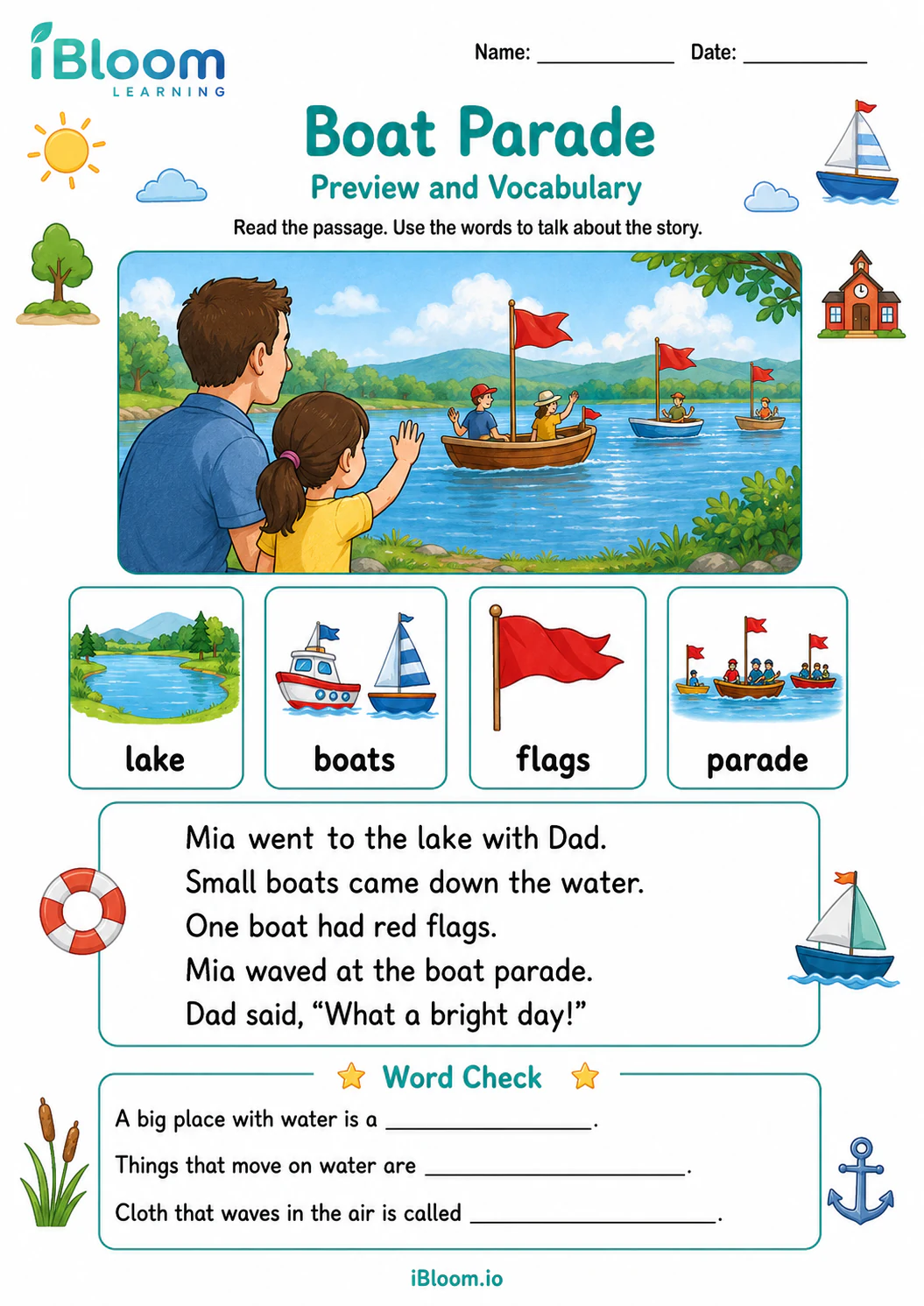
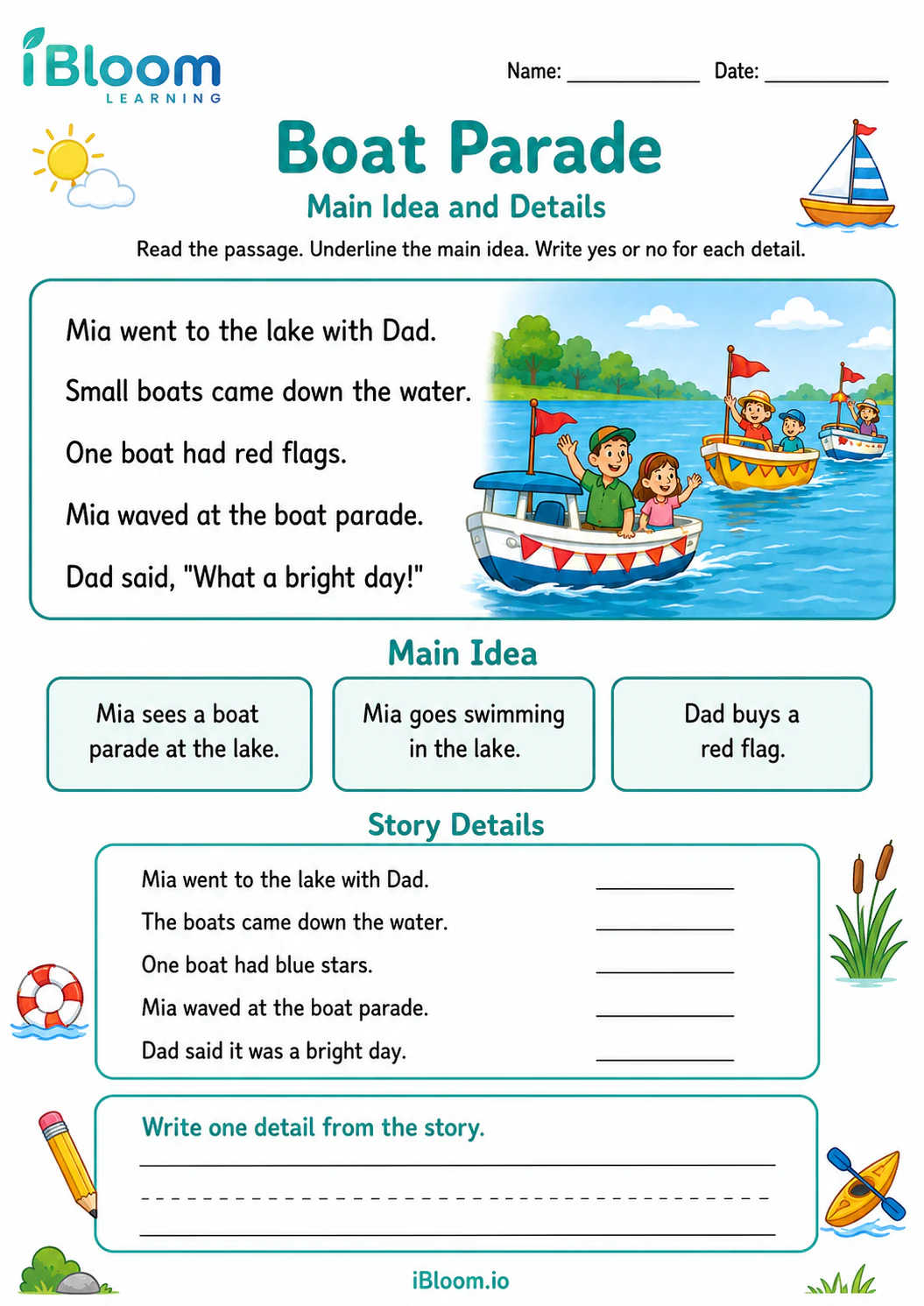
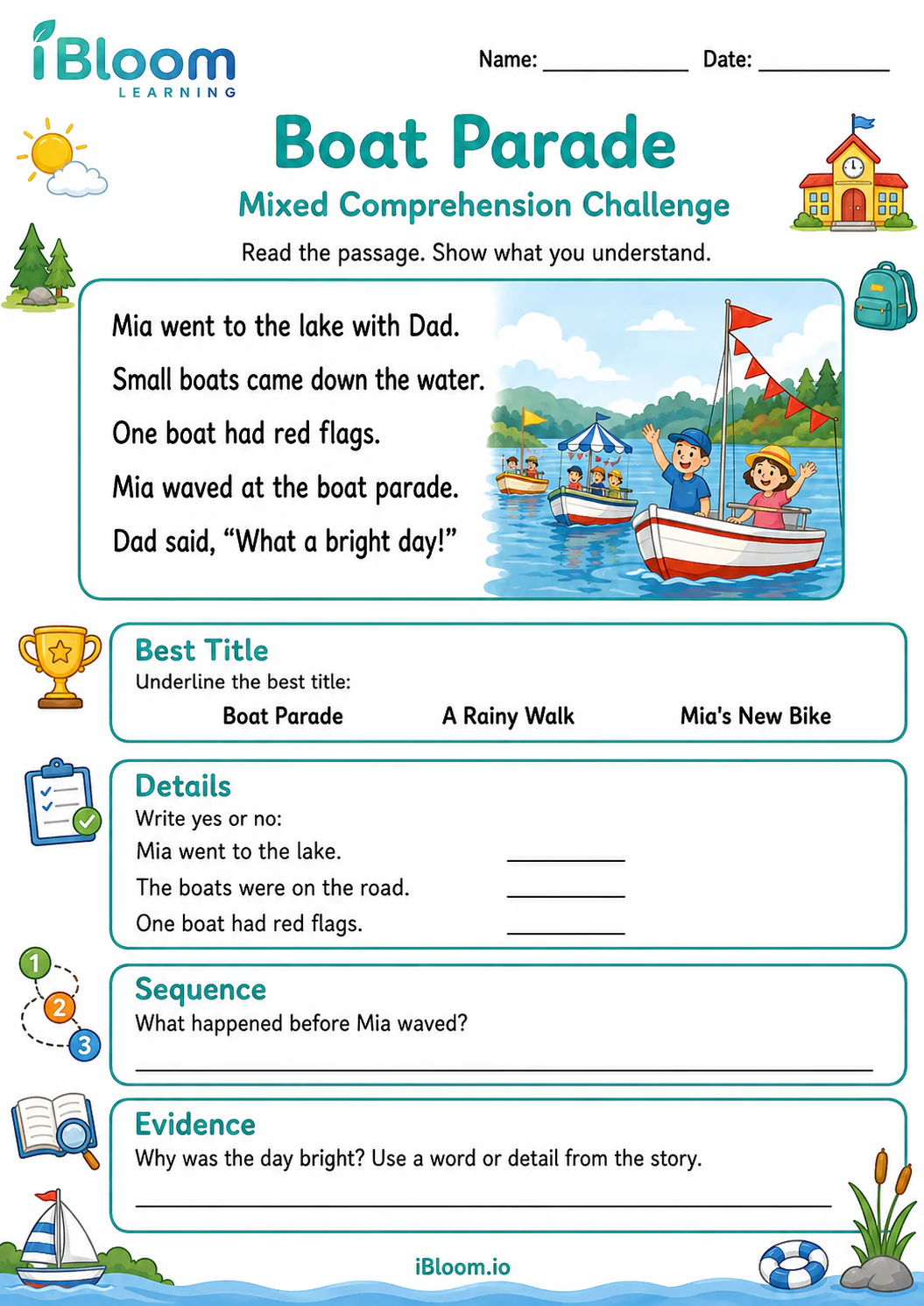
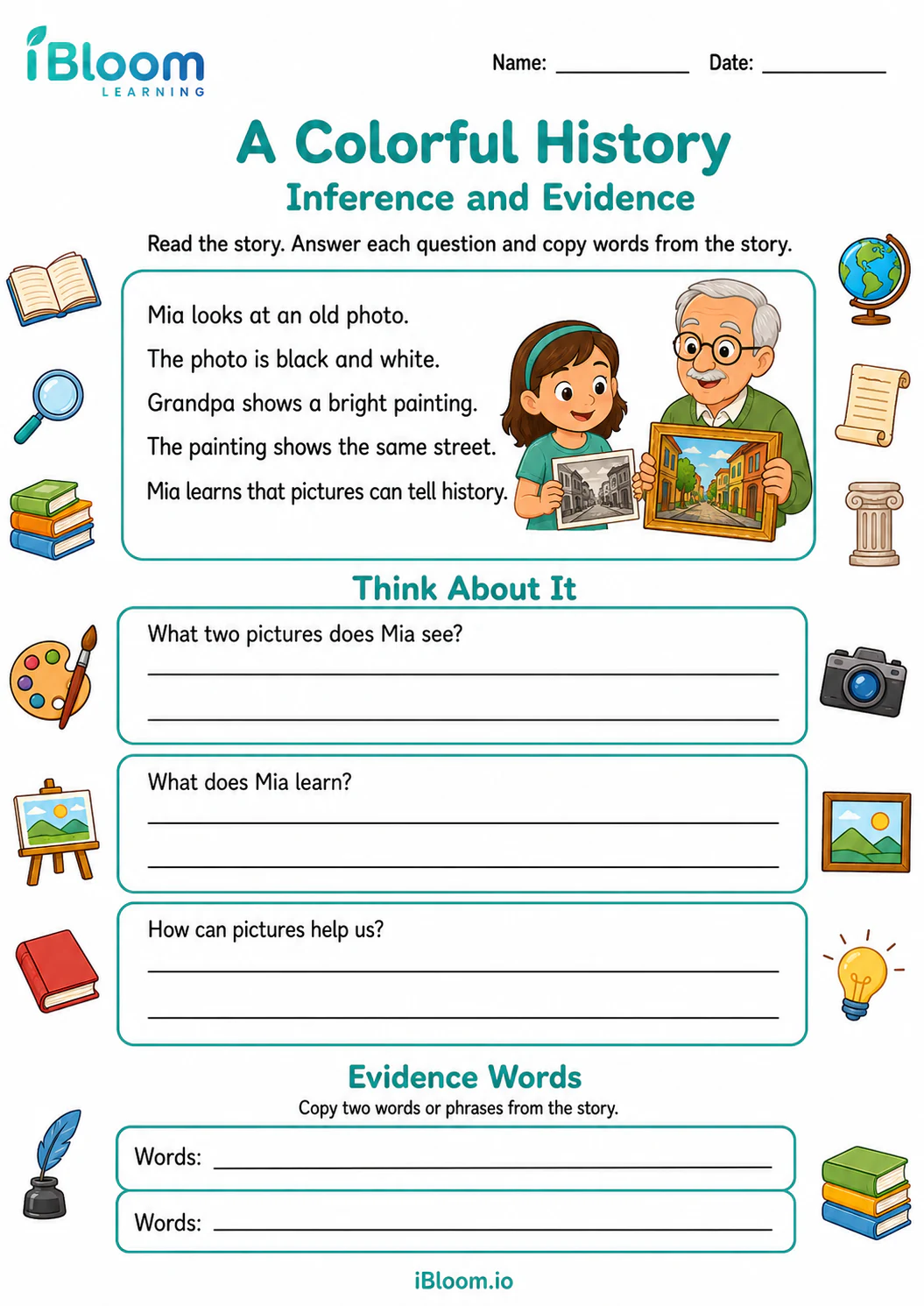
The first two parts ask readers to infer feelings, reasons, and actions from the boat-parade story. The final part asks for a written answer supported by a story detail.
How to use this worksheet
- 1Read the story once to understand what happens.
- 2Reread the sentence connected to the question.
- 3Choose an inference that fits the clue and the whole story.
- 4For a written response, state the idea and name a detail.
- 5Check that the detail actually appears in the passage.
Common mistakes and quick fixes
The mistake
Choosing an answer that sounds possible but has no story clue.
The fix
Point to a sentence that supports the idea.
The mistake
Copying a detail without answering the question.
The fix
State the inference first, then give the detail.
The mistake
Adding an event that did not happen in the story.
The fix
Keep the answer tied to what Mia and Ben did or said.
Common Core alignment
Answer story questions using details as evidence for an inference.
On this sheet: Questions ask children to infer from the story and name details that support an answer.
Show the official wordingHide the official wording
Ask and answer questions about key details in a text.
What to practice next
Make more practice
Further reading
Questions parents and teachers ask
How many questions are on the Grade 1 sheet?
There are 15 questions, grouped into short parts. Children can complete the parts in order and use the separate answer key to review their work. Invite the learner to explain one answer aloud and point to the clue or pattern that supports it.
Is an answer key included?
Yes. A separate answer key lists the answers for the worksheet. Use it after the child has tried each question, then revisit any answer that needs another look. Ask the child to compare each answer with the prompt and talk through any correction together.
How should I introduce the activity?
Read the directions together and talk through the first prompt. Ask the child to explain how the story detail supports an inference before moving on. That short conversation can make the written practice clearer and give you a chance to clear up confusion.
Can I use this at home or in class?
Yes. Print the worksheet for independent practice, a small group, or a short review with an adult. The answer key makes it easy to check completed work. The activities are grouped so learners can move through them at a comfortable pace.
What if a question feels difficult?
Pause and return to the prompt. Point out the information it gives, then solve one step at a time. The child can skip a tricky item and return after completing the next question. Keep the focus on the thinking process, not speed.