
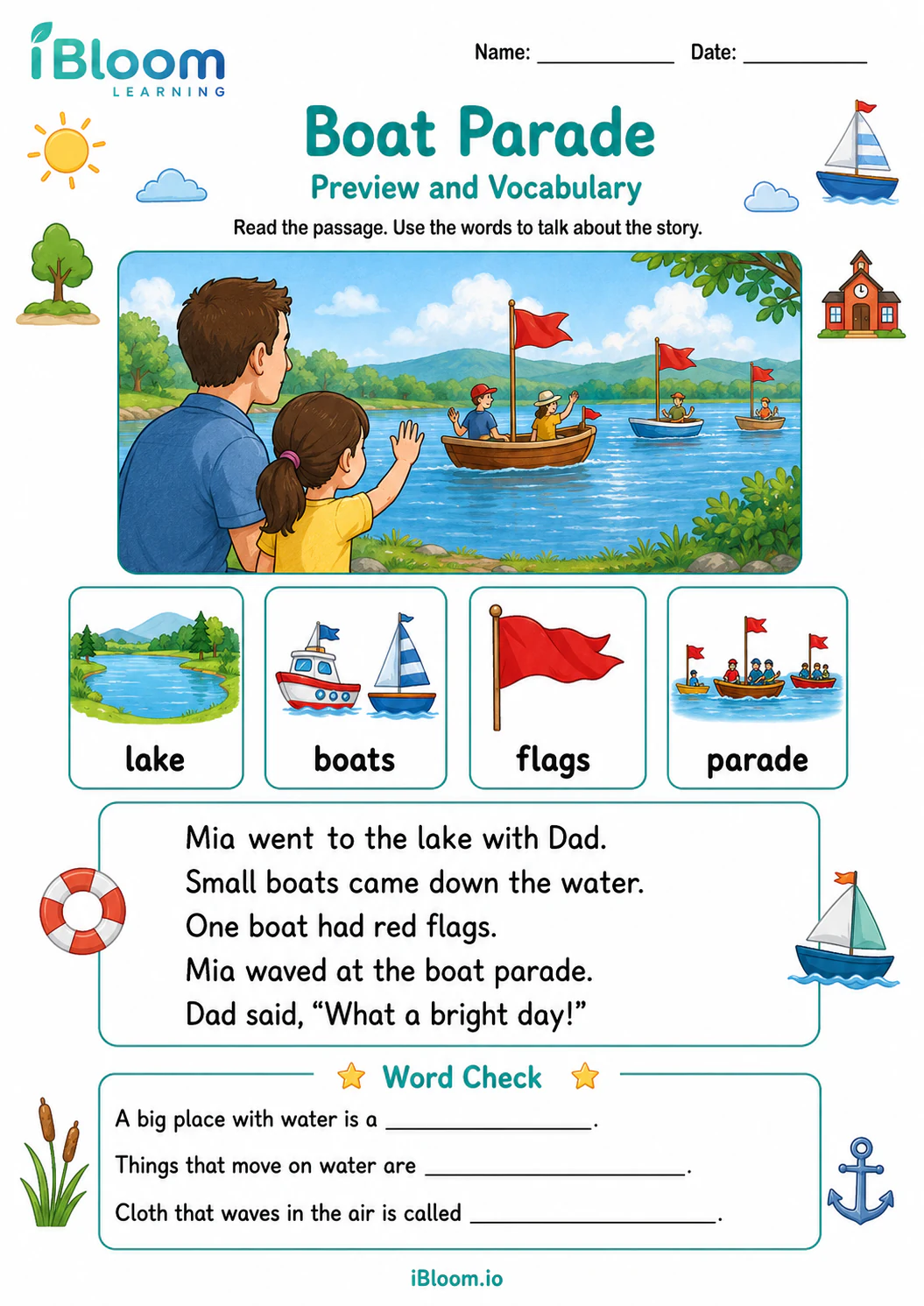
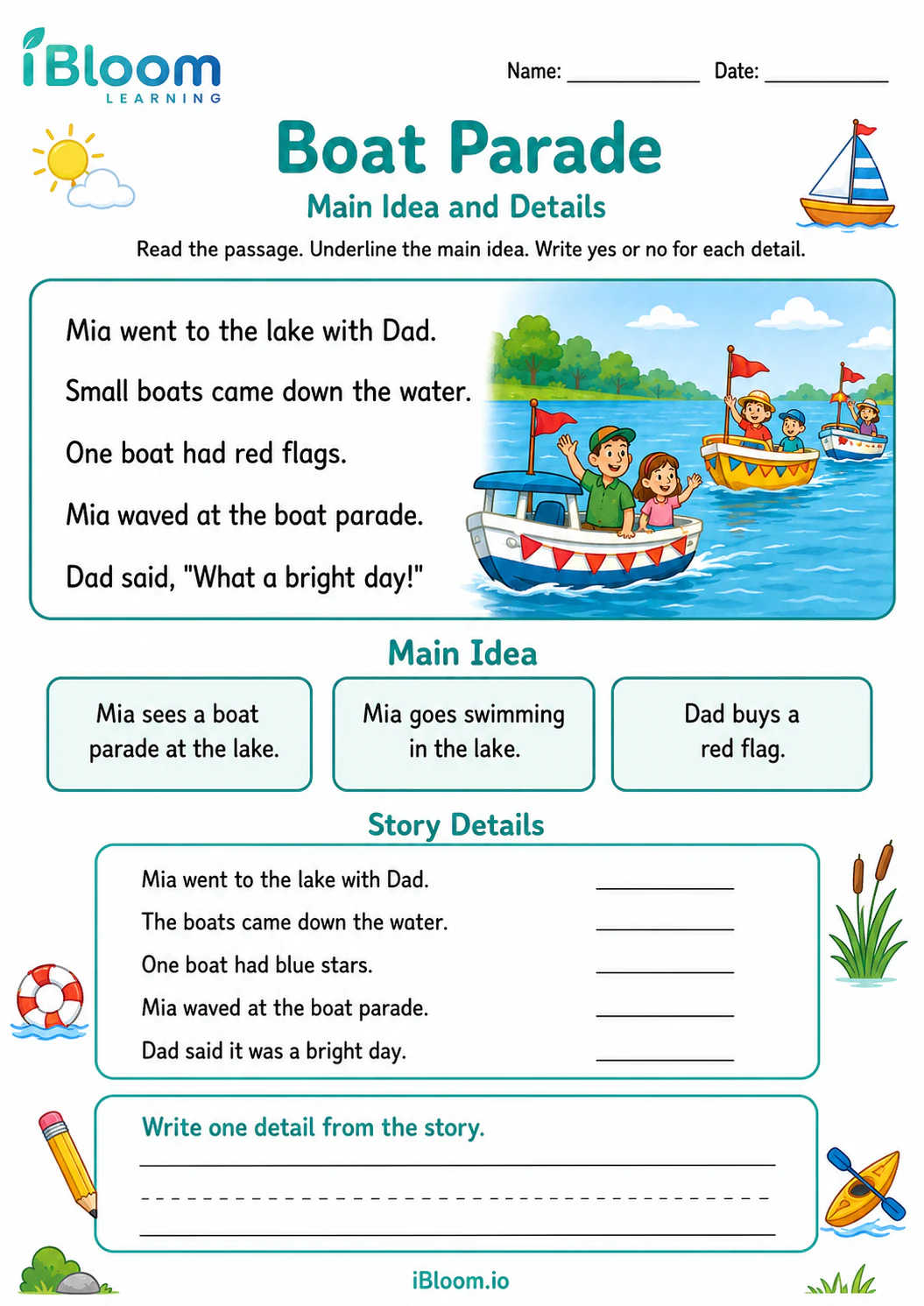
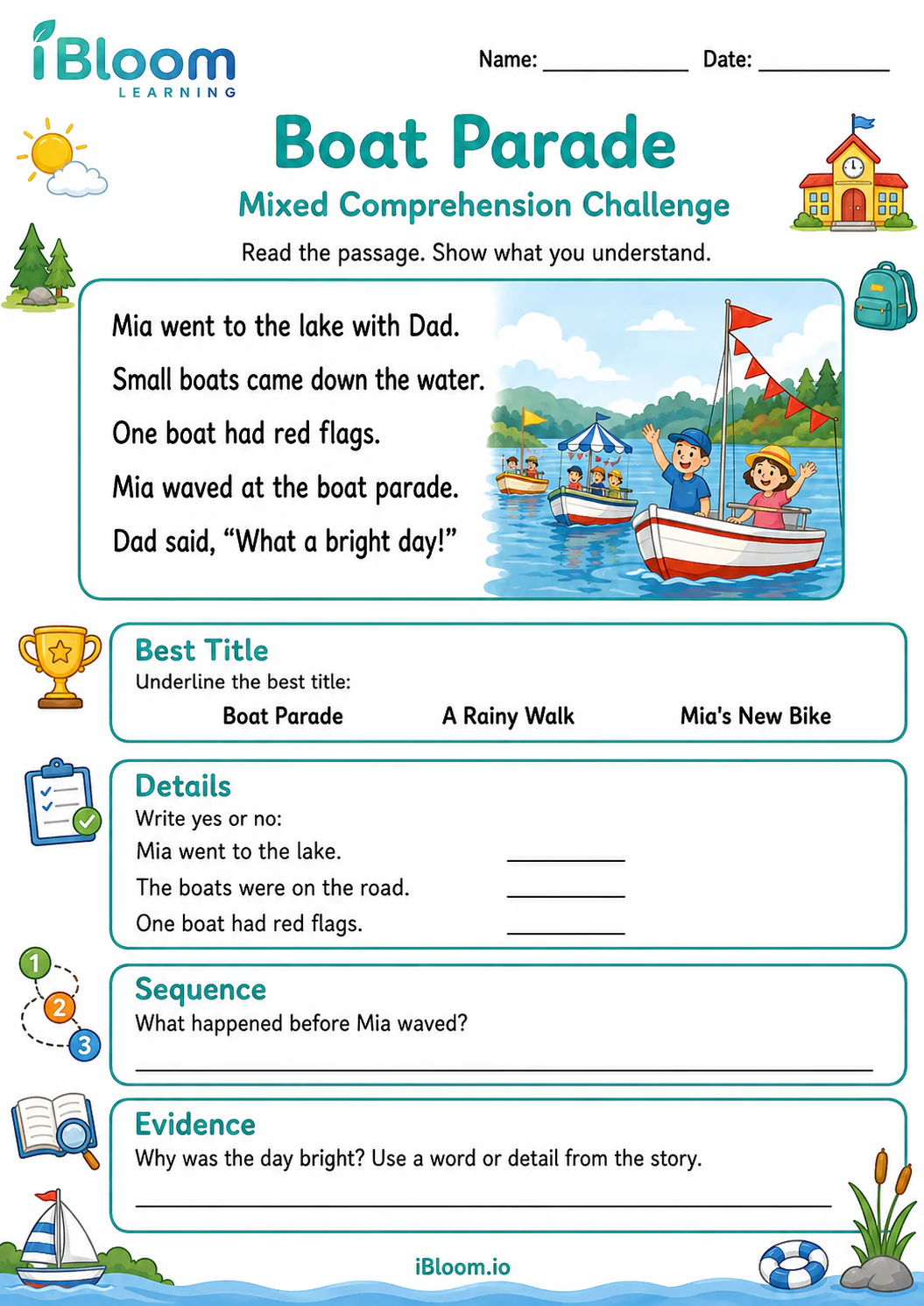
About this worksheet
This Grade 1 Boat Parade worksheet features an original story about Lena and Max adjusting a boat design before a parade. Learners recall events, explain the characters’ choice, and write about an inference using story details. It practices CCSS RL.1.2 and includes a separate answer key.
Aligned to RL.1.2
How do story details support a response?
A useful written response answers the question and includes a detail from the story. Lena worries that wind could tip tall sails; that detail explains why she and Max change their plan.
How can a reader support an answer?
Find the event the question asks about, then put the answer in your own words. Add a story clue when the question asks why or what a reader can infer.
- 1Why did Lena worry about tall sails?
- 2Find the clue about wind and the boat.
- 3Answer: Sample: She worried that wind might tip it.
What is on the worksheet?
The 14 questions move from recalling the boat and parade details to explaining the design change and making a reasonable inference. Four questions provide writing lines; the answer key gives sample responses.
How to use this worksheet
- 1Read the story once to follow the boat’s design changes.
- 2Find the event named in each detail question.
- 3For a why question, include the story clue.
- 4Write a complete thought on the response items.
- 5Use the key to check the idea, not exact wording.
Common mistakes and quick fixes
The mistake
Saying the test sail worked as planned.
The fix
Reread what happened when they tried one tall sail.
The mistake
Mixing up the first idea and final design.
The fix
Retell the change from one tall sail to two short sails.
The mistake
Giving an inference without a story clue.
The fix
Connect the idea to Lena’s worry or the boat’s steady trip.
Common Core alignment
This page practices a reading skill described in the Common Core standards.
Retell key story details and explain the story’s central message.
On this sheet: Questions ask readers to recall story details and explain character choices.
Show the official wordingHide the official wording
Retell stories, including key details, and demonstrate understanding of their central message or lesson.
What to practice next
Make more practice
Further reading
Questions parents and teachers ask
What happens to Lena and Max’s boat design?
They first test one sail, and it leans. The children then use two short sails near the middle. The story questions ask readers to recall this change and explain why testing helped them choose a steadier plan. Their final design is described near the middle of the passage, before the parade begins.
Which questions need a written response?
The final four questions ask learners to explain Lena’s concern, describe how the pair solved the problem, infer something about Lena, and name a possible feeling at the end. The other questions focus on short details and events from the story.
Can a child use different words than the answer key?
Yes. The key provides sample responses for questions that allow reasonable variation. A response should answer the prompt and fit the story. For instance, a child may describe Lena as careful or thoughtful if the answer connects that idea to her concern about wind.
How can I help with a “why” question?
Ask the child to find the event around the question in the passage. For Lena’s concern, the clue is that wind might tip the boat. The child can use that clue to form a complete answer without copying every sentence.
How long might this page take?
Set aside about 20 minutes for reading and answering the 14 questions. The four written responses may take longer than the short detail questions. A learner can reread the story while writing and then use the separate key to review each idea.