

About this worksheet
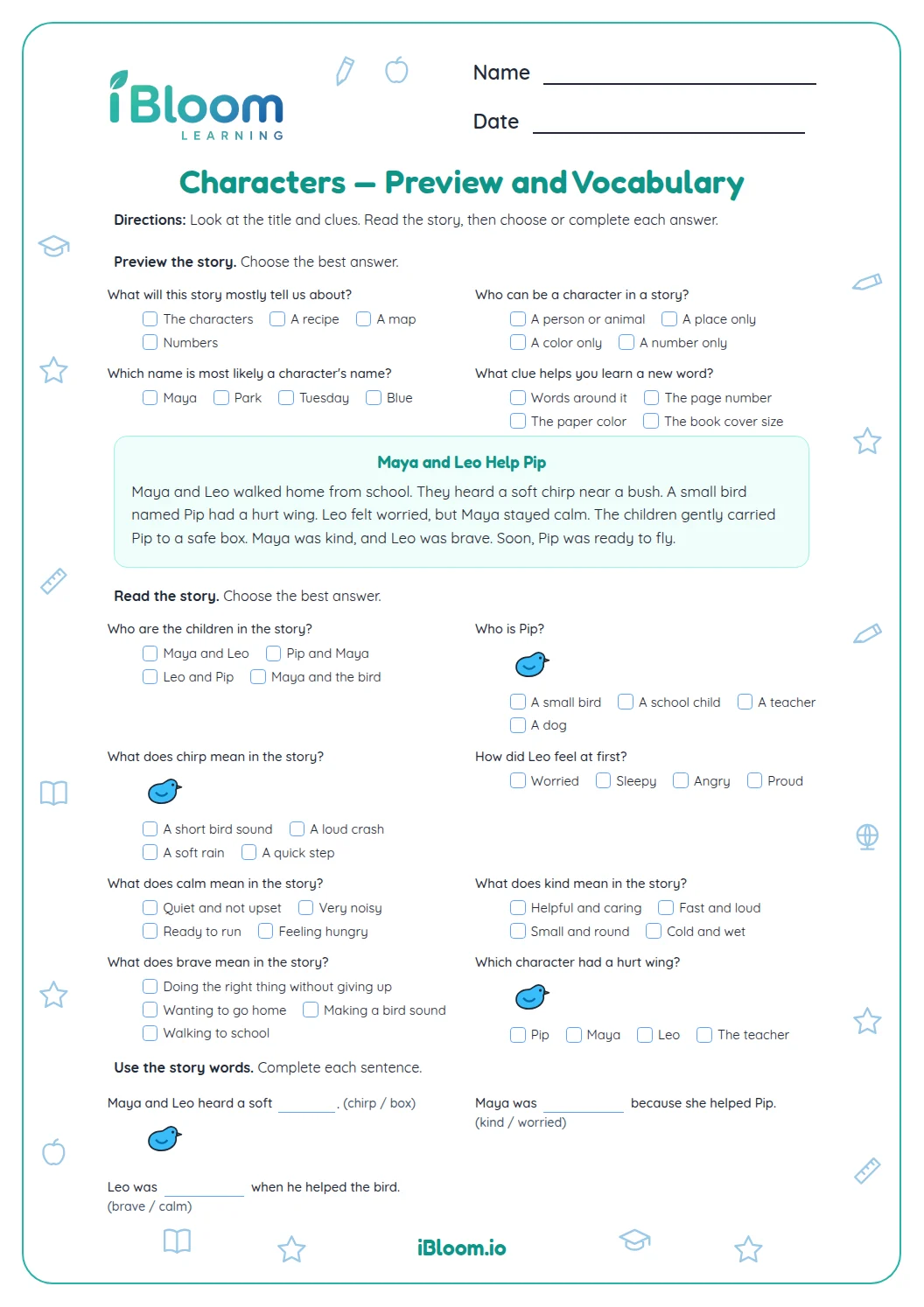
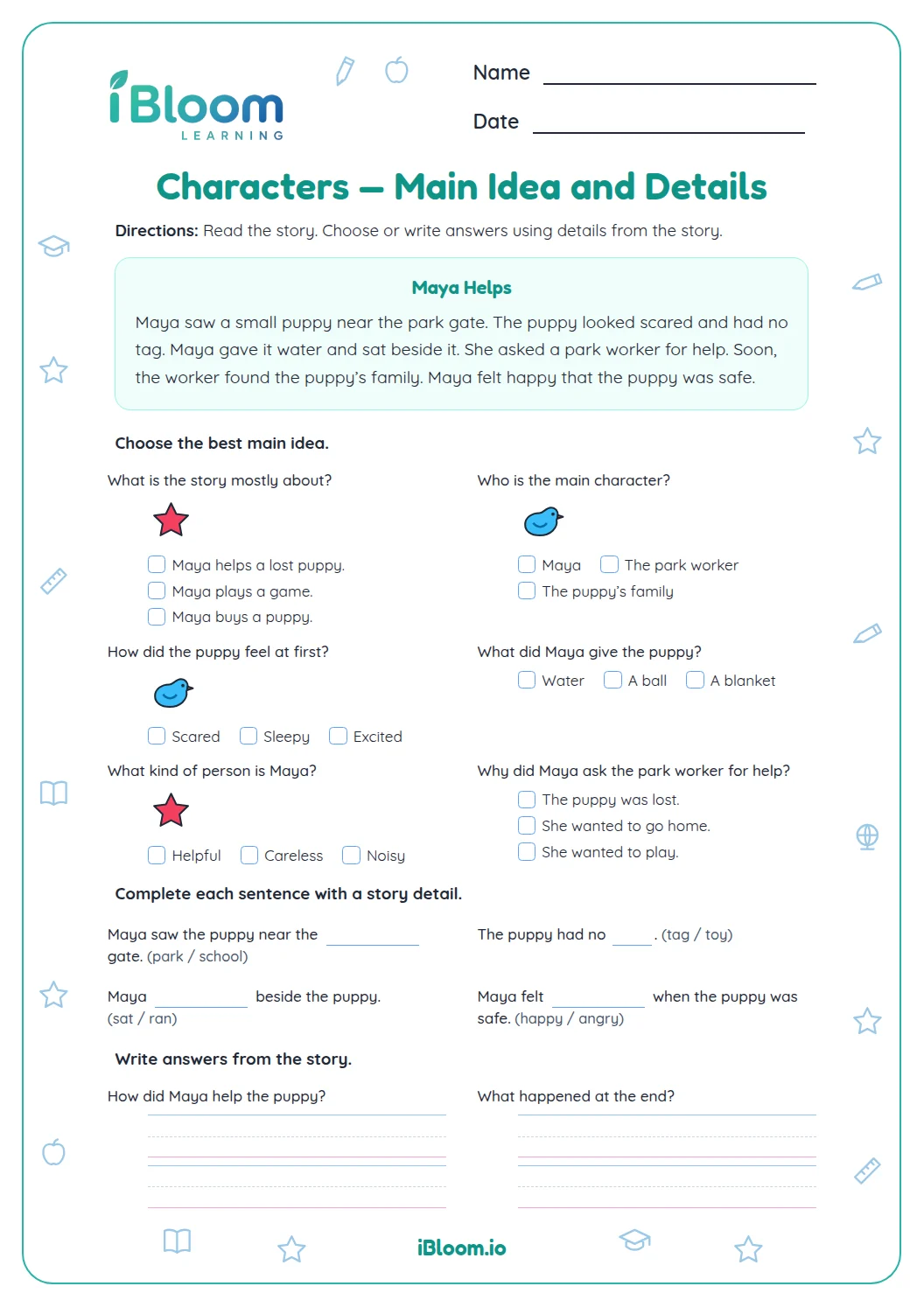
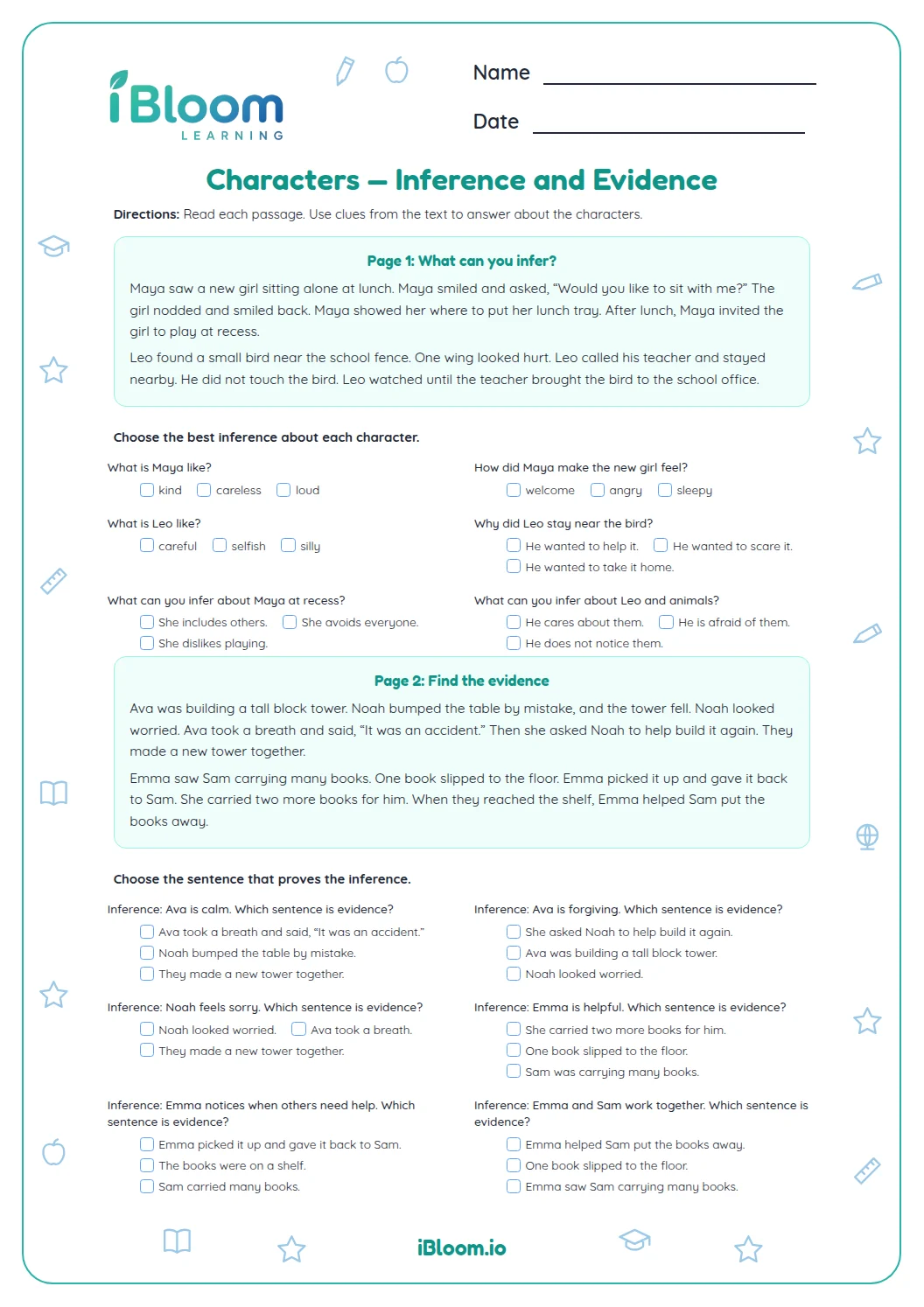
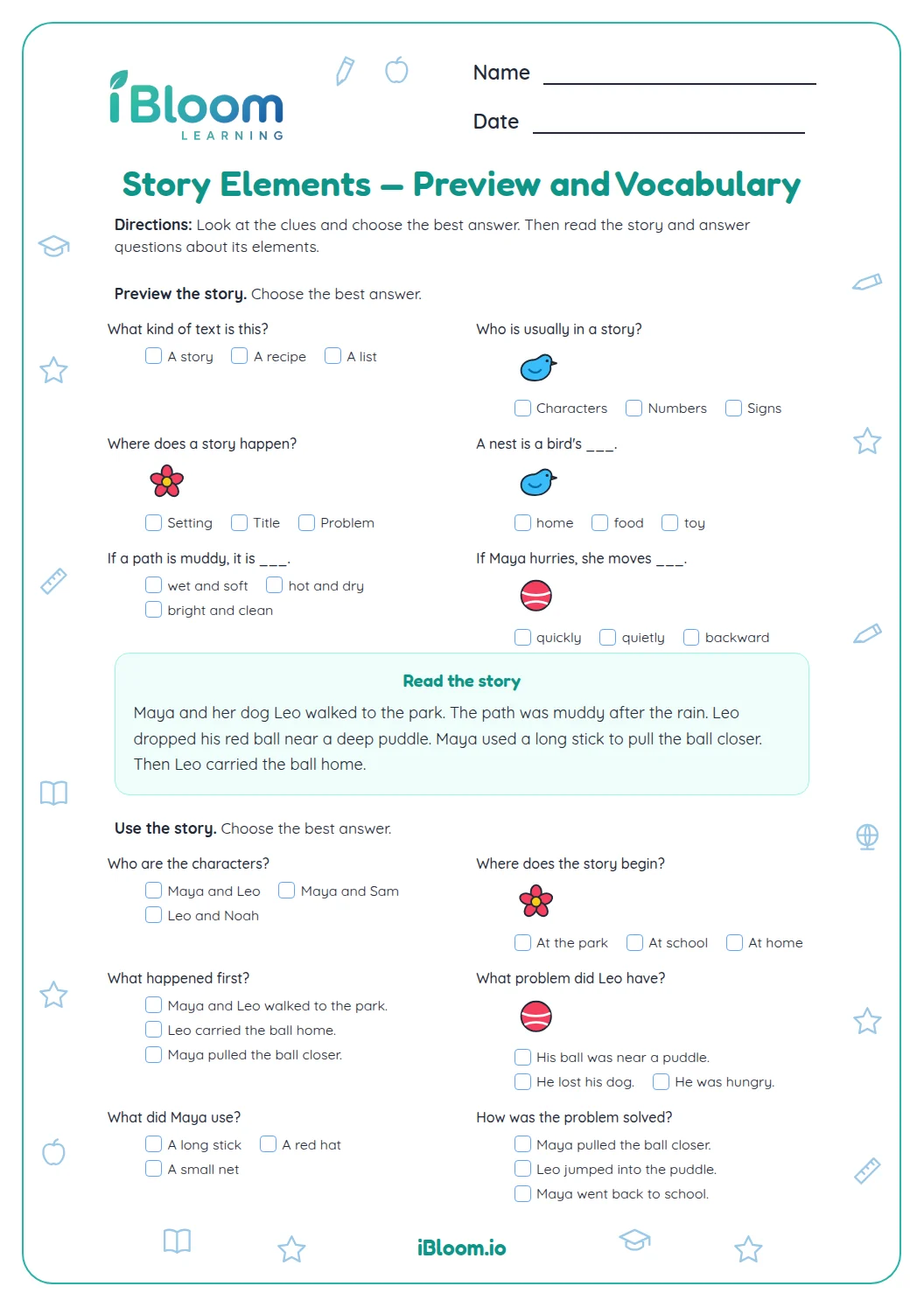
This Grade 1 reading worksheet features an original story about Nora, her grandpa, and a young bird. Fourteen questions move from finding character details to explaining how actions show a character’s choices. The passage is short enough for an early reader, and the answer key includes sample responses for open-ended items. The character work aligns with Common Core RL.1.3.
Aligned to RL.1.3
Which details tell us who the characters are?
A character is a person or animal in a story. Readers can name a character by finding who speaks or acts. In this story, Nora and Grandpa are people, and the small bird and its parent are also characters.
- 1What does Nora see beside the bush?
- 2Find the sentence that names the small bird.
- 3Answer: A small bird.
How can actions help describe a character?
Actions show what characters choose to do. Nora remembers a safety rule, calls Grandpa, and watches the bird from a distance. Those details show how she responds to a problem.
- Find the character in the question.
- Look for a sentence about what that character does.
- Use a detail from the story in your answer.
How much should a written response include?
A short answer may name one detail. An explanation can connect an action to an idea about the character. The answer key gives examples, but students may use different words if their answers match the story.
How to use this worksheet
- 1Read the title and notice the characters.
- 2Read the story once for what happens.
- 3Reread the sentence that answers each question.
- 4Write the character’s name when the question asks who.
- 5For “why” questions, include an action or detail as evidence.
Common mistakes and quick fixes
The mistake
Mixing up Nora and Grandpa.
The fix
Reread the sentence and check who performs the action.
The mistake
Answering with an event but no character.
The fix
Add the character’s name, such as “Nora calls Grandpa.”
The mistake
Adding a detail that is not in the story.
The fix
Point to a sentence in the passage that supports the answer.
Common Core alignment
This page practices the listed Common Core skill.
Describe a story character and connect actions to events.
On this sheet: Describe a story character and connect actions to events.
Show the official wordingHide the official wording
Describe characters, settings, and major events in a story, using key details.
What to practice next
Make more practice
Further reading
Questions parents and teachers ask
How long is the story?
The passage is 81 words, with details about Nora, Grandpa, and a bird family. That gives Grade 1 readers a short story to reread while finding who acts and what each character does. Children can point to a sentence in the passage before writing an answer.
Are all answers one word?
Some questions ask for a name or a short detail, while later questions ask children to explain an action. The answer key gives sample responses for open-ended questions. A child can use different wording when the meaning matches the story.
What should a child do if an answer is different from the key?
Check whether the answer is supported by the story and answers the question. Open-ended items can have more than one good response, so the key examples show one possible answer rather than the only acceptable wording. Reread the passage together when checking.
What character skills does the page practice?
Children identify characters, locate their actions, and connect those actions to story events. Later prompts ask them to describe a character using a detail from the passage. This gives practice moving from locating information to explaining what an action suggests.
Is there an answer key?
Yes. The key includes direct answers for detail questions and sample answers for written explanations. A child can complete the page first, then reread the passage while checking. Accept another response when it accurately reflects the story and answers the prompt.