



About this worksheet
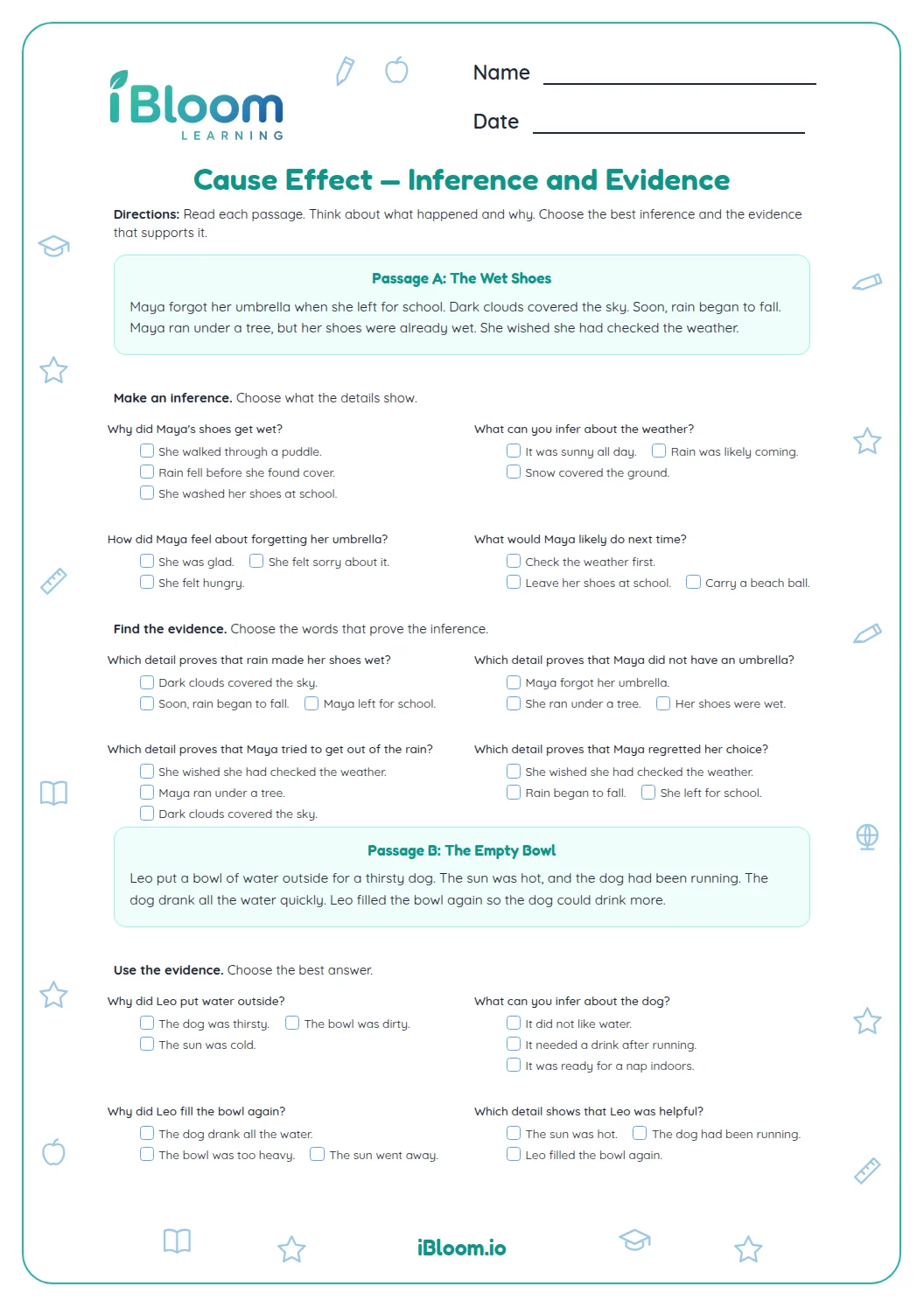
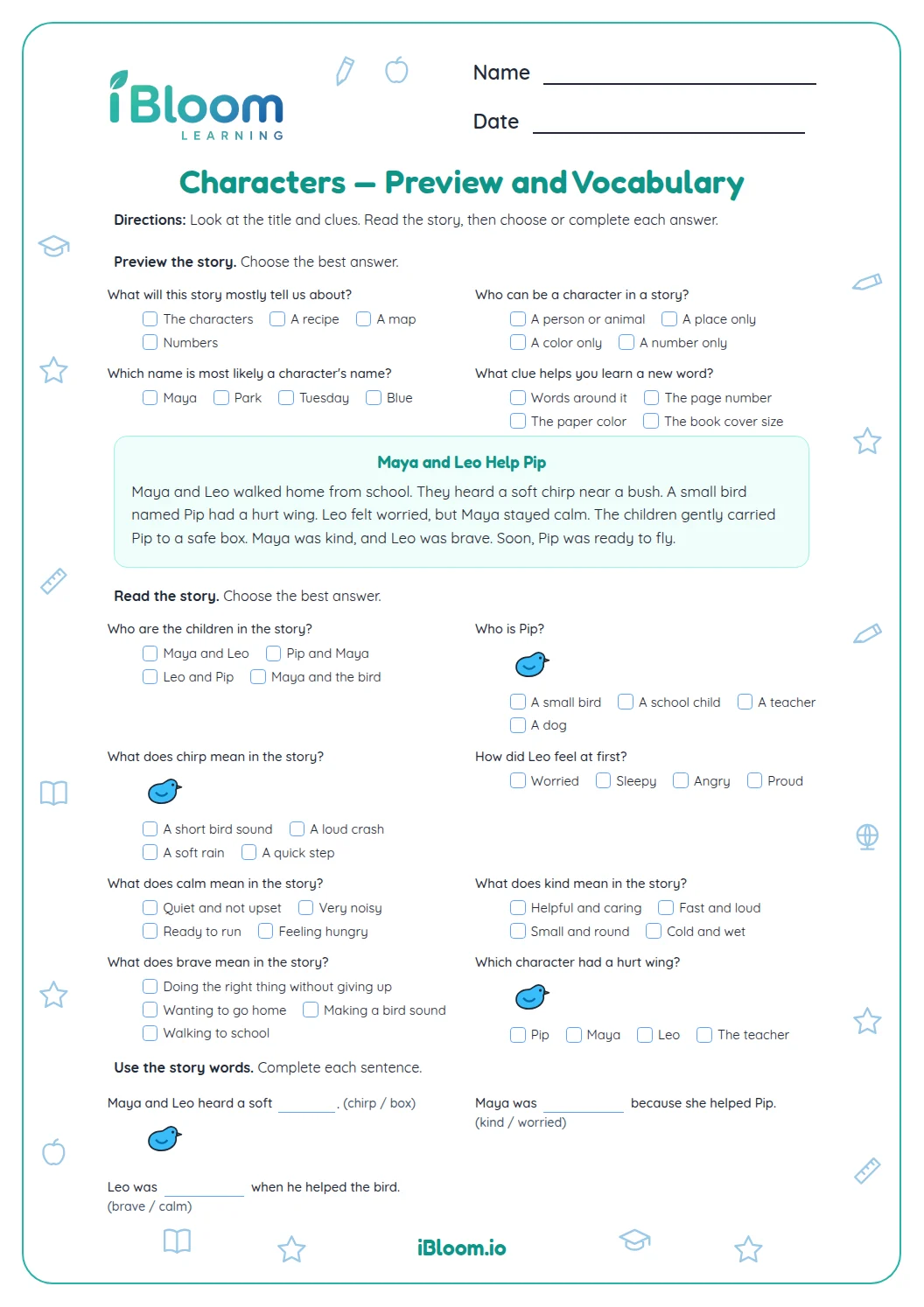
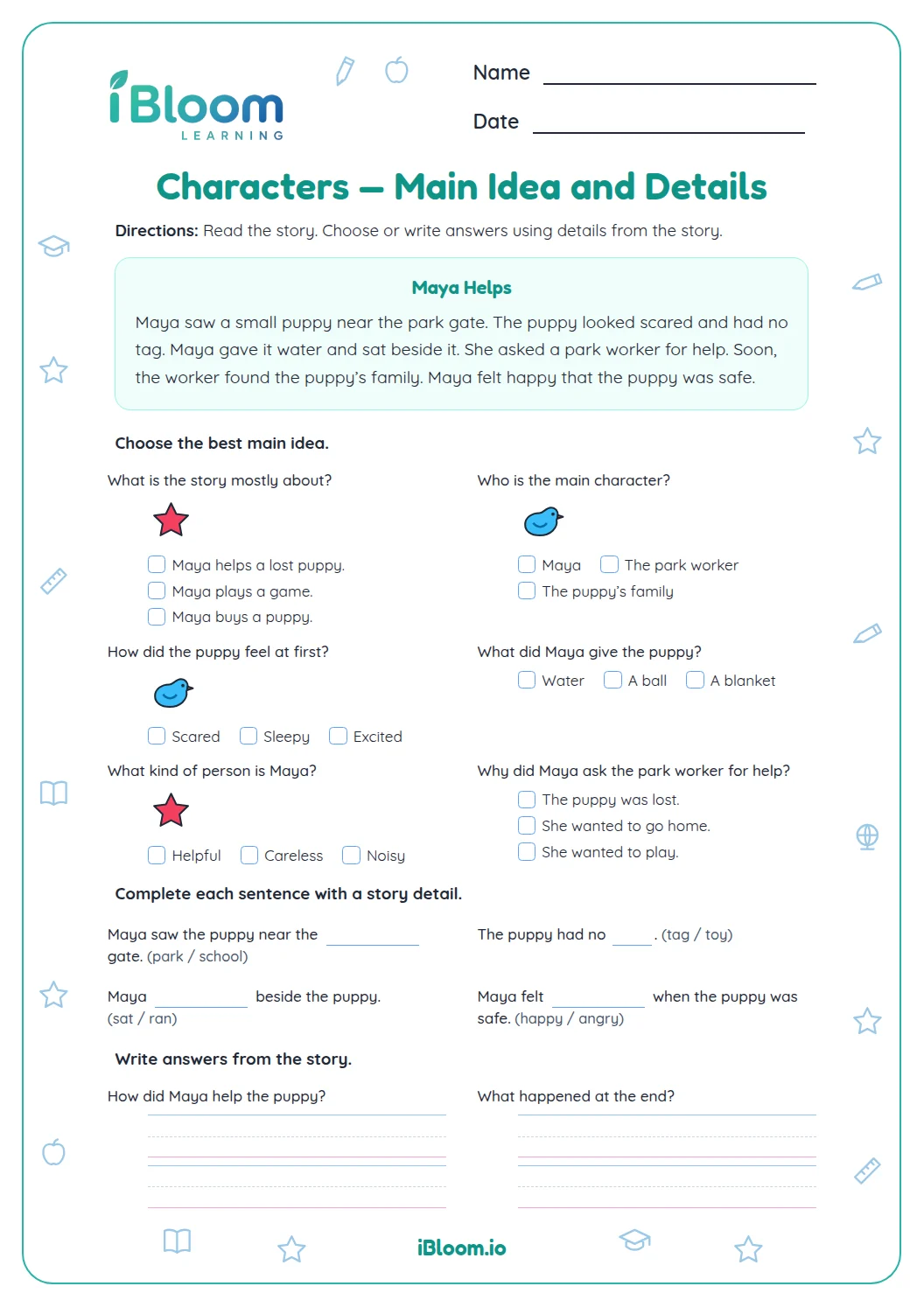
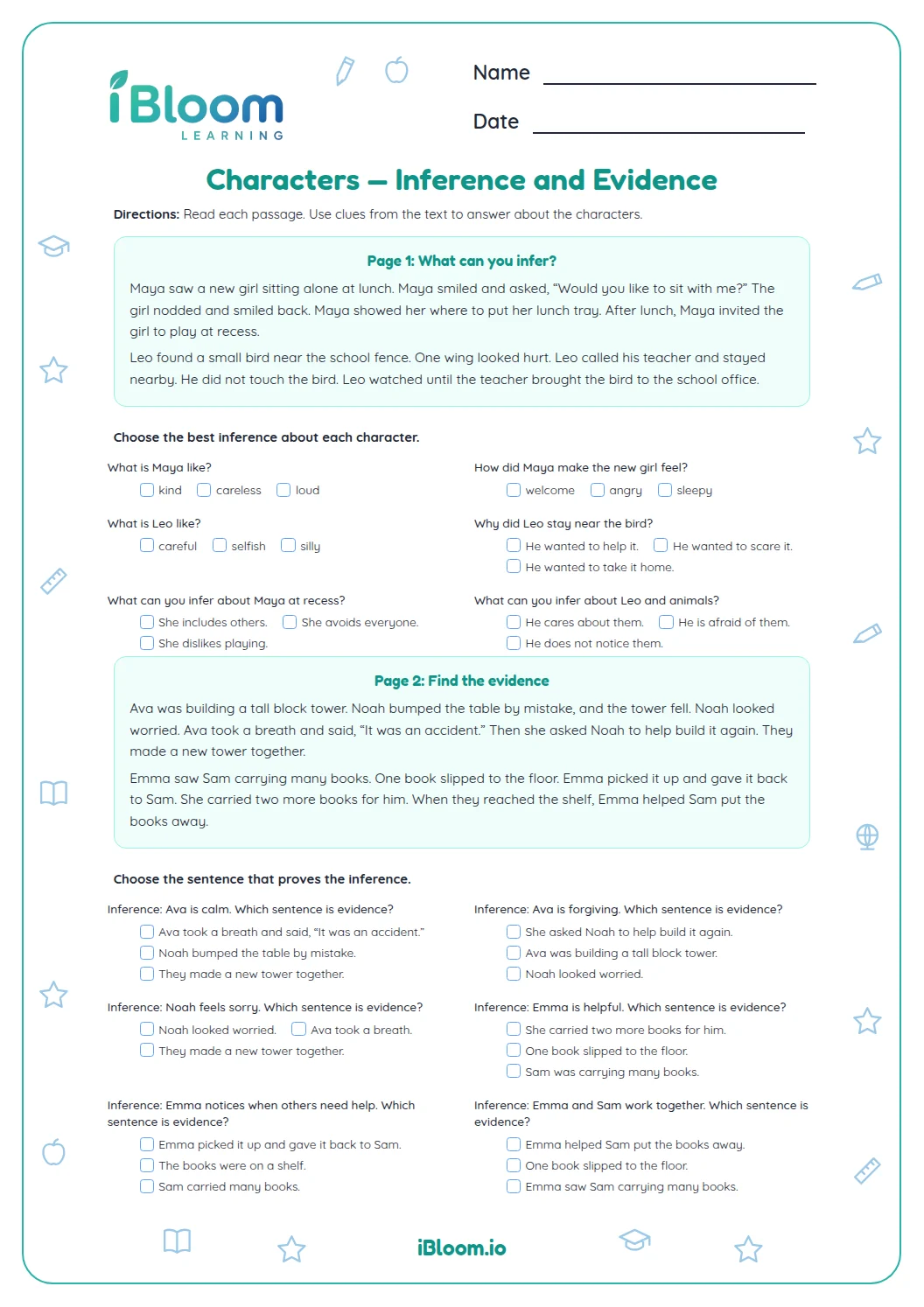
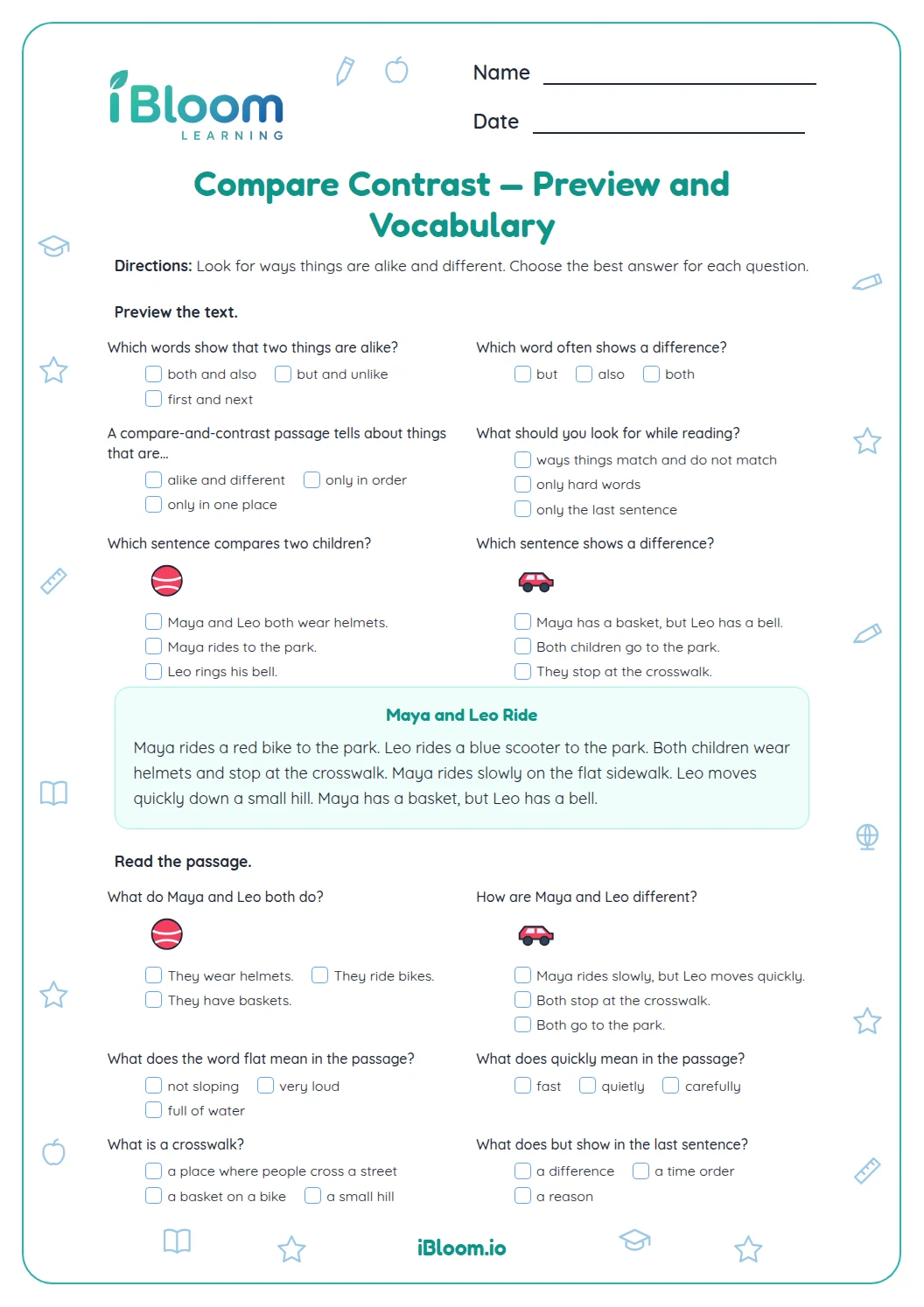
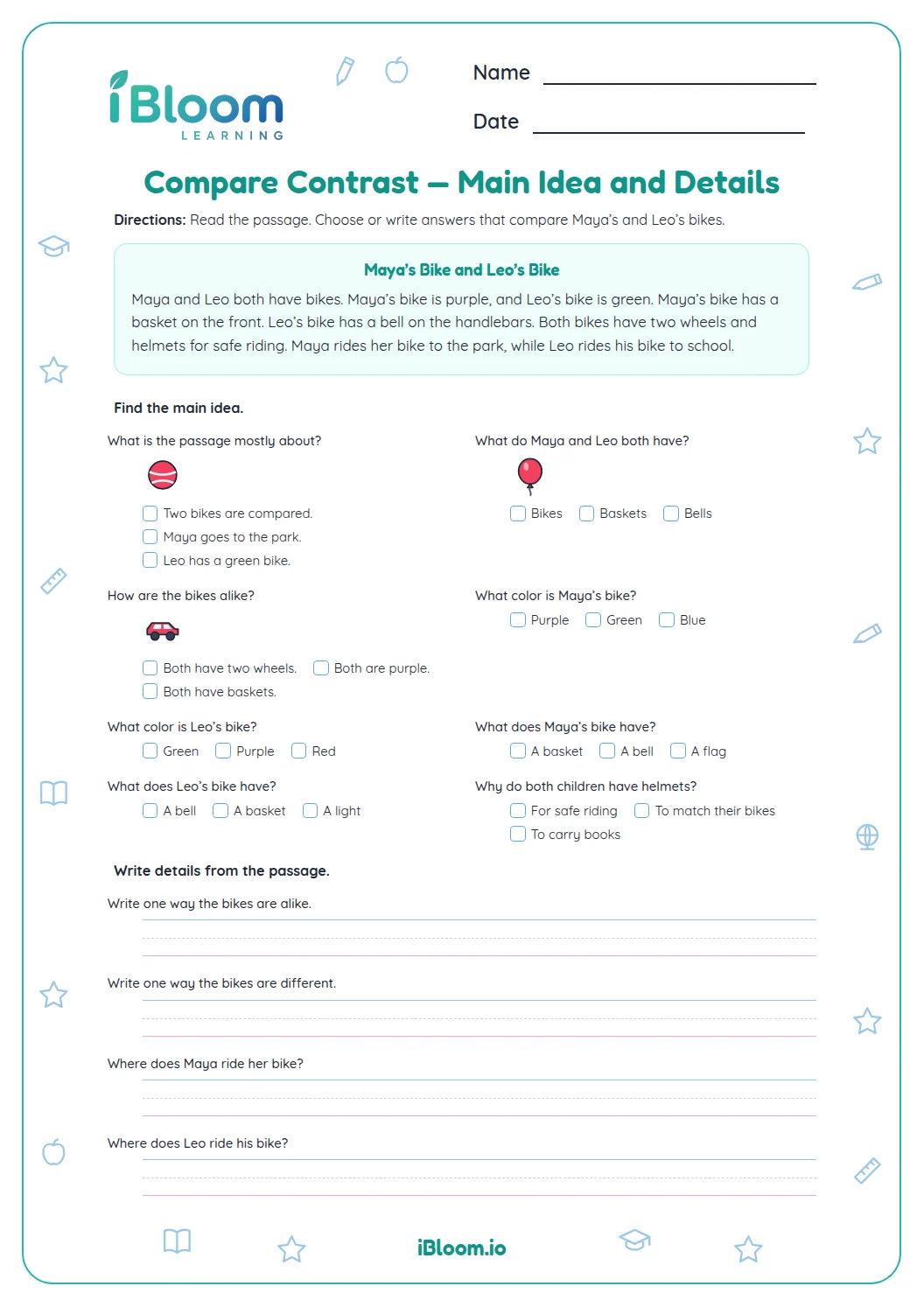
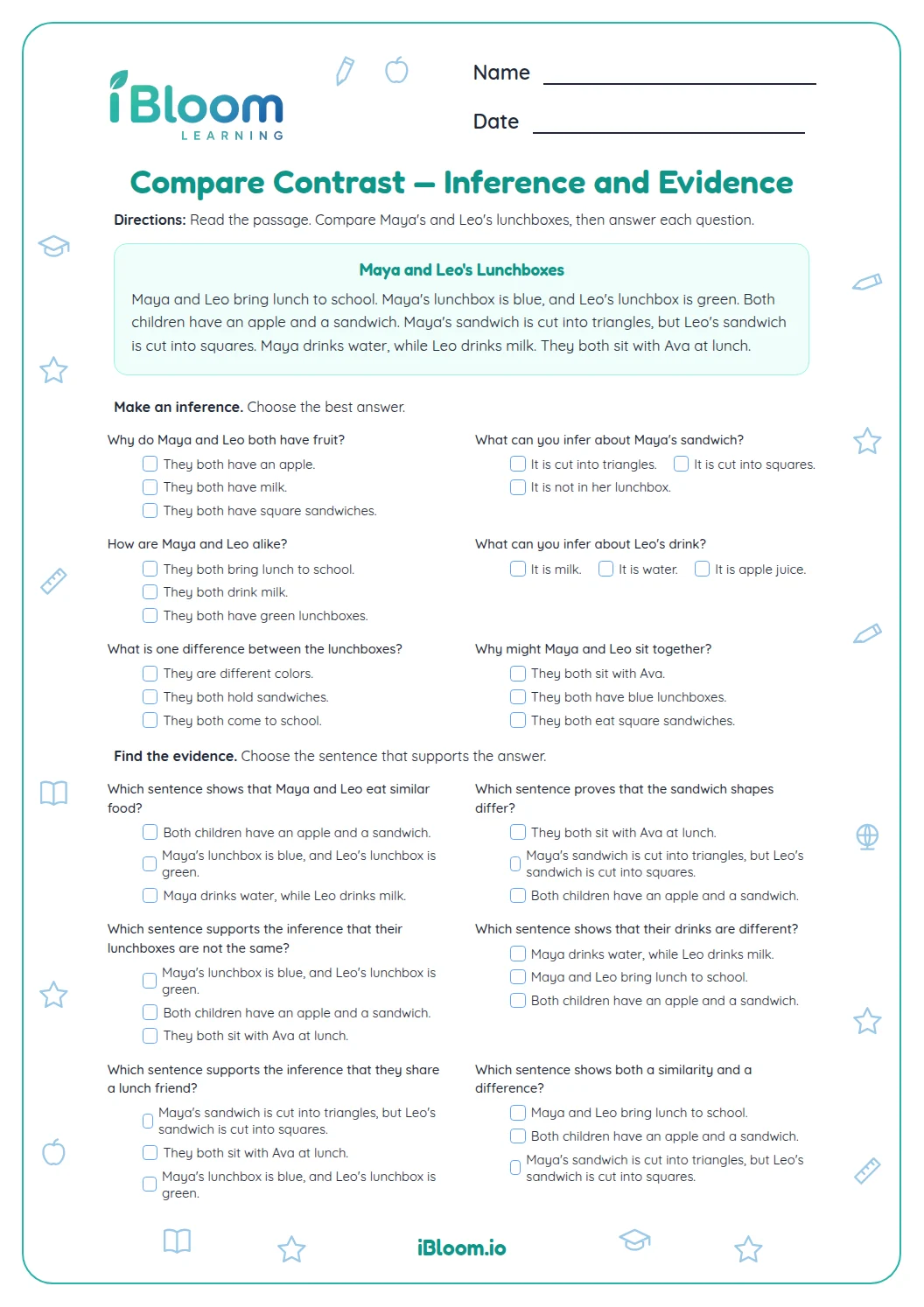
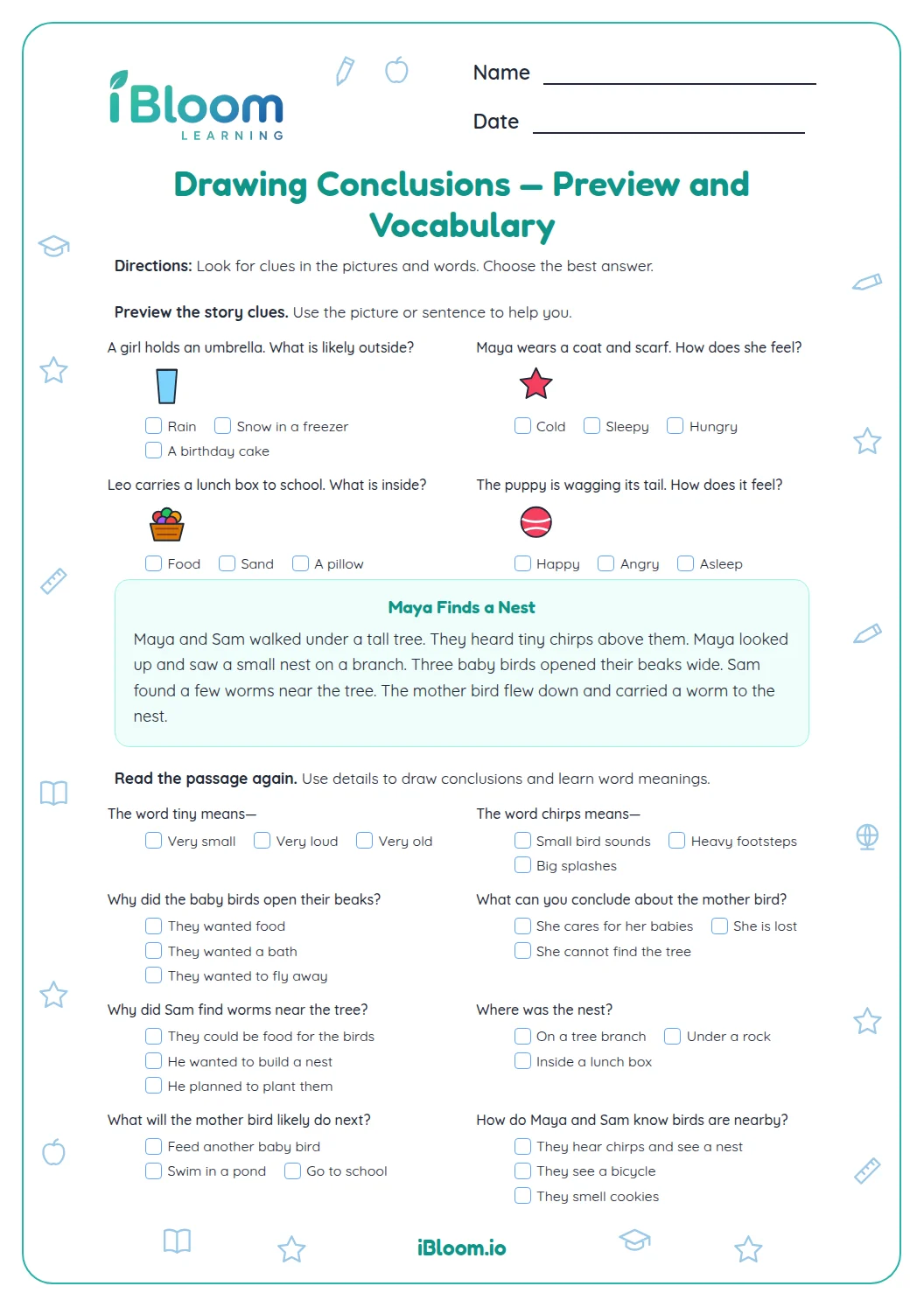
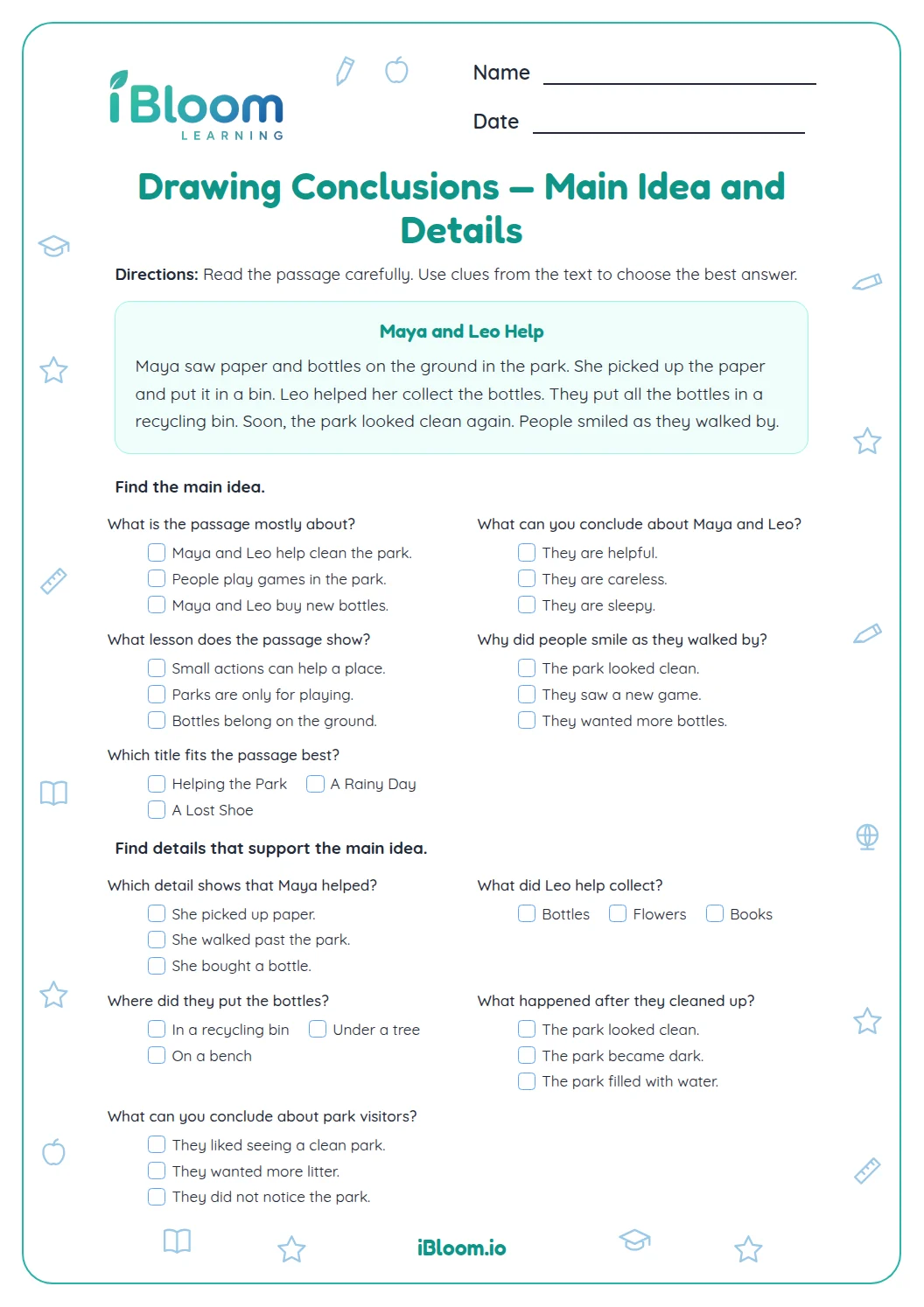
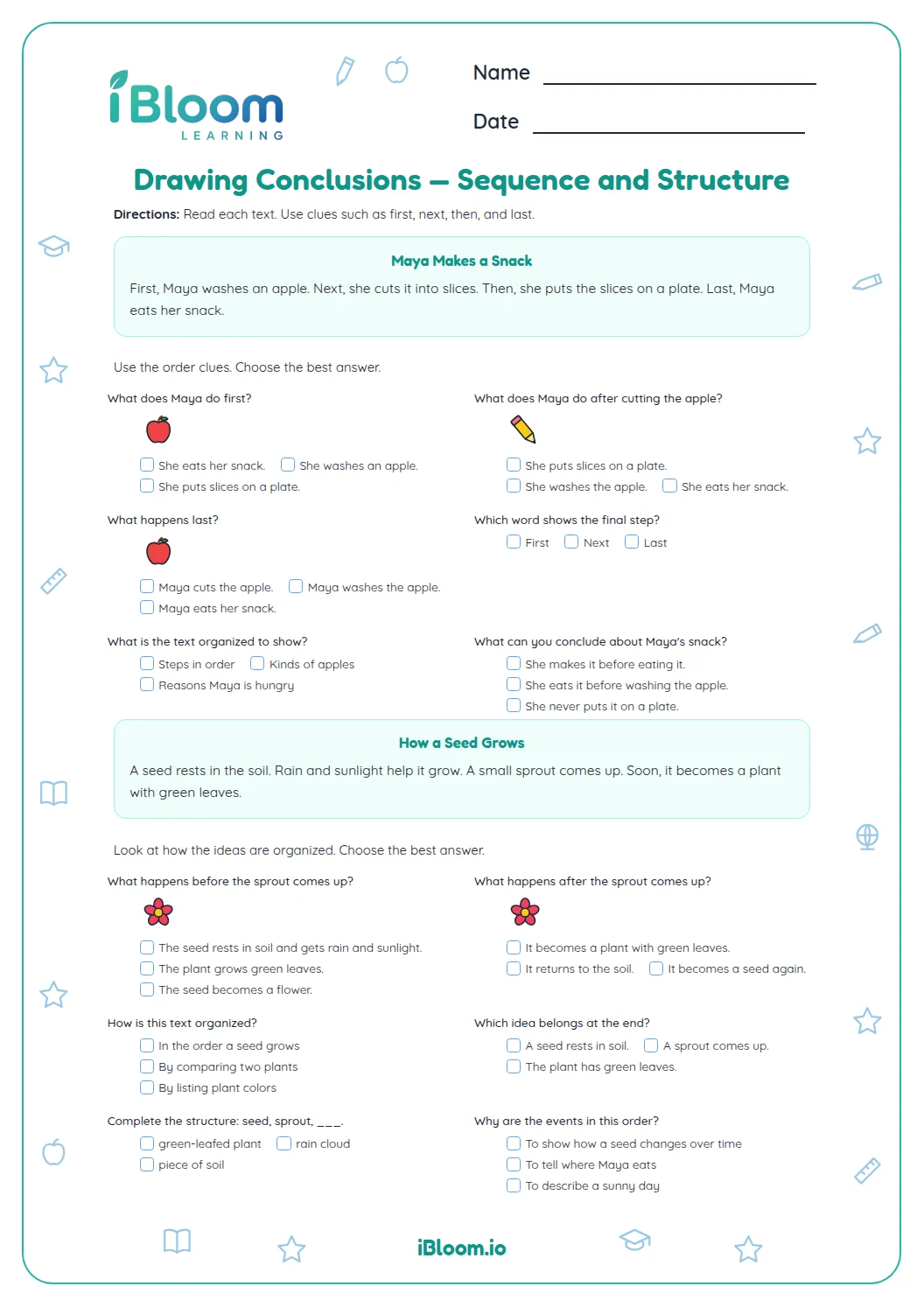
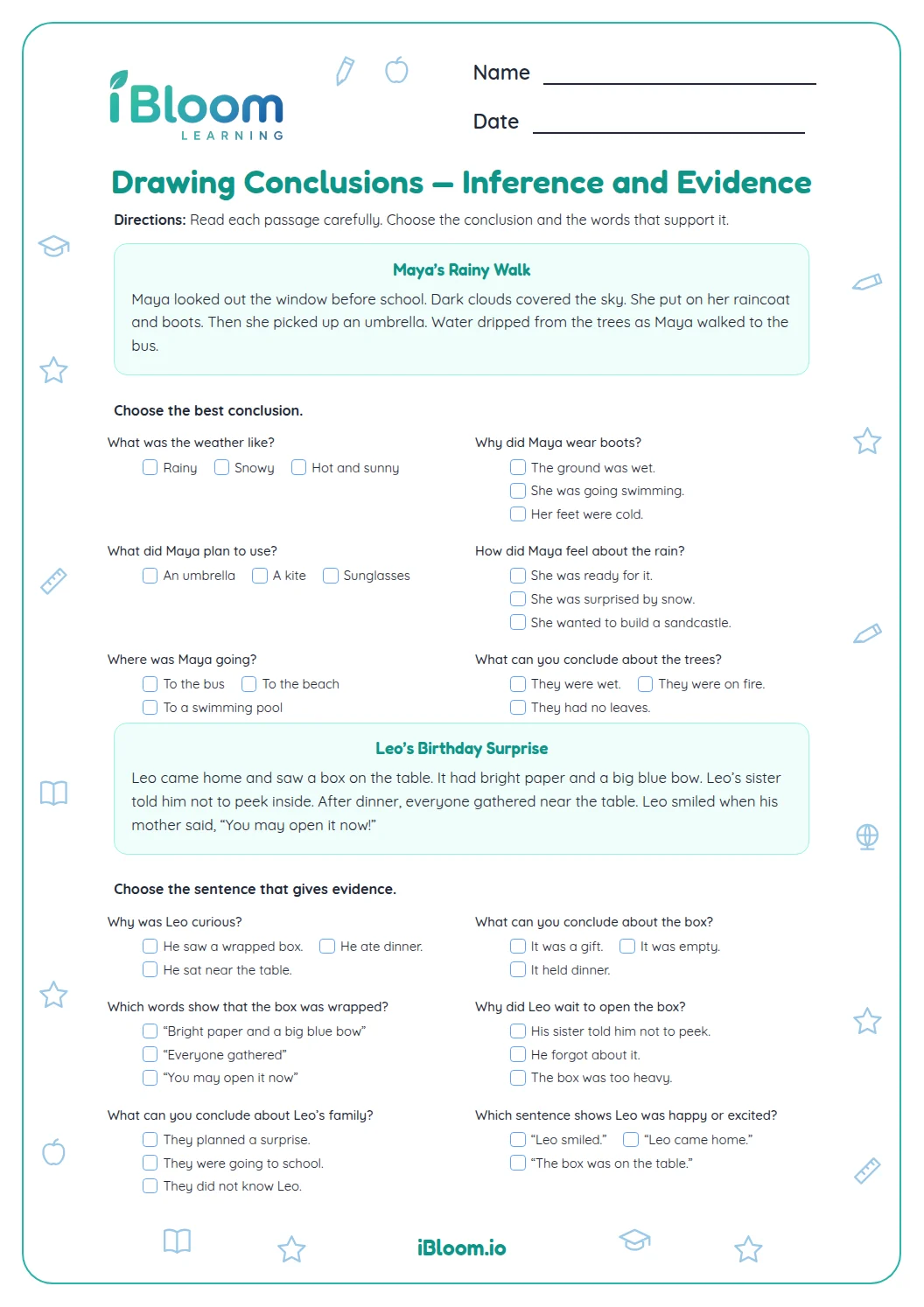
This Grade 1 reading worksheet gives children short, familiar texts to practice finding a main idea and a supporting detail. The 14 questions move from choosing a main idea, to matching a detail with a topic, to writing an answer in their own words. A separate answer key follows the three worksheet pages. The practice supports RI.1.2: identifying a text’s main topic and retelling key details.
Aligned to RI.1.2
How can a reader find the main idea?
Read the whole short text, then ask what idea connects its sentences. In the garden text, the bees, flowers, and ripe tomatoes all connect to the idea that a garden gives people food. The main idea covers the whole text; one detail covers only part of it.
- 1A garden grows food. Bees visit flowers. People pick ripe tomatoes.
- 2Main idea: A garden gives people food.
- 3The tomatoes and flowers are details that support the bigger idea.
Which details support a main idea?
A supporting detail should appear in the text and help explain the main idea. For the library text, “People can borrow books” supports the idea that a library is a place to read and borrow books. A detail about planting seeds would not fit that topic.
What should a written answer include?
Questions 11–14 ask children to name a detail or state a main idea. A short answer is enough when it clearly matches the text. For example, “People pick ripe tomatoes” is one detail from the garden text. The key gives sample answers; equivalent accurate wording works too.
How to use this worksheet
- 1Read each short text from beginning to end.
- 2Ask what all of its sentences are mostly about.
- 3Choose the answer that covers the whole text, not one small fact.
- 4For a detail question, find a fact that is stated in the text and fits the topic.
- 5Write a short response for questions 11–14, then check it against the answer key.
Common mistakes and quick fixes
The mistake
Choosing one interesting fact as the main idea.
The fix
Check whether the choice explains all the sentences in the short text.
The mistake
Picking a detail that belongs to a different topic.
The fix
Match the detail to the text named in the question and reread its sentences.
The mistake
Adding a detail that the text never gives.
The fix
Use a stated fact, such as the tomatoes in the garden text.
Curriculum alignment
This sheet practices the standard listed below.
Learners name a short text’s main topic and select details that support it.
On this sheet: Learners name a short text’s main topic and select details that support it.
Show the official wordingHide the official wording
Identify the main topic and retell key details of a text.
What to practice next
Make more practice
Further reading
Questions parents and teachers ask
How many questions are on the worksheet?
There are 14 questions in three parts. Six ask children to choose a main idea, four ask them to select a detail that supports a stated idea, and four ask for a short written response. The separate answer key gives the choices and sample wording for open responses.
What does “main idea” mean on this worksheet?
The main idea is what a short text is mostly about. For example, the garden text mentions bees, flowers, and tomatoes; its main idea is that a garden gives people food. The other sentences provide details that help explain that idea.
Do children need to write full sentences?
The last four questions call for brief written answers. A complete sentence is helpful, but the key accepts a clear phrase when it answers the question accurately. For example, “People pick ripe tomatoes” names one detail from the garden text.
What reading skill does this page practice?
The worksheet practices identifying a main topic and retelling key details from a text, the focus of RI.1.2. Children work with brief passages about a garden, a puppy, winter, a library, a kite, and a turtle, then use those texts to support their answers.
Is an answer key included?
Yes. The answer key follows the three worksheet pages and lists the correct choices. It also includes sample answers for the four written questions. Children can complete the worksheet first and then use the key to check whether each response matches the text.