




About this worksheet
Ben and Nora find a kite tangled in a tree. The questions ask readers to remember details, follow the order of their actions, and explain how they solve the problem.
Aligned to RL.1.3
How do readers follow story events?
A sequence records what happens first, next, and last. Readers can use words such as then, but they should also check what the characters do. Ben finds the kite before Nora holds the rake; they fly it only after the string is free.
Rereading the short passage is a useful strategy. Ask the child to point to the sentence that supports an answer instead of relying on a guess.
What does the story structure show?
The kite stuck in the tree is the problem. Ben asks Nora for help, they use a rake to free the string, and then they fly the kite. The beginning, middle, and ending connect as a problem and its solution.
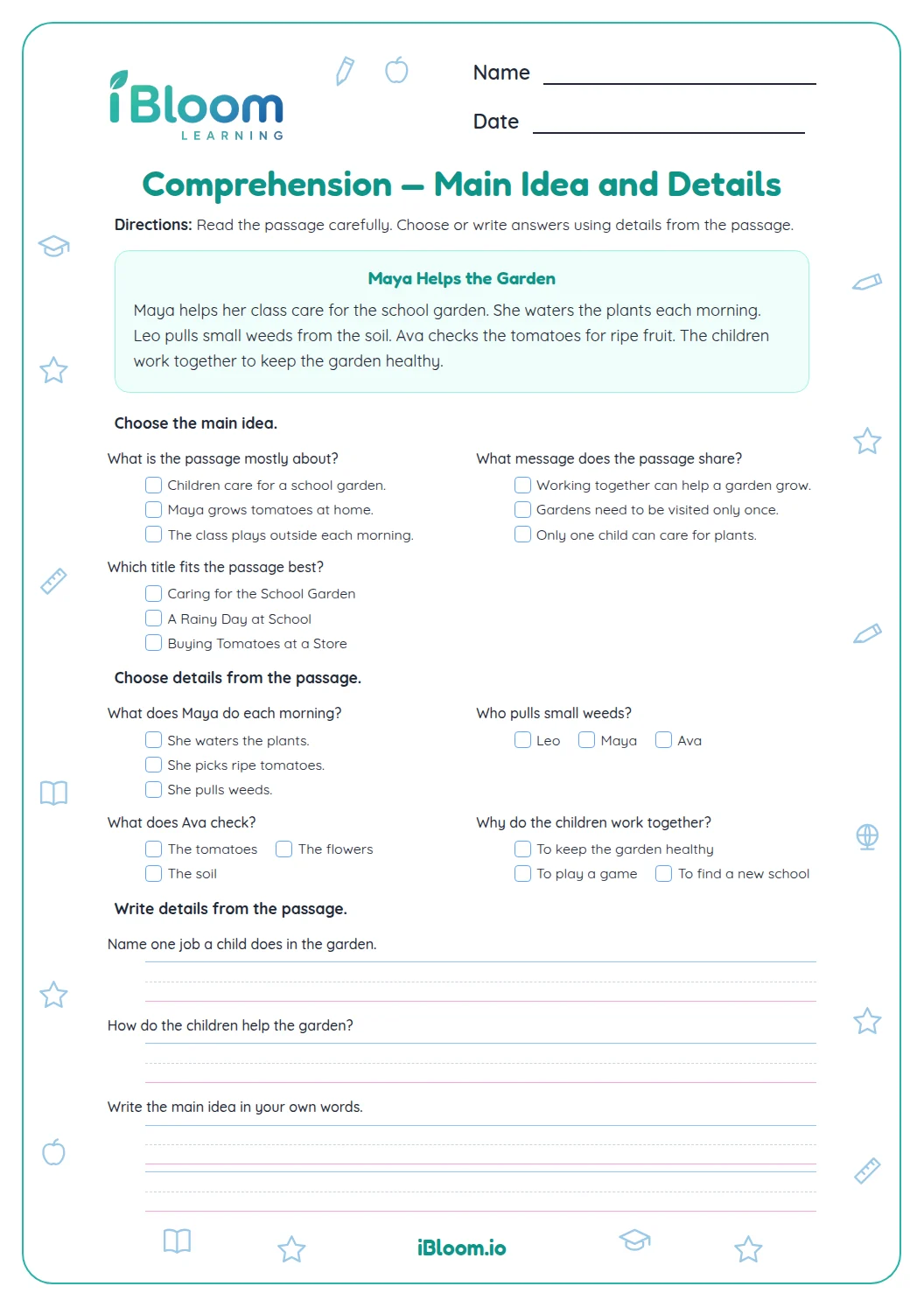
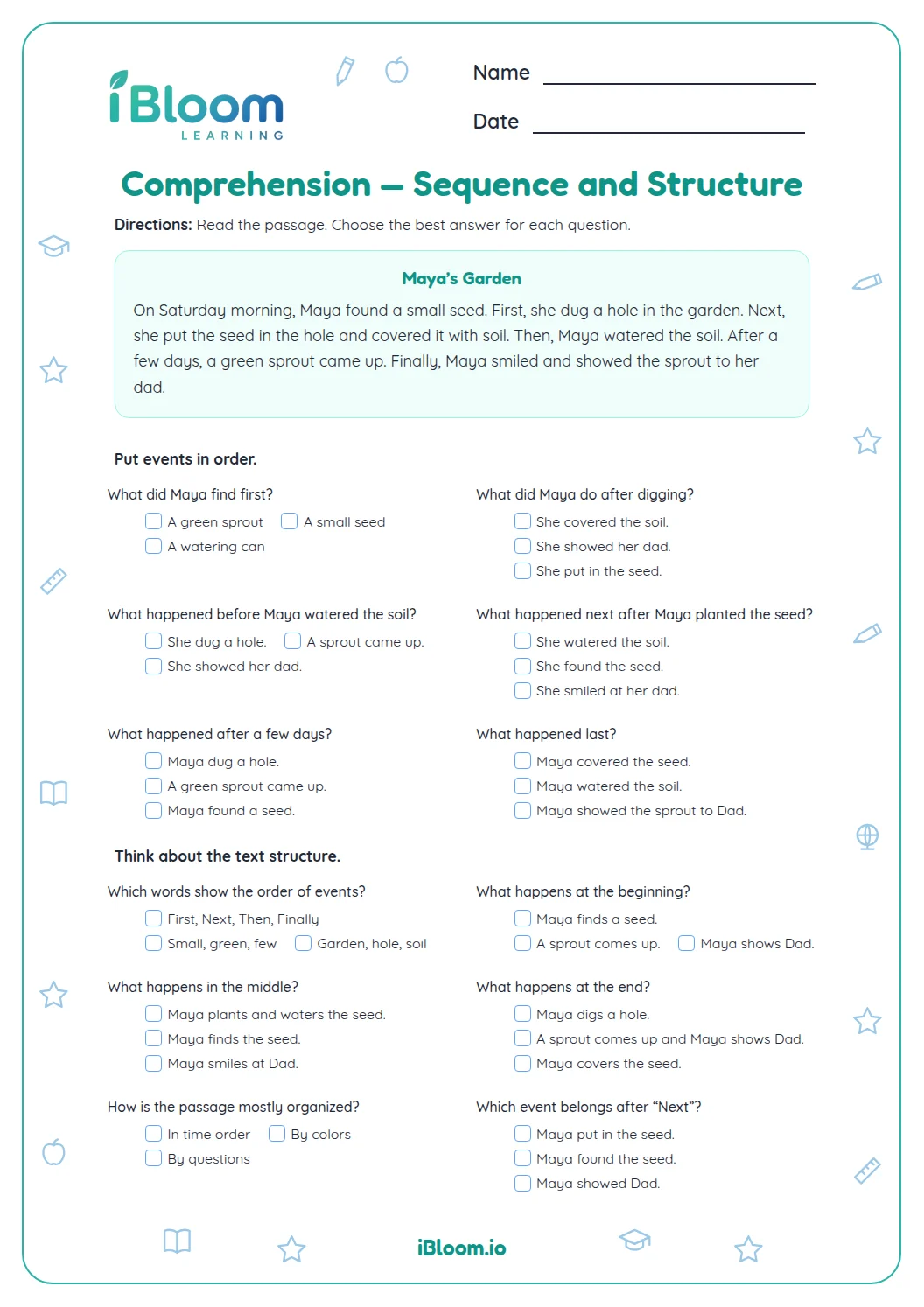
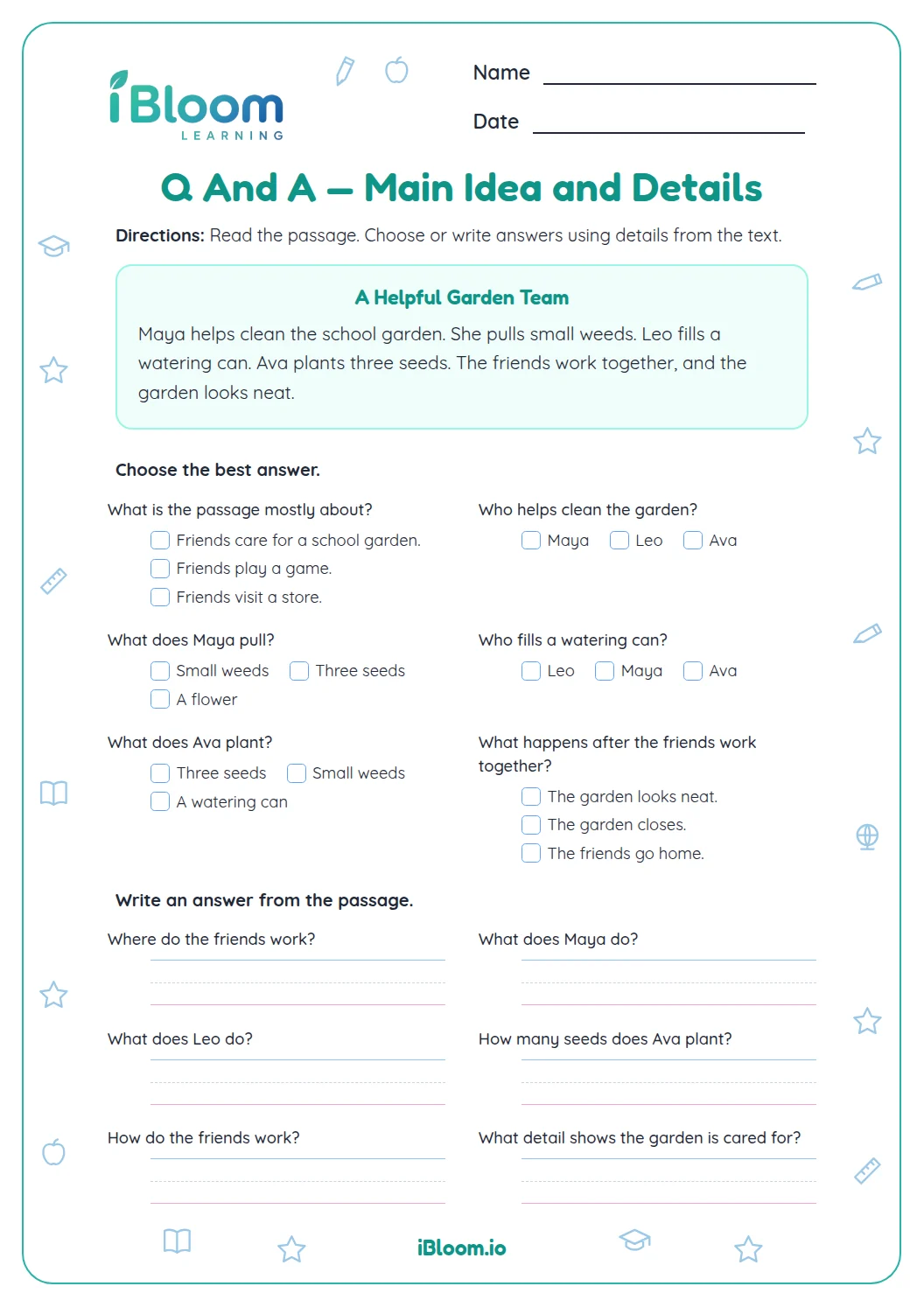
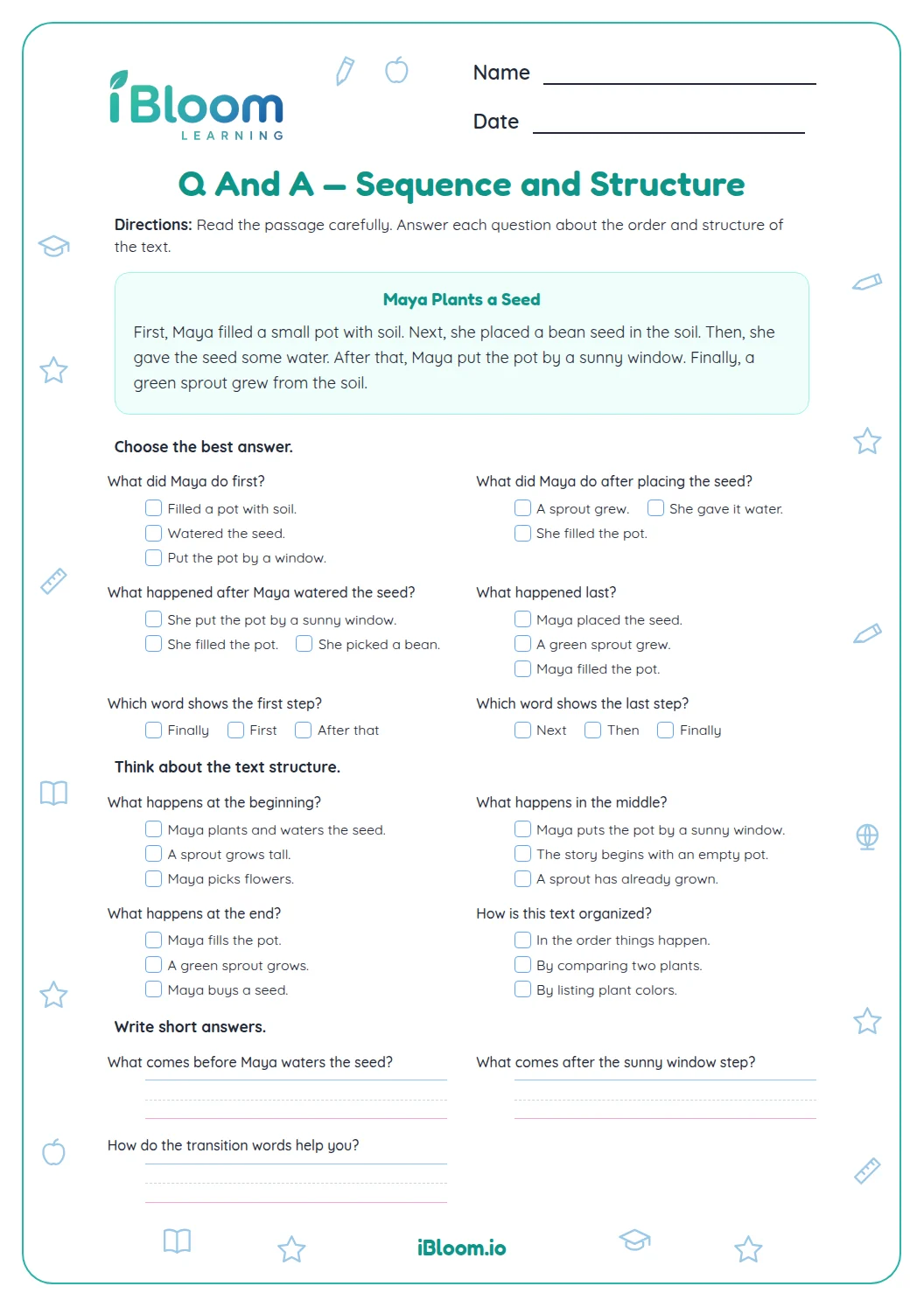
Part B asks for details, Part C follows the events, and Part D asks about the problem and solution.
Use the passage for evidence
- 1Read The Red Kite aloud once without stopping, then ask what Ben found.
- 2For Part B, reread a sentence to check each person, object, or place.
- 3For Part C, say the events aloud in order before choosing an answer.
- 4For Part D, name the problem first, then tell how the children fixed it.
- 5Check the key and ask the learner to point to the passage detail that supports one answer.
Common reading slips
The mistake
Mixing up the order of finding the kite and flying it.
The fix
Retell the story with three actions: find the kite, pull it down, fly it.
The mistake
Choosing a detail that appears in the story but does not answer the question.
The fix
Reread the exact question, then find the sentence about that person, object, or event.
The mistake
Calling the kite the solution.
The fix
The stuck kite is the problem. The children using the rake to free it is the solution.
Curriculum alignment
This page builds the Grade 1 habit of using story details to describe characters, setting, and major events.
Describe characters, settings, and major events in a story, using key details.
On this sheet: Readers recall details, sequence major events, and explain how the characters solve the story problem.
Show the official wordingHide the official wording
Describe characters, settings, and major events in a story, using key details.
What to practice next
Make more practice
Further reading
Questions parents and teachers ask
What skills does this Grade 1 worksheet practice?
This sheet asks first graders to remember story details, track events in order, and recognize a problem-and-solution story. The short passage gives all the evidence needed. Children can reread it before answering when a detail is hard to recall; the questions move from recall to explaining how the story works.
How can my child put the events in order?
A sequence tells what happens first, next, and last. Use the characters’ actions as clues: Ben finds the kite, Nora steadies the rake, and the pair fly it after retrieving it. Saying those actions aloud helps children compare the order with each choice.
What does problem and solution mean in a story?
A story’s structure is how its events fit together. Here, the problem is a kite tangled in a tree. Ben and Nora work together to bring it down, so the story follows a problem and solution instead of listing unrelated facts.
Should children reread the passage while answering?
Yes. The goal is to answer from story details, so rereading is a good strategy. Ask the child to point to the sentence that supports a choice. After checking the key, revisit any missed answer and find its evidence together rather than memorizing the answer alone.
Can children use the answer key to check their reading?
Yes. The key marks one correct answer for each multiple-choice item and lets an adult check the event sequence and story-structure choices. Ask the child to point back to a sentence in The Red Kite before showing the key, so the check stays connected to the text.