




About this worksheet
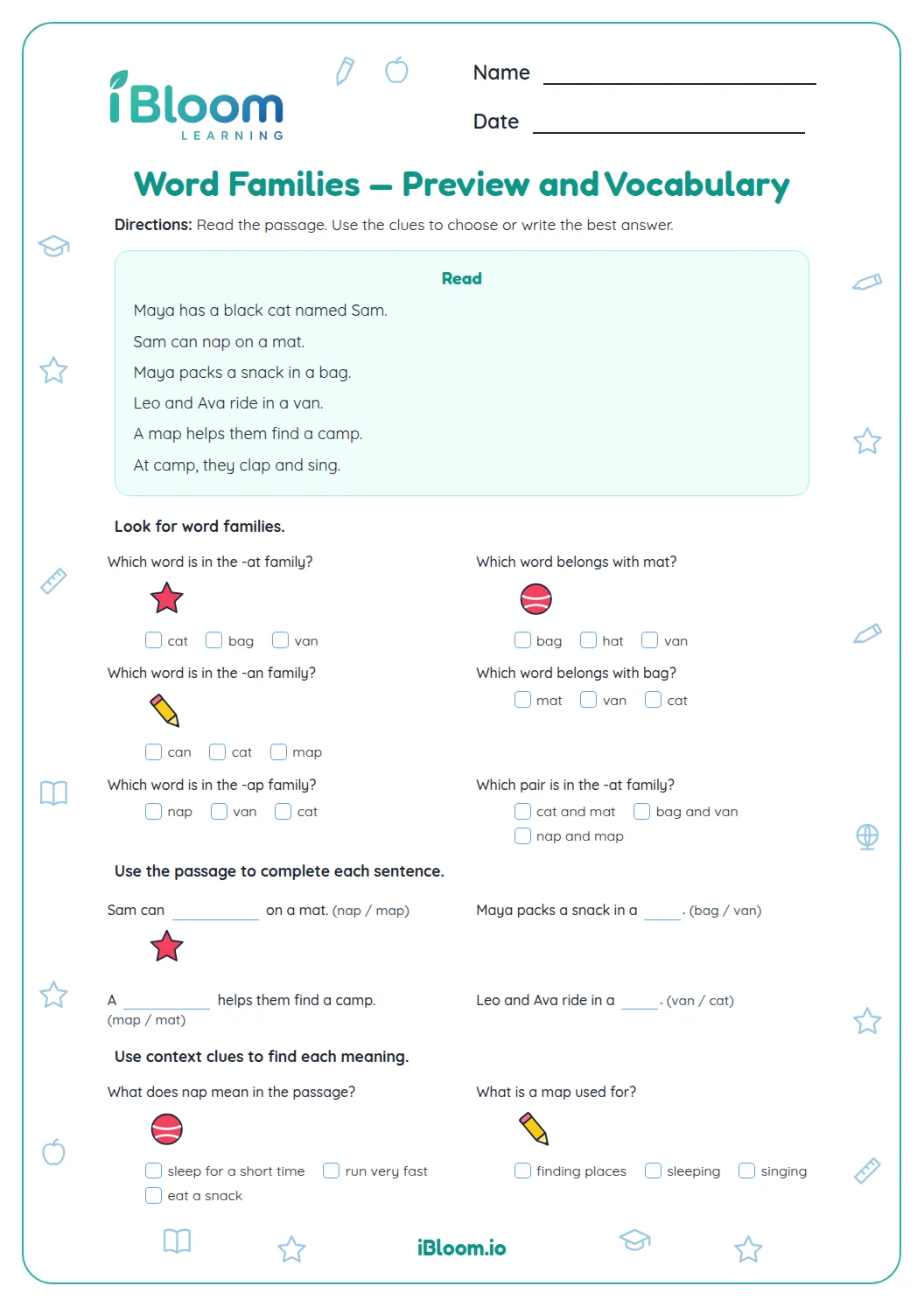
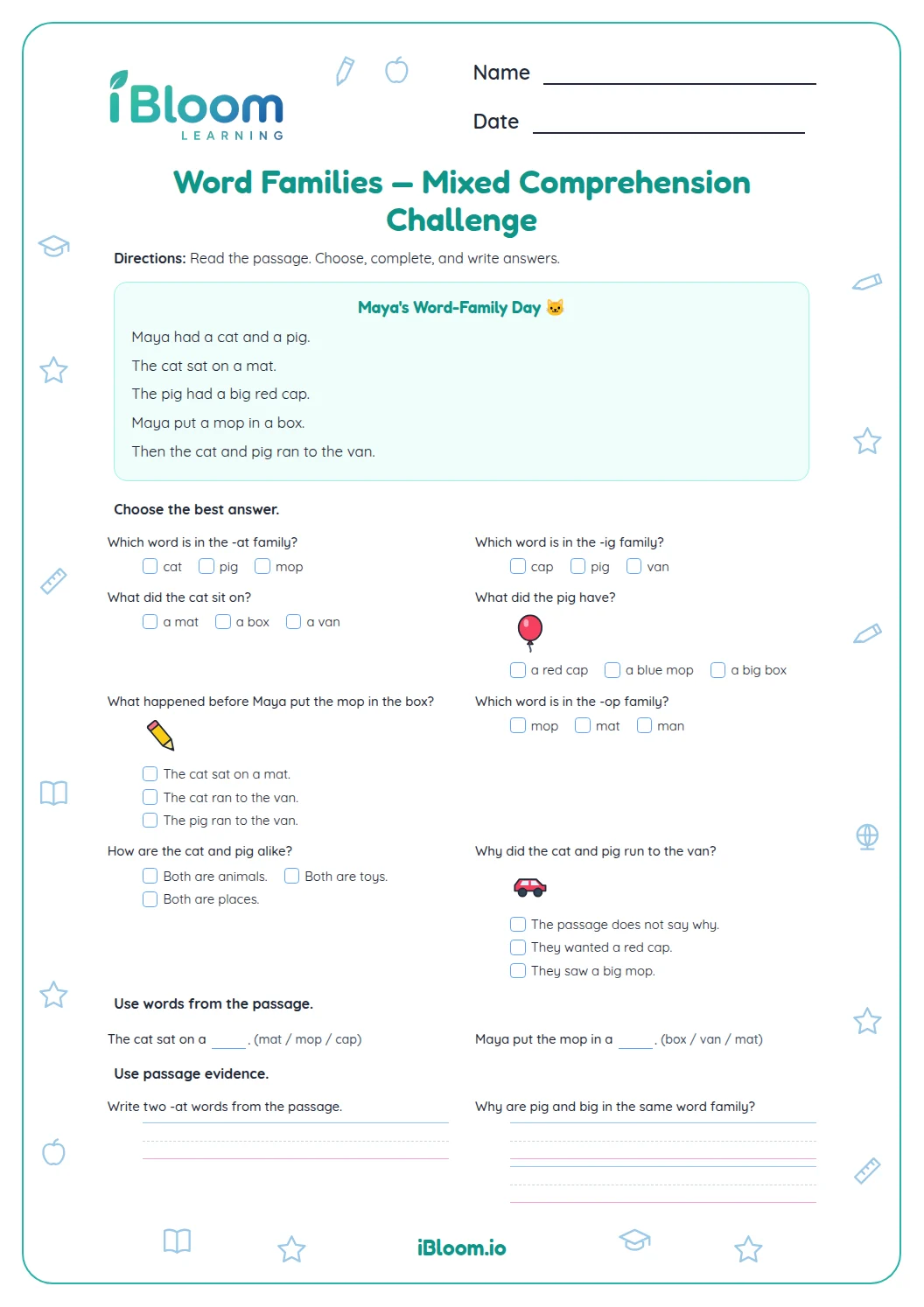
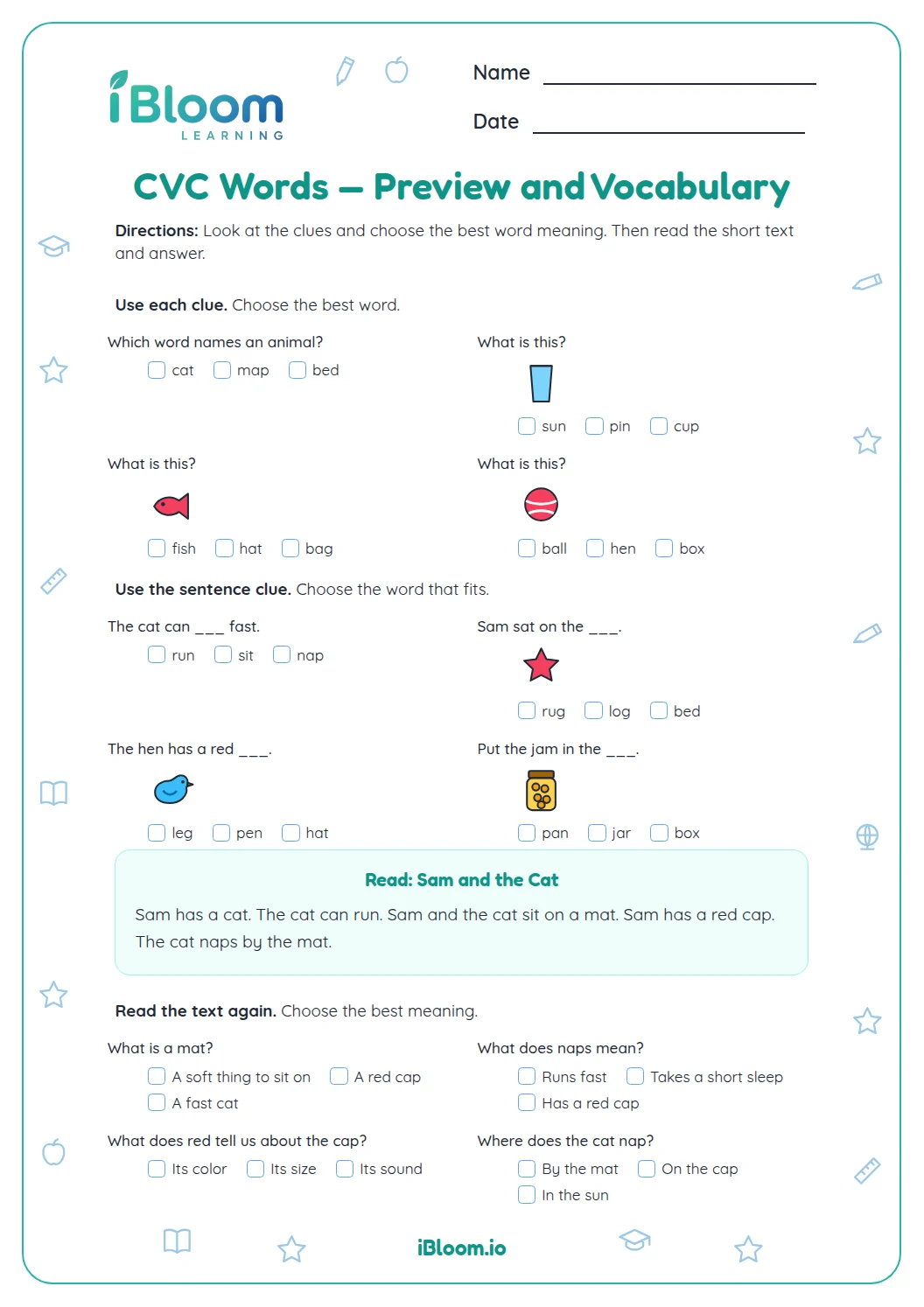
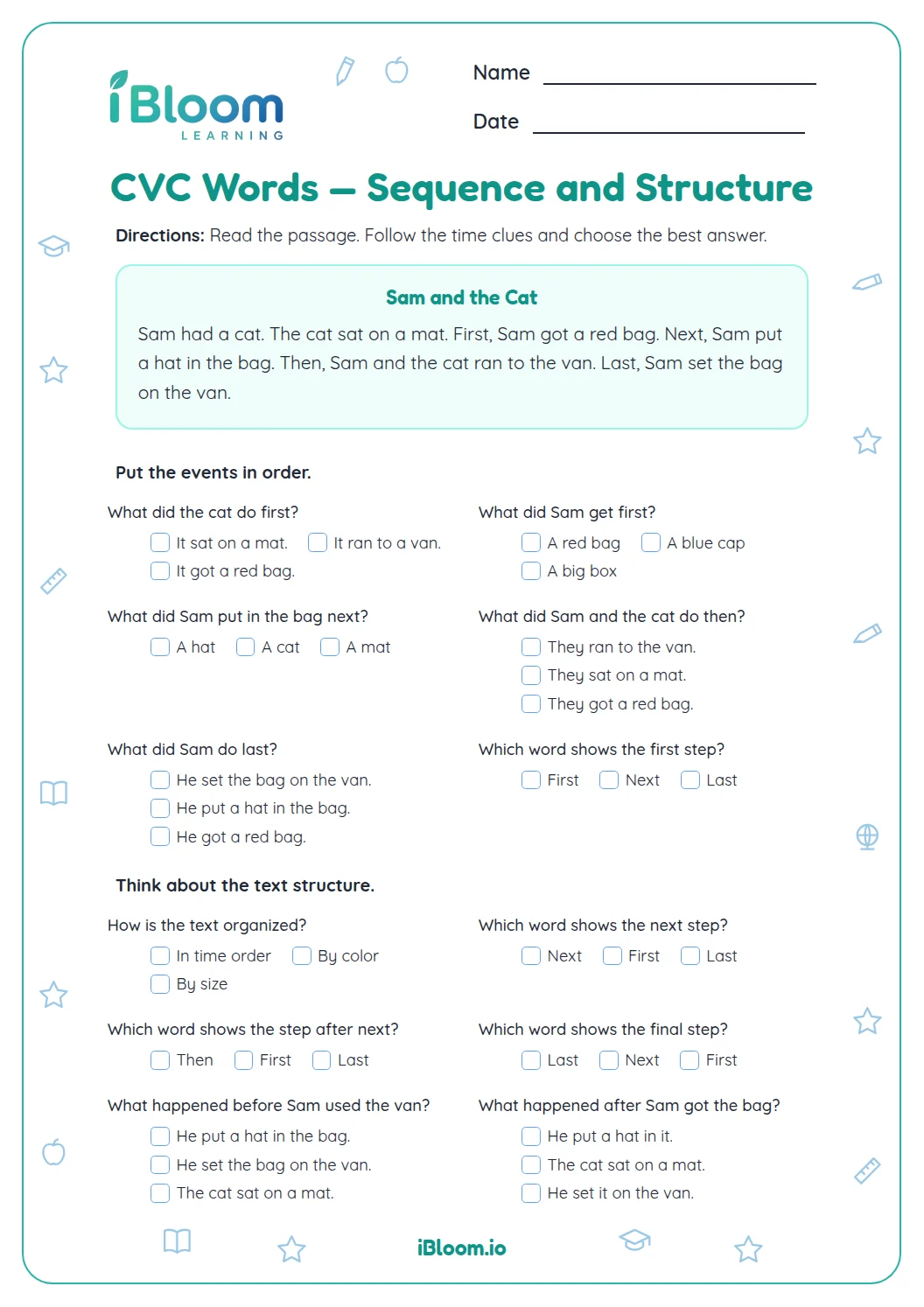
This Grade One reading worksheet pairs a short original story with word-family practice. In “A Cat and a Map,” children meet several one-syllable words with -at, -an, and -ap patterns. Part B checks story details and asks learners to identify, use, and extend those word families in writing. The answer key gives direct answers and sample sentences. The work aligns with CCSS RF.1.3.b.
Aligned to RF.1.3.b
How do word families help a reader?
Words in one family share the same spelling pattern at the end and usually rhyme. Recognizing -at can help a child read cat, Nat, and mat.
- 1Question 3 asks for an -at word. Cat ends in -at; nap ends in -ap.
How can a reader find an answer in the story?
Reread the sentence that contains the detail. Then answer with the character, object, or place named there.
- 1Question 8 asks what Sam finds in a red bag. The story says Sam finds a map.
How to use this worksheet
- 1Read the story once for meaning.
- 2Read it again and listen for words that rhyme.
- 3In Part A, compare the final letters and sounds.
- 4For story questions, point to the sentence that gives the answer.
- 5For writing prompts, use a word family pattern and reread your sentence.
Common mistakes and quick fixes
The mistake
Choosing words that rhyme but have different ending spellings.
The fix
For a word family, check both the ending sound and letters.
The mistake
Mixing up -at and -ap.
The fix
Look at the final consonant: t in cat, p in cap.
The mistake
Answering from memory when the story has a clear detail.
The fix
Reread the sentence about the map, tree, or cap.
Curriculum alignment
This Grade One practice connects each activity to the skill named in CCSS RF.1.3.b.
Reading a short story and responding to word-family clues
On this sheet: Reading a short story and responding to word-family clues
Show the official wordingHide the official wording
Decode regularly spelled one-syllable words.
What to practice next
Further reading
Questions parents and teachers ask
Which skill does this page practice?
This page pairs a short original story with word-family choices and written responses. Learners read one-syllable words with -at, -an, and -ap patterns, answer story questions, and write a few sentences using those patterns. The included key makes a later review quick and clear.
How should a learner use the answer key?
Read the story once for meaning, then answer the questions. Use the key after each part or at the end. For word-family answers, compare both the final sound and the letters at the end of the word. The included key makes a later review quick and clear.
Can this worksheet be used at home?
Yes. Read the story aloud together and invite the child to point to words that rhyme. The child can complete the choices independently, then use the key to check story details and written responses. The included key makes a later review quick and clear.
What should I do when an answer is incorrect?
Reread the sentence that tells the detail, then check the ending letters of the word. Words can rhyme without sharing the same spelling pattern, so compare both the sound and the letters when identifying a family. The included key makes a later review quick and clear.
How long will the practice take?
Plan about 15 minutes to read the story and answer the questions. Allow extra time for written sentences, since the learner may want to reread the story and choose word-family examples before writing. The included key makes a later review quick and clear.