





About this worksheet
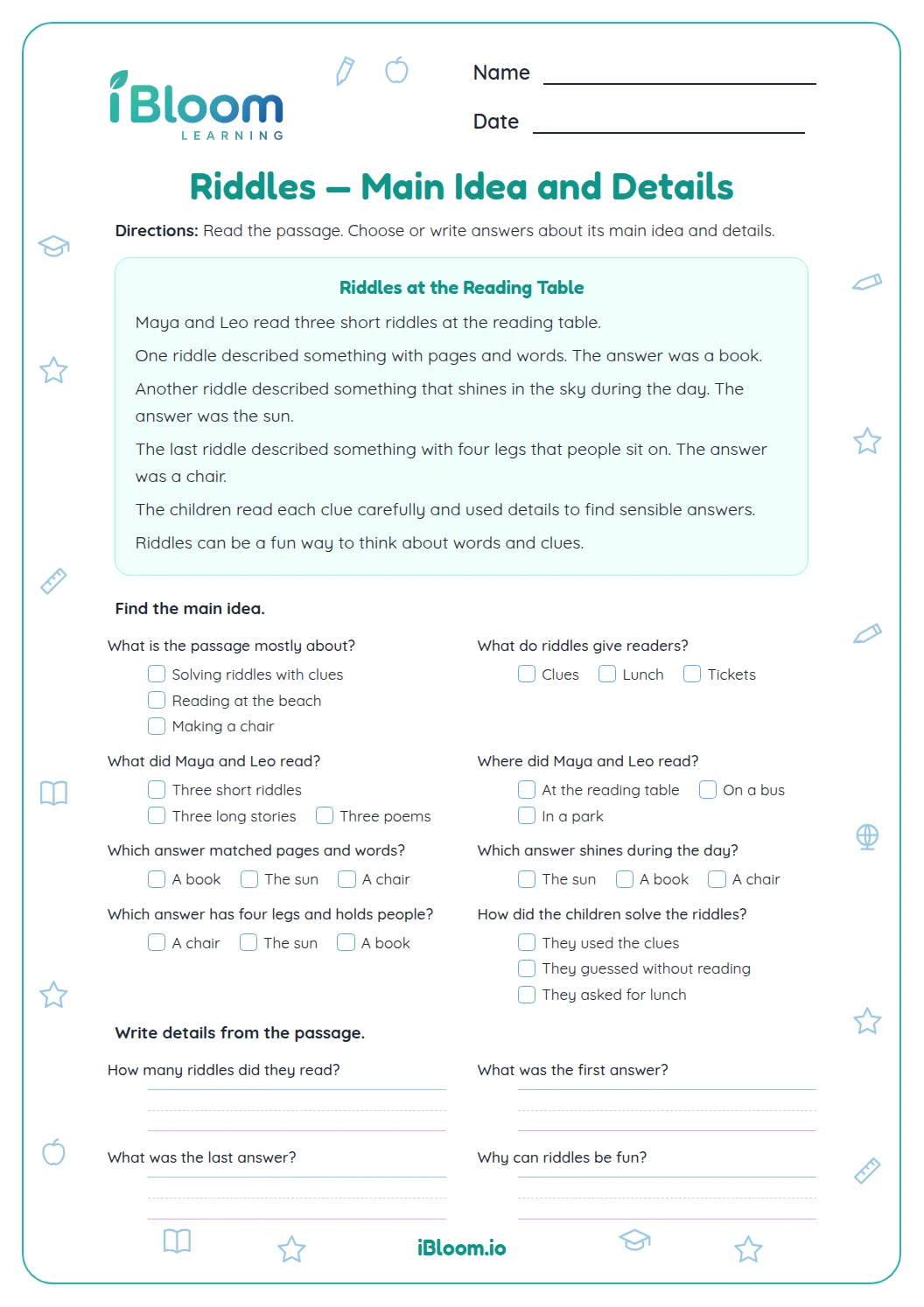
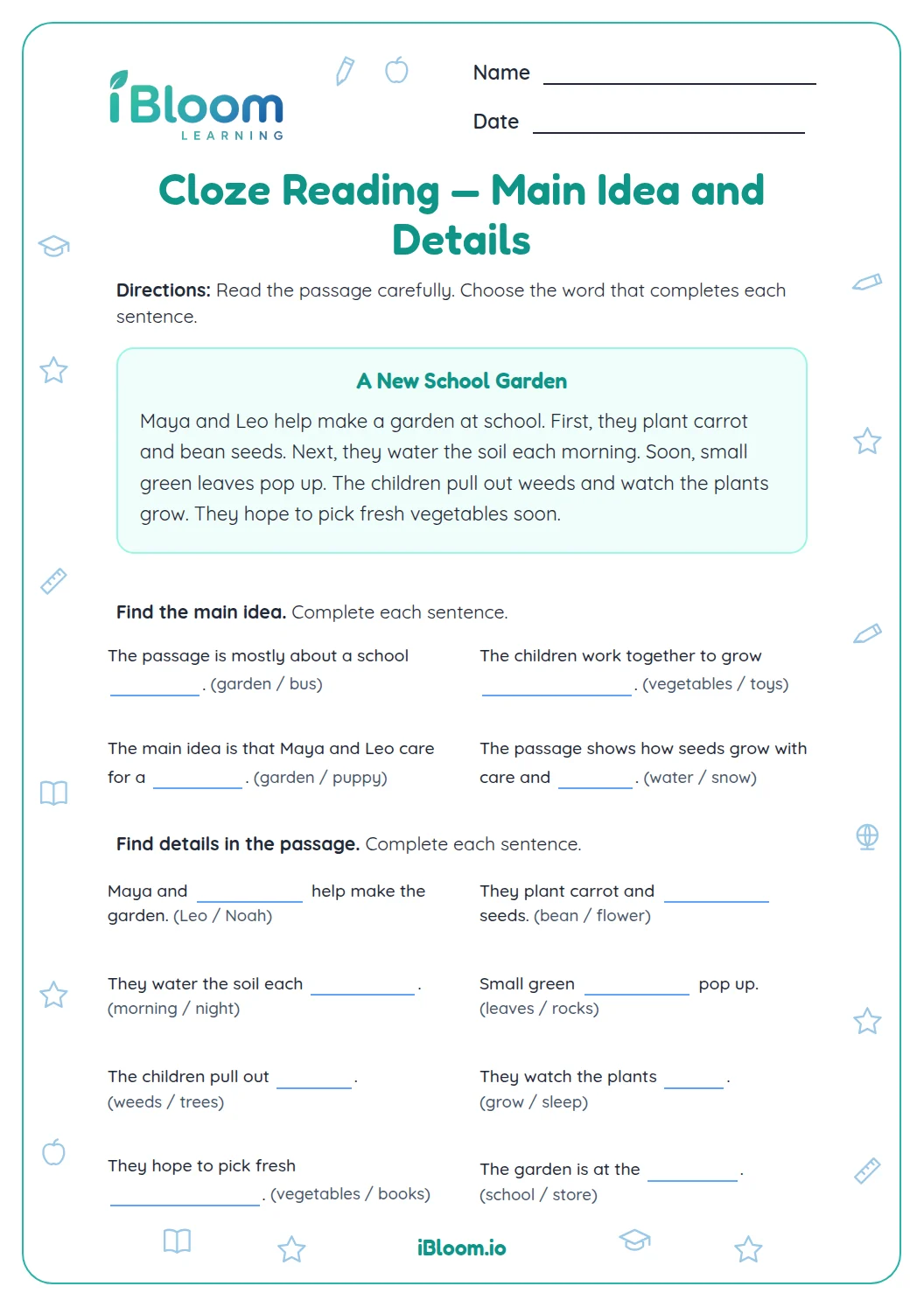
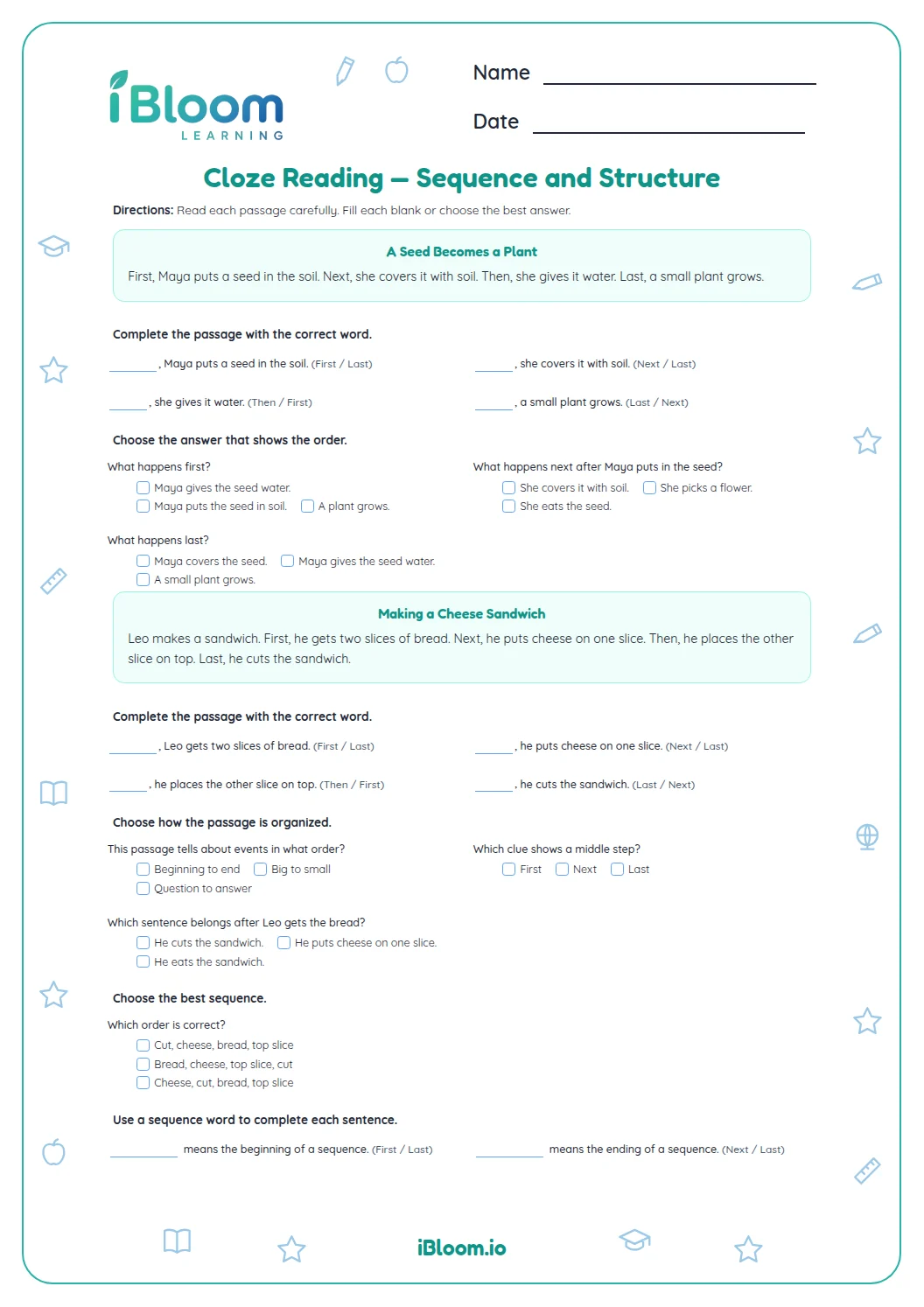
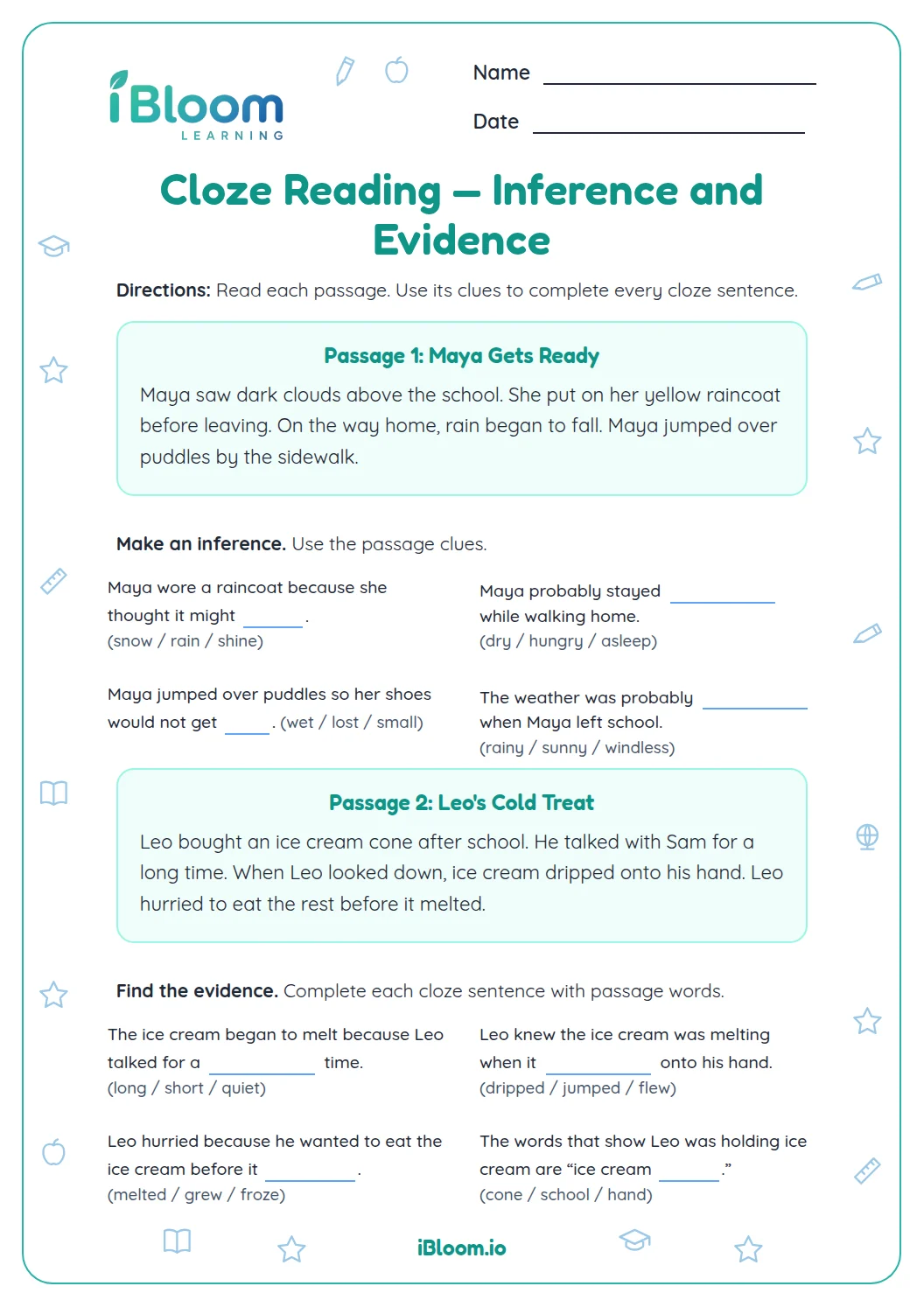
This printable Grade 1 worksheet pairs a four-riddle passage with 14 questions. Children choose what each riddle describes, find details in the passage, and use context to explain words such as dry, cover, and clue. The passage and questions practice asking and answering about key details (CCSS RL.1.1); a separate answer key supports checking after reading.
Aligned to RL.1.1
What will students practice?
The passage has four short riddles about a chair, the sun, a book, and rain. The questions first identify each answer, then return to details and phrases in the passage, and finish with four word-meaning choices.
The riddle answers come directly from the clues. For the detail questions, students can point to the sentence that supports each response.
- Part A: The four-riddle passage
- Part B: Read the Clues (5 questions)
- Part C: Find a Detail (5 questions)
- Part D: Use Word Clues (4 questions)
How can students work through an example?
For Question 1, use both details: the object has four legs and is used for sitting. A chair fits both clues; the other choices do not.
- 1Question 1: What has four legs and is used for sitting?
- 2Answer: chair
- 3Both details point to the same object.
How can an adult support practice?
For a detail question, reread the matching riddle instead of relying on memory. For example, the last riddle says a person may carry an umbrella to stay dry.
For a word question, read the whole phrase. “Stay dry” tells what the umbrella helps someone do: remain not wet.
What can students do next?
Use a related worksheet to practice the next small step, then return to this page later for a quick review.
How to use this worksheet
- 1Read the one-sentence directions together.
- 2Complete the first item and explain the clue used.
- 3Work through each part in order.
- 4Check answers with the key after finishing a part.
- 5Redo any missed item and say what changed.
Common mistakes and quick fixes
The mistake
Answering before reading the whole prompt.
The fix
Read it once for meaning, then look for the specific clue.
The mistake
Using a familiar pattern without checking every detail.
The fix
Compare the answer with the prompt one piece at a time.
The mistake
Treating a missed answer as a reason to stop.
The fix
Use the key to find the rule, then try the item again without looking.
Common Core alignment
This page supports the listed Common Core skill through its printed practice.
Answer riddles by finding key details stated in a short story.
On this sheet: Students answer questions about details and clues in the original riddle passage.
Show the official wordingHide the official wording
Ask and answer questions about key details in a text.
What to practice next
Make more practice
Further reading
Questions parents and teachers ask
How many questions are on this worksheet?
This printable Grade 1 worksheet pairs a four-riddle passage with 14 questions. Children choose what each riddle describes, find passage details, and use context to explain words such as dry, cover, and clue. It practices asking and answering about key details (CCSS RL.1.1), with a separate answer key for checking.
Can students use the answer key while working?
Have the student try the questions first, then use the key to check them. For Part C, ask the student to find the sentence that supports an answer, such as the line about carrying an umbrella to stay dry. This connects each response to the passage.
How long should this worksheet take?
Plan for about 15 minutes to read the four riddles and answer the 14 questions. Students who benefit from shorter turns can read one riddle, answer its matching question, and then continue to the detail and word-meaning questions.
What if a student misses an item?
For Question 1, the clues are “four legs” and “used for sitting.” The word chair fits both details. Reread the clue and ask the student to compare each answer choice with both parts before checking the key together.
Can I use the worksheet in a small group?
An adult can read the four riddles aloud with a small group, then invite students to answer and point to a supporting clue. The group can compare how each riddle narrows the choices. Use the answer key after everyone has had a chance to respond.