
About this worksheet
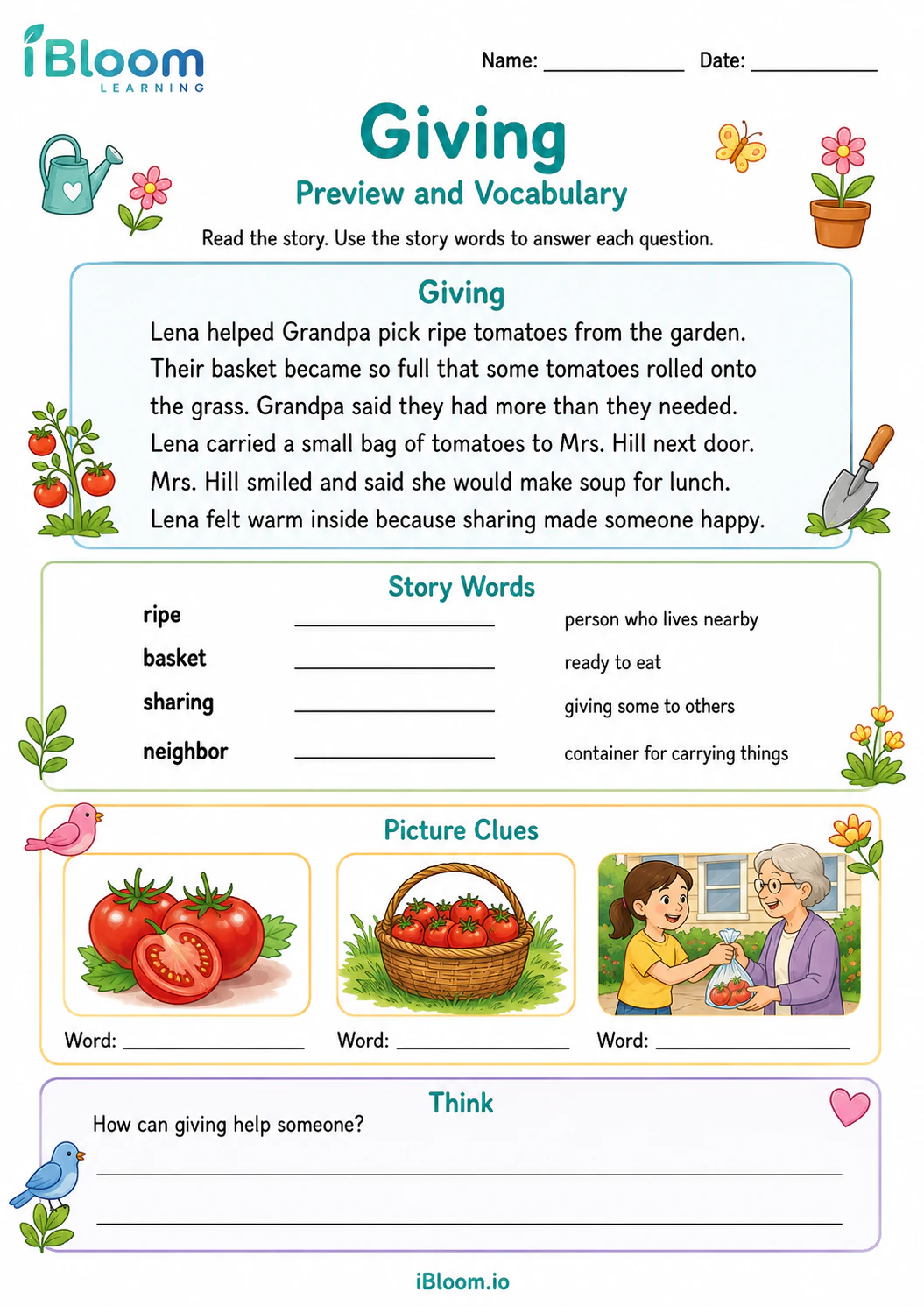
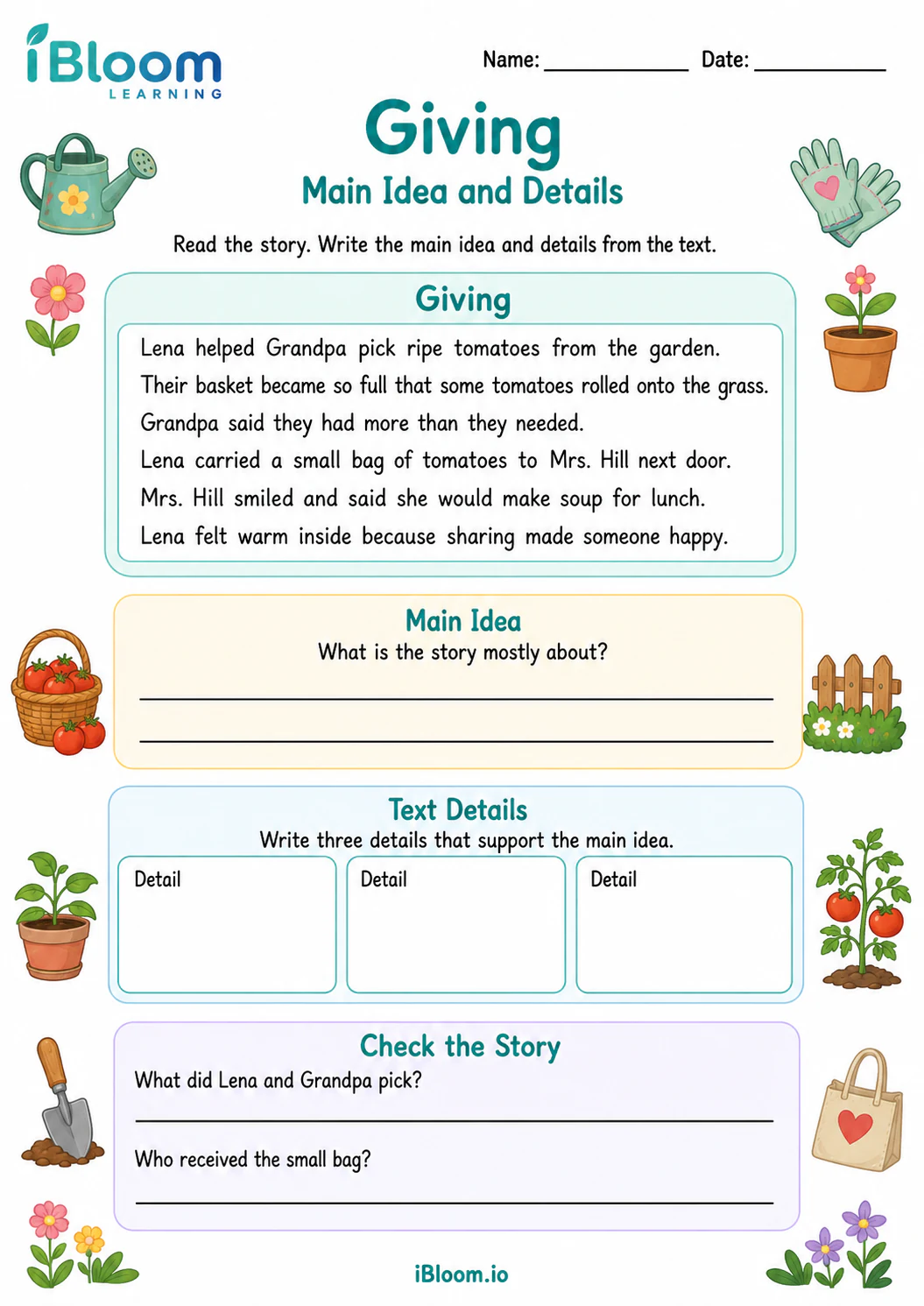
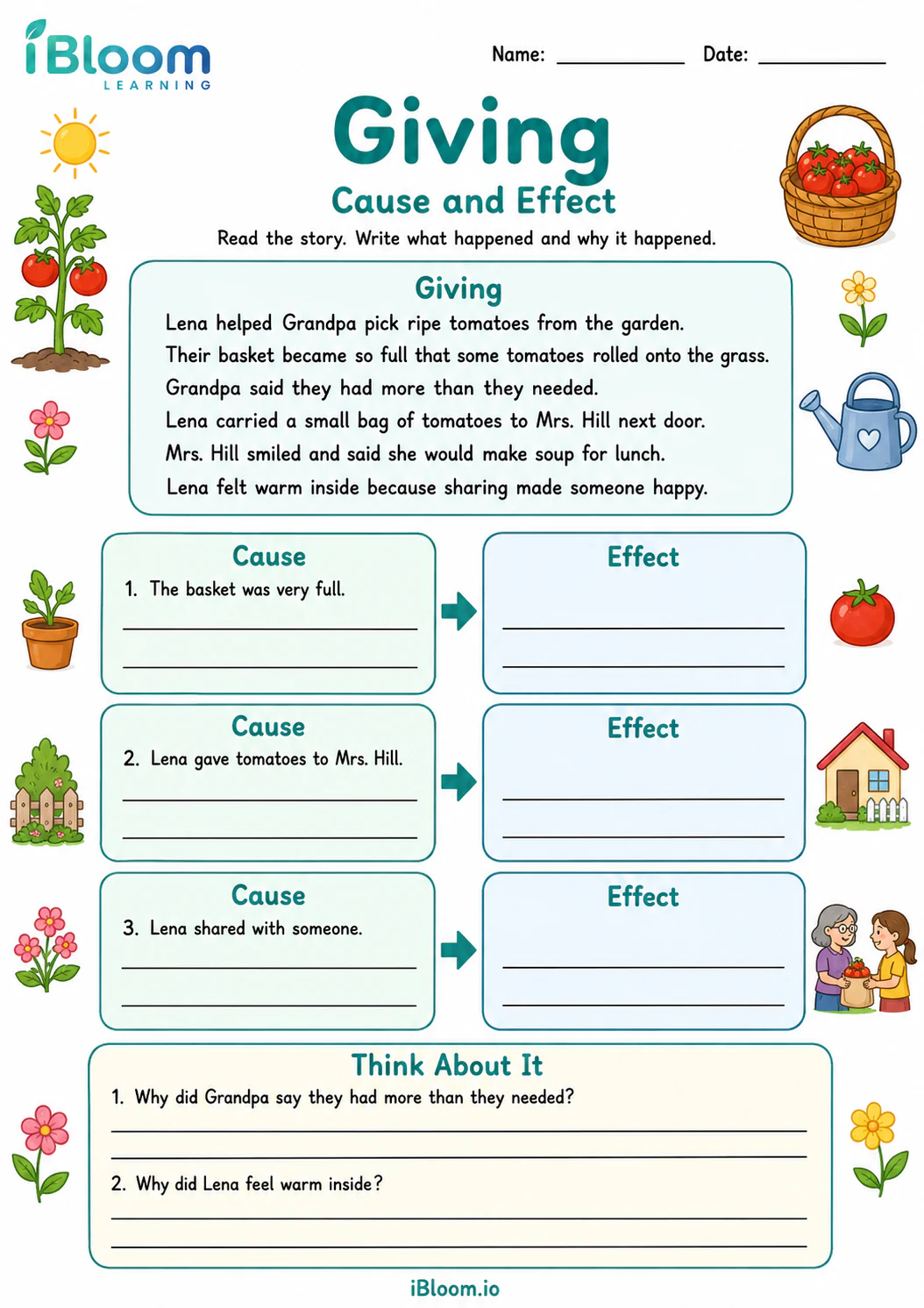
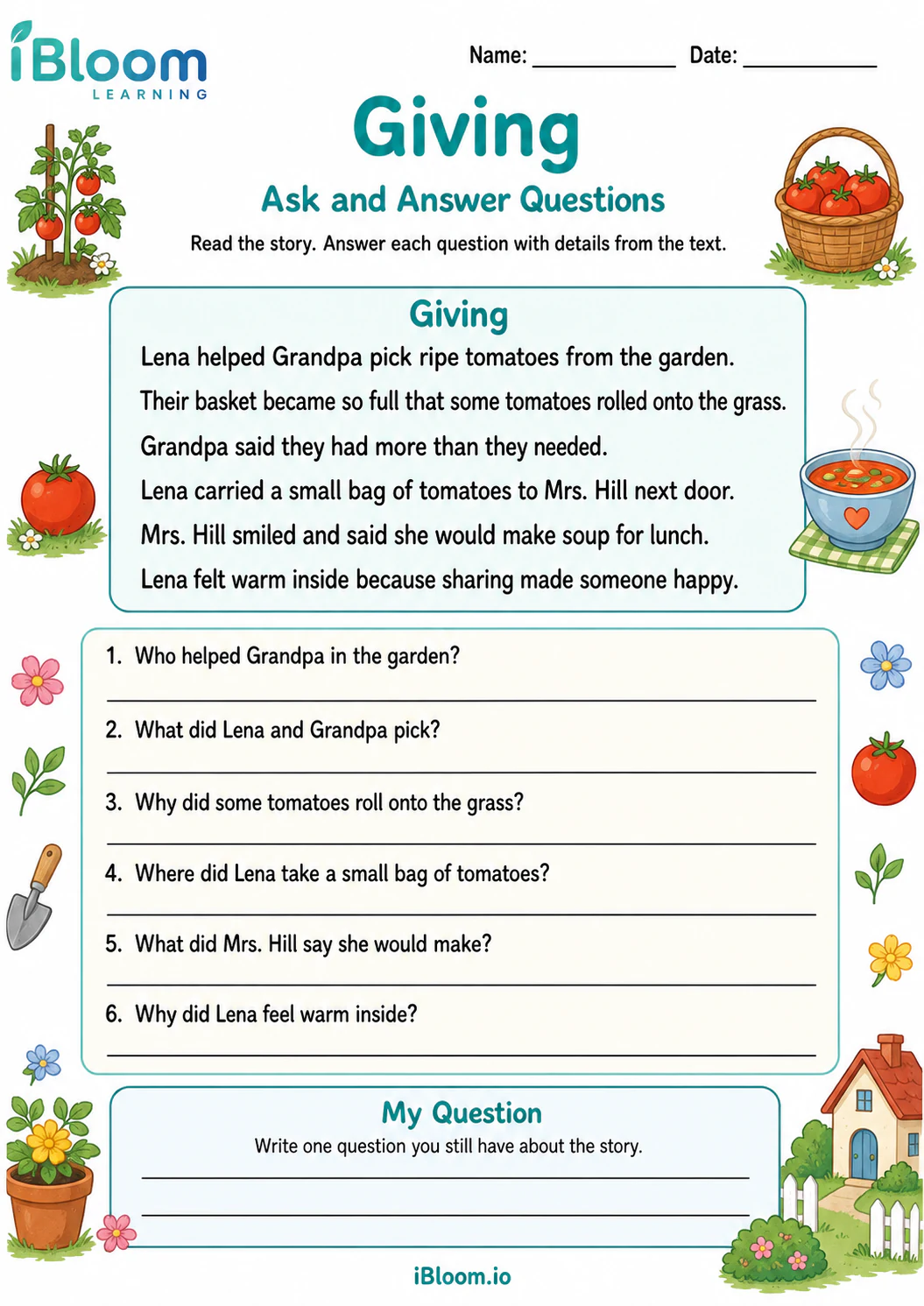
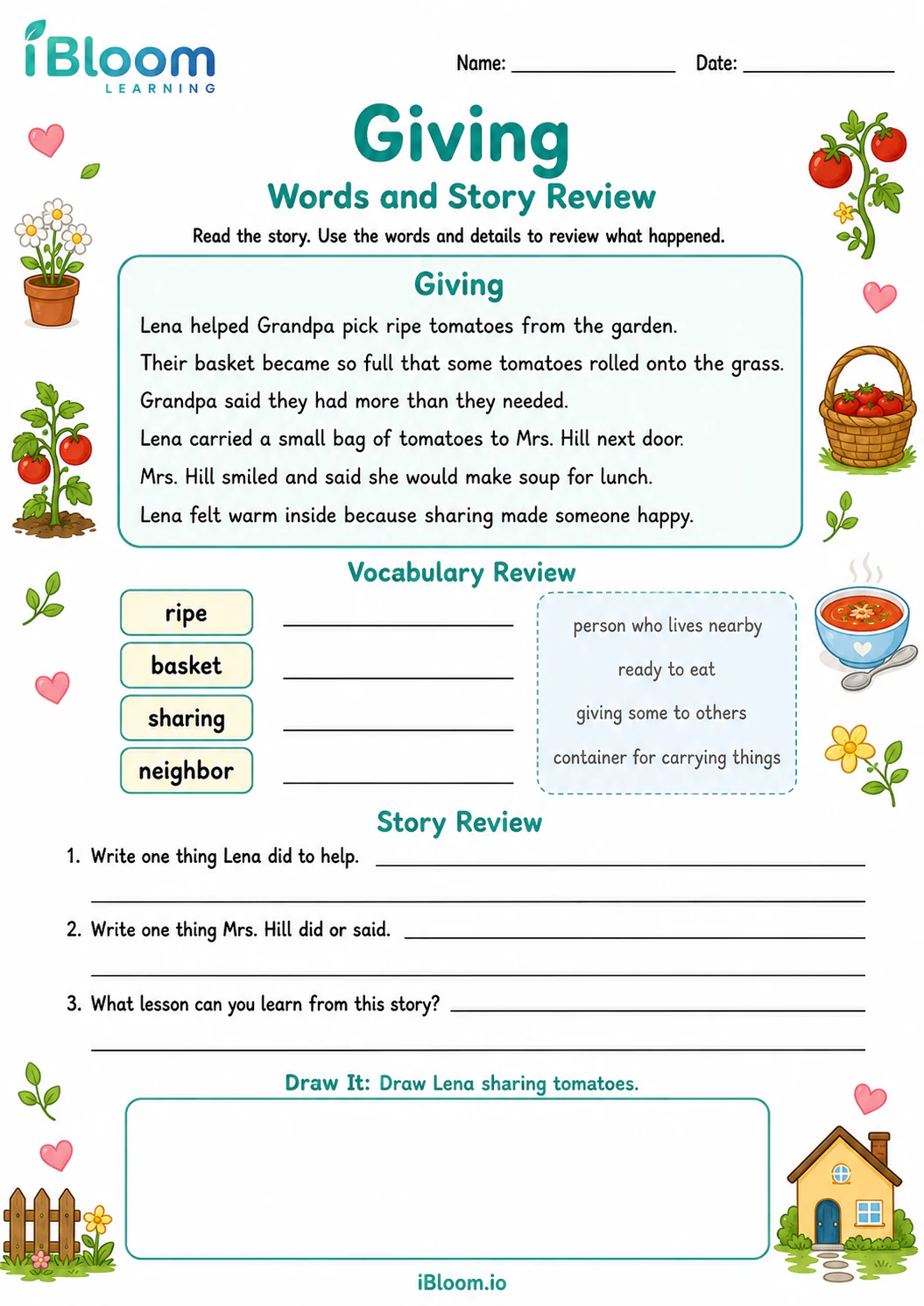
This Grade 2 reading worksheet features Lena and Grandpa picking tomatoes and sharing extras with Mrs. Hill. Its passage is followed by 14 questions: five multiple-choice, five fill-in, and four written responses. Students track event order, recall story details, and explain what the beginning introduces and how the ending concludes the action. The answer key includes sample wording for the written responses.
Aligned to RL.2.5 and RL.2.1
How do readers track event order?
Readers notice what happens first, what changes in the middle, and what happens last. Time words such as first and next help, while the events themselves confirm the sequence. Lena and Grandpa pick tomatoes before Lena brings some to Mrs. Hill.
Question 1 asks what Lena and Grandpa do first. They pick ripe tomatoes; Mrs. Hill’s soup plan comes later.
- 1What did Lena and Grandpa do first?
- 2They picked ripe tomatoes.
What does the beginning introduce?
The beginning introduces the characters and situation. The opening tells readers that Lena helps Grandpa pick tomatoes in the garden, before the basket becomes too full.
Question 12 asks students to explain this introduction using those details.
How does the ending conclude the action?
The ending tells how Lena feels after sharing the extra tomatoes. She feels warm inside because her action made someone happy.
Question 14 asks for a sentence about the ending. A complete answer names Lena’s feeling and connects it to sharing.
How to read and answer
- 1Read the whole story once to understand who is there and what happens.
- 2Reread and mark the time words, including “first” and “next.”
- 3Put each event in the order it appears in the story.
- 4For a written response, use a character name and a detail from the passage.
- 5Check the ending question by connecting Lena’s feeling to the sharing event.
Common mix-ups
The mistake
Choosing what Mrs. Hill plans to do as the last event.
The fix
Mrs. Hill plans soup before Lena walks home; the story’s final event is Lena’s feeling.
The mistake
Putting the spill before the basket is full.
The fix
Reread the sentence that explains the cause: the basket grew too full, then tomatoes rolled out.
The mistake
Explaining the ending without mentioning the story detail that causes Lena’s feeling.
The fix
Connect her warm feeling to sharing tomatoes with Mrs. Hill.
Common Core alignment
The questions focus on story order, structure, and key details from the passage.
Describe how the beginning introduces the story and how the ending concludes its action.
On this sheet: Questions ask what the beginning introduces and how the ending closes Lena’s story.
Show the official wordingHide the official wording
Describe the overall structure of a story, including describing how the beginning introduces the story and the ending concludes the action.
Answer questions about key events and details in the story.
On this sheet: Questions 1–10 ask about who, what, and when details in the passage.
Show the official wordingHide the official wording
Ask and answer such questions as who, what, where, when, why, and how to demonstrate understanding of key details in a text.
What to practice next
Make more practice
Further reading
Questions parents and teachers ask
Who appears in the passage?
Lena, her Grandpa, and Mrs. Hill appear in the story. Lena and Grandpa pick tomatoes in the garden, and Lena brings some of the extra tomatoes to Mrs. Hill, who lives next door. Mrs. Hill says she will make soup.
What happens first in the story?
Lena helps Grandpa pick ripe tomatoes in the garden. They fill a basket together before it becomes too full and some tomatoes roll onto the grass. The opening sentence gives the first event. The opening gives this event directly, making it a useful first detail to confirm before ordering what follows.
Why does Lena bring tomatoes to Mrs. Hill?
Grandpa says they picked more tomatoes than they needed, so Lena carries some of the extras next door. Mrs. Hill smiles and says she will make soup. The surplus tomatoes explain Lena’s decision to share. The surplus is stated in the story: they picked more than they needed, so Lena shares the extra tomatoes.
What happens at the end?
On the way home, Lena feels warm inside because sharing the extra tomatoes made someone happy. The final sentence gives both her feeling and the reason for it. The last sentence supplies both pieces of the response: Lena’s feeling and the effect of her sharing.
How does the worksheet practice story structure?
Students order events, identify details from the story, and explain what the beginning introduces and how the ending concludes the action. The questions refer to Lena’s actions and feelings in the passage. The passage and each question stay with the same tomato-sharing events, from the full basket through Lena’s walk home.
Can written answers use different words from the key?
Yes. The key gives sample responses, not the only acceptable wording. A response should name an accurate story event or detail and keep the sequence clear. For example, “Lena shared the extra tomatoes with her neighbor” accurately describes why she went to Mrs. Hill.