
About this worksheet
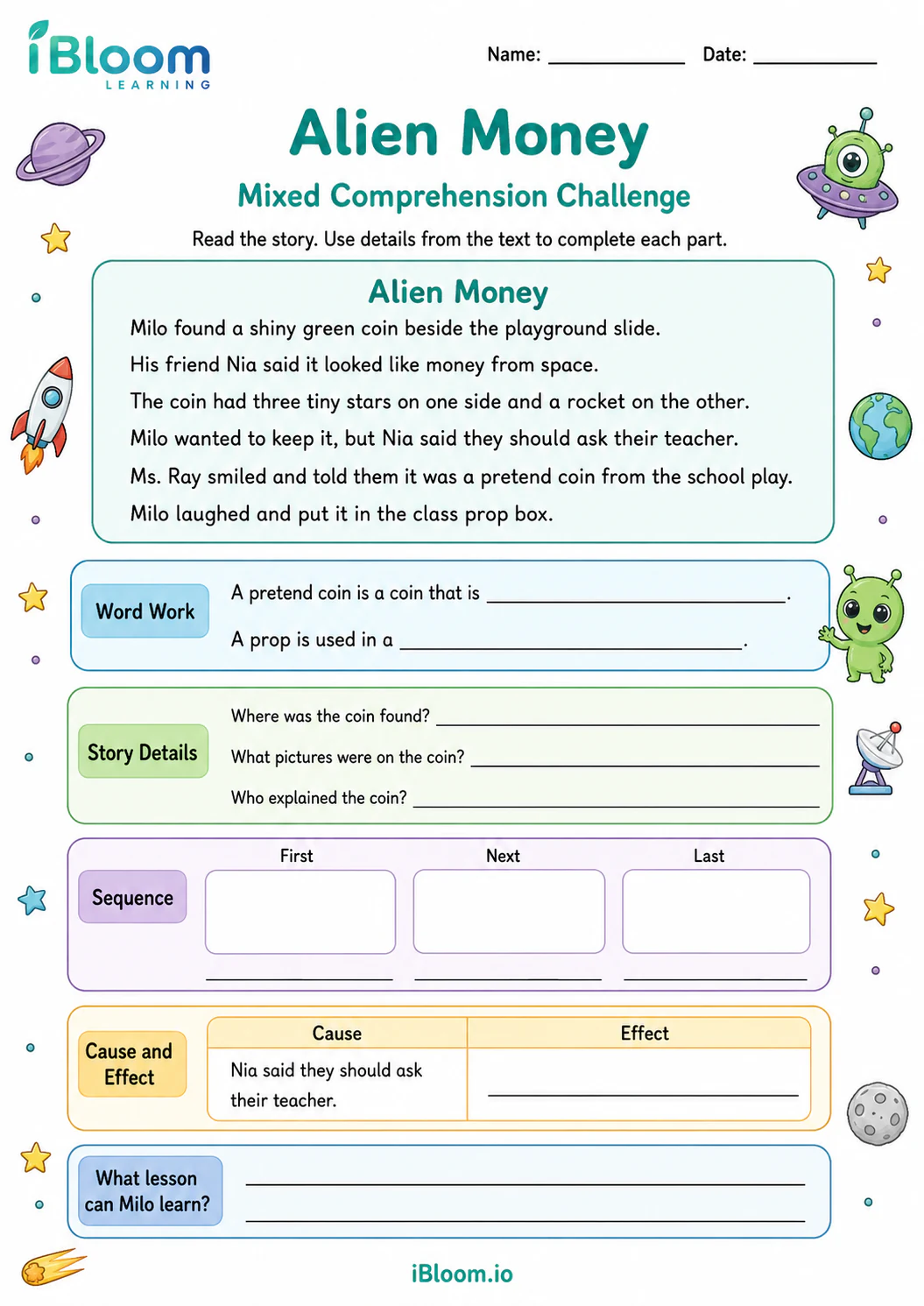
This Grade 2 printable pairs the Alien Money story with 15 questions. Children recall details about Milo’s coin, put events in order, and explain how his idea changes from the beginning to the ending. The answer key gives concise responses tied to the passage.
Aligned to RL.2.1 and RL.2.5
What is on this worksheet?
The passage follows Nia as she meets Zorp and makes a trade. Questions 1–7 check details, 8–12 follow the order of events, and 13–15 ask how the events connect.
Have the child point to a sentence or detail before answering, especially when explaining why Nia brings food or saves the coins.
How should children work through the parts?
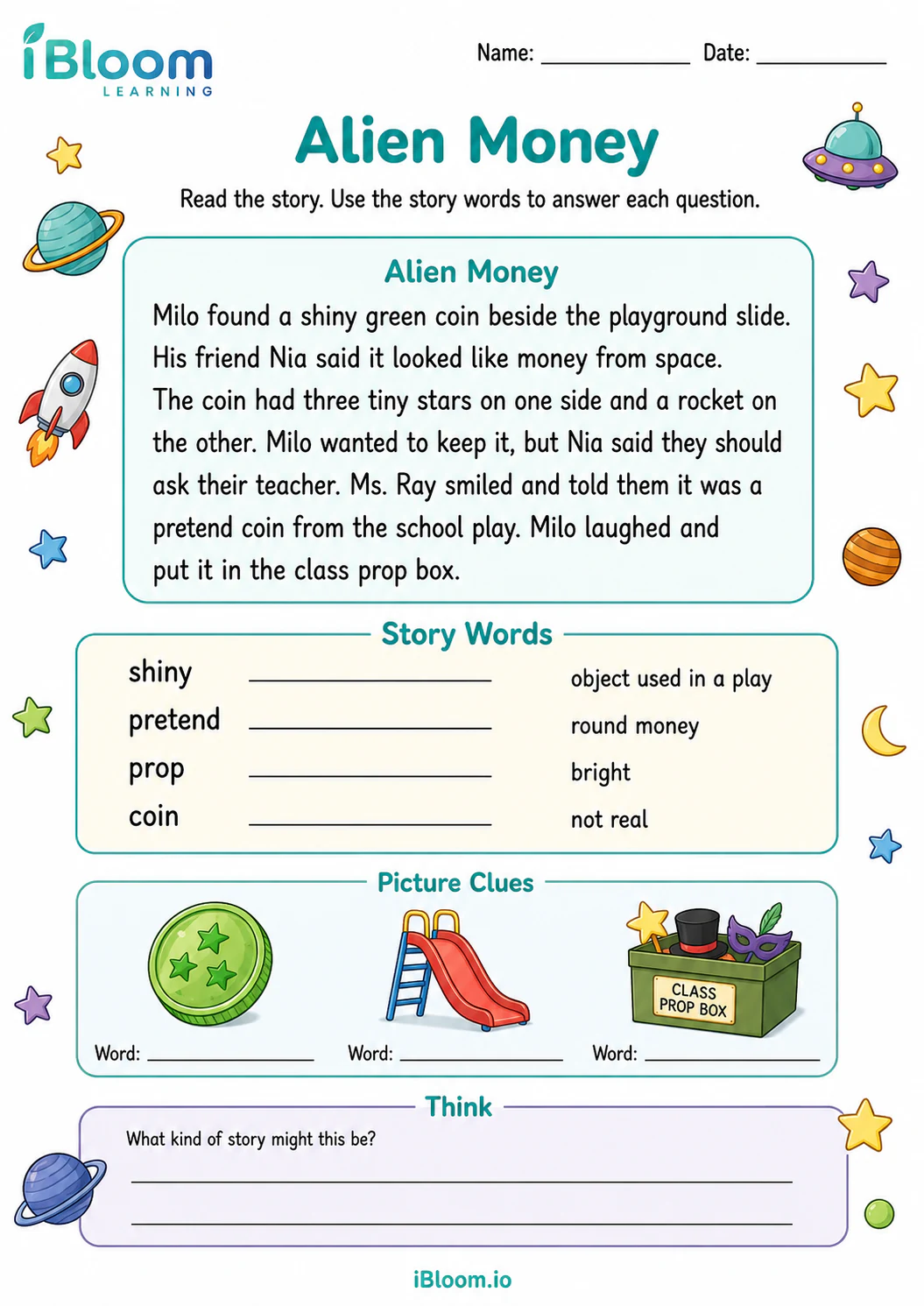
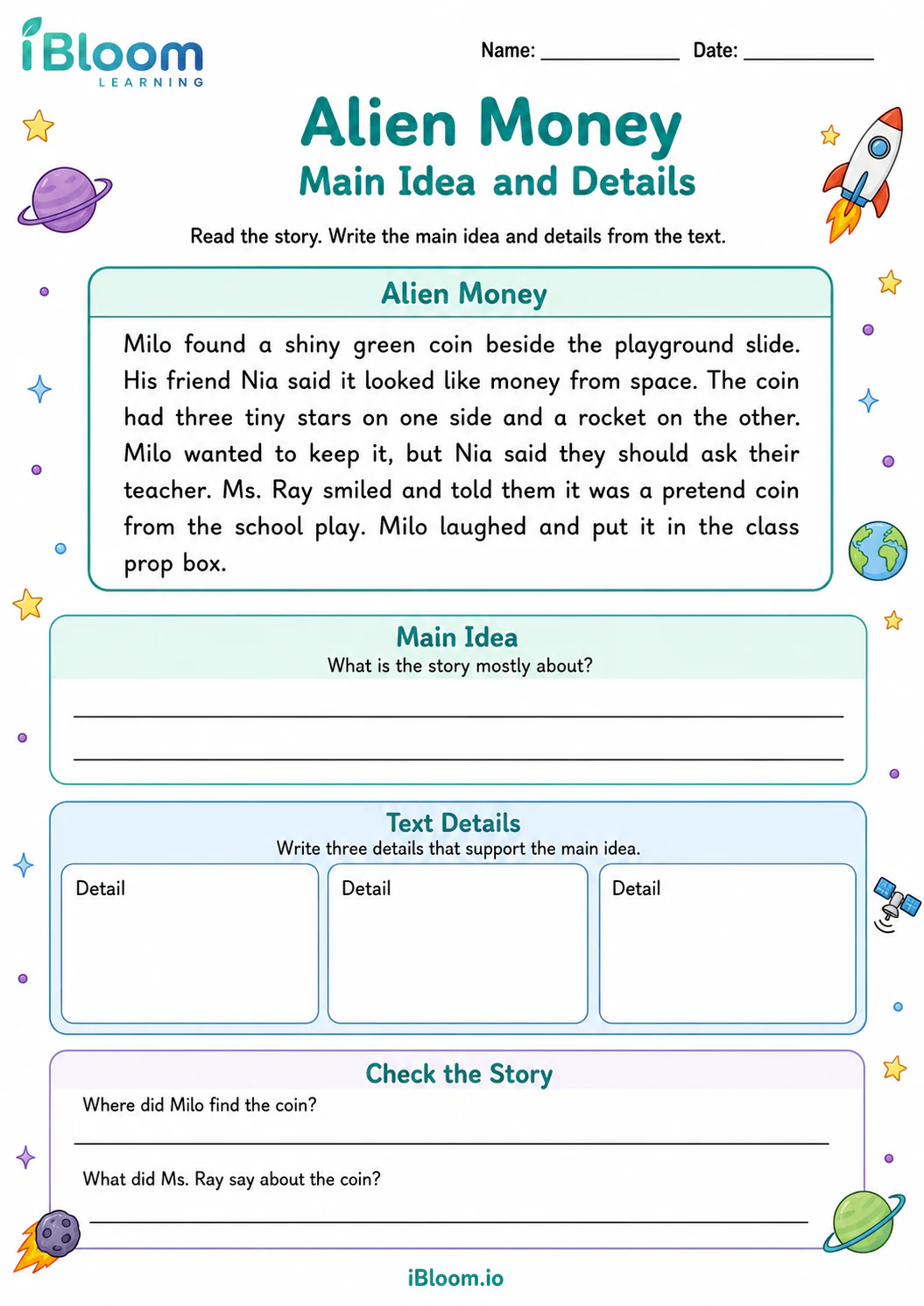
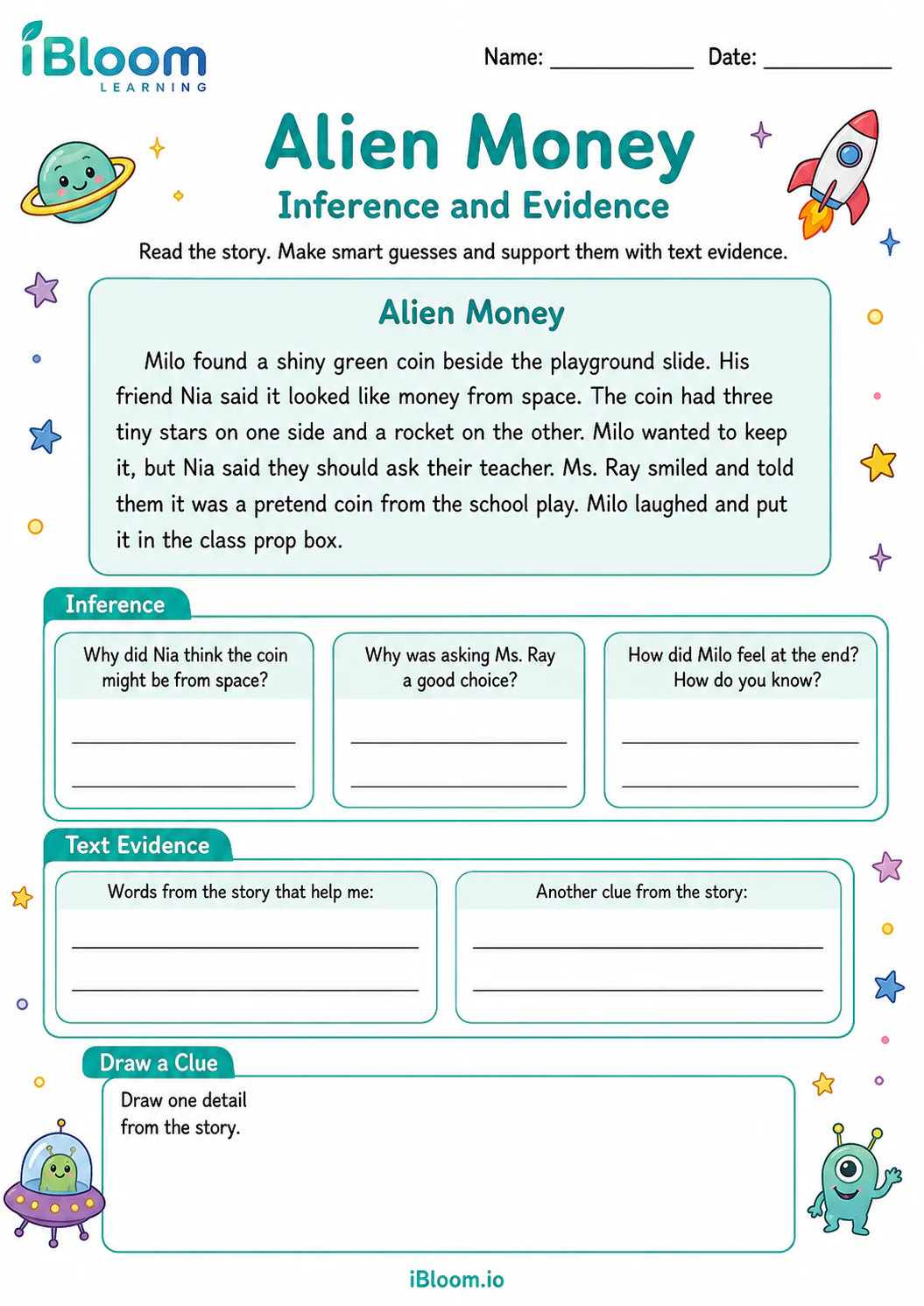
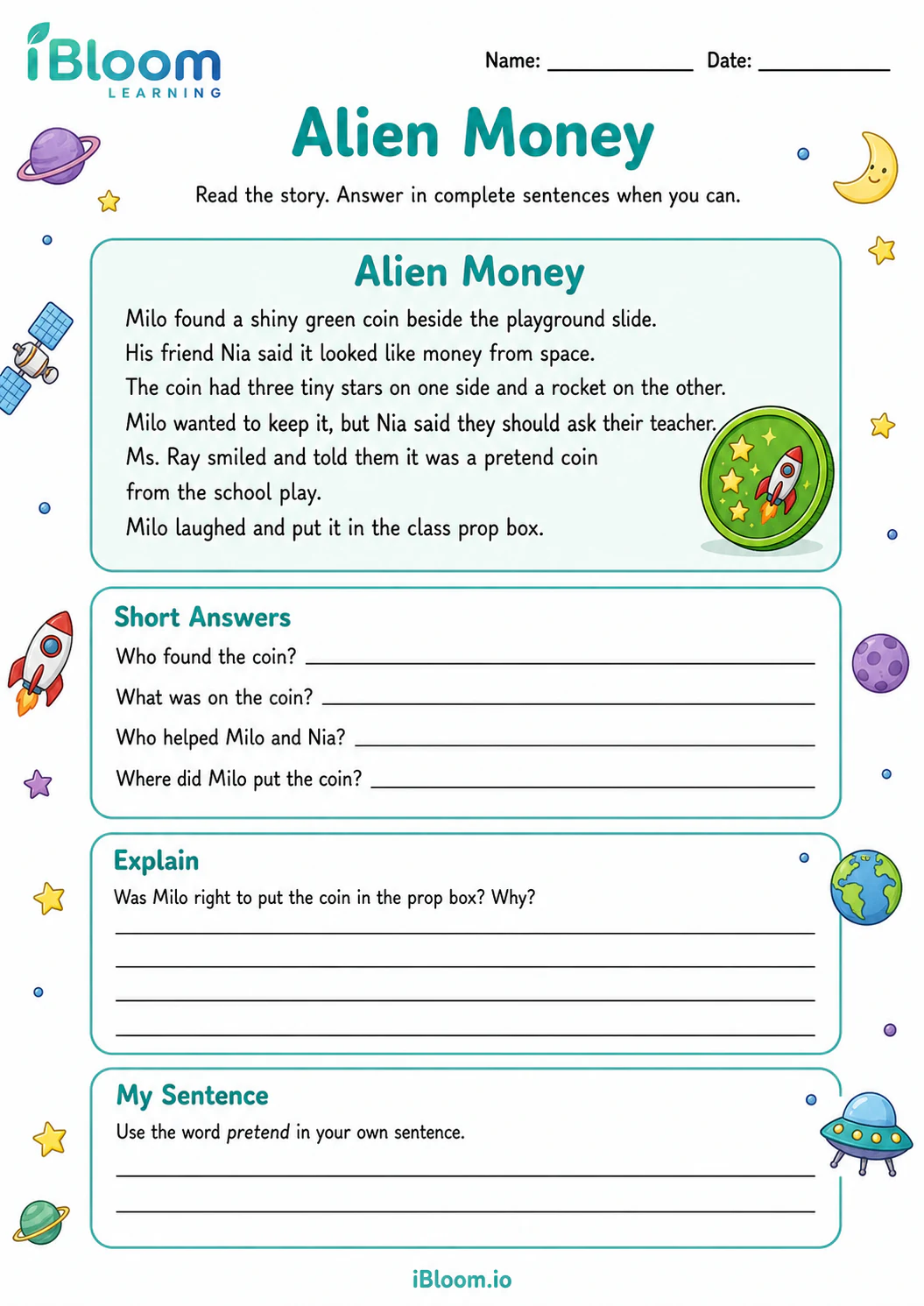
Part C follows Milo from finding the coin to learning that it belongs to the school play. For example, he finds the coin before Ms. Ray explains it; the passage makes that order clear.
- 1Milo finds the coin before Ms. Ray explains it.
How can families review the answers?
Use the key to check whether each response matches a passage detail. For a why question, ask the learner to name the clue that supports the answer.
How to use this worksheet
- 1Read the passage once to learn who Nia and Zorp are.
- 2Reread the paragraph that contains a needed detail.
- 3For Part C, identify what happened first and next.
- 4For Part D, connect an action to the clue that explains it.
- 5Check each response against the answer key and passage.
Common mistakes and quick fixes
The mistake
Mixing up the order of two events.
The fix
Find both events in the passage and compare which is described first.
The mistake
Giving a reason that the story never states or suggests.
The fix
Point to the detail that supports the explanation.
The mistake
Answering with a general idea instead of a story detail.
The fix
Name the person, object, or action from the passage.
Common Core alignment
Answer who, what, where, when, why and how questions using story details.
On this sheet: The questions directly practice this reading skill.
Show the official wordingHide the official wording
Ask and answer such questions as who, what, where, when, why, and how to demonstrate understanding of key details in a text.
Describe how a story begins, develops and concludes.
On this sheet: The questions directly practice this reading skill.
Show the official wordingHide the official wording
Describe the overall structure of a story, including describing how the beginning introduces the story and the ending concludes the action.
What to practice next
Make more practice
Further reading
Questions parents and teachers ask
How many questions are included?
The worksheet has 15 questions: seven detail questions, five event-order questions, and three questions about how the story develops. Children can return to the passage while working. The separate key gives concise responses to help an adult check each answer against Milo’s story.
What grade is this for?
The passage and questions are written for Grade 2 readers. An adult may read the story aloud or take turns reading, then invite the child to find the details independently. The questions move from recalling what happened to explaining how events connect.
How long should it take?
Plan for about 15 minutes, with extra time for rereading, careful editing or handwriting practice. Children can pause between parts, rest their hands, and return with fresh attention. Let the learner set a comfortable pace. Take a brief pause between parts, then finish with a review together.
Is an answer key included?
Yes, the printable includes a separate answer key. It lists the expected response for each item so adults can review the page quickly and focus help on a tricky clue or sentence together. Open it after independent practice and use it to notice strong clues, sound matches or clear letter forms.
How can I help if an answer is difficult?
Ask the child to find the sentence or story detail related to the question. For an event-order question, locate both events; for a why question, look for the clue that explains the action. The answer key can confirm whether the response matches the passage.