
About this worksheet
This Grade 2 reading worksheet pairs an original Barrels of Ideas story with 16 questions about its events and structure. Students follow Mia as she prepares a barrel, plants beans, and saves seeds. The questions move from literal details to sequence words and the story’s beginning-to-ending structure. It includes a separate answer key.
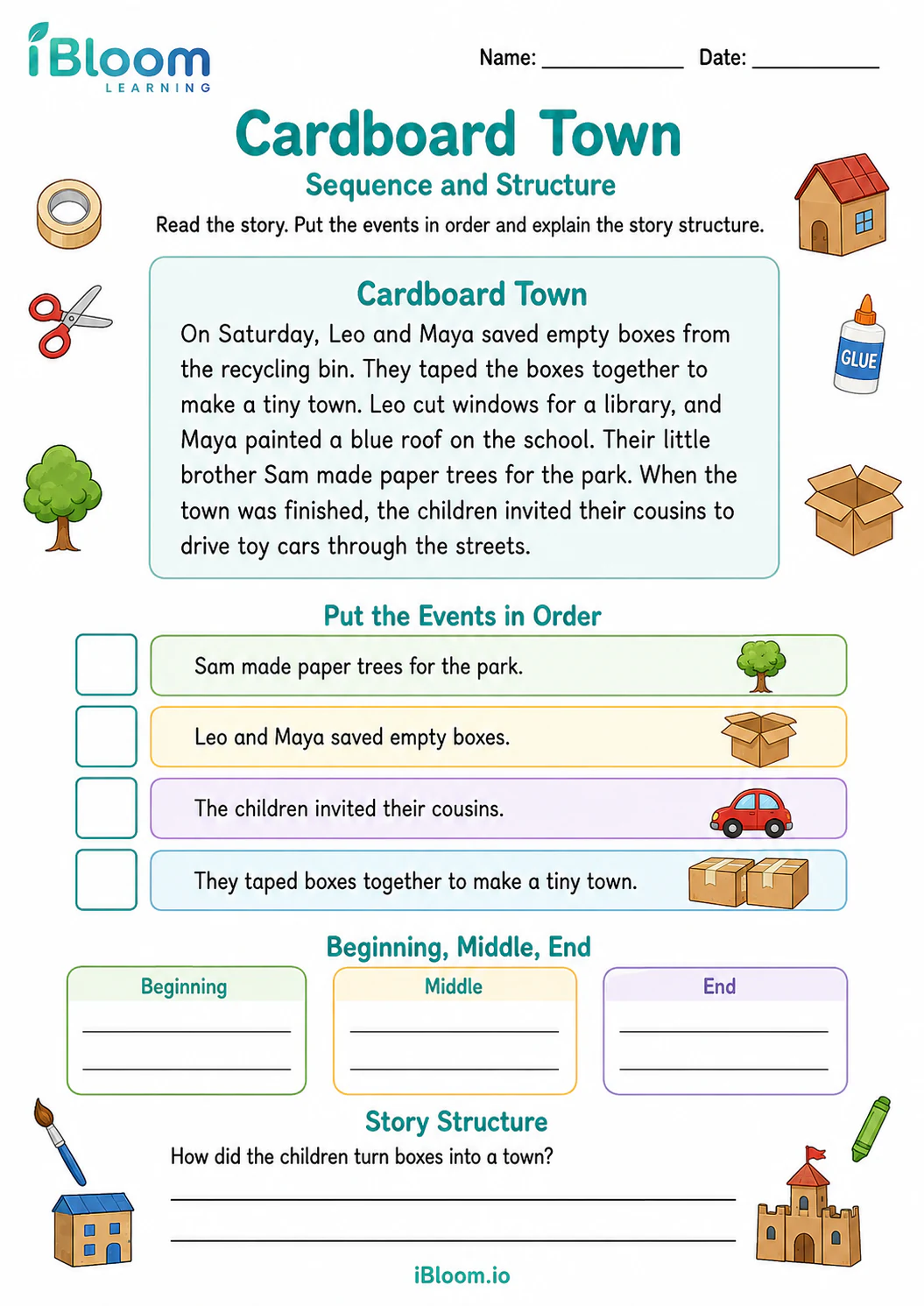
How can readers keep the events in order?
Notice time words such as first, next, then, and by summer. They connect actions in the order they happen. In question 2, Mia and Grandpa scrub the barrel before they add soil.
- 1What did they do first?
- 2Find the first action in the passage.
- 3Answer: scrubbed it clean
How does the beginning lead to the ending?
The beginning introduces Mia’s plan to make a garden. The middle gives the steps and shows the seeds growing. At the end, Mia picks beans and saves seeds for another season.
Which details explain why an event happened?
Some details explain a purpose. The holes let rainwater drain, and the string gives the vines something to climb. Linking an action with its reason helps a reader understand the sequence.
Read for order and structure
- 1Read the whole story once.
- 2Underline time words such as first, next, then, and by summer.
- 3List the main actions in order.
- 4Look for details that explain why an action happened.
- 5Check how the ending completes the beginning idea.
Sequence slips to catch
The mistake
Putting an action from the middle before the opening action.
The fix
Use the time words and reread the neighboring sentences.
The mistake
Mixing up a reason and an event.
The fix
Ask whether the detail tells what happened or why it happened.
The mistake
Choosing a structure from one detail alone.
The fix
Think about how the whole story moves from beginning to ending.
What to practice next
Make more practice
Further reading
Questions parents and teachers ask
How long is the story?
The passage is about 100 words and follows Mia as she turns an old barrel into a garden. She cleans it, plants beans, tends the vines, and saves seeds. The worksheet has three pages including the story and questions, followed by a separate three-page answer key.
How many questions are included?
There are 16 questions about the story. Twelve ask for details, and four focus on sequence or structure. Students locate events and then use time words and the order of events to understand how the beginning, middle, and ending fit together.
What does sequence mean?
Sequence means the order in which events happen. Mia scrubs the barrel, makes drainage holes, adds soil and seeds, waters them, and later tends the vines. Words such as “first,” “next,” and “then” help readers keep those actions in order.
What is the story’s structure?
The story mainly follows a sequence of events. It begins with Mia’s garden idea, follows the steps she takes, and ends with her picking beans and saving seeds for next spring. Readers can use those changes to describe beginning, middle, and end.
Can a student look back at the passage?
Yes. Looking back helps students check details and locate time words in the passage. Encourage them to find a sentence that supports each response instead of relying on memory alone or guessing what might happen in a garden.