
About this worksheet
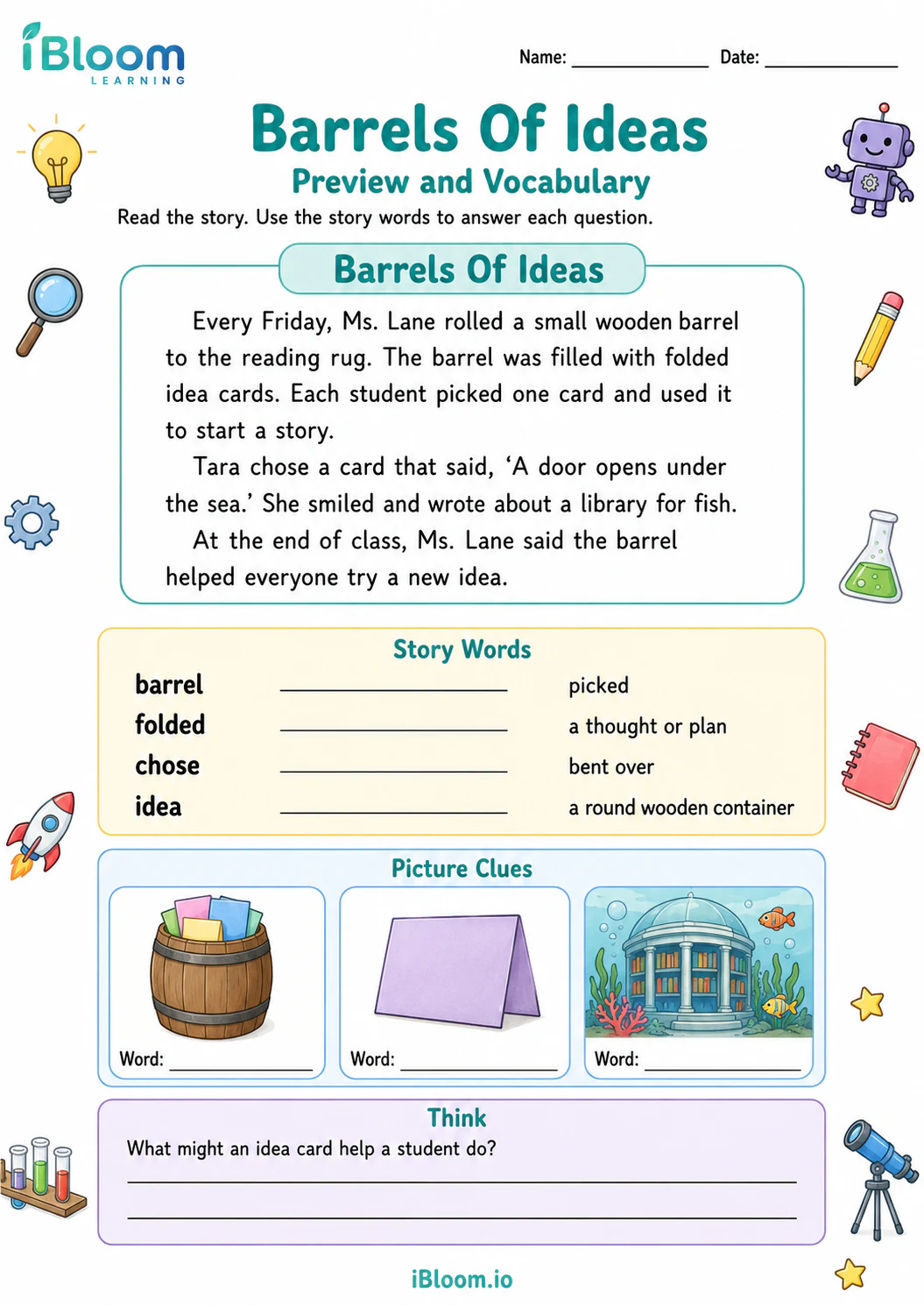
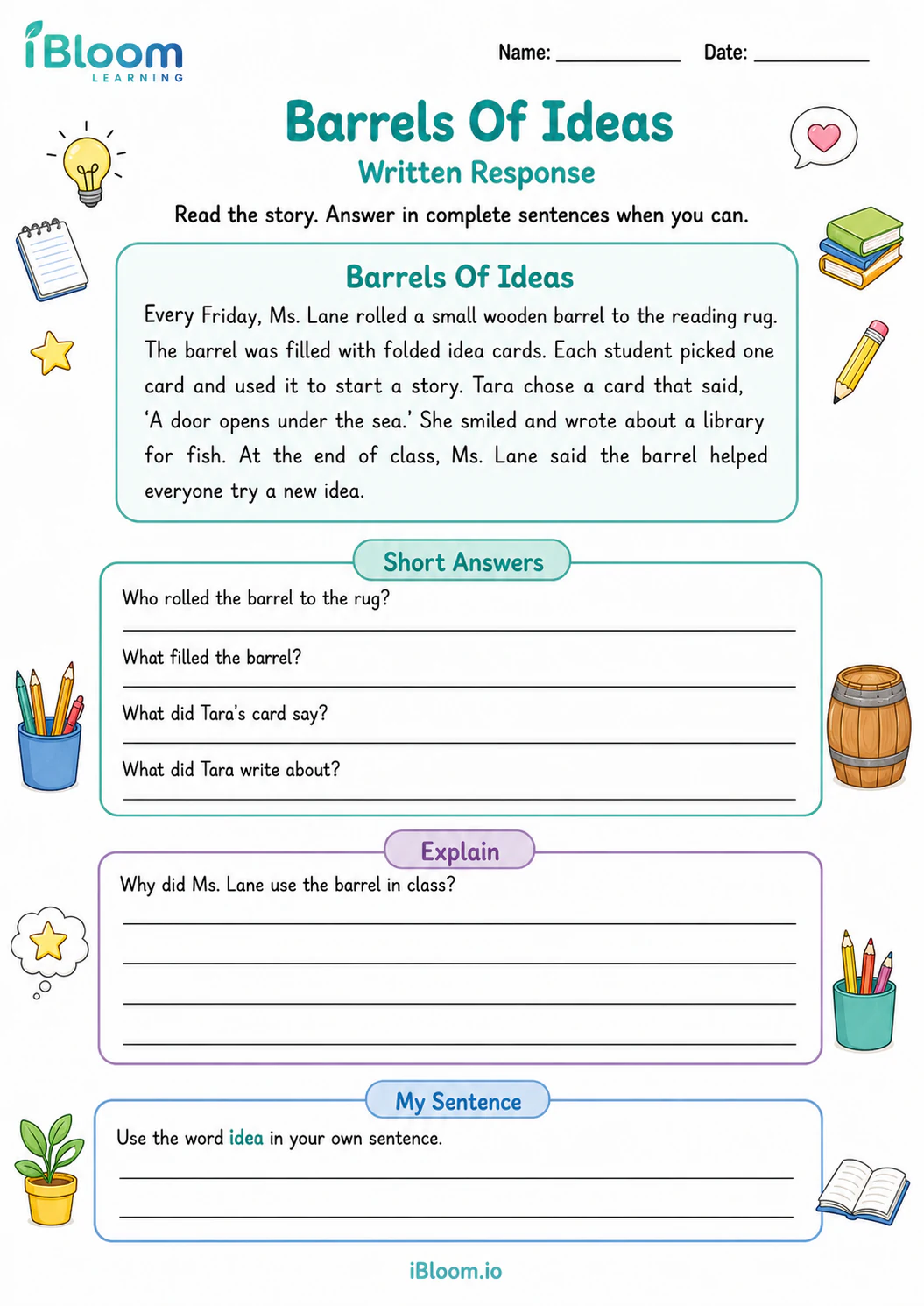
In this original story, Tara draws “A door opens under the sea” from Ms. Lane’s barrel of story-starter cards and imagines a library for fish. Students first locate stated details, then infer what Tara and Ms. Lane think, and finally support their ideas with evidence from the passage.
Aligned to RL.2.1
What happens in Barrels of Ideas?
Ms. Lane brings story-starter cards to the reading rug. Tara draws “A door opens under the sea” and imagines a library for fish. The ending gives readers another clue about how she feels about writing.
How do inference and evidence work together?
An inference is a reasonable idea the passage suggests without saying directly. Support it with a detail. Tara grins and begins a tale after drawing a card; that action supports the idea that she enjoys creating stories.
How to use this worksheet
- 1Read the direction for each part before you begin.
- 2Work through the questions in order and return to the passage or clues when needed.
- 3Use the separate answer key to check each response.
A helpful way to check
The mistake
Choosing an answer before rereading the clue.
The fix
Point to the word, example, or sentence that supports your choice.
The mistake
Mixing up a unit, describing word, or angle name.
The fix
Name what the question asks about, then check that your answer matches it.
Curriculum alignment
This worksheet supports the listed skill in a US elementary classroom.
Ask and answer questions about key details and demonstrate understanding of the central message or lesson.
On this sheet: Students answer questions about key details and use those details to support reasonable inferences.
Show the official wordingHide the official wording
Ask and answer such questions as who, what, where, when, why, and how to demonstrate understanding of key details in a text.
What to practice next
Questions parents and teachers ask
What does inference mean?
Ms. Lane brings story-starter cards to the reading rug. Tara draws “A door opens under the sea,” imagines a library for fish, and asks to take another card home. The questions move from details to evidence-based inferences. Students can revisit that clue when they explain their ideas.
How can a reader support an inference?
An inference is a reasonable idea the story suggests without stating directly. Readers combine a clue in the text with what they know, then check that the idea fits the details given in the passage. A detail that supports the inference is evidence, while the inference explains what the detail suggests.
Can a student give a different answer to a written question?
Point to an action or sentence that supports the idea. Tara grins and begins a tale after drawing her card. That action supports the inference that she enjoys imagining and writing stories. Students then connect the clue to their idea instead of repeating a detail without explaining it.
How many questions are included?
There are 14 questions in three parts: six story-detail choices, five inference choices, and three evidence questions. The separate answer key gives the selected details and an answer for each question. Readers can revisit the passage to confirm which details support their conclusions.