

About this worksheet
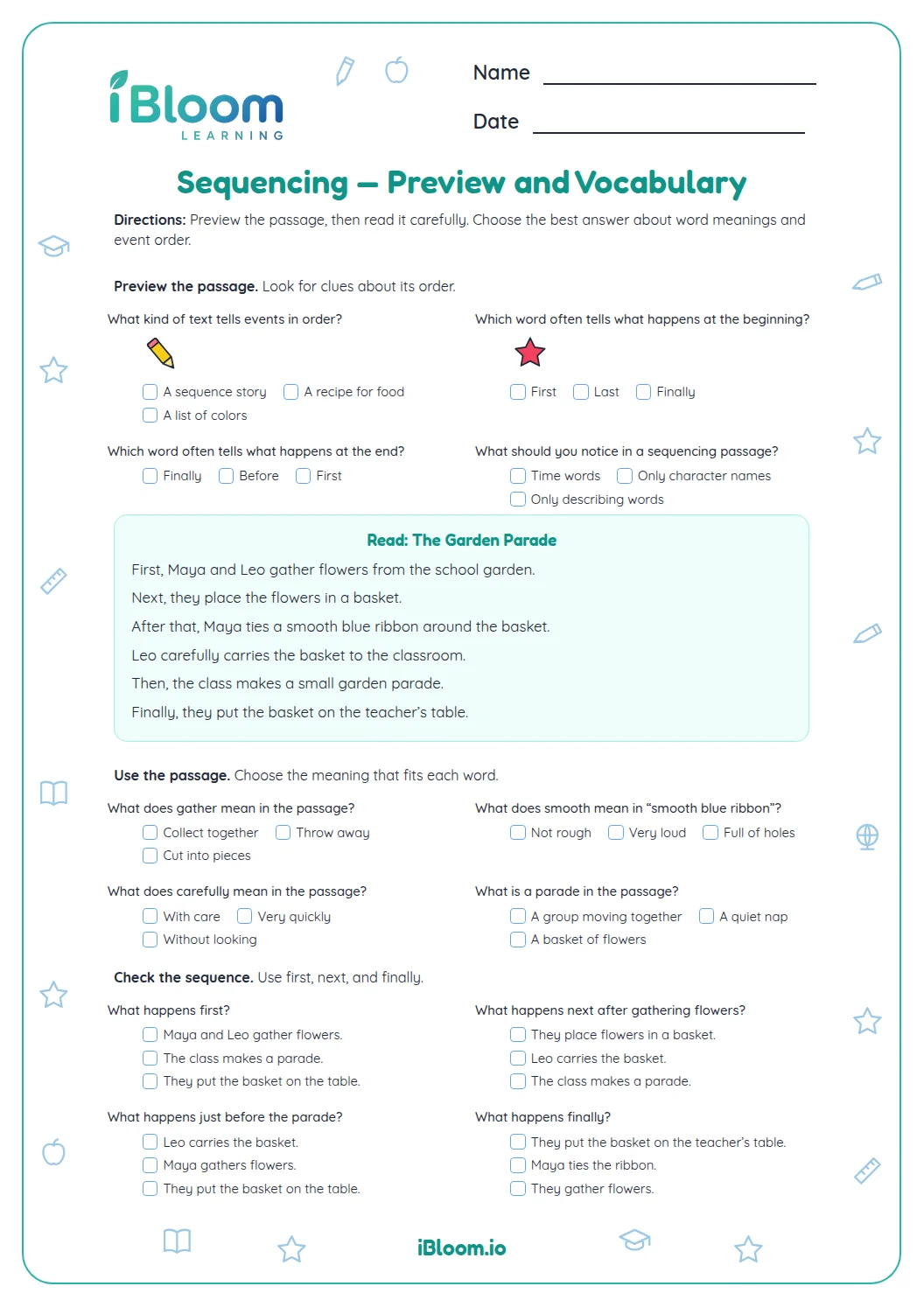
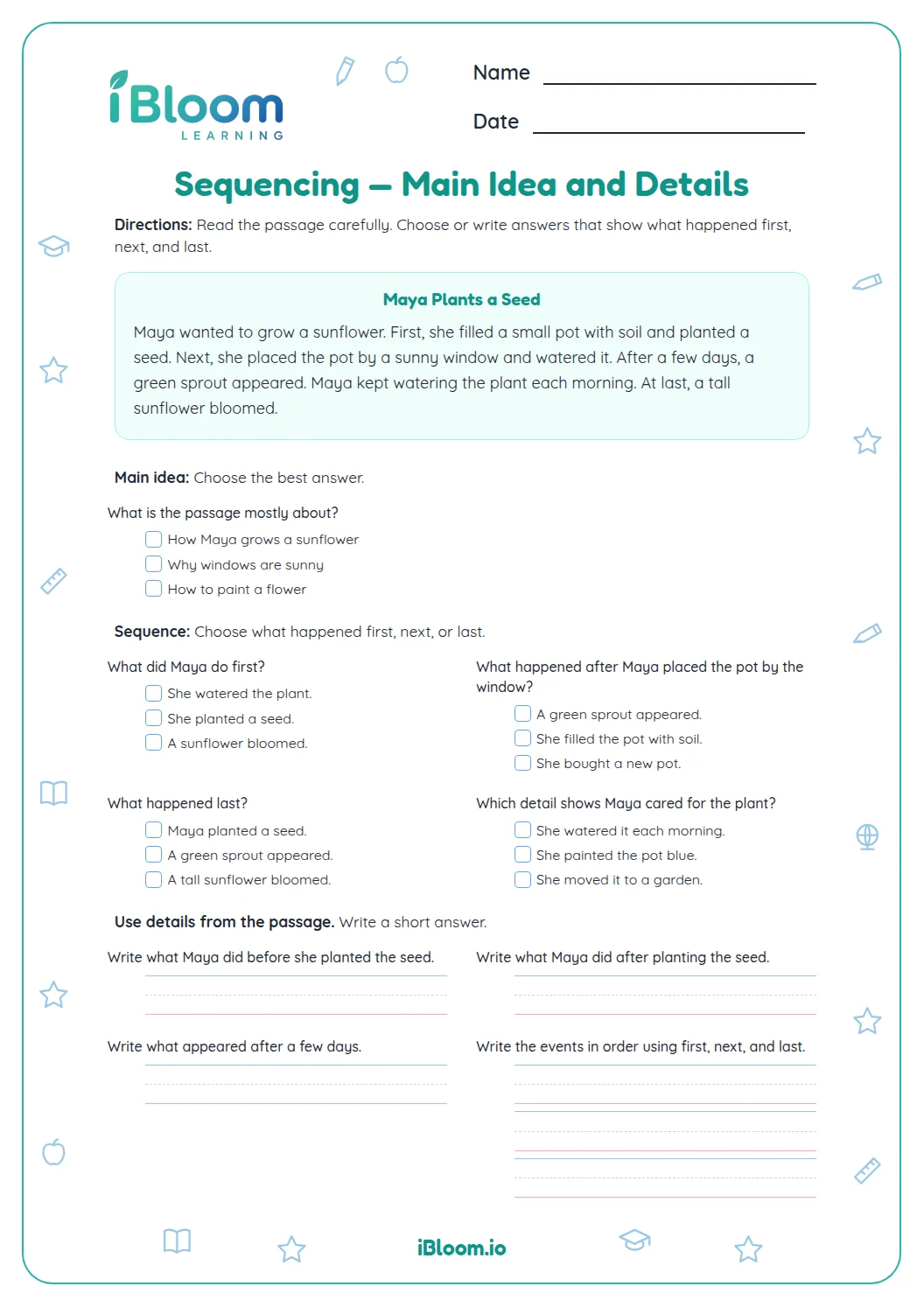
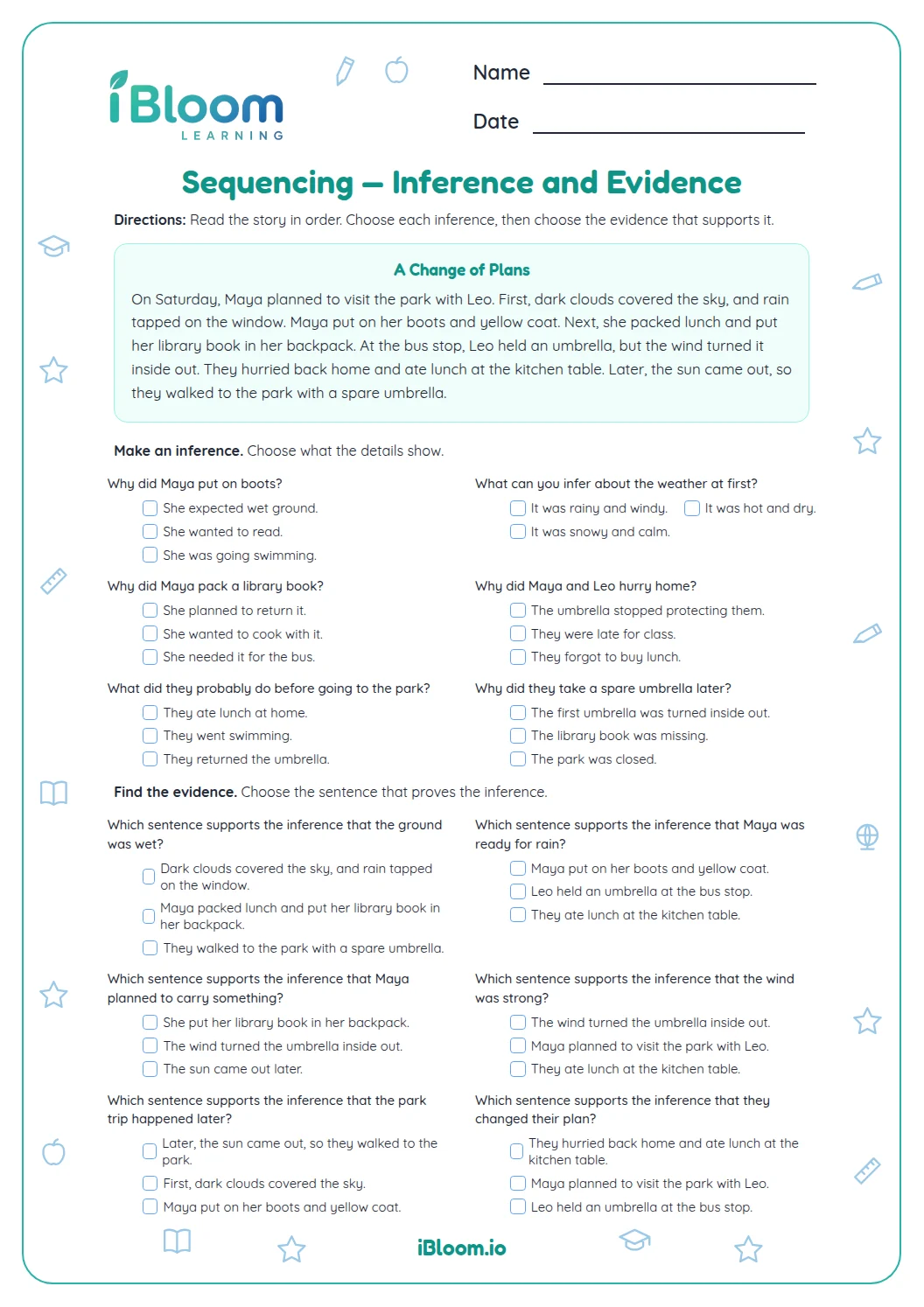
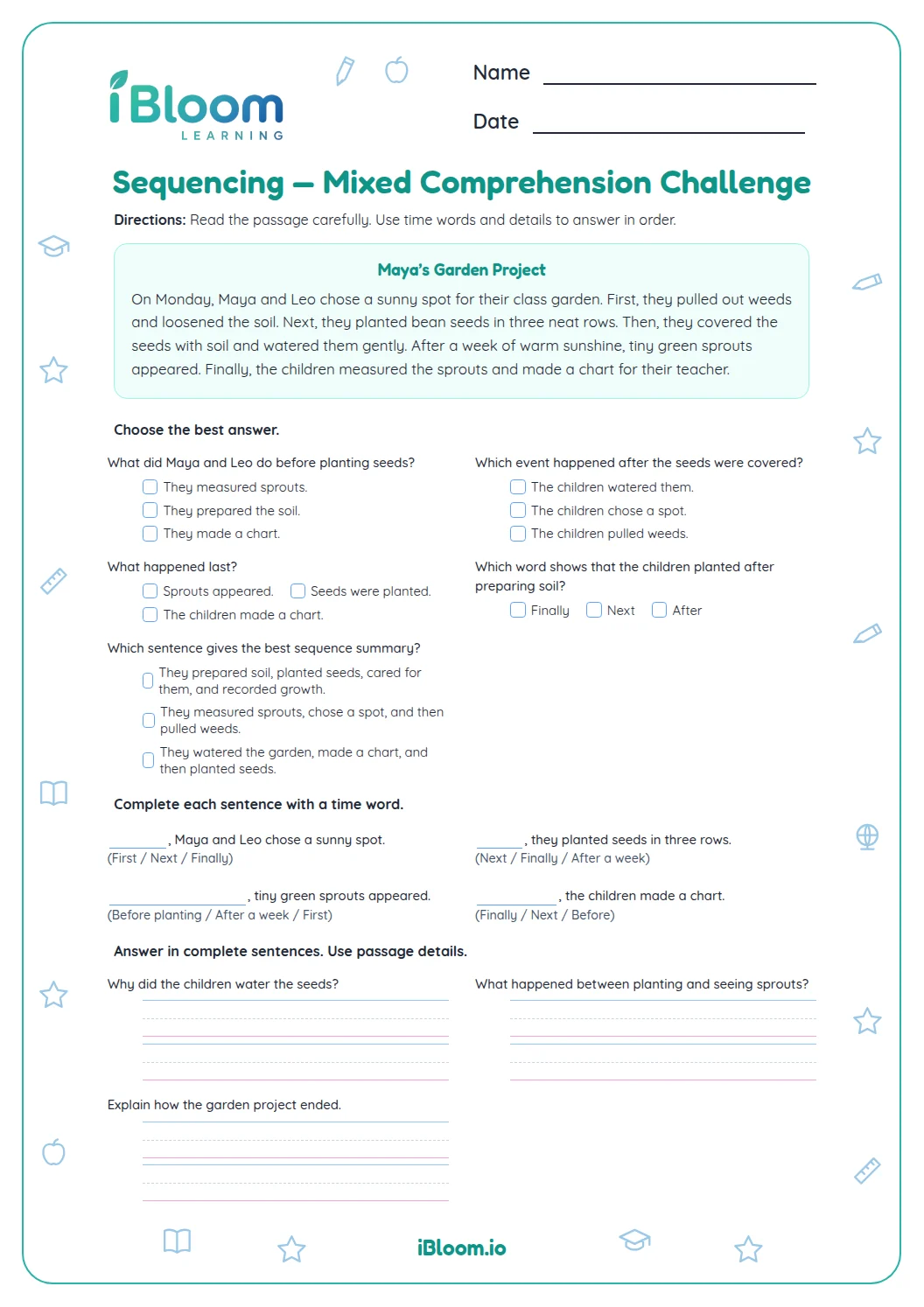
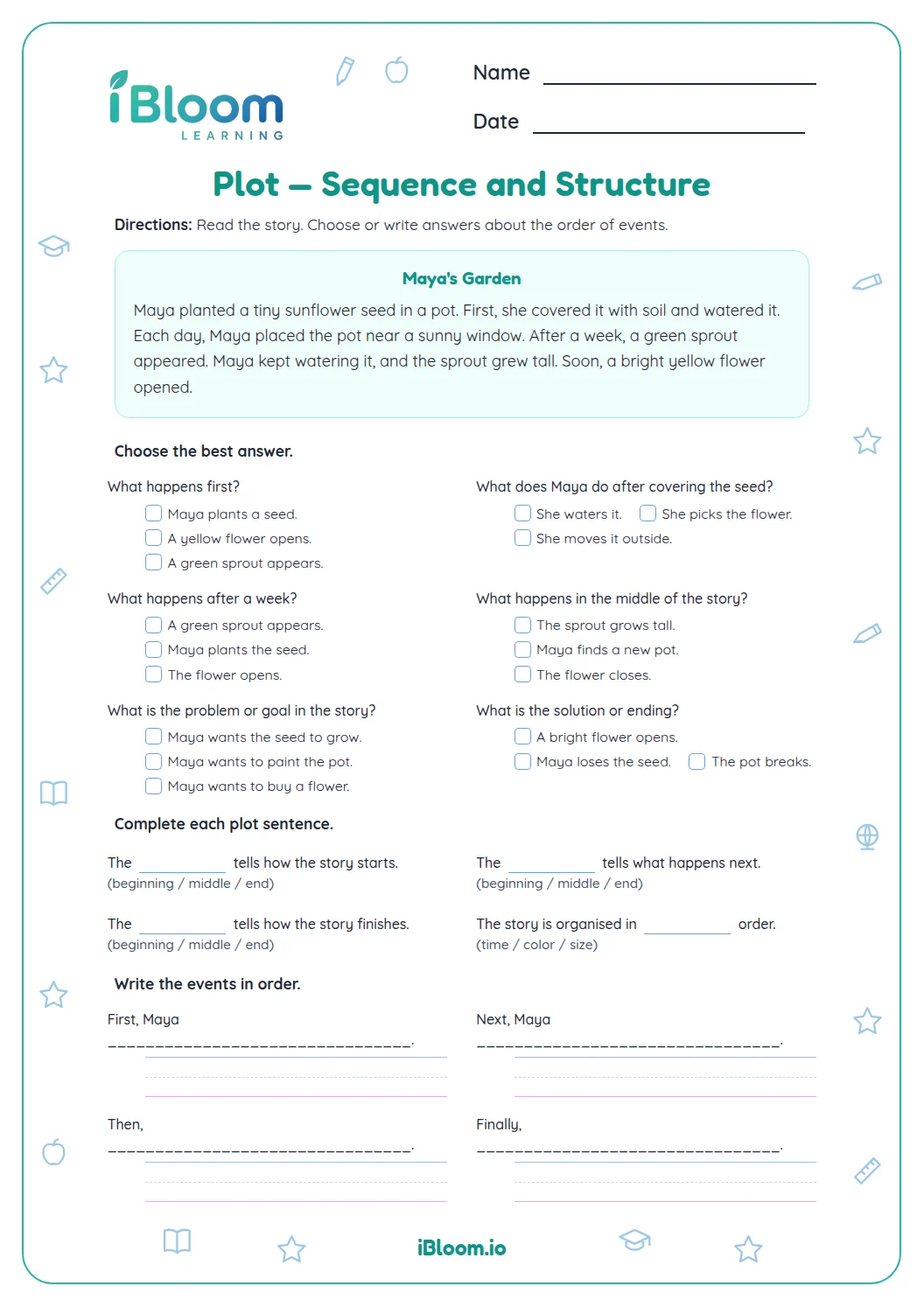
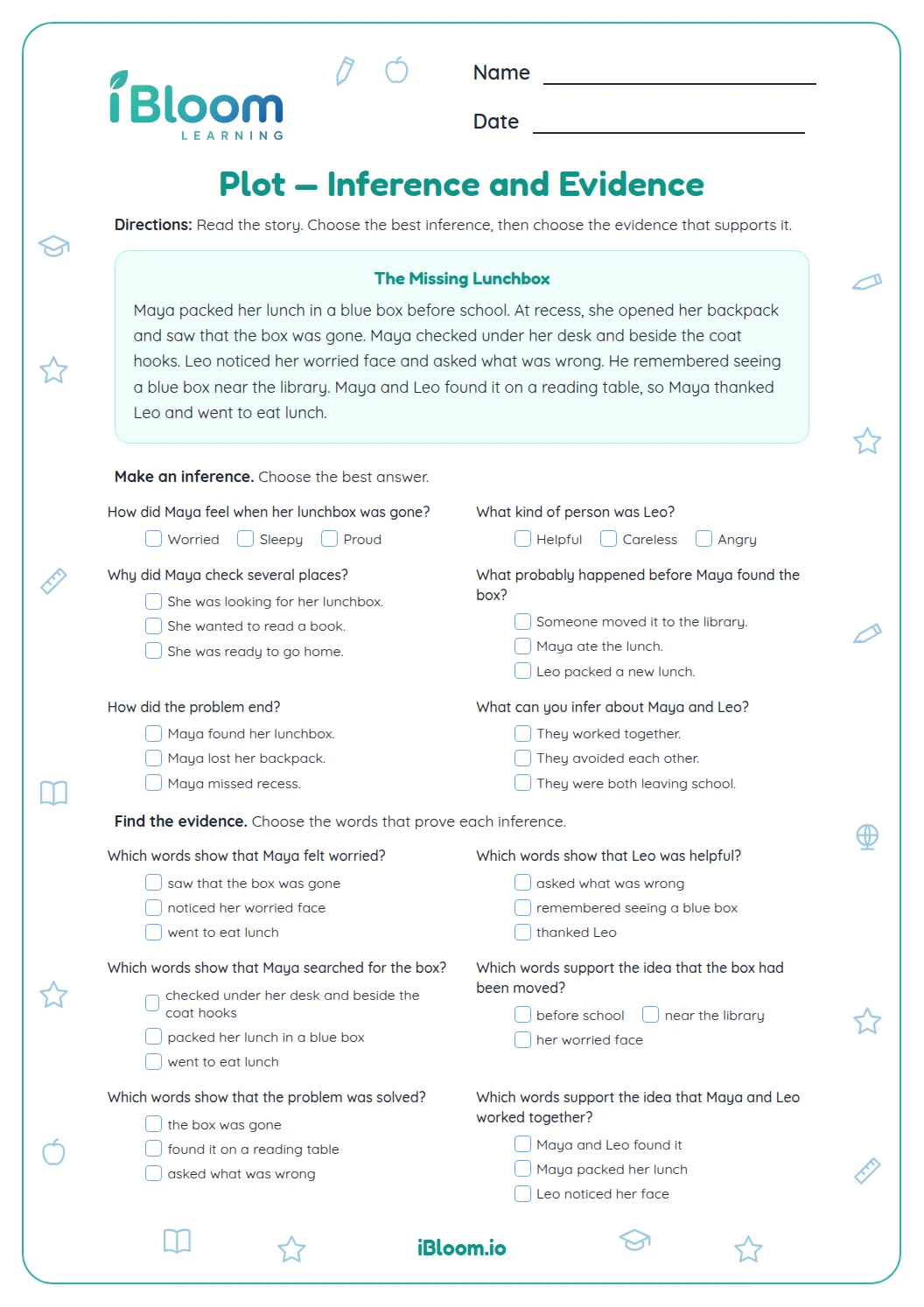
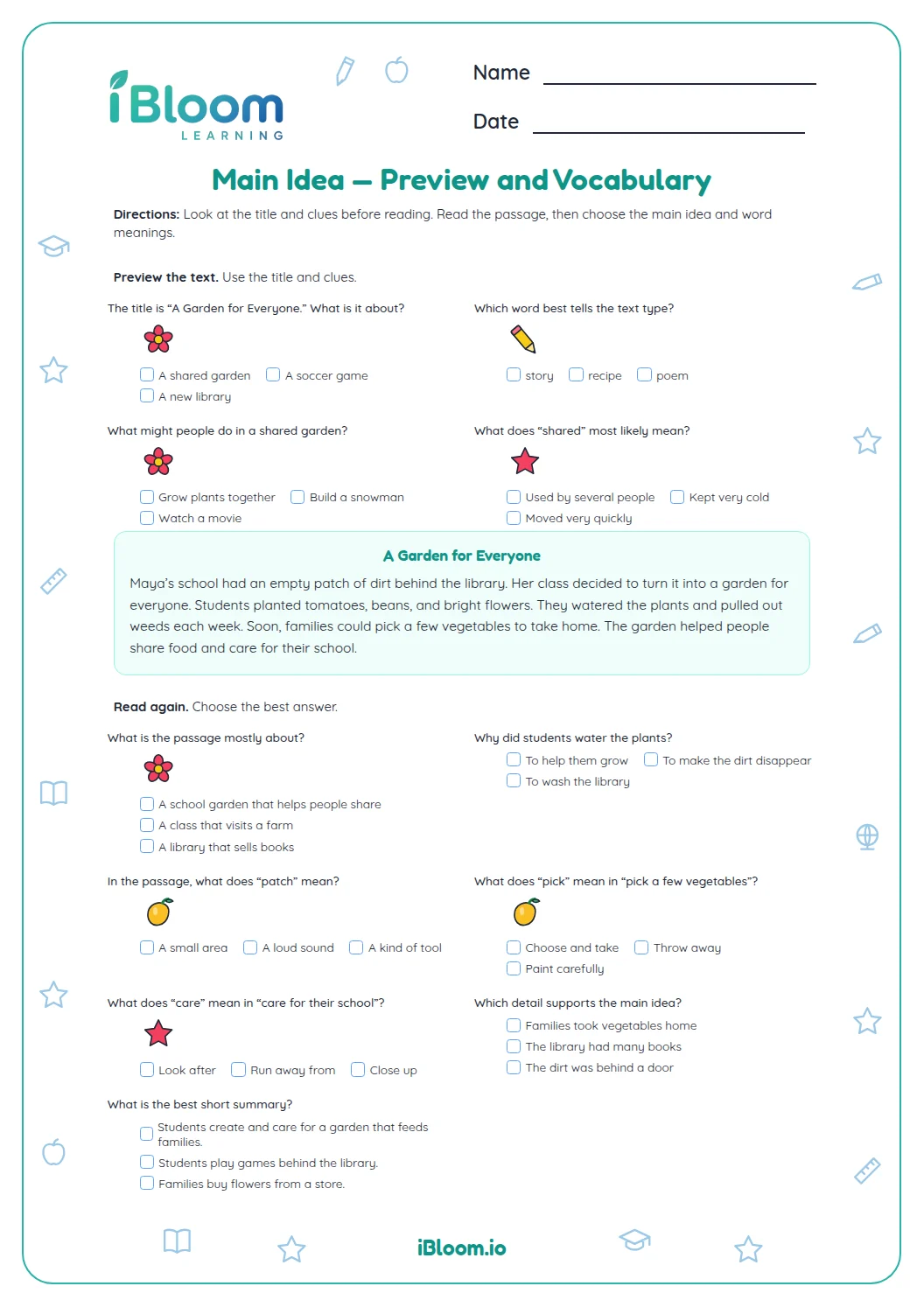
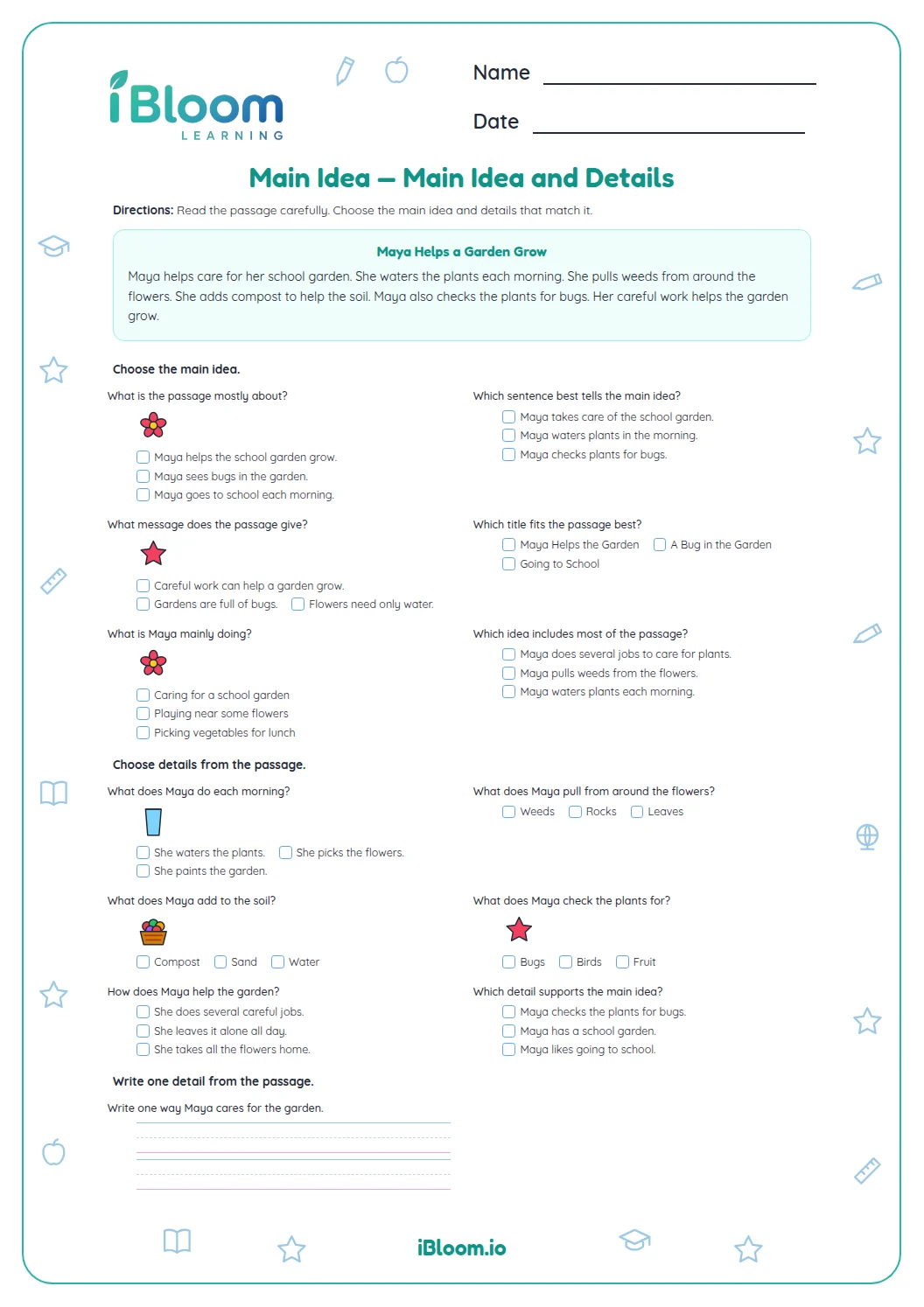
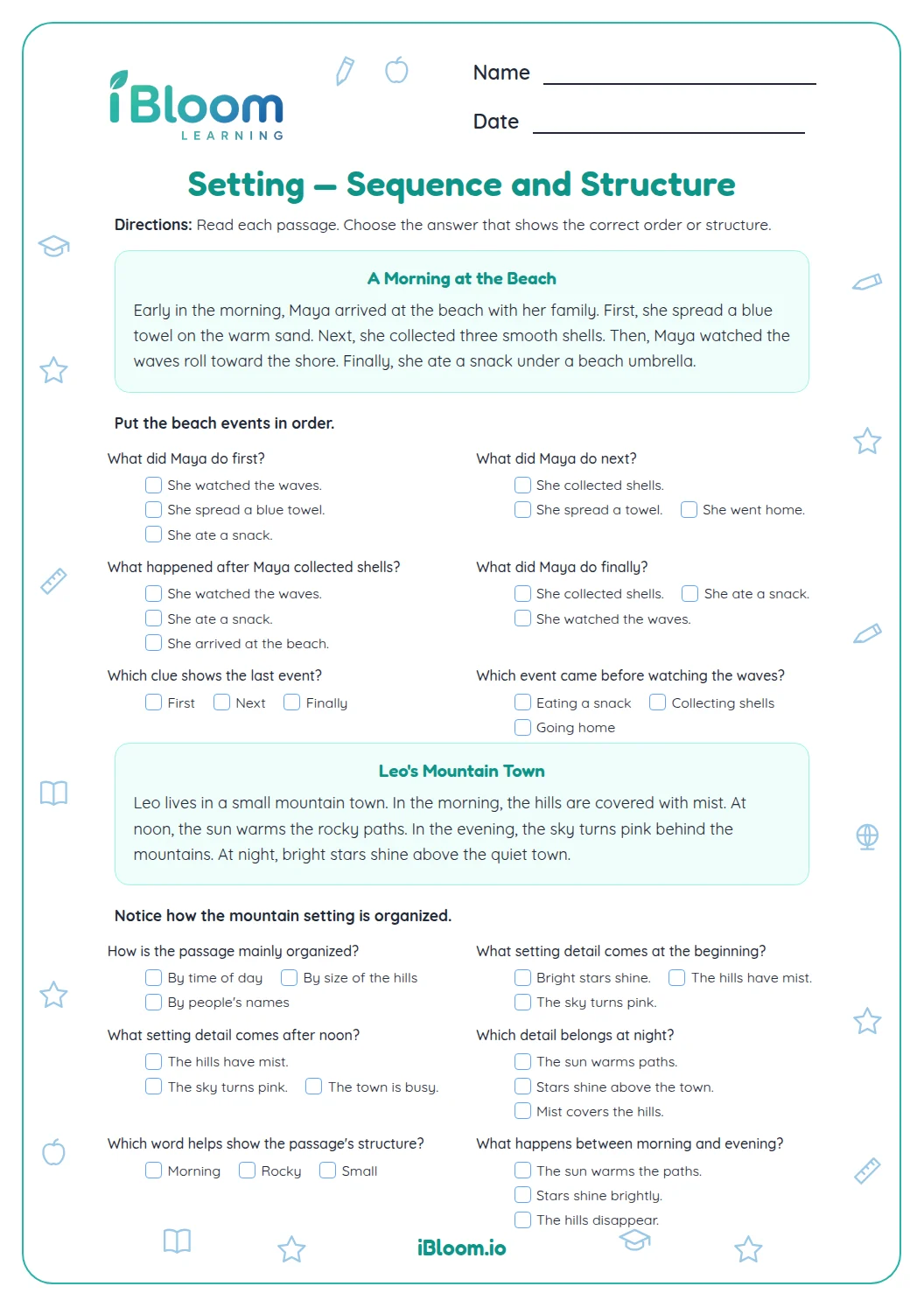
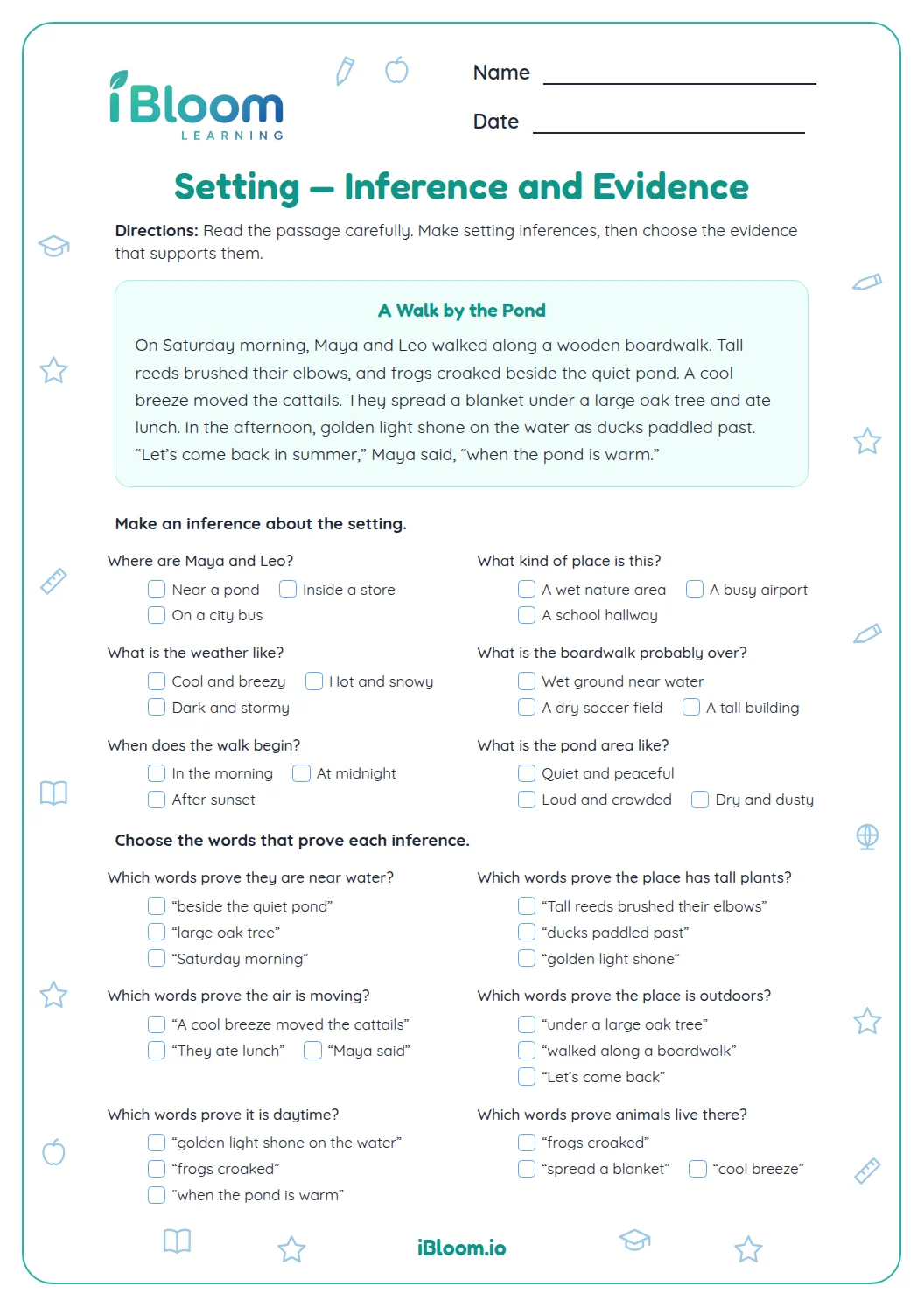
This Grade 2 reading printable uses “A Garden for the Class,” a short story about planting a bean seed and watching it sprout. Learners put events in order, use time words such as “Next,” and explain how one event leads to another across 14 questions. The answer key includes sample responses for written items. The passage and questions practice CCSS RL.2.3 by tracking how story events build.
Aligned to RL.2.3
How does event order work?
The passage follows the class from filling pots with soil to planting and watering a seed, then noticing a shoot on Friday. Part A orders familiar event sets; Parts B and C use the passage to find time clues and explain what happened before or after another event.
The same seed and shoot details appear in the passage and questions, so learners can point back to the text as evidence.
- 14 questions practice the skill in steps
- The answer key follows the worksheet questions
- Open responses include sample answers
How do time words show sequence?
Question 7 asks which word signals an event that comes after another. “Next” marks the step after filling the pots, helping the reader follow the planting sequence.
How can the answer key support practice?
Check one answer at a time. For a written response, compare the idea with the sample instead of requiring identical wording.
- Point to one clue that supports the answer
- Return to the passage or situation when needed
A simple practice routine
- 1Read the garden passage once for the whole event chain.
- 2Mark time clues such as Monday, next, and Friday.
- 3Order the events from earliest to latest.
- 4Return to the passage for before-and-after questions.
- 5Compare written answers with the key’s sample ideas.
Common mistakes and quick fixes
The mistake
Putting the seed into soil before filling the pot.
The fix
Reread the first sentences: the children fill the pots, then tuck in a seed.
The mistake
Treating “First” and “Next” as interchangeable.
The fix
Use “First” for the initial action and “Next” for the event that follows.
The mistake
Retelling events without passage details.
The fix
Name what happened and use a time clue such as “On Friday.”
Curriculum alignment
This worksheet practices the standard named below.
Describe how events in a story build on one another.
On this sheet: Learners track the ordered events in a short narrative and explain what follows.
Show the official wordingHide the official wording
Describe how characters in a story respond to major events and challenges.
What to practice next
Make more practice
Further reading
Questions parents and teachers ask
What passage do children read?
They read “A Garden for the Class,” an original passage about planting a bean seed, watering it, and noticing a shoot. The 14 questions ask readers to sequence events, recognize time words, and explain what happened before or after another event.
How do time words help with sequencing?
Words and phrases such as “On Monday,” “Next,” and “On Friday” mark when events happen. In question 7, “Next” signals an event that follows. Children can underline these clues before arranging the events or answering passage questions. Invite the learner to explain one choice and point to its evidence before checking.
How many pages and questions are included?
The passage and questions fill three worksheet pages, and the answer key takes three pages. There are 14 questions: event-order choices, passage-based questions, and written responses that ask learners to explain or retell the sequence. Invite the learner to explain one choice and point to its evidence before checking.
What should a written answer include?
A written answer should use details from the passage and keep events in their correct order. For example, a retell could say the children planted a seed and then watered it. The key gives sample responses, so equivalent accurate wording is fine.
Why did the class plan to measure the shoot?
Measuring the shoot each week lets the class notice how the plant changes as it grows. This final question asks learners to connect the next planned action to the event they observed, using a reason grounded in the passage. Invite the learner to explain one choice and point to its evidence before checking.