
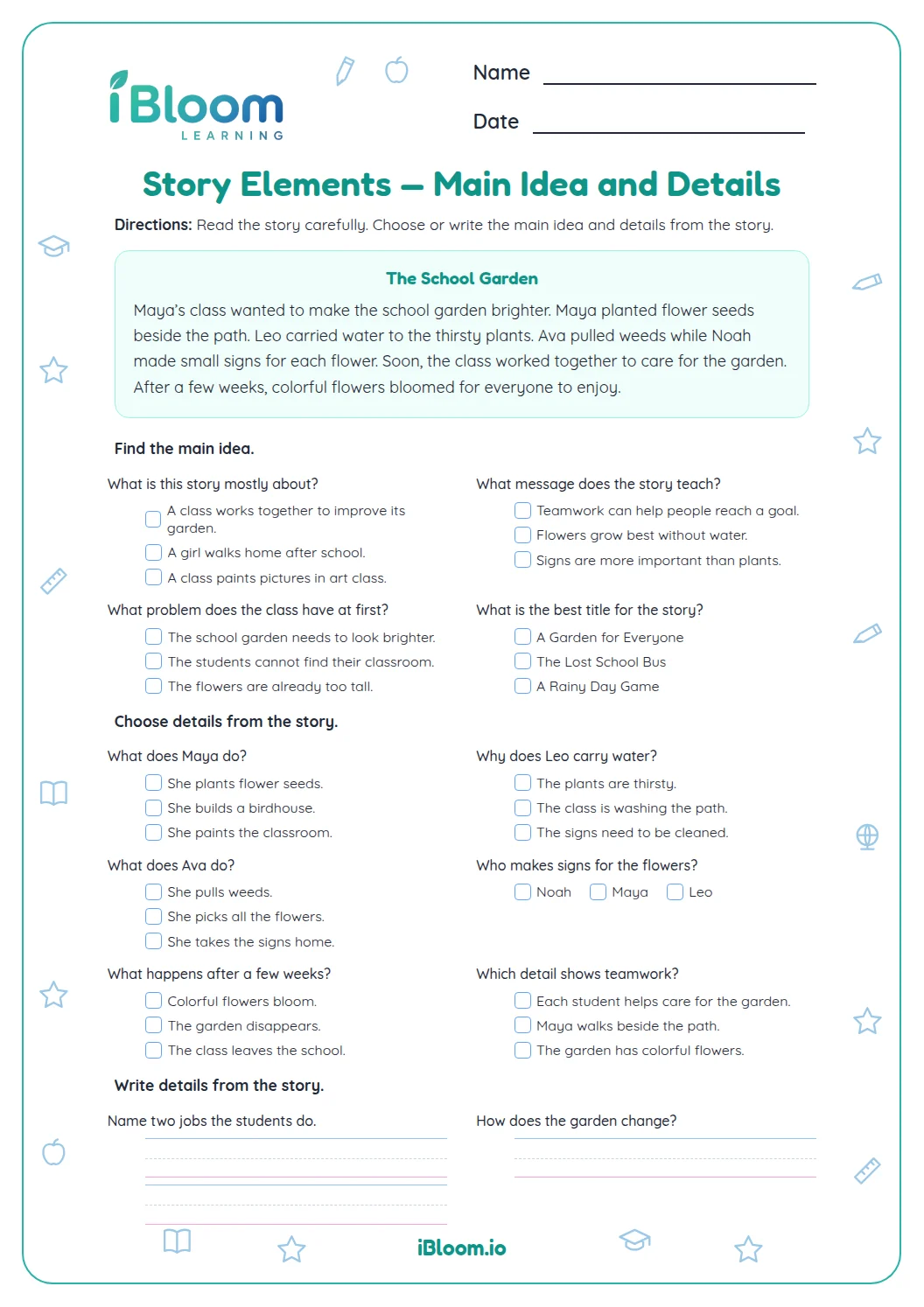
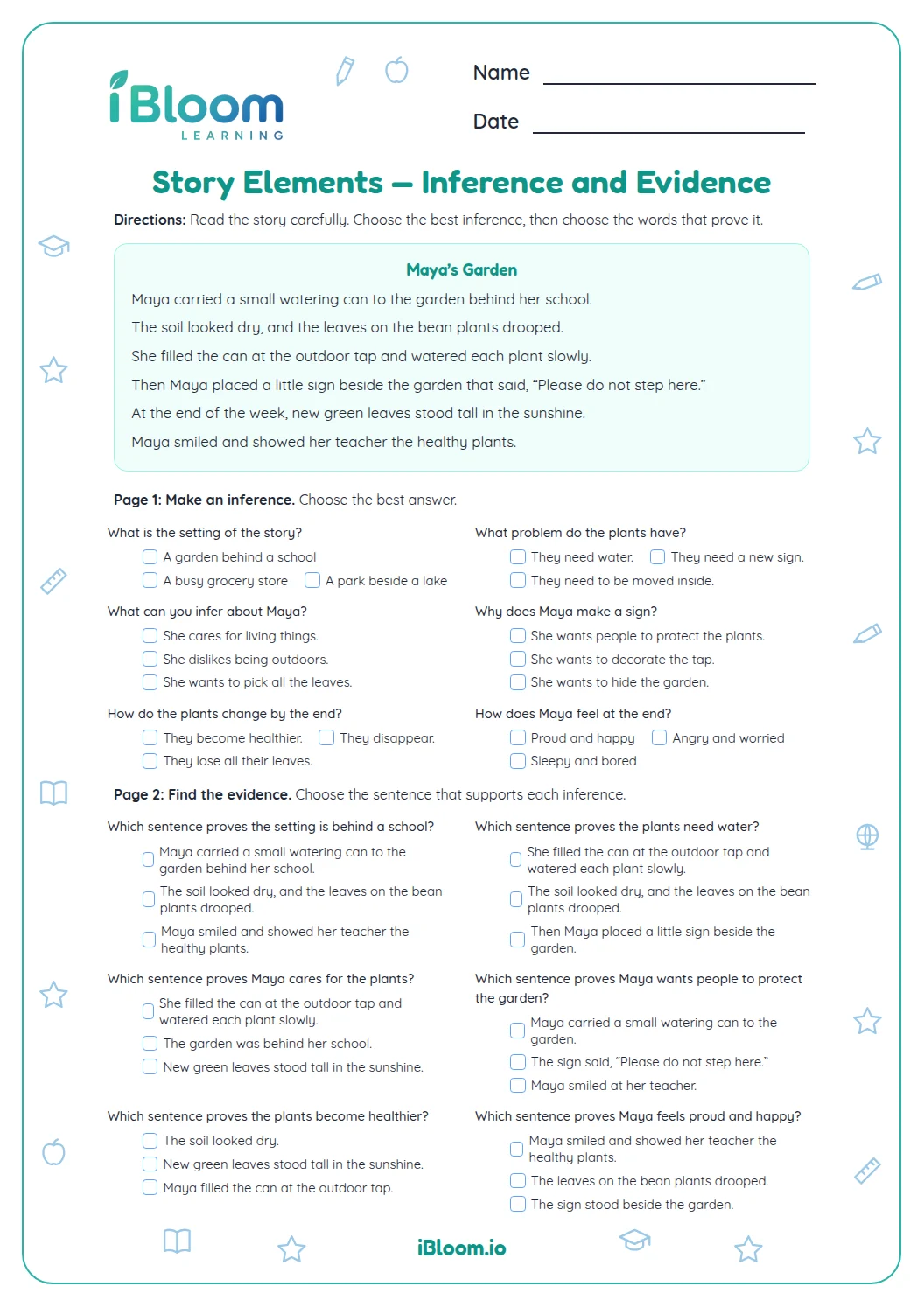
About this worksheet
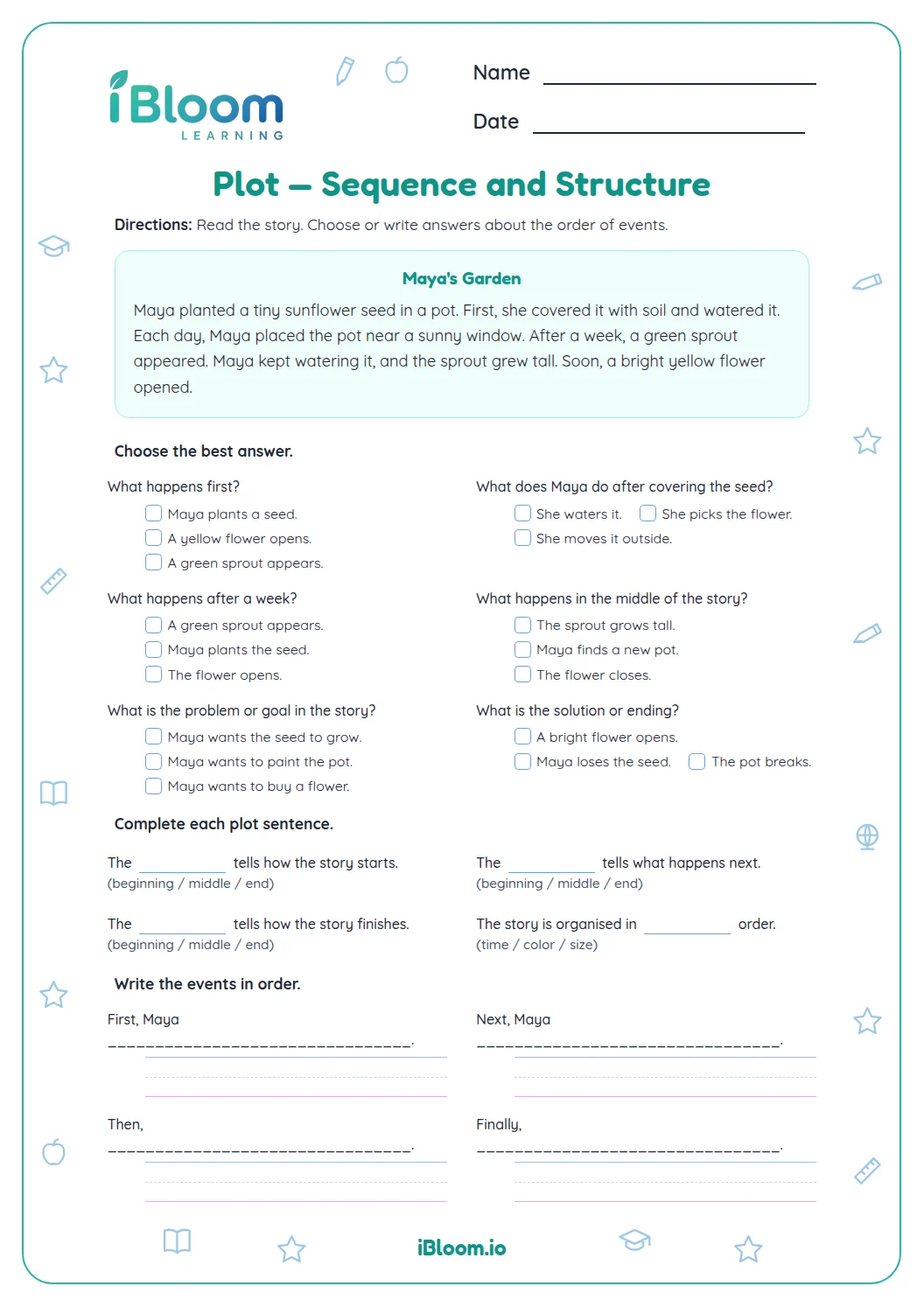
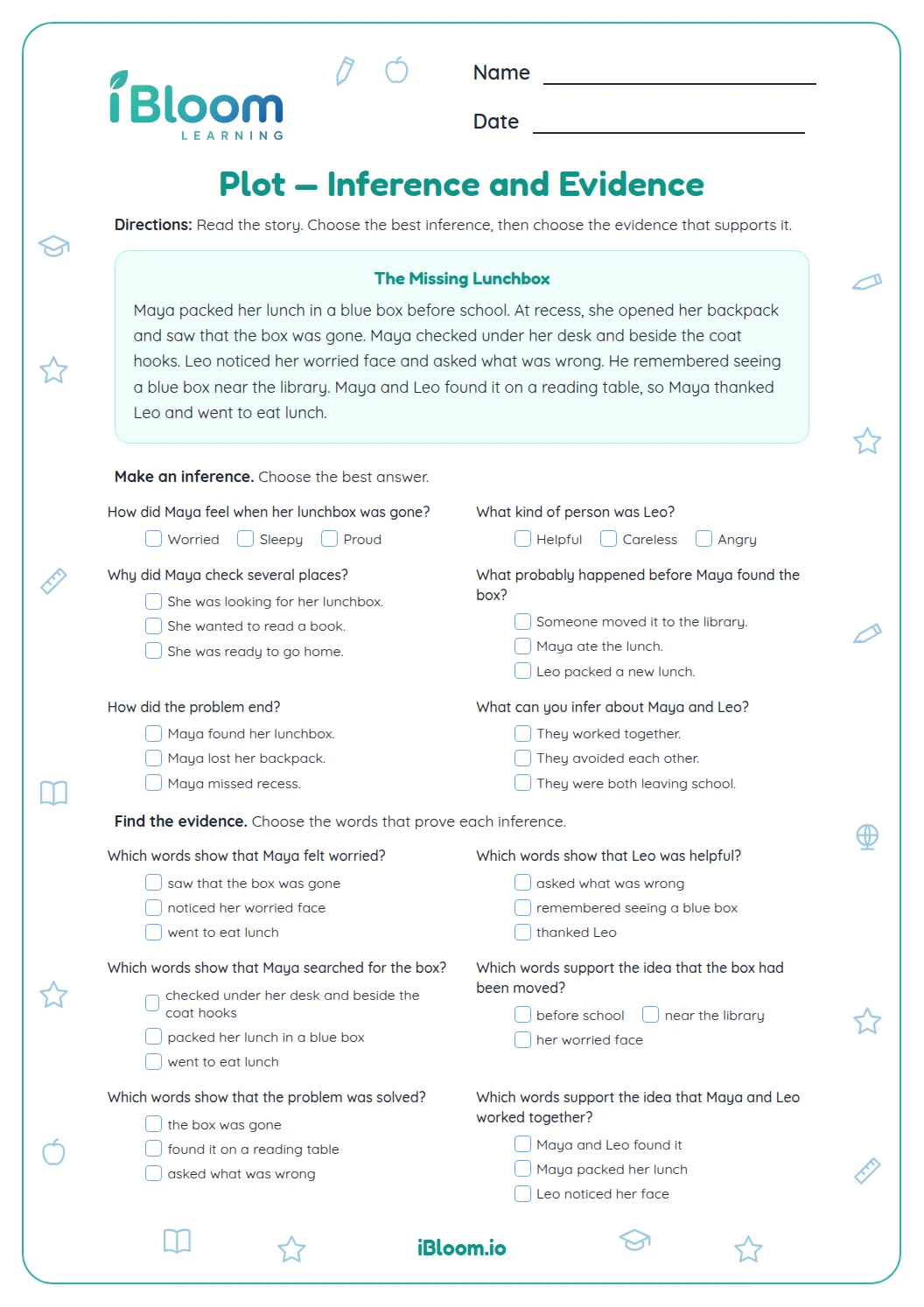
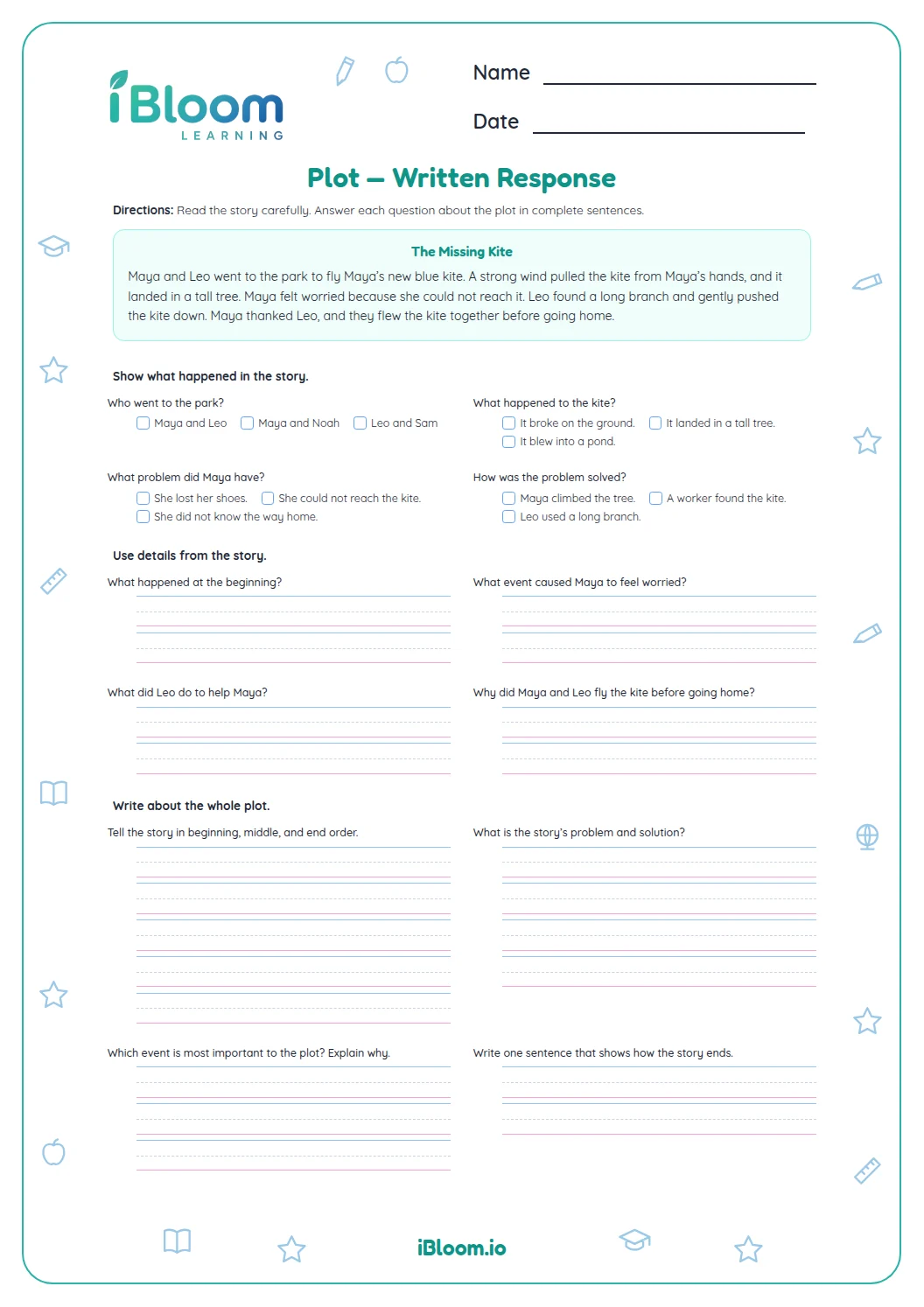
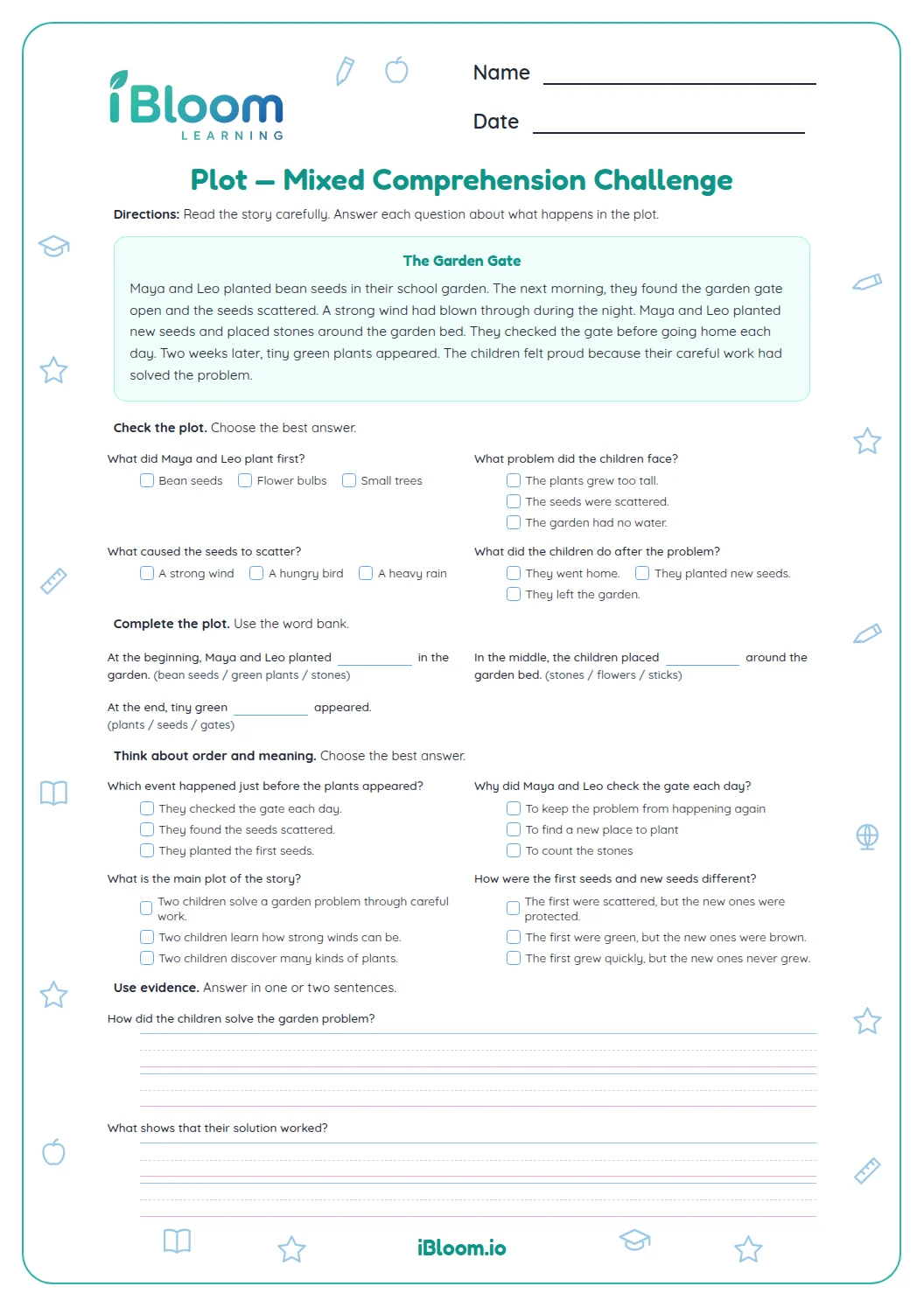
This free printable Grade 2 reading worksheet includes the original story “The Dry Garden” and 16 comprehension questions. Children identify the main idea, locate details, recount important events, and explain how two characters respond to a problem. The practice aligns with CCSS RL.2.2, which asks students to recount stories and determine a lesson. A separate answer key includes sample responses for open-ended questions.
Aligned to RL.2.2
What is the main idea of a story?
The main idea tells what the story is mostly about. In “The Dry Garden,” Mia and Ben notice a problem and work together to help the plants.
Question 1 asks for the main idea. A strong answer includes both the characters and their helpful action, rather than one small detail.
- 1Who is the story mostly about? Mia and Ben
- 2What is the important action? They help the garden
- 3Main idea: Friends help a dry garden.
How do details show what happens in the plot?
A plot is the chain of events in a story. Here, the friends notice dry soil, check the empty rain gauge, water the rows, and see a bird drink from a puddle.
A detail such as “the rain gauge was empty” explains why they needed to water. The ending shows the result: leaves lift and a flower opens.
How can a reader support an answer?
Return to the passage and find the sentence that gives evidence. For a question about how Mia helps, the text says she waters one row. For a lesson, connect the problem and the friends’ shared actions.
How to use this worksheet at home or in class
- 1Read the passage once to understand the whole story.
- 2Name the characters and the problem.
- 3Reread to find details about what the characters do.
- 4Put key events in the order they happen.
- 5For written answers, include a specific story detail.
- 6Check the key; responses may use different words if they match the story.
Common mistakes and quick fixes
The mistake
Choosing one small detail as the main idea.
The fix
Ask whether the answer explains most of the story or only one moment.
The mistake
Mixing up the order of events.
The fix
Reread transition clues and number the events as they appear.
The mistake
Giving an opinion without text evidence.
The fix
Point to an action or sentence in the passage that supports the answer.
Common Core alignment
This worksheet practices the Common Core skill named below.
Recount a story, identify key events, and determine its lesson.
On this sheet: Questions ask children to recount the garden story and infer the lesson from events.
Show the official wordingHide the official wording
Recount stories, including fables and folktales from diverse cultures, and determine their central message, lesson, or moral.
What to practice next
Make more practice
Further reading
Questions parents and teachers ask
What is “The Dry Garden” about?
Mia and Ben notice that the school garden is dry. They check an empty rain gauge, share the work of watering the plants, and see the leaves lift and a flower open. The passage gives children events and details to use when answering.
How can my child identify the main idea?
Ask what the whole story is mostly about, then name the characters and their important action. A small fact, such as the bird drinking from a puddle, is a detail. The main idea should connect to more than one event.
What does the worksheet mean by a plot?
Plot is the sequence of important events. In this story, the children notice dry soil, check for rain, water the garden, and see the plants perk up. Questions ask learners to follow those events and explain how the characters respond.
Are sample answers provided for written questions?
Yes. The answer key gives sample responses for questions that allow more than one wording. A response is suitable when it answers the question and matches a detail or event in “The Dry Garden.” Children can use their own words while keeping the story evidence accurate.
What is the plot in “The Dry Garden”?
Mia and Ben notice dry soil, check whether it rained, and water the garden together. The plants begin to lift and a flower opens. The questions ask readers to connect those events with the story’s main idea and lesson.
How can children support a written response?
They can return to the passage and include a specific action or result. For example, a response about the ending can mention that the leaves lifted or a yellow flower opened. The key gives sample wording for questions with more than one accurate answer.