

About this worksheet
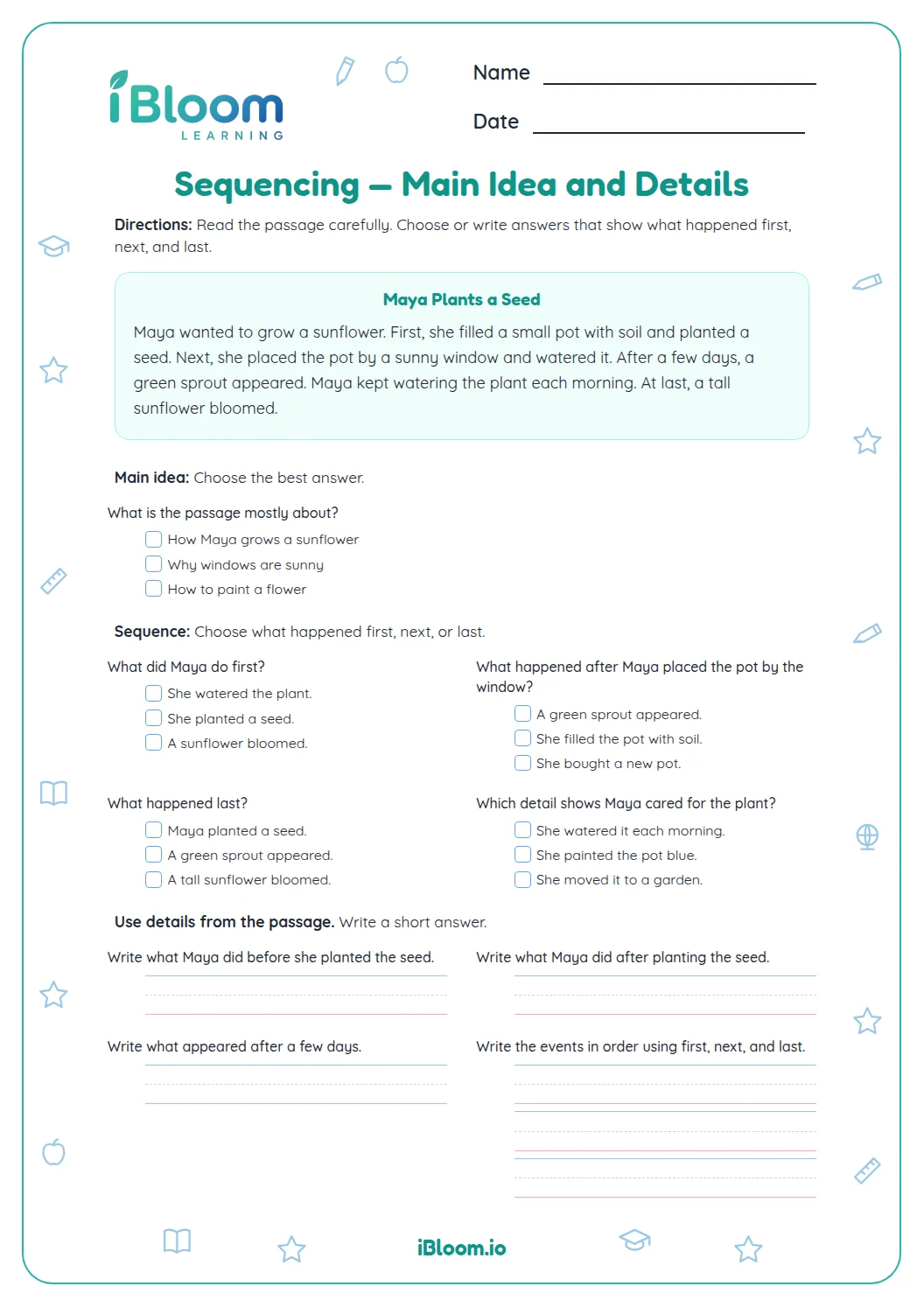
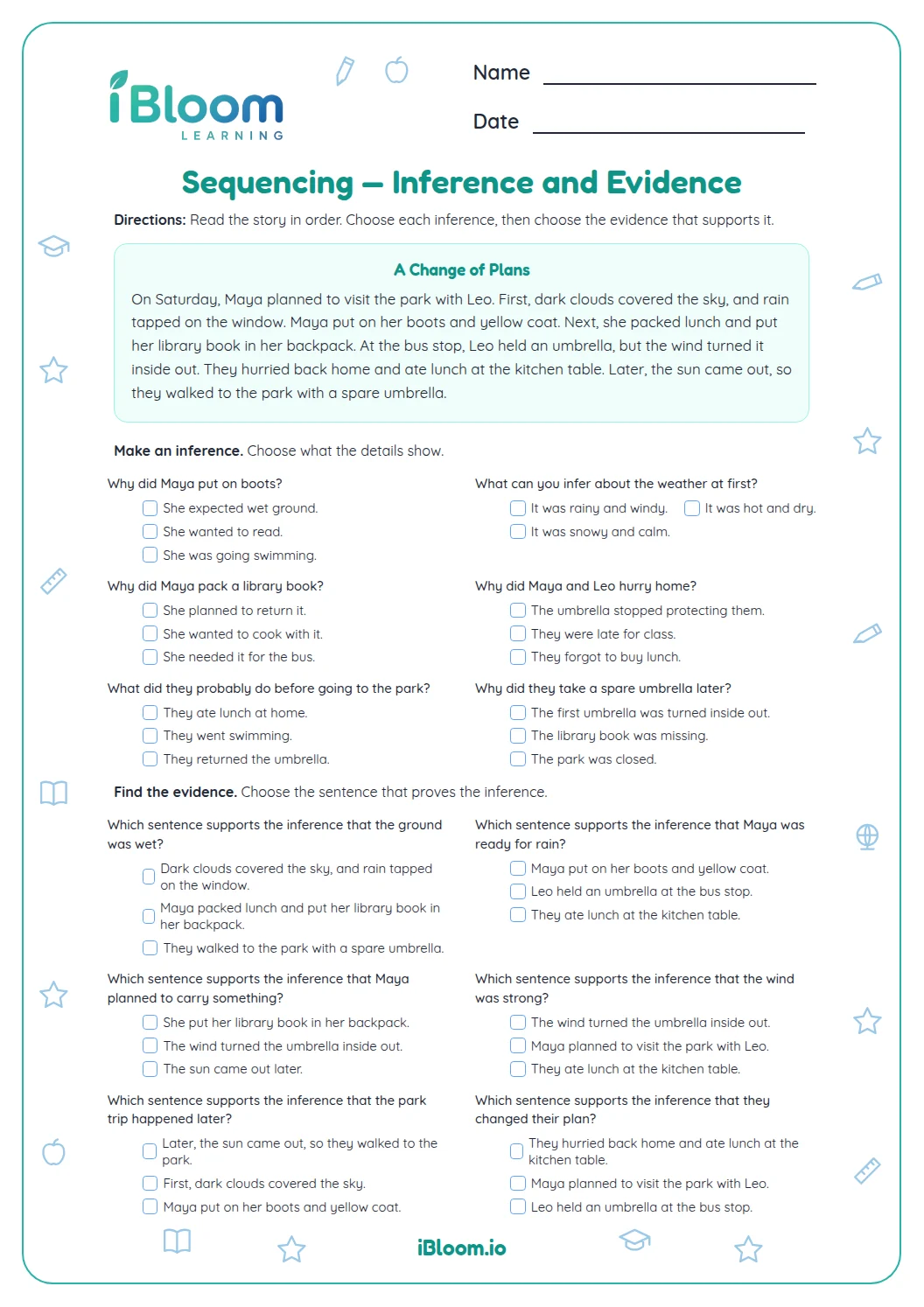
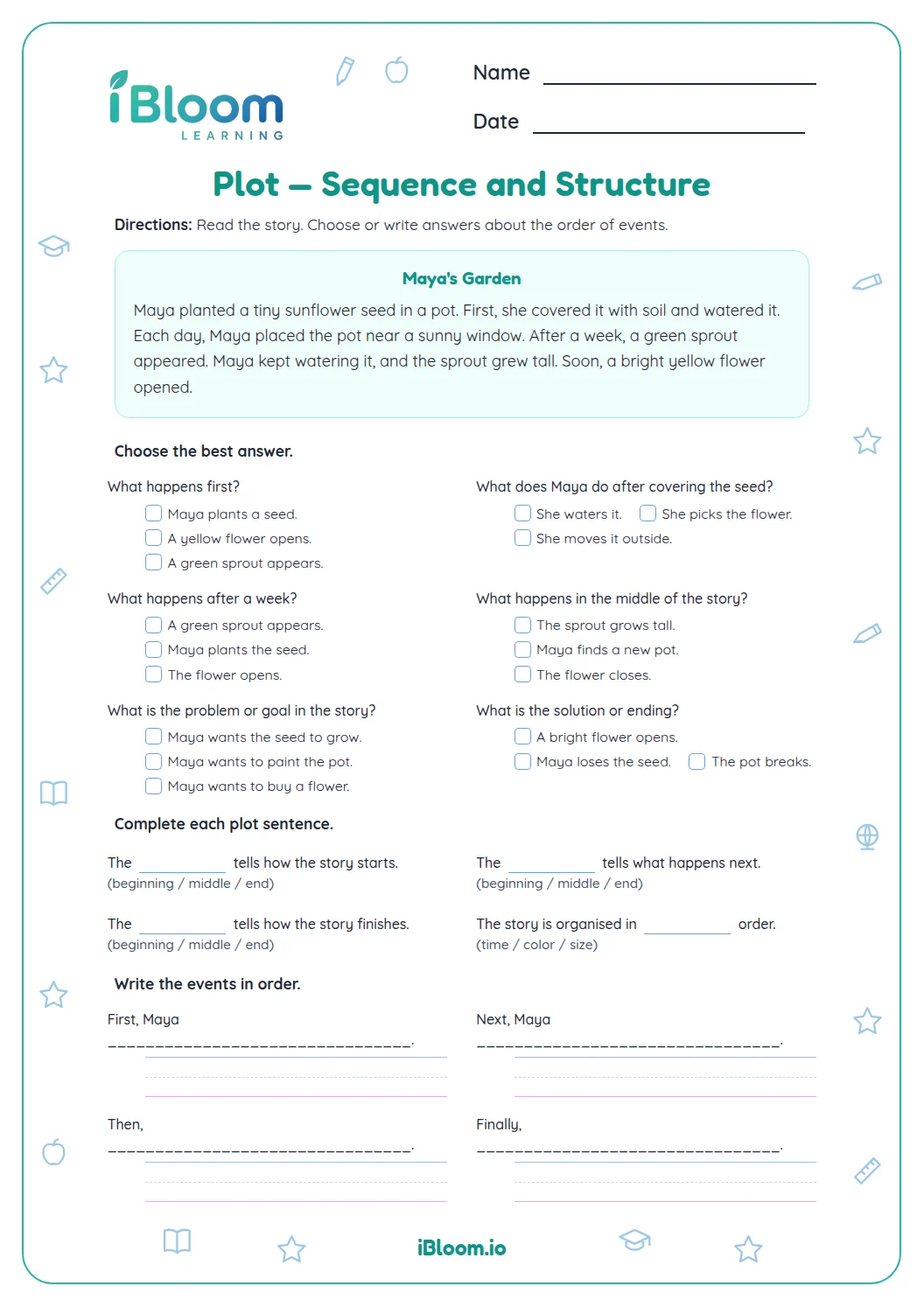
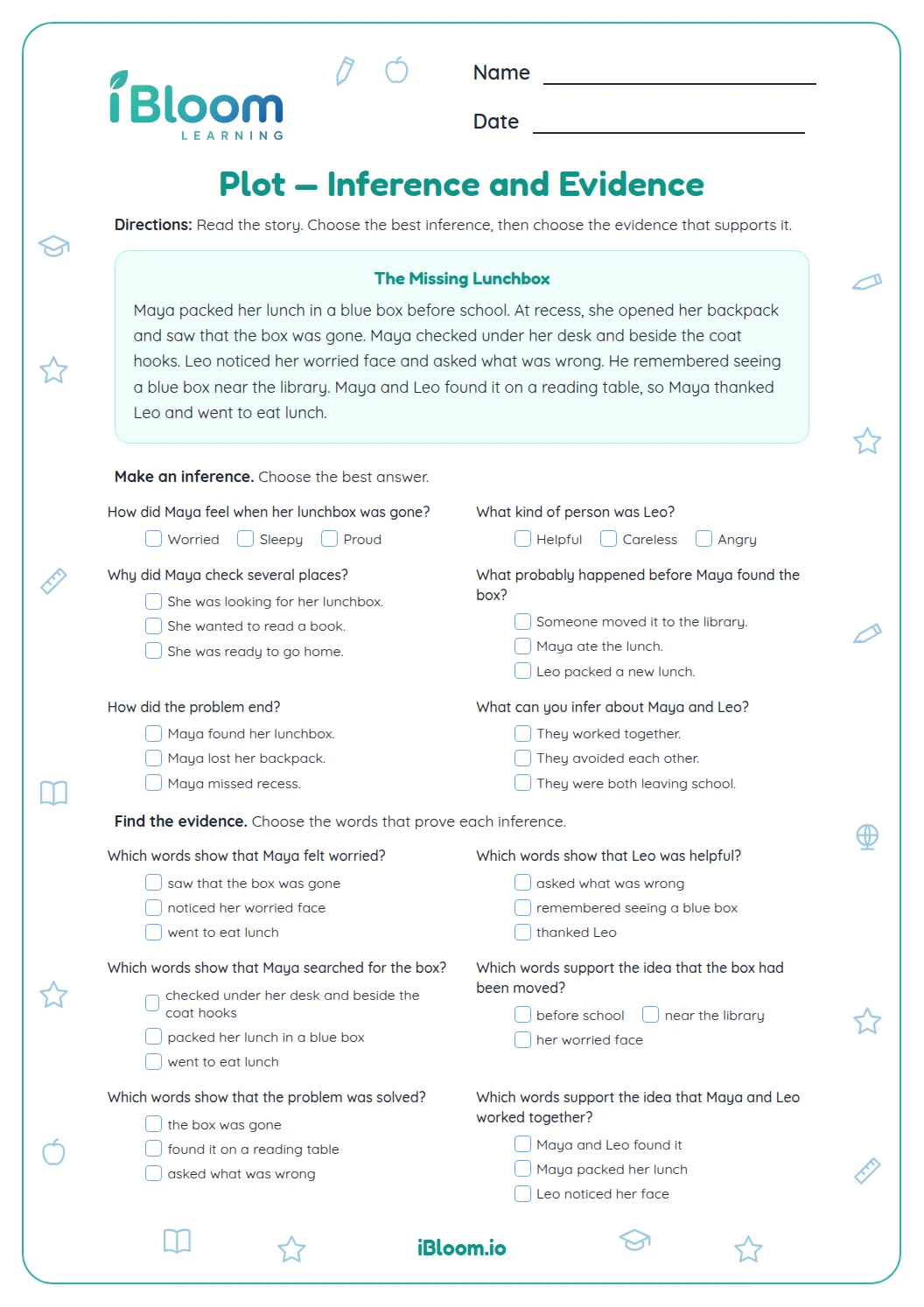
Read about Maya and Ben caring for a sunflower in their school garden. Questions ask who and where, track what happens first and last, order events, and explain how the beginning, middle, and end fit together.
Aligned to 2.RL.5 and 2.RL.3
How do readers follow a story’s structure?
A story’s structure is the way its events are arranged. The beginning introduces characters and the situation. The middle shows what happens next, often including a problem or important action. The ending tells what happens last.
To sequence events, look for time clues and check what must happen before something else. A seed must be planted before it can sprout. Use details from the passage to support an answer.
What does this worksheet ask?
The passage is about 70 words long. Fifteen questions move from story details to event order and story structure. Three questions invite a short written response, and the answer key includes sample responses.
- Part A: read the passage
- Part B: identify characters, setting, and details
- Part C: choose the first and last events
- Part D: explain story details and change
- Part E: identify the event order and beginning, middle, and end
- Answer key gives fixed answers and sample responses
How can you put the story events in order?
Question 7 asks what happened first. The passage says Maya and Ben planted the seed before they noticed the dry soil or saw a shoot, so planting is the first event.
How to use this worksheet
- 1Read the passage once to meet the characters and setting.
- 2Notice what happens at the beginning, middle, and end.
- 3Use time clues such as “one day” and “at last.”
- 4Check that an event could happen at that point in the story.
- 5Use a detail from the passage in a written answer.
Common mistakes and quick fixes
The mistake
Choosing an event that is important but happened later.
The fix
Look for the earliest event in the passage.
The mistake
Mixing up the beginning and the ending.
The fix
Check which event introduces the story and which one concludes it.
The mistake
Giving an answer that is not supported by the passage.
The fix
Point to the sentence that tells or supports the answer.
Common Core alignment
This worksheet practices the listed Common Core skill at the stated grade.
Describe how the beginning introduces the story and the ending concludes it.
On this sheet: Questions identify what happens at the beginning, middle, and end and describe the change across the story.
Show the official wordingHide the official wording
Describe the overall structure of a story, including describing how the beginning introduces the story and the ending concludes the action.
Describe how characters respond to major events and challenges.
On this sheet: Questions track the characters’ actions as they respond to dry soil and care for the growing seed.
Show the official wordingHide the official wording
Describe how characters in a story respond to major events and challenges.
What to practice next
Make more practice
Questions parents and teachers ask
What is the difference between sequence and structure?
Sequence is the order in which events happen. Structure describes how the story is organized into a beginning, middle, and ending. This worksheet asks children to order events from Maya and Ben’s garden story and identify what happens in each part.
Who plants the seed in the passage?
Maya and Ben plant a sunflower seed in their school garden. They take turns checking and watering it. Questions ask children to recall the characters, setting, and details as well as follow the events in order. The passage names both characters before describing their shared work.
What should a student include in a written response?
A student can answer in a clear phrase or sentence using a detail from the passage. For example, the soil looked dry, so Maya and Ben brought water. The answer key gives sample responses, but a different accurate answer may also work.
Does the worksheet have an answer key?
Yes. A separate answer key gives the correct choices and sample responses for the three written questions. The passage and questions take three pages, and the key is also provided for checking the work. The answer key follows the worksheet and can be used for review.
What happens at the end of the garden story?
A yellow sunflower opens, and Maya and Ben measure it for their garden journal. This final event concludes the story after the children have planted, watered, and cared for the seed as it grew. Students can use the ending detail to explain how the story concludes.