





About this worksheet
This free Grade 2 worksheet uses an original three-paragraph passage about neighbors creating a garden. Students complete sentences by choosing details and ideas that match the text, including its main idea and each paragraph’s focus. Fifteen questions move from direct recall to connecting details with the larger point; the printable answer key gives concise responses. The page practices RI.2.2, identifying a multiparagraph text’s topic and paragraph focus.
Aligned to RI.2.2
What is the passage about?
The passage follows a group of neighbors as they prepare a garden beside their library. It names the jobs people do and gives several ways the garden may help the neighborhood.
Part B asks about the whole passage, paragraph focus, and the neighbors’ work. Part C connects details to the larger ideas in the text.
How do details support a main idea?
A main idea states what a passage or paragraph is mostly about. A supporting detail is a specific action, fact, or example from the text.
- 1Paragraph 2 mainly tells that each neighbor has a job.
- 2Eli waters, Samira makes signs, and Mr. Ortiz adds a bench.
How can a reader check an answer?
Return to the passage and point to the words that support the answer. A detail should match the question and fit the paragraph’s focus.
How to use this worksheet
- 1Read the full passage once.
- 2Reread the paragraph named in the question.
- 3Look for a sentence that supports the choice.
- 4For a main idea, ask what several details have in common.
- 5Choose the option that completes the sentence accurately.
Common mistakes and quick fixes
The mistake
Choosing one interesting detail as the main idea.
The fix
Ask which idea fits several details, not just one sentence.
The mistake
Using a detail from a different paragraph.
The fix
Check the paragraph named in the question.
The mistake
Adding a guess that the passage never says.
The fix
Point to the sentence that supports each response.
Common Core alignment
This reading passage supports identifying a text topic and the focus of its paragraphs.
Name the passage topic and tell what each paragraph is mostly about.
On this sheet: Name the passage topic and tell what each paragraph is mostly about.
Show the official wordingHide the official wording
Identify the main topic of a multiparagraph text as well as the focus of specific paragraphs within the text.
What to practice next
Make more practice
Further reading
Questions parents and teachers ask
How many questions are on this worksheet?
The worksheet has 15 multiple-choice sentence completions after one original passage. They address the whole passage, paragraph focus, and details such as the neighbors’ jobs. The answer key identifies the best ending for each sentence, and the evidence comes from the text.
What is the passage about?
Neighbors create a garden beside a library. The passage describes how they prepare the beds, share tasks, and hope the garden will provide fresh food, learning, and a quiet place. These details give students a clear topic to track across three paragraphs.
What is a paragraph focus?
A paragraph focus is the idea that most of that paragraph’s sentences explain. In the garden passage, paragraph 2 mainly describes the neighbors’ jobs. Naming that focus helps a reader connect several small actions to one broader idea in the text.
How can students show why a choice fits?
Ask students to point to a sentence or detail in the passage that supports their choice. For example, Samira making plant signs supports the answer that each neighbor has a job. This habit connects a selected sentence ending with evidence from the text.
How should a student find a supporting detail?
First identify the idea the question asks about, then find a specific sentence that supports it. Samira making plant signs supports the idea that each neighbor takes a job. A detail from another paragraph may be true but may not answer that question.
What should come next?
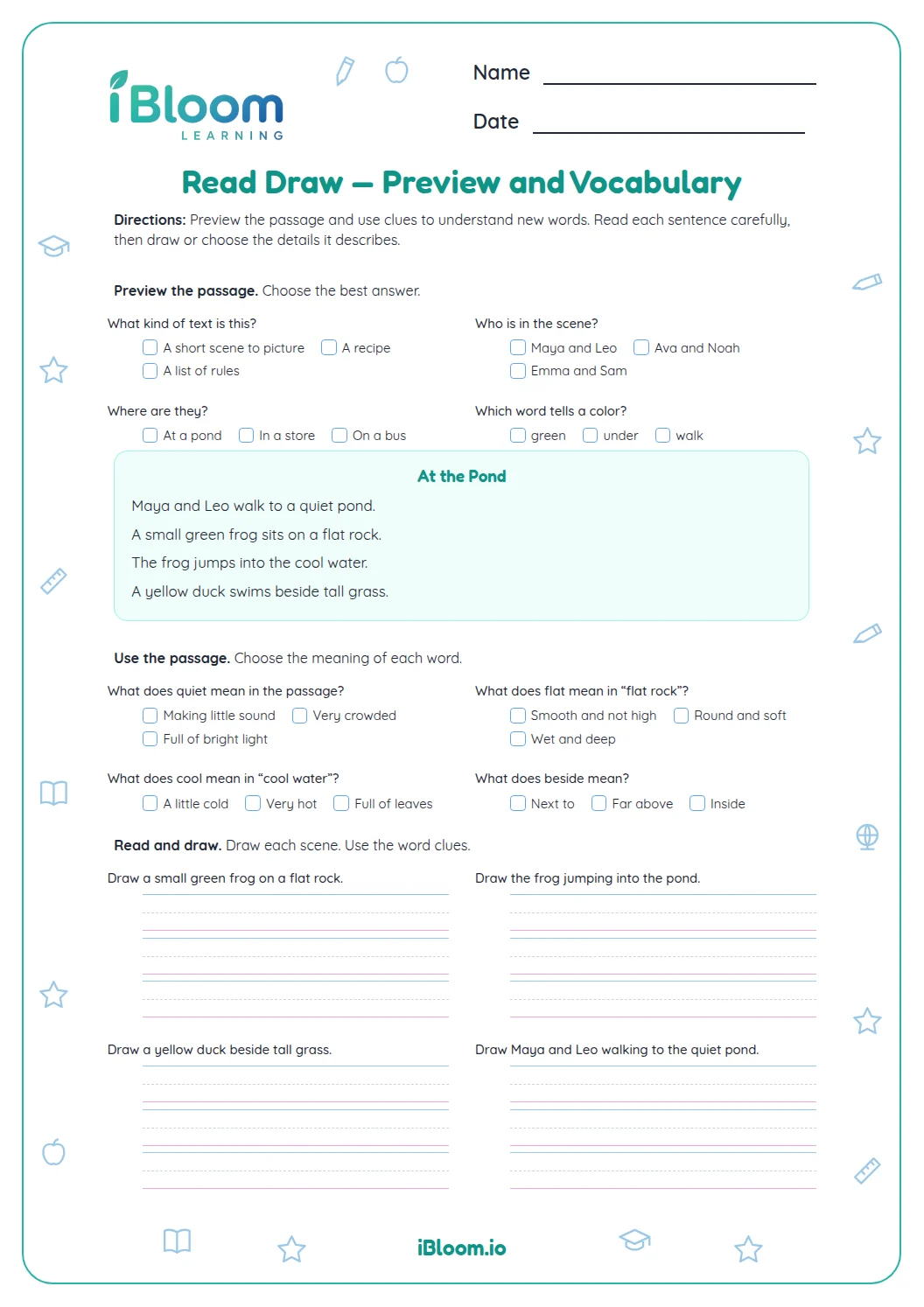
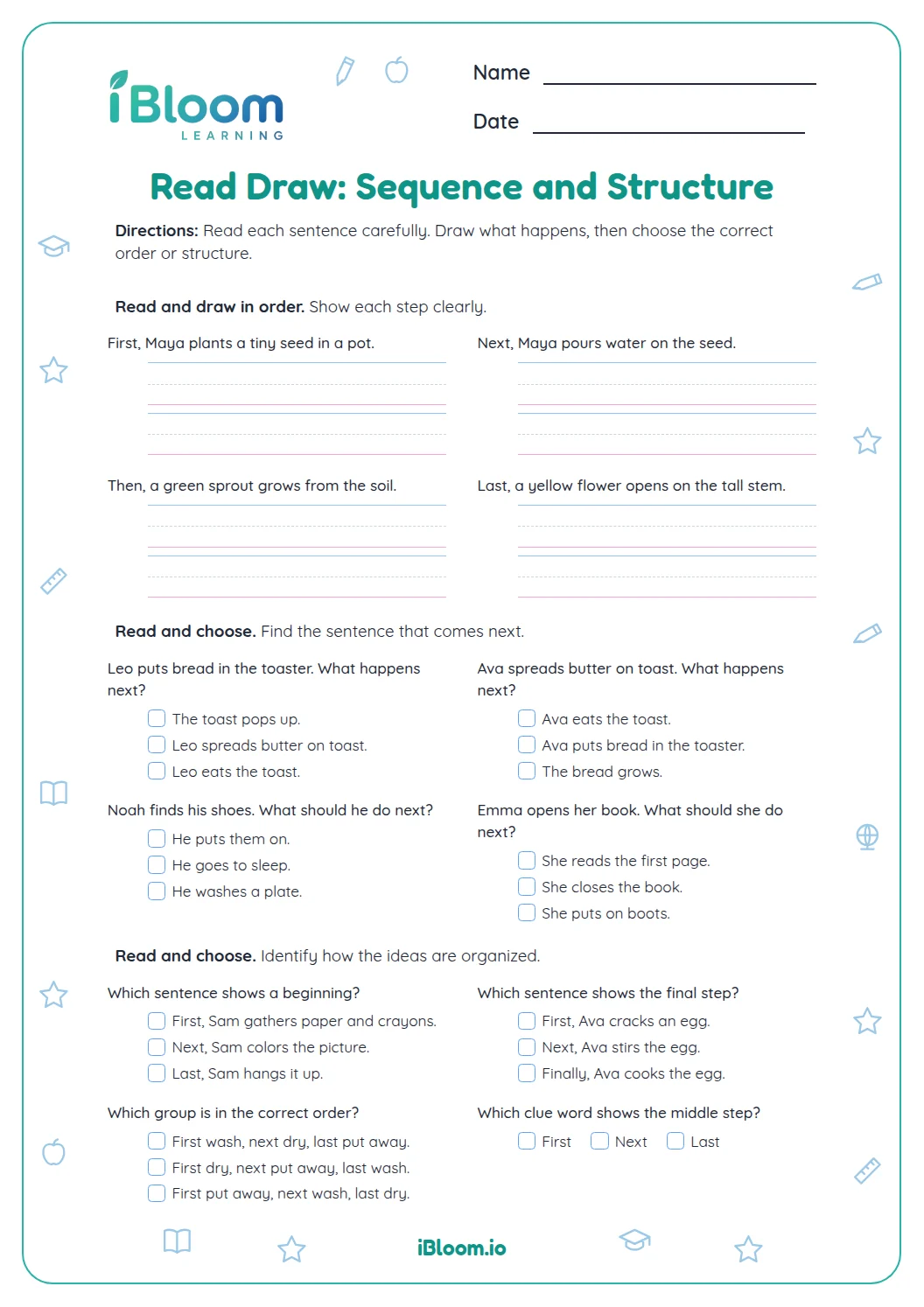
Cloze Reading adds practice using context to complete text, while Fluency focuses on reading connected text smoothly. Read Draw pairs a short text with a visual response. These sibling activities extend the garden page’s focus on understanding details and the ideas they support.