


About this worksheet
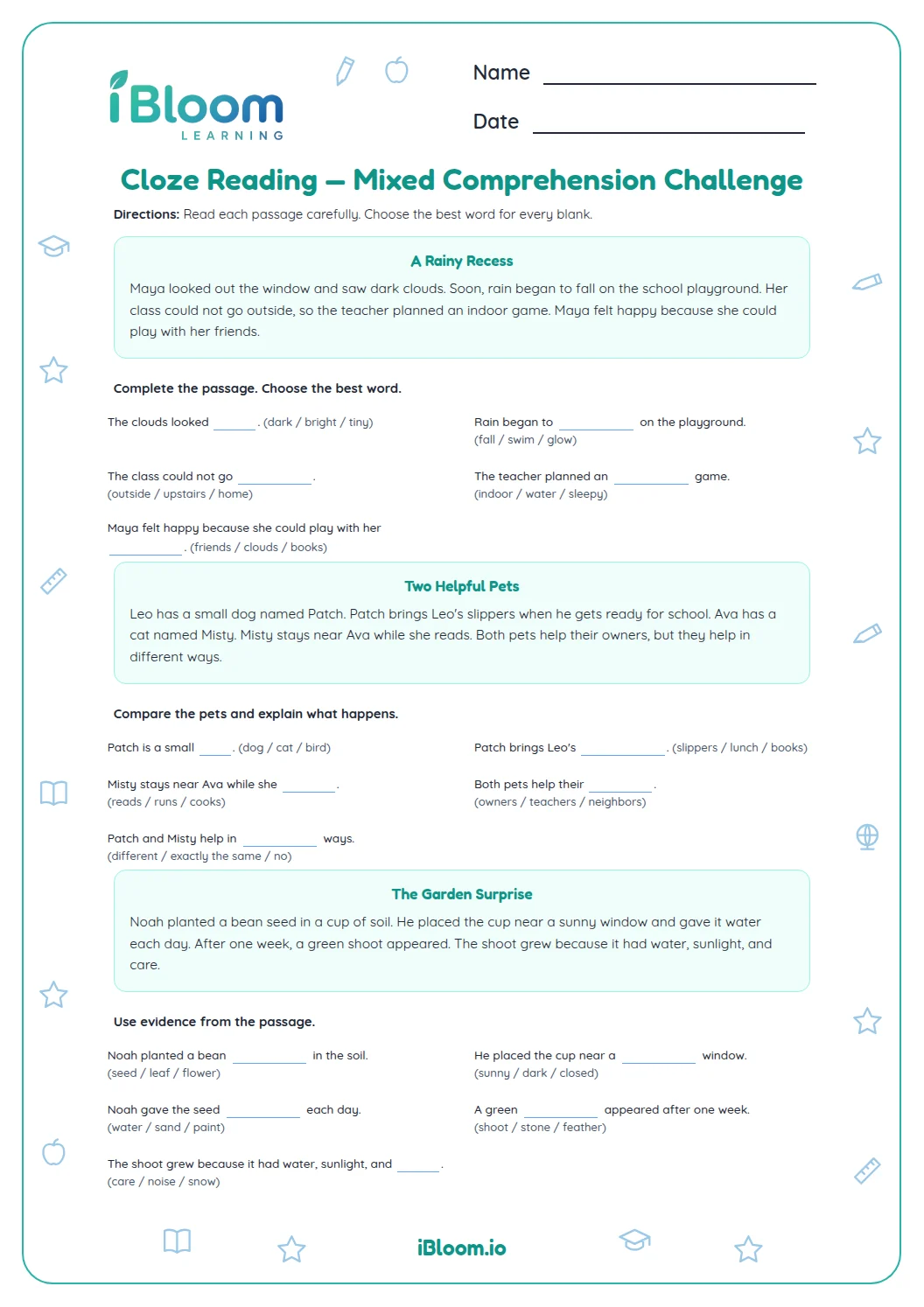
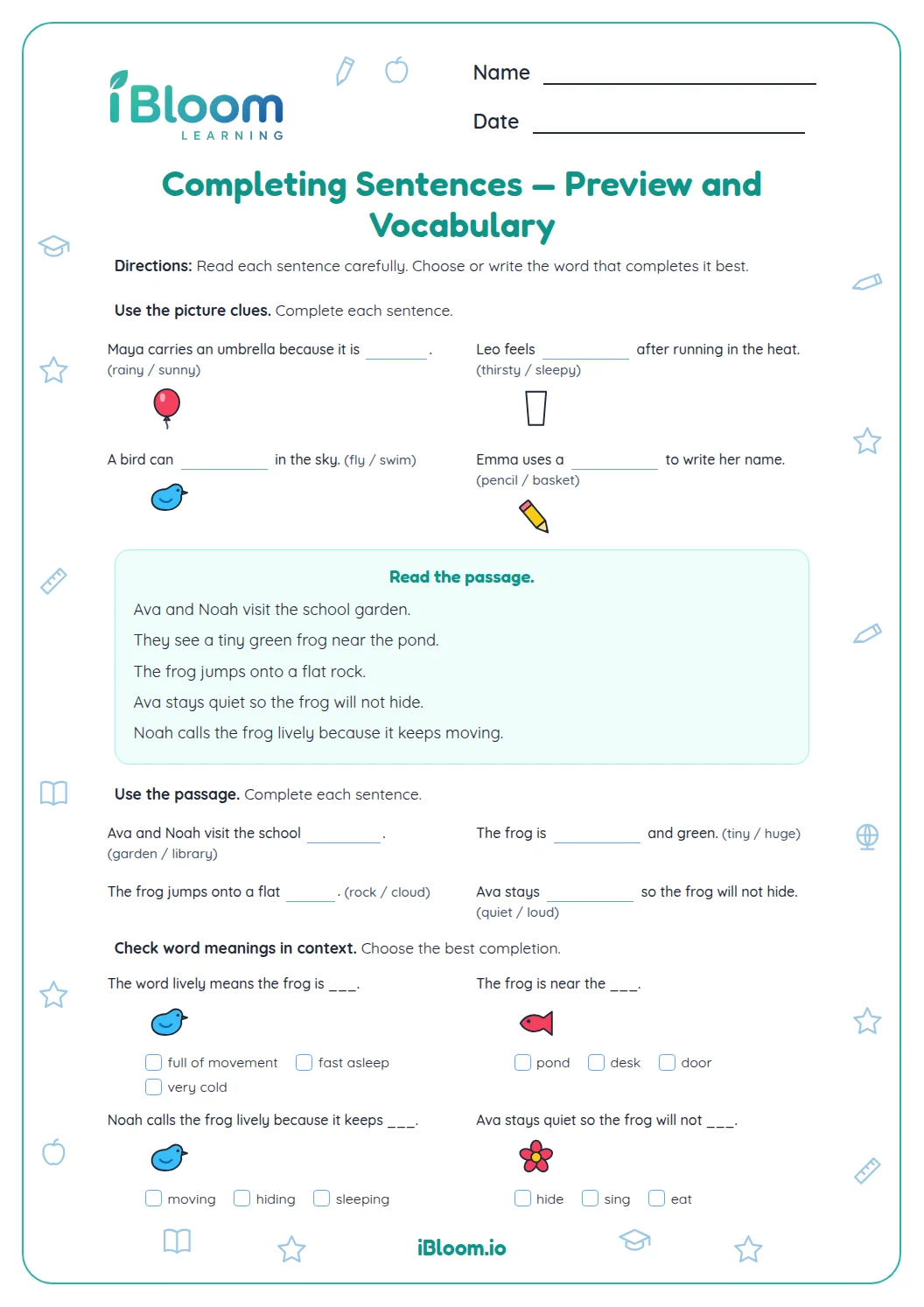
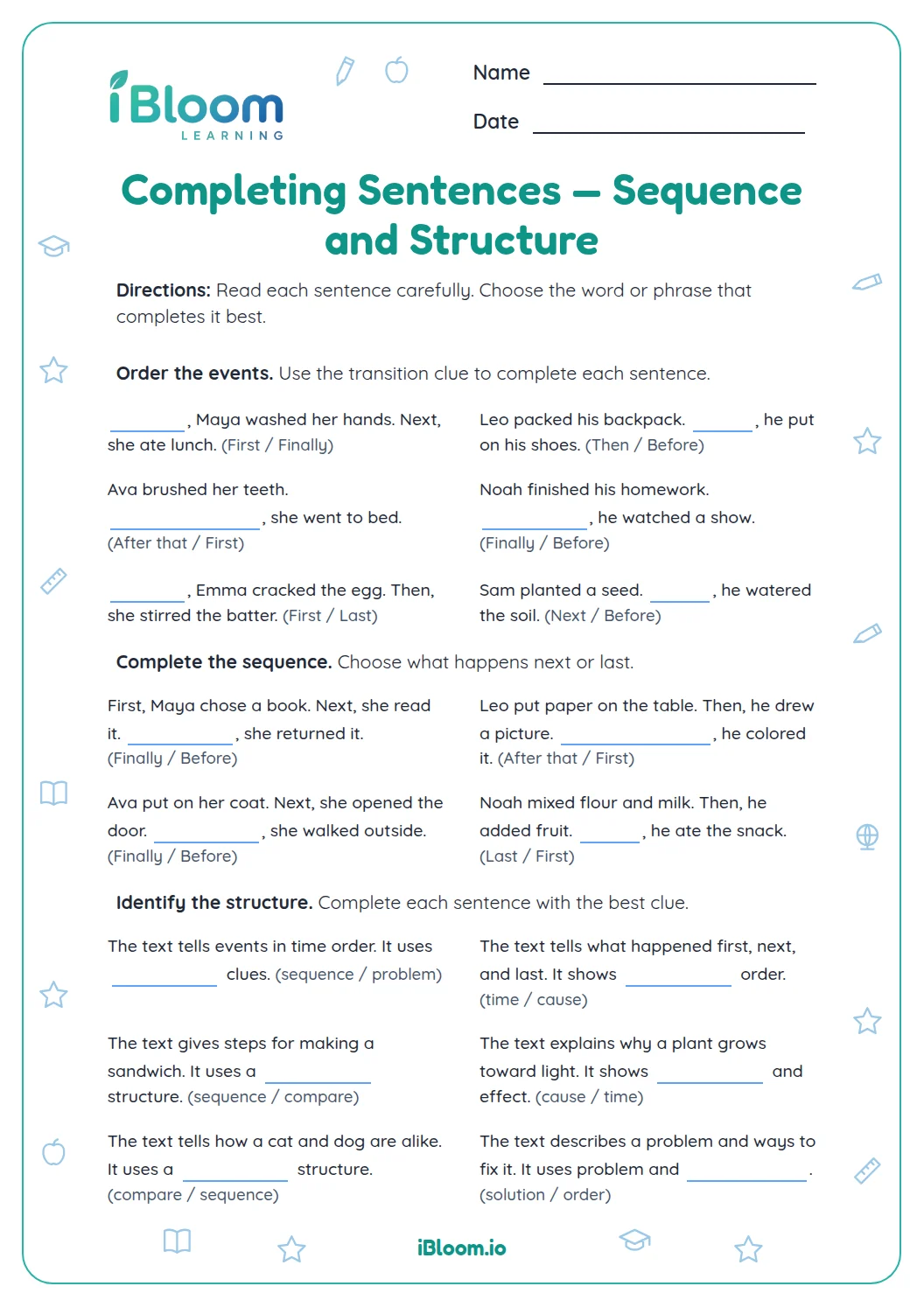
This Grade 2 cloze worksheet follows Ben as he plants a bean seed and watches it grow. Learners use a five-word bank to complete the passage, then answer 14 questions about the story’s sequence, details, and structure. The passage’s beginning introduces the planting, and its ending shows Ben responding to the new shoot. Practice aligns with CCSS.ELA-LITERACY.RL.2.1 and RL.2.5.
Aligned to CCSS.ELA-LITERACY.RL.2.1 and CCSS.ELA-LITERACY.RL.2.5
Use the passage clues
The first part asks learners to complete key words in a short story. Read the whole sentence and use the story meaning to choose a word.
After filling the blanks, read the passage again. The completed sentences provide the clues for the sequence questions.
Retell what happened
The second part checks whether learners can find what Ben did first, what happened between steps, and how the story ended.
A final detail question asks where Ben makes the plant picture. Learners can point to the sentence that names his notebook.
How to use this worksheet
- 1Read the directions together, then let the learner try each part independently.
- 2Ask the learner to explain one answer from each part.
- 3Use the separate answer key to check work and revisit any missed item.
Common mistakes and quick fixes
The mistake
Rushing and choosing an answer that does not fit the prompt.
The fix
Return to the passage, model or word, and point to the clue before answering.
The mistake
Changing an answer without checking the evidence.
The fix
Say the reason aloud and make sure it matches the question.
Curriculum alignment
This worksheet practices the named skill through short, grade-level items.
Ask and answer questions about key details.
On this sheet: Learners answer who, what, when, and why questions using details in the passage.
Show the official wordingHide the official wording
Ask and answer such questions as who, what, where, when, why, and how to demonstrate understanding of key details in a text.
Describe the overall structure of a story.
On this sheet: Learners complete and sequence the beginning, middle, and ending events.
Show the official wordingHide the official wording
Describe the overall structure of a story, including describing how the beginning introduces the story and the ending concludes the action.
What to practice next
Make more practice
Further reading
Questions parents and teachers ask
What words complete the cloze passage?
The word bank lists soil, seed, sunny, water, and shoot. Each word completes one blank in Ben’s story. Have the learner reread the whole sentence after filling it in and check that the completed detail matches the passage and makes sense.
What happens in Ben’s story?
Ben fills a cup with soil, plants a bean seed, places the cup by a sunny window, and waters it each morning. A shoot appears a few days later, and Ben draws the plant in his notebook. The questions follow these events.
How does the worksheet practice sequence?
Learners identify the first action, what follows planting, and what Ben does after the shoot appears. They also recognize “Next” as a signal word. Rereading the passage in order helps connect each answer to its place in the story. Rereading together makes the clue easier to notice.
What is the story’s structure?
The beginning introduces Ben’s plan to plant a bean. The middle describes planting and caring for the seed. The ending tells what appears and how Ben responds by drawing the plant. Learners use these details to describe how the story is organized.
How many questions and pages are included?
There are 14 questions across three total pages, including the answer key. Five blanks complete the passage; the remaining items ask about sequence, transition words, and story details. The separate key supports checking after the learner finishes. Read in sequence to notice how the passage ends.