







About this worksheet
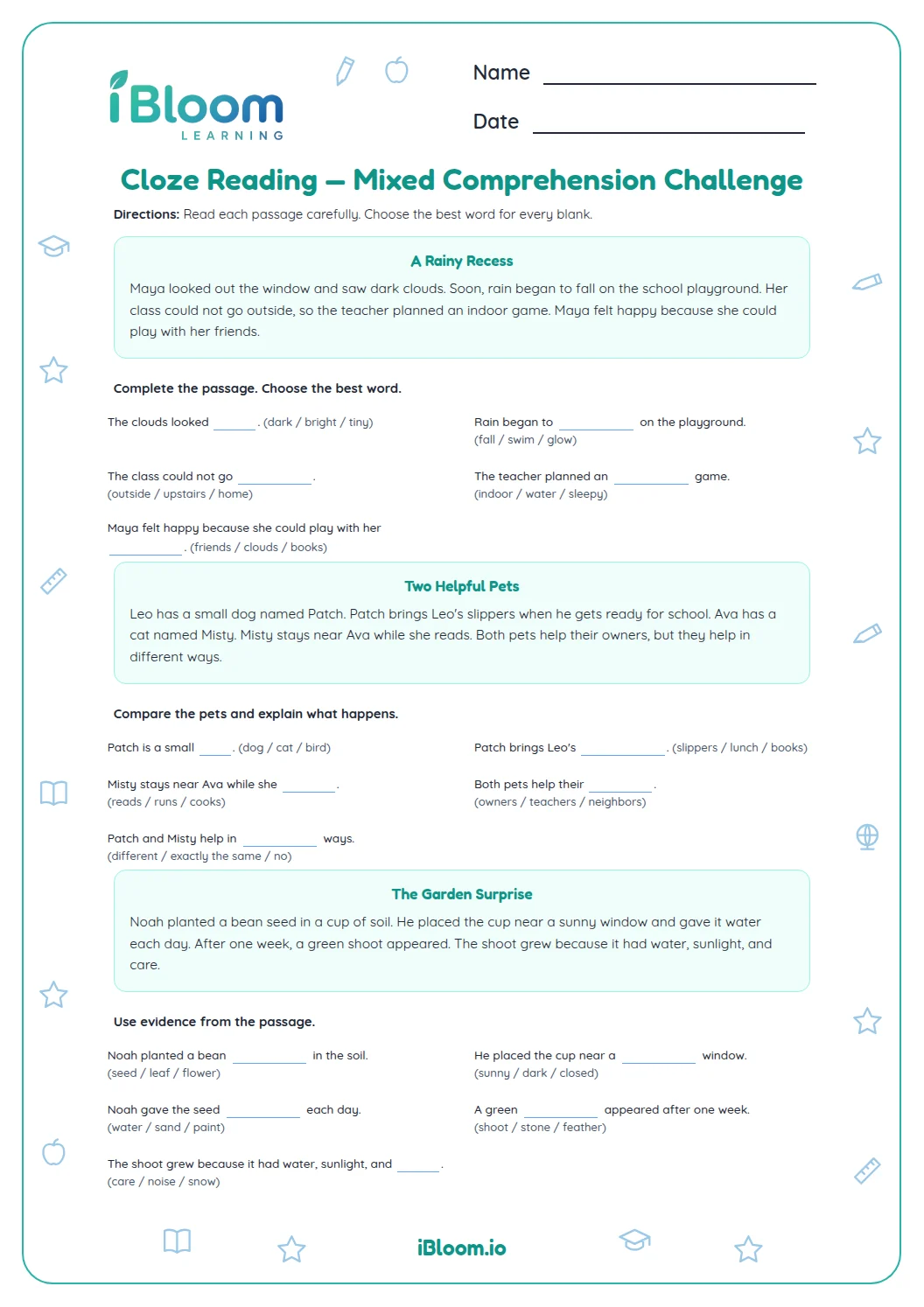
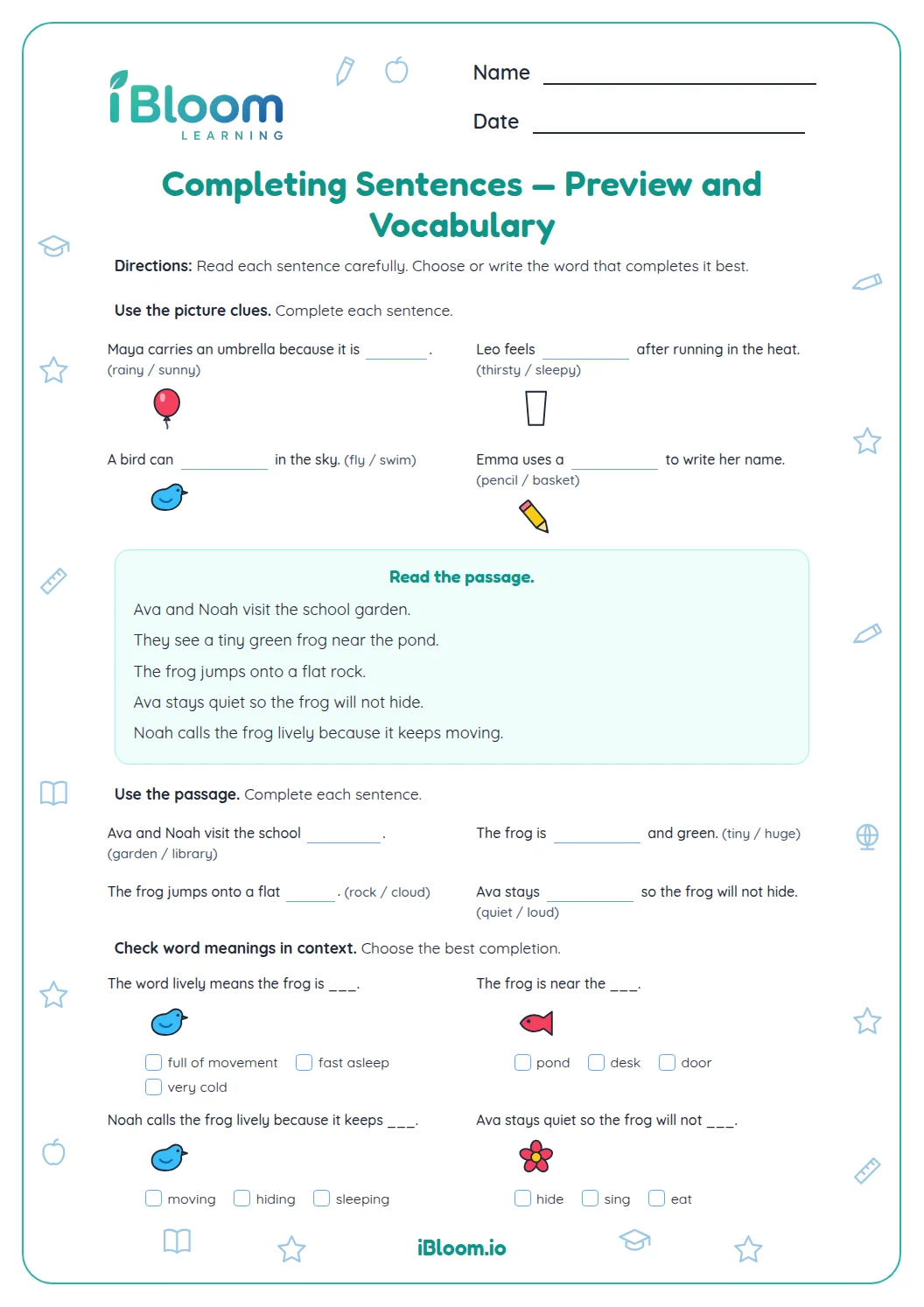
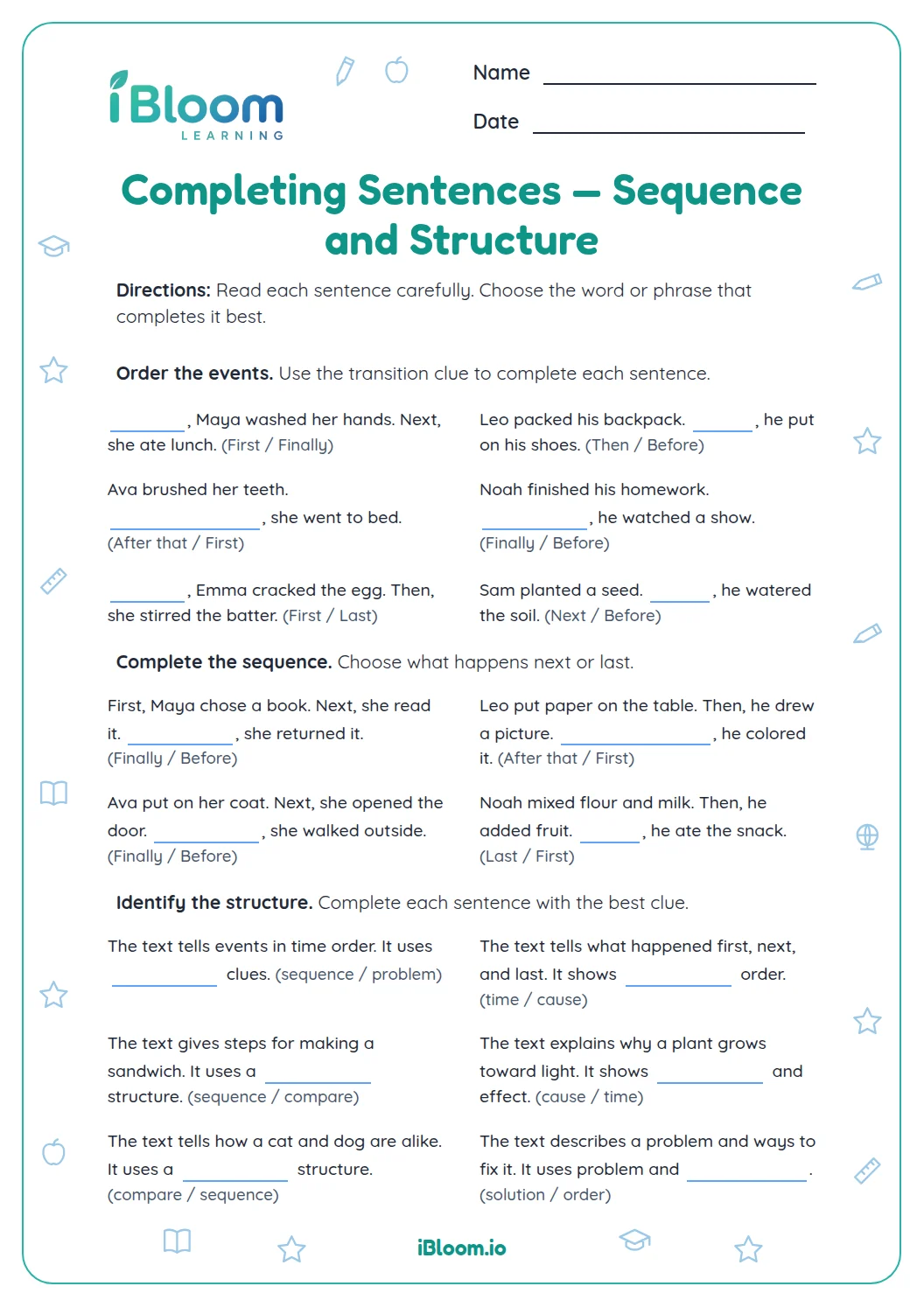
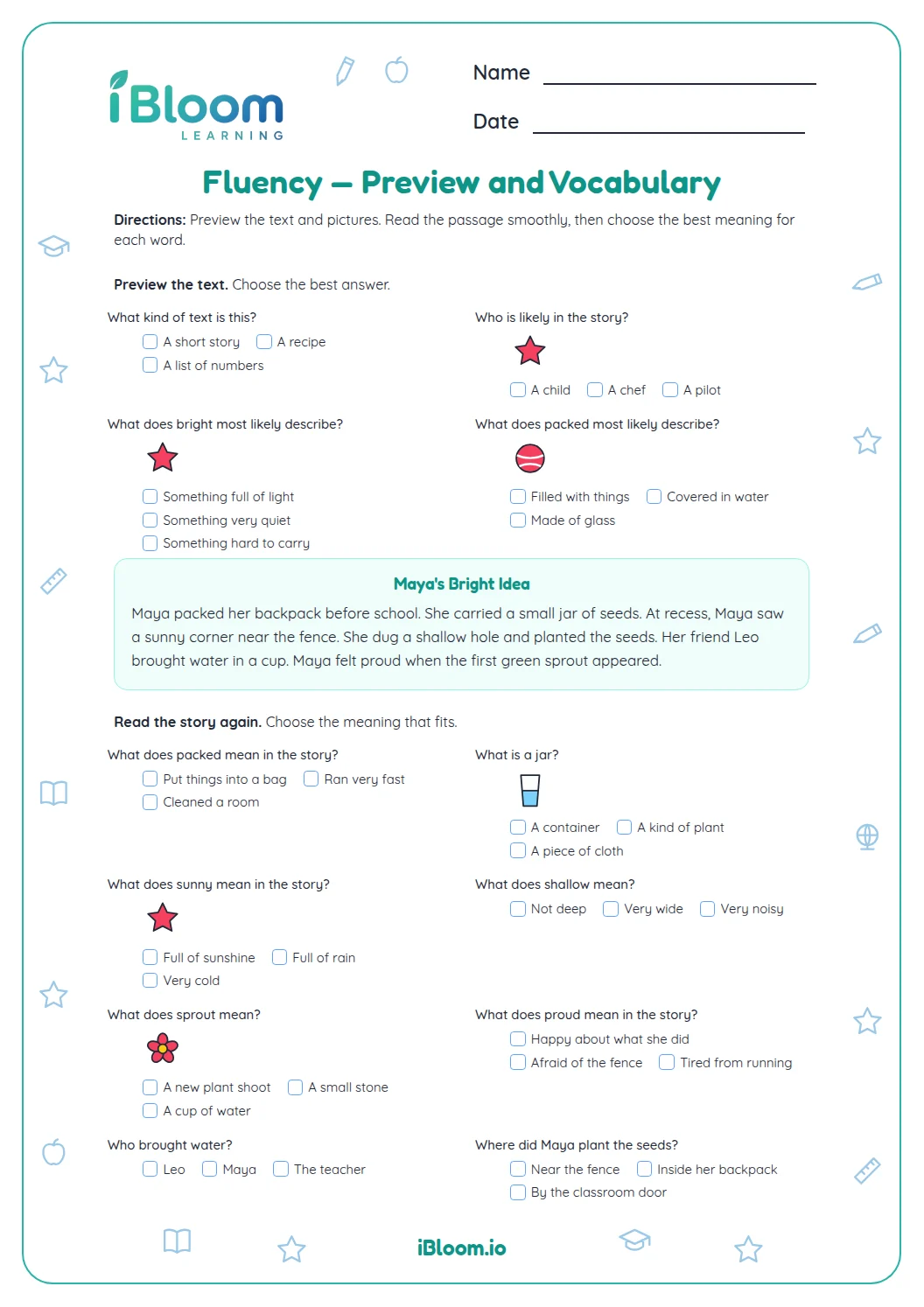
This free Grade 2 cloze reading worksheet uses a short garden passage to help children read for details and express what they understand. Part A is the passage; Part B asks children to complete five sentences with words from it. Part C checks details with five choices, and Part D has four short responses that call for passage evidence or a simple inference. The answer key gives the expected words and sample responses. The work practices CCSS RL.2.1 by focusing on questions about key details in a text.
Aligned to RL.2.1
What does cloze reading ask children to do?
Cloze reading removes a word from a sentence and asks the reader to use meaning and context to supply it. In this worksheet, the missing words come directly from Maya’s Garden, so children can reread and check each answer.
The later questions move from finding a stated detail to explaining a reason or noticing a change across the passage.
How can a child choose a missing word?
Read the whole sentence first, then look back at the passage for the same idea. Children should check that the word fits both the sentence meaning and its grammar.
- 1Tiny green ___ appeared after one week.
- 2Find the matching passage detail: “tiny green leaves appeared.”
- 3The missing word is leaves.
How should children support a written response?
A short answer can name the idea and add a passage detail. For example, a response about Maya’s care can mention that she watered the soil each morning before school. For an inference, a child can use a reasonable idea grounded in a detail, such as bees visiting flowers for food.
What is included on the sheet and key?
The worksheet has the passage, five sentence completions, five multiple-choice detail questions, and four written responses. The key lists exact words for the blanks and gives sample wording for answers that may vary.
How to use this worksheet
- 1Read Maya’s Garden once all the way through.
- 2For each blank, reread the whole sentence and find the matching passage words.
- 3For each choice, point to the detail that supports it.
- 4Answer the final questions in complete sentences and include a passage detail.
- 5Use the key to check meaning; accept another clear answer supported by the passage.
Common mistakes and quick fixes
The mistake
Choosing a word that fits the topic but not the sentence.
The fix
Read the full sentence aloud with the candidate word; check meaning and grammar.
The mistake
Answering from memory without checking the passage.
The fix
Return to the passage and find the sentence that gives the detail.
The mistake
Giving a one-word answer to a why question.
The fix
Name the reason in a sentence and connect it to a detail.
Common Core alignment
This worksheet practices reading for key details and explaining what a story says.
Answer who, what, where, when, why, and how questions using text details.
On this sheet: Children complete sentences, select passage details, and explain answers using Maya’s story.
Show the official wordingHide the official wording
Ask and answer such questions as who, what, where, when, why, and how to demonstrate understanding of key details in a text.
What to practice next
Make more practice
Further reading
Questions parents and teachers ask
What is cloze reading?
Cloze reading leaves a word out of a sentence so a reader can use context to supply it. On this worksheet, children complete five sentences with words from Maya’s Garden, then answer questions that move from details to short explanations.
Can I read the passage aloud with my child?
Yes. Reading aloud can help a child focus on meaning and the clues around each blank. Invite your child to follow the words, reread the matching line, and explain how the answer fits the sentence. The adult can read once, then let the child answer independently.
How many questions are on this worksheet?
There are 14 questions: five cloze blanks, five multiple-choice questions, and four short responses. Two responses have writing space; two use a short answer line. The passage appears first, and the separate answer key includes expected blank words and sample written answers.
What should count as a correct written response?
A response is correct when it answers the question and is supported by a passage detail. The key gives sample wording, but a child may phrase the idea differently. For the bee question, a reasonable explanation can mention that bees visit flowers for food.
What does the answer key include?
The key shows each missing word and marks the correct choices. It also provides sample sentences for the four open responses, so an adult can compare the child’s idea with the passage rather than require one exact phrasing.