





About this worksheet
This free Grade 2 worksheet tells a short fable about Rabbit, who invites three friends to dinner before an extra guest arrives. Children read the story, answer three title and story questions, choose six word meanings, and complete five sentences using details from the reading. The vocabulary centers on welcoming guests and sharing a meal: invited, crowded, host, share, enough, and fairly. The worksheet practices Common Core L.2.4a and RL.2.1. A separate answer key marks the nine choices and fills the five blanks.
Aligned to L.2.4a and RL.2.1
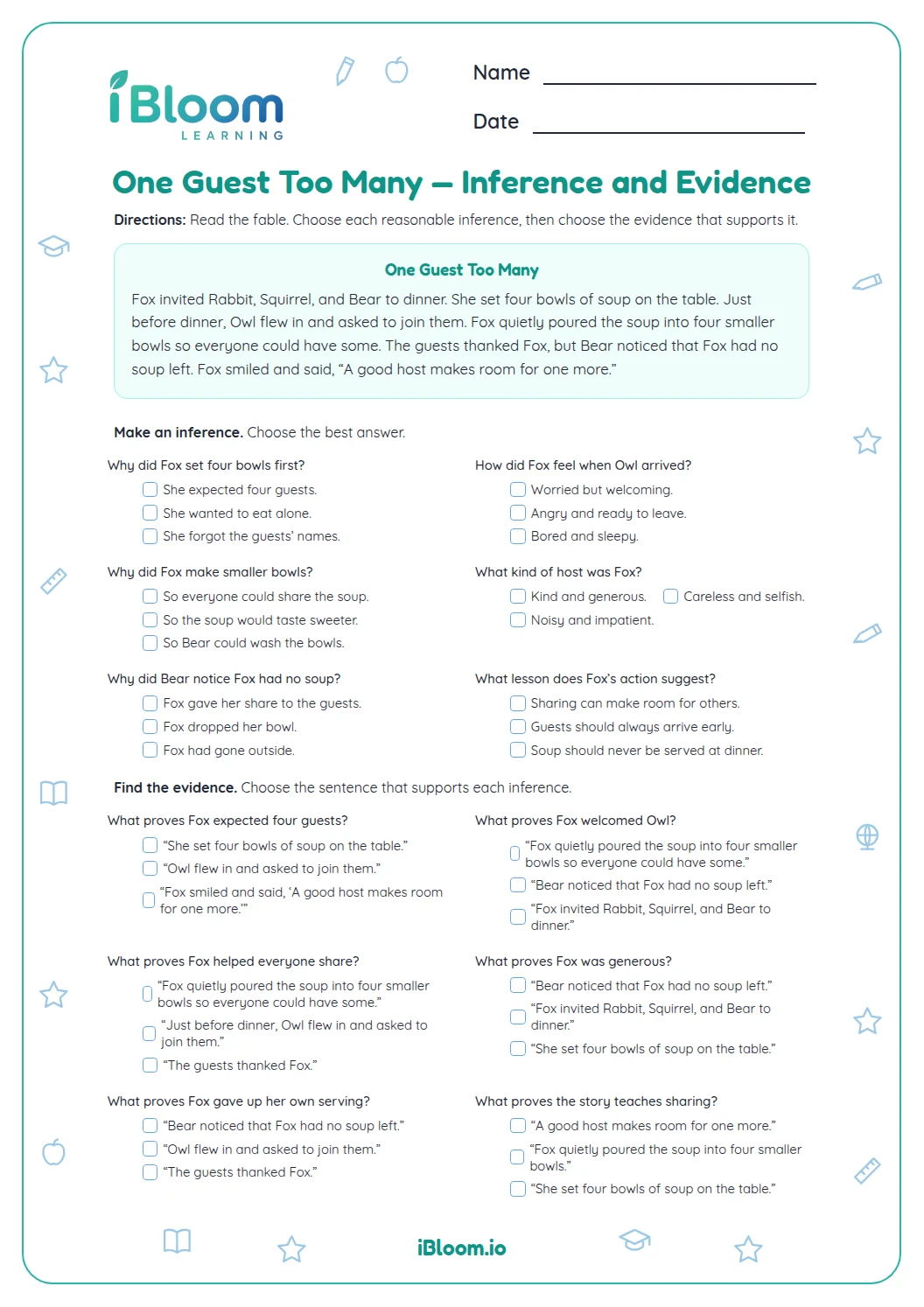
How do the title and story introduce the fable?
Part B follows the passage. Questions 1–3 use the title and story to introduce a fable, a guest, and the possibility of an extra visitor.
After reading, connect the title to Fox arriving when Rabbit has planned dinner for himself and three friends.
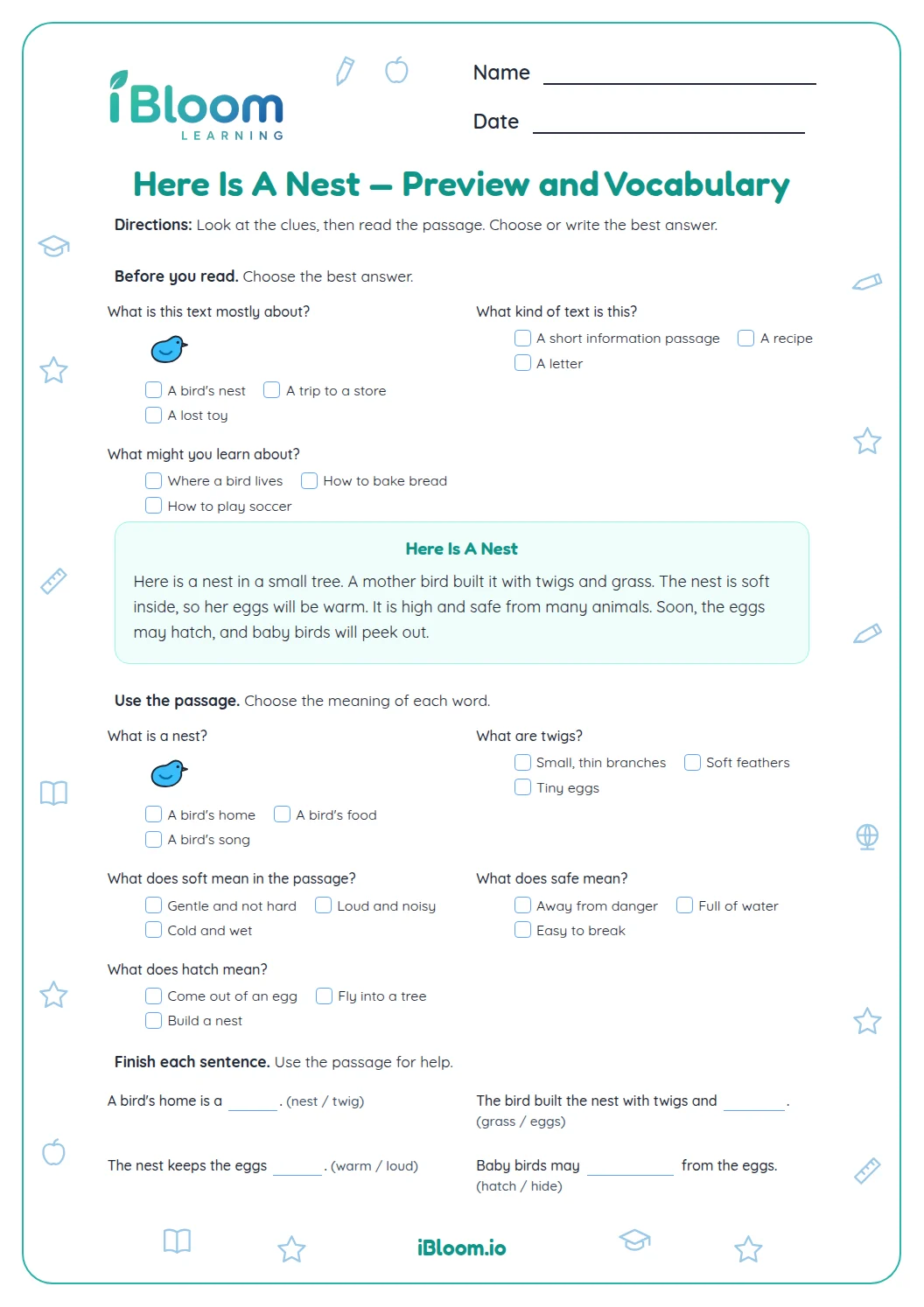
How do the dinner events explain the vocabulary?
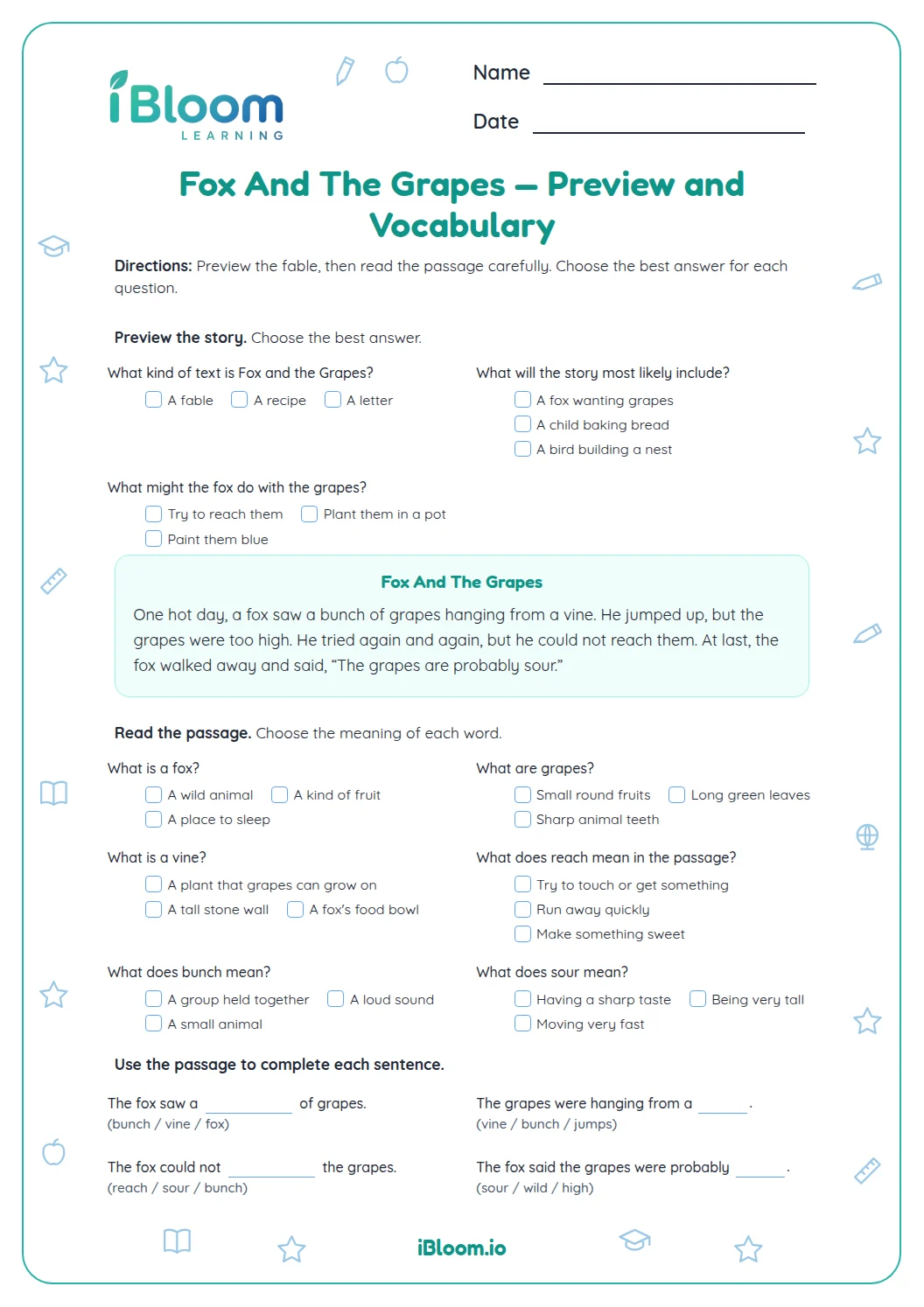
Part C asks about invited, crowded, host, share, enough, and fairly. Each word relates to something that happens at the meal.
For share, look at the sentence about smaller meals. Each animal leaves food for the others, which shows what sharing means.
- 1Each animal took a smaller meal so the others could have some too.
- 2Action clue: leaving some food for others
- 3Meaning of share: let others have some
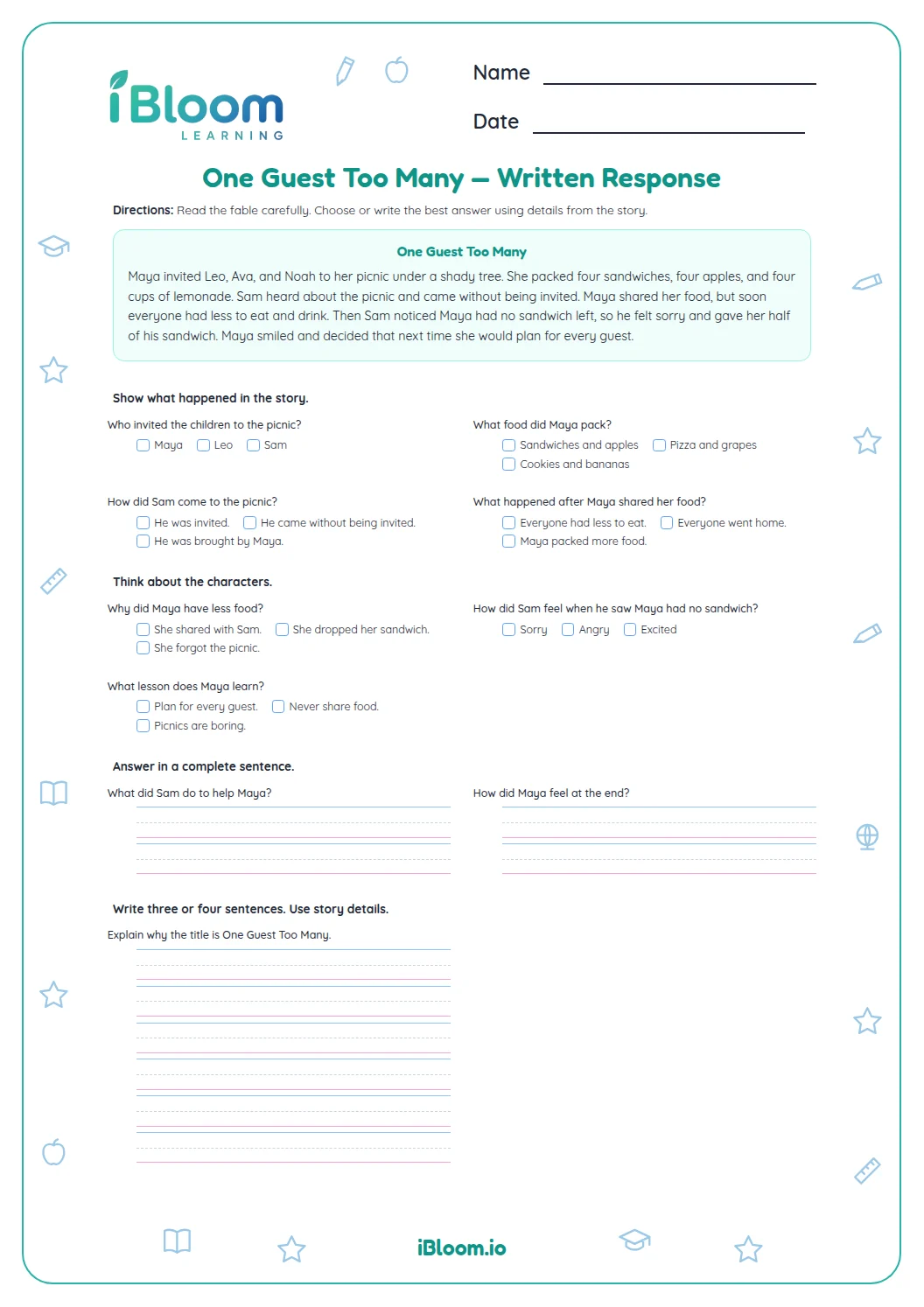
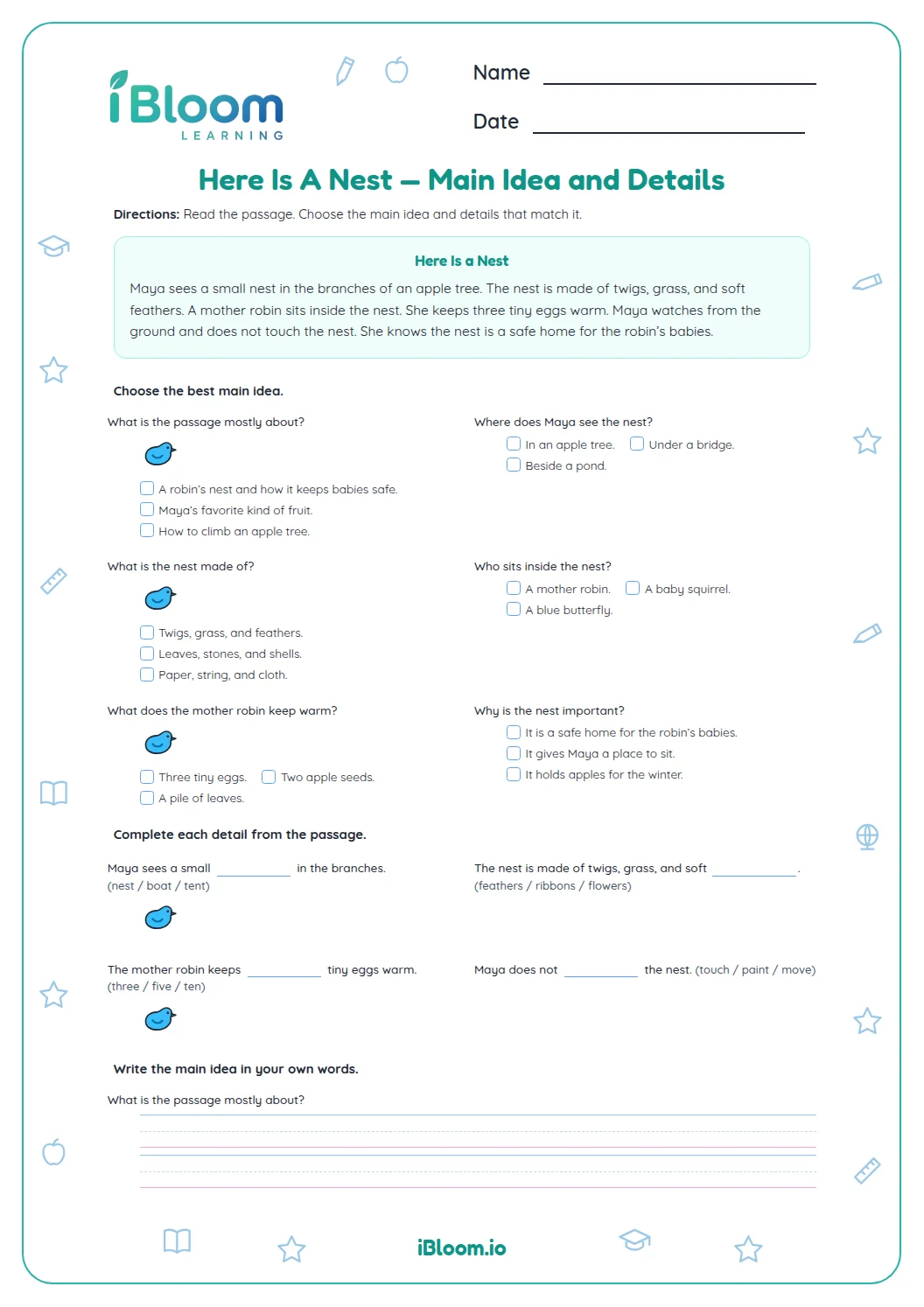
How do the four blanks check understanding?
Part D asks who Rabbit invited, when Fox arrived, how the animals divided the meal, and what Rabbit planned to do next time. Children use each of the four words in the printed bank once.
Have children find the matching sentence before writing. The last two answers connect the solution, smaller meals, to the lesson about planning and sharing fairly.
How to use this worksheet
- 1Read Part A, then answer questions 1–3 in Part B using the title and story.
- 2Read the fable in Part A, pausing to count the animals at the table.
- 3Complete Part C and point to an event that supports each meaning.
- 4For Part D, find the relevant detail and choose the word that fits.
- 5Check the key, then discuss how Rabbit solves the dinner problem.
Mistakes to check together
The mistake
Mixing up host and guest.
The fix
Rabbit welcomes the visitors, so he is the host. Fox comes to visit, so he is a guest.
The mistake
Thinking enough means extra food.
The fix
Enough means as much as needed. Here the food must feed everyone at the table.
The mistake
Counting only the three invited friends at the meal.
The fix
Count Rabbit, his three friends, and Fox: five animals need food.
Common Core alignment
Use the dinner-party events to work out six word meanings.
On this sheet: Part C connects vocabulary to sentence clues and the animals’ actions.
Show the official wordingHide the official wording
Use sentence-level context as a clue to the meaning of a word or phrase.
Answer questions about the guests, the meal, and Rabbit’s plan.
On this sheet: Part D checks who was invited, when Fox arrived, how the guests shared, and what Rabbit planned.
Show the official wordingHide the official wording
Ask and answer such questions as who, what, where, when, why, and how to demonstrate understanding of key details in a text.
What to practice next
Make more practice
Further reading
Questions parents and teachers ask
When should children answer questions 1–3?
Read Part A first, then answer questions 1–3 in Part B. The title introduces a guest and suggests an extra visitor, while the story shows Fox arriving when Rabbit has set four places. After reading, children can connect the title to the problem at dinner.
Which six vocabulary words are practiced?
Part C practices invited, crowded, host, share, enough, and fairly. The dinner-party events give children a setting for each meaning. Ask your child to explain the connection, such as Rabbit welcoming guests or everyone taking a smaller meal, before checking the selected answer against the key.
Can I read the fable aloud?
Yes, you can read the fable aloud while your child follows the print. Pause after Fox arrives to count the animals at the table. Then let your child choose the vocabulary meanings and find the details for the blanks, pointing to the words that support each answer.
What should children write in Part D?
Children write one word in each of the five blanks, using each word in the bank once. The reading supplies the needed details: the invited friends, the time Fox arrives, the smaller meals, Rabbit’s plan for next time, and why Rabbit is a good host. Full written sentences are already provided.
What lesson can we discuss after the worksheet?
The story connects being a good host with planning carefully and sharing fairly. Rabbit welcomes an extra visitor, then helps everyone get some food by serving smaller meals. Ask your child which action solves the immediate problem and what Rabbit plans to do differently at the next dinner.