Free printable practice
Grade 3 Reading Comprehension Practice
Grade 3 readers practise understanding stories, fables, passages, leveled texts, comprehension questions, and phonics patterns.
Explore Grade 3
Free printable worksheet PDFs
Preview every available page, then download the free worksheet PDF for home, homeschool, tutoring, or classroom practice.
Preview the exact activity before downloading it.
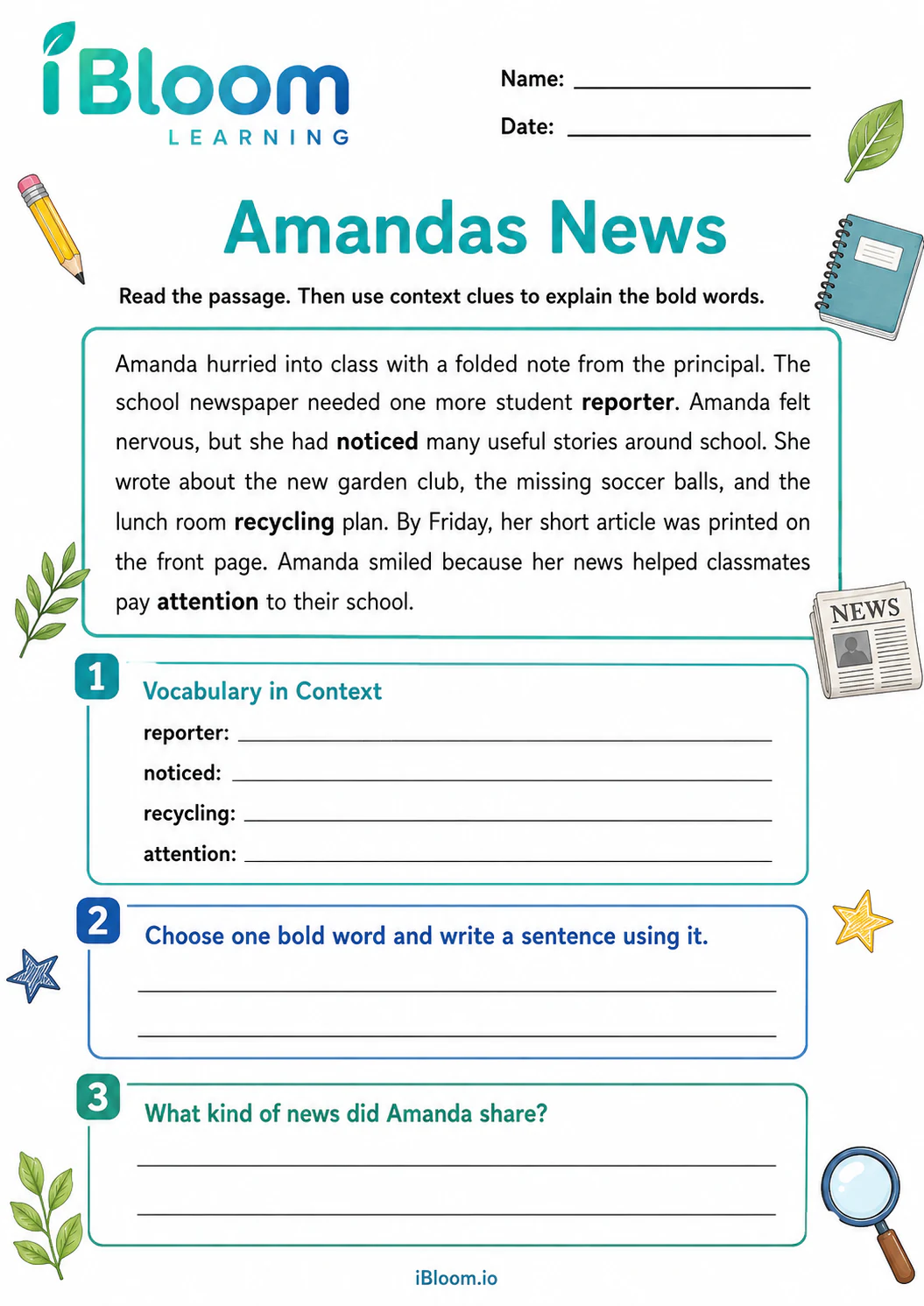 Amandas News — Preview and VocabularyGrade 3 reading worksheets for Amandas News help children practise story recall, inference, vocabulary in context, and evidence-based answers. This preview and vocabulary worksheet provides a distinct, age-appropriate way to practise the same lesson.Grade 3Free PDF preview
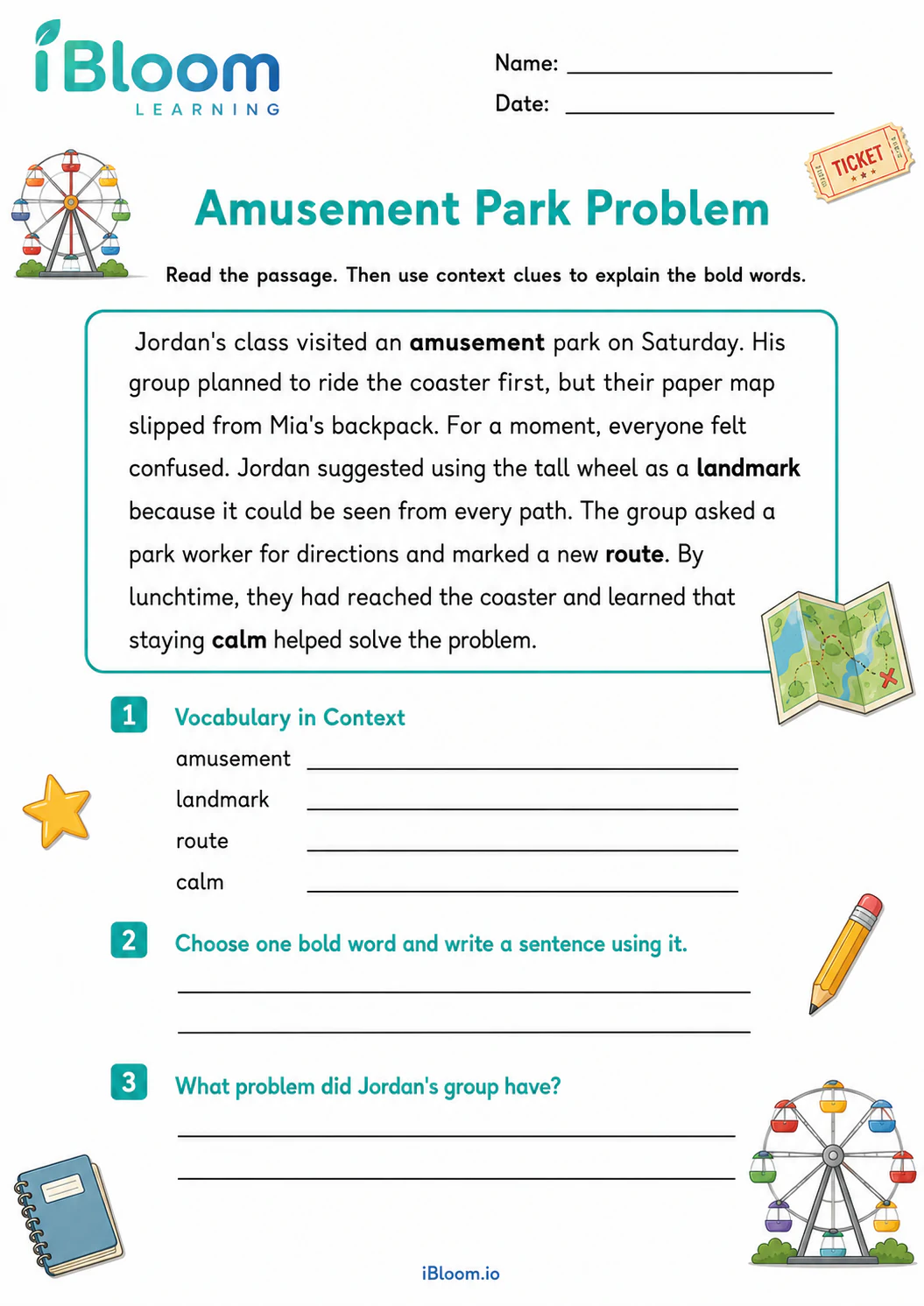 Amusement Park Problem — Preview and VocabularyGrade 3 reading comprehension worksheets for the children's story “Amusement Park Problem,” with questions on plot, details, and inference. This preview and vocabulary worksheet provides a distinct, age-appropriate way to practise the same lesson.Grade 3Free PDF preview
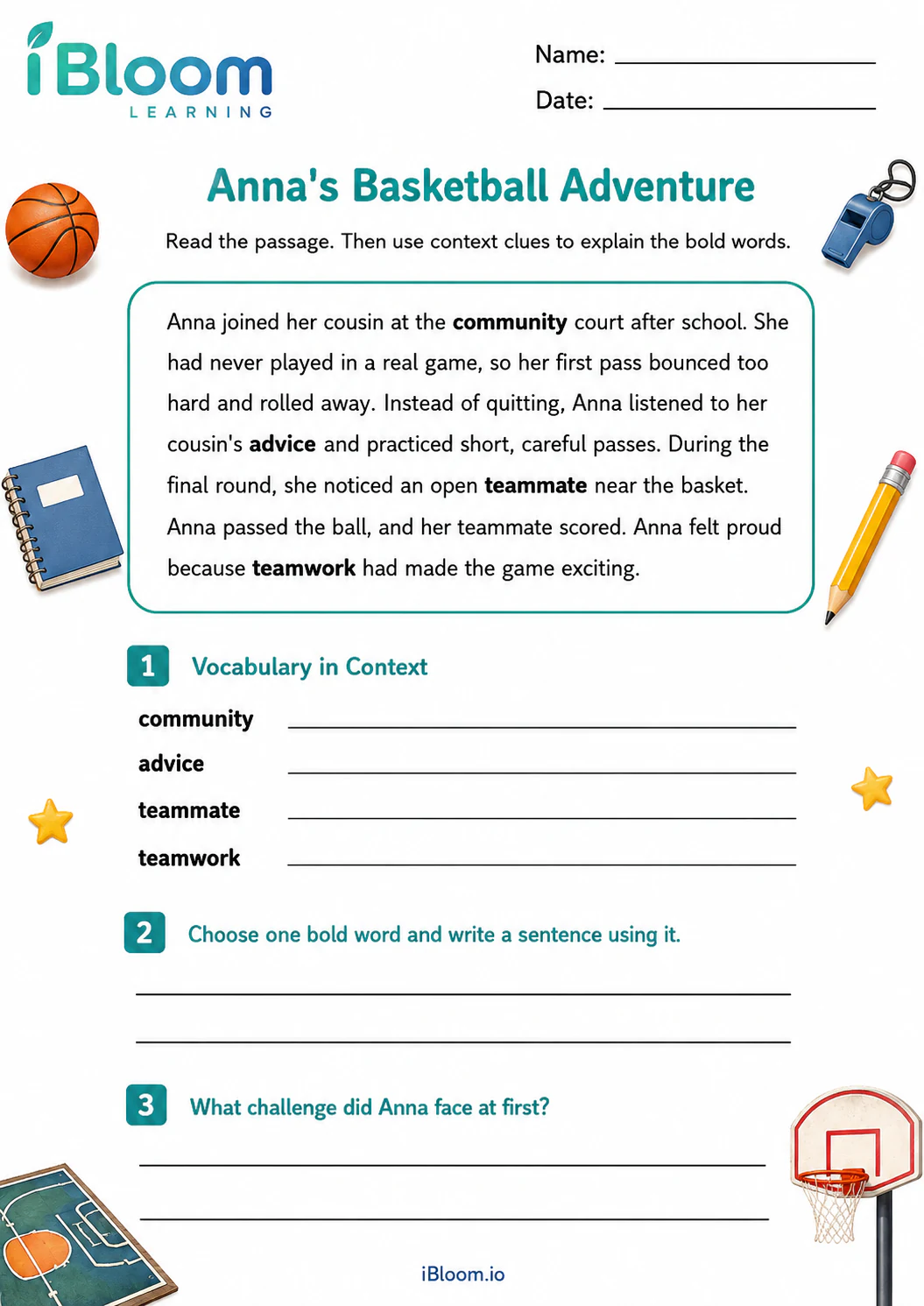 Anna And Her Basketball Adventure — Preview and VocabularyGrade 3 reading comprehension worksheets for Anna and Her Basketball Adventure, focusing on story details, sequence, inference, vocabulary, and evidence. This preview and vocabulary worksheet provides a distinct, age-appropriate way to practise the same lesson.Grade 3Free PDF preview
Practice that builds confidence
What Grade 3 readers practise
This Grade 3 reading comprehension collection helps children read fiction and nonfiction with better understanding. Students practise using details, answering questions, following events, noticing vocabulary, and explaining ideas from stories, fables, paragraphs and passages.
The printable worksheets include children’s stories, short passages, comprehension exercises, leveled reading and phonics practice. They support the Reading Comprehension > Grade 3 level with activities that move readers from accurate decoding toward thoughtful response.
By Grade 3, children are often reading longer texts and are expected to think beyond single sentences. These worksheets help them identify the main idea, recall key details, follow sequence, describe characters, notice cause and effect, and make reasonable inferences. Fables add practice with lessons or morals, while short passages help students focus on facts and evidence.

Stories, passages and leveled reading
The collection includes a mix of children’s stories, kids’ fables, paragraphs, passages and leveled reading selections. This variety matters because readers use different strategies for different texts. A story may ask them to track a problem and solution, while an informational passage may ask them to find a detail that supports an answer. Phonics practice can reinforce word reading when decoding still needs attention.
Parent reading routine
At home, ask your child to read a passage aloud or silently, then retell it in three parts: beginning, middle and end, or topic, details and conclusion. Next, choose two questions and have your child point to the sentence that helped them answer. Finish with one vocabulary word: ask what it means in the passage and have your child use it in a new sentence.

Classroom uses
Teachers can use these printables for independent reading response, small-group instruction, literacy centers, homework, or assessment practice. The shorter paragraphs are useful for modeling how to underline evidence, while longer stories support discussion about characters and theme. Phonics pages can be paired with comprehension when students need help reading the words accurately before discussing meaning.

Common errors to watch for
Some Grade 3 readers answer from memory or opinion instead of the text. Others copy a sentence without explaining it, skip unfamiliar words, or miss the lesson in a fable. Encourage students to reread the relevant part and ask, “What in the text proves my answer?” For sequence questions, have them number events before writing.
Free printable PDF download
Use this grade 3 reading comprehension worksheet page to preview the activity, print it, or download it as a PDF for quick practice. It works well for homework, homeschool lessons, tutoring, morning work, revision, and classroom centers.
Answers and answer key support
After the child completes the worksheet independently, parents and teachers can use the answer support or answer key information to check the work, review mistakes, and choose the next practice step.
Why iBloom worksheets help
The page brings together connected Grade 3 reading skills rather than a single question type. Students meet varied texts and practise responding in clear ways. A child-friendly strategy is “read, look back, answer”: read the question, look back in the passage, then write an answer that matches the evidence.
Helpful answers
Frequently asked questions
What kinds of texts are included for Grade 3?
The collection includes children’s stories, kids’ fables, short paragraphs, reading passages, leveled reading selections and phonics-based practice.
Which comprehension skills do these worksheets build?
They support main idea, details, sequence, character understanding, cause and effect, inference, vocabulary and using text evidence.
How should a child answer comprehension questions?
A strong routine is to reread the question, look back in the text, find evidence, and then write an answer that matches the question.
Are fables useful for Grade 3 readers?
Yes. Fables are short but meaningful, so they help children practise plot, character choices and identifying a lesson or moral.
Why is phonics included with reading comprehension?
Some Grade 3 students still need decoding support. Stronger word reading helps them focus more attention on understanding the text.
Is this grade 3 reading comprehension worksheet free?
Yes. You can preview it for free and use the printable worksheet for home or classroom practice.
Can I download this grade 3 reading comprehension worksheet as a PDF?
Yes. Use the worksheet download option to save a printable PDF, or print the worksheet directly from the page.
Does this grade 3 reading comprehension worksheet include answers or an answer key?
When the activity has fixed answers, iBloom includes answer support so parents and teachers can check the completed worksheet.