Free printable practice
Childrens Stories Practice Activities
Grade 3 children read short fiction and nonfiction passages, then answer questions about details, vocabulary, sequence, cause and effect, and main ideas.
Explore Childrens Stories
Free printable worksheet PDFs
Preview every available page, then download the free worksheet PDF for home, homeschool, tutoring, or classroom practice.
Preview the exact activity before downloading it.
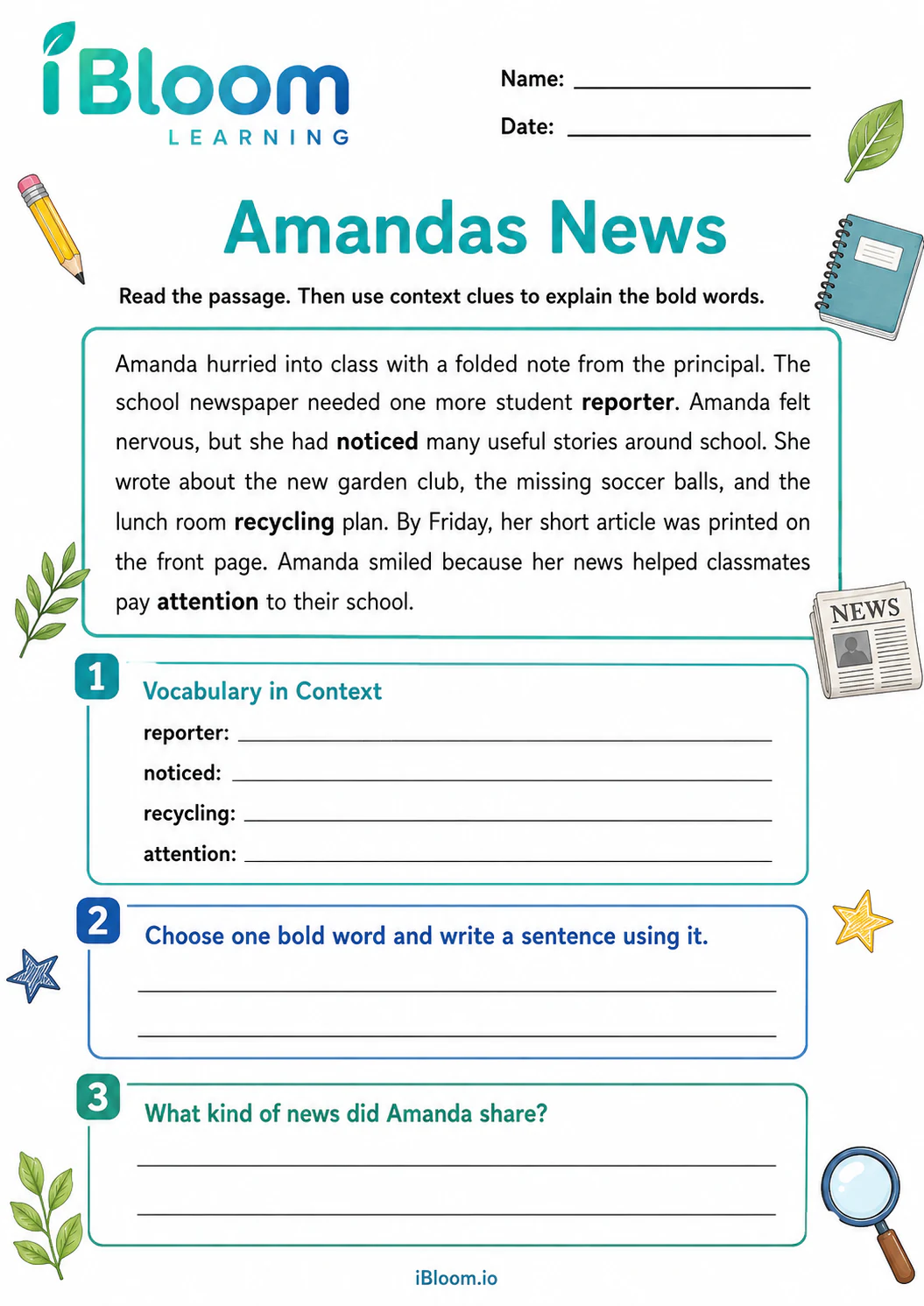 Amandas News — Preview and VocabularyGrade 3 reading worksheets for Amandas News help children practise story recall, inference, vocabulary in context, and evidence-based answers. This preview and vocabulary worksheet provides a distinct, age-appropriate way to practise the same lesson.Grade 3Free PDF preview
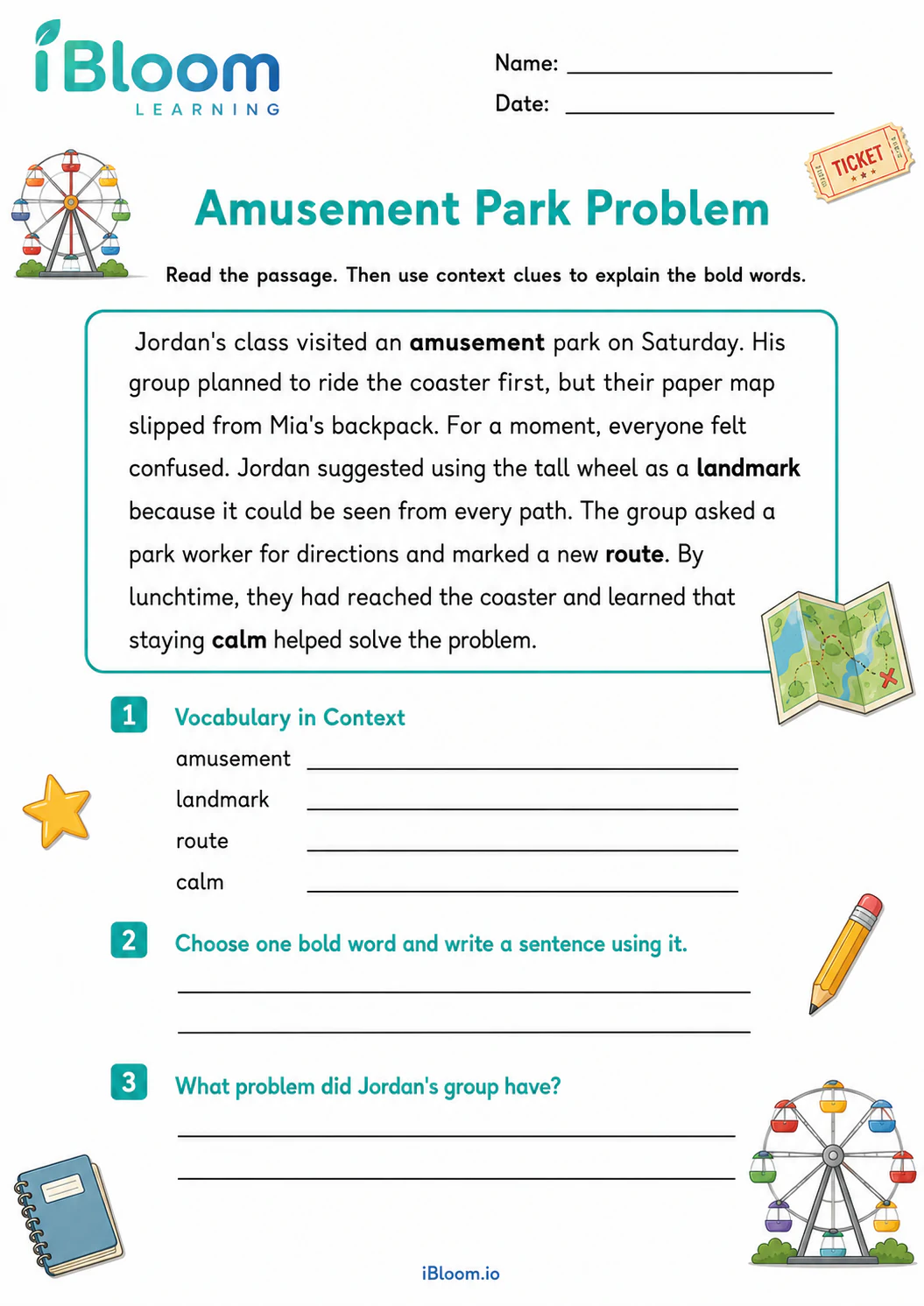 Amusement Park Problem — Preview and VocabularyGrade 3 reading comprehension worksheets for the children's story “Amusement Park Problem,” with questions on plot, details, and inference. This preview and vocabulary worksheet provides a distinct, age-appropriate way to practise the same lesson.Grade 3Free PDF preview
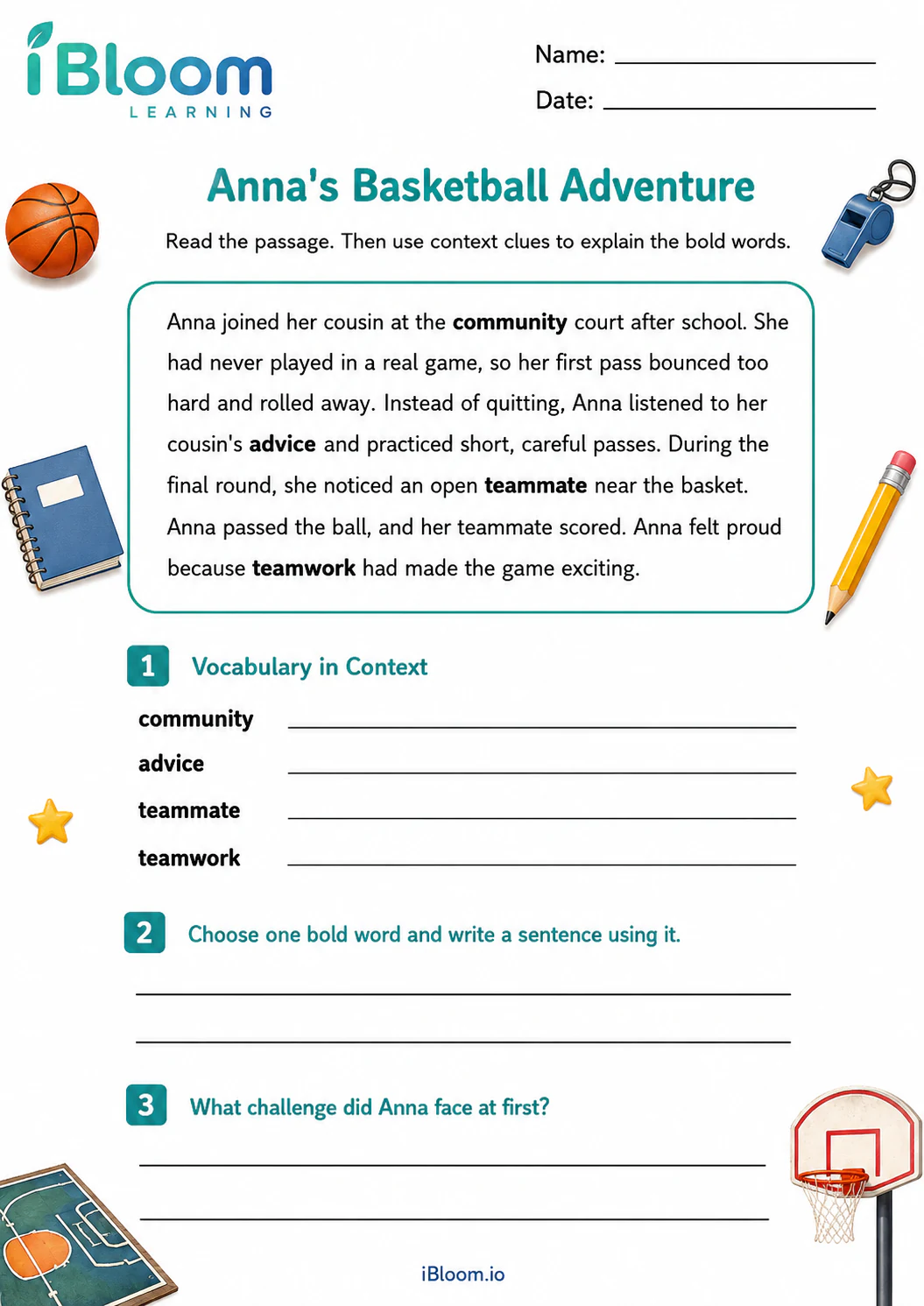 Anna And Her Basketball Adventure — Preview and VocabularyGrade 3 reading comprehension worksheets for Anna and Her Basketball Adventure, focusing on story details, sequence, inference, vocabulary, and evidence. This preview and vocabulary worksheet provides a distinct, age-appropriate way to practise the same lesson.Grade 3Free PDF preview
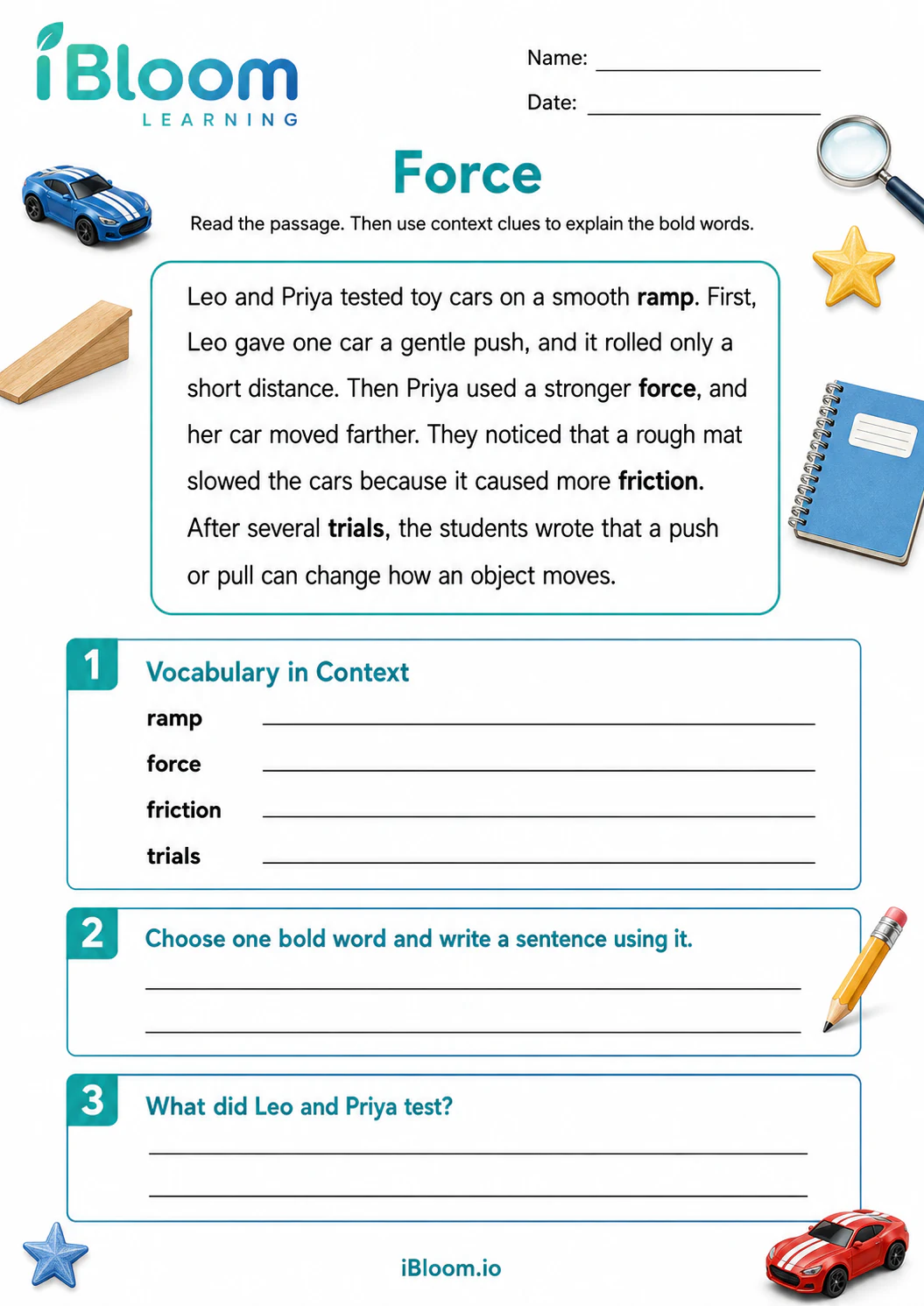 Force — Preview and VocabularyPrintable Grade 3 reading comprehension activities for the children’s story “Force,” with questions that build careful reading, vocabulary, and evidence-based answers. This preview and vocabulary worksheet provides a distinct, age-appropriate way to practise the same lesson.Grade 3Free PDF preview
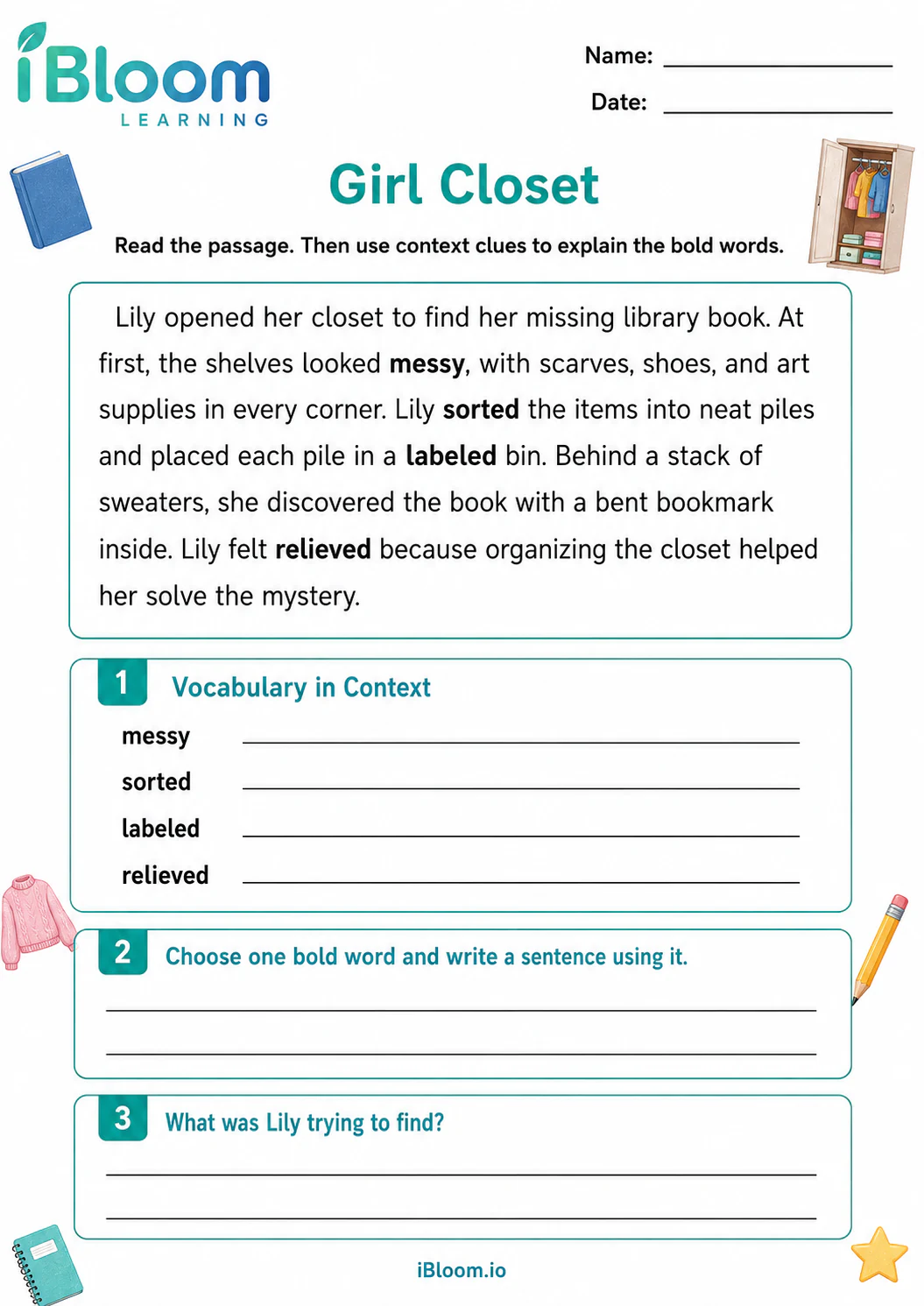 Girl Closet — Preview and VocabularyGrade 3 students read the children’s story “Girl Closet” and practise answering comprehension questions with clear evidence from the text. This preview and vocabulary worksheet provides a distinct, age-appropriate way to practise the same lesson.Grade 3Free PDF preview
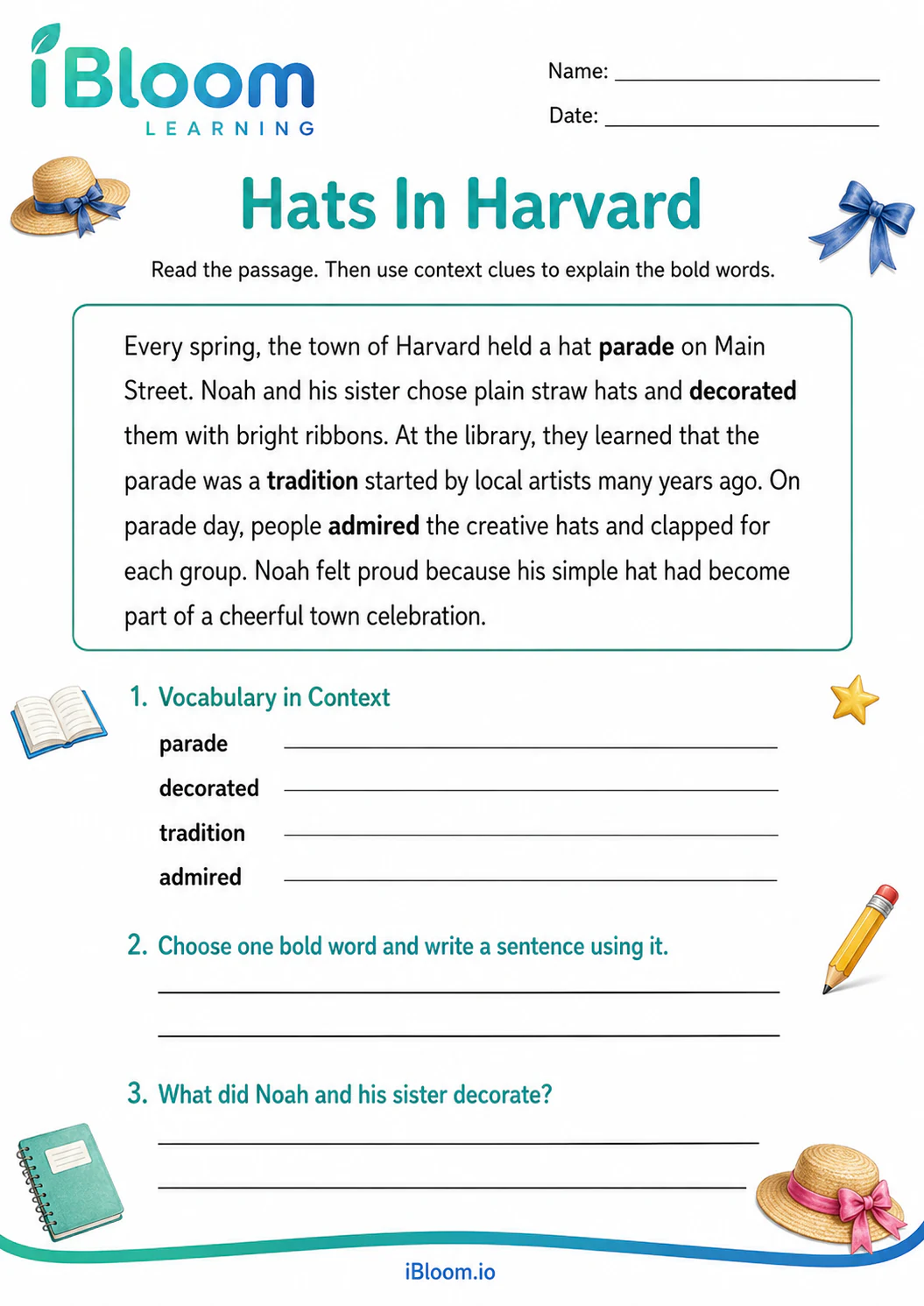 Hats In Harvard — Preview and VocabularyGrade 3 readers practise understanding the children’s story “Hats In Harvard” through printable comprehension, vocabulary, and evidence-based response activities. This preview and vocabulary worksheet provides a distinct, age-appropriate way to practise the same lesson.Grade 3Free PDF preview
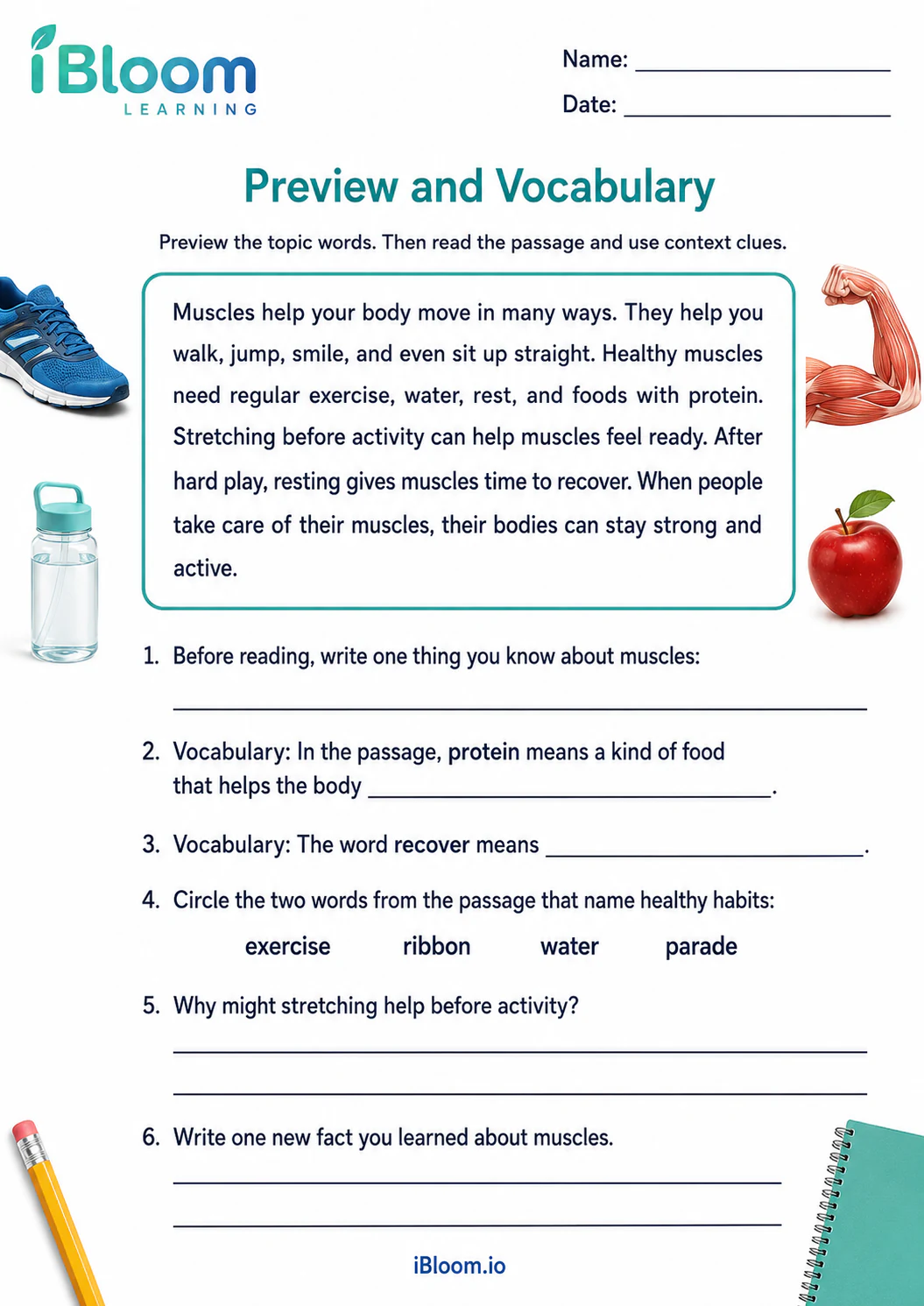 Healthy Muscles Matter — Preview and VocabularyExplore healthy muscles matter practice activities within Childrens Stories Practice Activities, organised so children, families, and elementary teachers can move from broad learning areas to focused printable practice. This preview and vocabulary worksheet provides a distinct, age-appropriate way to practise the same lesson.Grade 3Free PDF preview
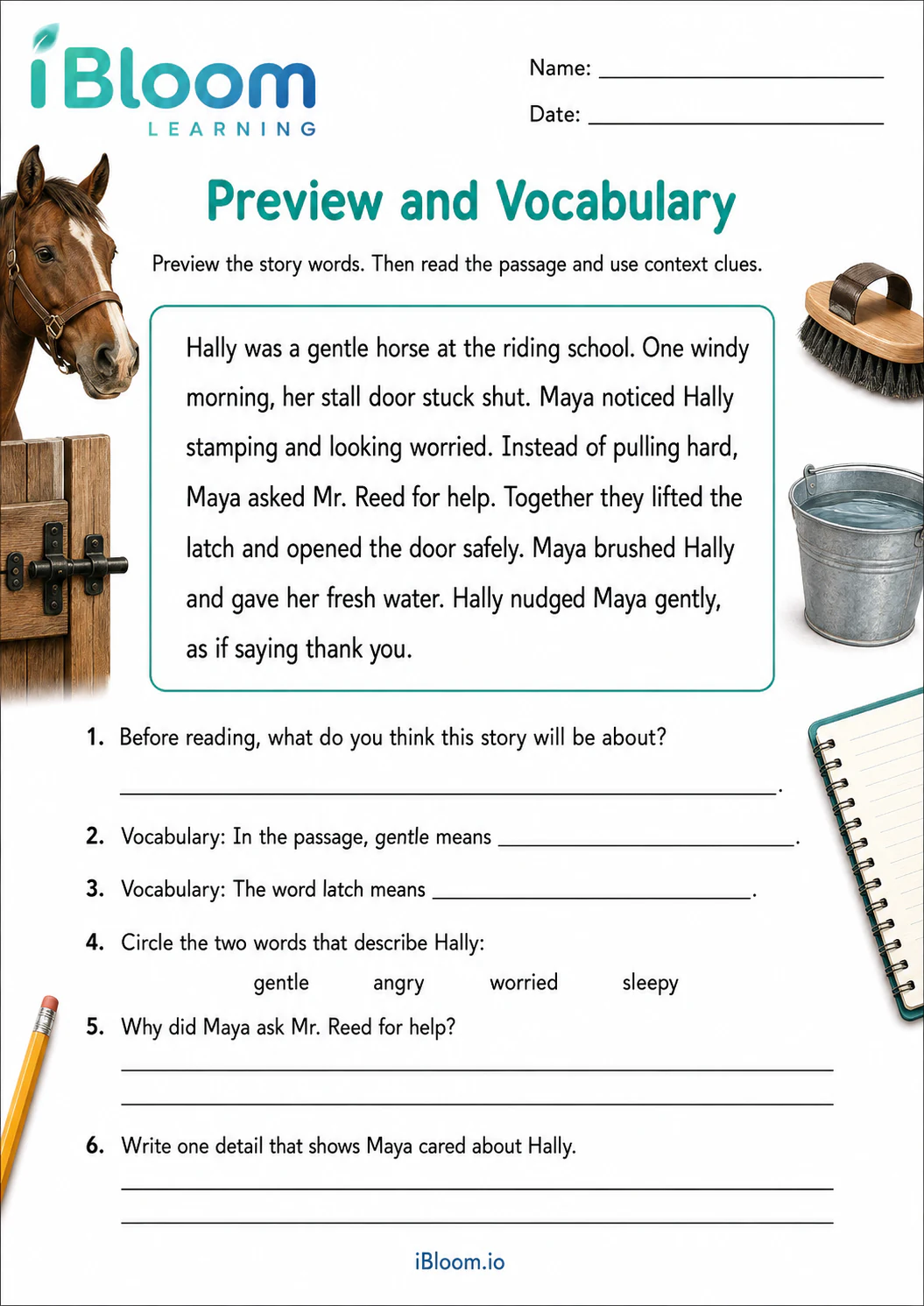 Helping Hally — Preview and VocabularyGrade 3 children read the story “Helping Hally” and answer focused questions about events, character choices, vocabulary, and evidence from the text. This preview and vocabulary worksheet provides a distinct, age-appropriate way to practise the same lesson.Grade 3Free PDF preview
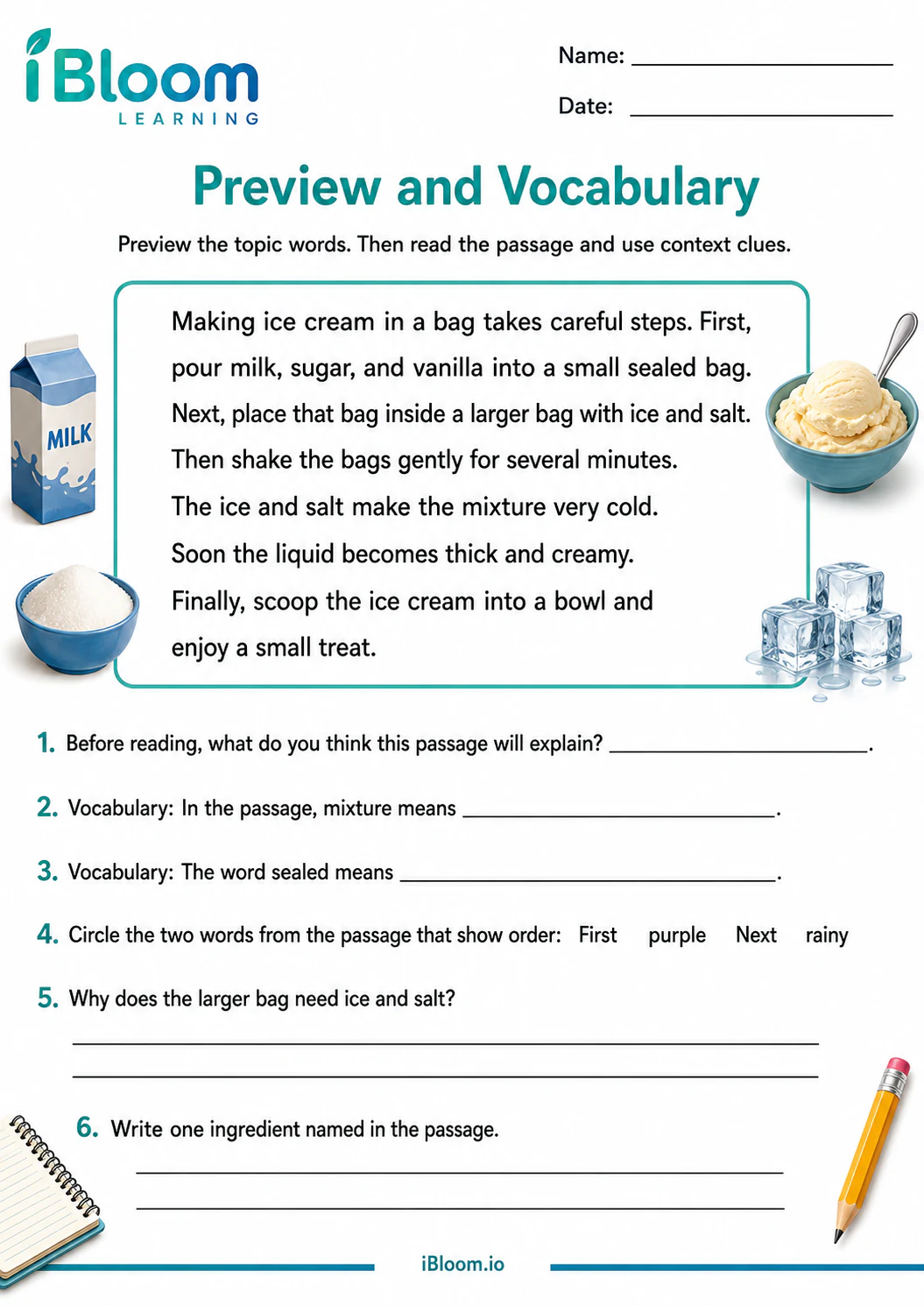 How To Make Ice Cream — Preview and VocabularyGrade 3 reading comprehension activities for the children’s story “How To Make Ice Cream,” with practice in sequencing, vocabulary, details, and text evidence. This preview and vocabulary worksheet provides a distinct, age-appropriate way to practise the same lesson.Grade 3Free PDF preview
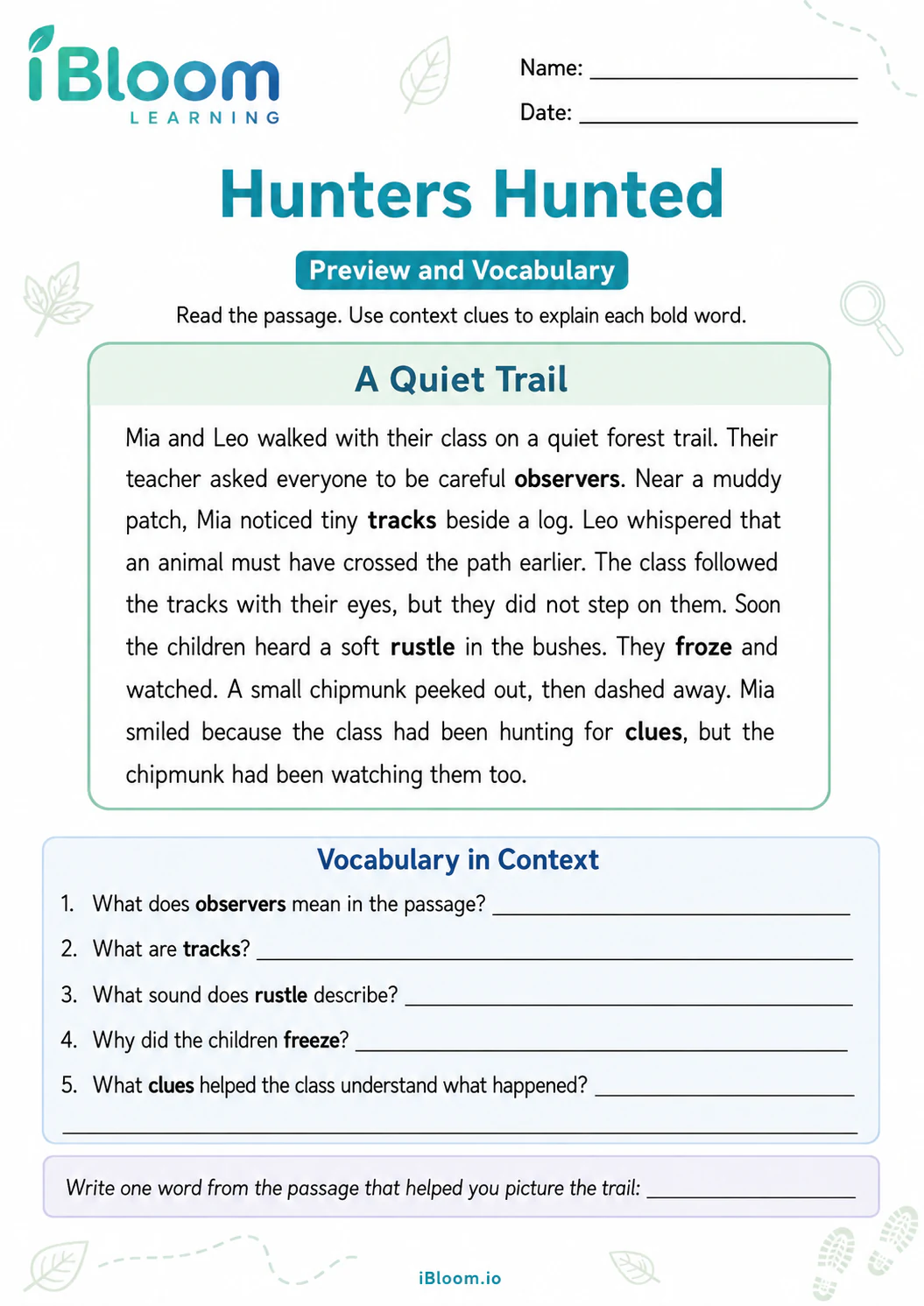 Hunters Hunted — Preview and VocabularyExplore hunters hunted practice activities within Childrens Stories Practice Activities, organised so children, families, and elementary teachers can move from broad learning areas to focused printable practice. This preview and vocabulary worksheet provides a distinct, age-appropriate way to practise the same lesson.Grade 3Free PDF preview
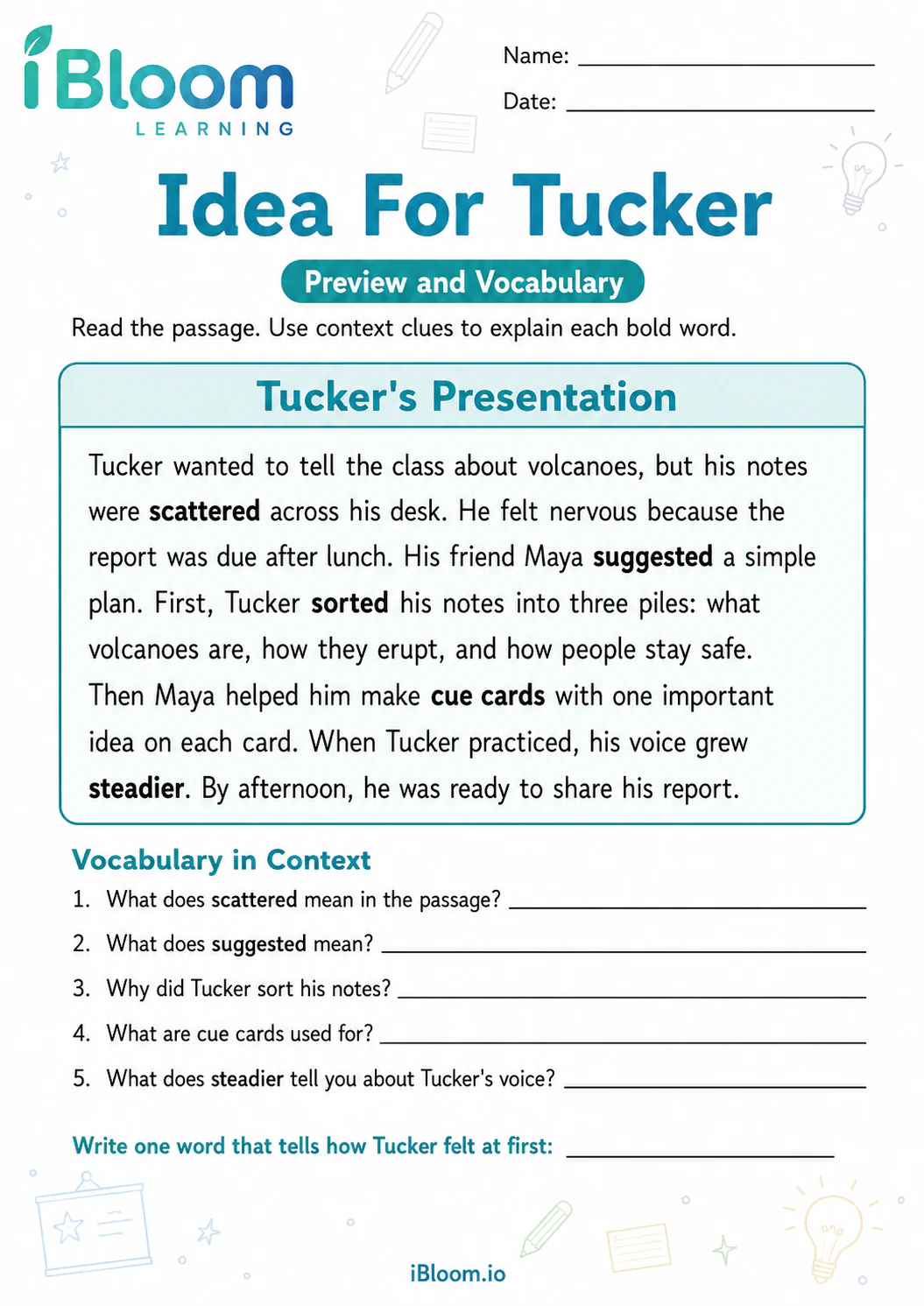 Idea For Tucker — Preview and VocabularyGrade 3 reading comprehension worksheets for the children’s story Idea for Tucker, with practice in evidence, sequencing, vocabulary, and inference. This preview and vocabulary worksheet provides a distinct, age-appropriate way to practise the same lesson.Grade 3Free PDF preview
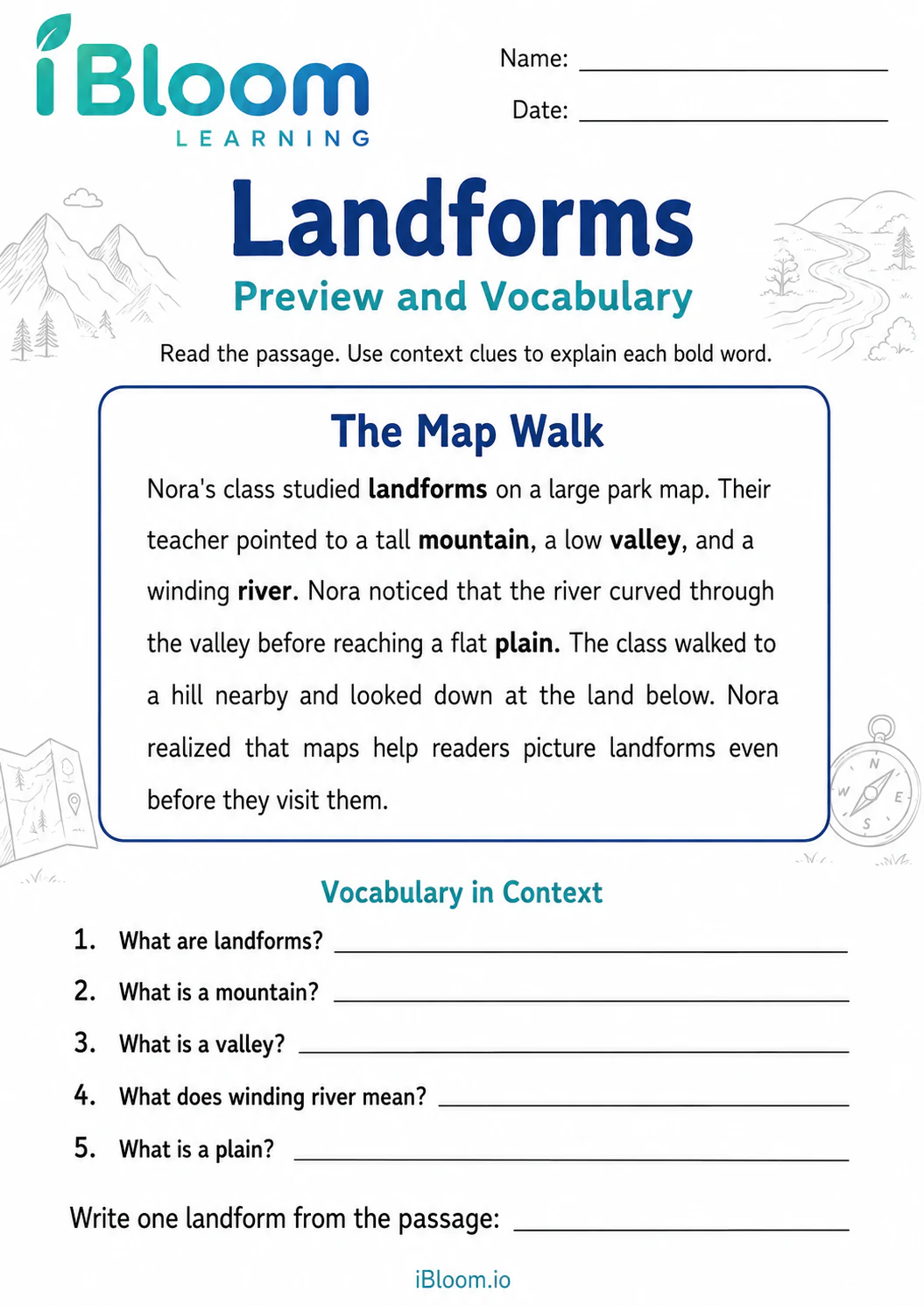 Landforms — Preview and VocabularyGrade 3 readers build comprehension with children’s stories that feature landforms, setting clues, vocabulary and text evidence. This preview and vocabulary worksheet provides a distinct, age-appropriate way to practise the same lesson.Grade 3Free PDF preview
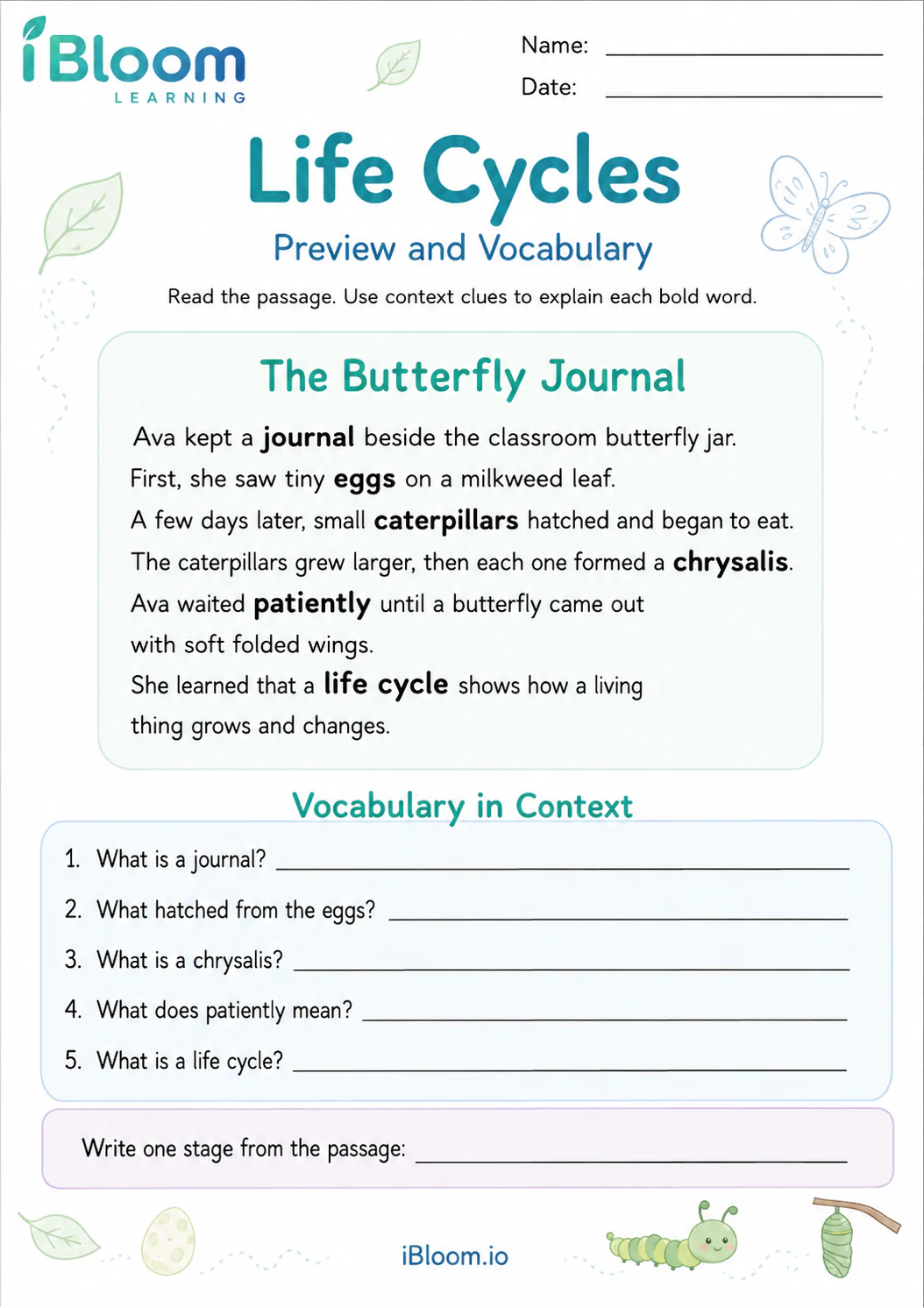 Life Cycles — Preview and VocabularyExplore life cycles practice activities within Childrens Stories Practice Activities, organised so children, families, and elementary teachers can move from broad learning areas to focused printable practice. This preview and vocabulary worksheet provides a distinct, age-appropriate way to practise the same lesson.Grade 3Free PDF preview
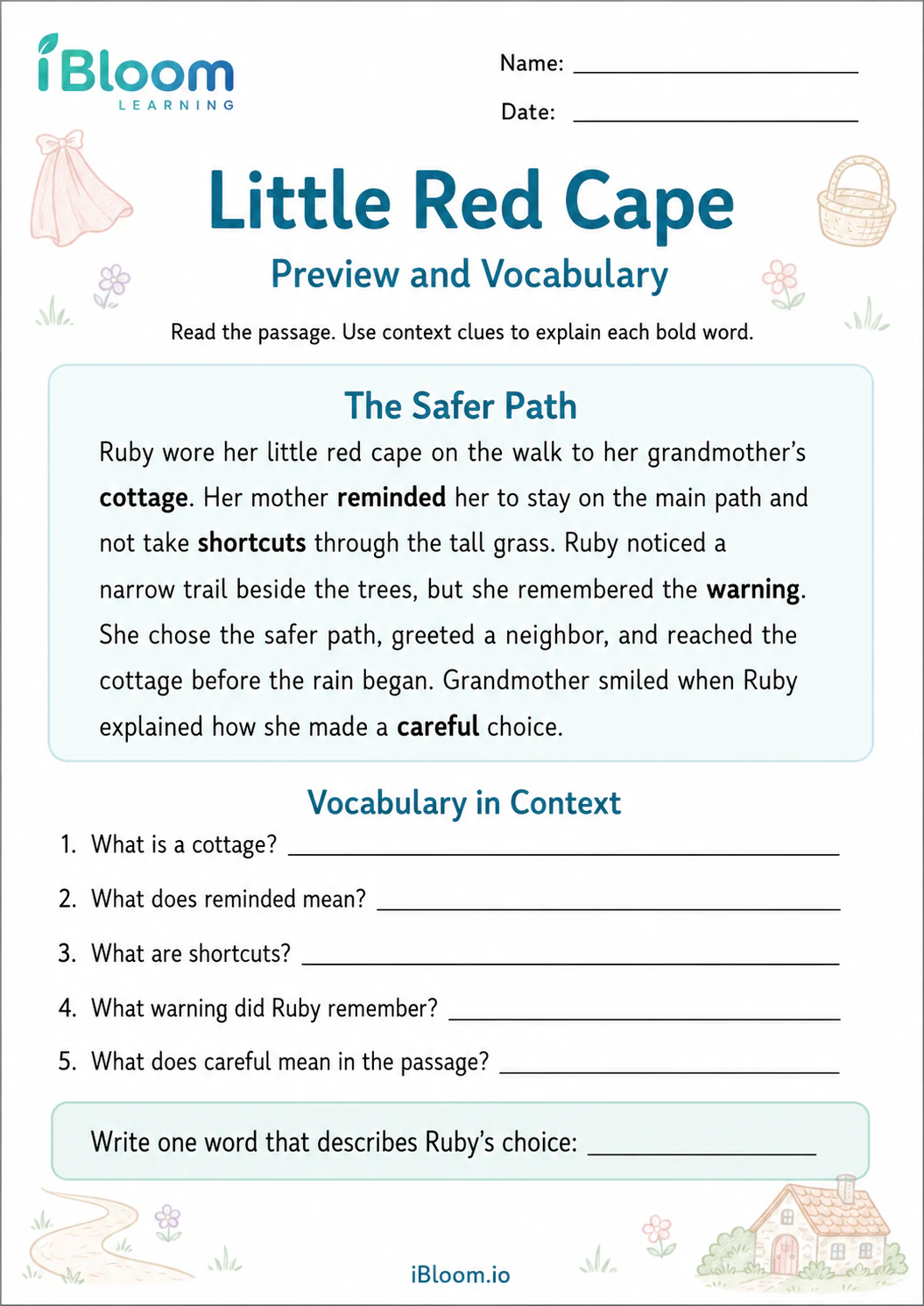 Little Red Cape — Preview and VocabularyExplore little red cape practice activities within Childrens Stories Practice Activities, organised so children, families, and elementary teachers can move from broad learning areas to focused printable practice. This preview and vocabulary worksheet provides a distinct, age-appropriate way to practise the same lesson.Grade 3Free PDF preview
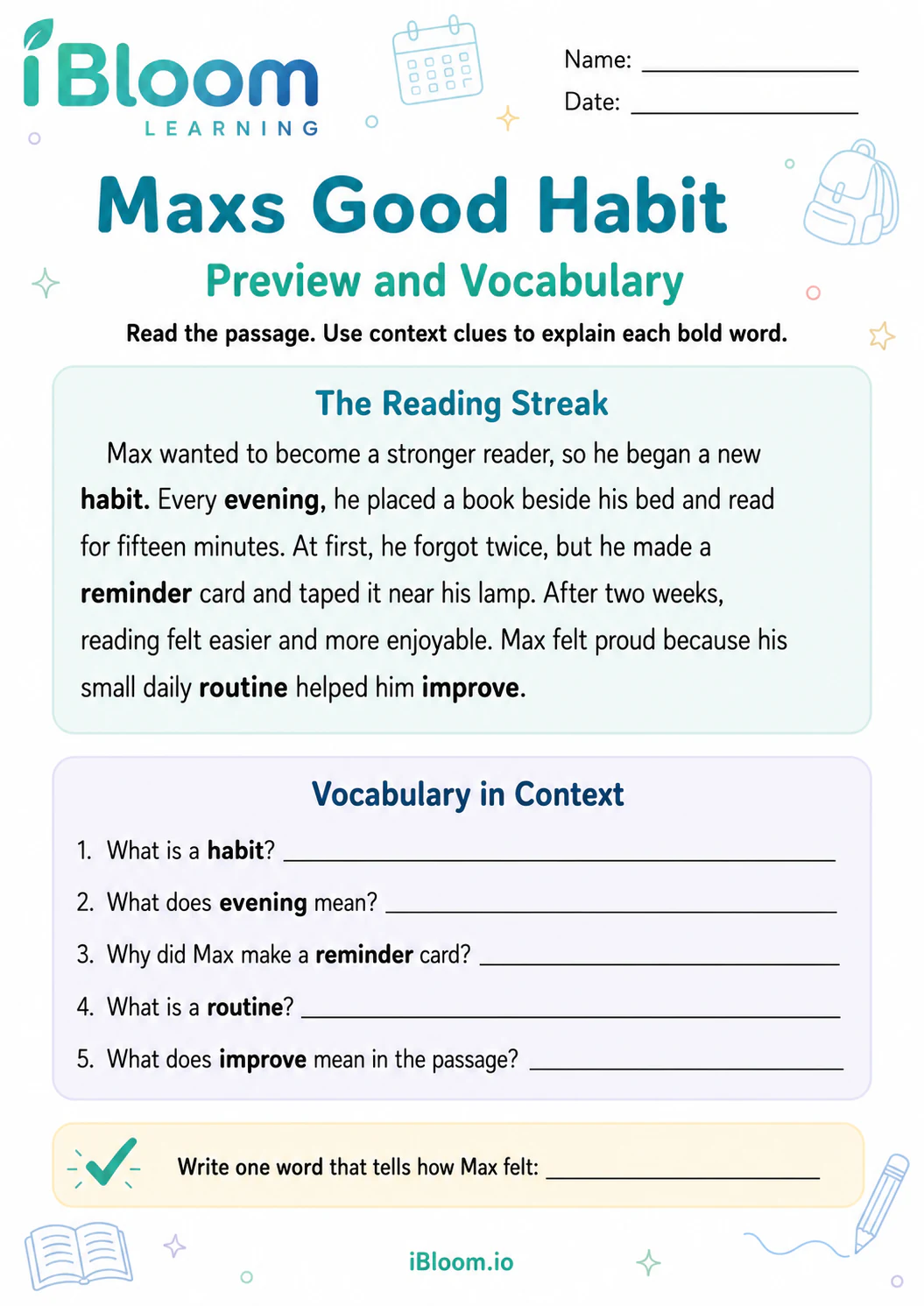 Maxs Good Habit — Preview and VocabularyGrade 3 reading comprehension worksheets for Max's Good Habit help children read a short story, track details, infer meaning, and write clear answers. This preview and vocabulary worksheet provides a distinct, age-appropriate way to practise the same lesson.Grade 3Free PDF preview
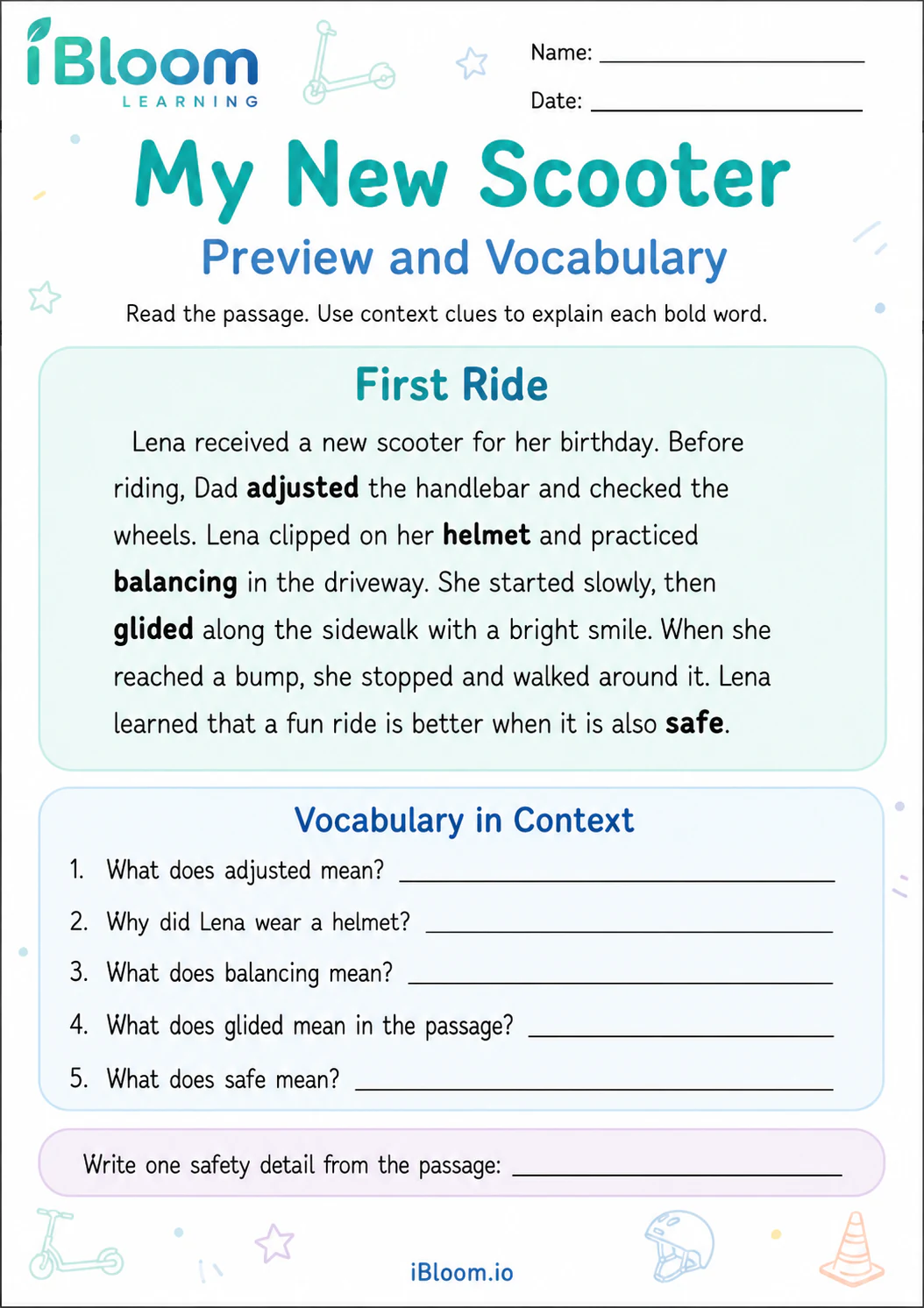 My New Scooter — Preview and VocabularyGrade 3 students read the children’s story “My New Scooter” and practise answering comprehension questions with details, sequence, vocabulary, and inference. This preview and vocabulary worksheet provides a distinct, age-appropriate way to practise the same lesson.Grade 3Free PDF preview
Practice that builds confidence
What children practise
These Grade 3 reading comprehension worksheets help children practise understanding children’s stories and short informational passages in the Reading Comprehension > Grade 3 > Childrens Stories collection. Learners read closely, notice important details, and answer questions using evidence from the text.
The printable activities include varied passages such as Landforms, Will The Wolf, Amusement Park Problem, Hats In Harvard, Force, The Bee, Life Cycles, and Hunters Hunted. Questions guide children to retell events, explain ideas in their own words, understand vocabulary, and connect story actions with outcomes.
This collection builds the everyday comprehension habits third graders need when stories and short articles become more detailed. Children identify characters, settings, problems, solutions, facts, opinions, and key details. A passage such as Little Red Cape may focus on story events, while What Are Clouds, Healthy Muscles Matter, or Life Cycles asks students to follow information and explain science ideas clearly.

Progression across the worksheets
The pages move beyond simple recall. Children may first answer who, what, where, and when questions, then explain why something happened, how a character changed, or what a paragraph is mostly about. Titles such as Own Words, The Solver, Idea For Tucker, and Helping Hally encourage children to restate ideas instead of copying whole sentences.
A simple parent routine
At home, have your child read the passage once for the gist and a second time with a pencil. Ask them to underline one clue for each answer before writing. After finishing, invite them to retell the piece in three sentences: beginning, middle, and end for stories, or topic, important facts, and conclusion for informational texts. For passages like Tag Rules or How To Make Ice Cream, let them explain the steps aloud.

Classroom uses for teachers
Teachers can use these worksheets for independent reading practice, small-group comprehension lessons, literacy centers, or quick checks after teaching a skill. Pairs can compare evidence for answers in Amanda’s News, Maxs Good Habit, or Anna And Her Basketball Adventure, then discuss how the text supports their thinking.

Common errors to watch for
Some children choose answers from memory or personal opinion instead of the passage. Others copy too much text when asked to explain in their own words, miss words such as because and however, or confuse a character’s feeling with a proven fact. Encourage students to reread the exact sentence that supports each response.
Free printable PDF download
Use this grade 3 children's stories reading comprehension worksheet page to preview the activity, print it, or download it as a PDF for quick practice. It works well for homework, homeschool lessons, tutoring, morning work, revision, and classroom centers.
Answers and answer key support
After the child completes the worksheet independently, parents and teachers can use the answer support or answer key information to check the work, review mistakes, and choose the next practice step.
Why iBloom worksheets help
The passages offer a friendly mix of familiar situations, light adventure, and age-appropriate nonfiction. Because the questions vary by text, children practise flexible comprehension rather than repeating one pattern. A child-friendly strategy is: read, find the clue, say it in your own words, then write the answer.
Helpful answers
Frequently asked questions
What kinds of passages are included in this Grade 3 collection?
The collection includes children’s stories and short informational passages, with topics such as landforms, clouds, life cycles, healthy muscles, a scooter, basketball, ice cream, rules, habits, and animal survival.
Which reading skills do these worksheets practise?
Children practise finding details, identifying the main idea, sequencing events, explaining cause and effect, using context clues, making simple inferences, and answering in their own words.
How can I help my child avoid guessing the answers?
Ask your child to reread the passage and point to the sentence or phrase that proves the answer. If they cannot find evidence, they should slow down and read that section again.
Are these worksheets only for fiction stories?
No. Many pages are story-based, but titles such as What Are Clouds, Force, Landforms, Healthy Muscles Matter, and Life Cycles give children practice with informational reading too.
How should teachers use these in a Grade 3 classroom?
Teachers can use them for literacy centers, small-group lessons, independent practice, homework, or quick comprehension checks after teaching skills such as retelling, evidence, vocabulary, or main idea.
Is this grade 3 children's stories reading comprehension worksheet free?
Yes. You can preview it for free and use the printable worksheet for home or classroom practice.
Can I download this grade 3 children's stories reading comprehension worksheet as a PDF?
Yes. Use the worksheet download option to save a printable PDF, or print the worksheet directly from the page.
Does this grade 3 children's stories reading comprehension worksheet include answers or an answer key?
When the activity has fixed answers, iBloom includes answer support so parents and teachers can check the completed worksheet.