Free printable practice
Idea For Tucker Practice Activities
Grade 3 reading comprehension worksheets for the children’s story Idea for Tucker, with practice in evidence, sequencing, vocabulary, and inference.
Free printable worksheet PDFs
Preview every available page, then download the free worksheet PDF for home, homeschool, tutoring, or classroom practice.
Preview the exact activity before downloading it.
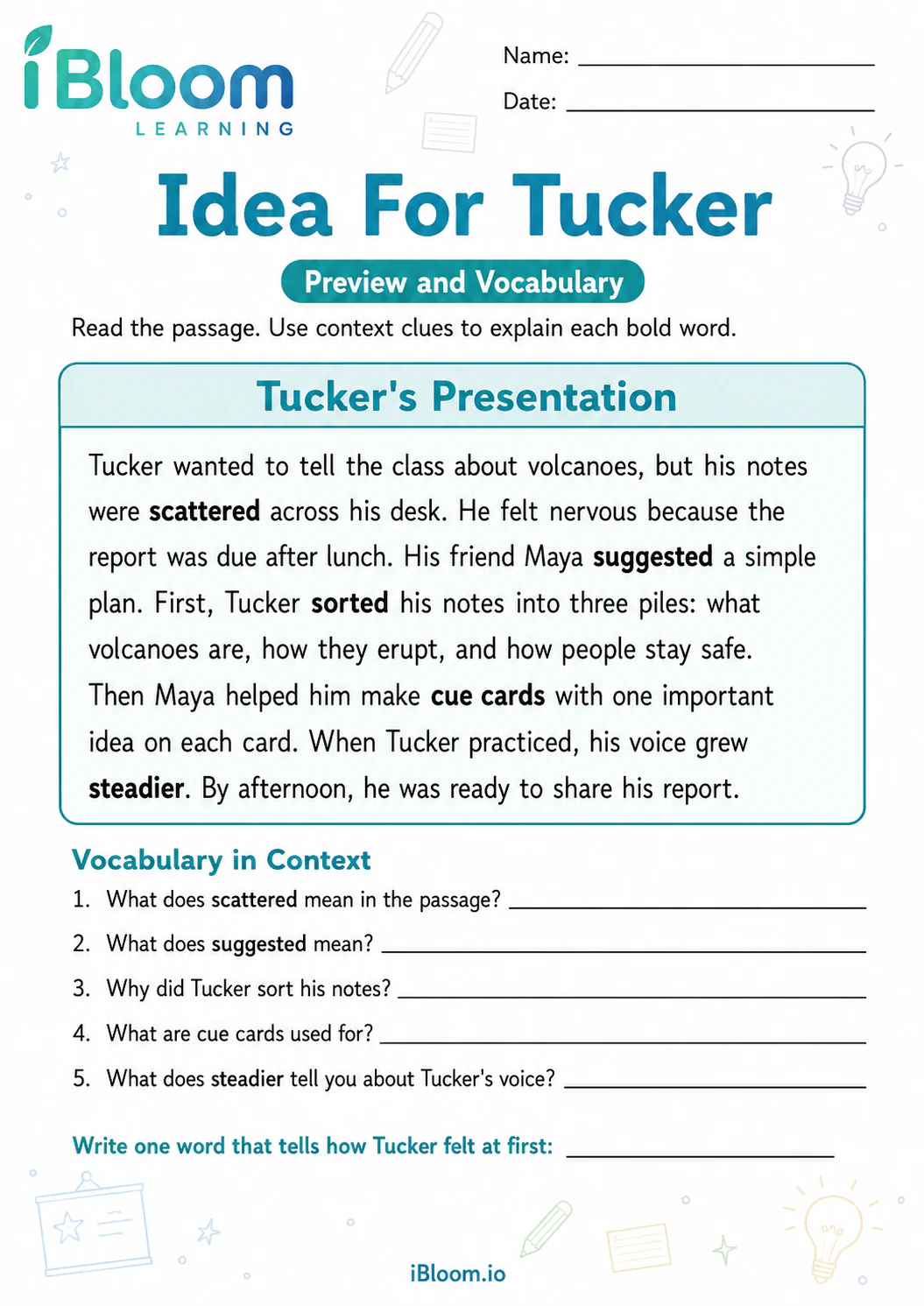 Idea For Tucker — Preview and VocabularyGrade 3 reading comprehension worksheets for the children’s story Idea for Tucker, with practice in evidence, sequencing, vocabulary, and inference. This preview and vocabulary worksheet provides a distinct, age-appropriate way to practise the same lesson.Grade 3Free PDF preview
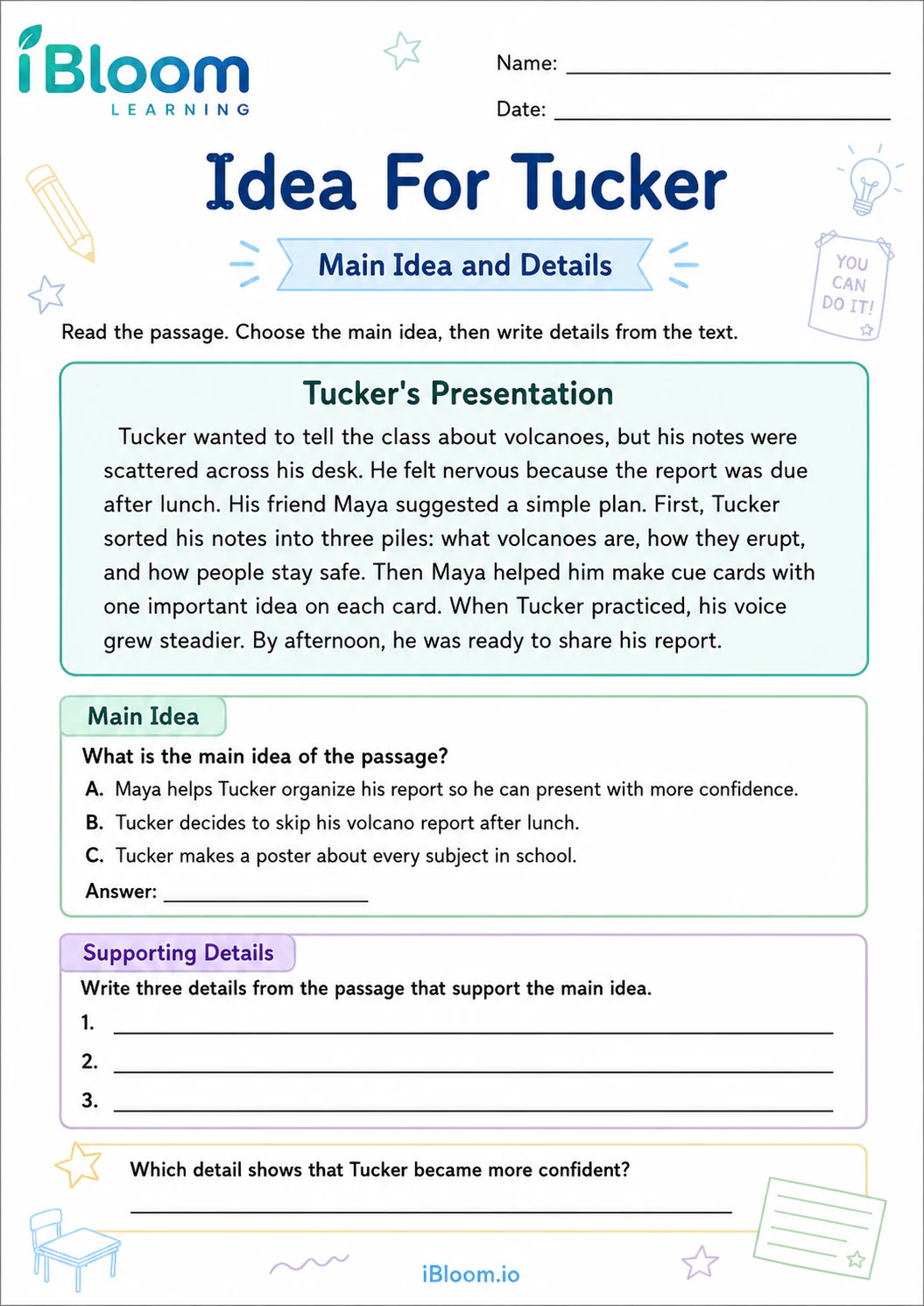 Idea For Tucker — Main Idea and DetailsGrade 3 reading comprehension worksheets for the children’s story Idea for Tucker, with practice in evidence, sequencing, vocabulary, and inference. This main idea and details worksheet provides a distinct, age-appropriate way to practise the same lesson.Grade 3Free PDF preview
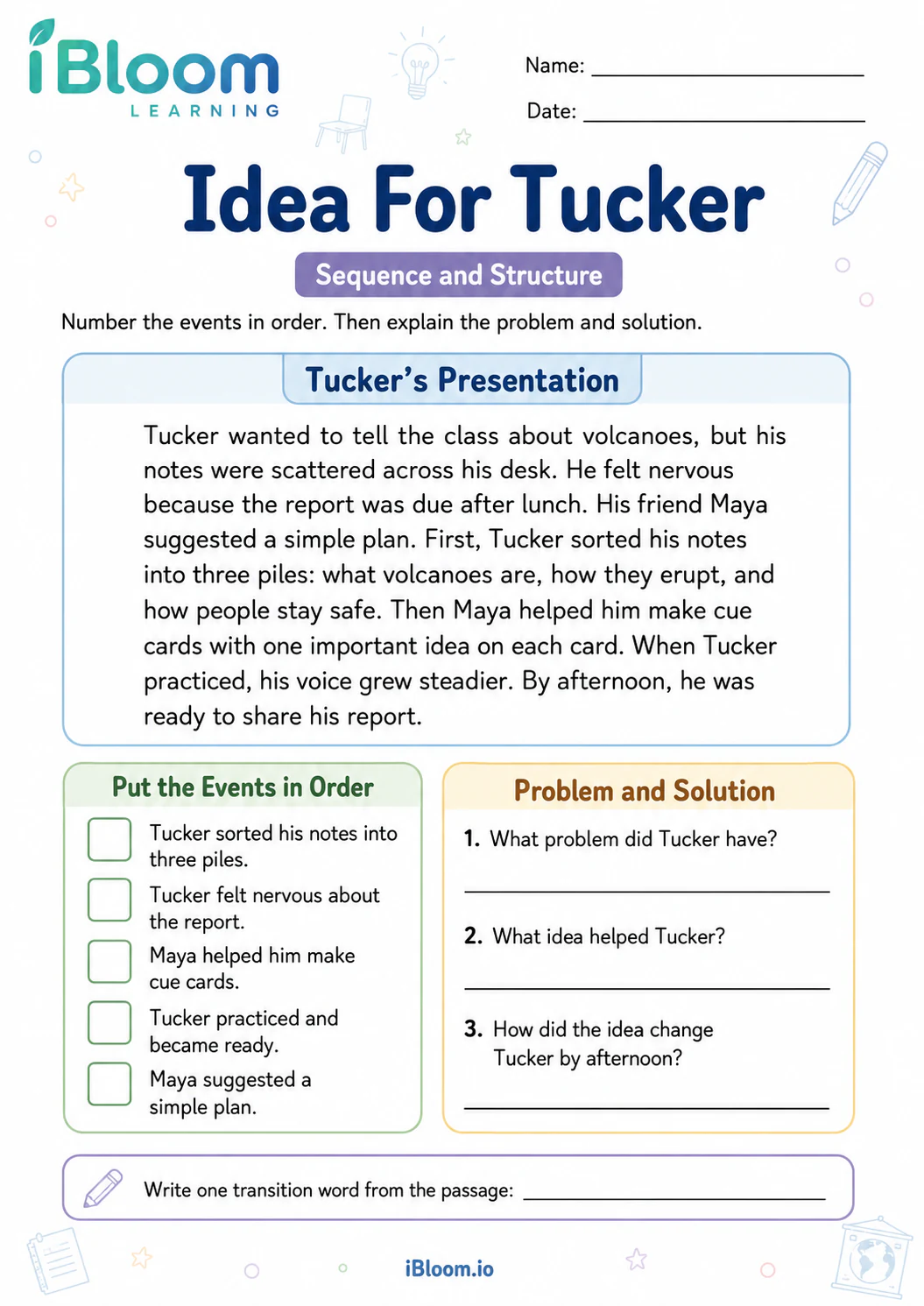 Idea For Tucker — Sequence and StructureGrade 3 reading comprehension worksheets for the children’s story Idea for Tucker, with practice in evidence, sequencing, vocabulary, and inference. This sequence and structure worksheet provides a distinct, age-appropriate way to practise the same lesson.Grade 3Free PDF preview
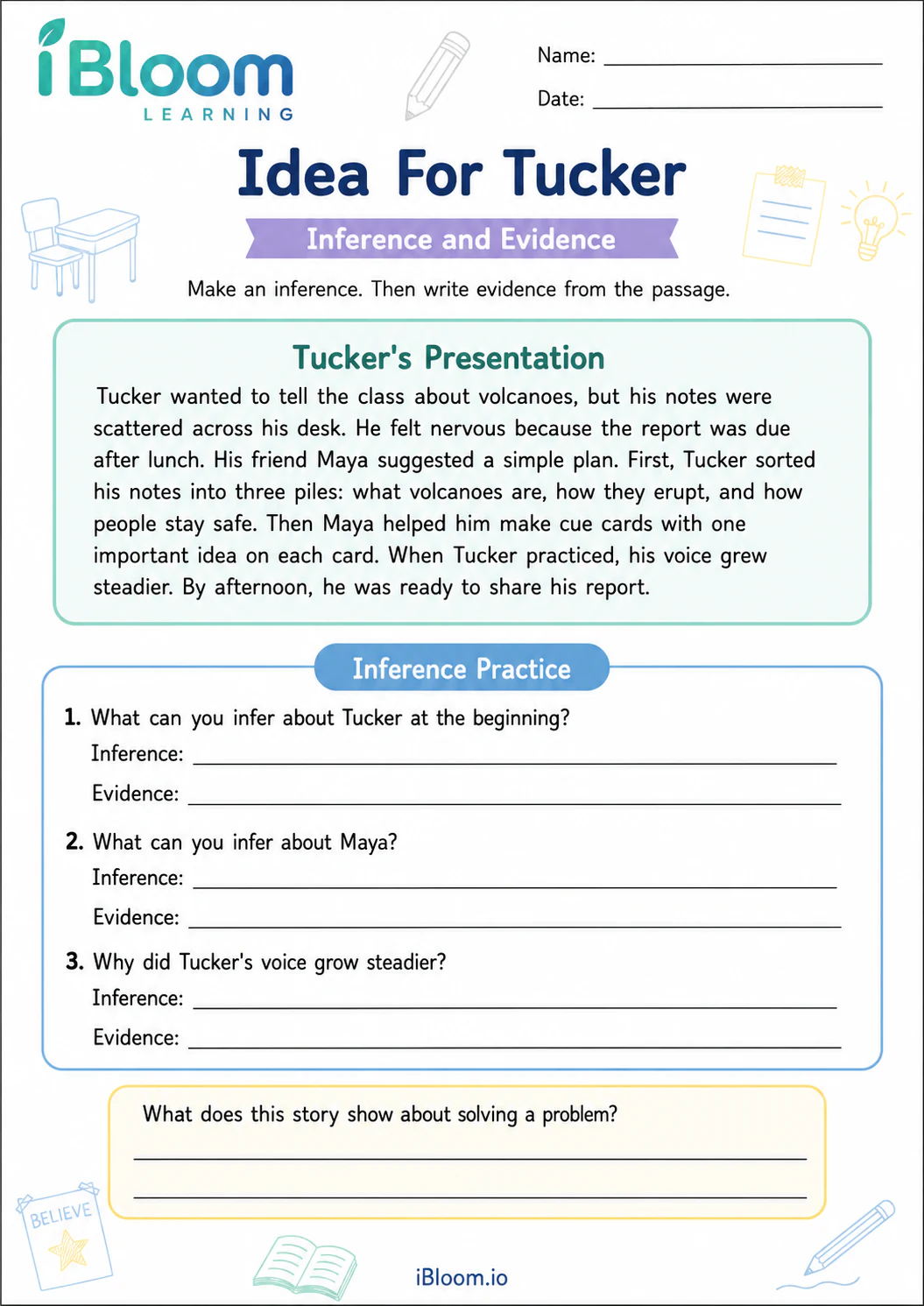 Idea For Tucker — Inference and EvidenceGrade 3 reading comprehension worksheets for the children’s story Idea for Tucker, with practice in evidence, sequencing, vocabulary, and inference. This inference and evidence worksheet provides a distinct, age-appropriate way to practise the same lesson.Grade 3Free PDF preview
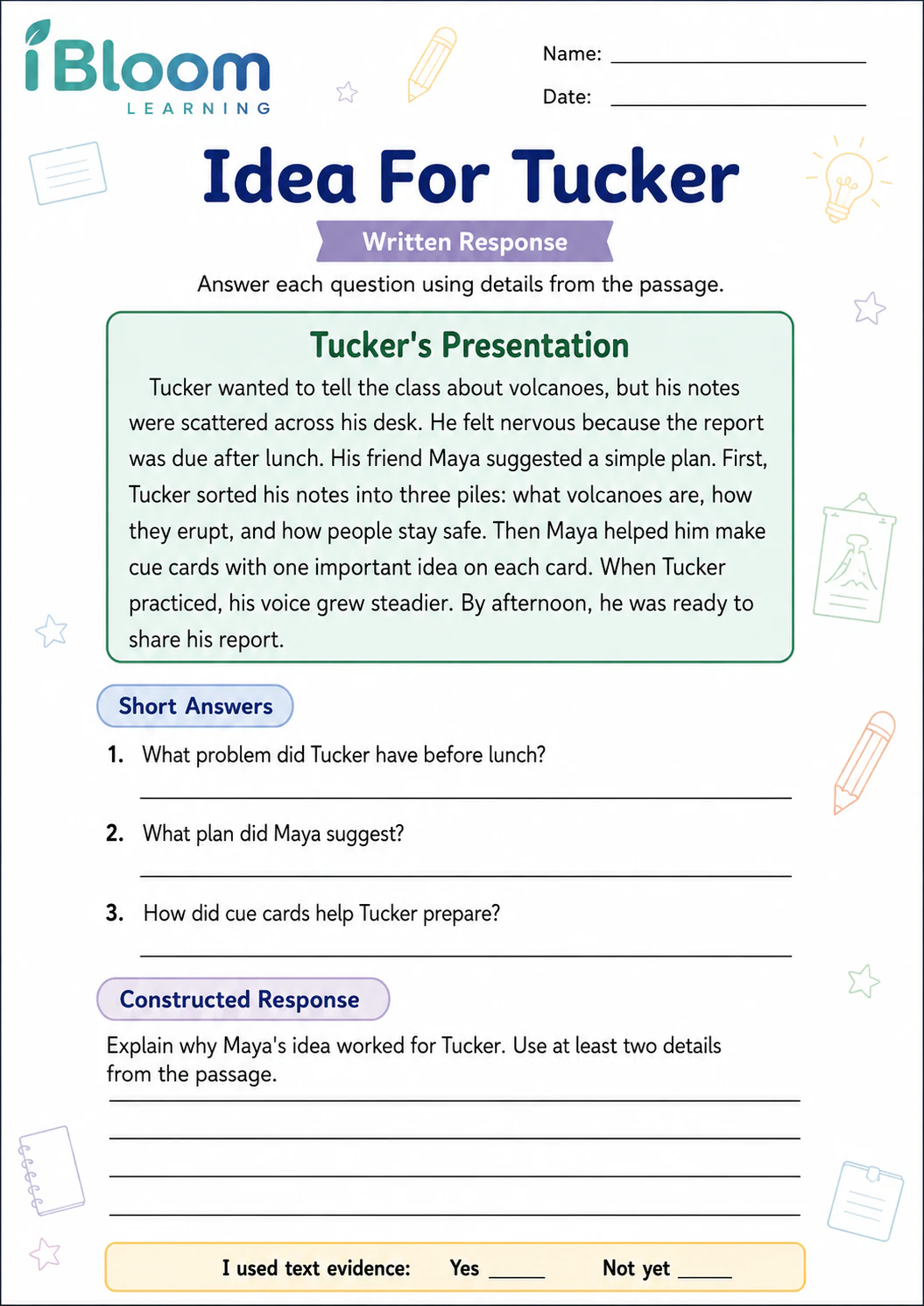 Idea For Tucker — Written ResponseGrade 3 reading comprehension worksheets for the children’s story Idea for Tucker, with practice in evidence, sequencing, vocabulary, and inference. This written response worksheet provides a distinct, age-appropriate way to practise the same lesson.Grade 3Free PDF preview
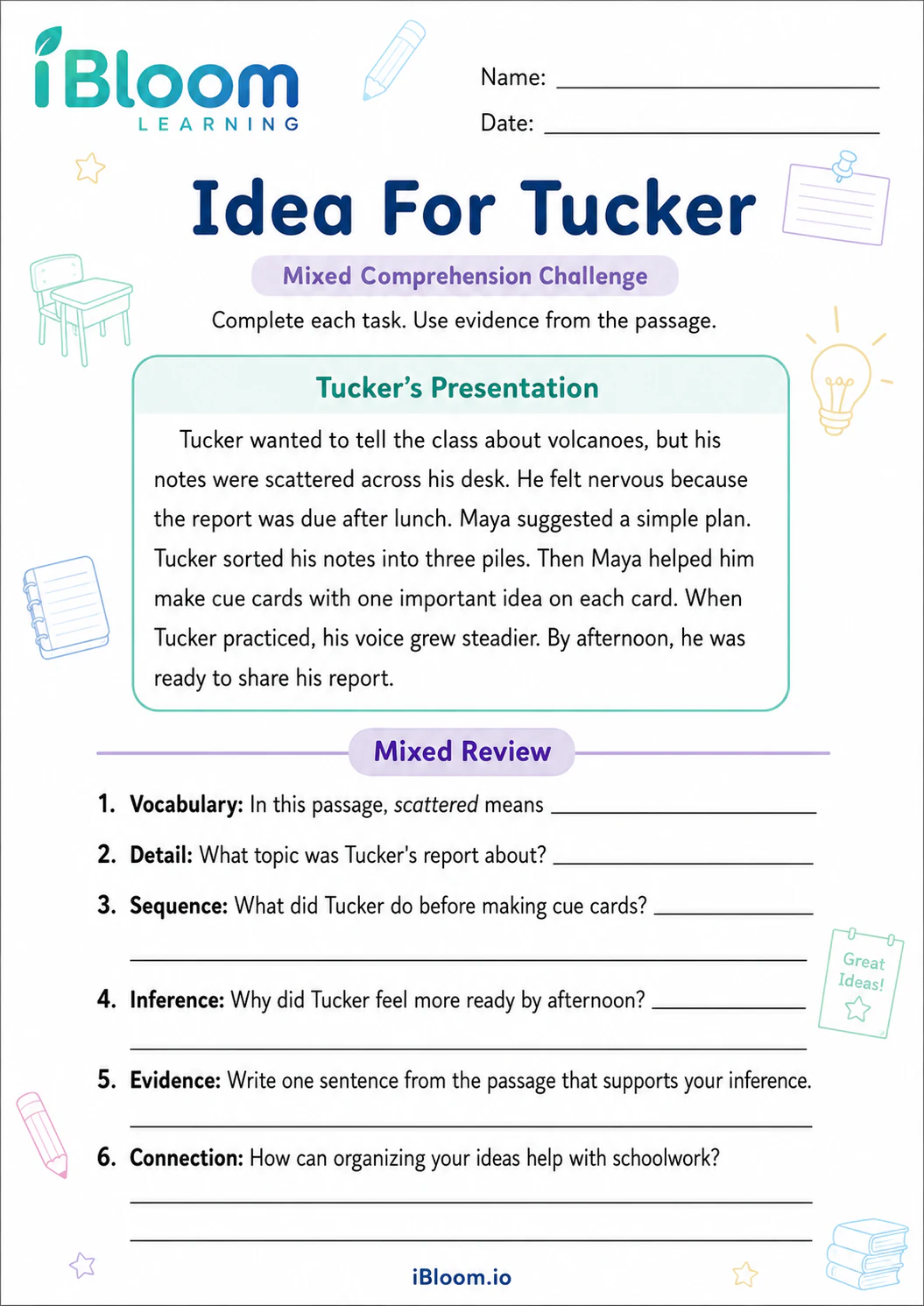 Idea For Tucker — Mixed Comprehension ChallengeGrade 3 reading comprehension worksheets for the children’s story Idea for Tucker, with practice in evidence, sequencing, vocabulary, and inference. This mixed comprehension challenge worksheet provides a distinct, age-appropriate way to practise the same lesson.Grade 3Free PDF preview
Practice that builds confidence
Build story comprehension
These Grade 3 reading comprehension activities help children read the children’s story Idea for Tucker with attention to characters, events, problem solving, and details that support an answer.
The printable worksheets give students a purposeful second look at the story through written responses, vocabulary practice, sequencing, and inference questions that ask them to explain their thinking.
Idea for Tucker practice activities are designed for third graders who are moving from simply recalling a story to explaining how and why events happen. Children practise identifying the main character, noticing the problem in the story, following the order of events, and using text details to describe Tucker’s idea and its result. Questions may ask for a direct answer, a short written explanation, or evidence from the passage.

Vocabulary and evidence work
This collection supports close reading of a children’s story without turning it into a guessing game. Students look back at the passage to confirm who did what, what changed, and which words helped them understand a character’s actions. Useful reading vocabulary includes character, setting, problem, solution, sequence, clue, detail, and inference. Encourage children to underline or point to the sentence that proves their answer before writing.
A simple parent routine
At home, have your child read the story once for enjoyment and once with a pencil nearby. After the second read, ask three quick questions: What was Tucker trying to do? What idea helped? Which part of the story shows that? Let your child answer aloud first, then write. If the written response is too short, prompt with because, for example, or I know this because to help connect the answer to the story.

Classroom uses for teachers
Teachers can use these printables after a shared read-aloud, in small reading groups, or as independent comprehension practice. They also work well in literacy centers where students must return to the text, not just rely on memory. For discussion, pair students and have them compare the evidence they chose for one question. This helps children see that good answers are supported by specific details.

Common errors to watch for
Some Grade 3 readers choose an answer that sounds reasonable but is not supported by the story. Others retell every event instead of answering the exact question. Watch for vague responses such as he was nice or it worked without a detail from the text. If sequencing is difficult, have students number key events in the margin or use first, next, then, and finally to organize their thinking.
Free printable PDF download
Use this Idea for Tucker worksheet page to preview the activity, print it, or download it as a PDF for quick practice. It works well for homework, homeschool lessons, tutoring, morning work, revision, and classroom centers.
Answers and answer key support
After the child completes the worksheet independently, parents and teachers can use the answer support or answer key information to check the work, review mistakes, and choose the next practice step.
Why iBloom worksheets help
iBloom worksheets keep the focus on meaningful comprehension of Idea for Tucker rather than busywork. The activities guide children from literal recall to inference and written explanation, while still staying close to the story. A child-friendly strategy is: read, look back, prove it, then write. This routine builds confidence because students learn that the text contains the clues they need.
Helpful answers
Frequently asked questions
What skills do the Idea for Tucker worksheets practise?
They practise Grade 3 story comprehension, including recalling key details, sequencing events, describing characters, identifying the problem and solution, using vocabulary in context, and supporting answers with text evidence.
Should my child read the story before answering the questions?
Yes. Children should read Idea for Tucker at least once, and then look back at the story while answering. Returning to the text helps them give accurate answers instead of relying only on memory.
How can I help if my child writes very short answers?
Ask your child to add a reason or detail from the story. Sentence starters such as I know this because or The story shows this when can help turn a one-word answer into a clear explanation.
Are these activities suitable for independent Grade 3 practice?
Many third graders can complete them independently after reading the story, but students who struggle with comprehension may benefit from reading the passage aloud with an adult or discussing the first question together.
How can teachers use these worksheets in class?
Teachers can use them after a read-aloud, during small-group reading, in literacy centers, or as a follow-up task focused on finding evidence in the story and explaining answers in complete sentences.
Is this Idea for Tucker worksheet free?
Yes. You can preview it for free and use the printable worksheet for home or classroom practice.
Can I download this Idea for Tucker worksheet as a PDF?
Yes. Use the worksheet download option to save a printable PDF, or print the worksheet directly from the page.
Does this Idea for Tucker worksheet include answers or an answer key?
When the activity has fixed answers, iBloom includes answer support so parents and teachers can check the completed worksheet.