Free printable practice
Amandas News Practice Activities
Grade 3 reading worksheets for Amandas News help children practise story recall, inference, vocabulary in context, and evidence-based answers.
Free printable worksheet PDFs
Preview every available page, then download the free worksheet PDF for home, homeschool, tutoring, or classroom practice.
Preview the exact activity before downloading it.
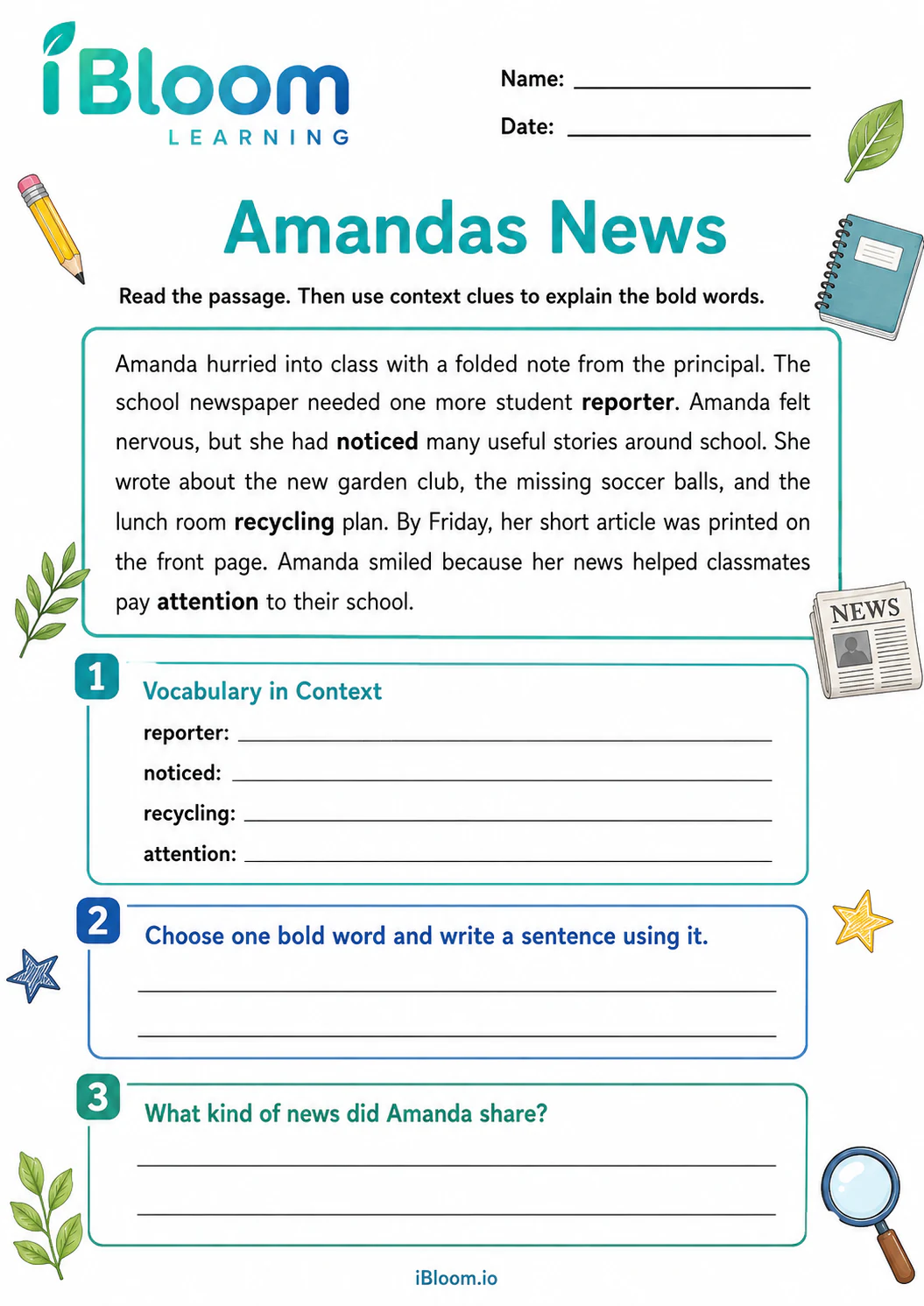 Amandas News — Preview and VocabularyGrade 3 reading worksheets for Amandas News help children practise story recall, inference, vocabulary in context, and evidence-based answers. This preview and vocabulary worksheet provides a distinct, age-appropriate way to practise the same lesson.Grade 3Free PDF preview
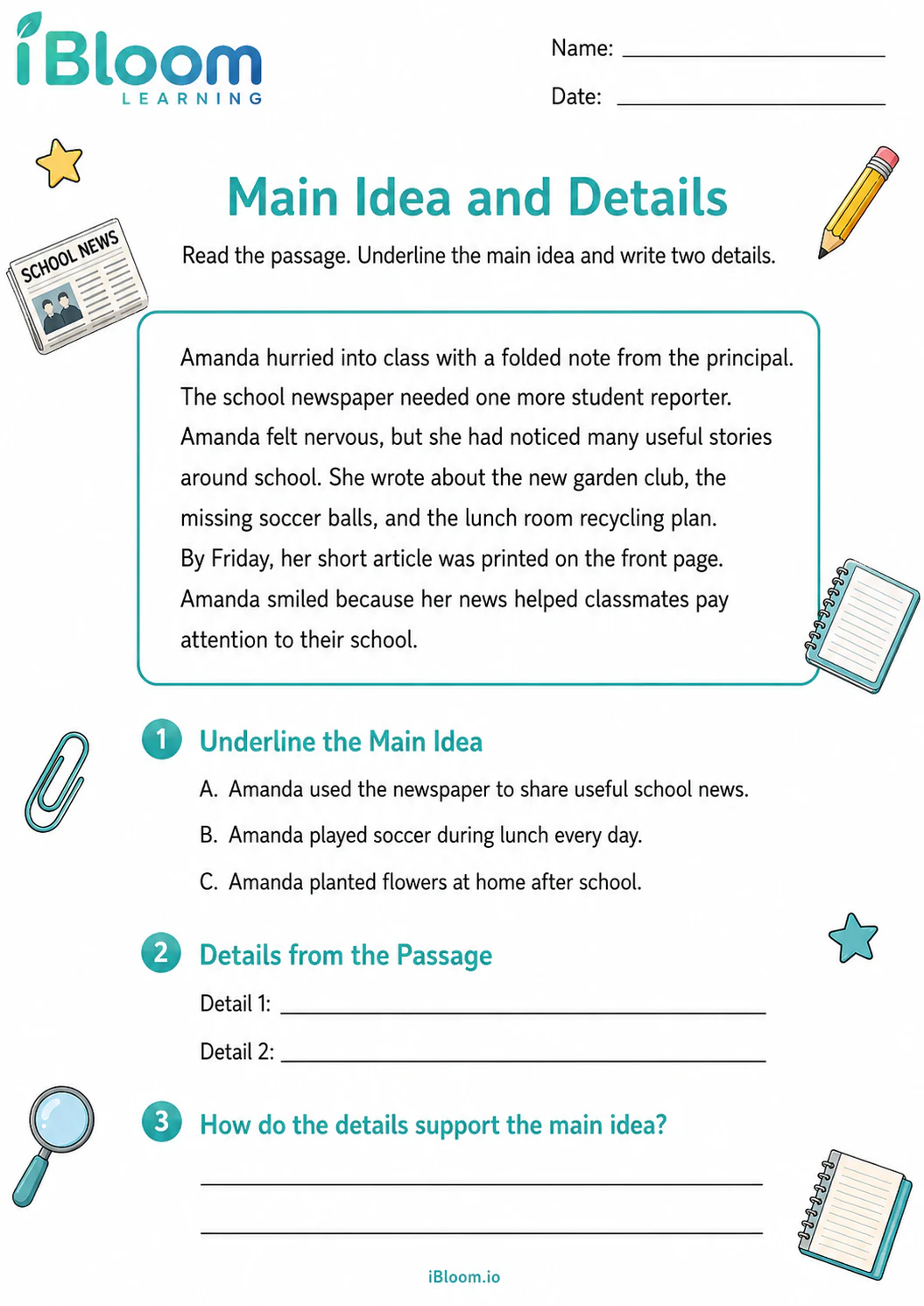 Amandas News — Main Idea and DetailsGrade 3 reading worksheets for Amandas News help children practise story recall, inference, vocabulary in context, and evidence-based answers. This main idea and details worksheet provides a distinct, age-appropriate way to practise the same lesson.Grade 3Free PDF preview
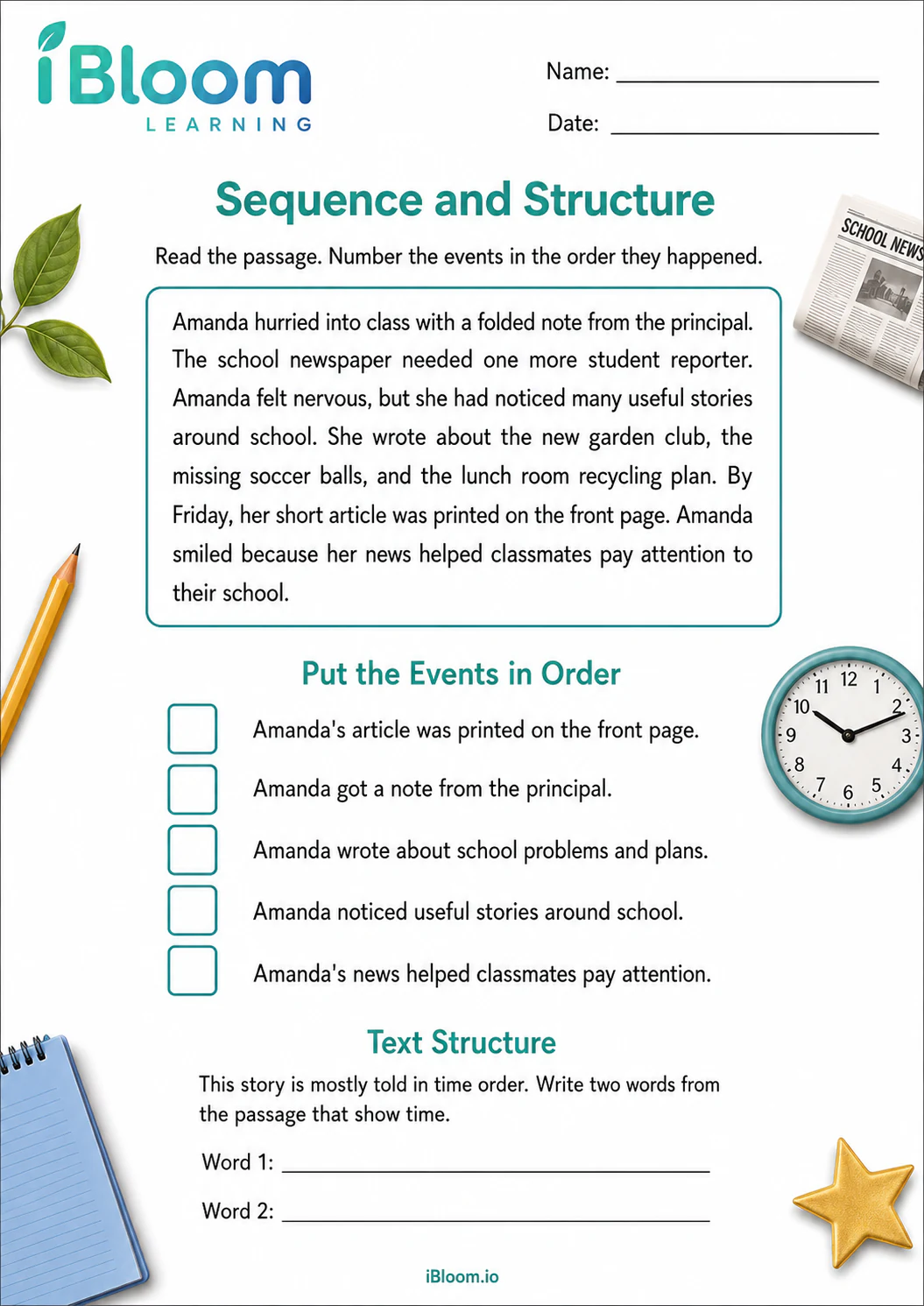 Amandas News — Sequence and StructureGrade 3 reading worksheets for Amandas News help children practise story recall, inference, vocabulary in context, and evidence-based answers. This sequence and structure worksheet provides a distinct, age-appropriate way to practise the same lesson.Grade 3Free PDF preview
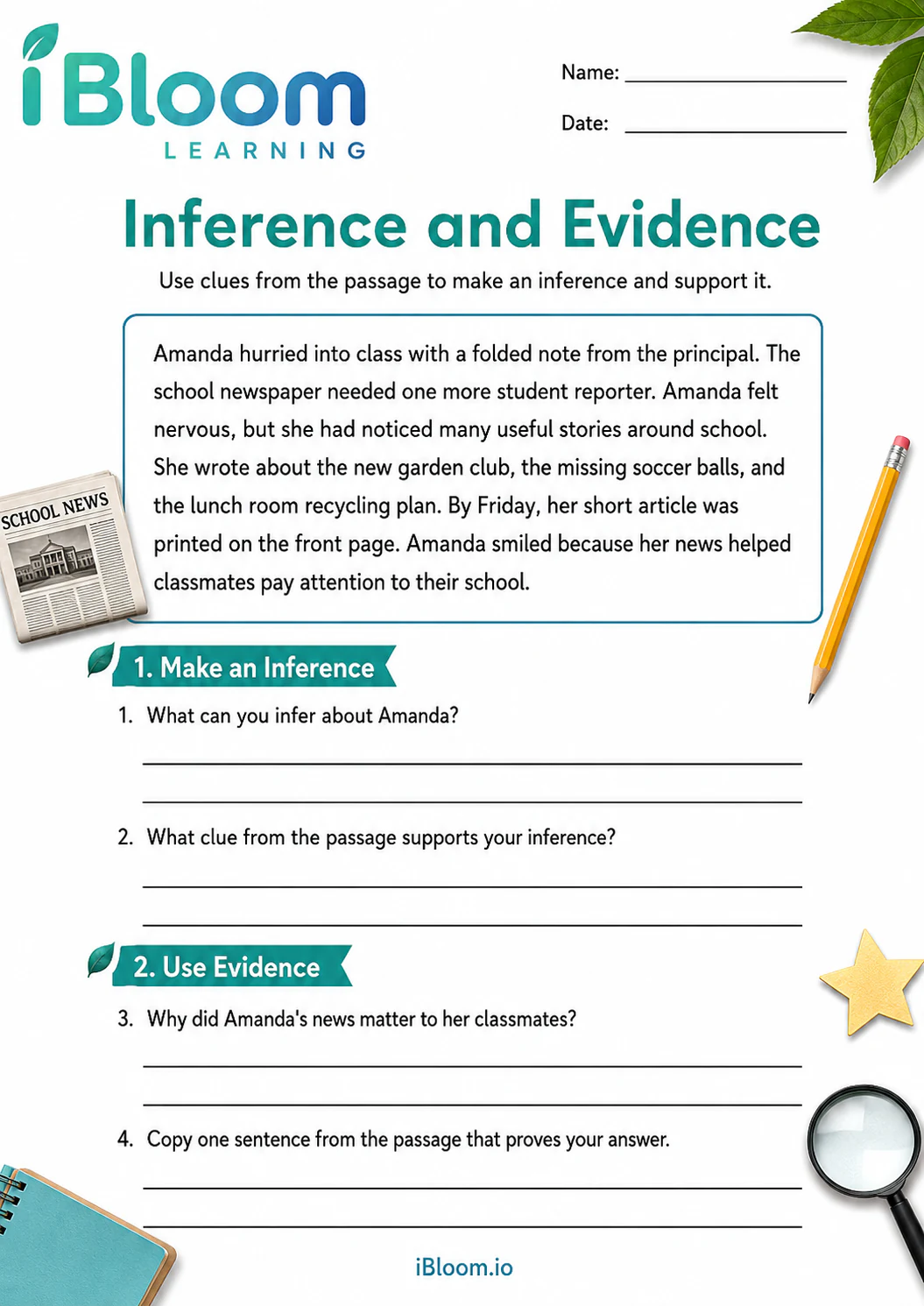 Amandas News — Inference and EvidenceGrade 3 reading worksheets for Amandas News help children practise story recall, inference, vocabulary in context, and evidence-based answers. This inference and evidence worksheet provides a distinct, age-appropriate way to practise the same lesson.Grade 3Free PDF preview
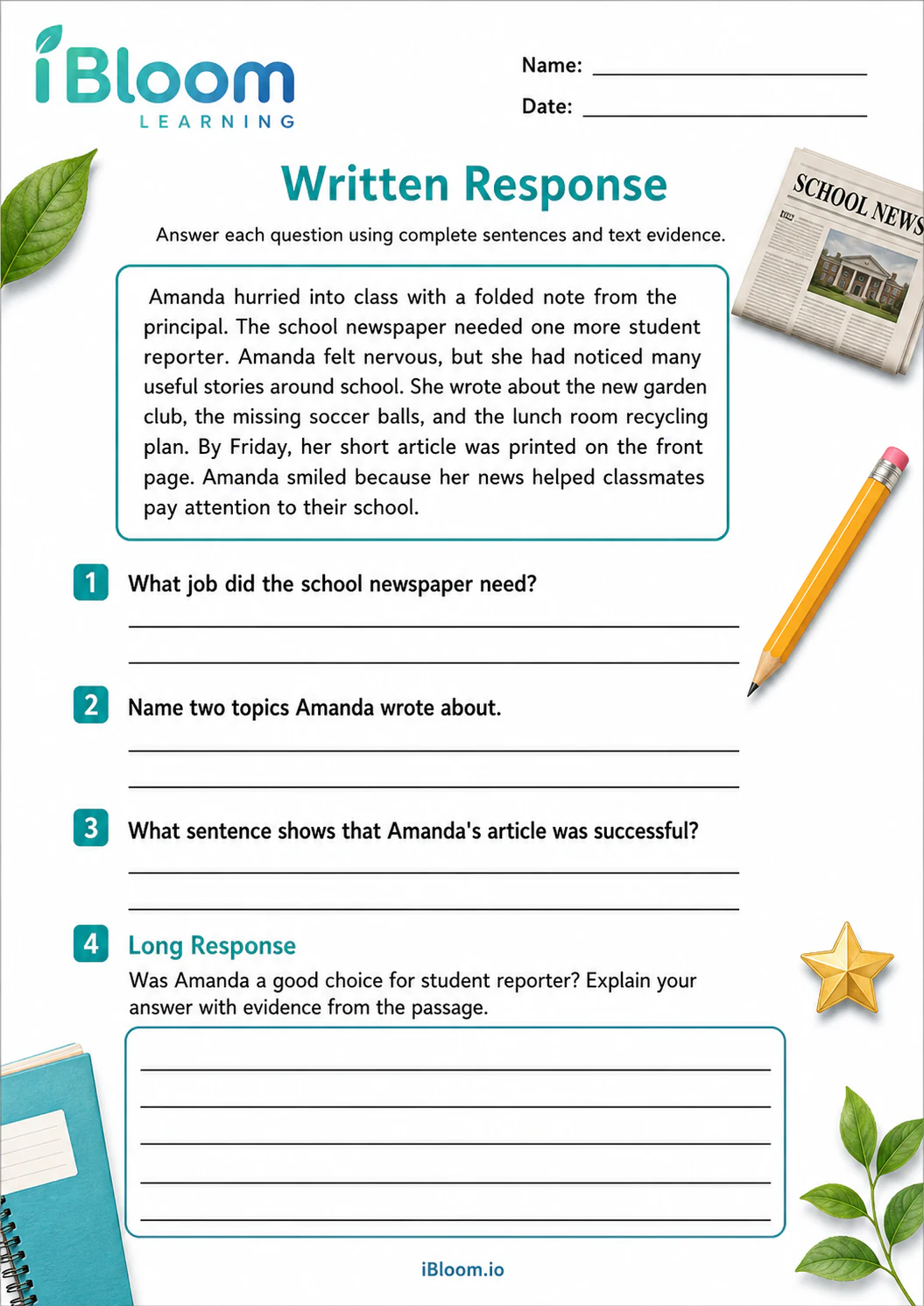 Amandas News — Written ResponseGrade 3 reading worksheets for Amandas News help children practise story recall, inference, vocabulary in context, and evidence-based answers. This written response worksheet provides a distinct, age-appropriate way to practise the same lesson.Grade 3Free PDF preview
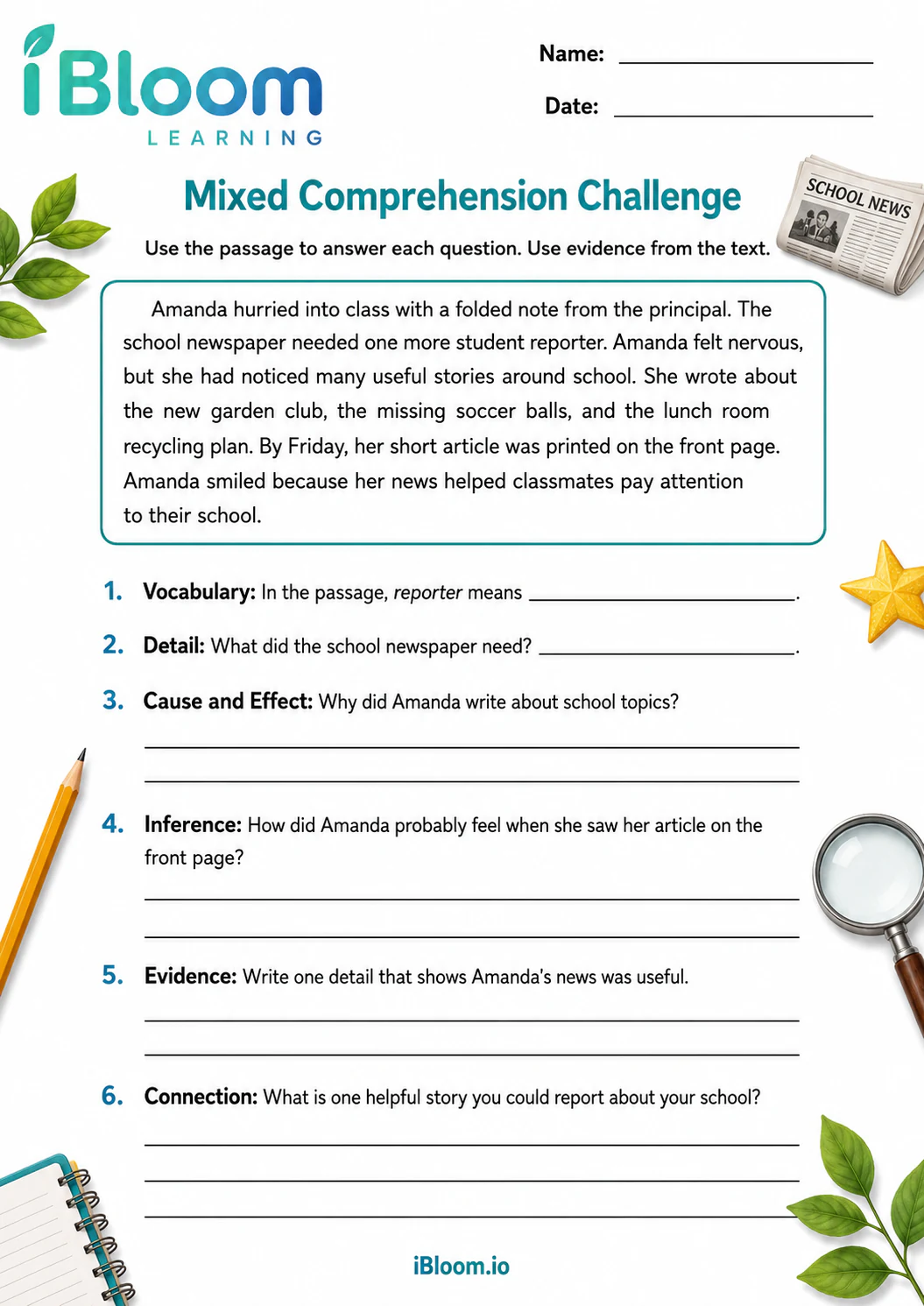 Amandas News — Mixed Comprehension ChallengeGrade 3 reading worksheets for Amandas News help children practise story recall, inference, vocabulary in context, and evidence-based answers. This mixed comprehension challenge worksheet provides a distinct, age-appropriate way to practise the same lesson.Grade 3Free PDF preview
Practice that builds confidence
Reading the story closely
These Grade 3 reading comprehension activities focus on the children’s story Amandas News. Students practise reading a short fiction passage carefully, noticing what happens, how characters respond, and which details matter most.
The printable worksheets include comprehension questions, vocabulary work, and written response practice tied directly to the story. Children learn to go back to the text, support answers with details, and explain their thinking in complete sentences.
In this Reading Comprehension > Grade 3 > Children’s Stories page, Amandas News gives students practice with the habits strong readers use in fiction. They identify important events, keep track of who is involved, and notice clues about character feelings, choices, and reactions.

Building comprehension step by step
The work should move from basic understanding to deeper thinking. Start with questions that ask what happened in the story, then guide children toward why it happened and what a character may have been thinking. Useful prompts include: “Which detail tells you that?” and “What happened before that?” Vocabulary questions should be answered from context, not from guessing, so students learn to use surrounding sentences as clues.
A simple parent routine
Have your child read the story once for the gist. On the second read, ask them to underline the part that explains Amanda’s news, circle a detail about another character’s response, and put a question mark beside any confusing word or sentence. Then let them answer independently. Before checking, ask them to point to the sentence that helped with each answer.

Classroom uses for teachers
Teachers can use these pages for whole-class comprehension practice, small-group reading, literacy centers, morning work, or a quick fiction check-in. The story also works well for partner discussion: one student reads a question, and the other must find evidence before answering. Written responses can be used to model how to restate the question and add a text detail.

Common errors to watch for
Grade 3 readers may answer from memory without rereading, confuse the order of events, or choose an answer because it sounds familiar rather than because the story supports it. Some children also write opinions when the question asks for evidence. A child-friendly strategy is “Stop, point, prove”: stop before answering, point to the proof in the passage, then prove the answer in words.
Free printable PDF download
Use this Amandas News reading comprehension worksheet page to preview the activity, print it, or download it as a PDF for quick practice. It works well for homework, homeschool lessons, tutoring, morning work, revision, and classroom centers.
Answers and answer key support
After the child completes the worksheet independently, parents and teachers can use the answer support or answer key information to check the work, review mistakes, and choose the next practice step.
Why iBloom worksheets help
The iBloom activities keep the focus on one complete story, so children can practise comprehension without jumping between unrelated passages. Questions encourage careful rereading, accurate story recall, and clear explanation. This makes the page useful for building confidence with Grade 3 fiction comprehension and for helping students move from “I think” to “the text shows.”
Helpful answers
Frequently asked questions
What skills do the Amandas News worksheets practise?
They practise understanding a Grade 3 fiction passage, recalling story details, sequencing events, making simple inferences, using vocabulary in context, and writing answers supported by the text.
Should my child reread Amandas News before answering the questions?
Yes. A first read helps with the general meaning, while a second read helps children find exact details, check the order of events, and avoid guessing from memory.
How can I help without giving my child the answers?
Ask guiding questions such as “Where did you see that in the story?” or “Which sentence helped you decide?” This keeps the focus on finding evidence rather than being told the answer.
Are these activities better for home practice or classroom use?
They work for both. Parents can use them for focused reading practice, and teachers can use them in small groups, literacy centers, independent work, or as a fiction comprehension check.
What should I do if my child gives very short written answers?
Encourage them to restate part of the question and add one story detail. For example, instead of a one-word answer, they can write a complete sentence that explains what happened and why.
Is this Amandas News reading comprehension worksheet free?
Yes. You can preview it for free and use the printable worksheet for home or classroom practice.
Can I download this Amandas News reading comprehension worksheet as a PDF?
Yes. Use the worksheet download option to save a printable PDF, or print the worksheet directly from the page.
Does this Amandas News reading comprehension worksheet include answers or an answer key?
When the activity has fixed answers, iBloom includes answer support so parents and teachers can check the completed worksheet.