






About this worksheet
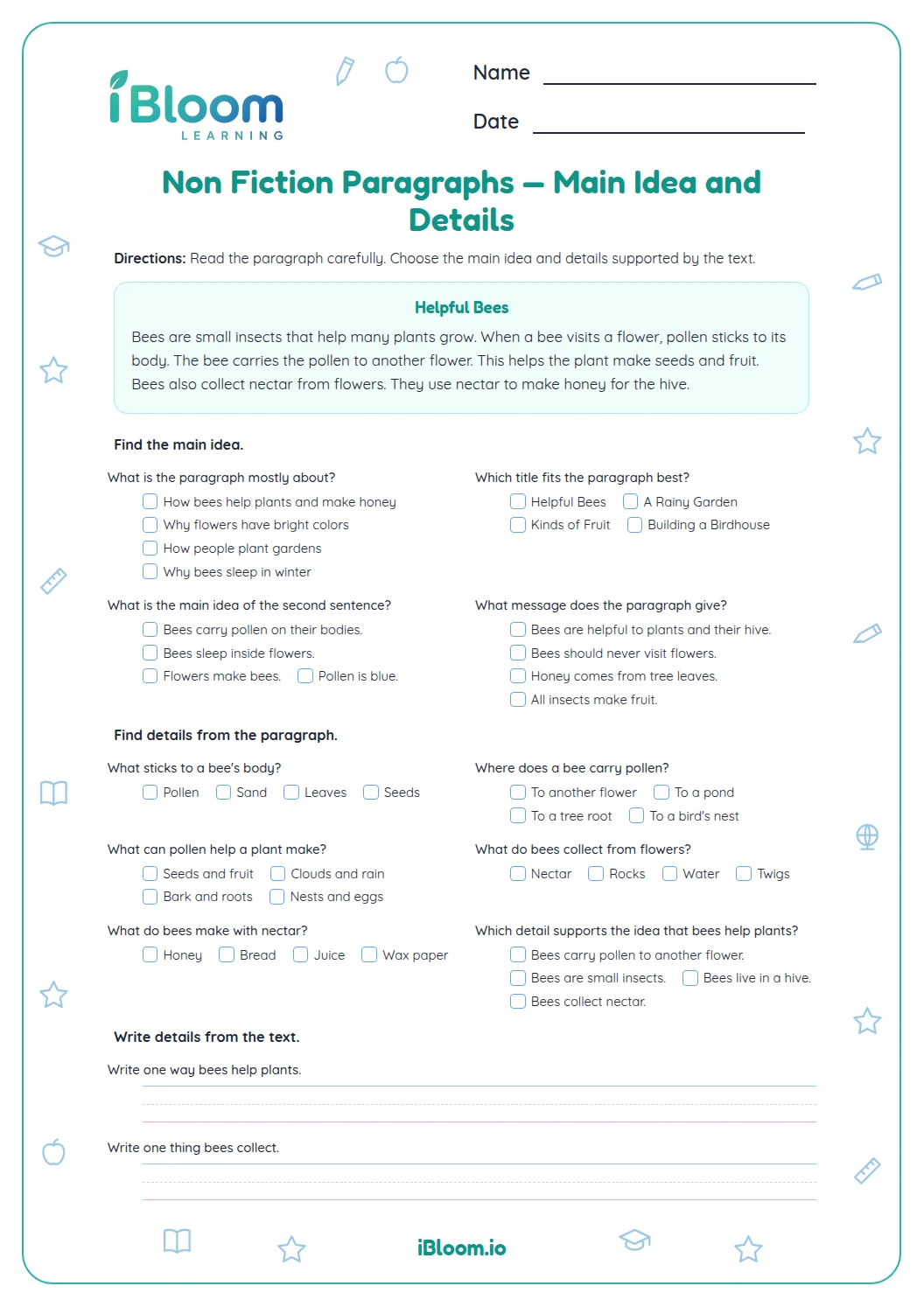
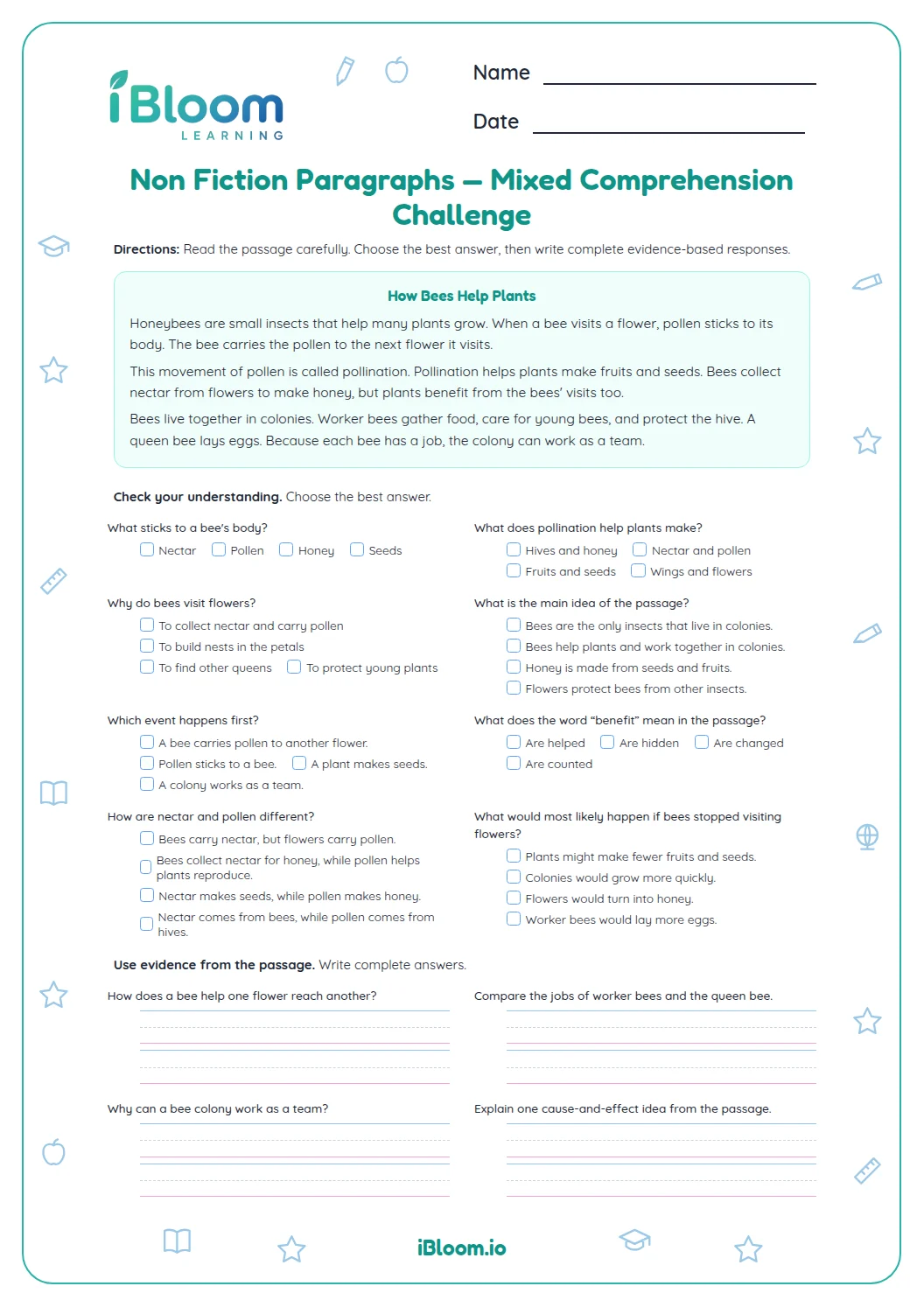
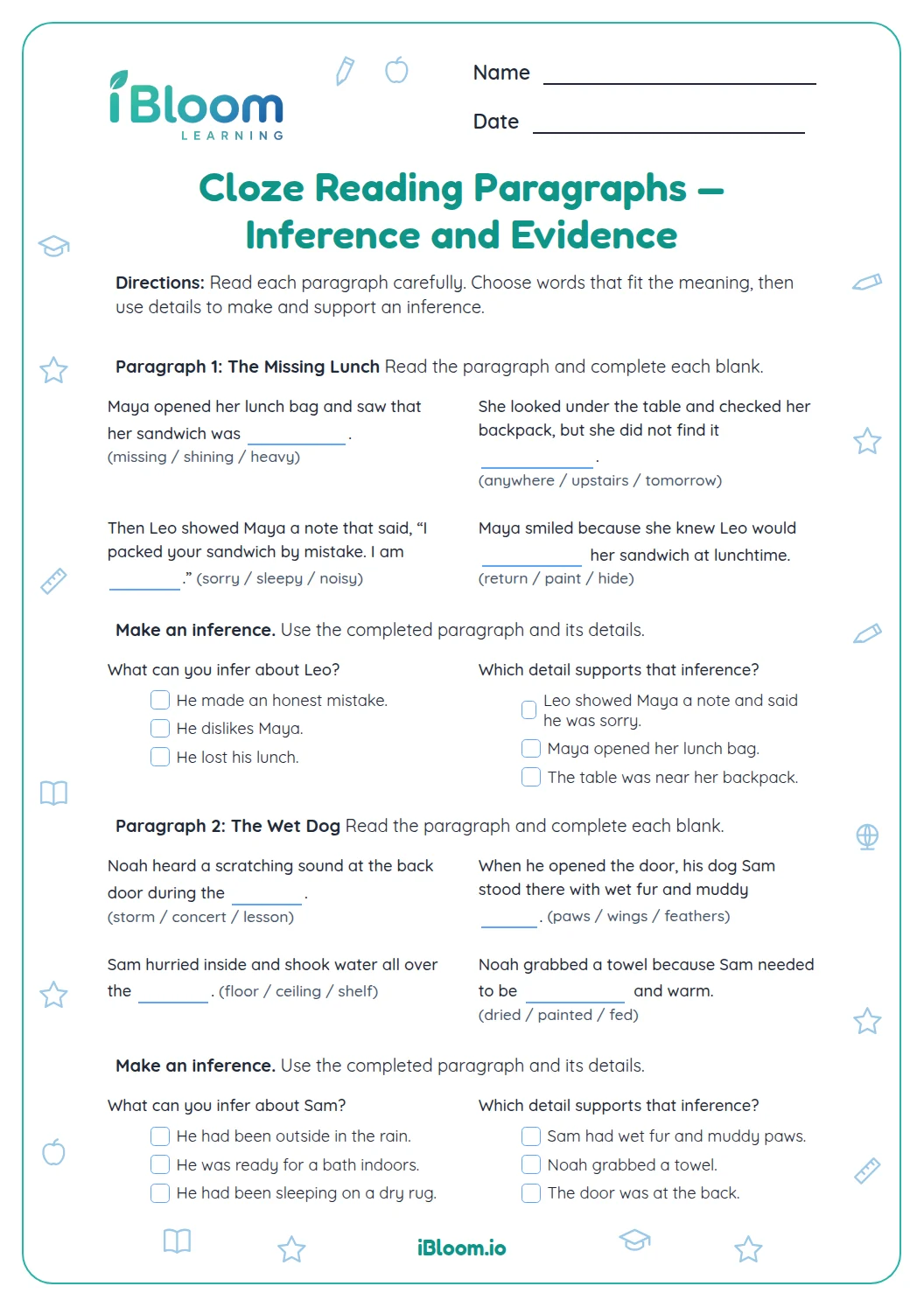
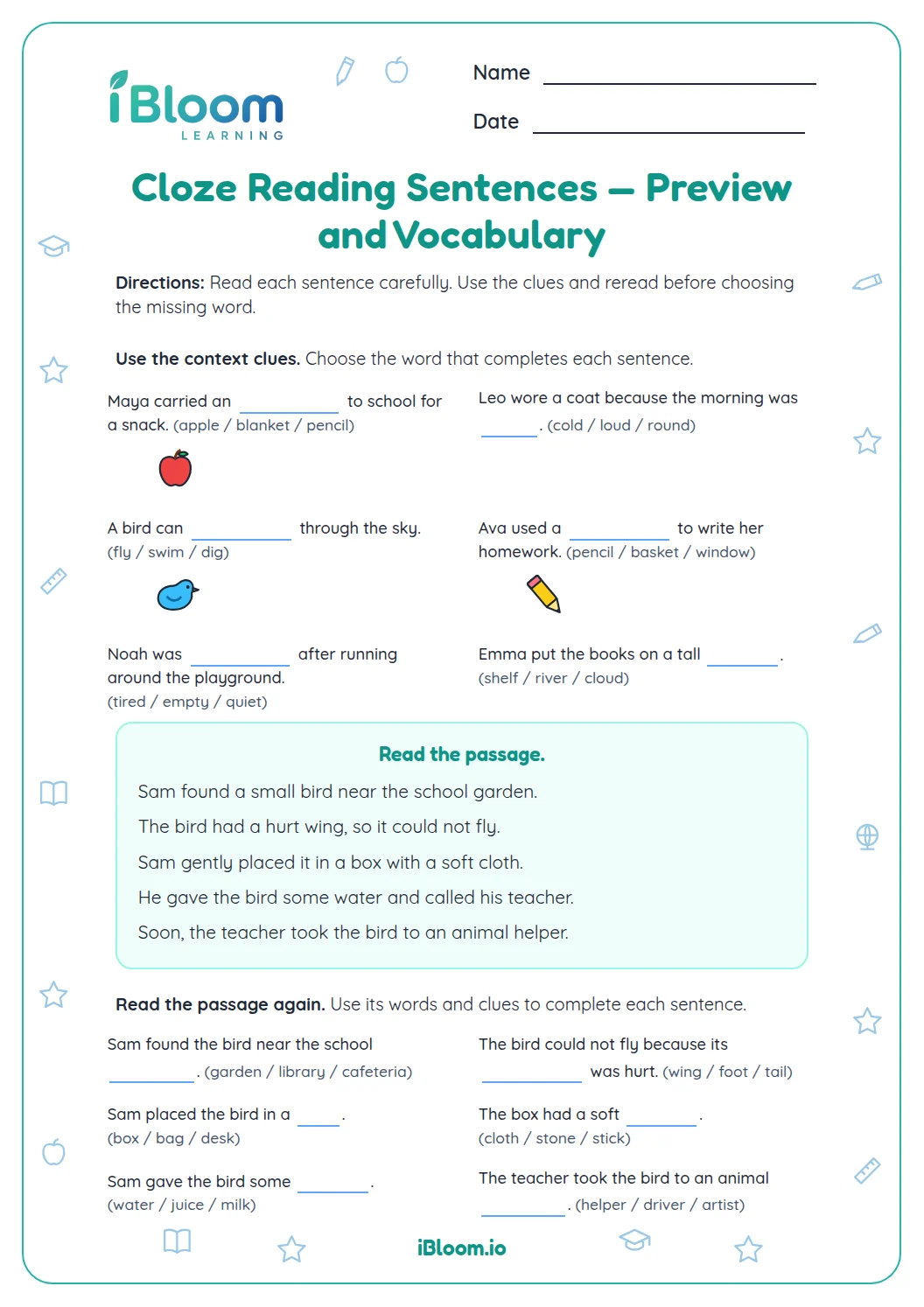
This free printable worksheet is for Grade 3 students practicing a rain-collection passage with detail, inference, evidence, sequence, and vocabulary questions. It includes 14 questions, a clearly organized worksheet, and a separate answer key. The page below explains the exact strategy used in the questions, with a worked example and practical ways to check the answers.
Aligned to RI.3.1 and RI.3.4
How is the practice organized?
The worksheet has 14 questions, arranged in Parts A–B. It starts with a rain-collection passage with detail, inference, evidence, sequence, and vocabulary questions. Use the key after the student has tried each part.
A useful first move is to name exactly what the prompt asks: extend a pattern, use a clue, support an opinion, or find evidence in the passage.
How can students connect an inference to evidence?
For the question about the empty barrel, connect the passage detail that students used tap water when rainwater ran out to the inference that stored rain did not always meet the garden’s needs. Then select the sentence that supports it.
Invite the student to point to the equation, passage detail, or reason that supports each response.
How can families review the answers?
Finish a part before checking the answer key. For an equation, substitute the missing number and verify the product. For a written opinion, compare the response with the prompt’s requirements; the sample answer is one possible response.
How to use this worksheet
- 1Read the part heading and directions before starting.
- 2Try each problem and mark any item to revisit.
- 3For a pattern or equation, check the step or operation.
- 4For a text question, point to the clue that supports the answer.
- 5Check completed work with the answer key and correct any errors.
Common Core alignment
Answer questions by referring to details in the passage.
On this sheet: Students connect each answer to a specific detail in the informational passage.
Show the official wordingHide the official wording
Ask and answer questions to demonstrate understanding of a text, referring explicitly to the text as the basis for the answers.
Use context to determine the meaning of a domain word.
On this sheet: Vocabulary items ask for meanings from context.
Show the official wordingHide the official wording
Determine the meaning of general academic and domain-specific words and phrases in a text relevant to a grade 3 topic or subject area.
What to practice next
Make more practice
Further reading
Questions parents and teachers ask
What does this Grade 3 worksheet practice?
This worksheet includes 14 questions on details, inferences, evidence and vocabulary. Students can complete the sections in order, then use the separate answer key to check their work. The examples and directions on the page show how to approach the exact skills practiced in each section.
How should a student use the answer key?
Ask the student to show the step or point to the sentence that supports the response. For open writing, compare the work with the prompt’s requirements and use the sample answer as one model, not the only acceptable wording. Then invite the student to revise the response.
How long does this worksheet take?
Plan for about 15 minutes for these 14 questions, with extra time for discussing answers or revising written work. Students can complete one part at a time instead of finishing the entire worksheet in one sitting. Check each completed part with the answer key.
Can I use this worksheet for a small group?
Yes. Model one item from the worksheet, then let students try the next one independently or with a partner. Ask them to explain the clue, calculation, or reason behind a response before checking the key. This keeps the discussion connected to the page’s skill.
What should I do when an answer is different from the key?
Ask the student to show the step or point to the sentence that supports the response. For open writing, compare the work with the prompt’s requirements and use the sample answer as one model, not the only acceptable wording. Then invite the student to revise the response.