

About this worksheet
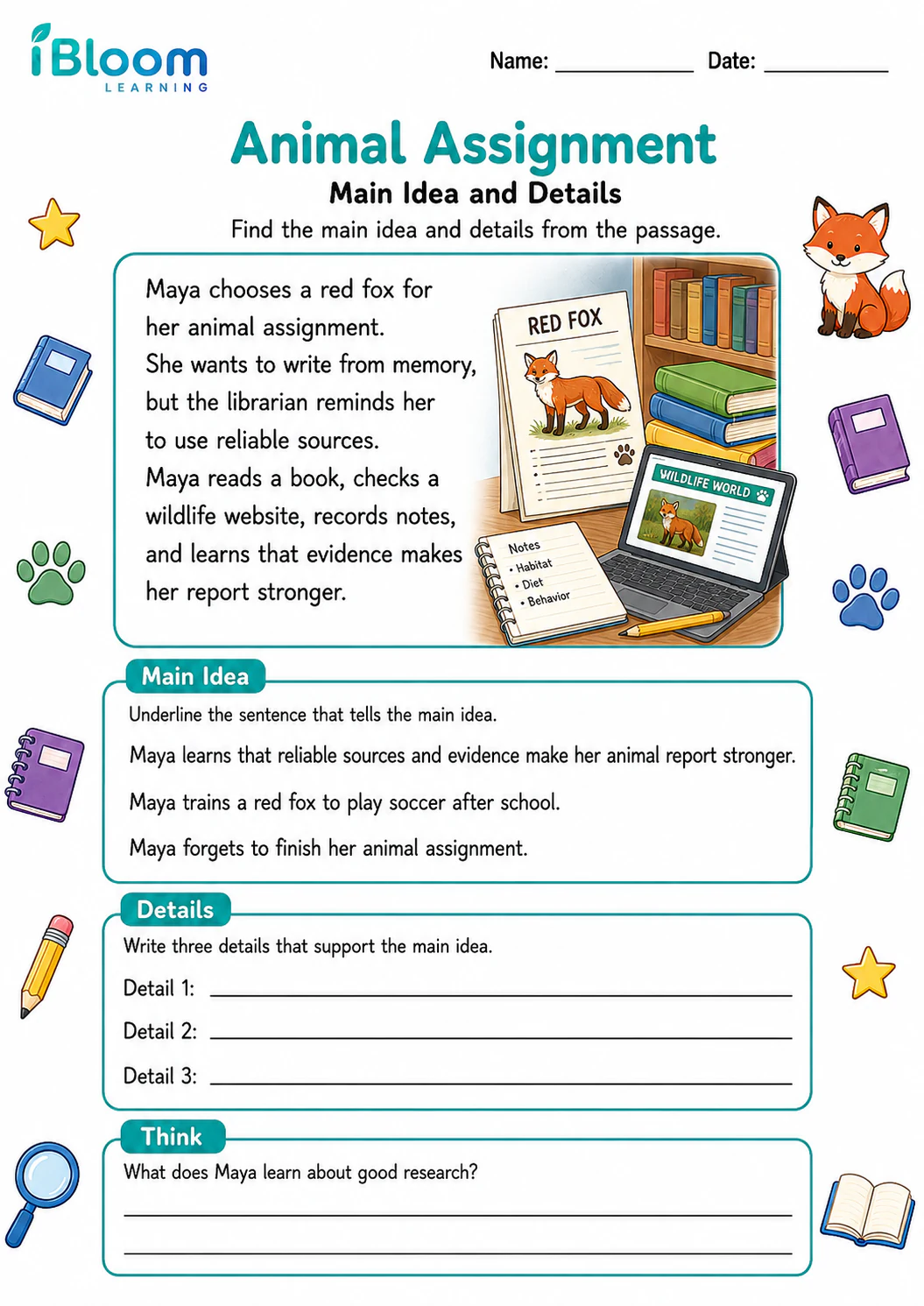
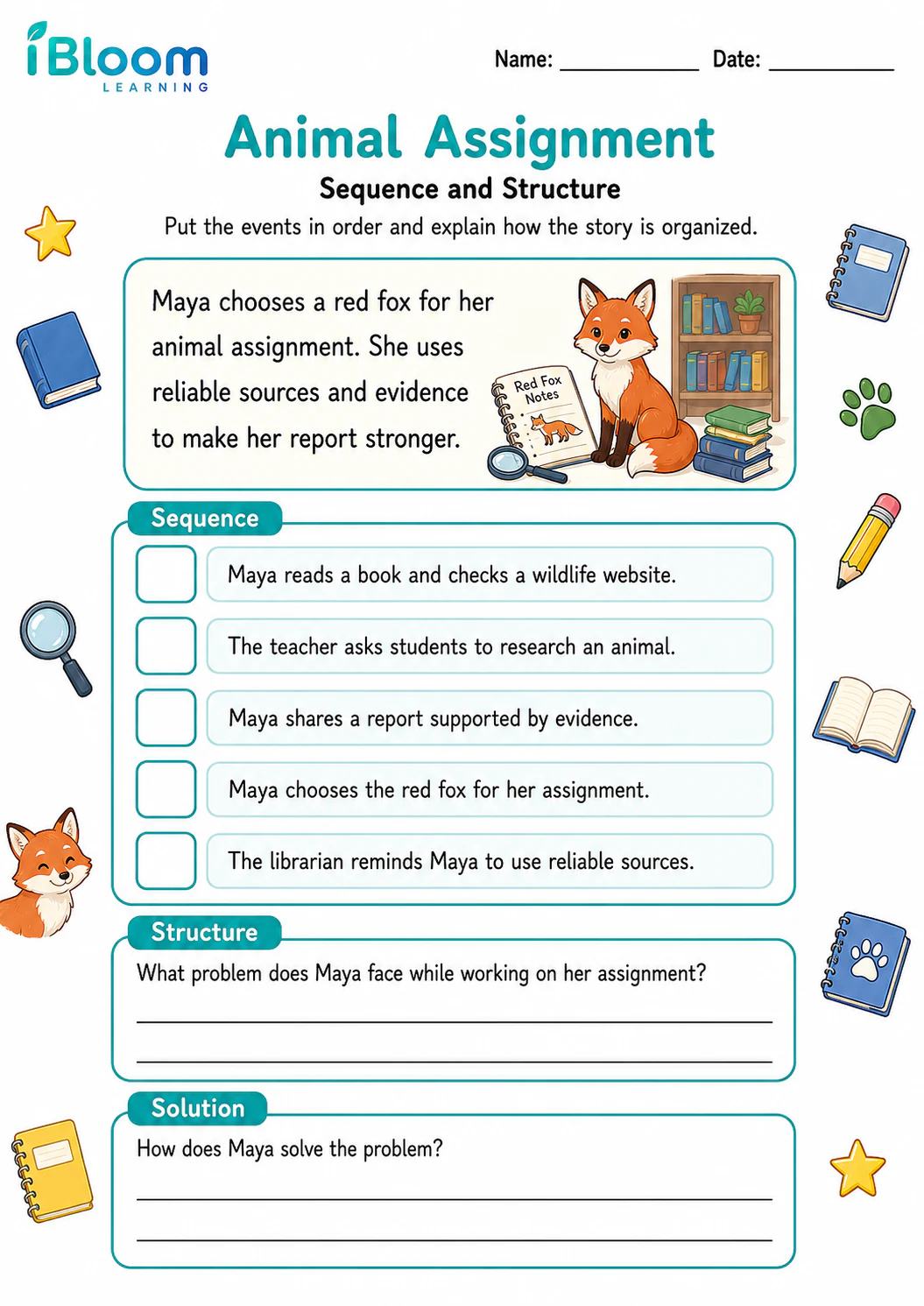
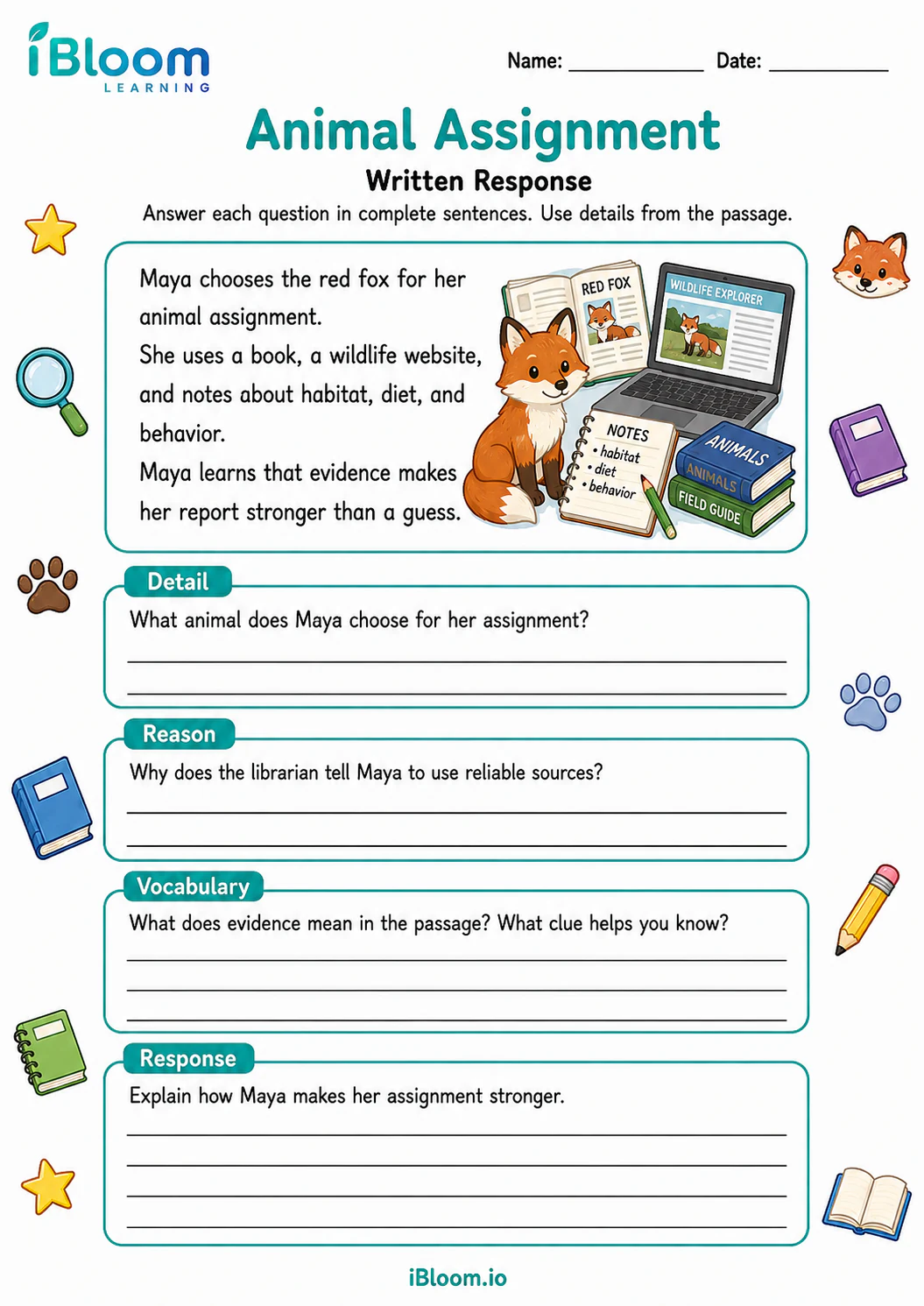
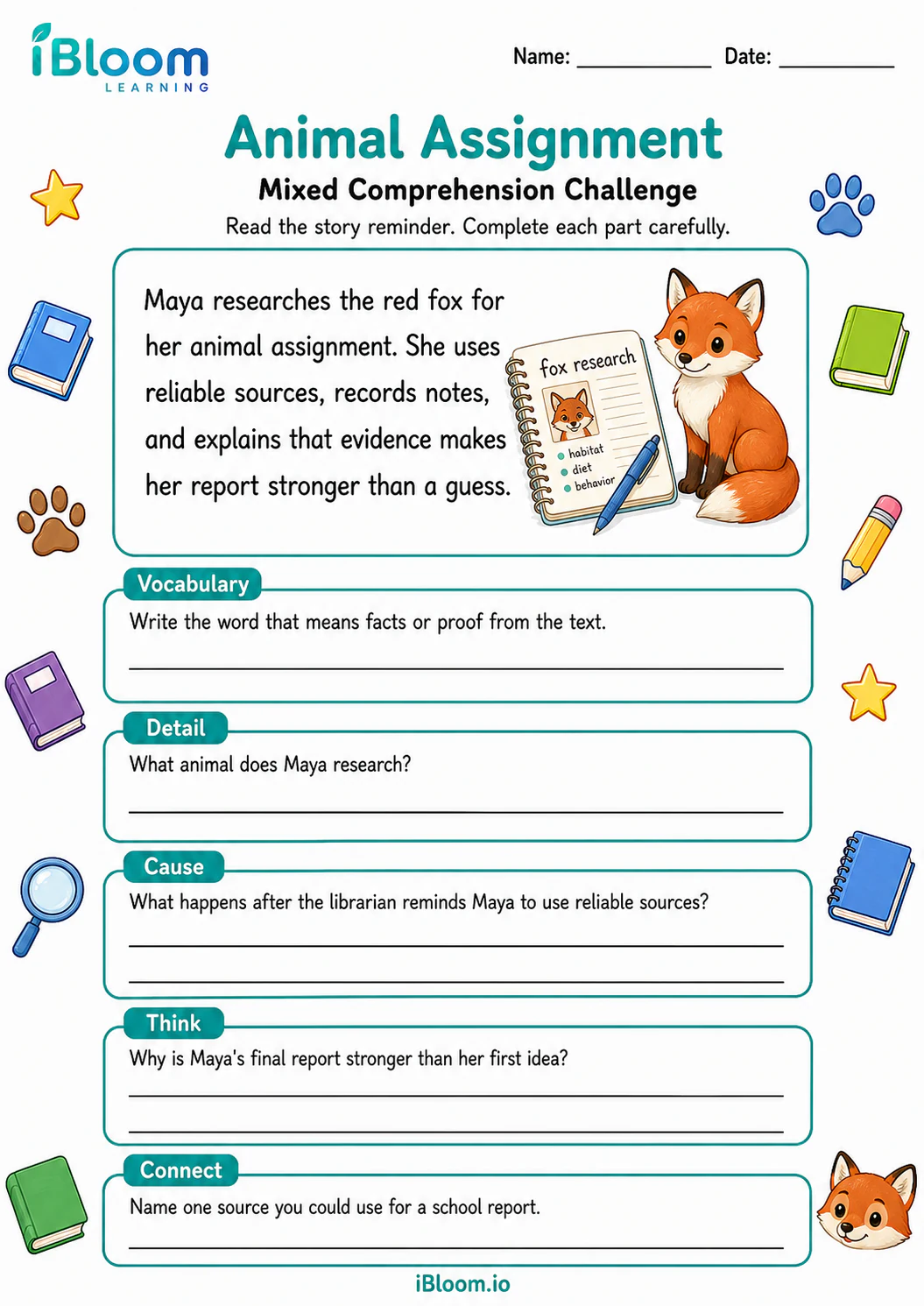
This Grade 4 Animal Assignment worksheet pairs an original passage about Maya researching foxes with 14 questions. Learners find stated details, explain word meaning, and infer how Maya works as a researcher using evidence from the text. It practices CCSS RL.4.1, and includes a separate answer key.
Aligned to RL.4.1
How do details support an inference?
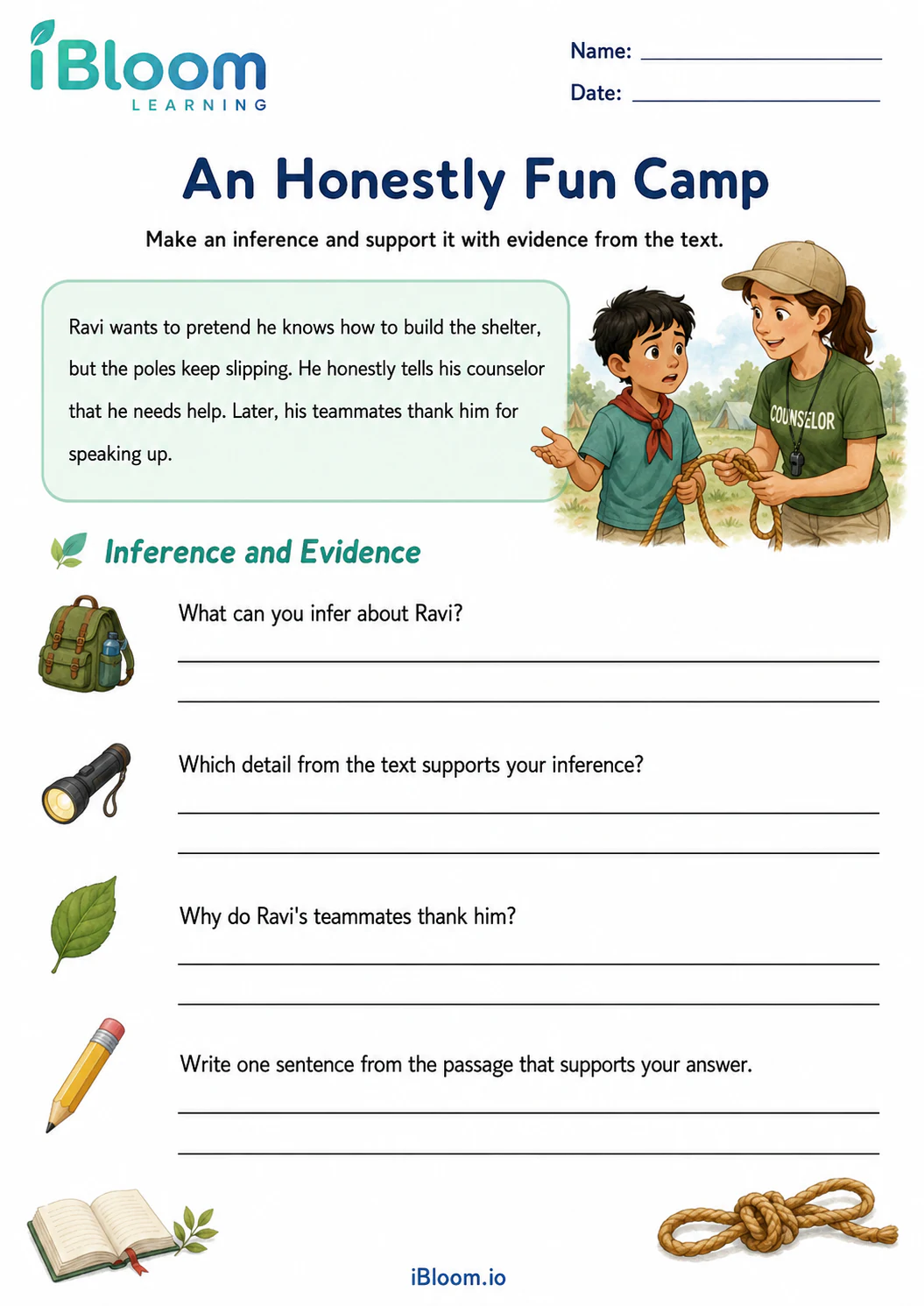
An inference combines a text clue with what a reader already knows. In Maya’s story, her notes and source checking show that she wants her report to be accurate.
How can a reader support an answer?
Reread the lines around the question. Name the clue first, then explain what it suggests. For example, Maya consults a book and a wildlife center website; that detail supports the idea that she checks information.
- 1What can you infer about how Maya researches?
- 2Clue: She checks a book and a wildlife center website.
- 3Answer: Sample: Maya checks facts with reliable sources.
What is on the worksheet?
The 14 questions move from passage details and vocabulary to evidence and inference. The answer key accepts concise answers that match the passage and gives sample language when a response may vary.
How to use this worksheet
- 1Read Maya’s report passage once for the whole story.
- 2Return to the passage for each detail question.
- 3Use nearby words to work out “reliable.”
- 4For an inference, name the clue and what it suggests.
- 5Check your response against the answer key.
Common mistakes and quick fixes
The mistake
Guessing what Maya did without a passage clue.
The fix
Point to the sentence that supports the idea.
The mistake
Treating a single fact as the whole passage’s main point.
The fix
Connect the research details to Maya’s goal.
The mistake
Using “reliable” to mean merely interesting.
The fix
Use the passage context: reliable sources can be trusted.
Common Core alignment
This page practices a reading skill described in the Common Core standards.
Use passage details to answer and explain.
On this sheet: The questions directly practice this skill.
Show the official wordingHide the official wording
Refer to details and examples in a text when explaining what the text says explicitly and when drawing inferences from the text.
What to practice next
Make more practice
Further reading
Questions parents and teachers ask
What does the passage say Maya is researching?
Maya is preparing a report about foxes. She learns what foxes eat and where they rest, then records notes about food and shelter. The questions ask learners to find those facts and use details about Maya’s research choices to support an inference.
How should a learner answer an inference question?
An inference should fit the story and connect to a clue. For example, Maya checks a book and a wildlife center website, so a learner can infer that she wants accurate information. Encourage the child to name both the idea and the detail that supports it.
Does every answer need a full sentence?
The short detail questions can be answered in a few clear words. For questions asking why or what can be inferred, a sentence makes the connection easier to see. The key gives sample wording; accept another answer that fits the passage.
What is included in the answer key?
The separate key lists responses for all 14 questions. It gives short factual answers for passage details and sample answers for questions with more than one reasonable wording. Check that a learner’s evidence and inference agree with what Maya does in the story.
How long might this worksheet take?
Allow about 20 minutes for reading the passage and answering the 14 questions. A learner may need extra time to reread for evidence or write a complete inference. The page works for independent practice or a read-and-discuss session with an adult.