
About this worksheet
This Grade 4 worksheet uses an original camp story about Ravi, who learns that honestly asking for help can help a group learn together. Fifteen multiple-choice questions cover the main idea, supporting details, and a concise summary. A separate key gives answers. The page practices Common Core RL.4.2 by asking students to determine a main idea and explain how details support it.
Aligned to RL.4.2
What does Eli learn at Camp Pinecone?
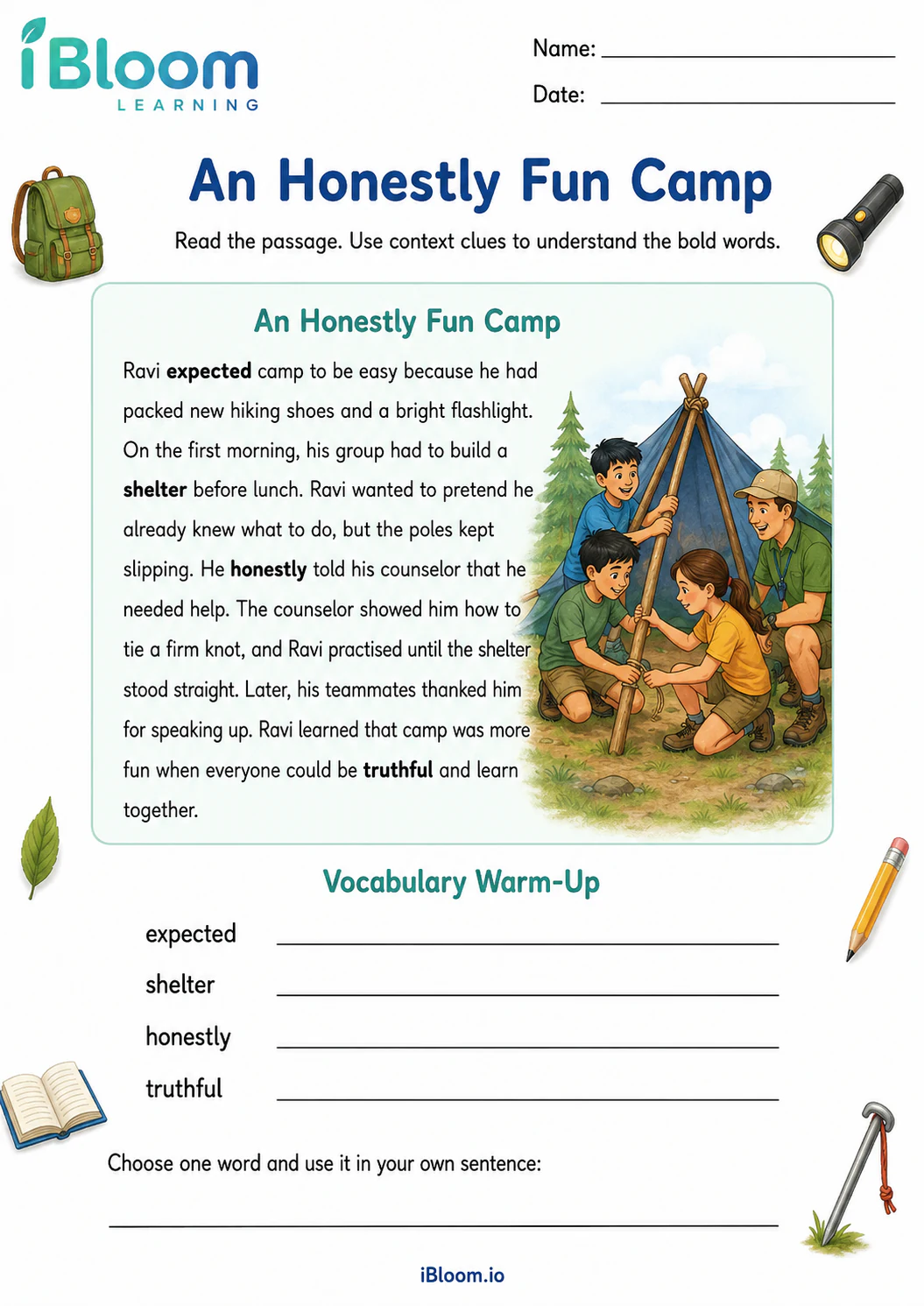
Ravi arrives expecting camp to be easy, then struggles to build a shelter. He tells Jo he needs help, and the campers solve the problem together. They also improve a muddy trail, share camp jobs, and play a guessing game.
The questions cover the main idea, supporting details, and a concise summary. Students use the full sequence of events, not one isolated detail, to choose their answers.
How can readers choose a main idea?
A main idea covers the whole text and connects important details. A statement about only the shelter, sandwiches, or one game is too narrow. A statement about asking for help and learning together includes the story’s repeated focus.
- 1Detail: Ravi tells Jo he needs help when the shelter leans.
- 2Connection: The campers learn to solve the problem together, supporting the story’s main idea.
What belongs in a short summary?
A summary names the main idea and selects a few events that support it. Students can leave out smaller moments, such as Jo’s mistaken animal guess, when they do not explain Ravi’s learning.
How to use this worksheet
- 1Read how Ravi’s shelter problem is solved and what happens later.
- 2Choose a main idea that covers more than one event.
- 3For detail questions, return to the paragraph where it occurs.
- 4In written answers, explain how details support the idea.
- 5Use the key’s samples to compare ideas and evidence.
Common mistakes and quick fixes
The mistake
Choosing a detail as if it were the main idea.
The fix
Ask whether it covers the whole story or only one moment.
The mistake
Selecting an idea that fits only the beginning.
The fix
Notice how Ravi’s honest request changes what the campers can do together.
The mistake
Listing details without connecting them.
The fix
Add a phrase explaining what each event shows about Eli’s experience.
Common Core alignment
Students use details from Eli’s story to identify its theme and summarize what happens.
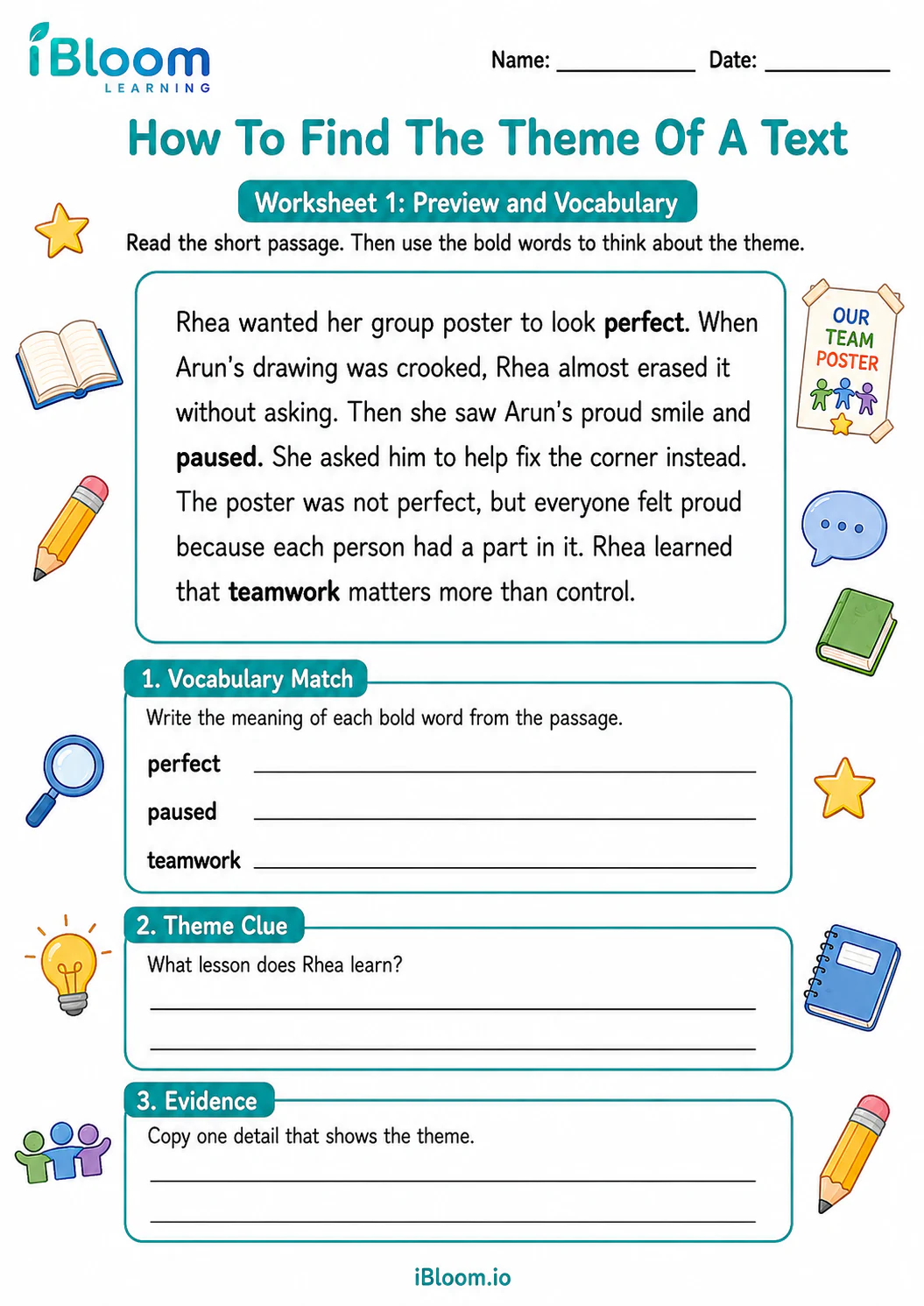
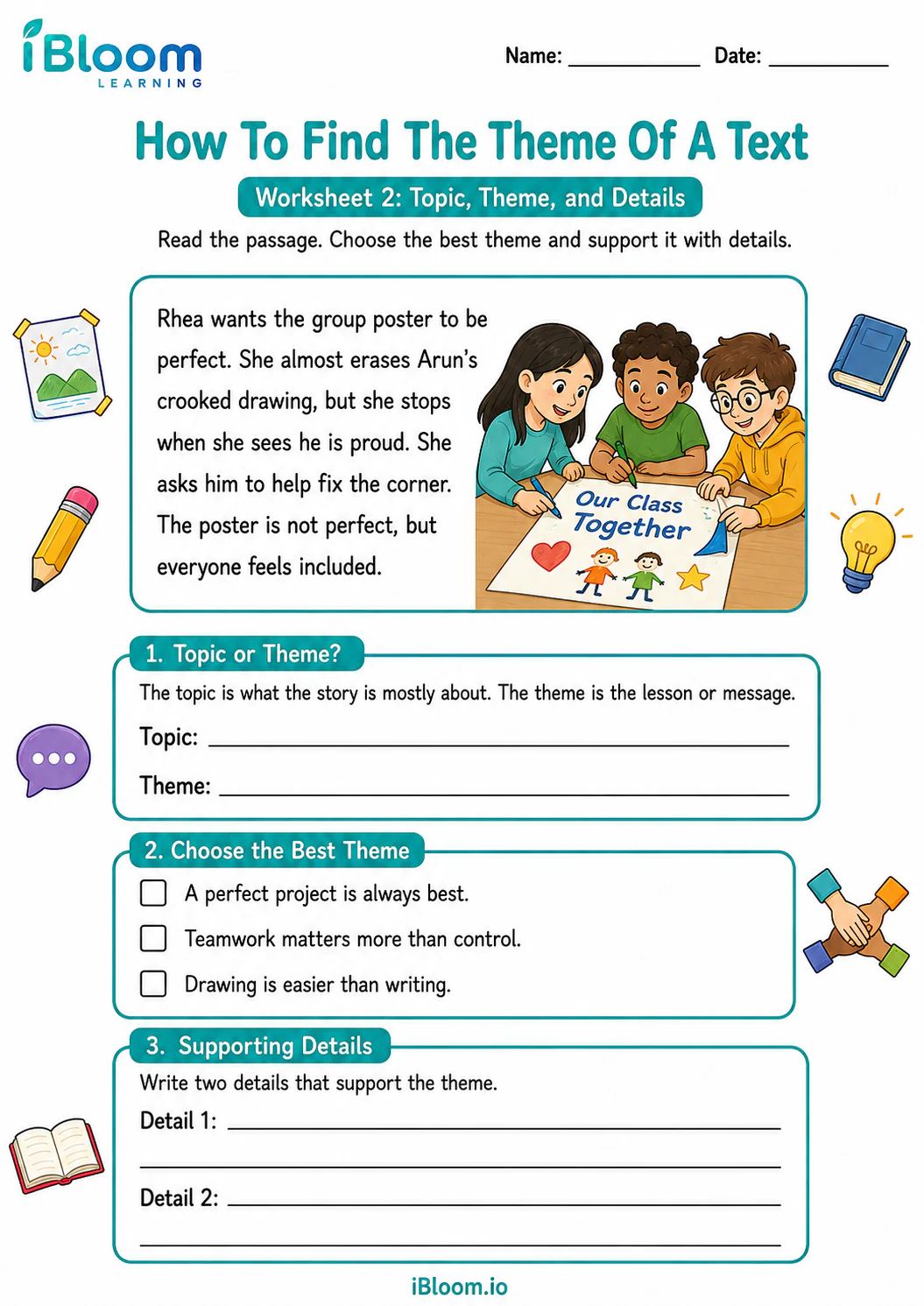
Use Ravi’s challenge and choices to identify a theme and summarize the story.
On this sheet: Questions connect Ravi’s response to his challenge with the story’s lesson and summary.
Show the official wordingHide the official wording
Determine a theme of a story, drama, or poem from details in the text; summarize the text.
What to practice next
Make more practice
Further reading
Questions parents and teachers ask
What is the main idea of An Honestly Fun Camp?
Ravi learns that being honest about needing help can help a group learn and work together. He struggles with the shelter, tells Jo he needs help, and builds it with the campers. Later events near the stream and during camp activities reinforce the value of teamwork.
How many questions are included?
There are 15 multiple-choice questions about the main idea, supporting details, and summary. The key lists a concise response for each item, so adults can check reasoning as well as story facts. Return to the passage and identify the event supporting the correct choice.
How can students tell a main idea from a detail?
A detail names one event or fact, such as Eli counting sandwiches. A main idea describes what several events show across the story. If a possible answer fits only one paragraph, it may be a detail rather than the central idea.
Why does the story include chores and games?
The shelter challenge shows Ravi that honestly asking for help lets the group solve a problem together. The story also includes camp jobs and a game, so readers can connect the lesson to both shared work and fun.
What makes a strong summary?
A strong summary states the main idea and includes a few key events that support it. Students should leave out minor moments that do not explain Eli’s experience. The sample answer shows one concise way to join the idea and evidence.
What should students practice next?
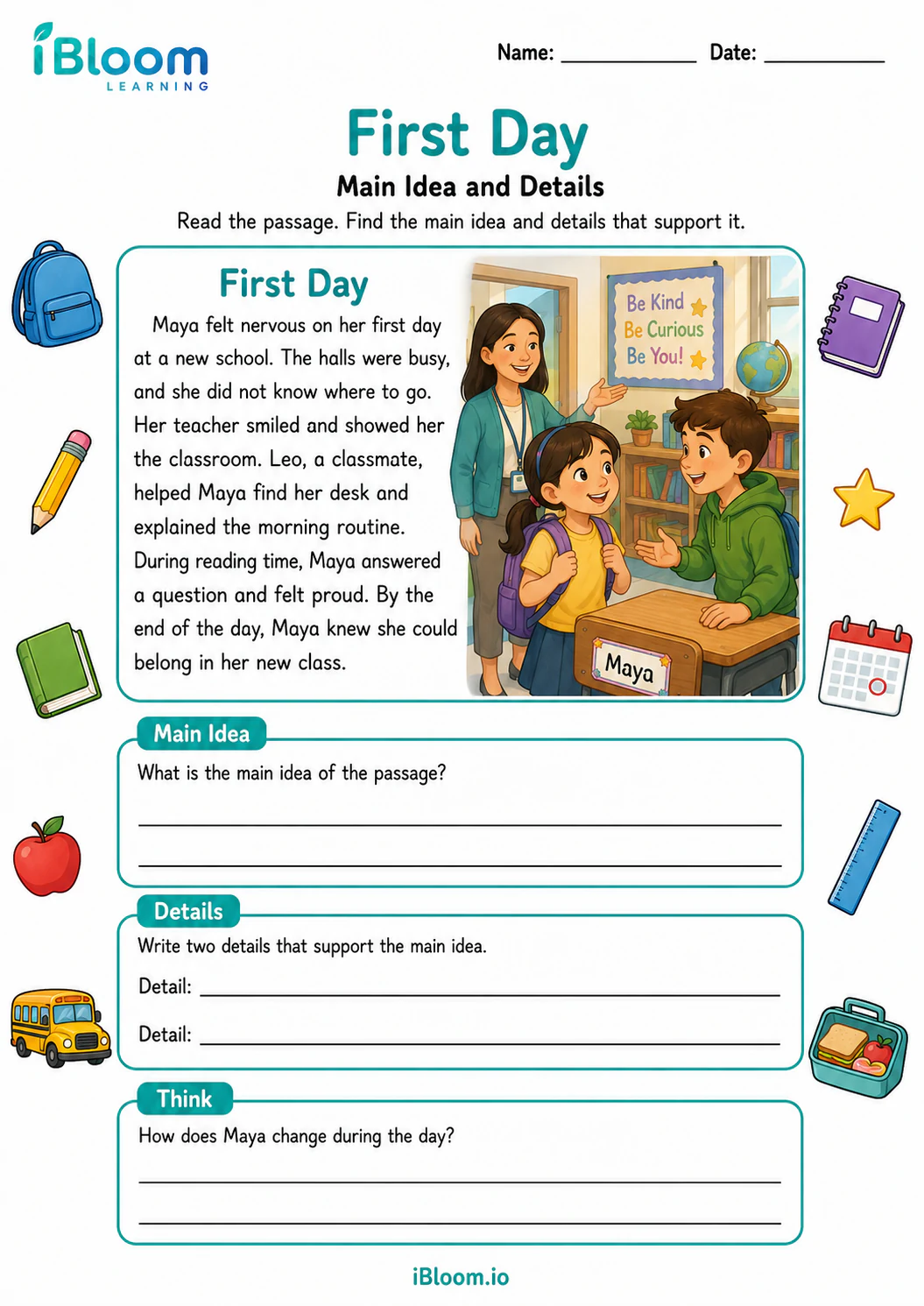
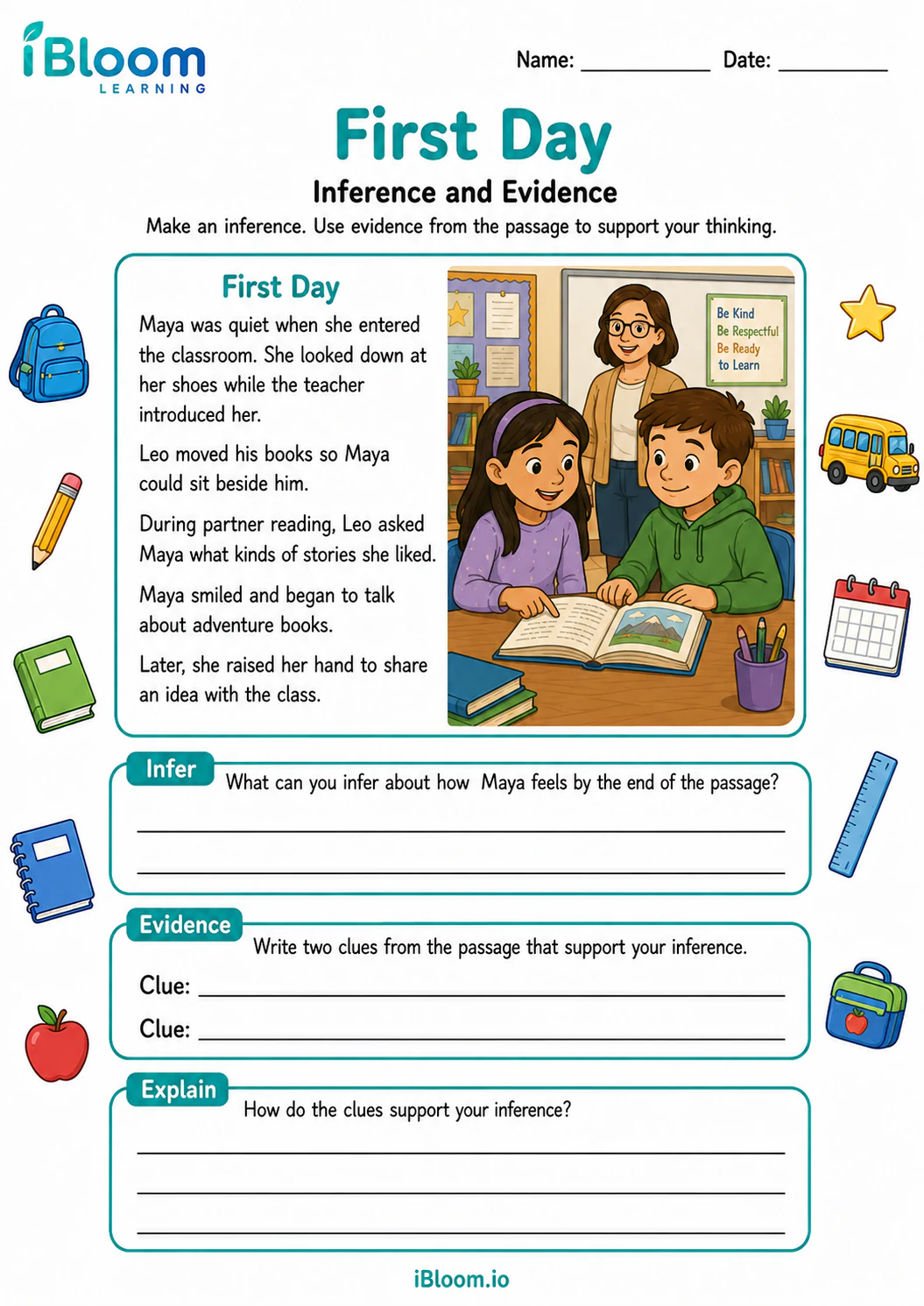
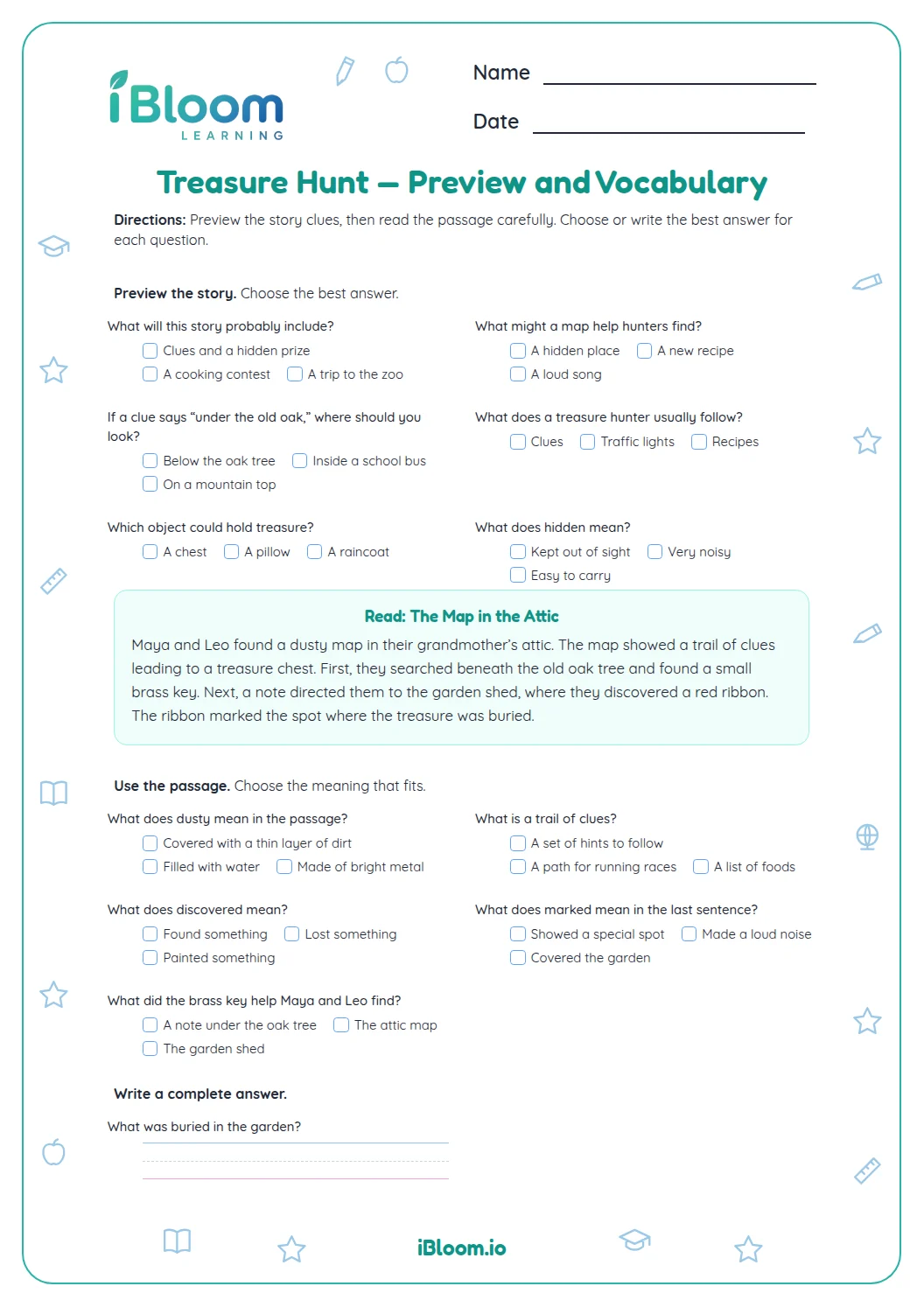
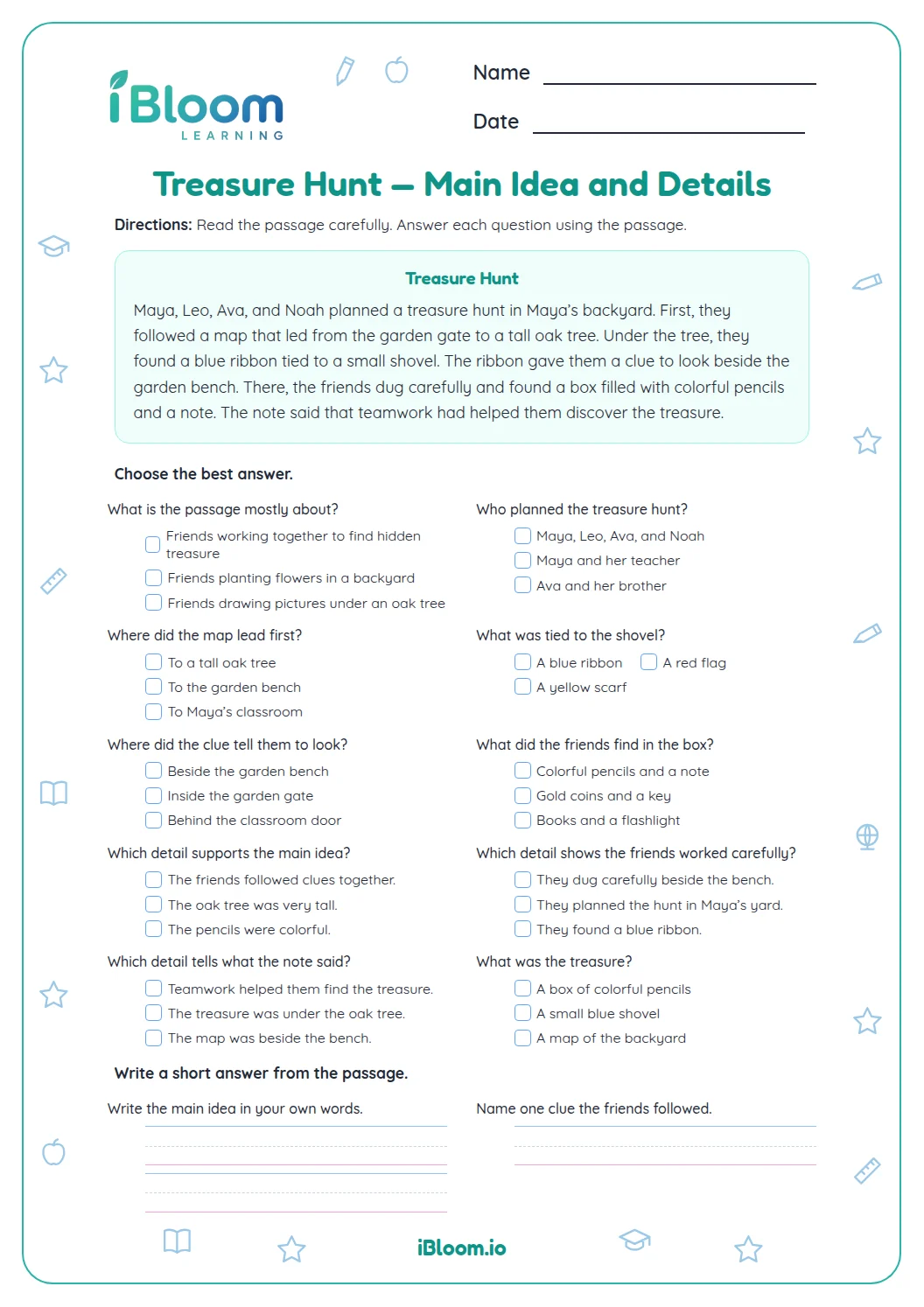
A related story worksheet lets students apply the same reading habits to new characters and events. First Day and Treasure Hunt offer new stories, while the theme page adds a related way to interpret details across a text.