

About this worksheet
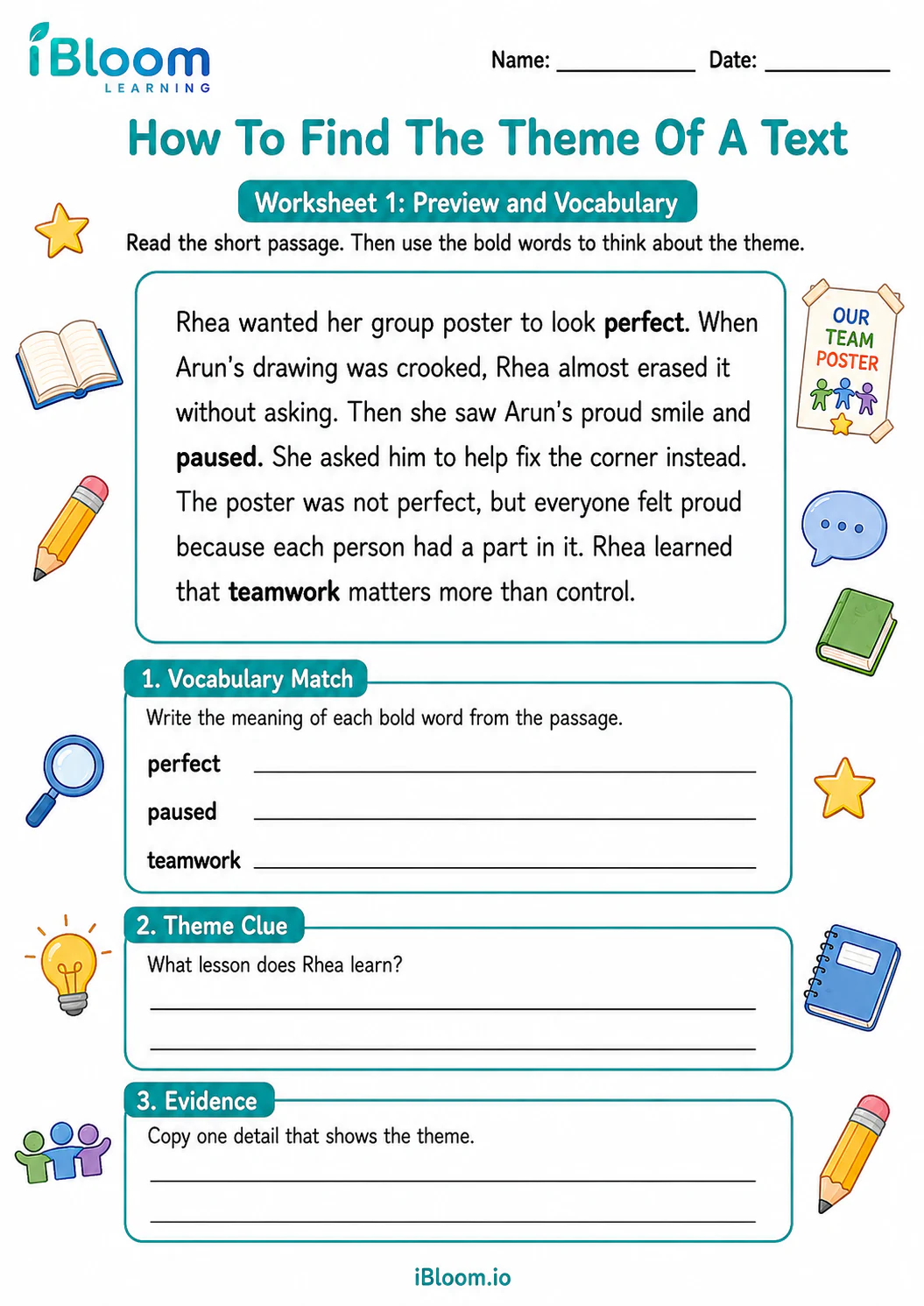
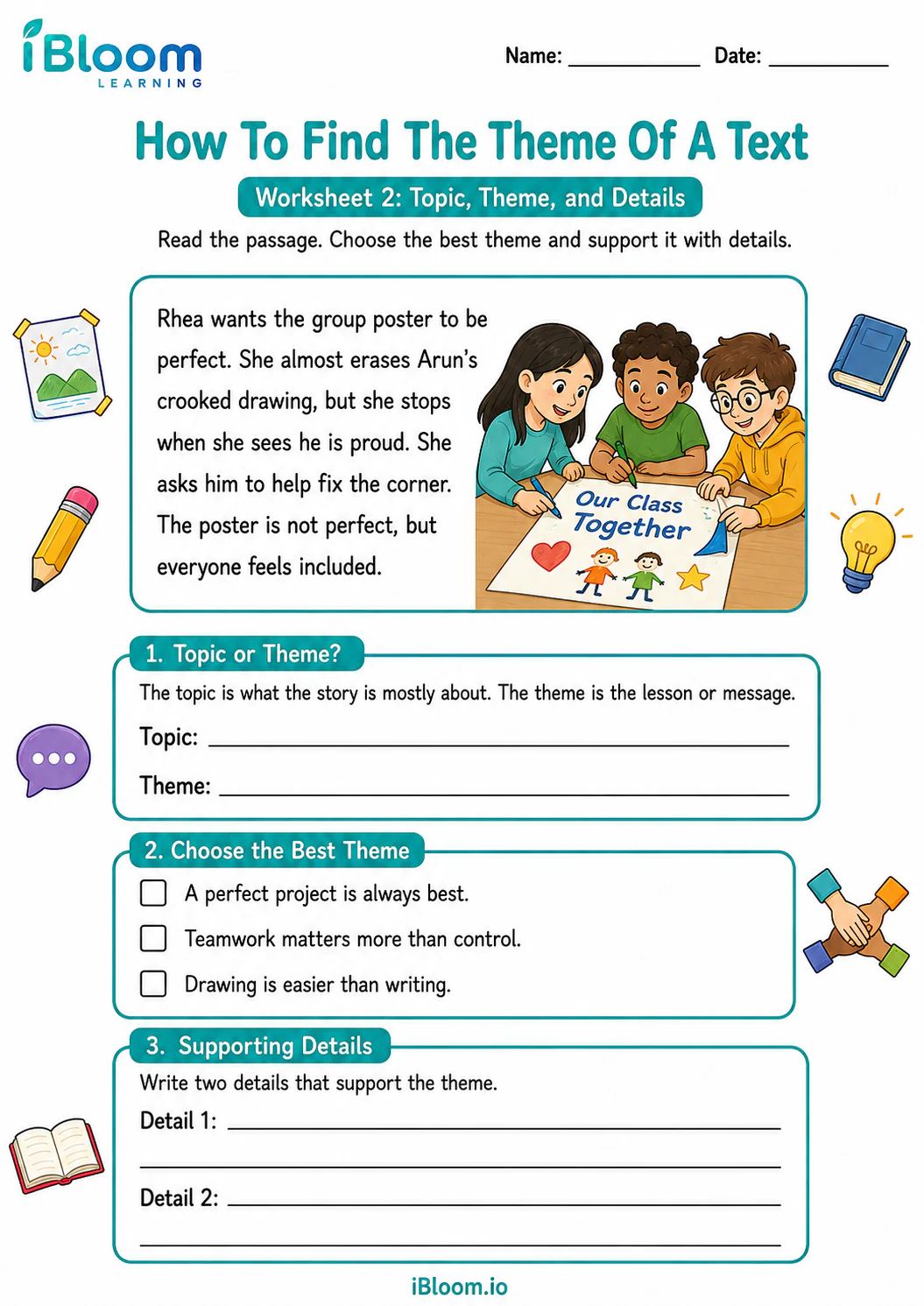
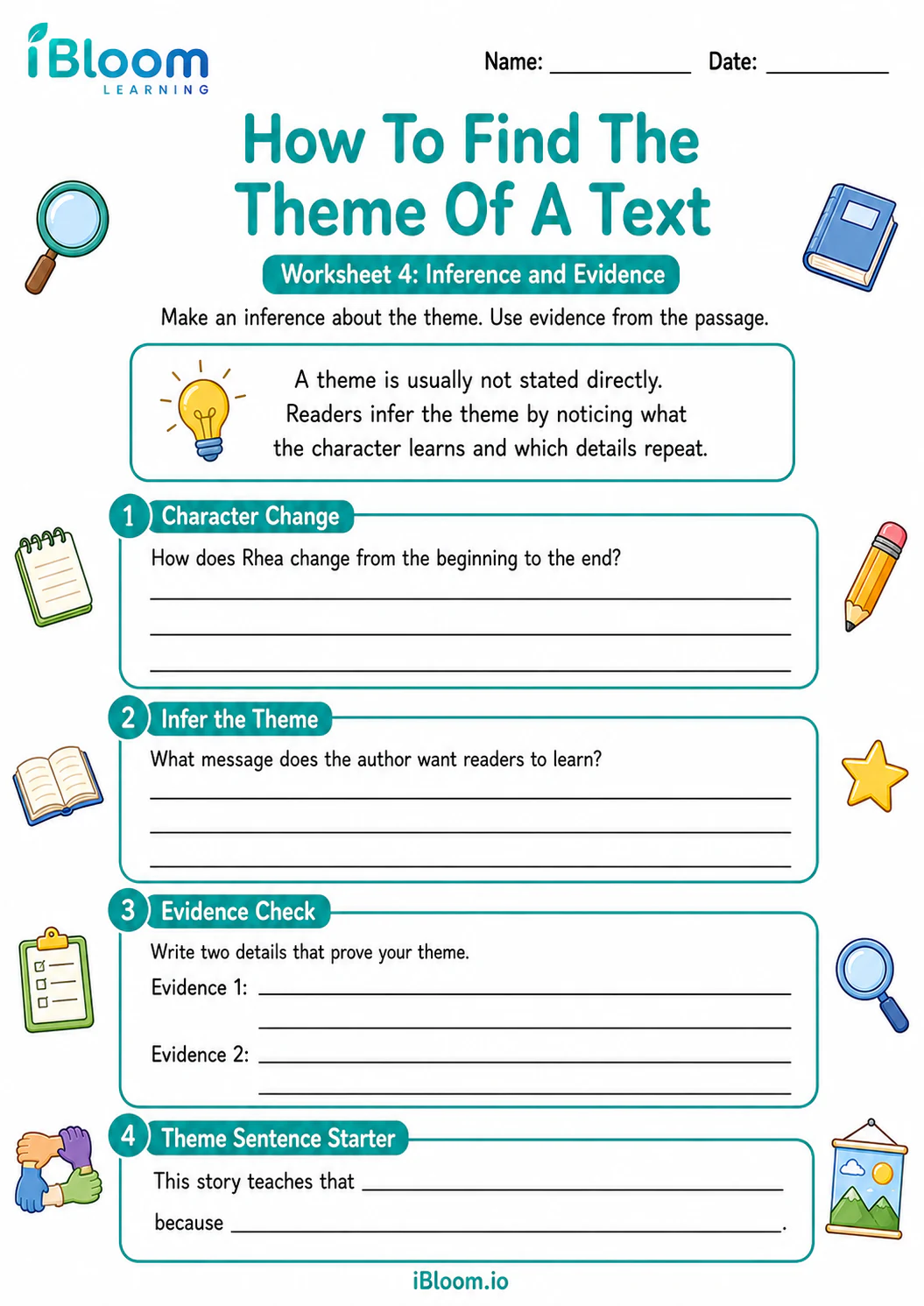
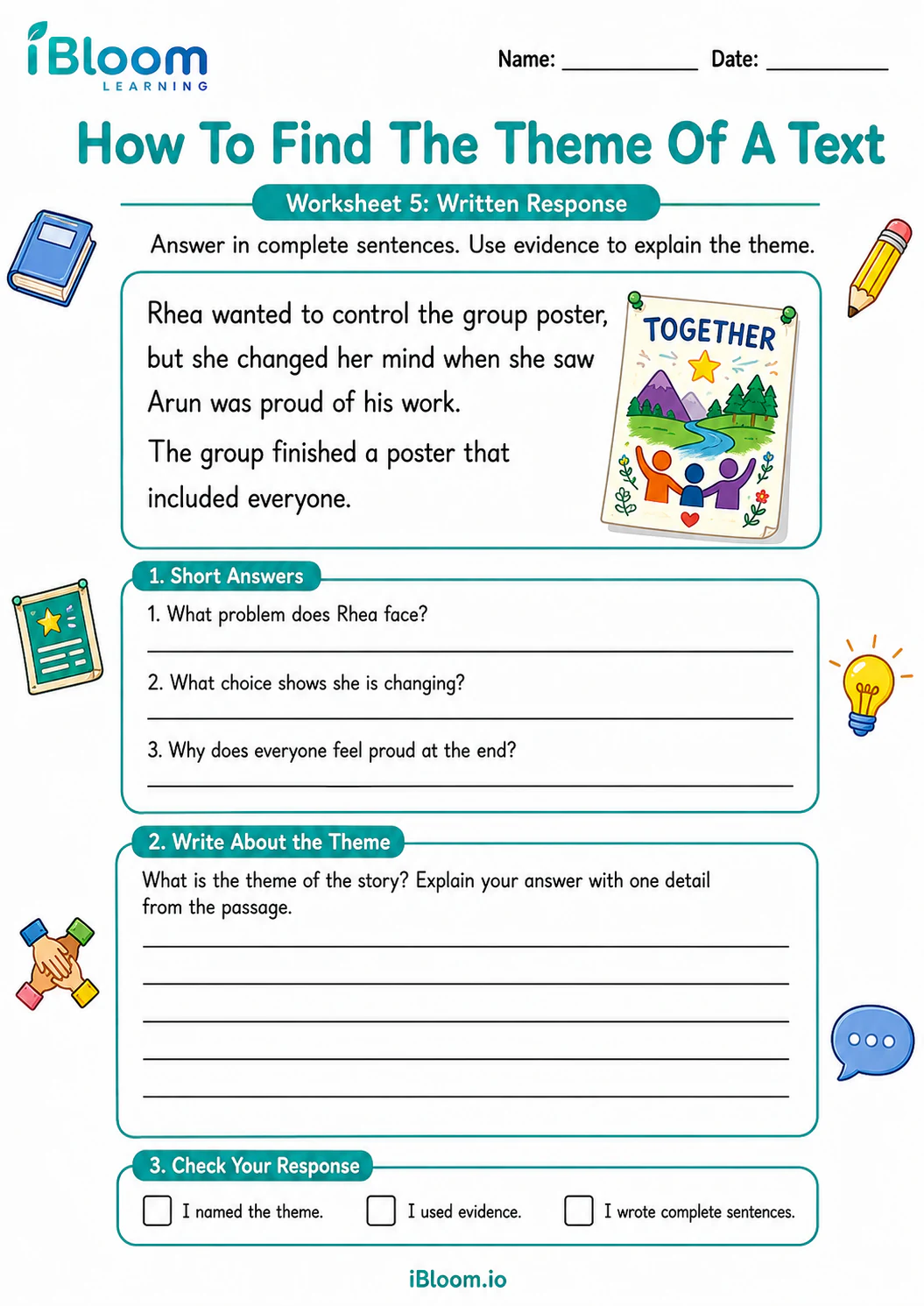
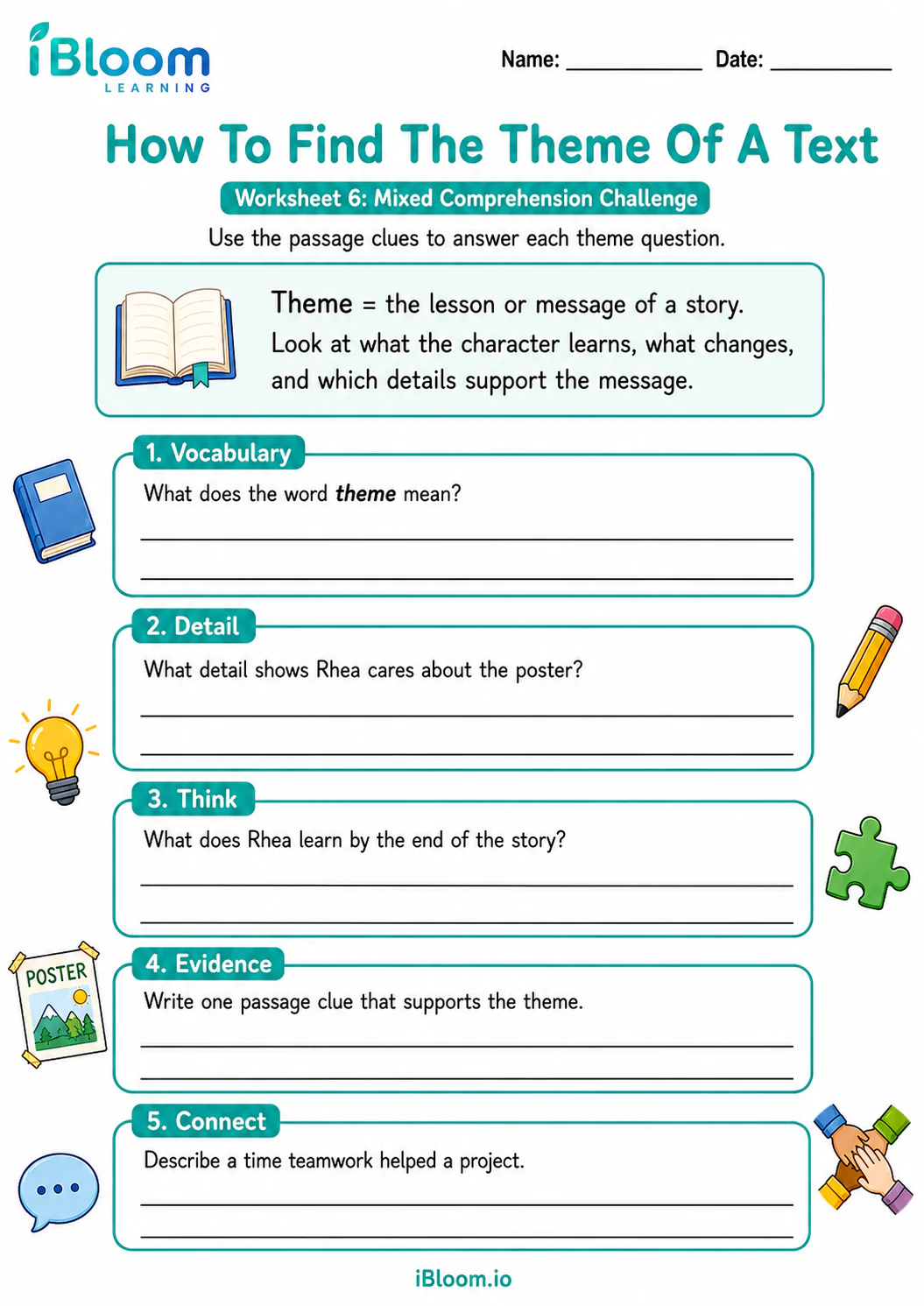
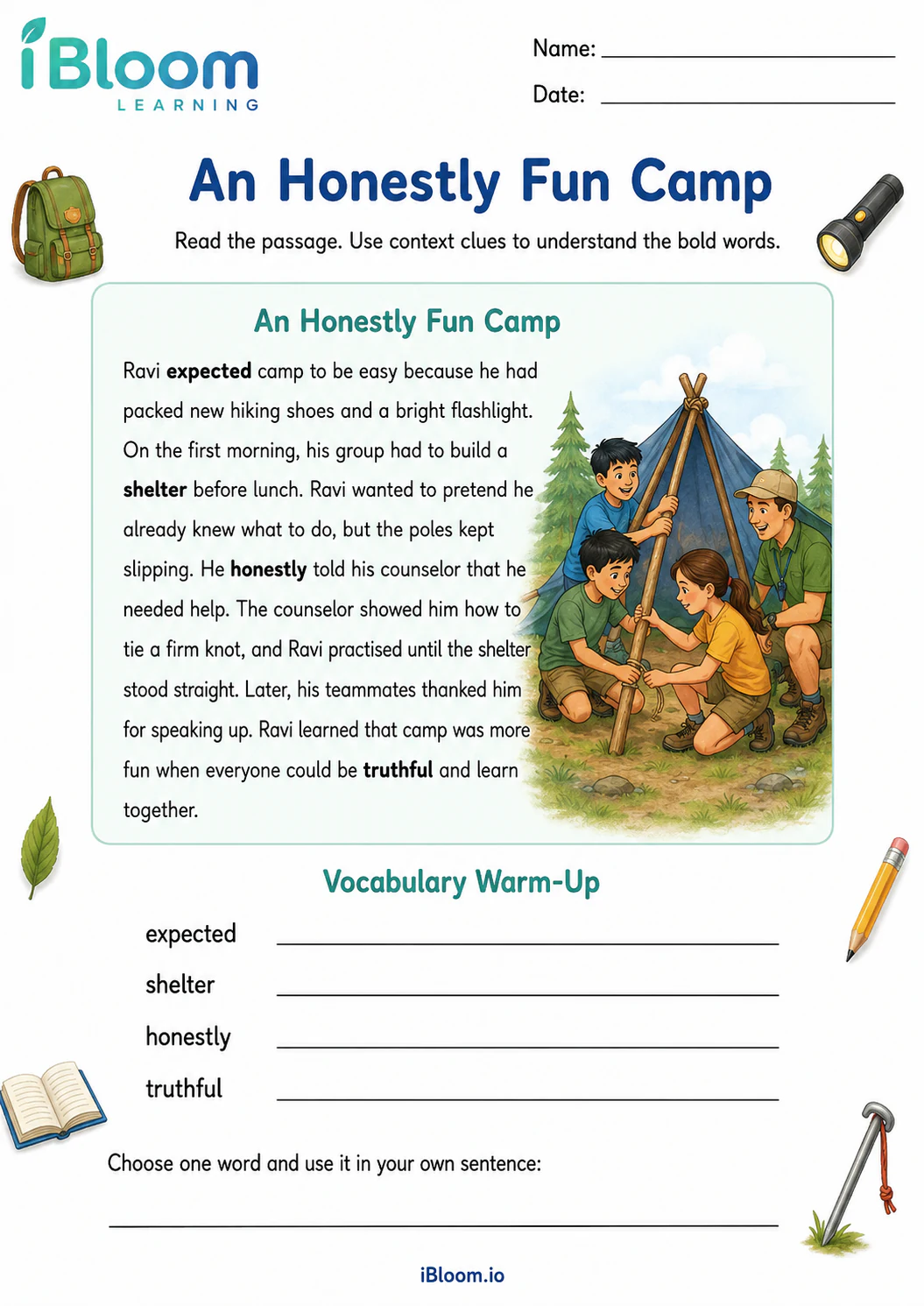
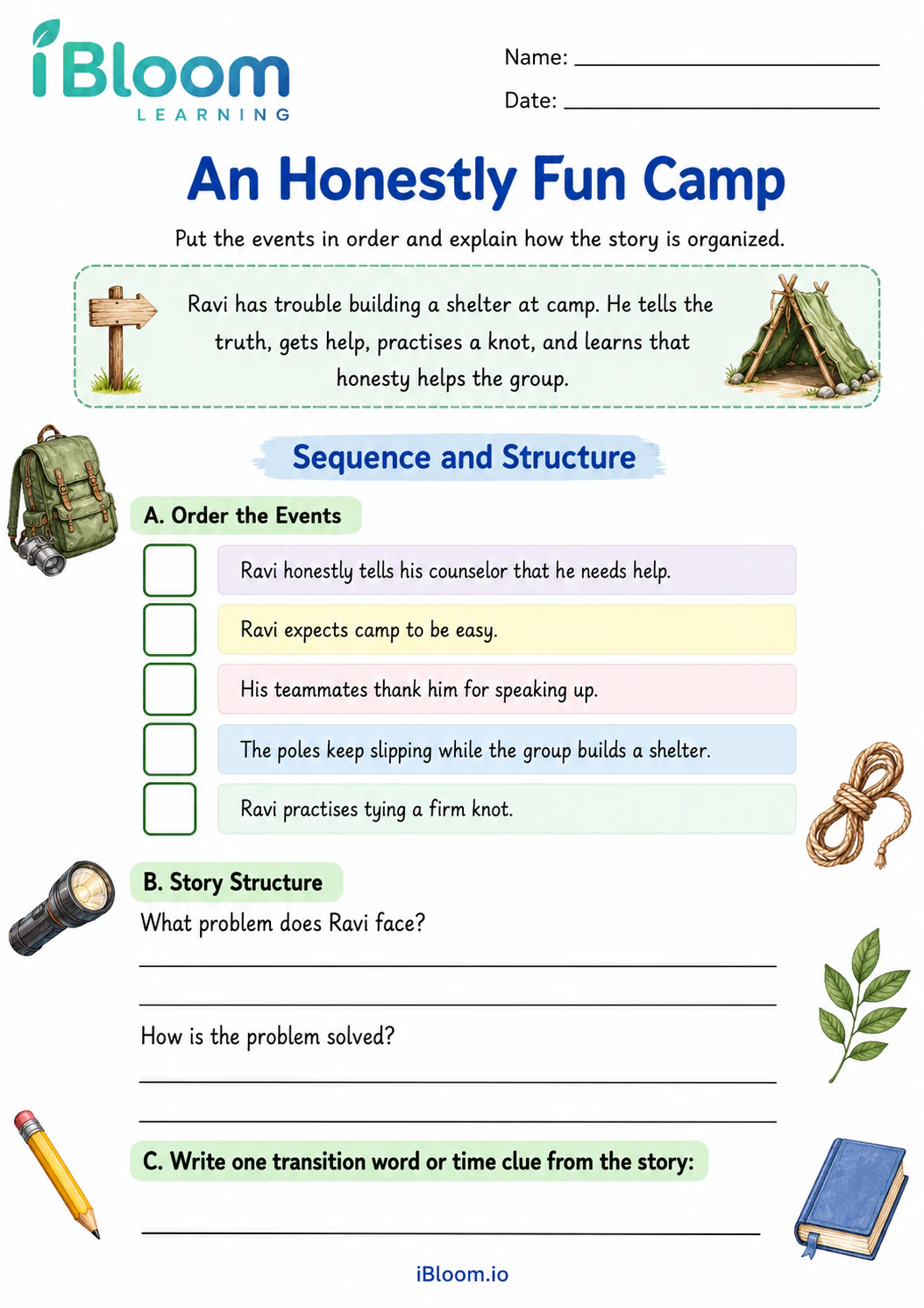
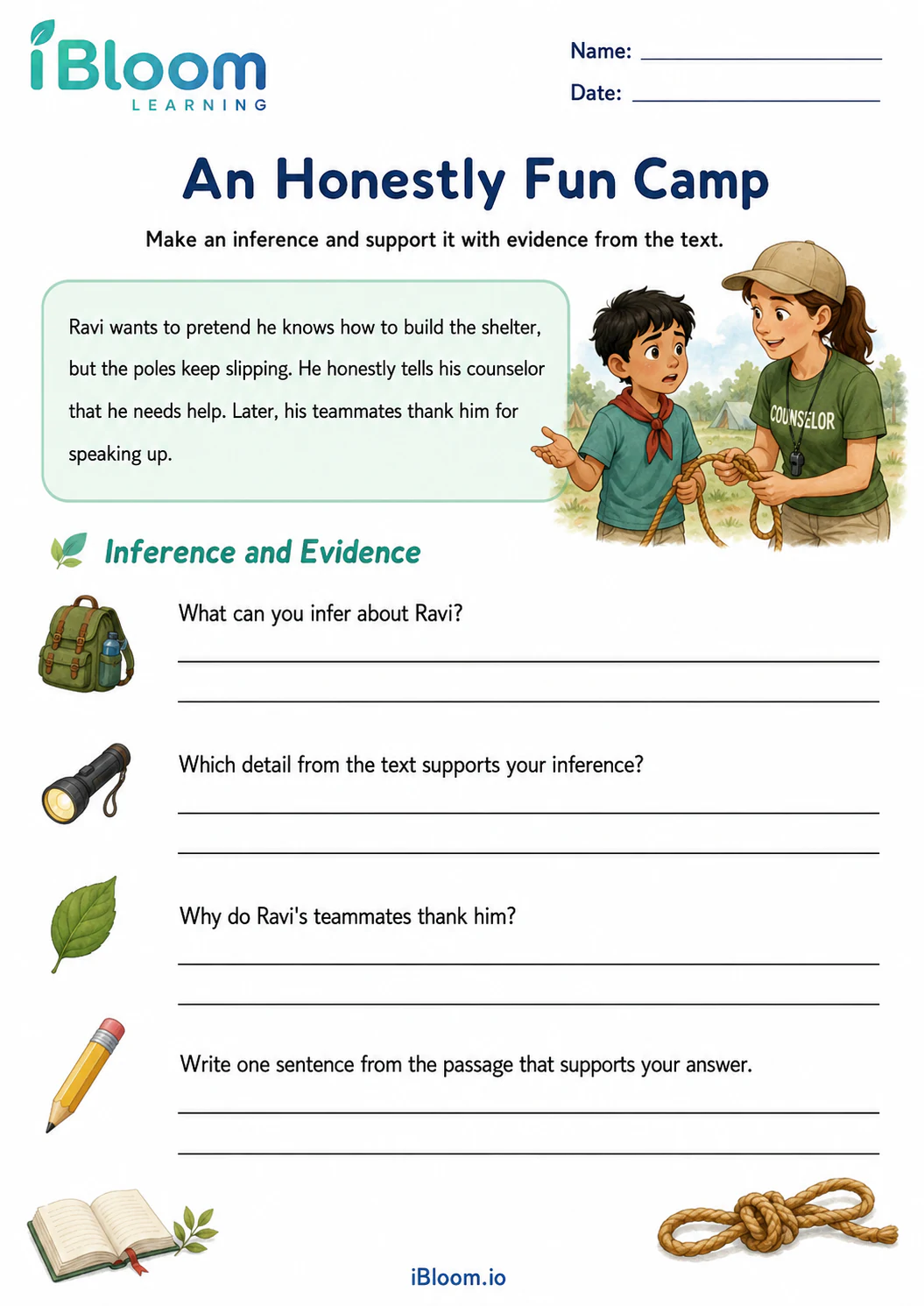
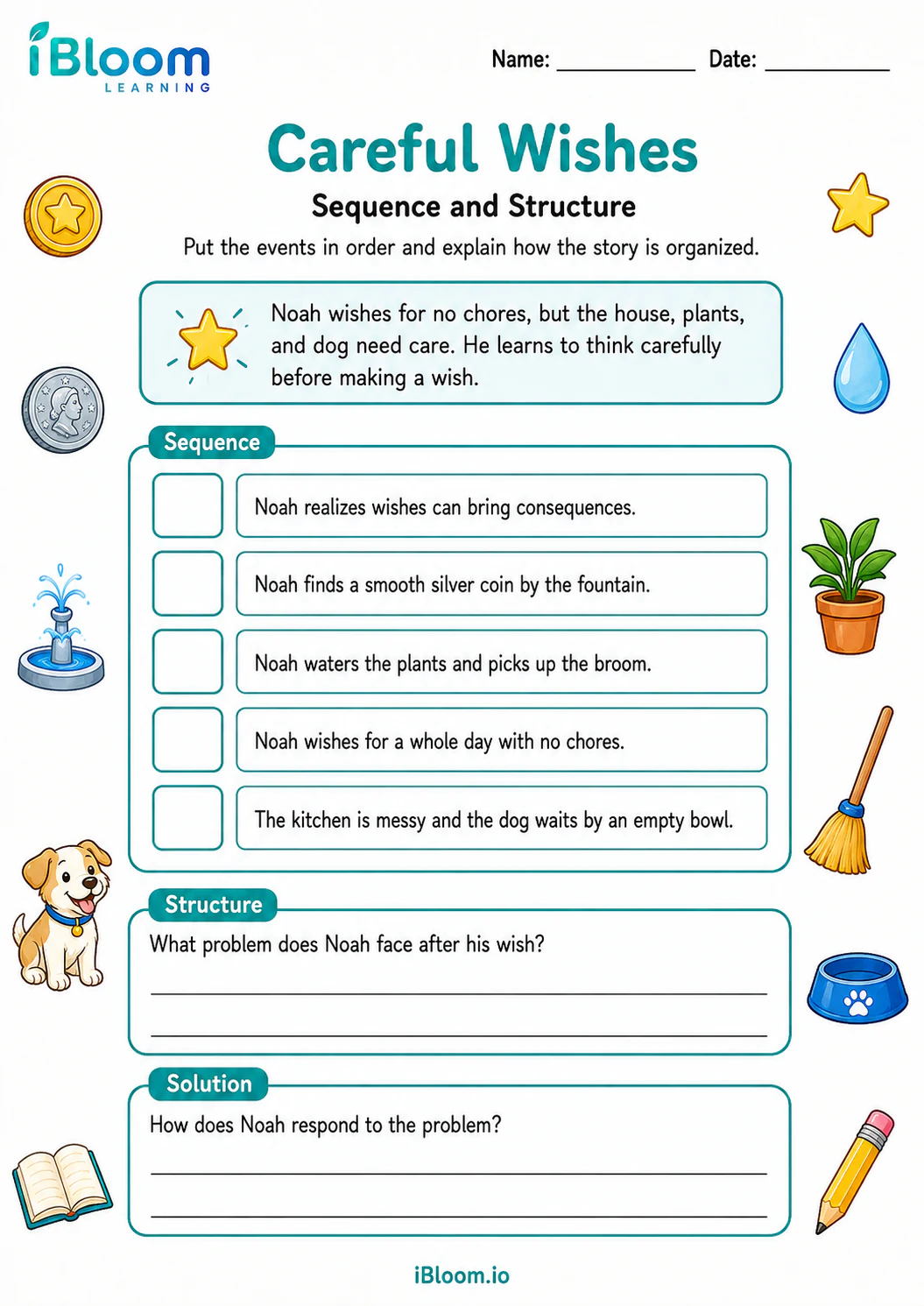
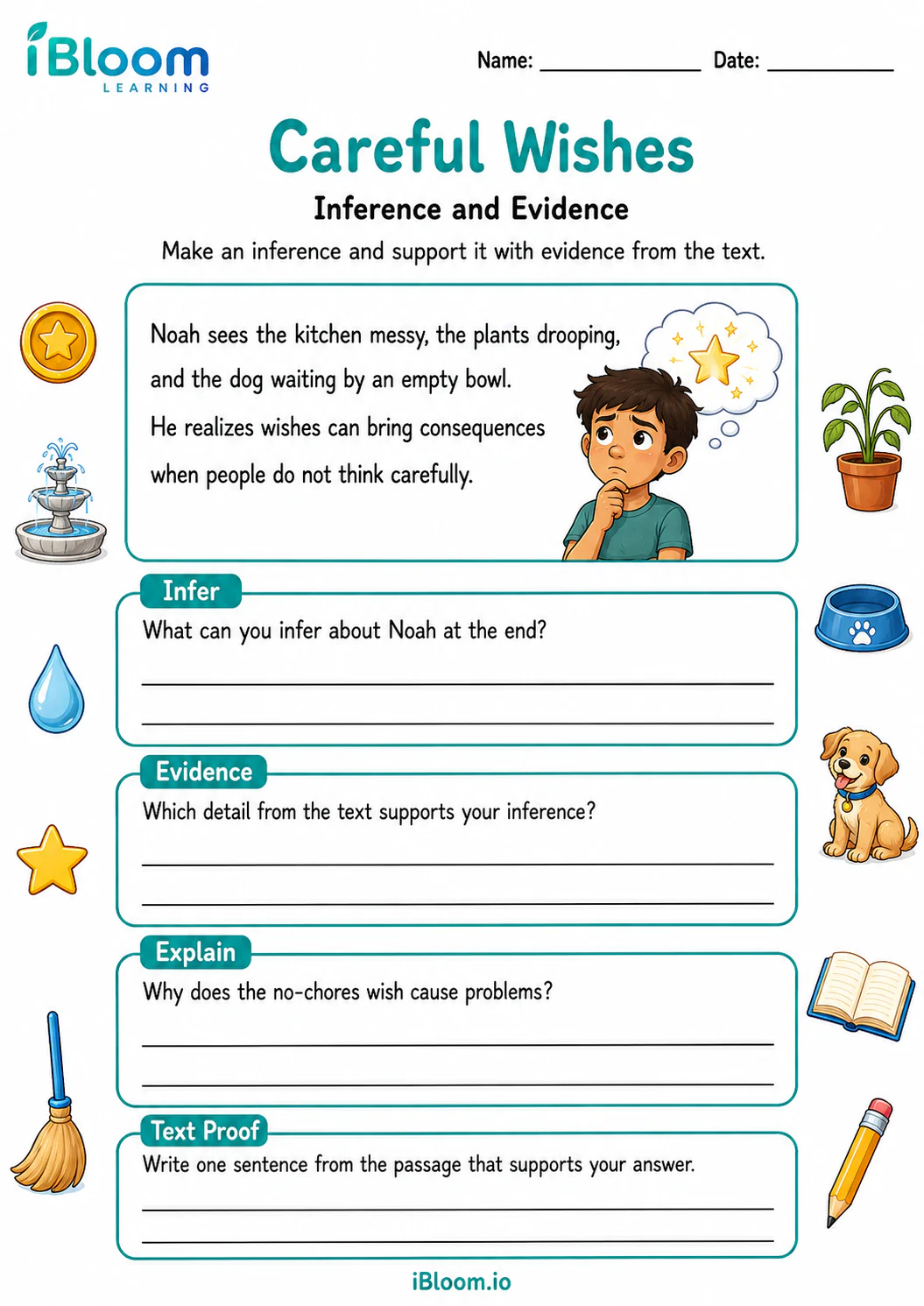
This Grade 4 reading worksheet uses an original story about a class garden to connect sequence and structure with theme. Across 16 questions, learners track what happens first, next, and last; notice how a problem leads to a solution; and use details to infer the story’s lesson. A separate answer key supports review. The page practices CCSS RL.4.2 by determining a theme from story details and summarizing the text.
Aligned to RL.4.2
How does sequence help you follow a story?
Track what happens first, next, and last. Notice how one event prompts a character or group to act.
How do events build a story?
A problem, a response, and a result often form the story’s structure. Look for details that show how the situation changes.
How can details point to a theme?
A theme is a lesson or idea developed through events. Use more than one detail to support it, then summarize the story without listing every small fact.
- 1The students missed two watering days, then made a reminder chart.
- 2Their shared plan helped them care for the garden.
How to use the page
- 1Read the directions and look at the first example prompt.
- 2Complete one part at a time, reading each whole sentence or situation.
- 3For writing items, say the answer aloud before putting it on the line.
- 4Review the answer key and revisit any item that needs a second try.
Common mistakes and quick fixes
The mistake
Calling the topic the theme.
The fix
State what the story suggests about that topic.
The mistake
Using one small detail as the whole story’s lesson.
The fix
Look across the beginning, turning point, and ending.
The mistake
Retelling every event in a summary.
The fix
Keep the main problem, response, and outcome.
This page practices the following standard.
Determine a story’s theme from details and summarize it.
On this sheet:
Show the official wordingHide the official wording
Determine a theme of a story, drama, or poem from details in the text; summarize the text.
What to practice next
Make more practice
Further reading
Questions parents and teachers ask
What story is on this worksheet?
The original passage “The Class Garden” follows students who disagree about planting, make a plan, and work together when a row becomes dry. Questions track the events and help readers infer the lesson from the ending. It is written for this practice page.
How many questions are included?
There are 16 questions across four pages, followed by a four-page answer key. Items cover event order, how events build, story details, summary, and theme. The passage appears on the worksheet pages for learners to reread when needed.
What does theme mean?
Theme is a lesson or idea developed by a story. Readers infer it from events, character responses, and the ending; it is more than naming the story’s topic. A good theme fits the whole passage, not one detail.
How can I help a child find the theme?
Ask the child to name the problem, describe how the students respond, and explain what the ending shows. Then state a lesson that fits the full story. Encourage using details from more than one event as evidence for the idea.
How long should this reading practice take?
About 25 minutes allows time to read the passage and answer 16 questions. Learners may need more time to reread details before selecting a theme or summary. The answer key supports review after independent work and a brief discussion.