Free printable practice
How To Find The Theme Of A Text Practice Activities
Grade 4 students practice finding the theme of children’s stories by using character actions, problems, outcomes, and text evidence.
Free printable worksheet PDFs
Preview every available page, then download the free worksheet PDF for home, homeschool, tutoring, or classroom practice.
Preview the exact activity before downloading it.
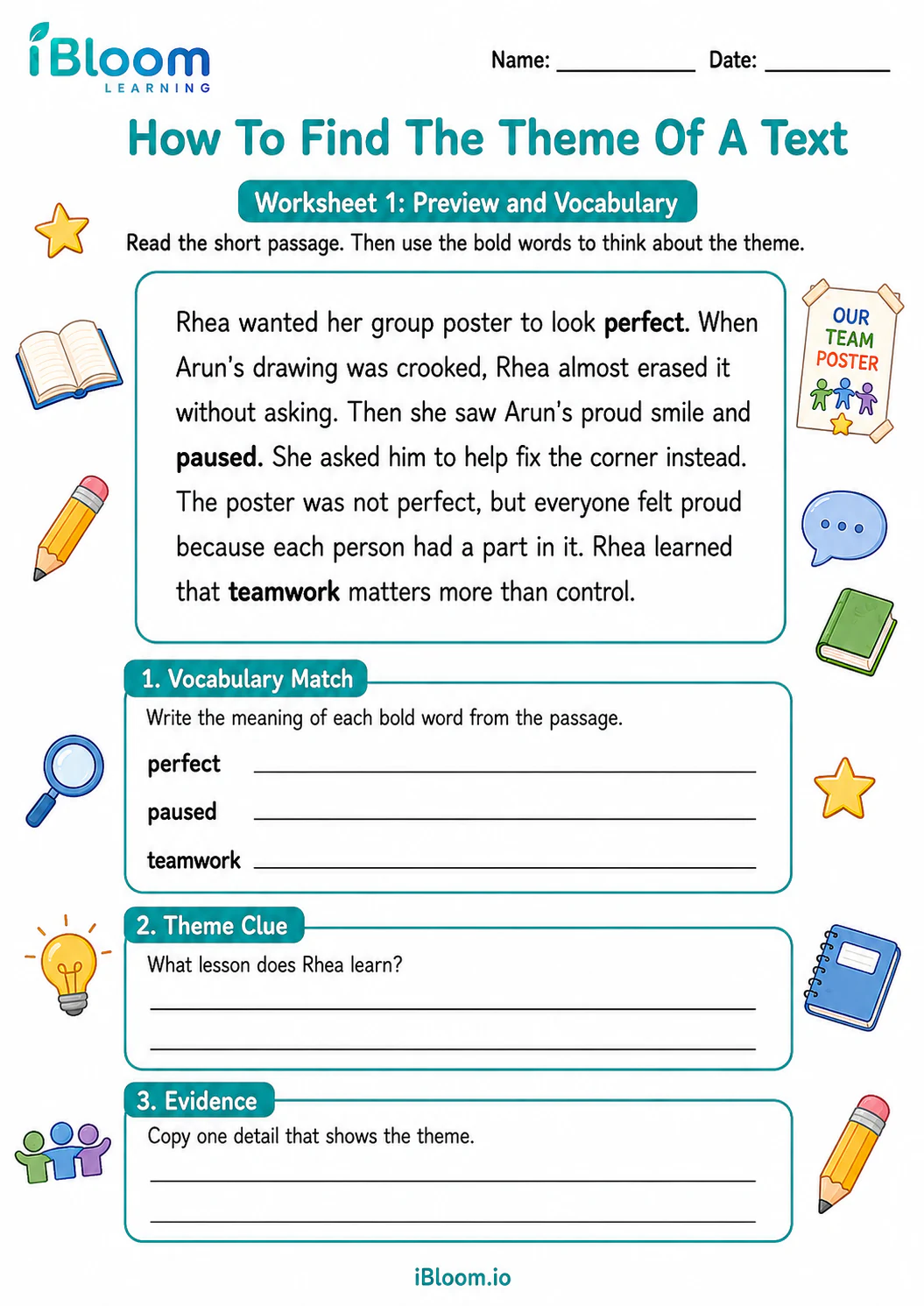 How To Find The Theme Of A Text — Preview and VocabularyGrade 4 students practice finding the theme of children’s stories by using character actions, problems, outcomes, and text evidence. This preview and vocabulary worksheet provides a distinct, age-appropriate way to practise the same lesson.Grade 4Free PDF preview
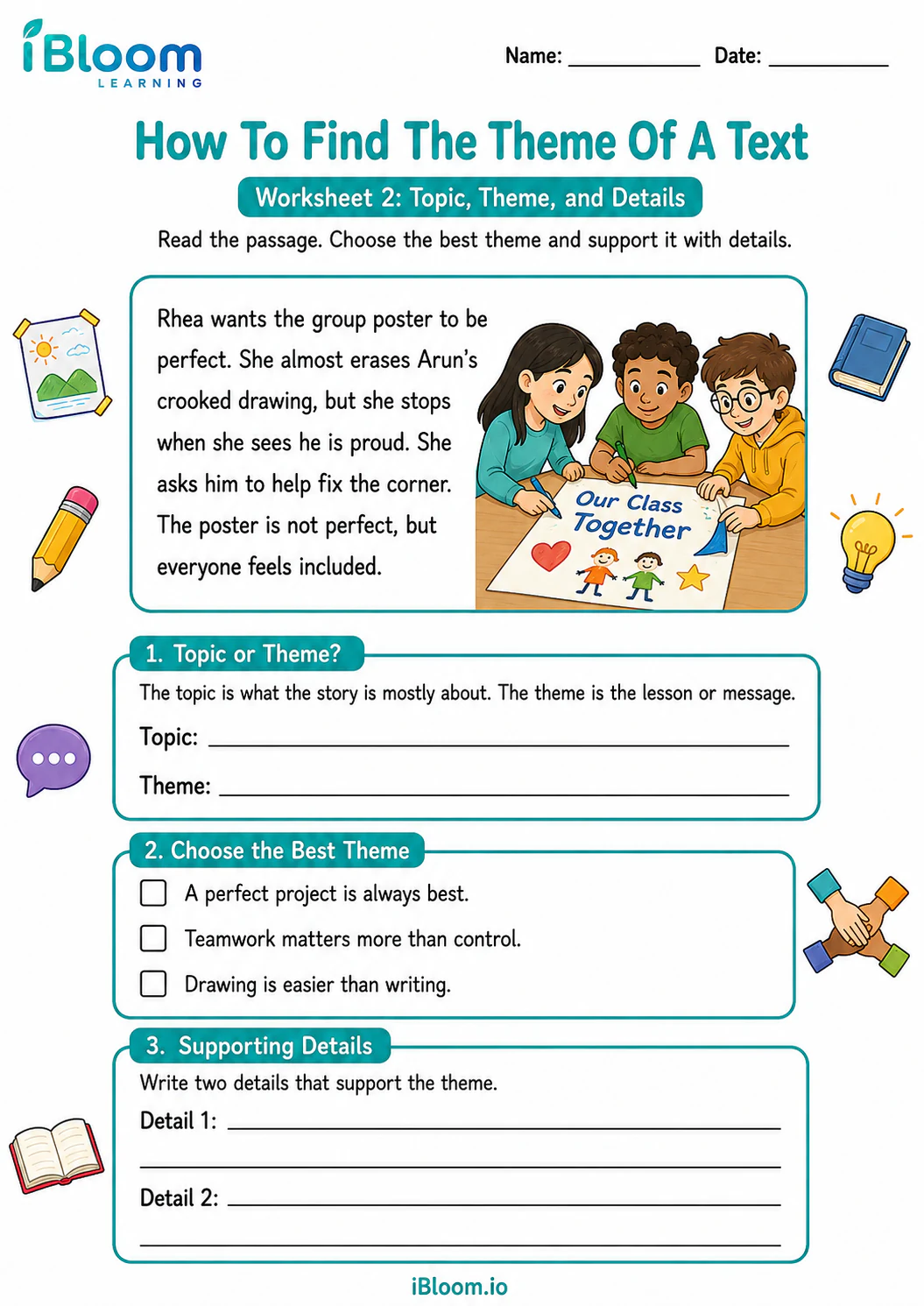 How To Find The Theme Of A Text — Main Idea and DetailsGrade 4 students practice finding the theme of children’s stories by using character actions, problems, outcomes, and text evidence. This main idea and details worksheet provides a distinct, age-appropriate way to practise the same lesson.Grade 4Free PDF preview
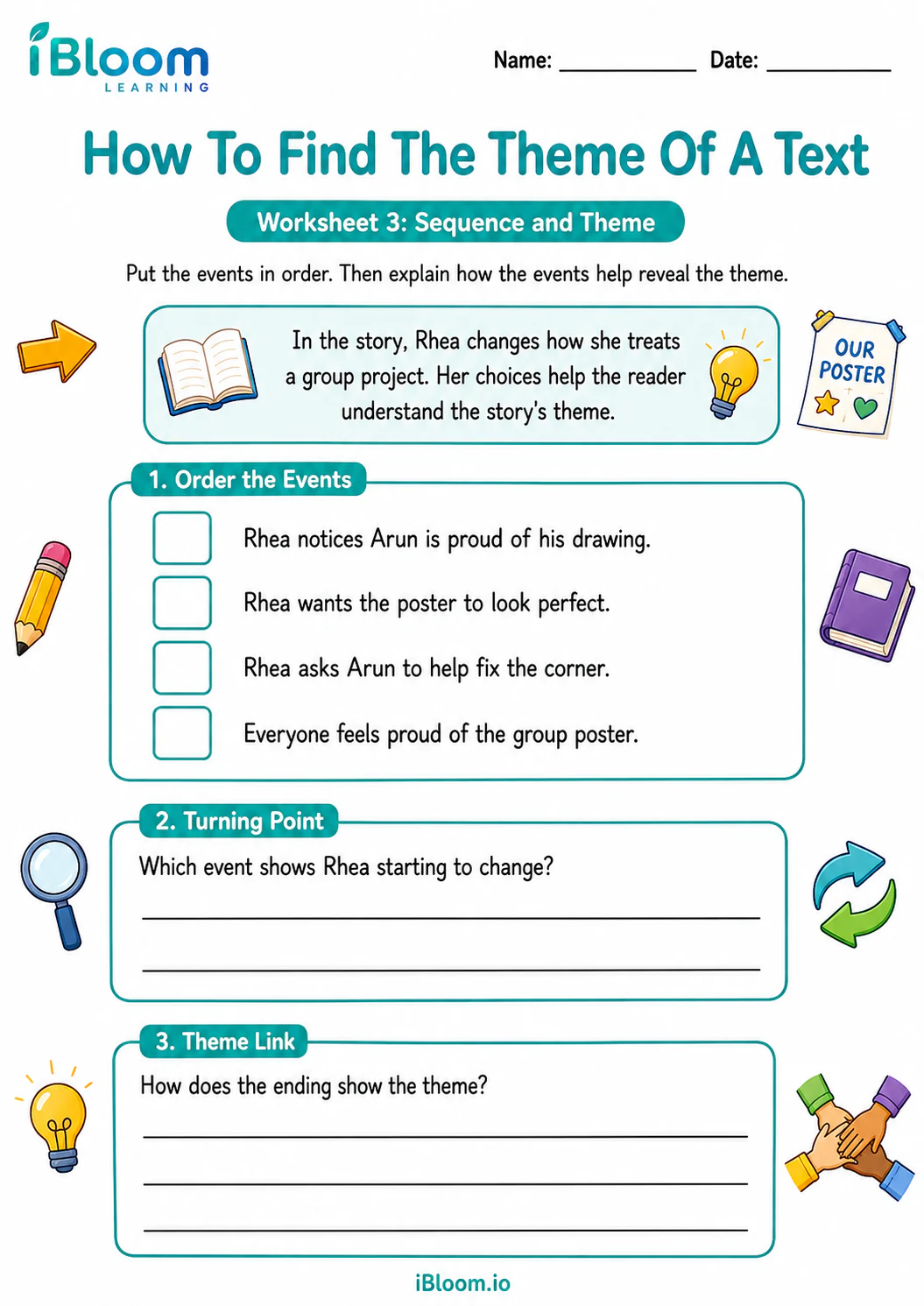 How To Find The Theme Of A Text — Sequence and StructureGrade 4 students practice finding the theme of children’s stories by using character actions, problems, outcomes, and text evidence. This sequence and structure worksheet provides a distinct, age-appropriate way to practise the same lesson.Grade 4Free PDF preview
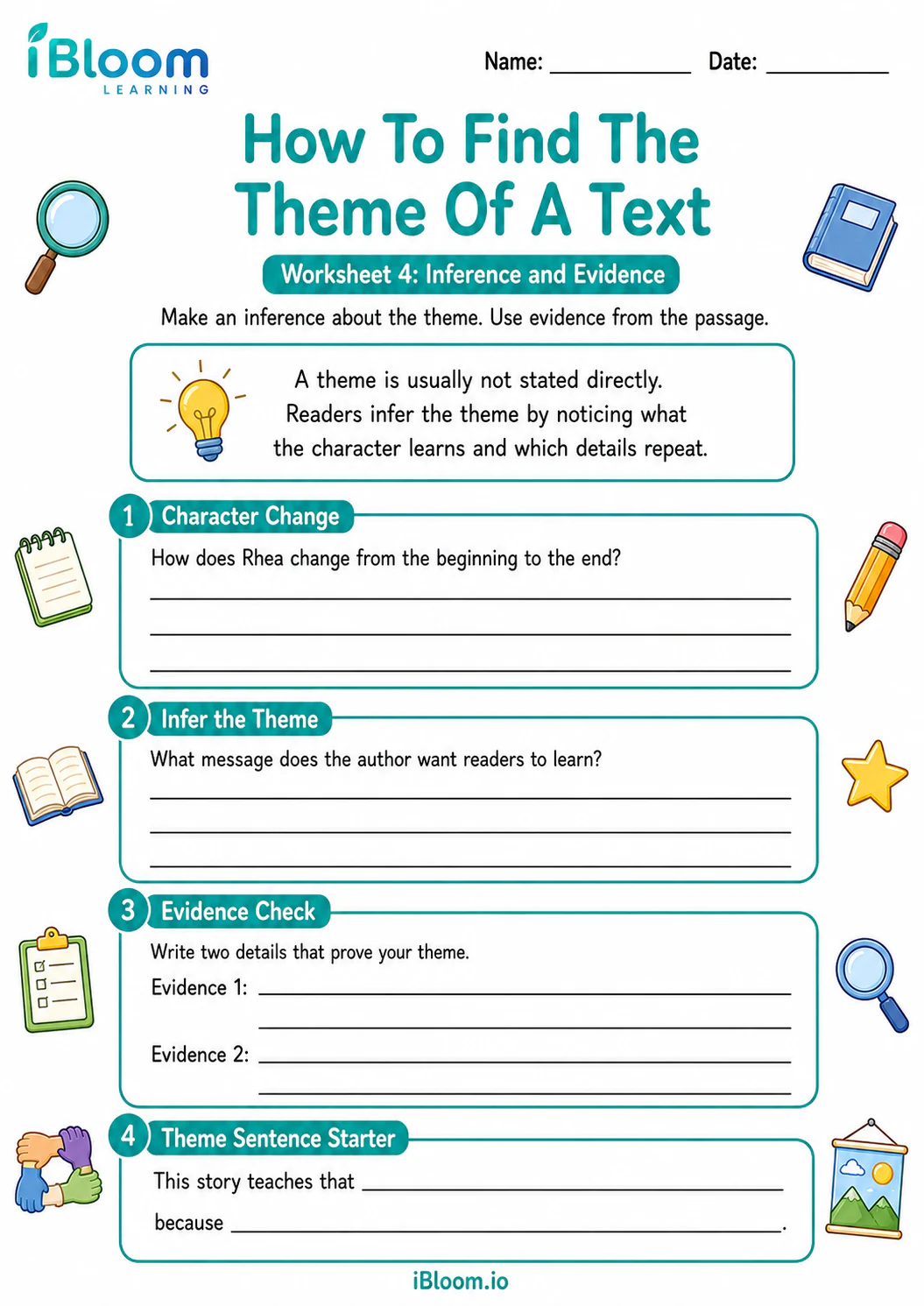 How To Find The Theme Of A Text — Inference and EvidenceGrade 4 students practice finding the theme of children’s stories by using character actions, problems, outcomes, and text evidence. This inference and evidence worksheet provides a distinct, age-appropriate way to practise the same lesson.Grade 4Free PDF preview
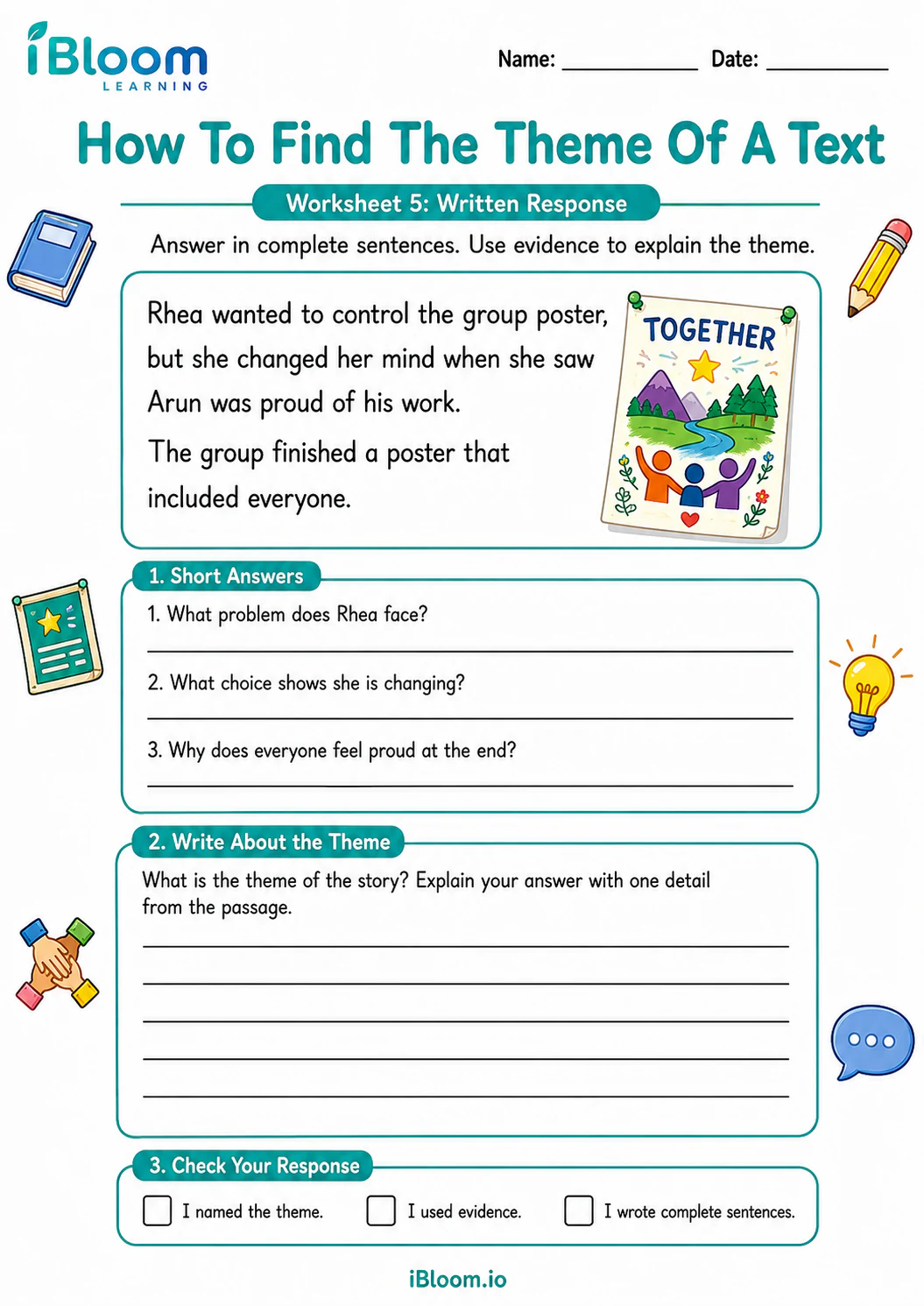 How To Find The Theme Of A Text — Written ResponseGrade 4 students practice finding the theme of children’s stories by using character actions, problems, outcomes, and text evidence. This written response worksheet provides a distinct, age-appropriate way to practise the same lesson.Grade 4Free PDF preview
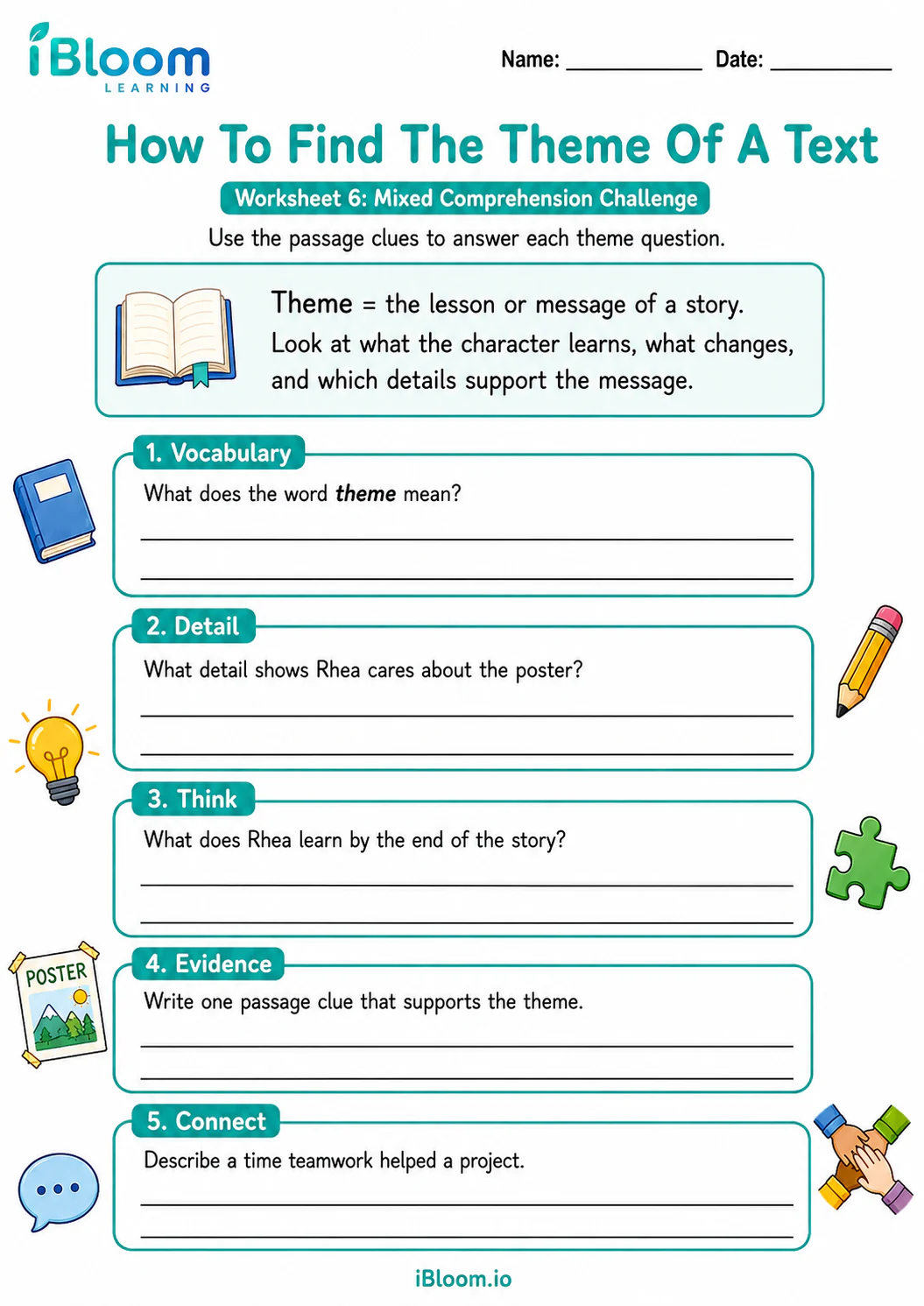 How To Find The Theme Of A Text — Mixed Comprehension ChallengeGrade 4 students practice finding the theme of children’s stories by using character actions, problems, outcomes, and text evidence. This mixed comprehension challenge worksheet provides a distinct, age-appropriate way to practise the same lesson.Grade 4Free PDF preview
Practice that builds confidence
Understanding theme in stories
These Grade 4 reading comprehension worksheets help children learn how to find the theme of a text in children’s stories. Students practice looking beyond the plot to understand the message, lesson, or big idea the author wants readers to think about.
The printable activities guide students to notice character choices, story problems, turning points, and endings. Children may answer questions, choose a theme, explain evidence, and write short responses that connect the theme to details from the story.
Theme is not just what happens in a story. It is the deeper message a reader can learn from the characters and events, such as perseverance, honesty, kindness, courage, or learning from mistakes. In Grade 4, students are ready to move from retelling the plot to explaining what the story teaches and how they know.

From plot details to a big idea
These worksheets build the skill step by step. Children read a short children’s story or passage, identify the main problem, notice how a character responds, and think about what changes by the end. They then connect those details to a theme statement. For example, if a character keeps practicing after failing, the theme may be about determination rather than simply about playing a sport.
Parent routine for home practice
At home, have your child read the story once for enjoyment and a second time with a pencil. Ask three questions: What problem does the character face? What choice does the character make? What can readers learn from the ending? Encourage your child to underline one sentence or event that supports the theme before writing an answer.

Classroom uses for teachers
Teachers can use these printables during reading groups, independent comprehension practice, morning work, or literacy centers. They also work well after a read-aloud: students can compare the worksheet story with a class text and discuss whether two different stories share a similar theme. Short written responses give teachers a clear view of who can support an idea with evidence.

Common errors to watch for
Some students confuse theme with topic. Friendship is a topic; a theme might be good friends are honest with each other. Others write a summary instead of a lesson, or choose a theme that sounds positive but is not supported by the story. Remind students that a strong theme should fit the beginning, middle, and end, not just one detail.
Free printable PDF download
Use this how to find the theme of a text worksheets grade 4 page to preview the activity, print it, or download it as a PDF for quick practice. It works well for homework, homeschool lessons, tutoring, morning work, revision, and classroom centers.
Answers and answer key support
After the child completes the worksheet independently, parents and teachers can use the answer support or answer key information to check the work, review mistakes, and choose the next practice step.
Why iBloom worksheets help
iBloom activities keep the focus on evidence-based thinking. Prompts guide children to trace character actions, consequences, and lessons before naming the theme. A child-friendly strategy is: Problem, Choice, Change, Lesson. Find the problem, notice the choice, explain what changes, and state the lesson in a complete sentence.
Helpful answers
Frequently asked questions
What does finding the theme mean in Grade 4 reading?
It means identifying the message or lesson a story teaches, then using details from the characters, problem, and ending to explain why that theme fits.
How is theme different from the main idea?
The main idea tells what a text is mostly about. Theme is the deeper message or lesson, especially in a story. A story may be about a race, but its theme may be perseverance.
What should my child include in a theme answer?
A strong answer should name the theme in a complete sentence and include at least one story detail that supports it, such as a character’s choice or how the problem is solved.
Why does my child keep writing a summary instead of a theme?
Many children retell events because plot is easier to see. Ask, “What did the character learn?” or “What can readers learn from this?” to move from summary to theme.
Can one story have more than one theme?
Yes. Some stories can support more than one theme, but students should choose a theme that is clearly supported by several details across the story.
Is this how to find the theme of a text worksheets grade 4 free?
Yes. You can preview it for free and use the printable worksheet for home or classroom practice.
Can I download this how to find the theme of a text worksheets grade 4 as a PDF?
Yes. Use the worksheet download option to save a printable PDF, or print the worksheet directly from the page.
Does this how to find the theme of a text worksheets grade 4 include answers or an answer key?
When the activity has fixed answers, iBloom includes answer support so parents and teachers can check the completed worksheet.