
About this worksheet
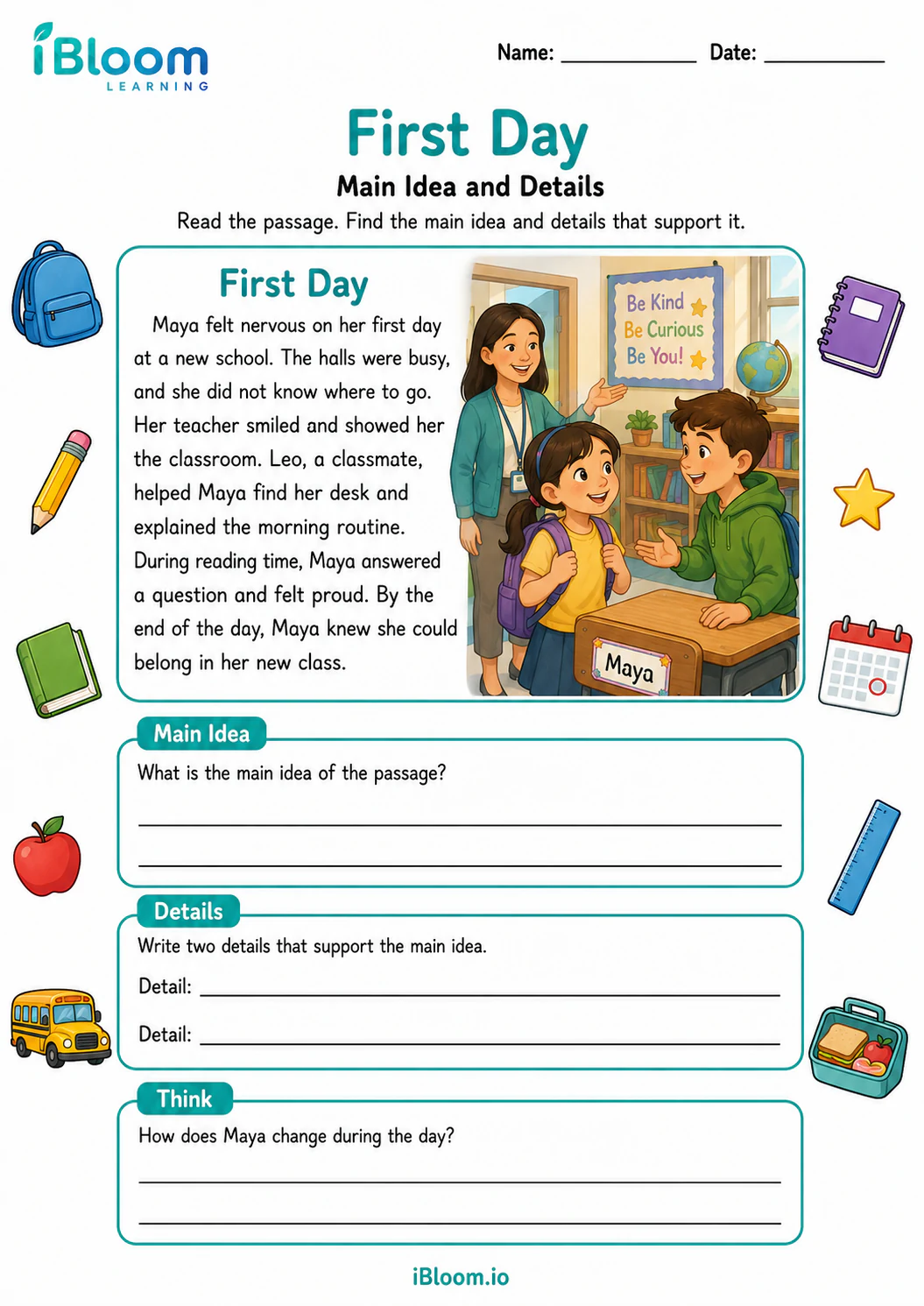
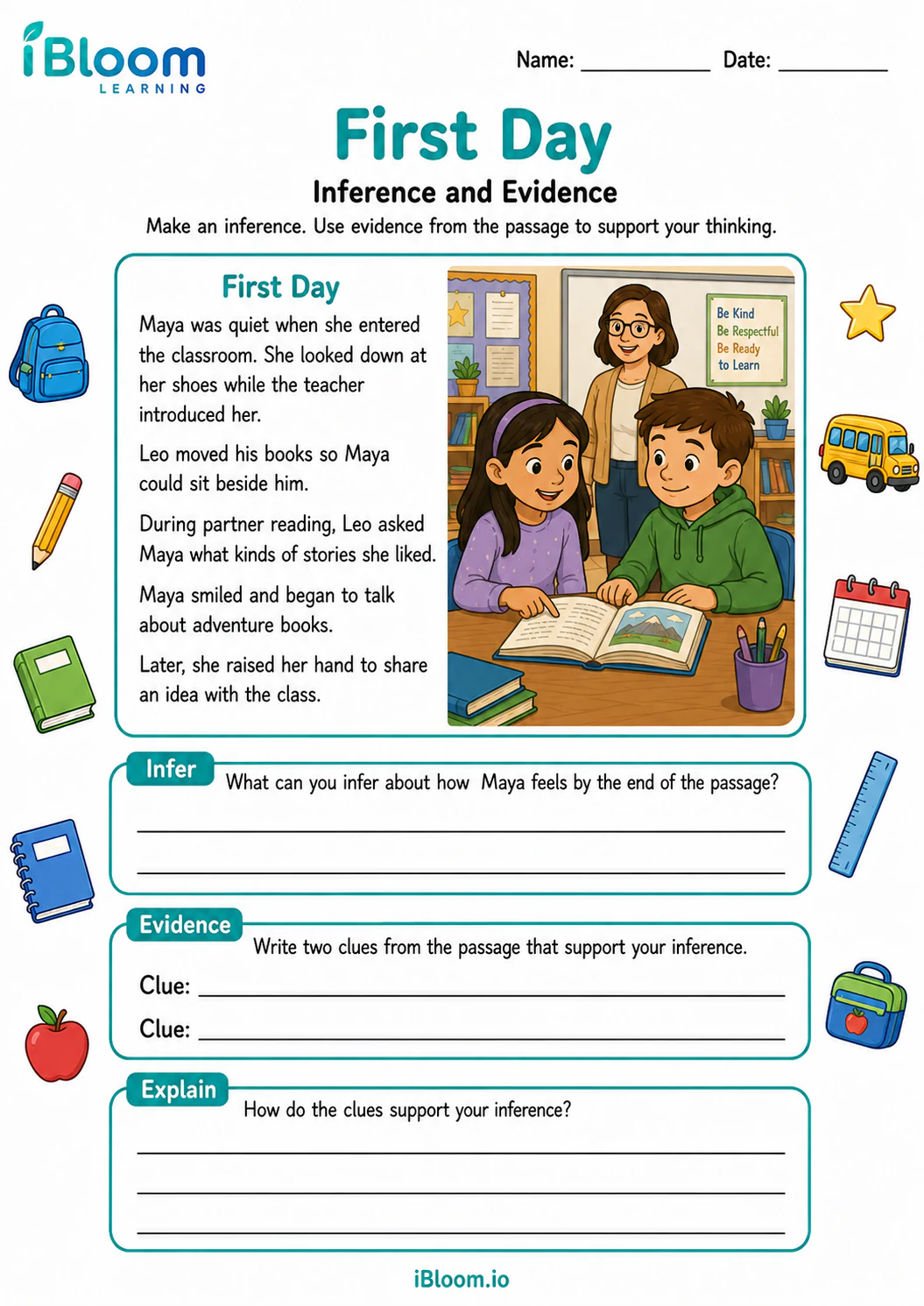
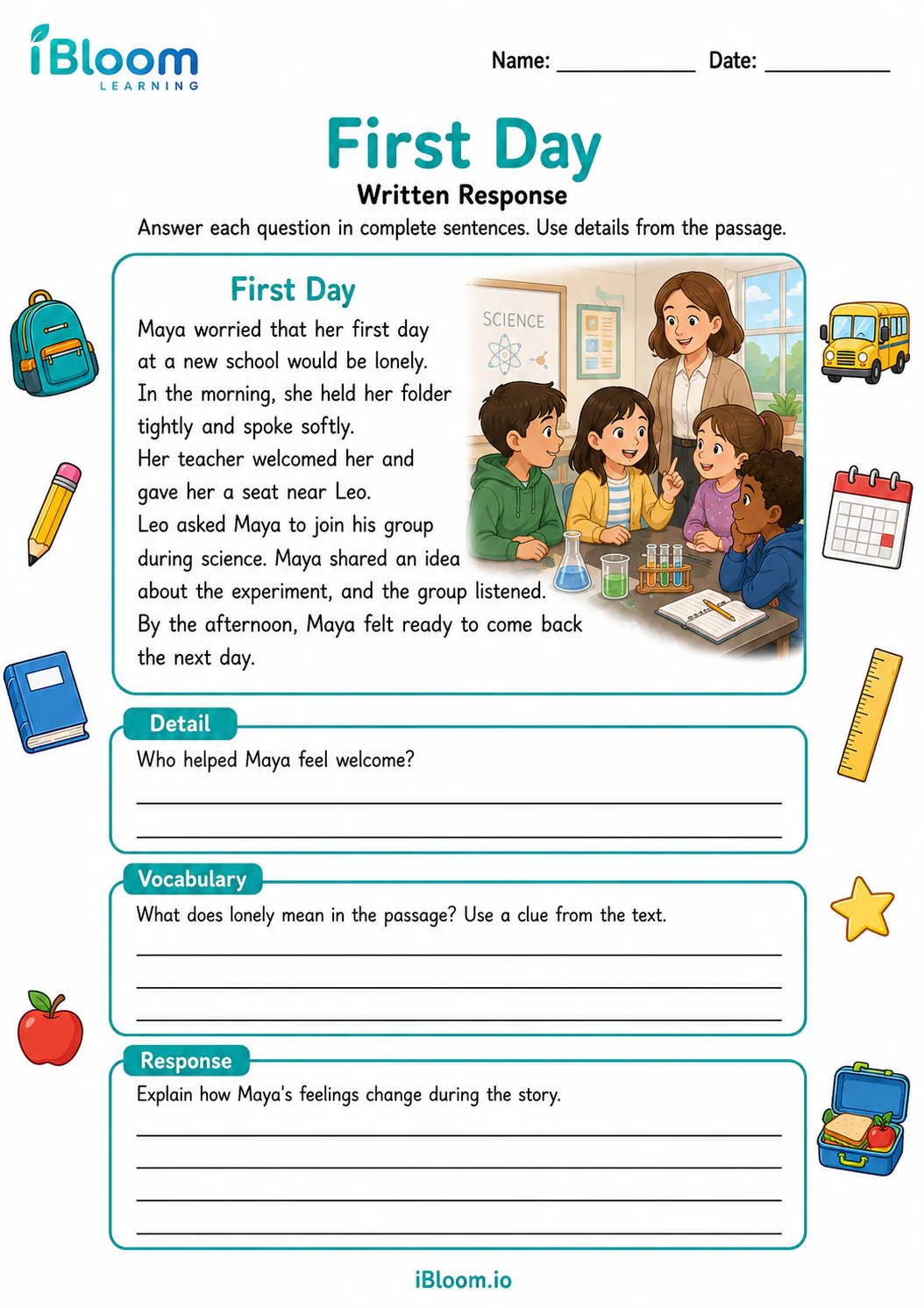
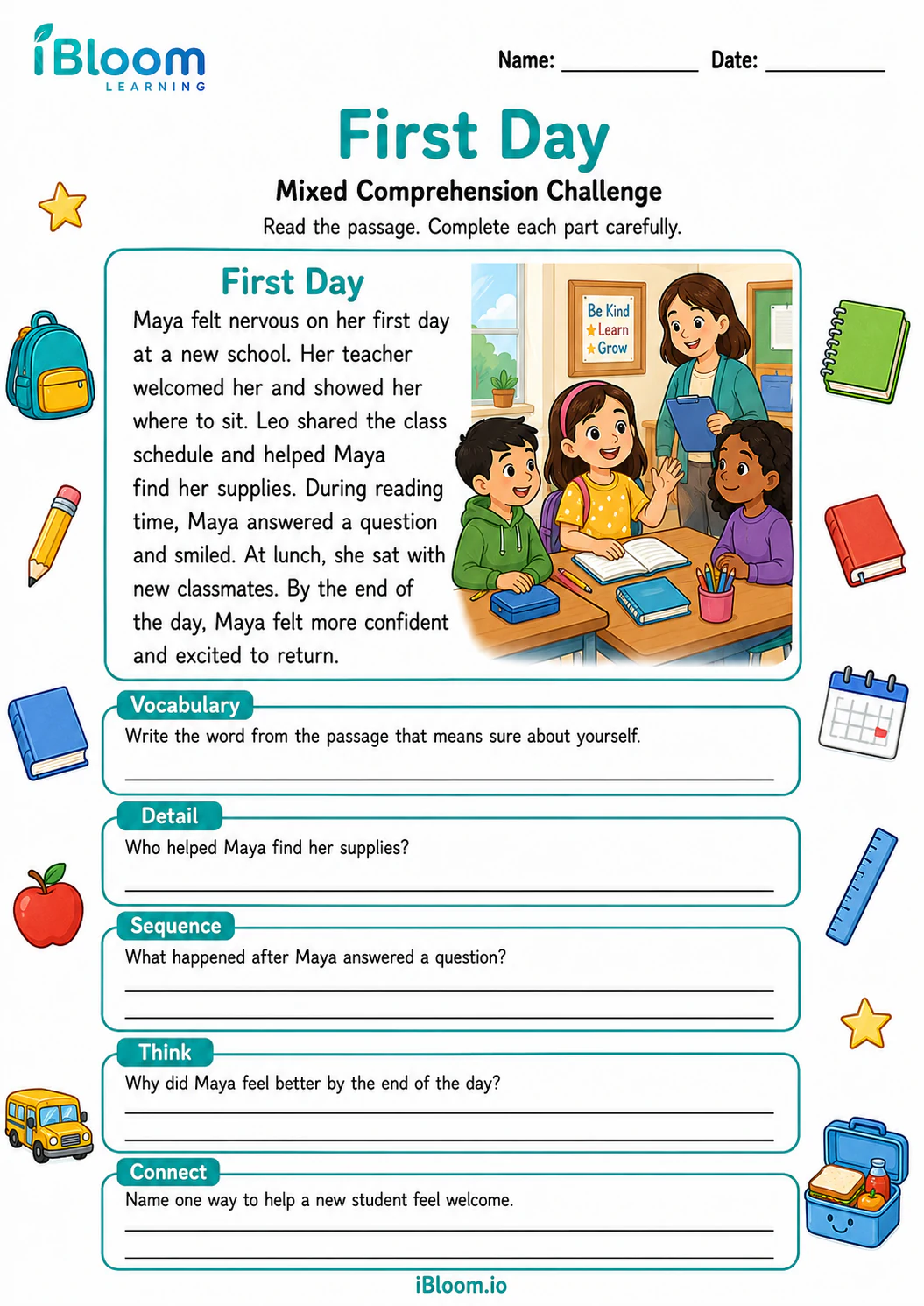
This Grade 4 story worksheet follows Mia and Eli through a first day at school. Readers recall details, put events in order, and use actions from the passage to explain how Mia’s feelings about the classroom change. The original passage and 14 questions are followed by an answer key.
Aligned to RL.4.3
How do readers put events in order?
Use time words and actions to track what happens first, next, and later. For example, Mia puts the pot on the windowsill before Eli arrives.
What changes for Mia during the story?
Mia begins unsure about the unfamiliar classroom. After she welcomes Eli and works with him, she feels more at home.
How does the sequence shape the story?
The events move from Mia’s uncertain arrival to a shared science task. Readers connect each action to the way the first day ends.
How to use this worksheet
- 1Read the directions and the worked example together.
- 2Complete each part in order, returning to the story or number clues as needed.
- 3Check one answer by pointing to the matching detail or recalculating both sides.
- 4Use the answer key to review any item that needs another try.
Common mistakes and quick fixes
The mistake
List events without checking their order.
The fix
Return to the passage and use time words and character actions to sequence them.
The mistake
Retell a detail without explaining why it matters.
The fix
Add how the detail affects a character or what happens next.
The mistake
Assume a character feels the same at the end.
The fix
Compare the character’s beginning and ending actions, then support the change with a passage detail.
Common Core alignment
The questions support Grade 4 reading of literature, especially describing events and explaining how story details contribute to the plot.
Describe how characters and events develop using details from the story.
On this sheet: Students use Mia’s actions and the sequence of events to describe how her first day changes.
Show the official wordingHide the official wording
Describe in depth a character, setting, or event in a story or drama, drawing on specific details in the text.
What to practice next
Make more practice
Further reading
Questions parents and teachers ask
What does sequence mean when reading a story?
Sequence is the order in which story events happen. Readers can use time words such as first, then, and during, and they can also think about what one character does before the next event can happen. Putting events in order helps explain the plot.
How can a reader identify a turning point?
A turning point is an event that changes what happens next or how a character feels. Name the event, then explain the change it causes. In this story, Mia makes room for Eli, and their shared science work helps the classroom feel more welcoming.
What does story structure describe?
Story structure is how the events and details fit together. A story may begin with a character facing uncertainty, show a choice or action, and end with a change. Readers can use the beginning, middle, and ending to describe that pattern.
How should students support an answer about the story?
Students should point to a specific action or detail in the passage and explain how it supports the answer. For example, Mia moves her backpack and waves Eli over, which shows she is trying to make him feel welcome. A precise passage detail makes the explanation easier to verify.
How can readers explain the order of events?
Track what happens first, next, and later, then connect each event to what follows. In this passage, Mia moves her backpack before Eli takes the empty chair beside her. A precise passage detail makes the explanation easier to verify.