

About this worksheet
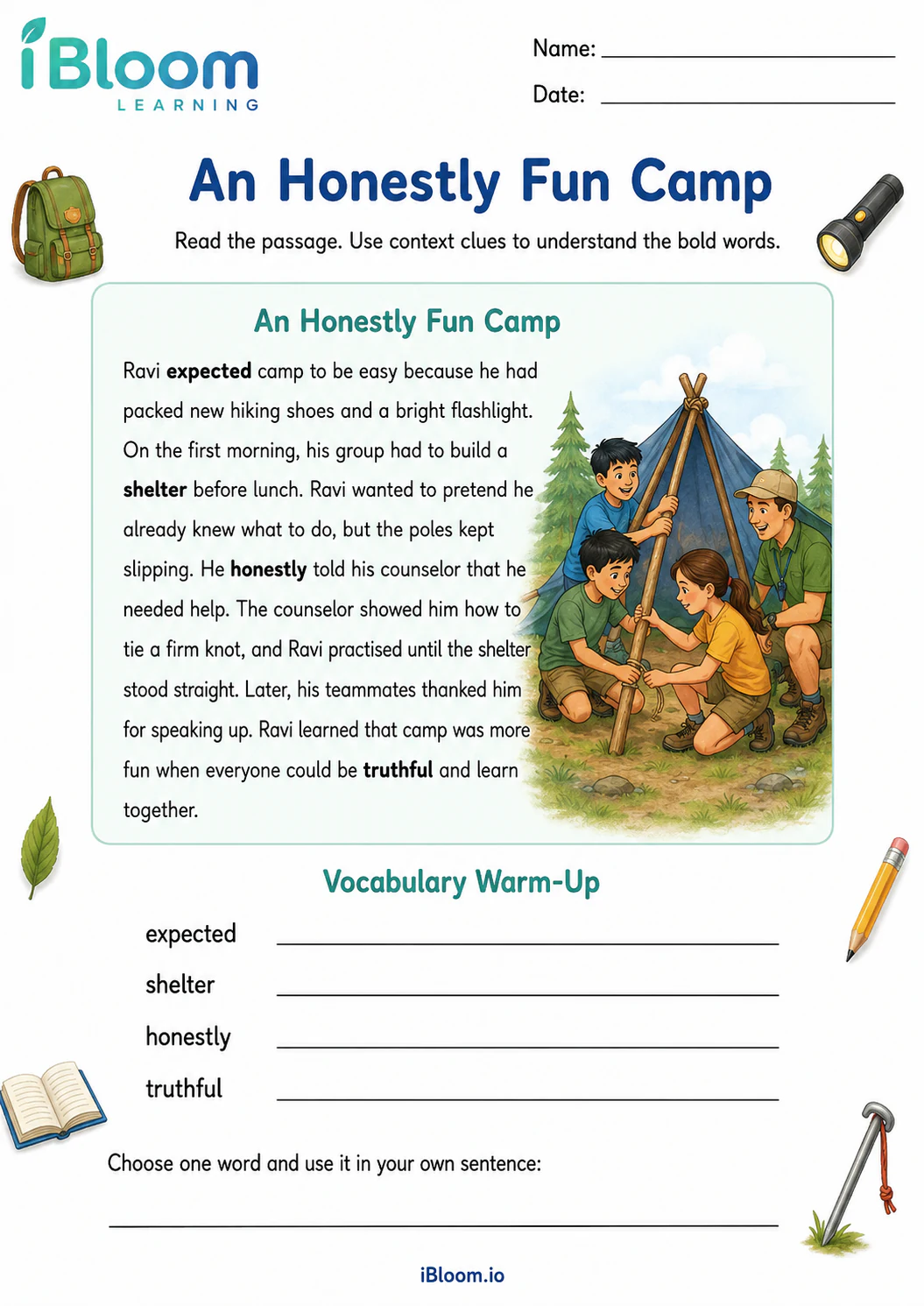
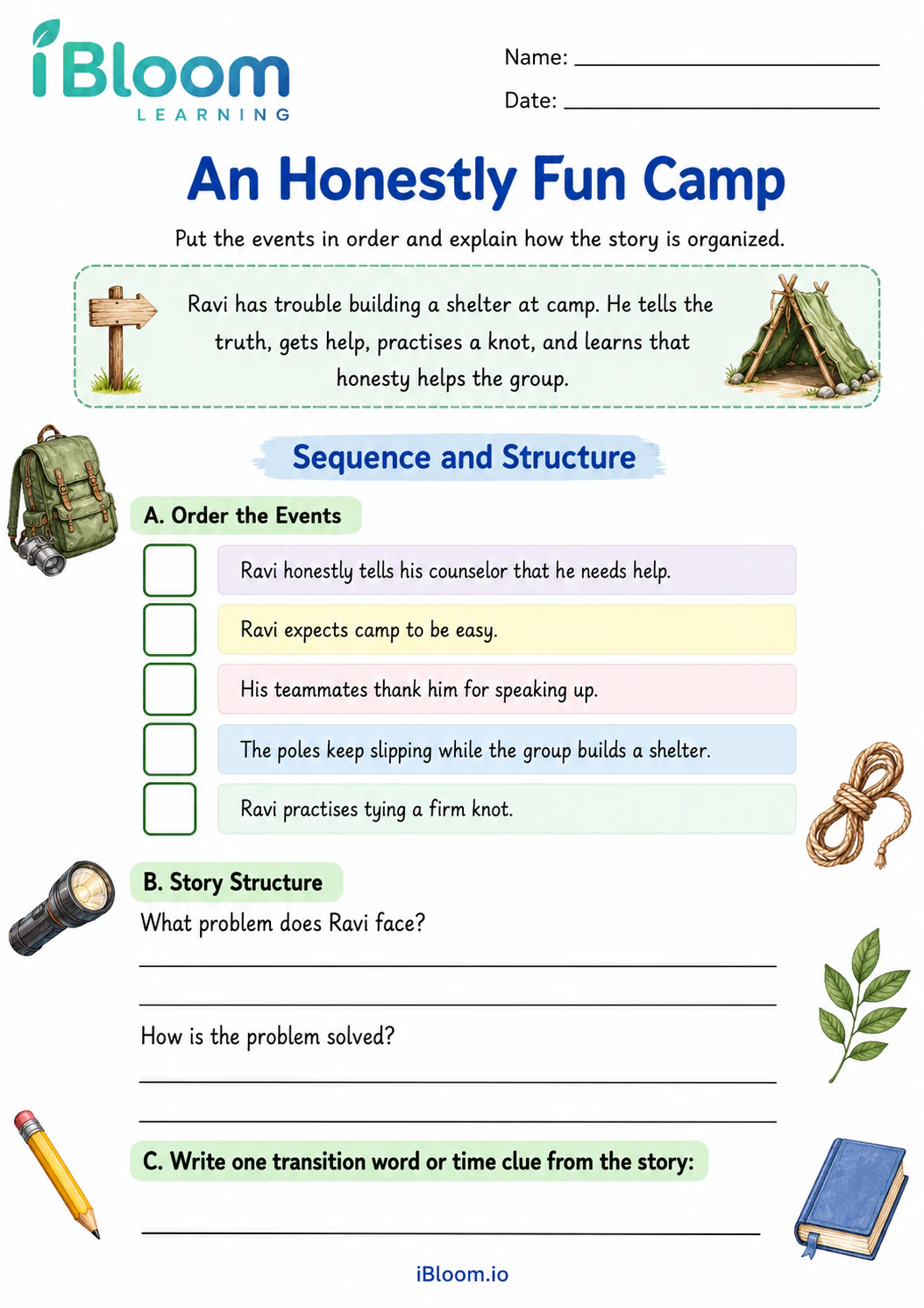
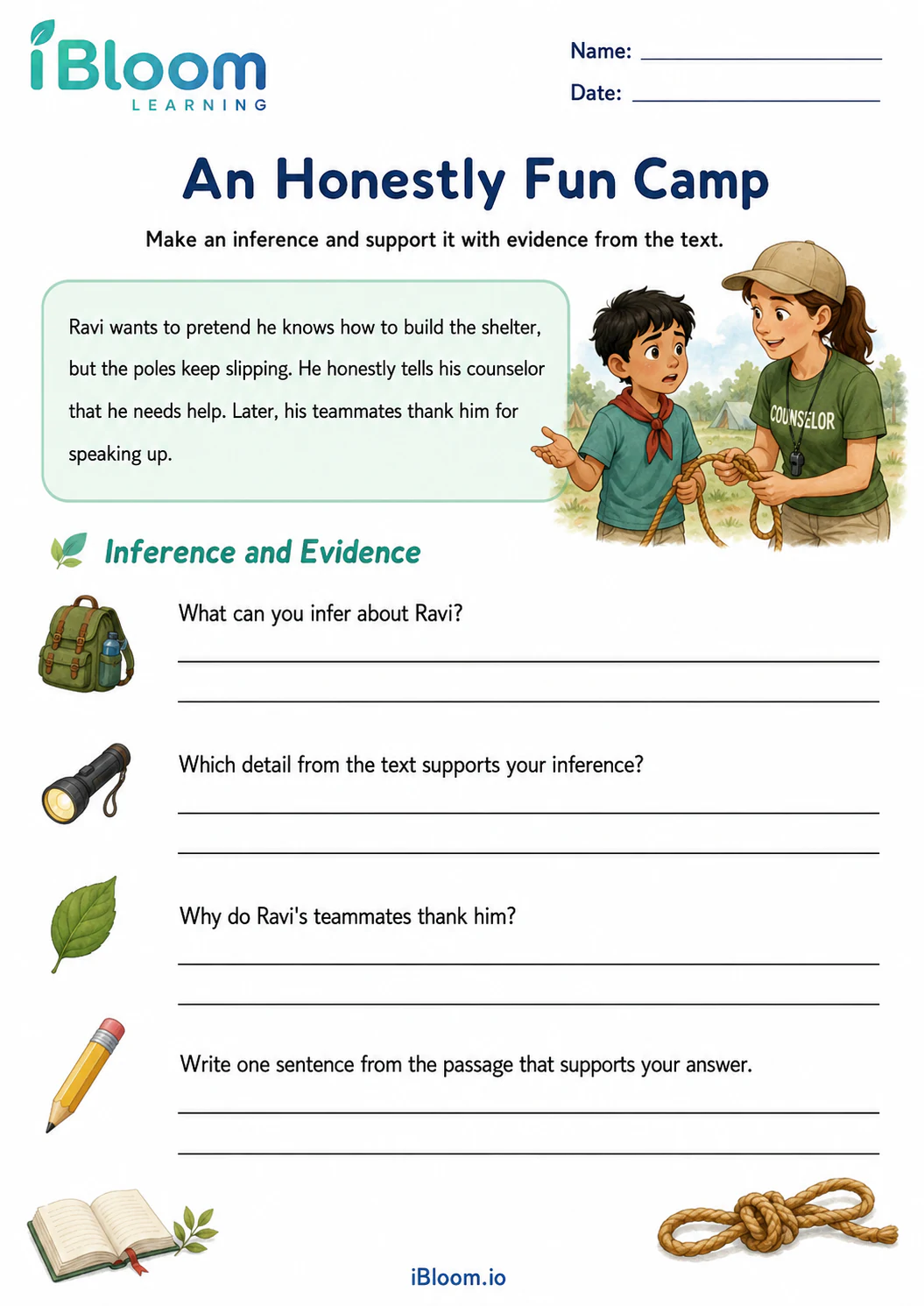
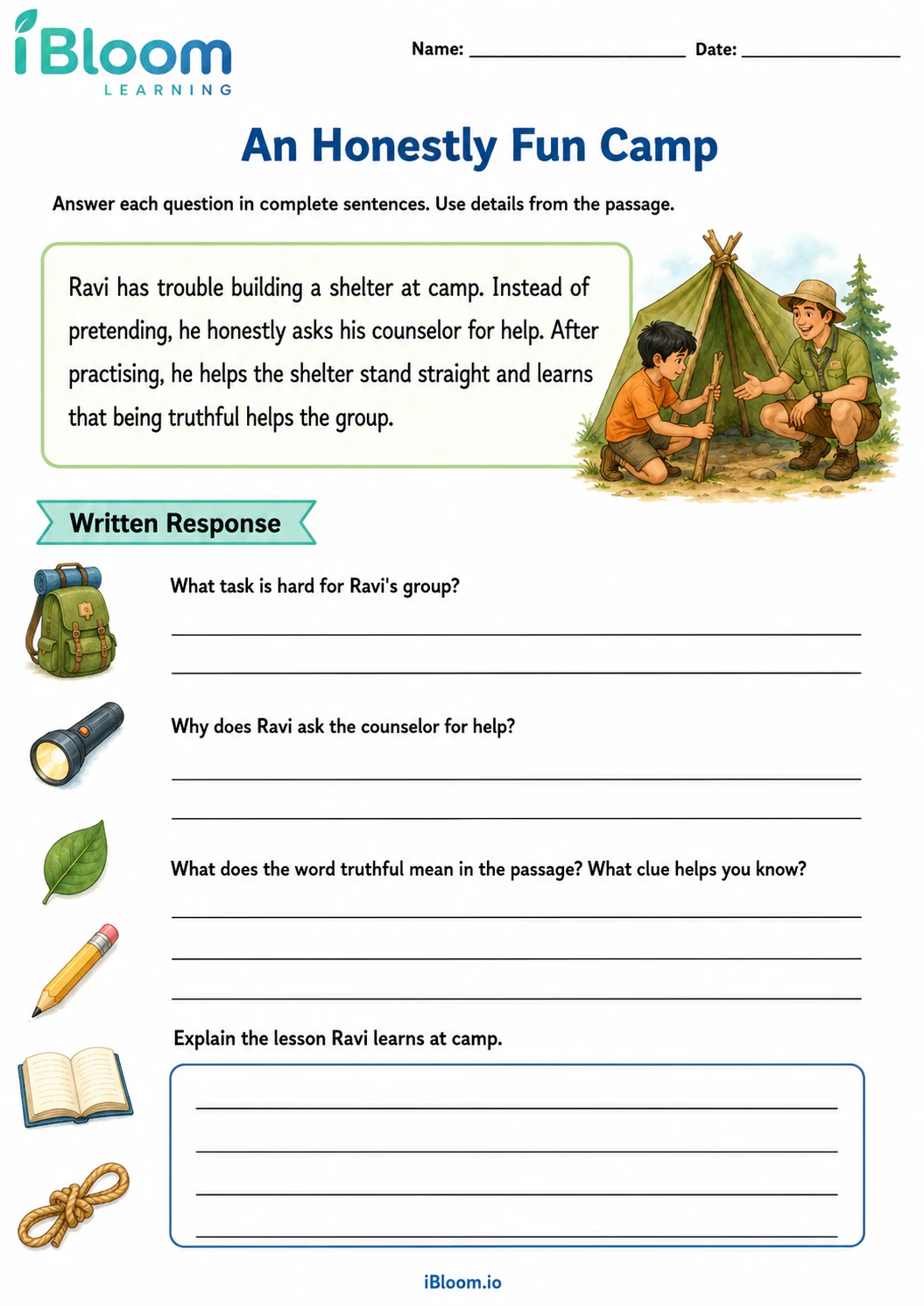
This Grade 4 printable pairs an original camp story about Ravi with 14 mixed comprehension questions. Ravi’s first knot slips while he builds a shelter, so he tells the counselor what went wrong, practices the knot steps, and works with his group to finish. Children answer questions about details, vocabulary, cause and effect, sequence, inference, theme, and a personal connection. A separate answer key is included.
What does Ravi do when his knot slips?
Ravi notices the tarp sag and admits that his knot is too loose. The counselor shows him how to loop the rope and pull it snug. Ravi practices, checks the knot with a gentle tug, and then the group secures the rest of the tarp.
- 1The knot is too loose.
- 2Ravi tells the counselor what went wrong.
- 3His honesty lets the group fix the shelter together.
Which comprehension skills do the questions practice?
The questions check story details, vocabulary, cause and effect, sequence, inference, and the lesson. For example, the counselor’s direction to pull the rope snug, followed by Ravi’s gentle tug test, shows that snug means firm and secure.
What is included in the printable?
The passage appears first, followed by 14 questions in two parts and a separate answer key. Short responses keep attention on story evidence and the sequence of Ravi’s choices.
How to use this worksheet
- 1Read the full passage once to learn Ravi’s problem.
- 2On the detail questions, return to the sentence that describes the knot or shelter.
- 3Use nearby actions to work out the meaning of “snug.”
- 4For inference and theme, connect Ravi’s choice to what happens afterward.
- 5Check the short answers with the key, then ask the learner to explain one clue from the story.
Common reading mistakes and quick fixes
The mistake
Saying Ravi finishes the shelter before asking for help.
The fix
Check the sequence: the first knot slips, then he asks the counselor for help.
The mistake
Defining “snug” without using the rope sentence.
The fix
Use the counselor’s directions and Ravi’s tug test to infer that the knot should be firm.
The mistake
Naming the theme without connecting it to the plot.
The fix
Link Ravi’s honesty and practice to the way the group solves the shelter problem.
What to practice next
Make more practice
Questions parents and teachers ask
What is Ravi trying to build?
Ravi and his camp group are building a shelter to keep their supplies dry. His first knot lets the tarp sag, so he tells the counselor it is too loose. Readers follow how he learns the knot and helps the team finish.
Why does Ravi ask the counselor for help?
Ravi sees that the first knot is not holding the tarp. He admits the problem instead of pretending the shelter is ready, and the counselor shows him how to loop and tighten the rope. The story shows the group can solve the problem once Ravi speaks up.
What does “snug” mean in the passage?
“Snug” means firm and close in this passage. The counselor asks Ravi to pull the rope snug, and he checks the knot with a gentle tug. Those actions help readers use context to understand the word. The passage gives clues about what happens when Ravi admits the knot is loose and practices again.
What does the worksheet ask children to practice?
The 14 questions cover story details, vocabulary, cause and effect, sequence, inference, and theme. Children can look back at Ravi’s actions and the shelter to support their answers. They follow the problem from his loose knot through the group’s finished shelter.
How should I check open-ended answers?
The key gives concise answers for all 14 questions. For open responses, accept wording that matches the story events and gives a sensible explanation. For the question about Ravi’s next challenge, look for the idea that he will ask for help sooner.
Is an answer key included?
Yes. A separate answer key gives answers for all 14 questions, including the vocabulary meaning and the message about asking for help. Use it after the learner finishes a section to check details and reread any part that was unclear.