
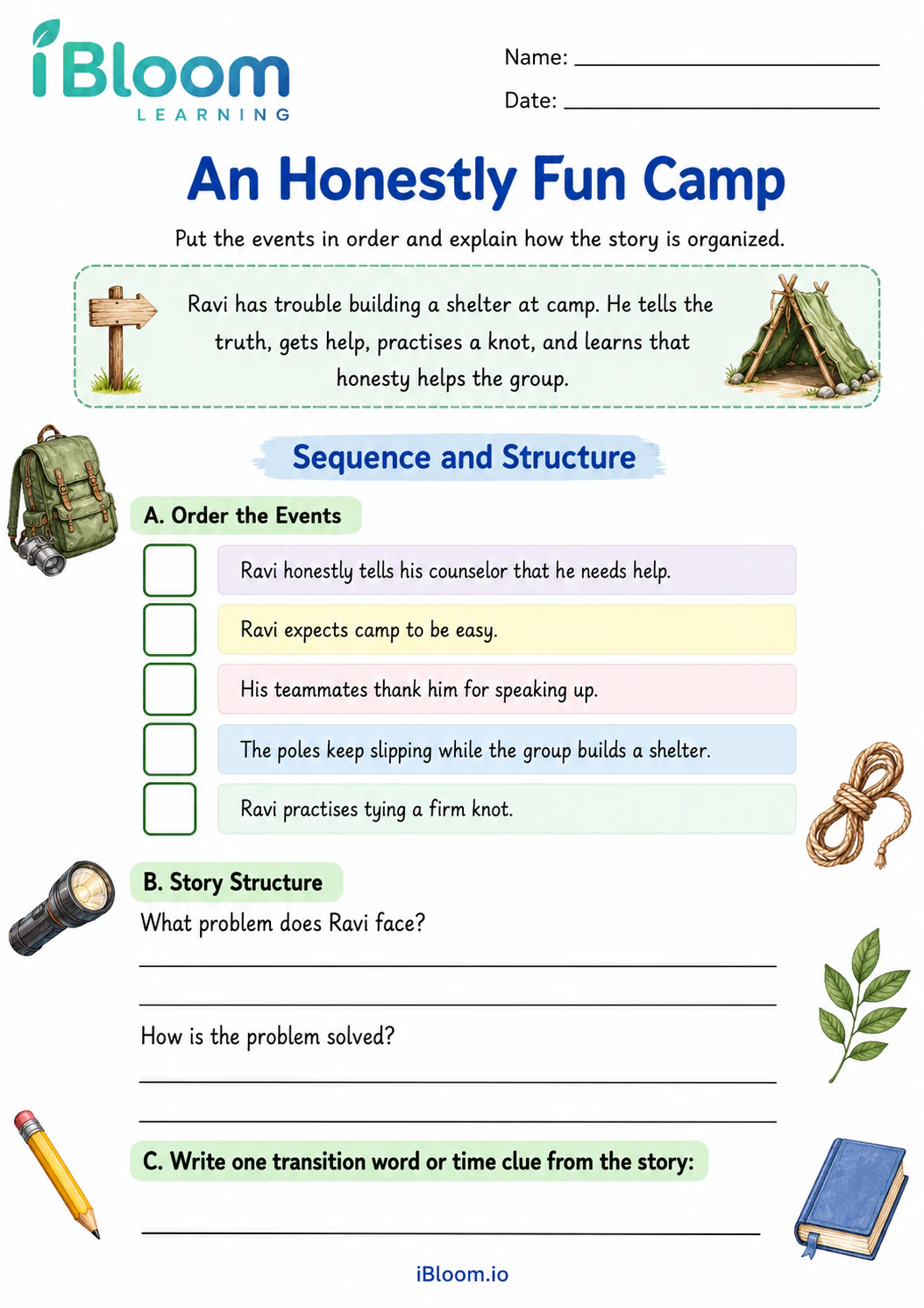
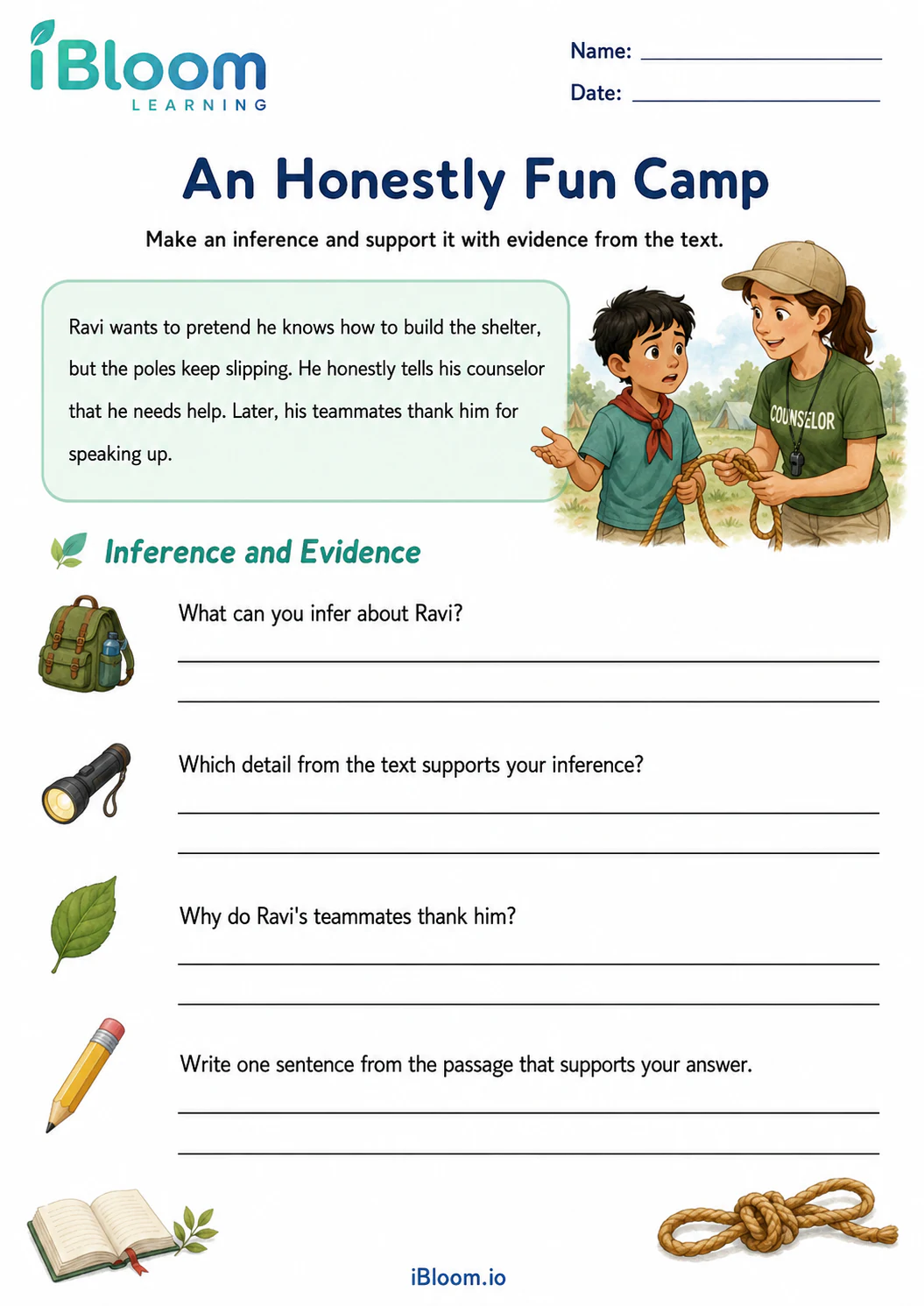
About this worksheet
This Grade 4 worksheet follows Emma and her family through a familiar visit to Sunny Table. Learners answer 14 questions about event order, time-order words, story details, and how the ending connects to the visit. One response asks them to support an explanation with evidence from the passage. The practice aligns with CCSS.ELA-LITERACY.RL.4.3.
Aligned to CCSS.ELA-LITERACY.RL.4.3
How does Emma’s visit unfold?
The passage moves from the host’s welcome to the family’s meal and Emma’s thank-you. For example, after the host leads the family to a booth, Emma reads the menu and asks about the soup. Keep each event connected to the passage’s time words.
Which clues help explain the structure?
Words such as “First,” “Next,” “Then,” and “Soon” show when events happen. In the written response, explain how the ending connects to Emma’s familiar restaurant routine and support the idea with a passage detail.
How to use this worksheet
- 1Read the passage once to understand Emma’s visit.
- 2Reread the sentence around each event named in a question.
- 3Use time words to check the order before choosing.
- 4For the written response, state a connection and support it with a detail.
- 5Compare answers with the key and return to the passage for corrections.
Common sequence mistakes
The mistake
Putting an event first because it is memorable.
The fix
Check the time word and the sentence before it.
The mistake
Treating “soon” as the same moment as the order.
The fix
Keep the order: the server writes the order, then the food arrives soon after.
The mistake
Explaining the ending without connecting it to the beginning.
The fix
Use a detail about the familiar visits or the host remembering the family.
Curriculum alignment
This worksheet practices the named skill through short, grade-level items.
Describe a story character, event, or sequence using details.
On this sheet: Learners track Emma’s actions and support explanations with details from the story.
Show the official wordingHide the official wording
Describe in depth a character, setting, or event in a story or drama, drawing on specific details in the text.
What to practice next
Make more practice
Further reading
Questions parents and teachers ask
What story does the worksheet use?
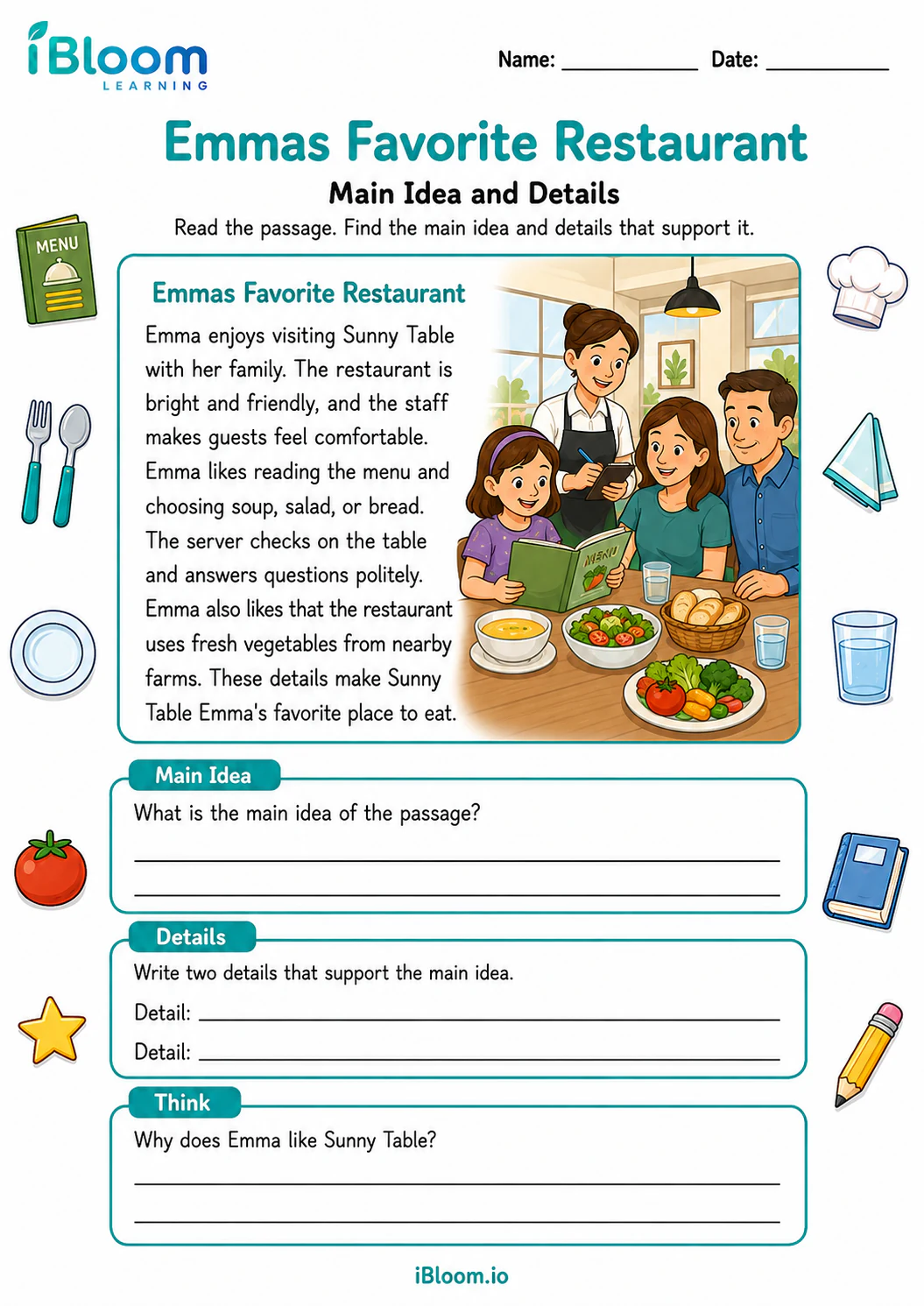
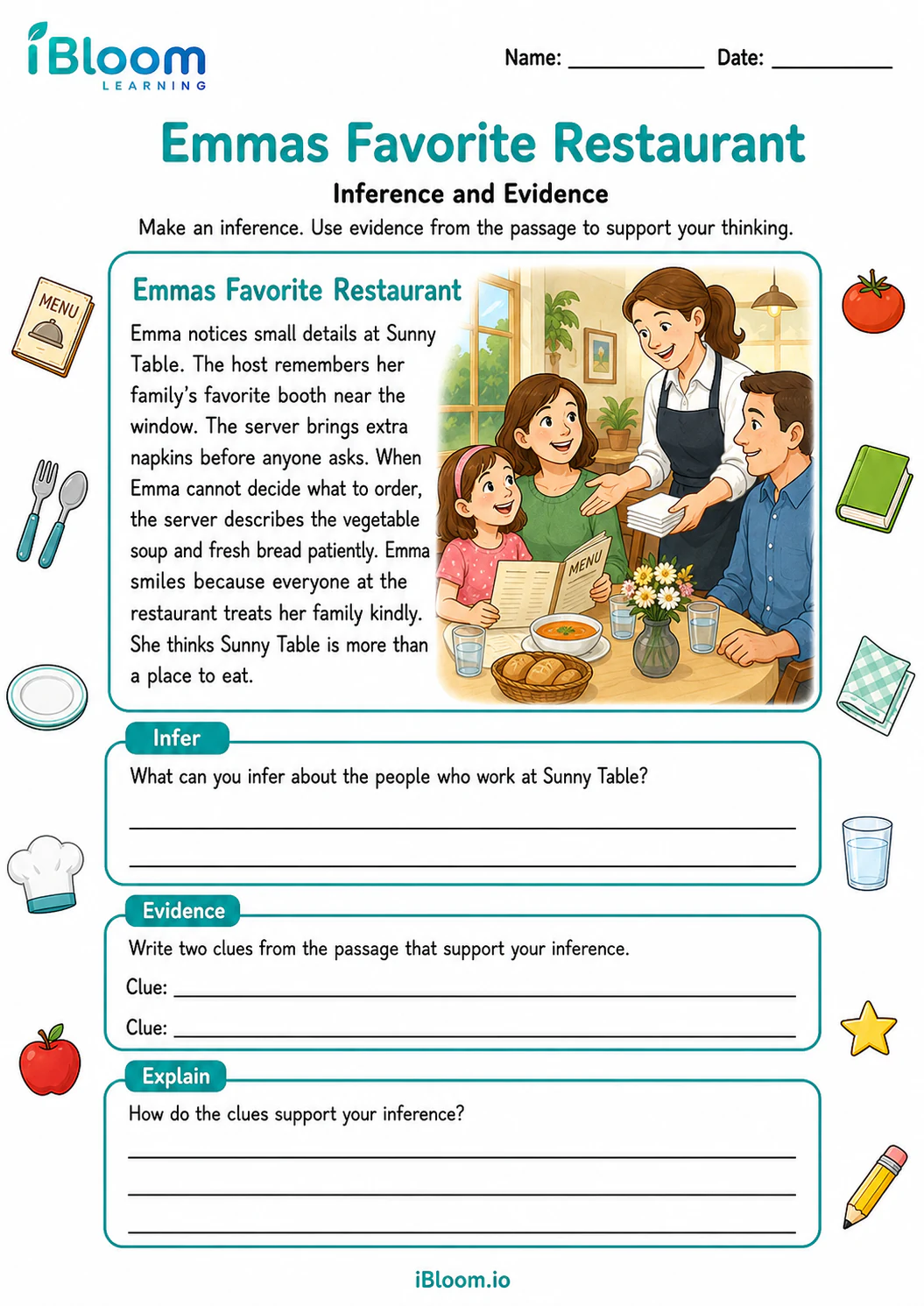
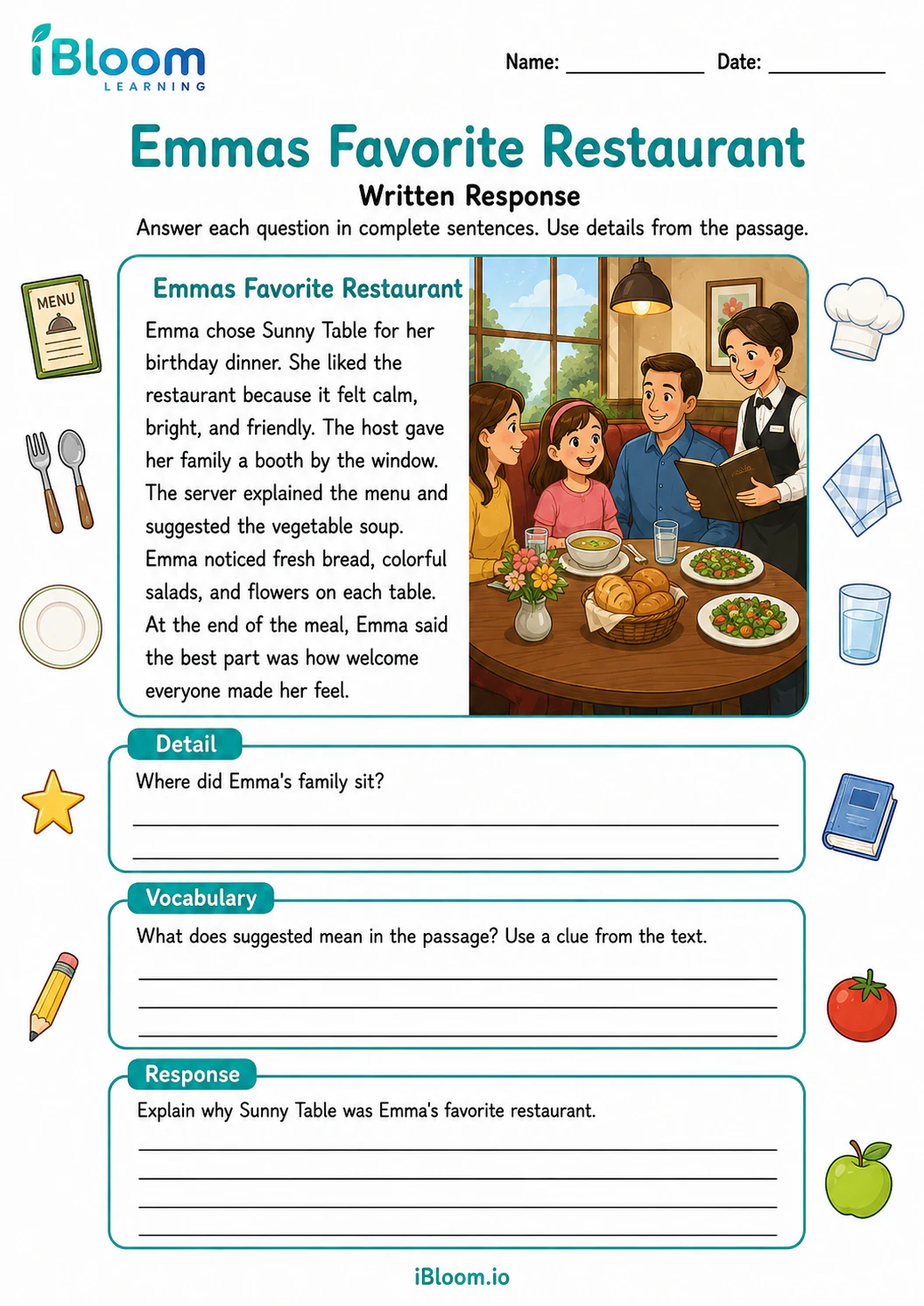
It uses an original passage about Emma’s family visiting Sunny Table, a restaurant they know well. The host remembers them, Emma asks about the soup, and the family shares a meal. Learners use these events and time clues to answer sequence and structure questions.
What does sequence and structure mean here?
Sequence is the order in which events happen; structure is how the author arranges those events. The passage follows Emma’s visit from the welcome through the meal. Questions ask learners to use transition words and story details to explain that organization.
Does the worksheet include a written response?
Yes. One item asks learners to explain how the ending connects to the beginning. A strong response refers to the family’s familiar visits or the host remembering them, then connects that detail to Emma’s thanks at the end. Rereading together makes the clue easier to notice.
How can I help without giving away an answer?
Ask the learner to point to the sentence that supports a response. For order questions, have them underline time words such as “First,” “Then,” or “Soon,” then retell events in order before checking a choice. Rereading together makes the clue easier to notice.
How many questions and pages are included?
The printable has 14 questions across three total pages, including the answer key. It includes sequence choices, story-detail questions, signal-word practice, and one short written response for learners to support with passage evidence. Rereading together makes the clue easier to notice.