

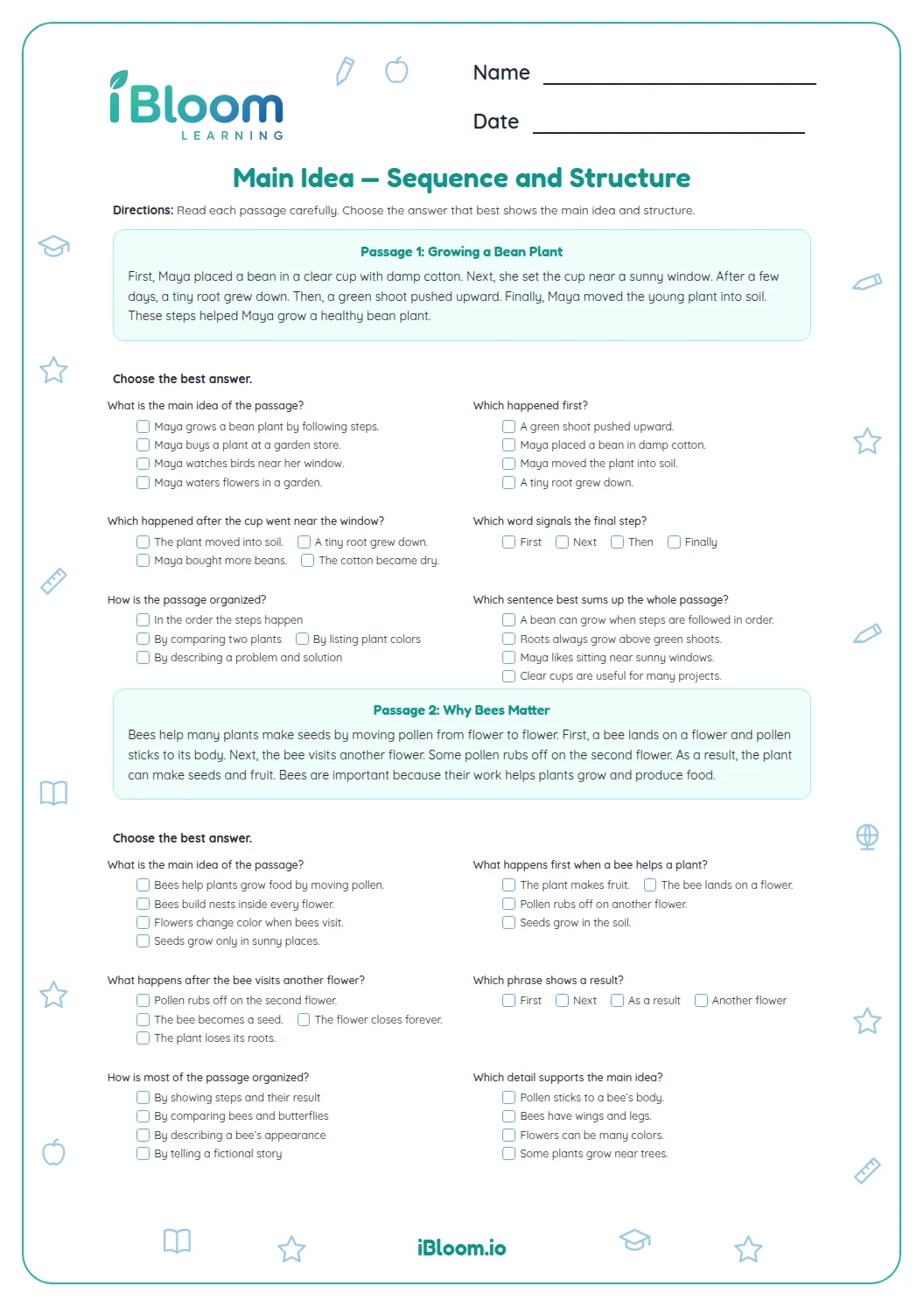
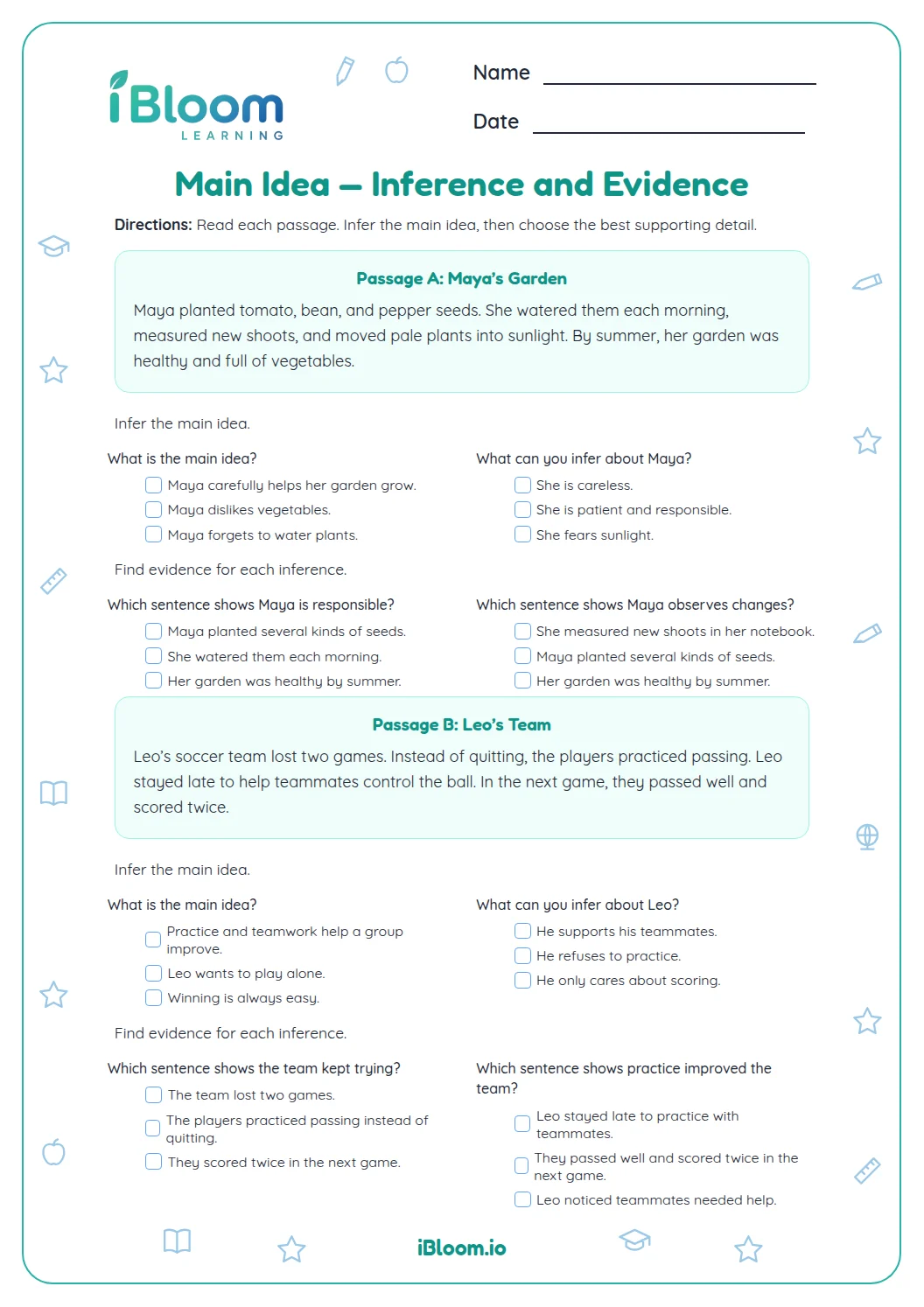
About this worksheet
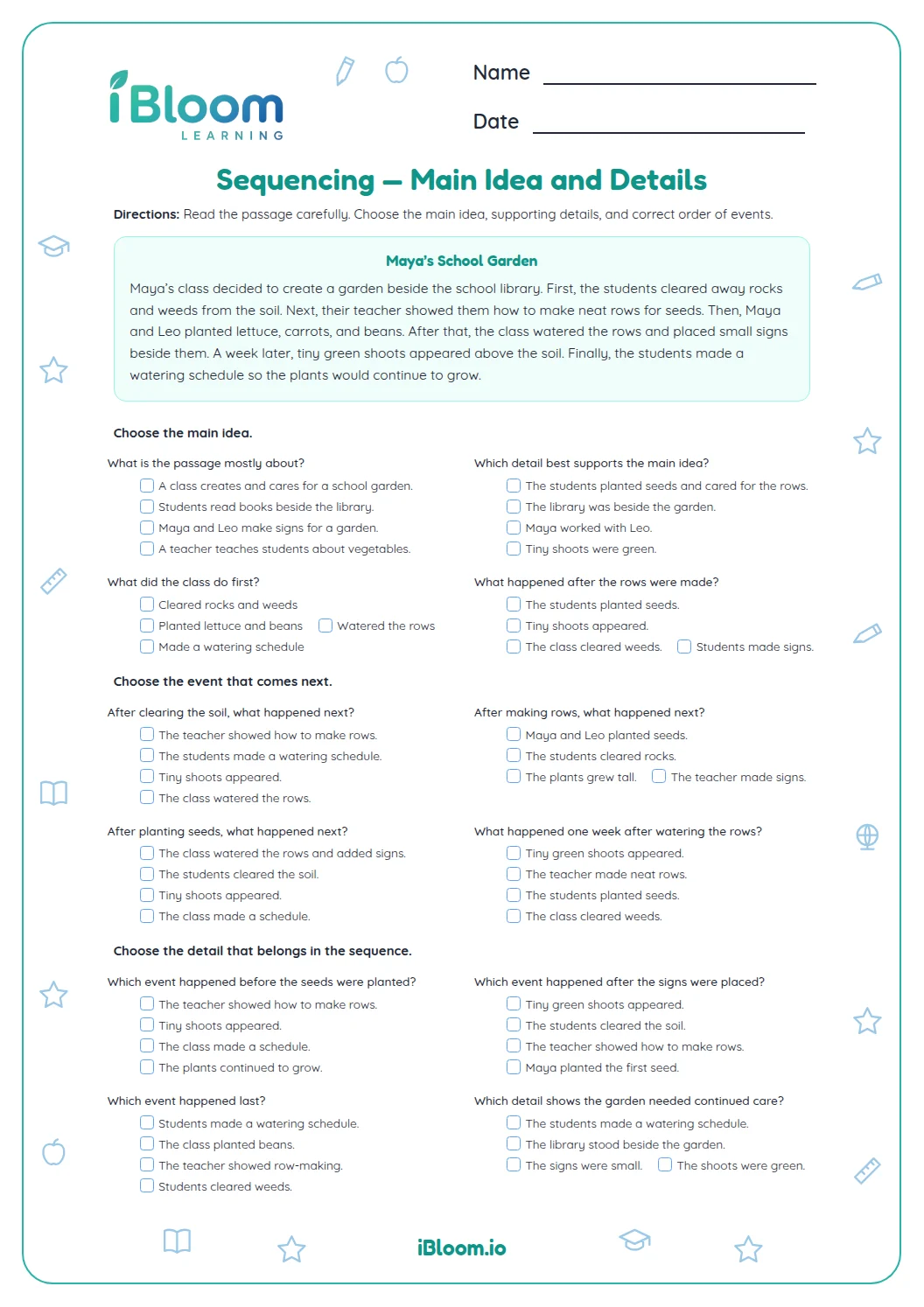
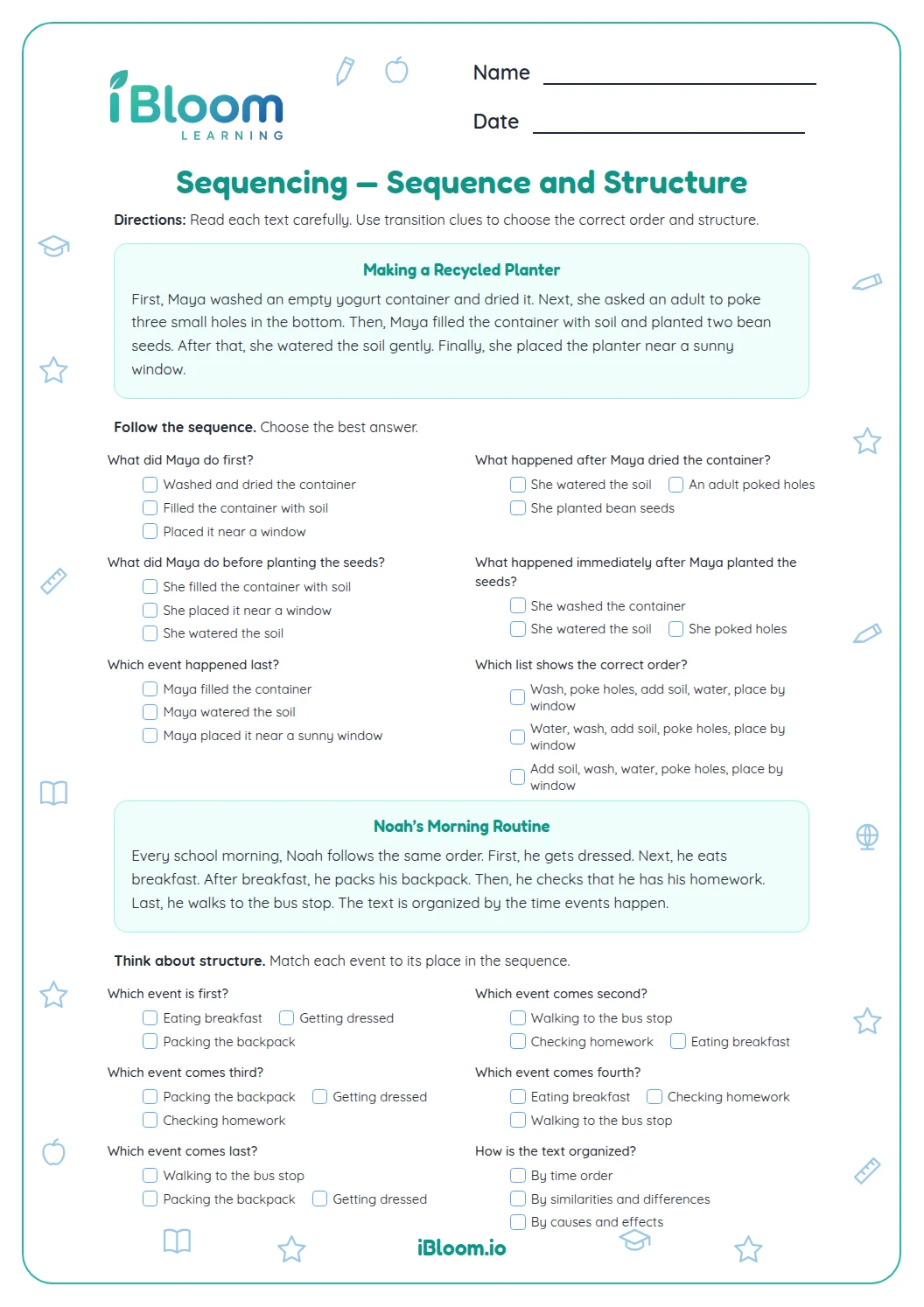
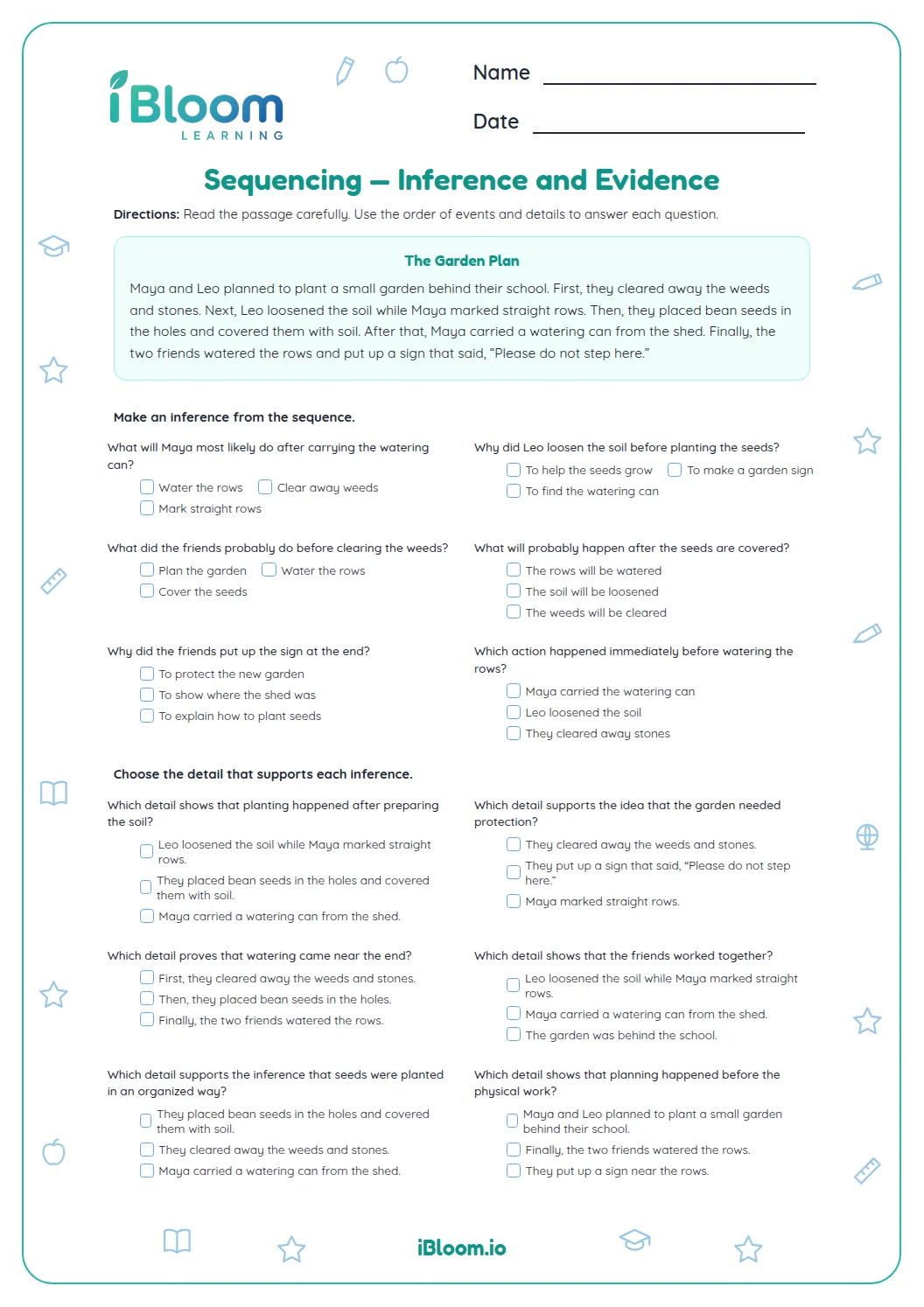
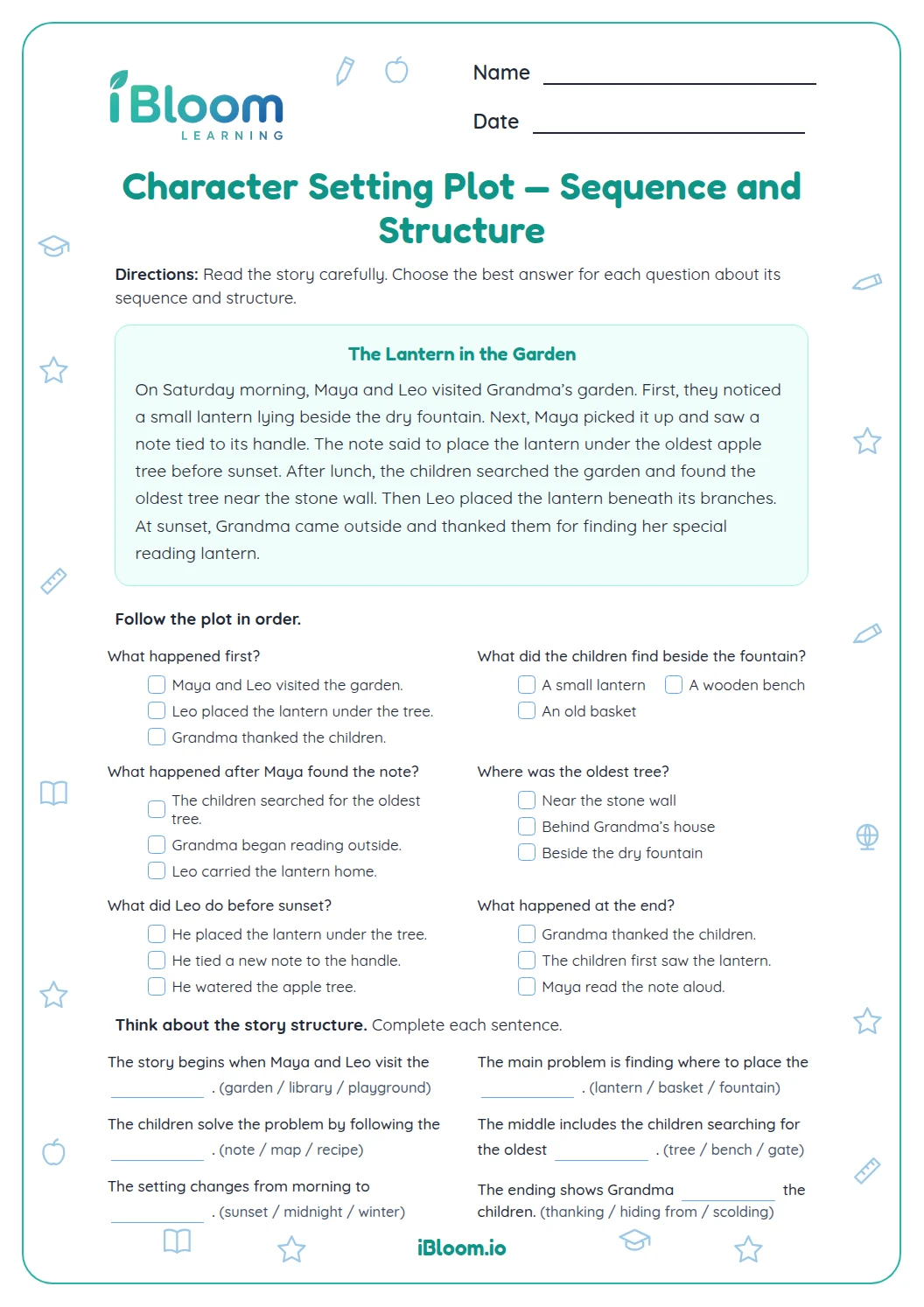
This Grade 4 reading worksheet uses an original passage about a class growing basil beside the lunchroom. Readers answer seven multiple-choice questions about what happened first, next, and later, then write seven short retellings with details. The sequence questions move from identifying single events to explaining the order across several steps. A separate key includes model responses. The practice supports Common Core RL.4.3 by asking readers to describe story events with specific text details.
Aligned to RL.4.3
What happens in the garden passage?
A class prepares a planter, waits for basil to sprout, and uses the leaves in the lunchroom. Keep track of the actions as you read. Time markers such as Monday, Wednesday, and Friday help anchor the sequence.
How do you answer the order questions?
Return to the sentence that names the event. Read the nearby time clue, then compare it with the other events in the choices. Do not rely on what usually happens in a garden; use this passage.
- 1Question: Which event happened first?
- 2The passage begins with Ms. Chen showing the empty planter on Monday.
- 3So the first event is: Ms. Chen showed the empty planter.
How do you write a useful retelling?
Name the actions in order and include a detail that distinguishes each one. A short response can use “first,” “next,” “after,” or “finally” to make the timeline clear.
How to use this worksheet
- 1Read the whole passage once to understand the garden project.
- 2Underline or remember time words such as Monday, Wednesday, and Friday.
- 3For each choice question, find the matching event in the passage.
- 4For written responses, list the events in order before drafting.
- 5Reread your sentence to check that the actions and time clues match.
- 6Use the model answers to check the important details, even if your wording differs.
Common mistakes and quick fixes
The mistake
Putting an event first because it seems like the most important one.
The fix
Check where the passage places it; importance and order are different.
The mistake
Skipping a step between planting and the first leaves.
The fix
Look for what Jordan did on Wednesday and include it when retelling that stretch.
The mistake
Adding a garden detail that is not in the passage.
The fix
Point to a sentence that supports each event in your response.
Common Core alignment
Use specific story details to describe events and explain how they unfold.
On this sheet: Parts B and C ask readers to order and retell the story events with text details.
Show the official wordingHide the official wording
Describe in depth a character, setting, or event in a story or drama, drawing on specific details in the text (e.g., a character’s thoughts, words, or actions).
What to practice next
Make more practice
Further reading
Questions parents and teachers ask
What passage does the worksheet use?
It includes an original passage about a Grade 4 class that prepares a planter, grows basil, and shares leaves with the lunchroom. The story has clear time markers across several days, giving readers details they can use to track the events in order.
How many sequencing questions are there?
There are 14 questions. Seven multiple-choice items ask about individual events and their order. Seven written-response prompts ask children to retell steps or connect more than one event. The answer key gives a model for every response. The key helps check the work.
Does a written response have to match the key word for word?
No. The key offers sample responses that name the important event or events in the right order. A child may use different wording and still be correct if the response matches details from the passage and answers the prompt. The key helps check the work.
How can I help if my child mixes up the order?
Ask your child to find the time words in the passage and place the events on a simple timeline. Monday, Wednesday, and Friday provide anchors. Then ask what happened between those days, using the sentences about watering, sprouting, and protecting the shoots.
What skill does this worksheet practice?
It practices following and explaining a sequence in a story. Readers identify what happened first and later, then retell several events with details. This supports close reading because children must return to the passage rather than guess from general knowledge.