




About this worksheet
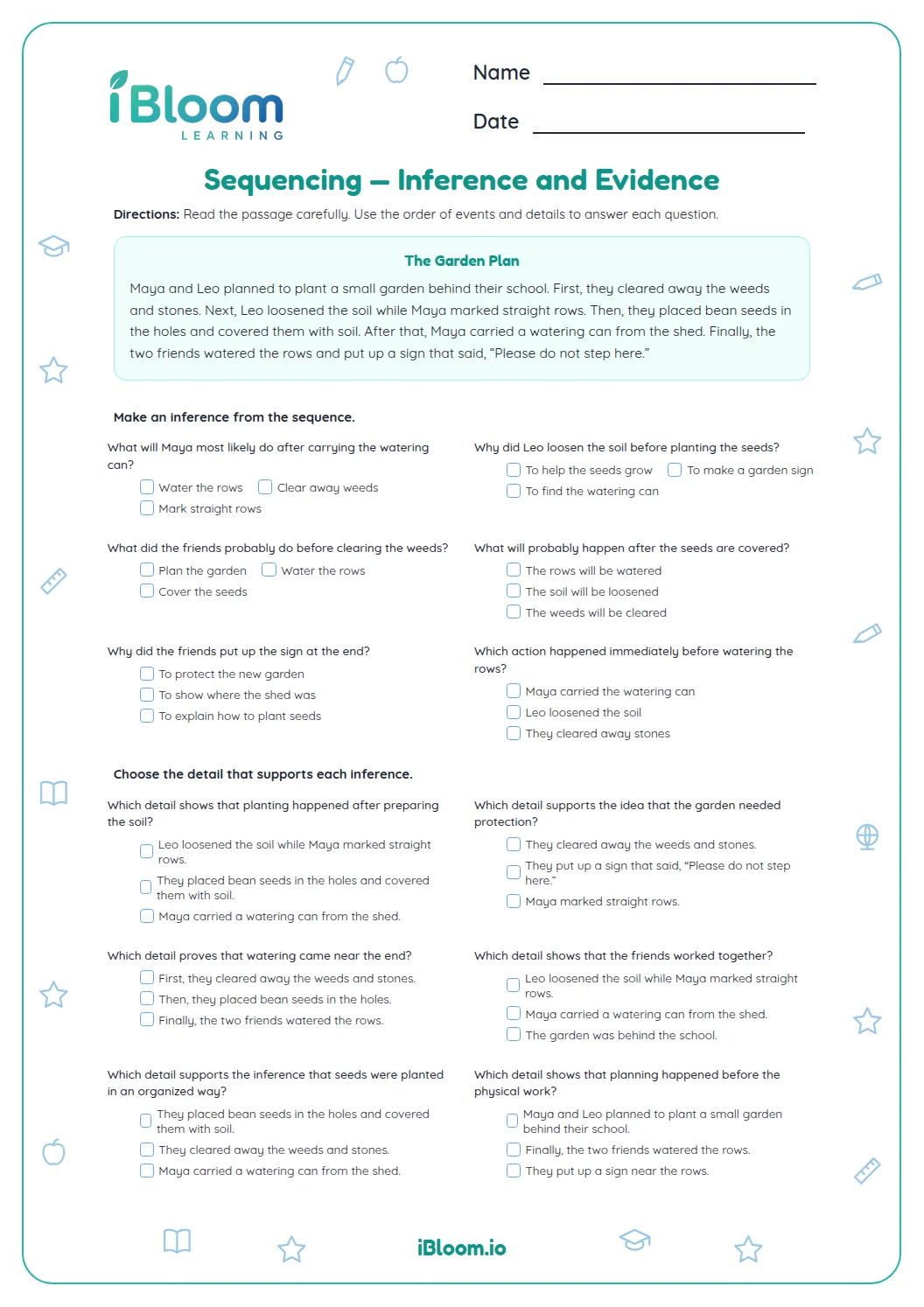
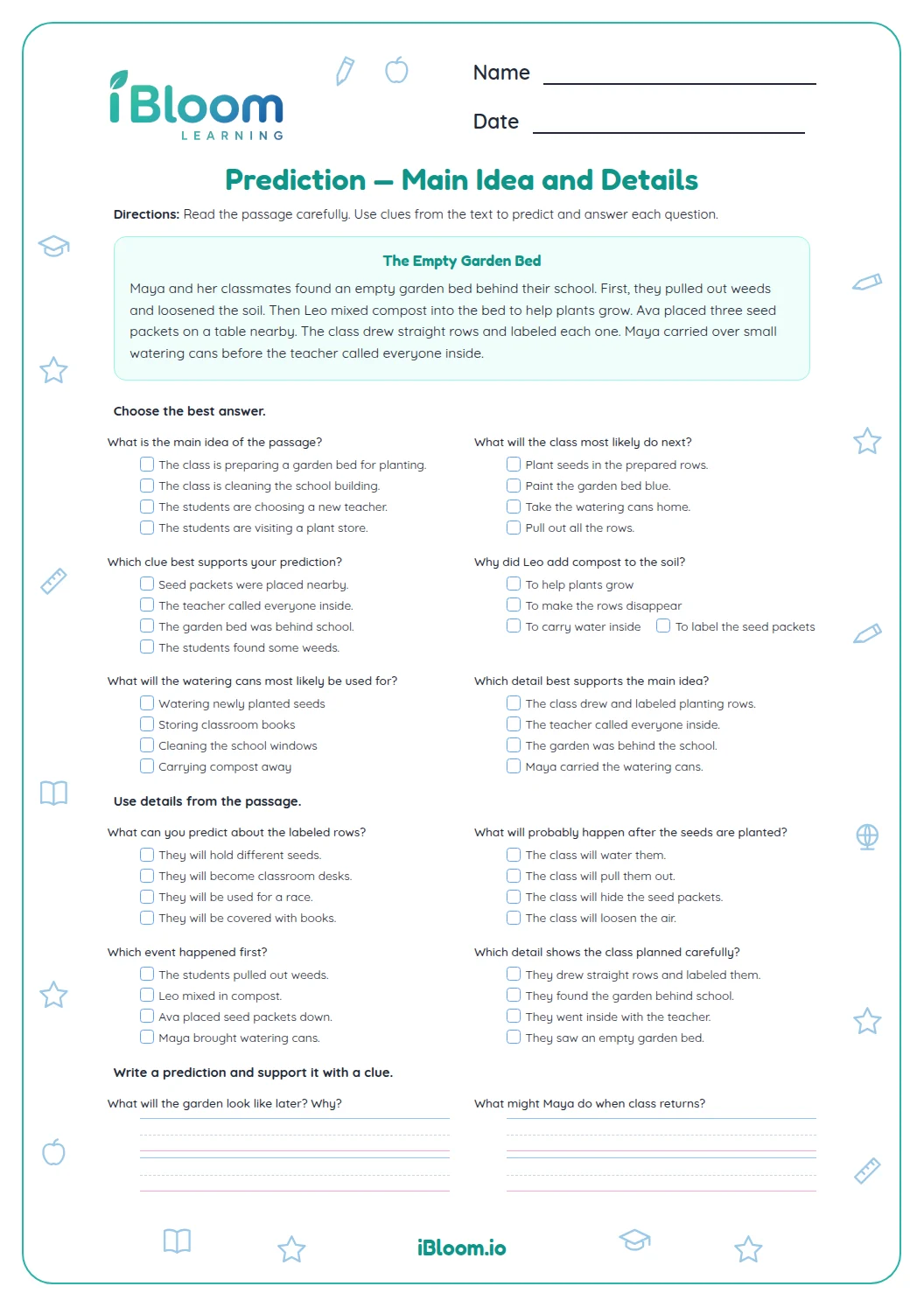
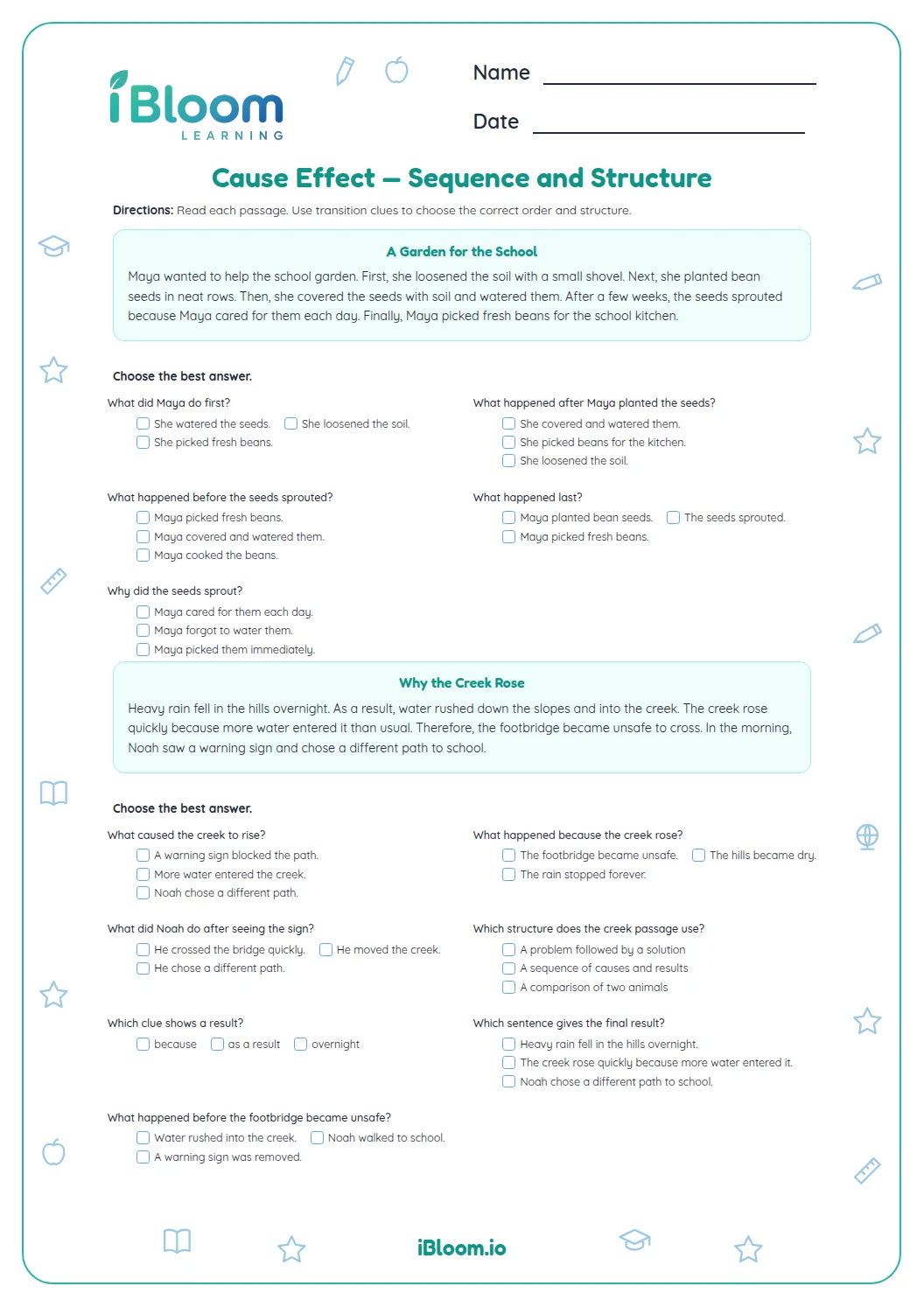
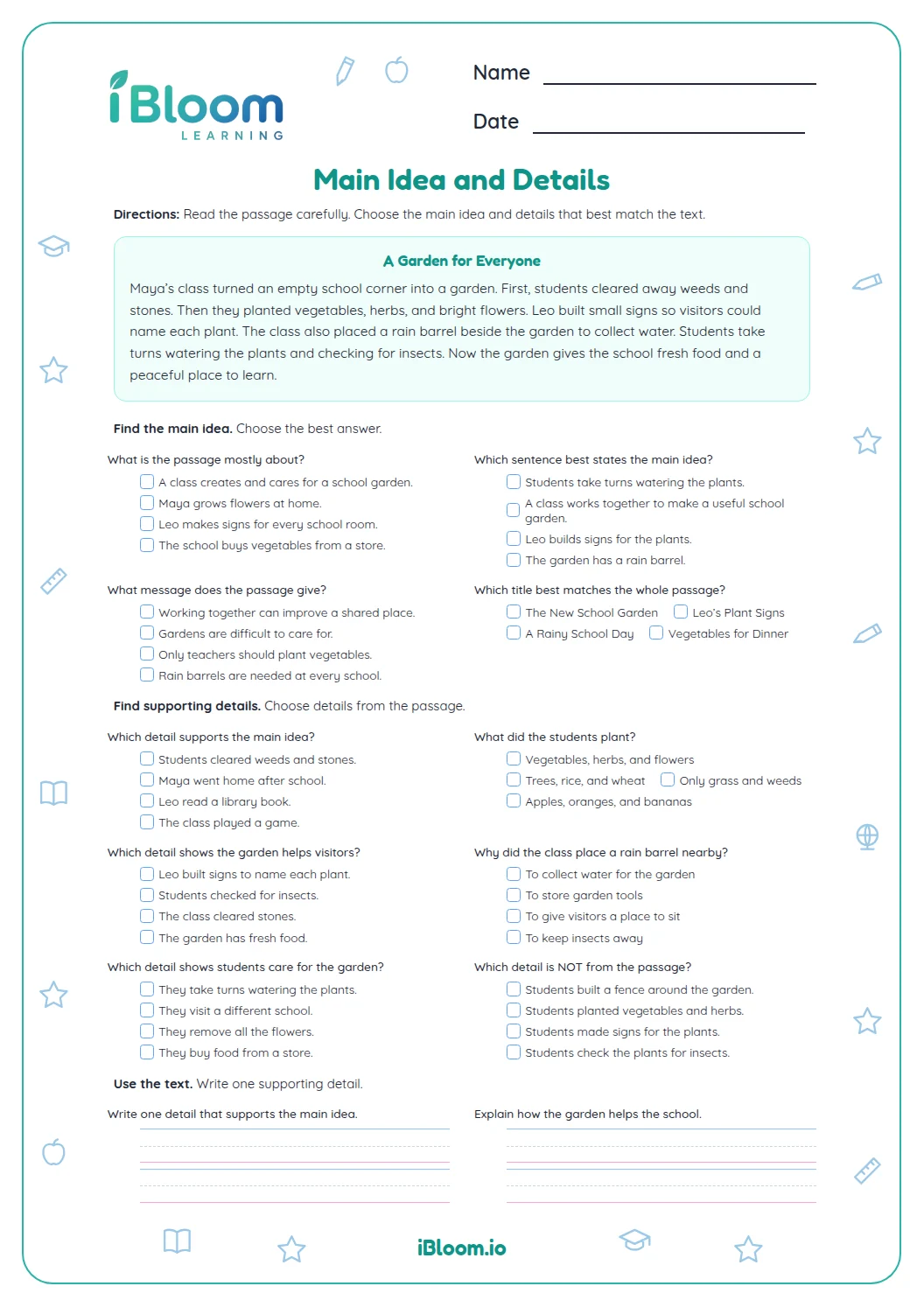
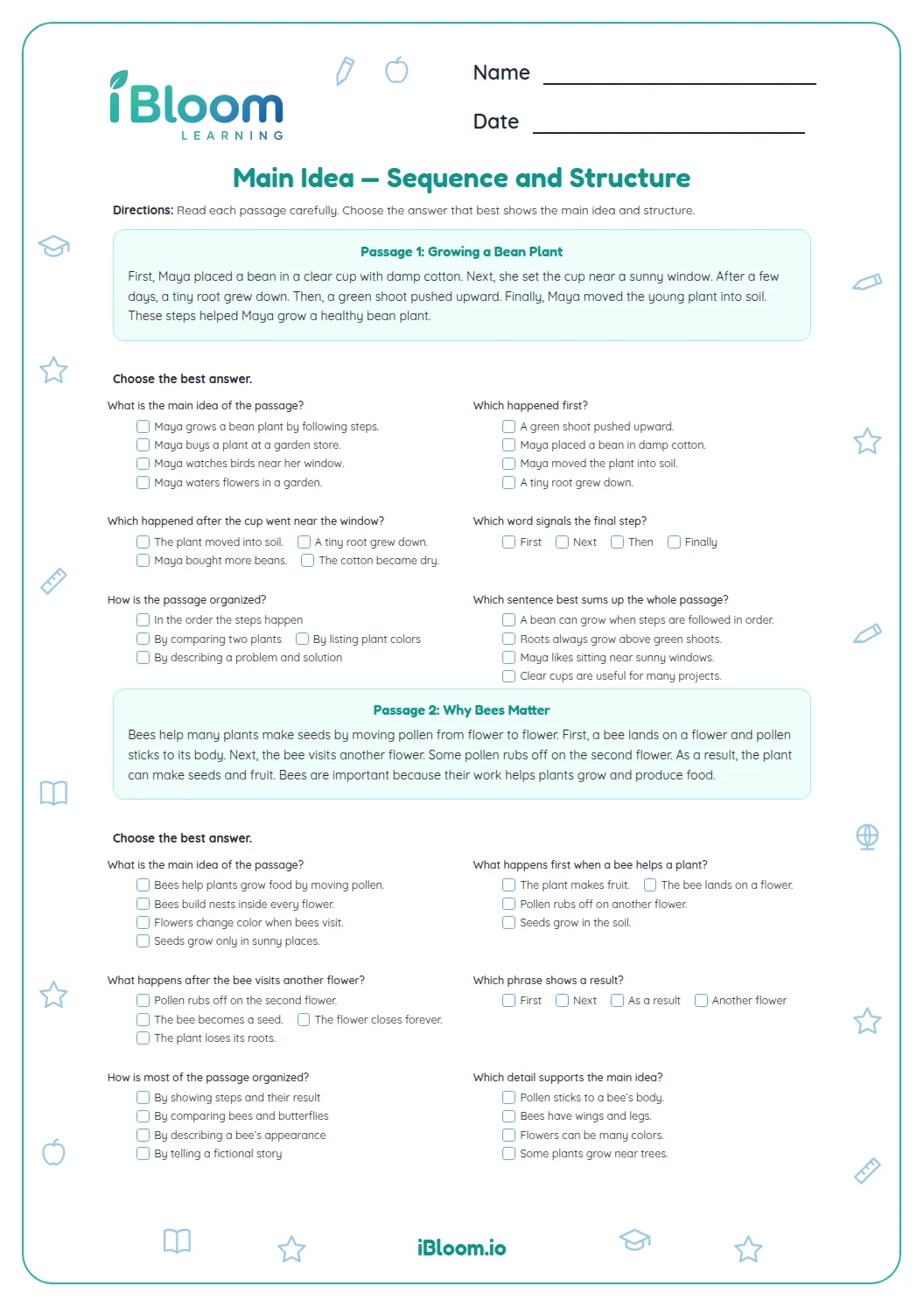
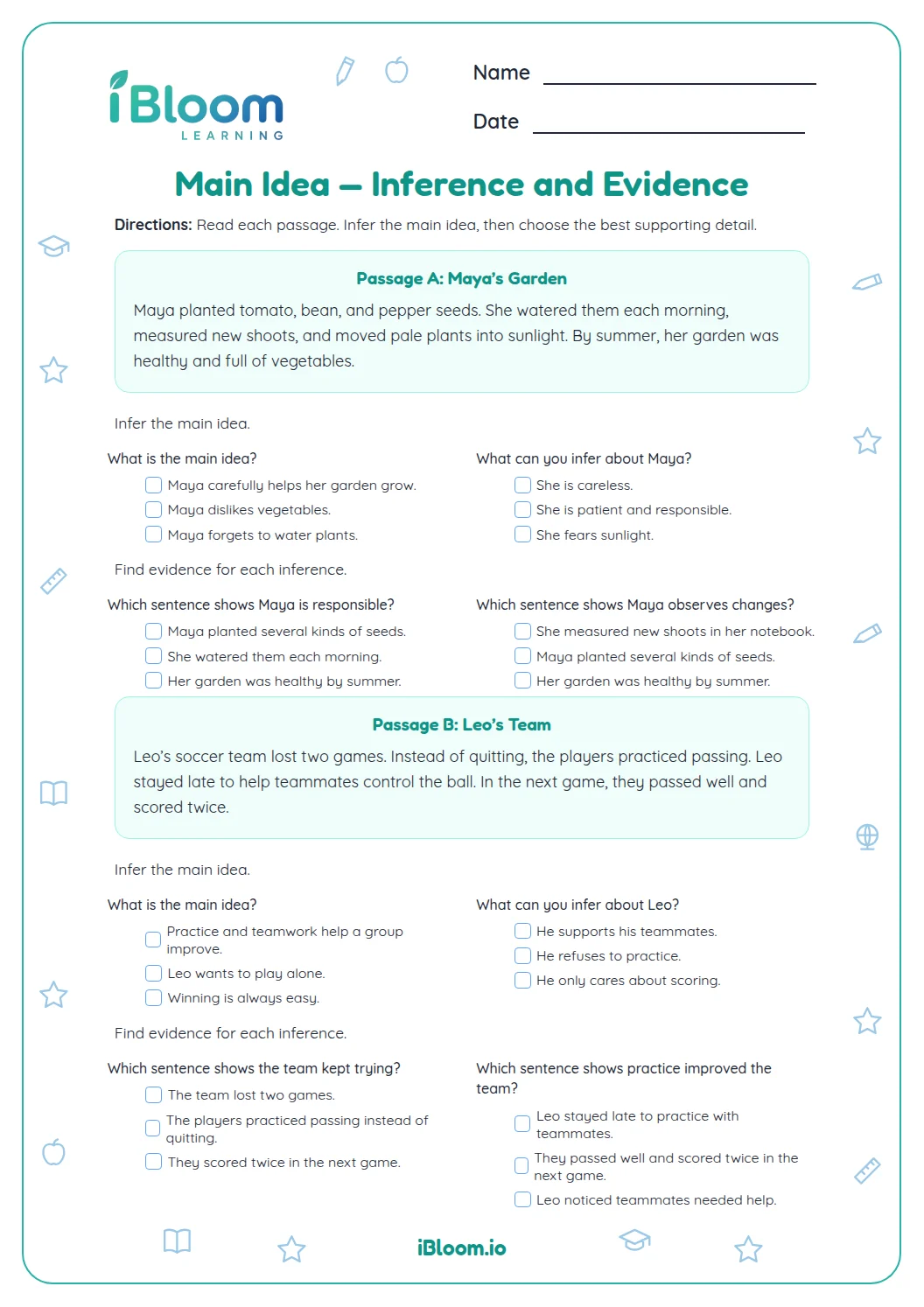
This Grade 4 worksheet pairs Maya’s lettuce garden sequence with an informational passage about desert fox adaptations. Fourteen multiple-choice questions ask readers to track events, draw conclusions from details, and recognize how the fox passage is organized. The answer key lists one supported response for each item.
Aligned to RL.4.1
How does the garden passage show sequence?
Transition words organize Maya’s actions from planting seeds to picking lettuce. Look for the event before or after the detail named in each question.
How do details explain the fox’s adaptations?
The second passage groups features with their purposes: large ears release heat, furry feet protect from hot sand, and a cool burrow offers a place to rest. These clues support conclusions about survival.
How is the information organized?
The garden passage follows events in time order. The fox passage lists features and explains how they help the animal survive.
How to use this worksheet
- 1Read both passages once.
- 2Use transition words to track Maya’s actions.
- 3Match each fox feature to the job the passage gives it.
- 4Choose conclusions supported by details.
- 5Check each response with the separate key.
Common mistakes and quick fixes
The mistake
Mixing up the order of Maya’s actions.
The fix
Use First, Next, Then, and Finally as sequence clues.
The mistake
Choosing a fox detail without its purpose.
The fix
Connect each feature to the way it helps the fox.
The mistake
Calling both passages the same structure.
The fix
One tells events in time order; the other explains features and purposes.
Common Core alignment
Students return to the passage for explicit details and use those details to support conclusions.
Refer to story details when explaining meaning and drawing inferences.
On this sheet: Questions ask students to cite story details for answers and inferences.
Show the official wordingHide the official wording
Refer to details and examples in a text when explaining what the text says explicitly and when drawing inferences from the text.
What to practice next
Make more practice
Further reading
Questions parents and teachers ask
What happens first in Maya’s garden?
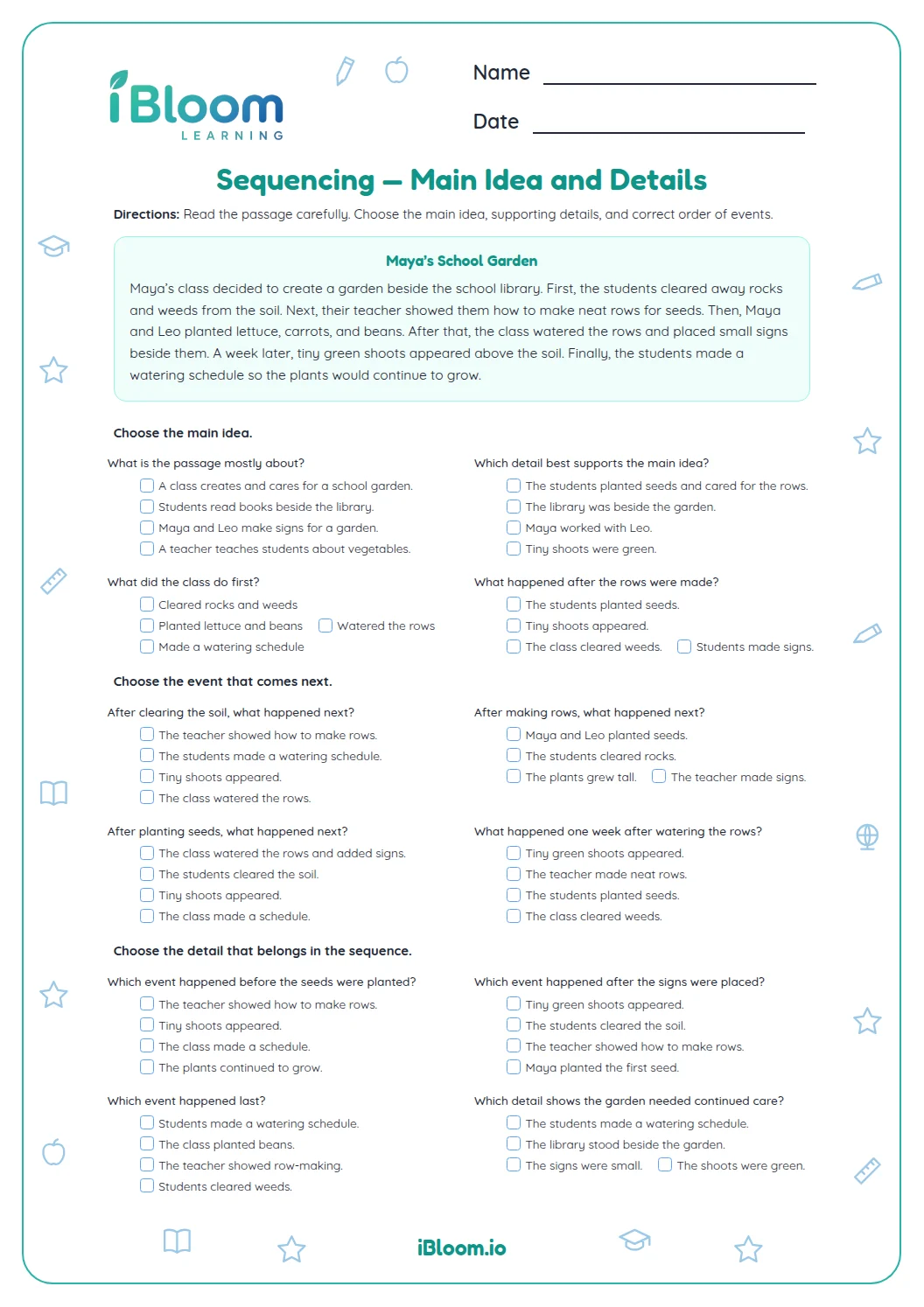
Maya loosens the soil and plants the seeds. She waters them each morning, sees tiny leaves after two weeks, places a fence around the plants, and picks the lettuce for the picnic. The transition words help readers follow that order.
How do the fox’s ears help it?
The passage says the desert fox’s large ears release heat from its body. This detail helps explain how the fox lives in a hot, dry place. Furry feet protect it from hot sand, and a cool burrow gives it a place to rest during the hottest part of the day.
How are the two passages organized?
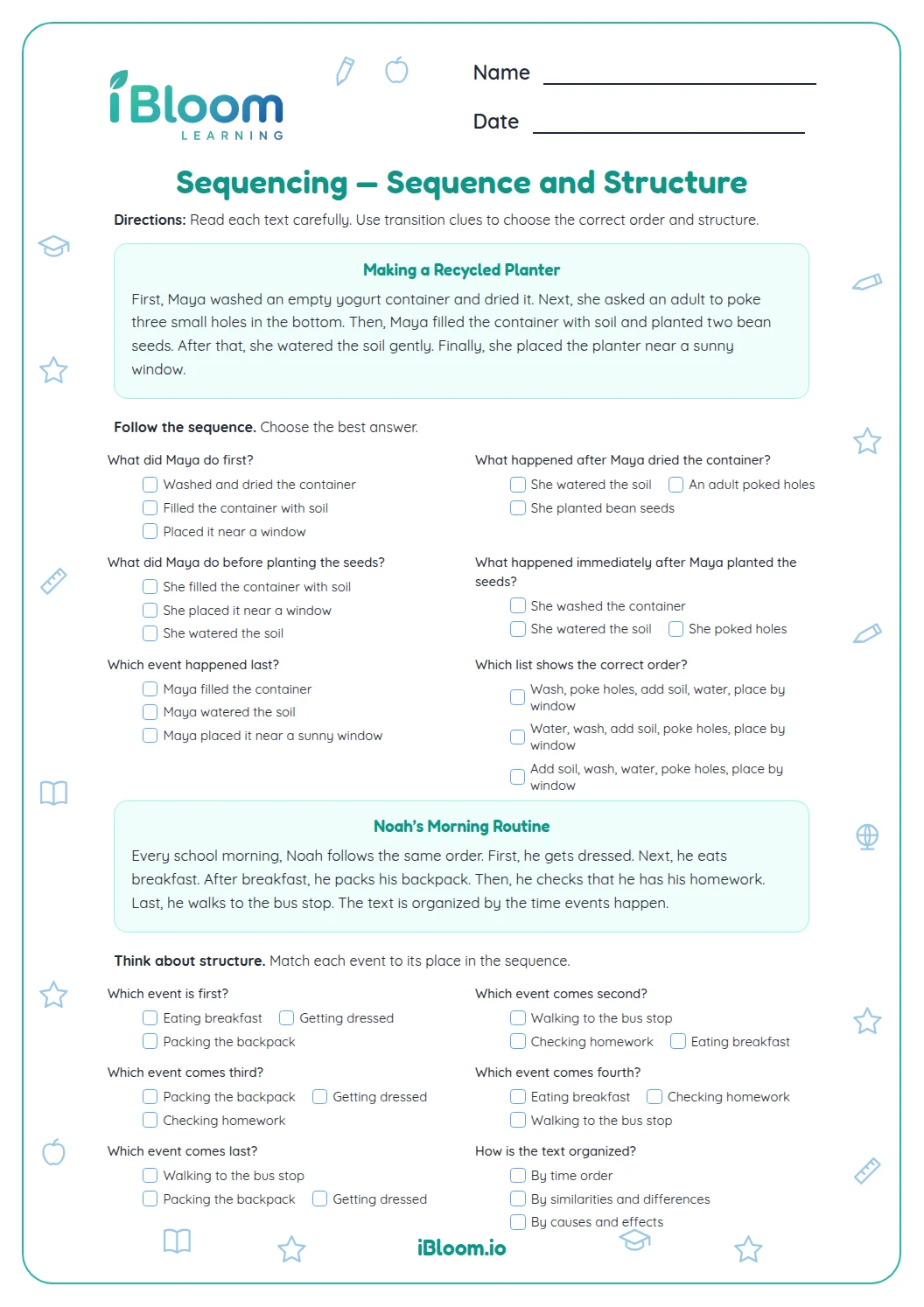
The garden passage follows Maya’s actions in time order. The fox passage lists features and explains how each helps the animal survive. Readers can use transitions in the first text and feature-purpose details in the second to identify the structures.
What does the worksheet ask students to infer?
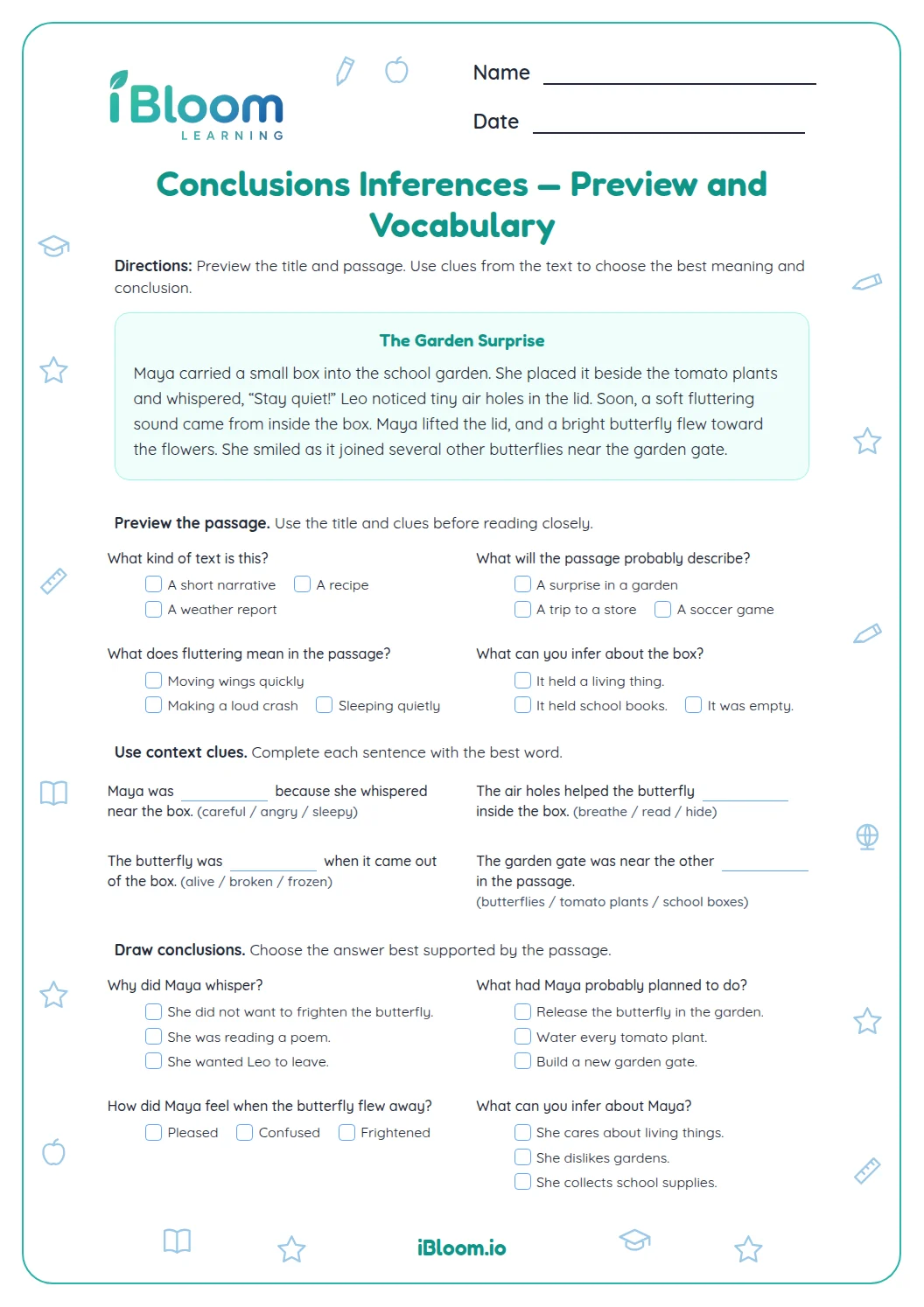
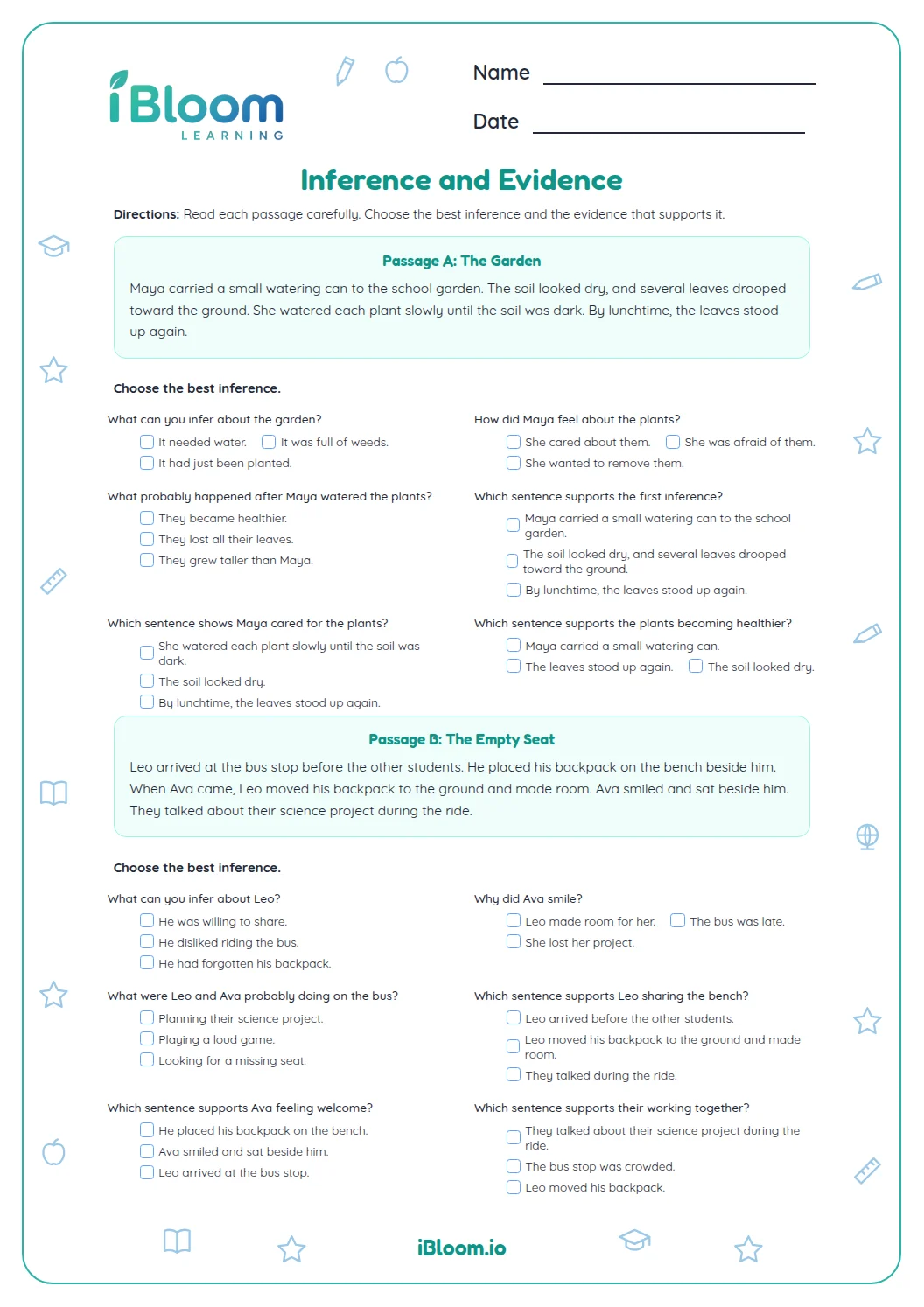
Students draw conclusions from details, such as why Maya built a fence or how a desert fox avoids heat. A supported answer connects a conclusion to a fact from the relevant passage instead of relying on a guess.
How many questions are on the sheet?
There are 14 multiple-choice questions across three worksheet pages. The items cover the order of Maya’s garden actions, conclusions supported by details, and the structure of the desert fox passage. A separate answer key lists the supported choice for every question so learners can review their reasoning.