

About this worksheet
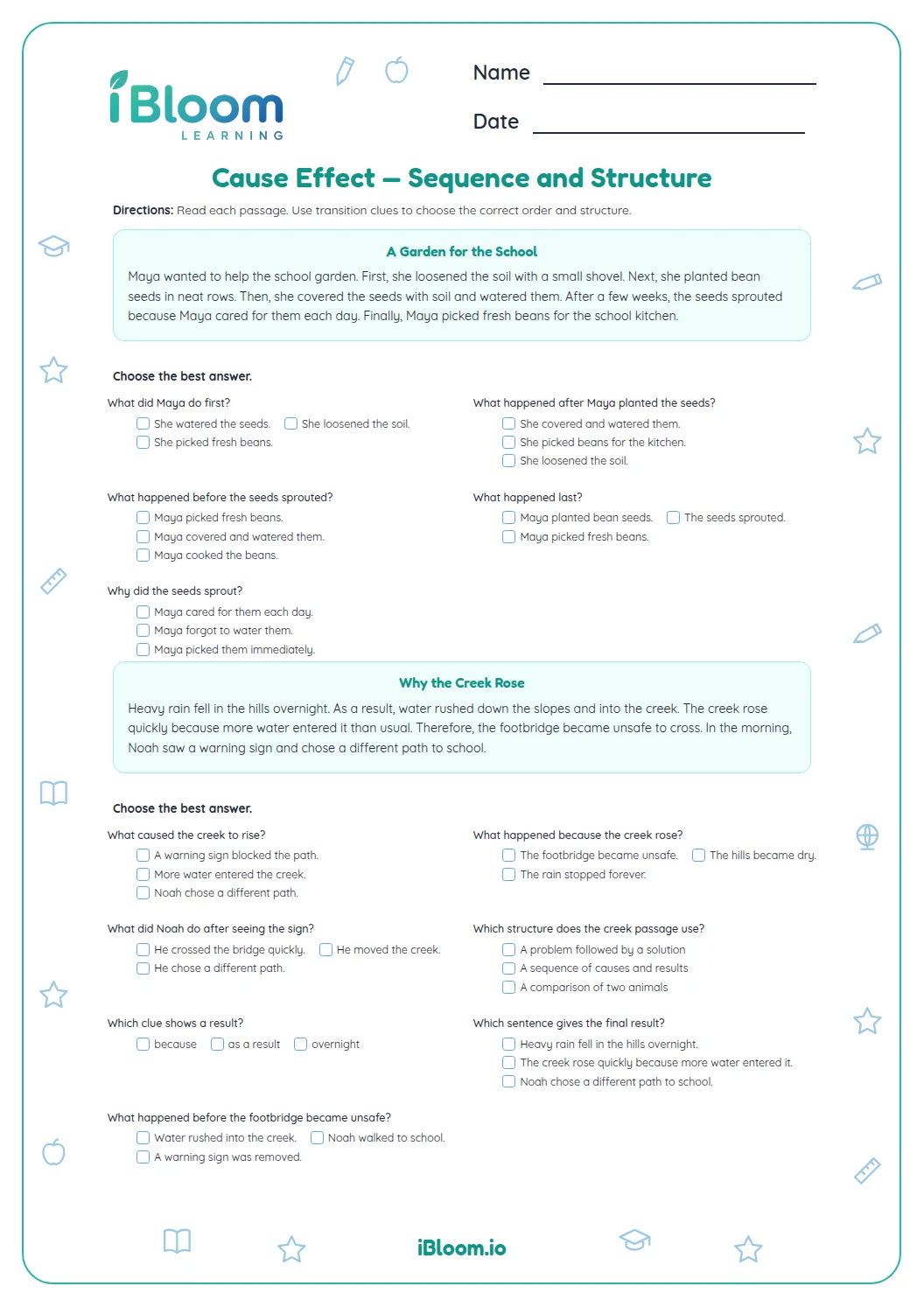
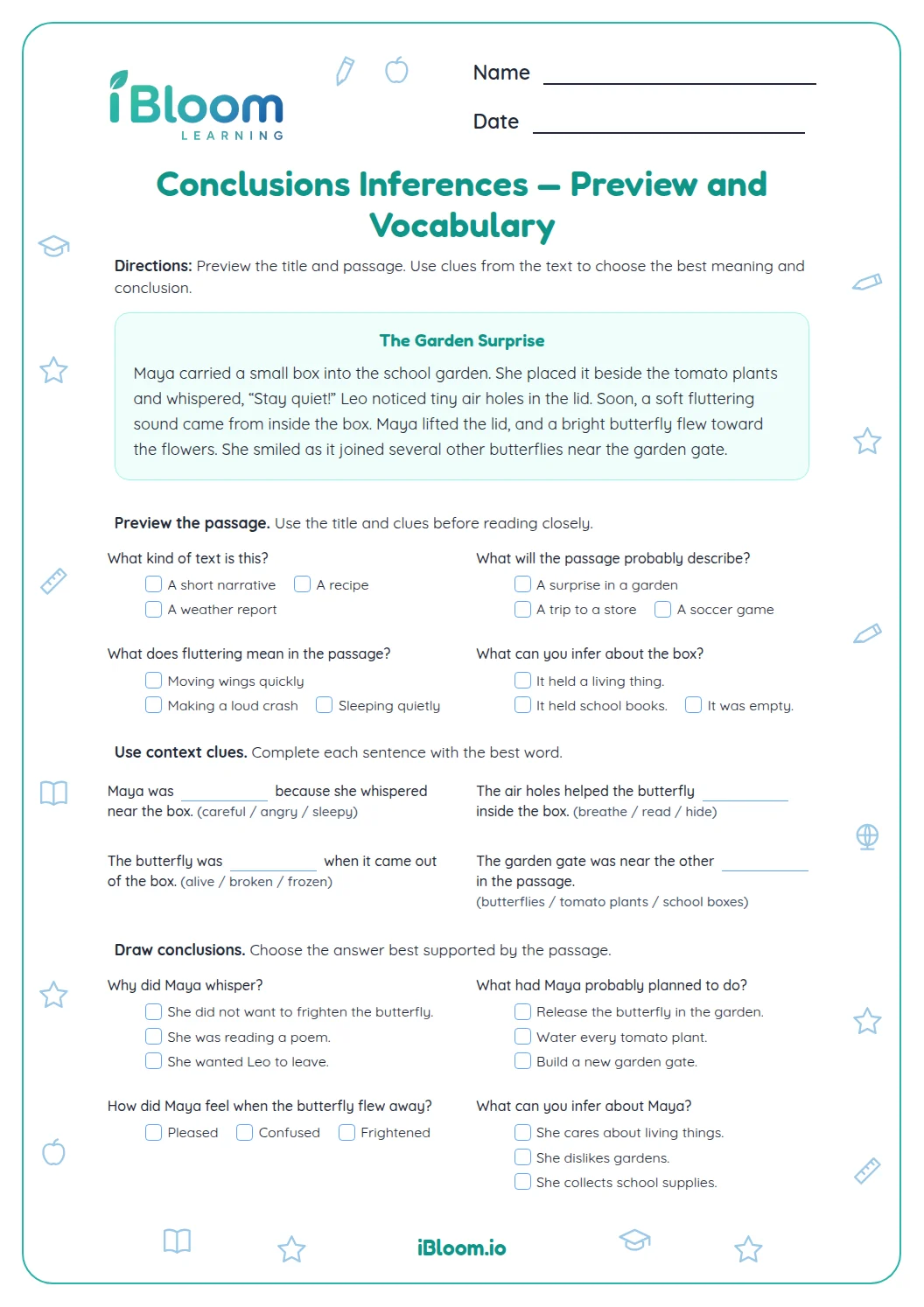
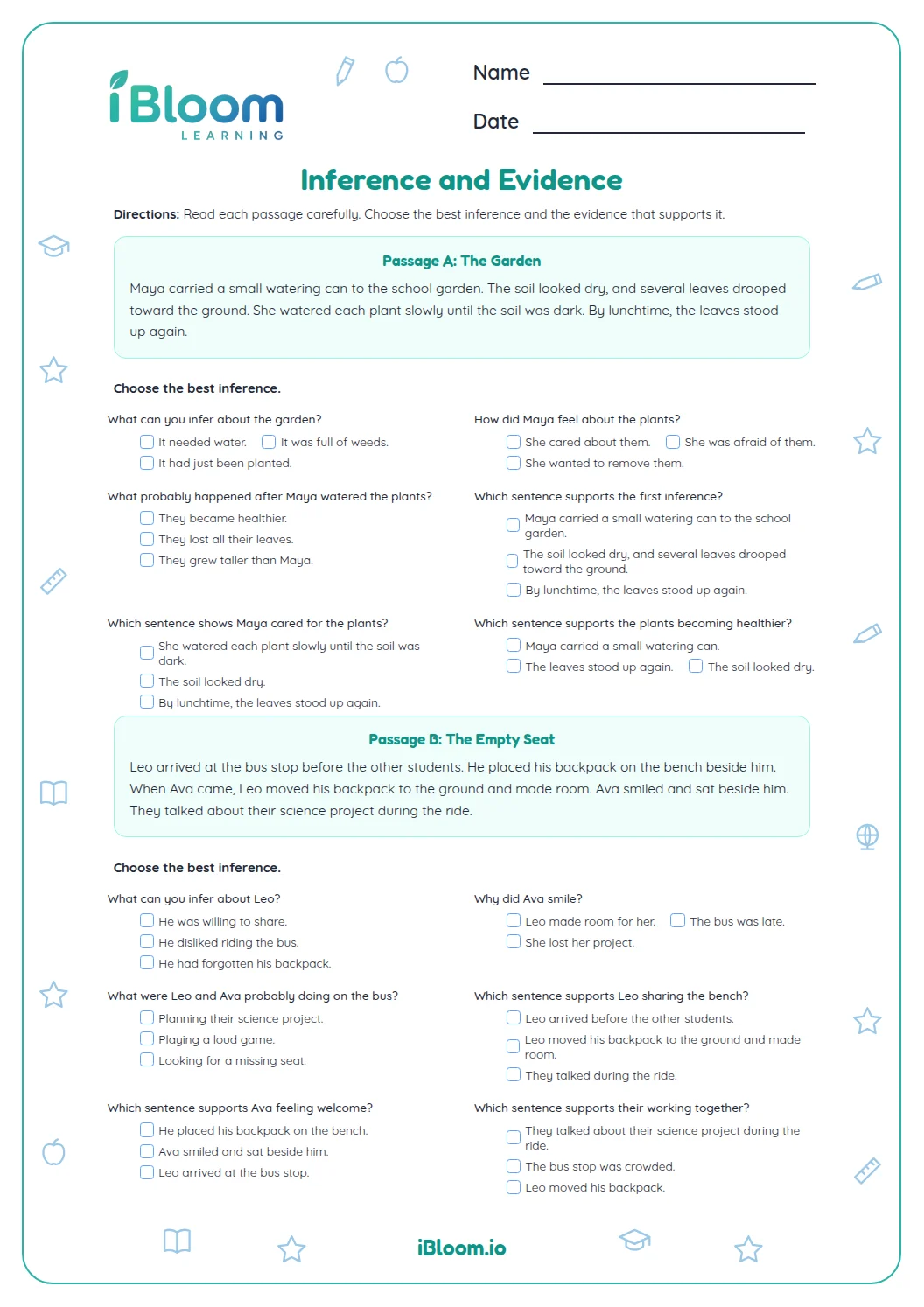
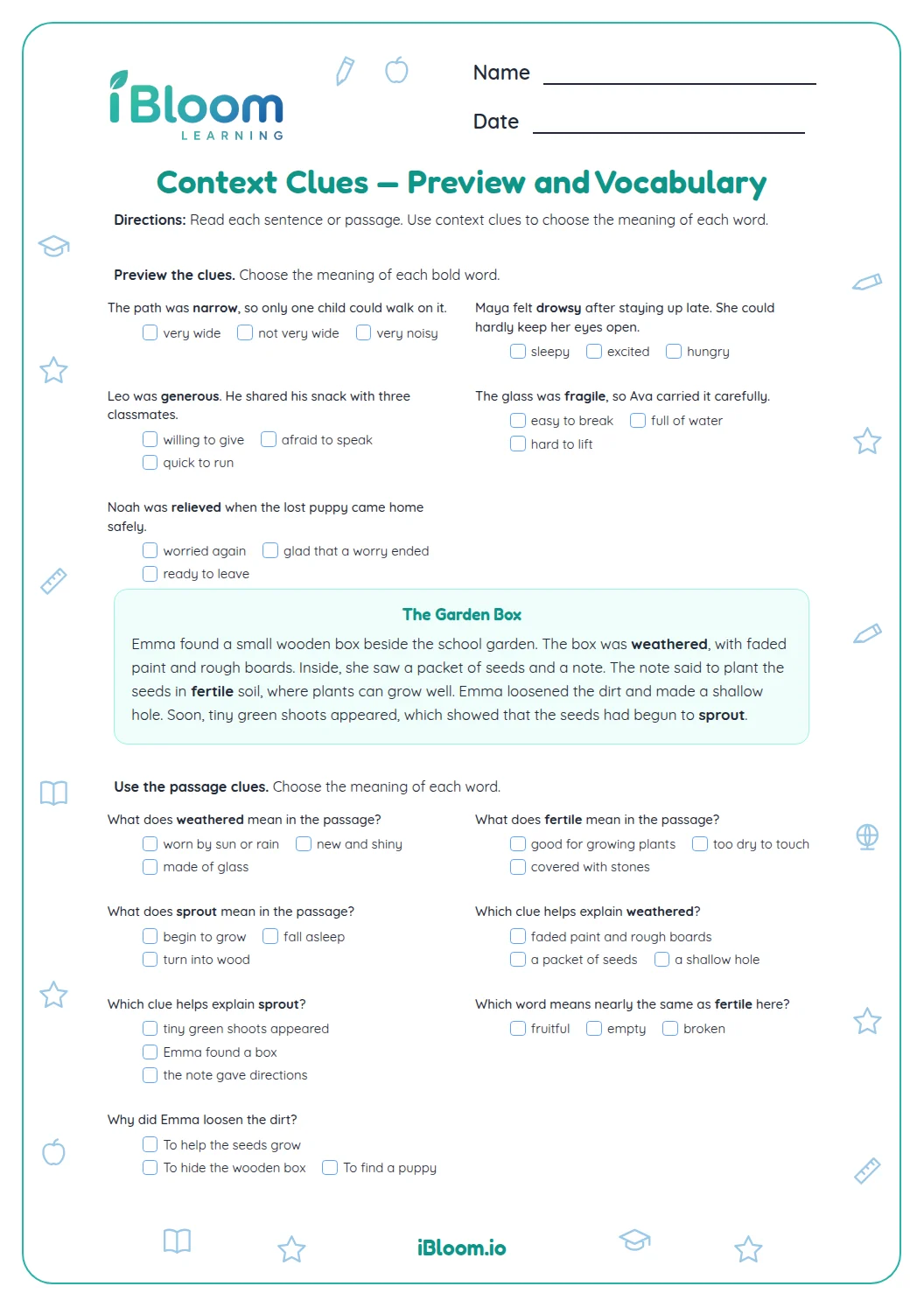
The Grade 4 worksheet pairs a rain-garden passage with 14 cause-and-effect and context-clue questions. It includes an answer key and practices the cited Common Core reading standard.
Aligned to RI.4.3
How should readers preview the passage?
Use the title to predict the text type and topic. Question 1 identifies the rain-garden passage as informational and points to its focus: how a class manages rainwater.
How can readers trace causes and effects?
Find what happened and the action or condition connected to it. The class prepared soil and planted deep-rooted flowers because the garden could hold water. Later, no puddle formed by the doors. Questions 3 through 10 ask students to follow event order, causes, results, and passage details.
How do context clues help with vocabulary?
The passage describes water moving across pavement after rain, so runoff means water flowing over land. It says the class planted native flowers and grasses in a rain garden, suggesting plants that naturally grow in that area. Use nearby actions and results to infer each word.
How to use this worksheet
- 1Read once to follow the problem and the class’s response.
- 2Reread the sentence around the event named in each question.
- 3For cause-and-effect questions, state both the cause and the result.
- 4Use nearby details to infer the meanings of runoff and native.
- 5Answer the four written questions in a complete, passage-based sentence.
- 6Check the key and revise any answer that lacks a passage detail.
Common mistakes and quick fixes
The mistake
Naming an event without explaining what caused it.
The fix
Connect the event to the passage detail that led to it.
The mistake
Guessing a vocabulary word from memory alone.
The fix
Reread the nearby sentence and use its examples or results.
The mistake
Giving a broad opinion instead of a passage detail.
The fix
Point to a specific action or result in the rain-garden text.
Use passage details to explain why the class made changes and what happened next.
On this sheet:
Show the official wordingHide the official wording
Explain events, procedures, ideas, or concepts in a historical, scientific, or technical text, including what happened and why, based on specific information in the text.
What to practice next
Make more practice
Further reading
Questions parents and teachers ask
What is the passage about?
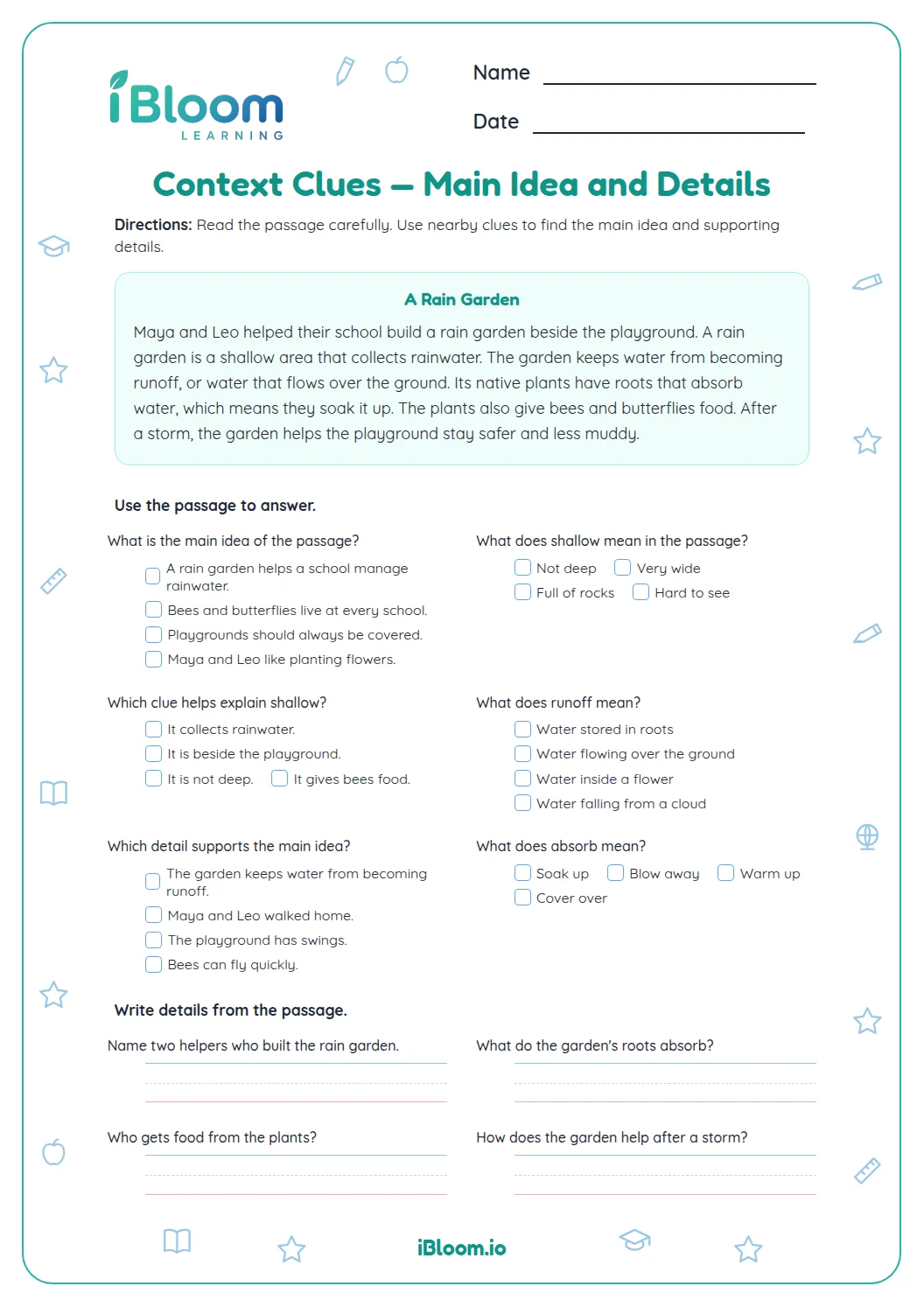
The passage explains how a class made a rain garden after heavy rain sent water toward the school doors. Students prepare the soil, plant flowers and grasses, and protect the area with a sign. A later storm lets readers see what changed after the garden was planted.
How many questions require written answers?
Two questions ask students to write a short response. One explains how the garden changed the result after the second storm; the other uses a passage clue to interpret native. The other 12 questions use answer choices, including vocabulary in context.
What does runoff mean in this passage?
Runoff is water that flows over land instead of soaking into the ground where it falls. In the passage, rain moves across the playground pavement toward the doors. The garden is designed to absorb some of that water into the soil.
How should students answer cause-and-effect questions?
Name the event and the detail that explains it. For example, the passage says the garden absorbed runoff, and after the next storm no puddle formed by the doors. A response should connect those two details rather than just saying the garden helped.
Can the answer key accept different wording?
Yes. The four written-response answers are samples, so students can use different words if their responses match the passage. For multiple-choice questions, select the option that the passage supports. If a written response is unclear, reread the related sentence together.
How is native used here?
The passage describes native flowers and grasses planted in a rain garden. In this context, native suggests plants that naturally grow in that area. The worksheet asks students to use the surrounding details to infer that meaning rather than memorize a definition.