

About this worksheet
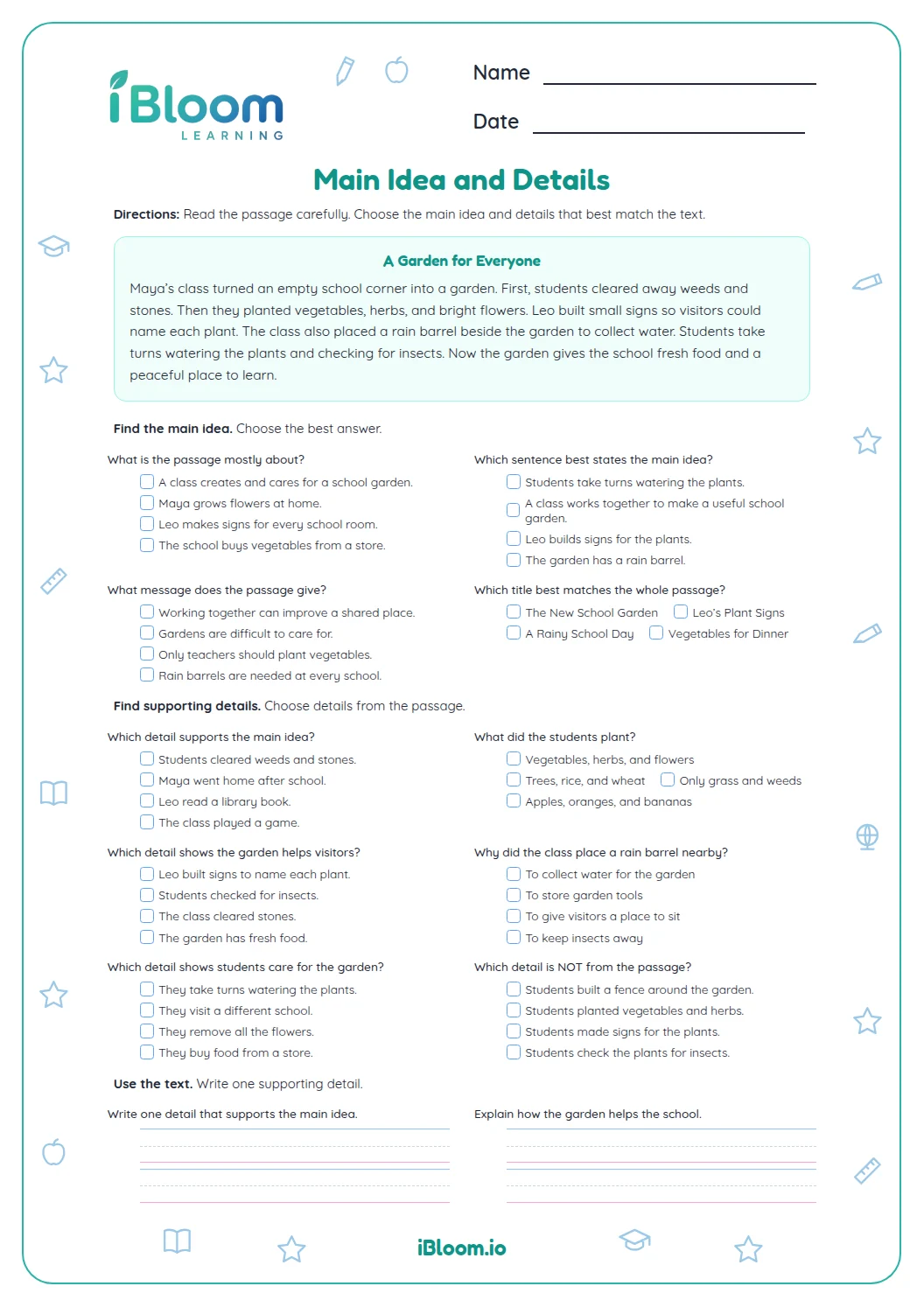
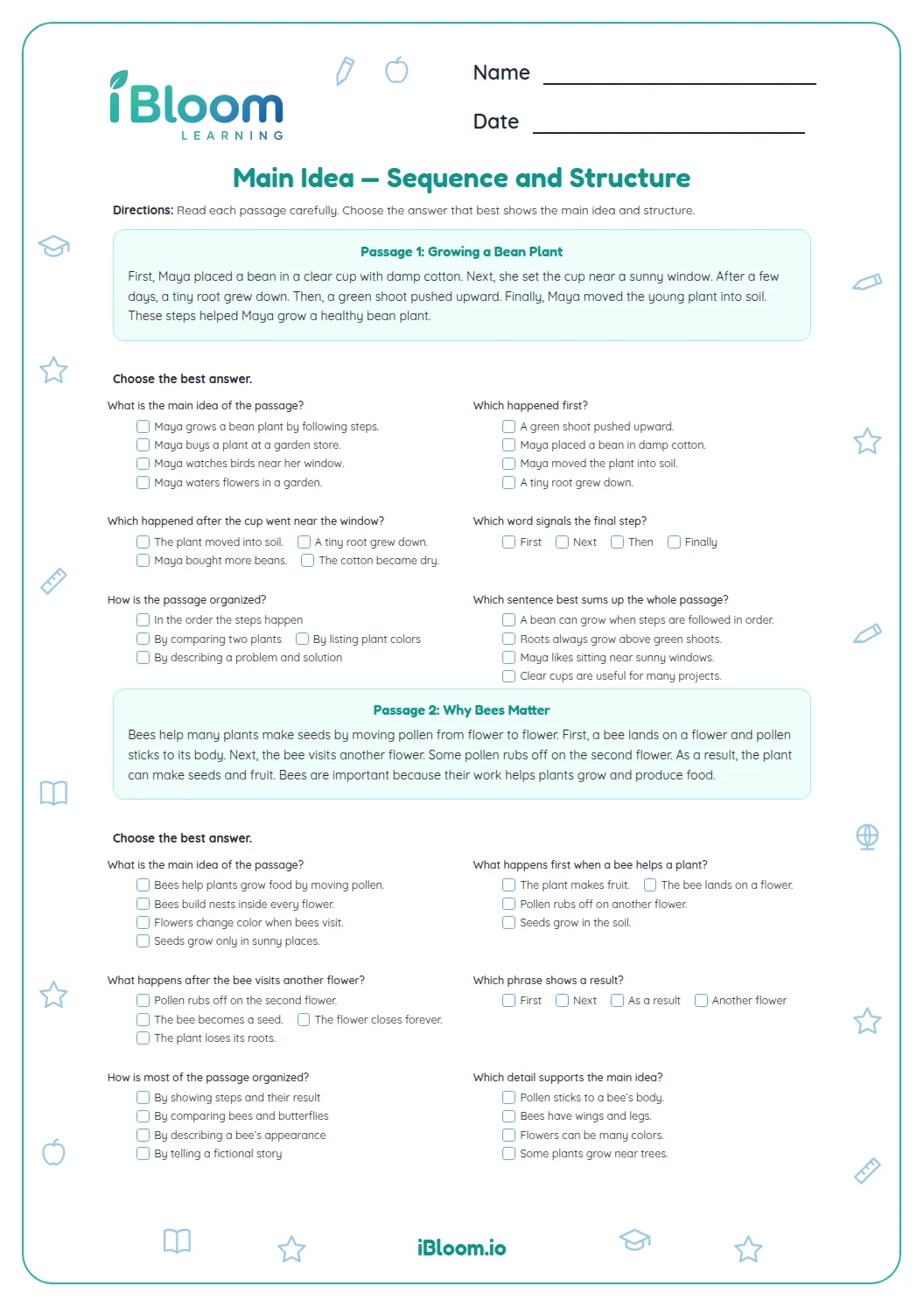
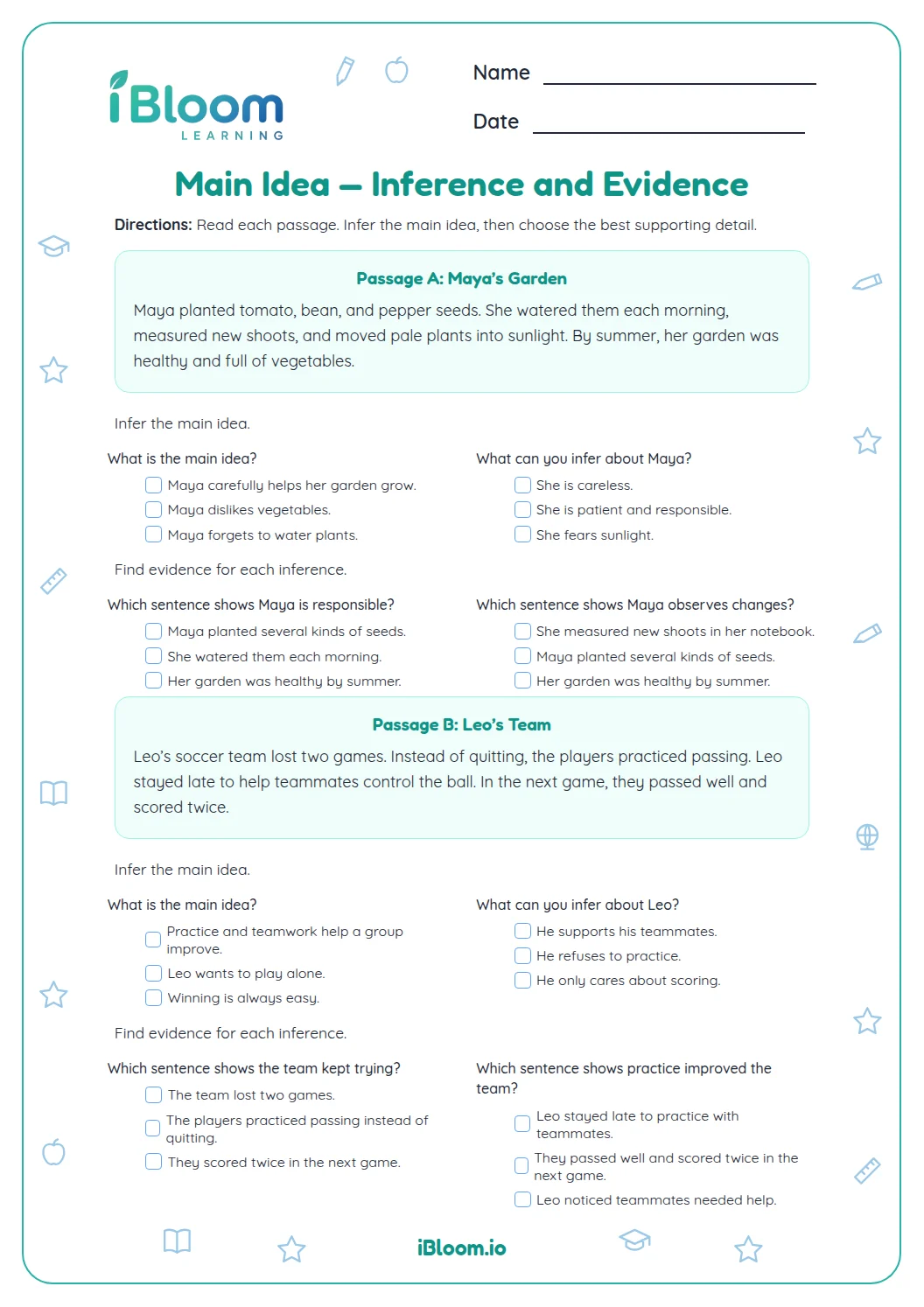
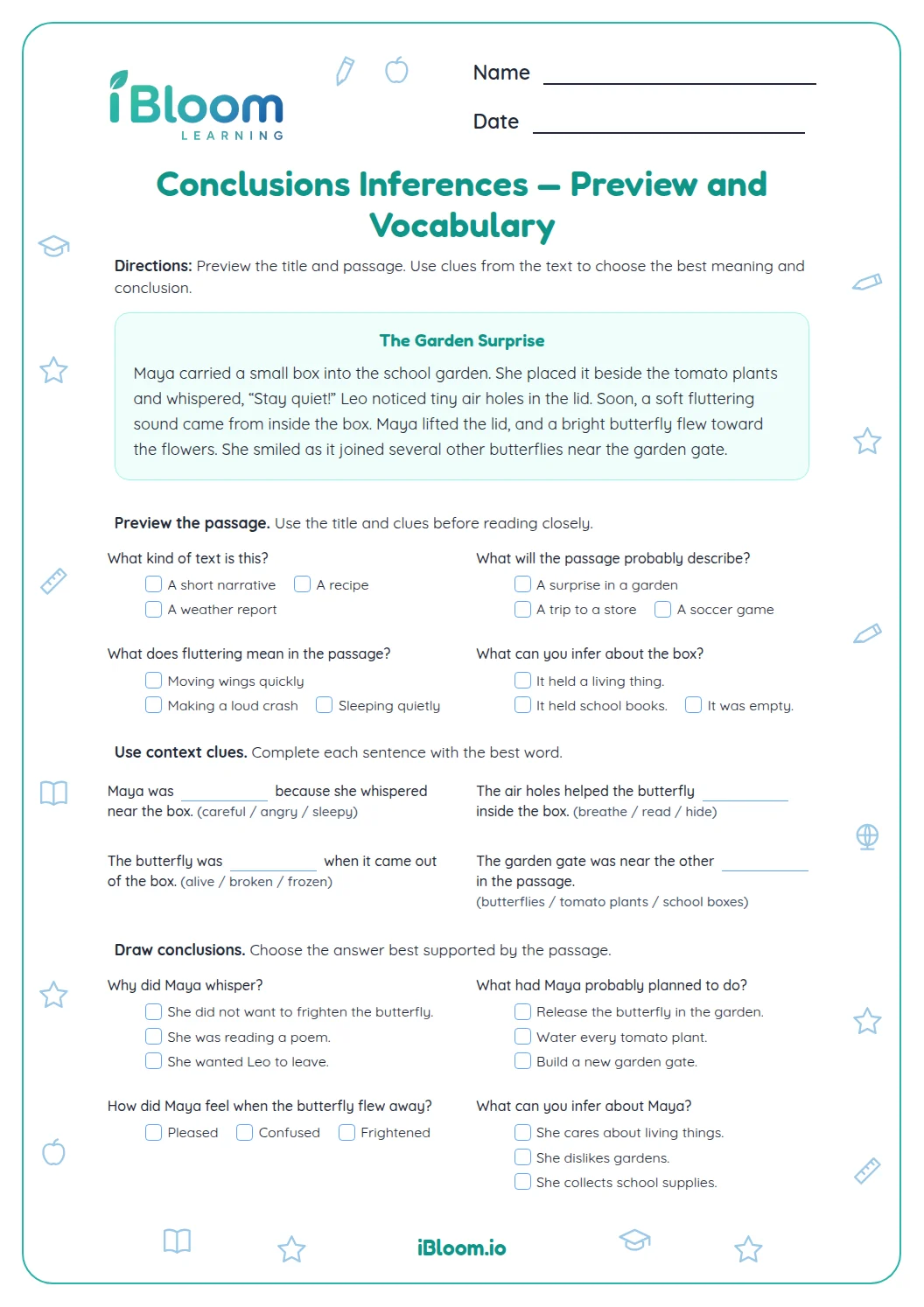
This Grade 4 passage worksheet has 14 questions: 12 selected-response items and two concise evidence-based explanations. It includes an answer key and practices the cited Common Core reading standard.
Aligned to RI.4.3
What happens in “The Garden After Rain”?
Lena’s class plants beans, then a storm moves some seeds toward a path. The students return seeds to a raised bed, add dry leaves, and dig a channel for extra water. Later, they protect the new shoots and give the beans a trellis. Read for each event and the reason for the class’s response.
How can readers trace cause and effect?
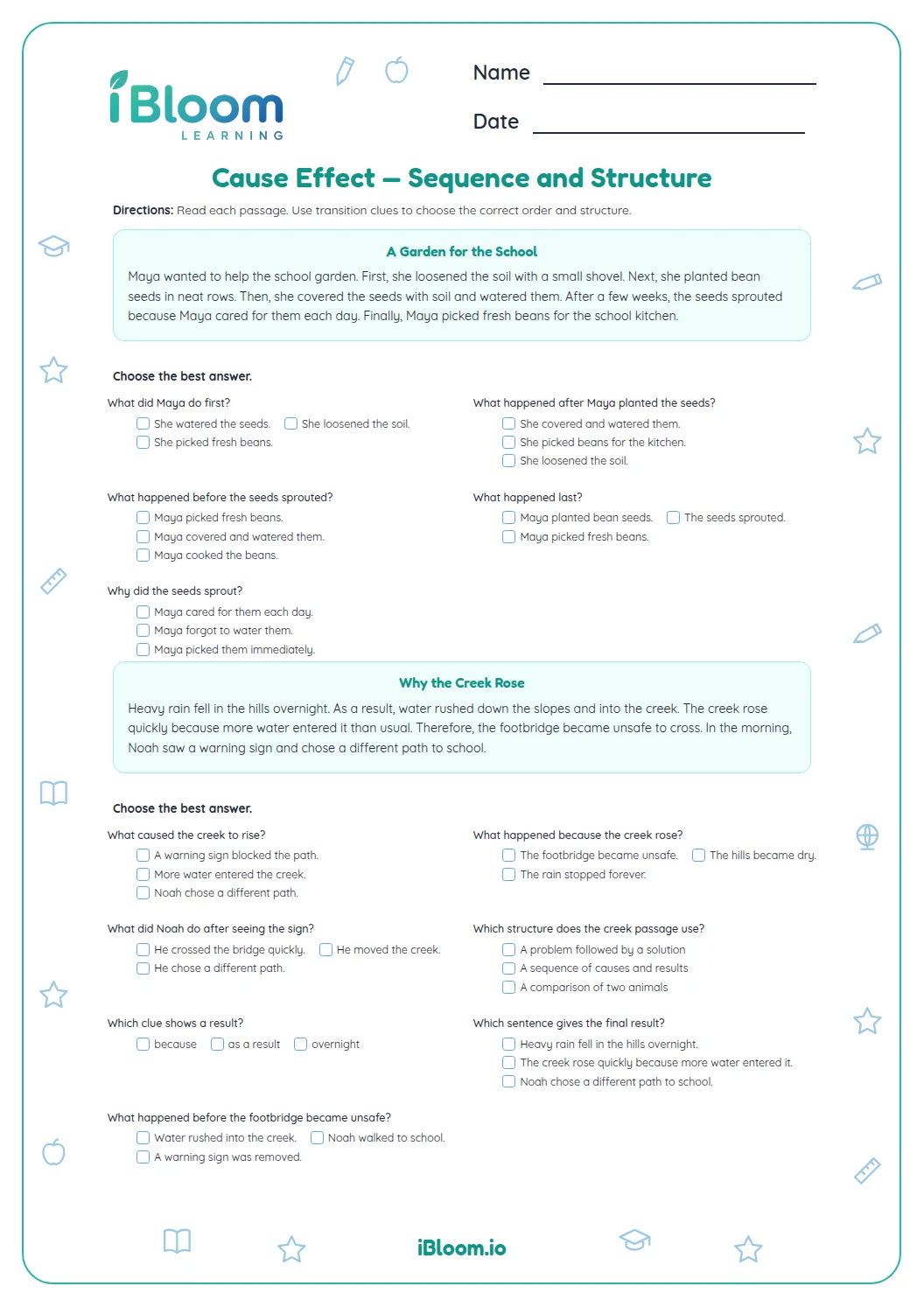
Identify the event that happened first, then ask what followed because of it. Signal words such as because, after, and so can help, but the connection must still fit the passage. Part B asks children to select a cause or result; Part C asks them to name connected events.
- 1What caused the seeds to wash toward the path?
- 2The passage says a storm dropped heavy rain before the seeds moved. The cause is “heavy rain.”
How can a response use text evidence?
State the cause or result, then include the event detail that supports it. For example, the text says students often ran past the garden at recess, which explains why the class built a fence around the shoots. A specific detail makes the explanation traceable to the passage.
What is a cause-and-effect chain?
One result can lead to another event. Heavy rain moves seeds; the class responds by moving them to a raised bed and guiding extra water away; later, shoots appear. Part D asks children to explain these links and use details rather than add a guess the passage does not support.
How to use this worksheet
- 1Read the passage once for the overall garden problem and the class’s responses.
- 2On a second read, mark the event that happens before each result in Parts B and C.
- 3For the written responses, name the cause or effect and add a passage detail.
- 4For “two details” prompts, check that both details appear in the text.
- 5Use the answer key’s sample responses as models; accept another answer supported by the passage.
Common mix-ups and a quick fix
The mistake
Naming a result when asked what caused it.
The fix
Look for the earlier event and ask what made the later event happen.
The mistake
Giving a garden fact that is not in the passage.
The fix
Point to a sentence that supports the explanation before writing it.
The mistake
Listing two events without explaining their link.
The fix
Join them with because, so, or after and make clear which event led to the other.
Common Core alignment
This worksheet asks readers to explain events and their causes using information in the passage.
Explain what happened and why using specific information from a text.
On this sheet: Children use passage details to explain garden events and the reasons for them.
Show the official wordingHide the official wording
Explain events, procedures, ideas, or concepts in a historical, scientific, or technical text, including what happened and why, based on specific information in the text.
What to practice next
Further reading
Questions parents and teachers ask
What is a cause-and-effect relationship?
A cause is an event or condition that helps make something happen; the effect is what follows. In the passage, heavy rain is the cause of seeds washing toward the path. The worksheet asks children to trace these links and explain them with details instead of guessing from general knowledge.
How did the class respond after the seeds moved?
The students moved the seeds back into a raised bed, mixed dry leaves into the soil, and dug a channel to guide extra water away. Those details describe their response to the storm. Several questions ask children to connect what they observed with the changes they made.
Why did the class build a fence?
The passage says students often ran past the garden at recess, so the class built a fence around the shoots. This is a cause-and-effect link: the risk from rushing feet explains the protective choice. A good response names the detail and tells how it connects to the fence.
How should a child answer a written-response question?
Answer the question directly, then use a detail from the passage to support the explanation. For a cause-and-effect chain, put the events in order and make their link clear with because, so, or after. The answer key gives sample wording, but another text-supported response can also work.
How many questions and pages are included?
There are 14 questions after the passage: 12 multiple-choice items and two written responses. The printable has a separate answer key with sample wording for both open responses. Readers can return to the story to check the event details behind each answer.