

About this worksheet
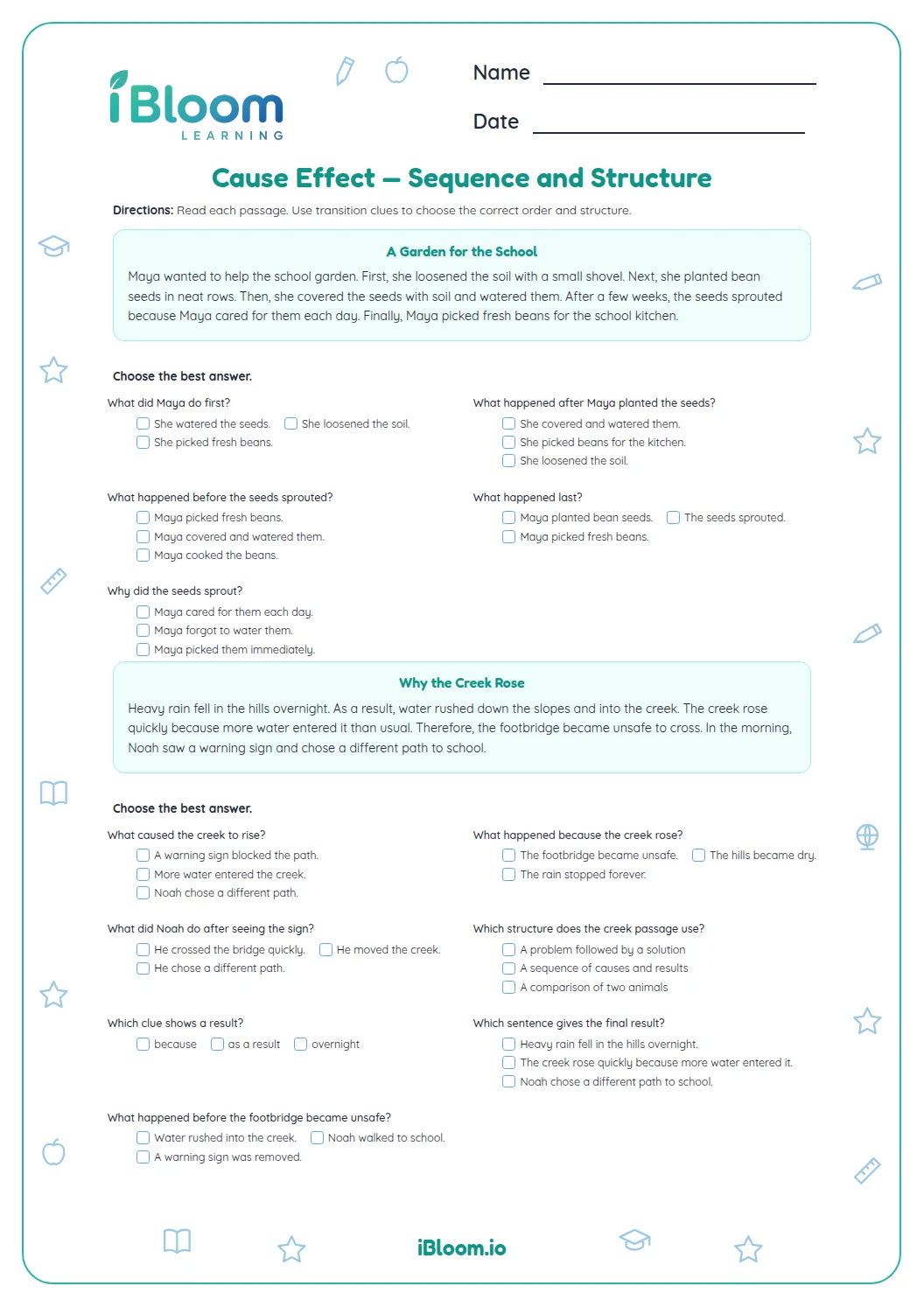
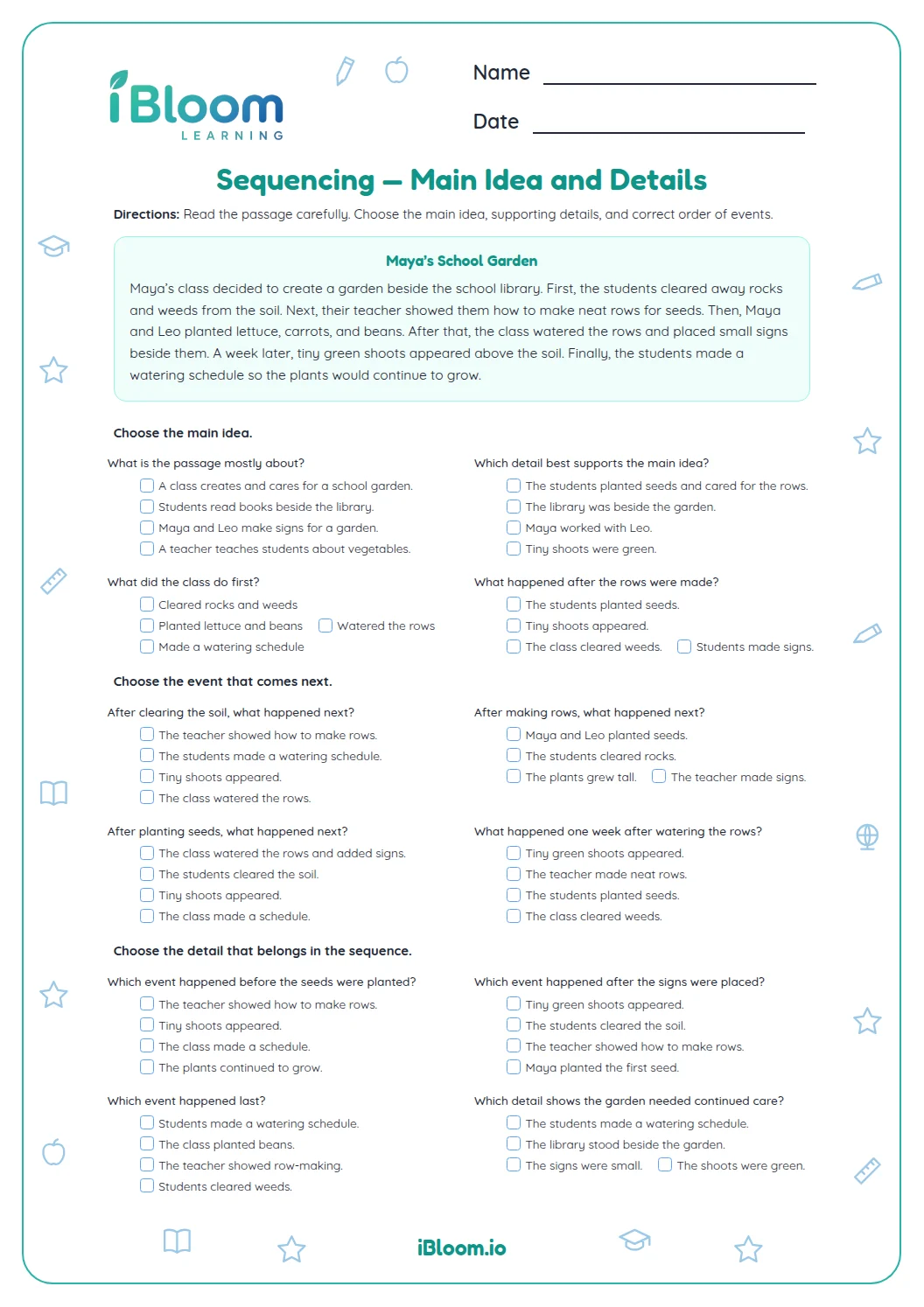
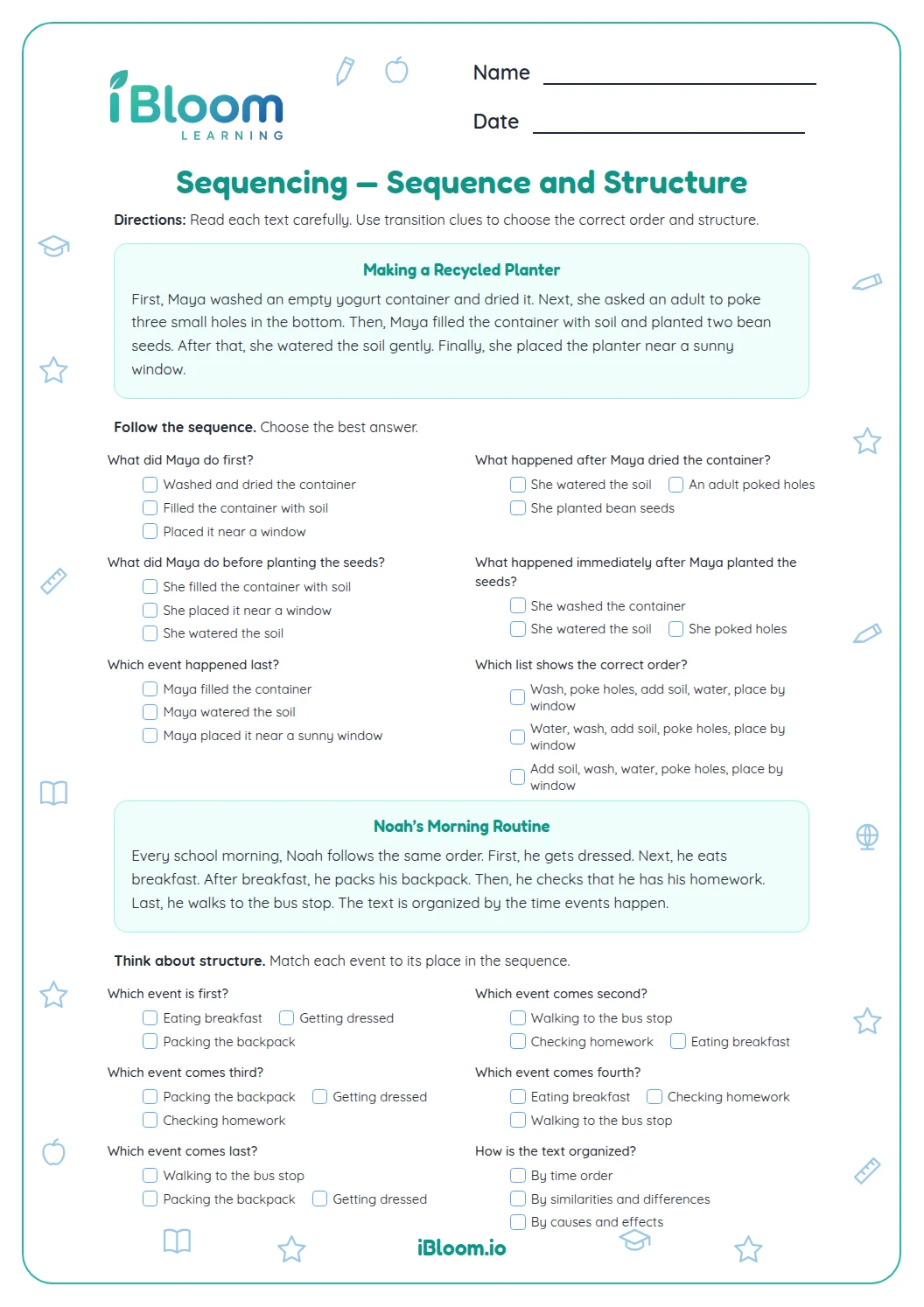
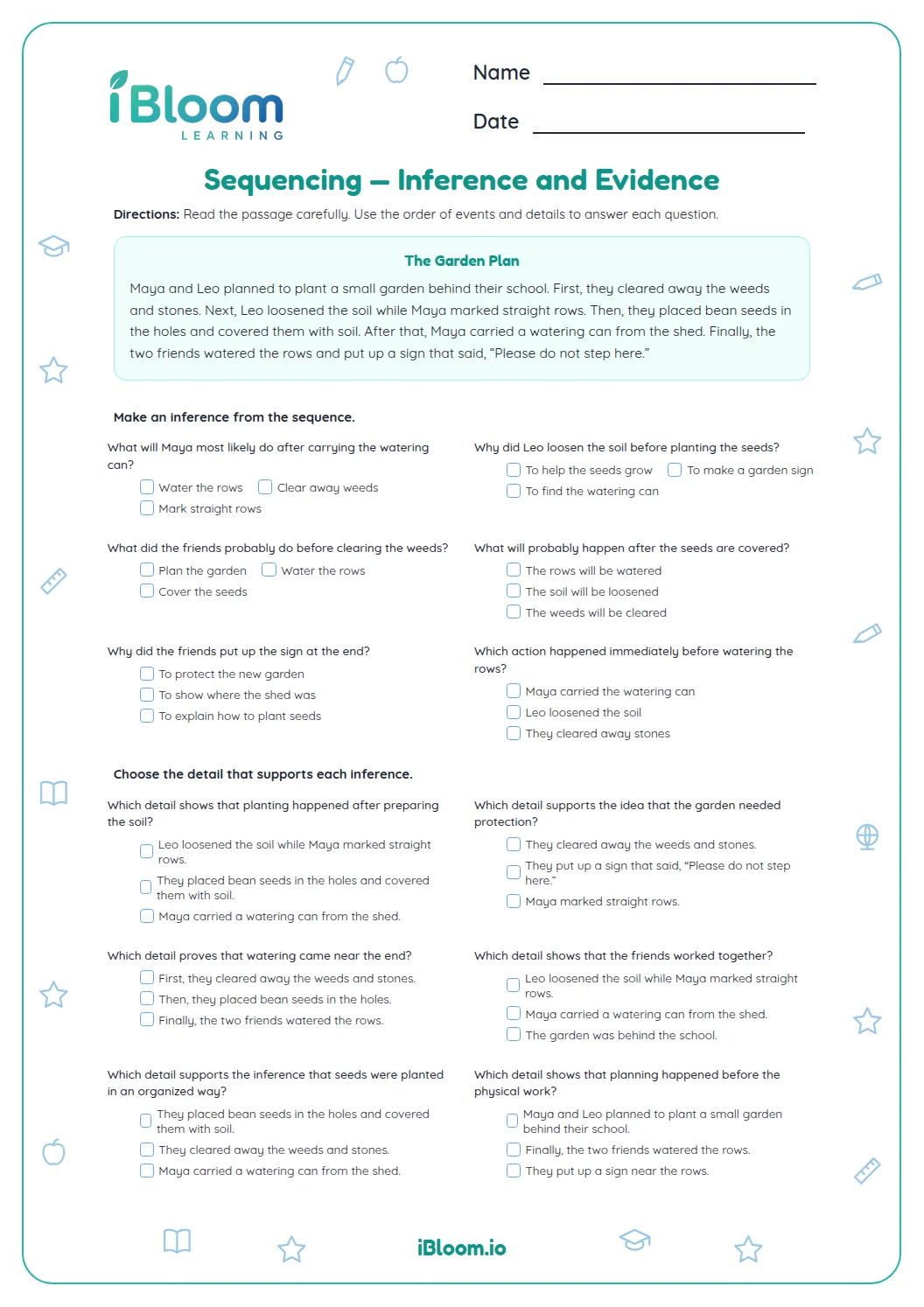
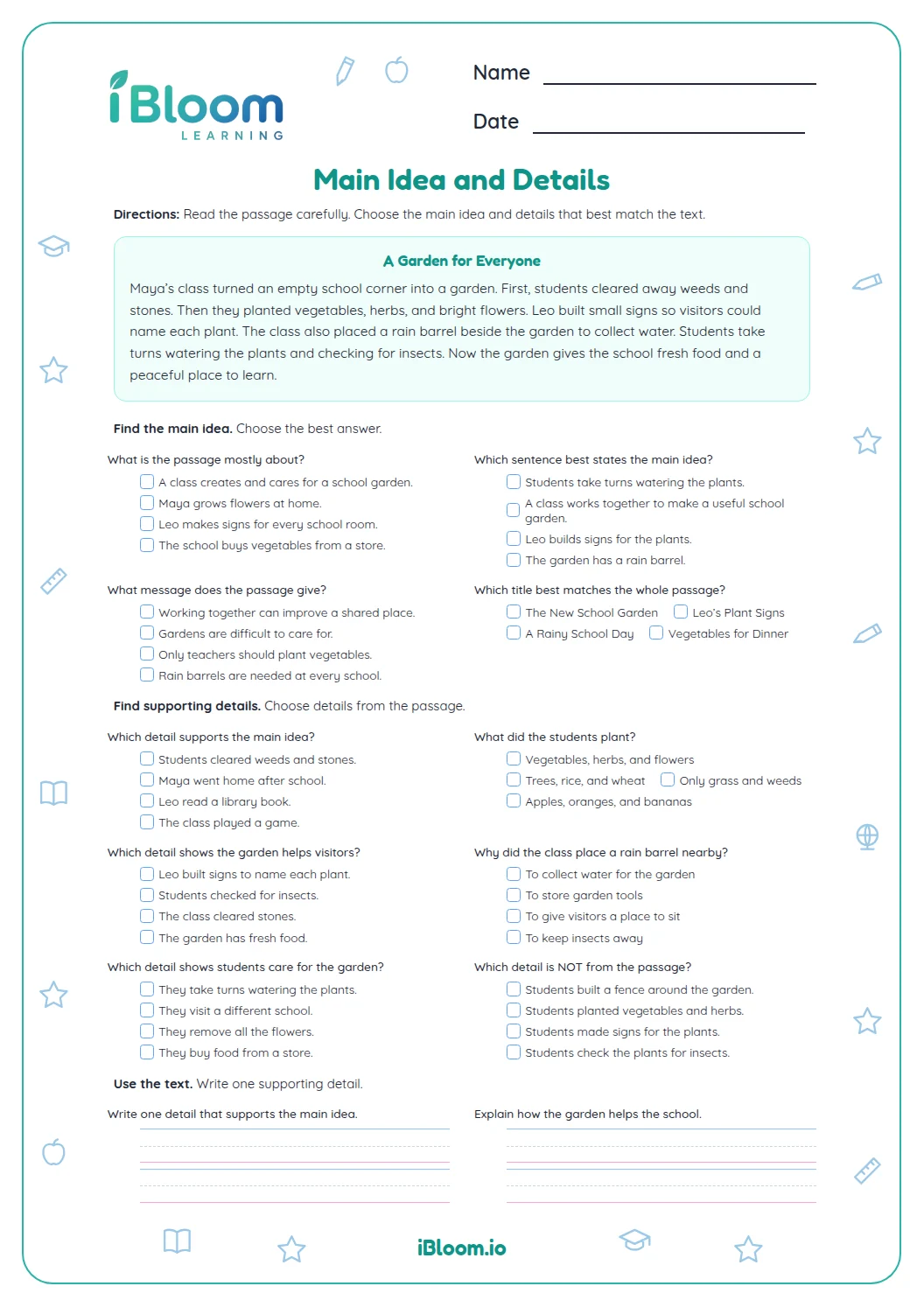
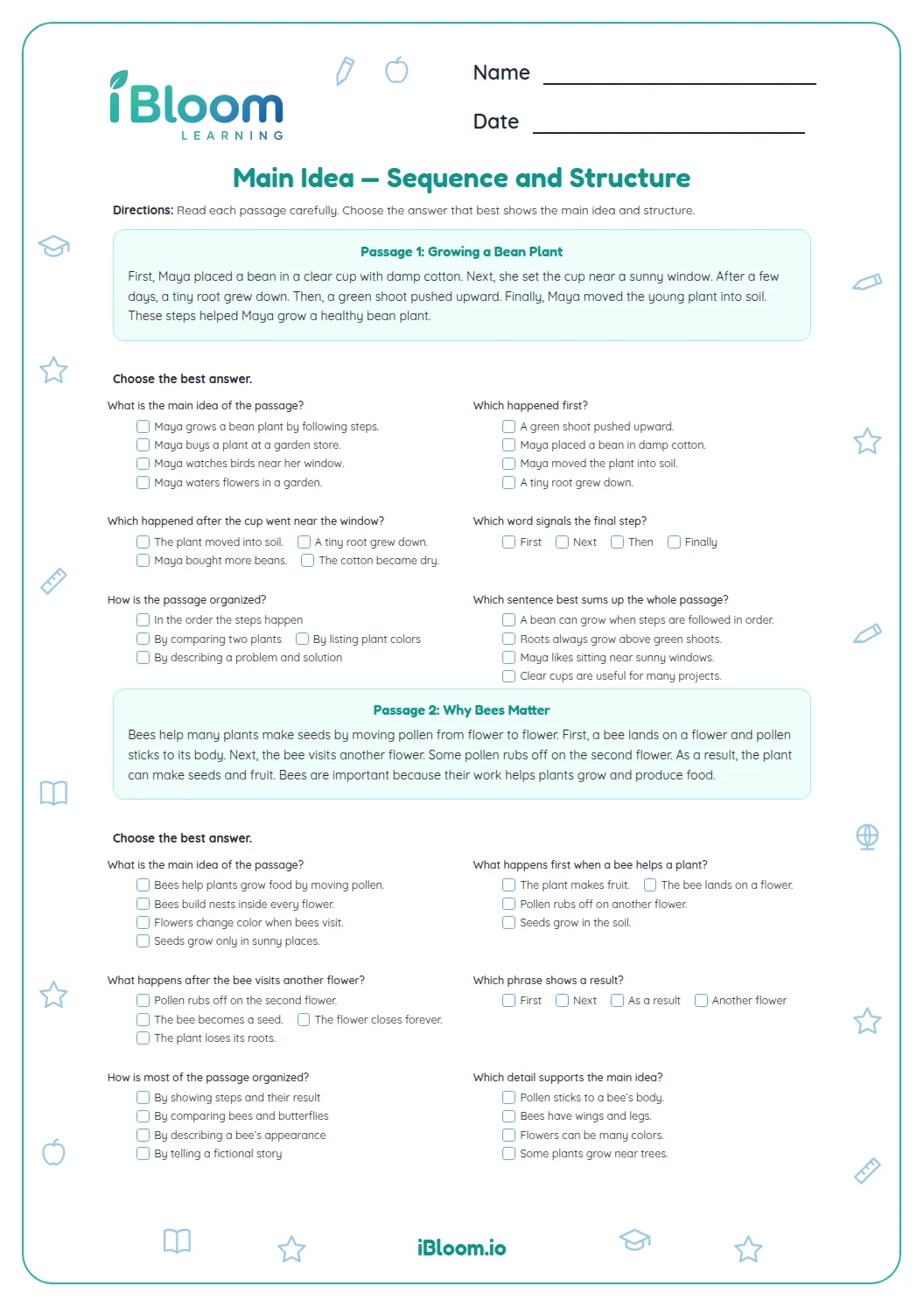
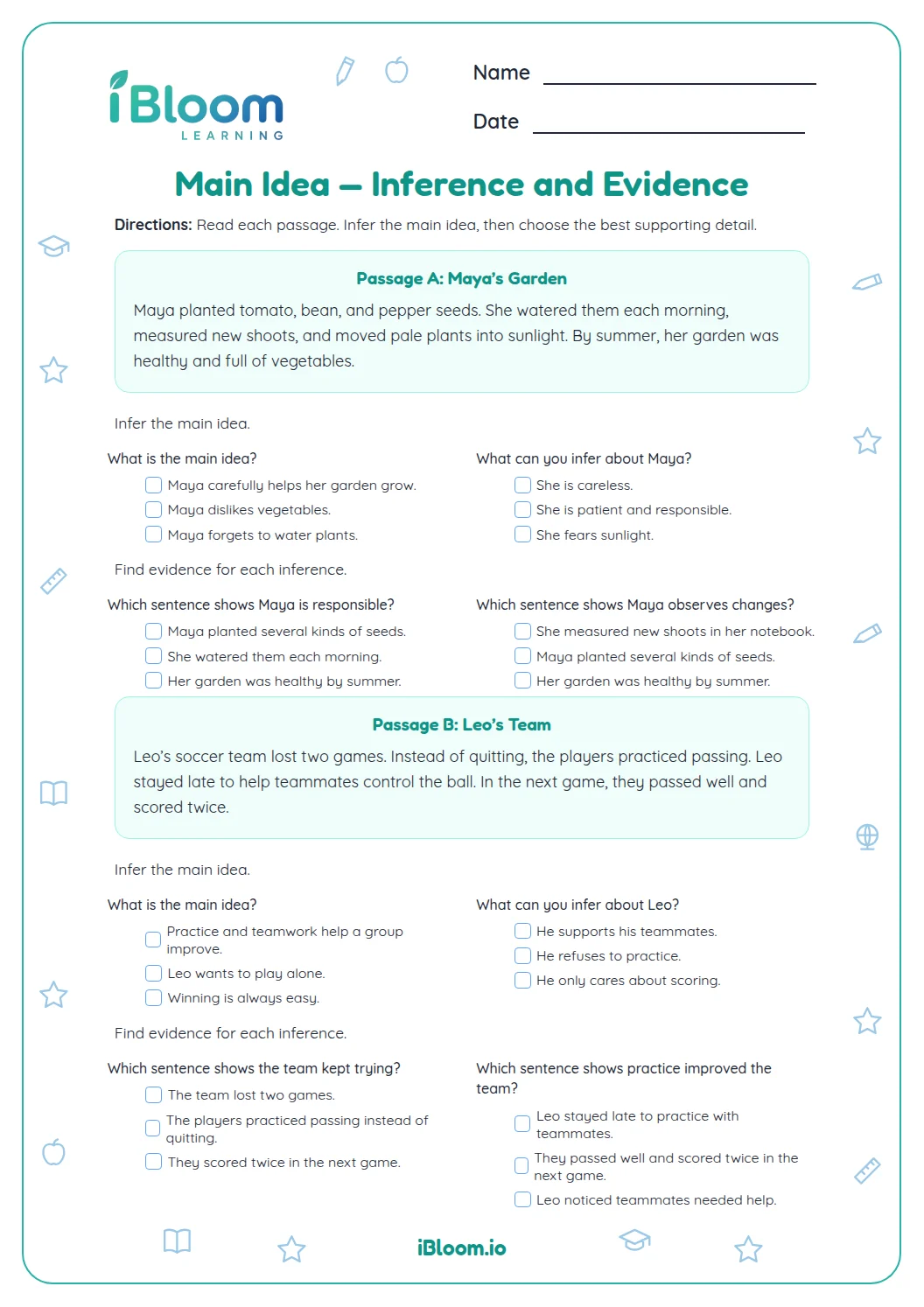
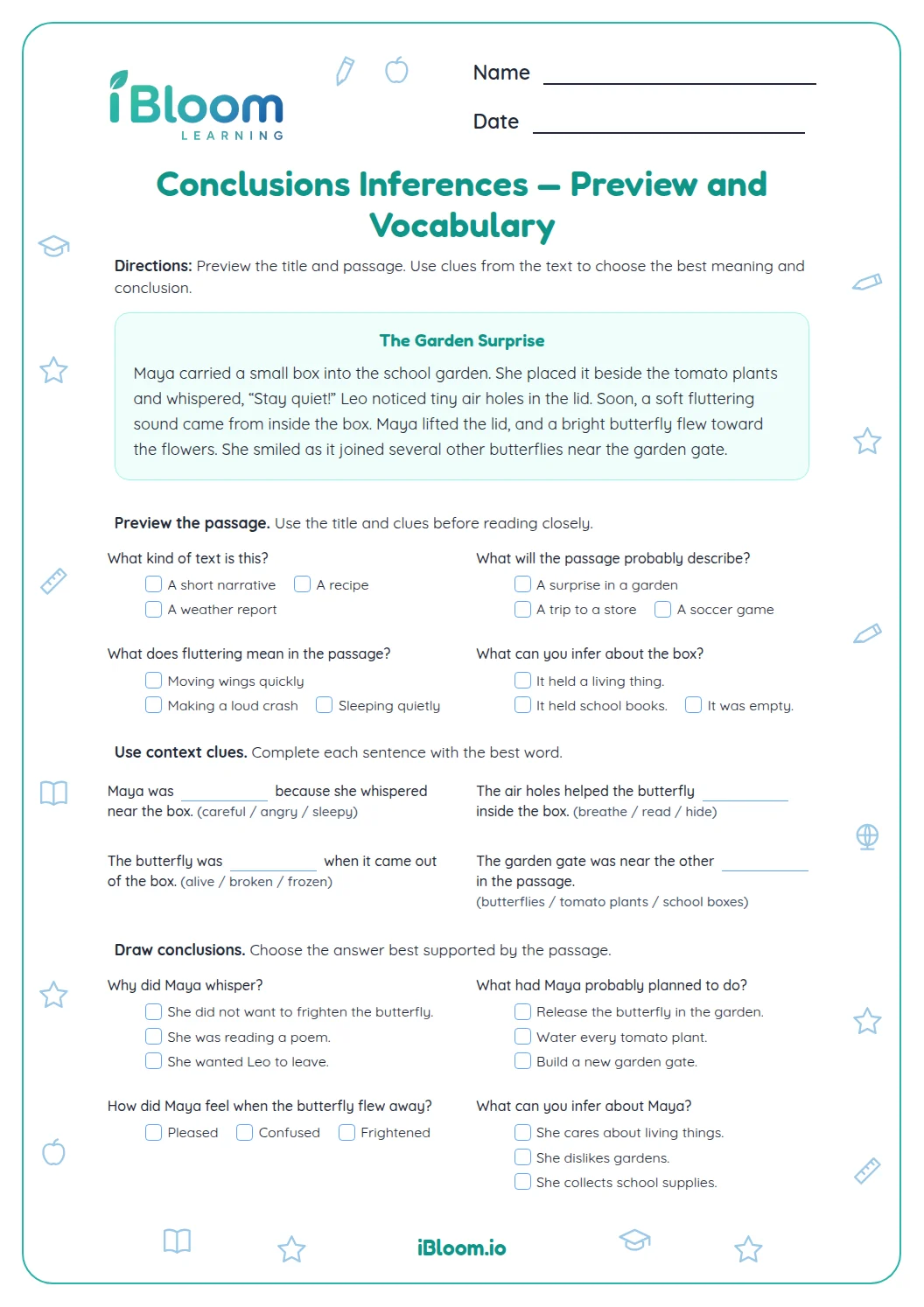
This Grade 4 worksheet has 14 questions: 12 selected-response items and two brief written explanations. It includes an answer key and practices the cited Common Core reading standard.
Aligned to RI.4.3
How can I find a cause in the passage?
A cause explains why an event happened. Look for a decision, condition, or earlier event that comes before the result. The passage says a frost warning appeared, so Ms. Rivera moved the trays into the classroom.
- 1Cause: A frost warning appeared.
- 2Effect: Ms. Rivera moved the trays inside.
- 3Evidence: The warning was for Saturday night.
How do causes link into a chain?
One result can become the cause of a later choice. Rain made the garden muddy; the muddy ground led the class to choose raised beds. Follow each link in order instead of naming only the final result.
How can I explain a cause and effect?
State the cause and result, then add a detail that proves the connection. In an open response, use a complete sentence and keep the events in the same order as the passage.
What will the worksheet ask me to do?
The 15 questions move from locating causes and effects to following a chain and explaining a possible outcome. The two final responses accept other wording when it is supported by the passage.
How can I use this worksheet?
- 1Read the passage once to understand the garden problem.
- 2Underline a cause and its result in each event chain.
- 3Return to the passage before choosing an answer.
- 4Use a specific detail in both written responses.
- 5Check each response with the answer key.
What mistakes should children check?
The mistake
Naming a result when the question asks what caused it.
The fix
Ask “Why did that happen?” and point to the earlier detail that explains it.
The mistake
Choosing an event that happened nearby but did not cause the result.
The fix
Check that the passage links the two events with a reason or clear result.
The mistake
Writing a prediction without evidence.
The fix
Tie the possible result to a detail such as the frost warning or muddy ground.
Common Core alignment
This page asks readers to explain linked events from an informational passage.
Explain what happened and why in a science or technical text using information from it.
On this sheet: Students connect garden events and causes using passage details.
Show the official wordingHide the official wording
Explain events, procedures, ideas, or concepts in a historical, scientific, or technical text, including what happened and why, based on specific information in the text.
What to practice next
Make more practice
Further reading
Questions parents and teachers ask
What is a cause-and-effect relationship?
A cause is why something happens, and an effect is what happens as a result. In this passage, a frost warning is the cause; moving the seed trays indoors is the effect. Questions 1 and 2 ask children to trace that event and the result that followed.
How can my child find the cause in a passage?
Have your child name the event first, then ask, “Why did that happen?” Look for an earlier detail that answers the question. For example, the class chose raised beds because rain left the garden ground muddy. Pointing back to that sentence keeps the answer grounded in the text.
Does every cause-and-effect link use the word because?
No. A passage may show a connection across neighboring sentences without using because. Children can look for time order and details that explain a decision or result. The seedling passage says stems leaned toward the window, then the class turned trays, which made the plants grow straighter.
What does the passage say about the seedlings?
A frost warning led the teacher to bring the trays indoors. The class also turned trays toward the light, watered dry soil, and made small holes in the covers. Those details help explain the seedlings’ growth and the class’s later garden choices.
How should my child answer the last two questions?
Use a complete sentence that names a cause and its effect. For the prediction, connect the possible result to evidence in the passage, such as the frost warning. The answer key gives sample responses; another clear answer can work if the text supports it.
How many questions and pages are included?
There are 14 questions after the informational passage: 12 multiple-choice items and two written responses. A separate answer key provides the correct choices and sample wording for open responses. Readers can return to the passage to check which event caused each result.