








About this worksheet
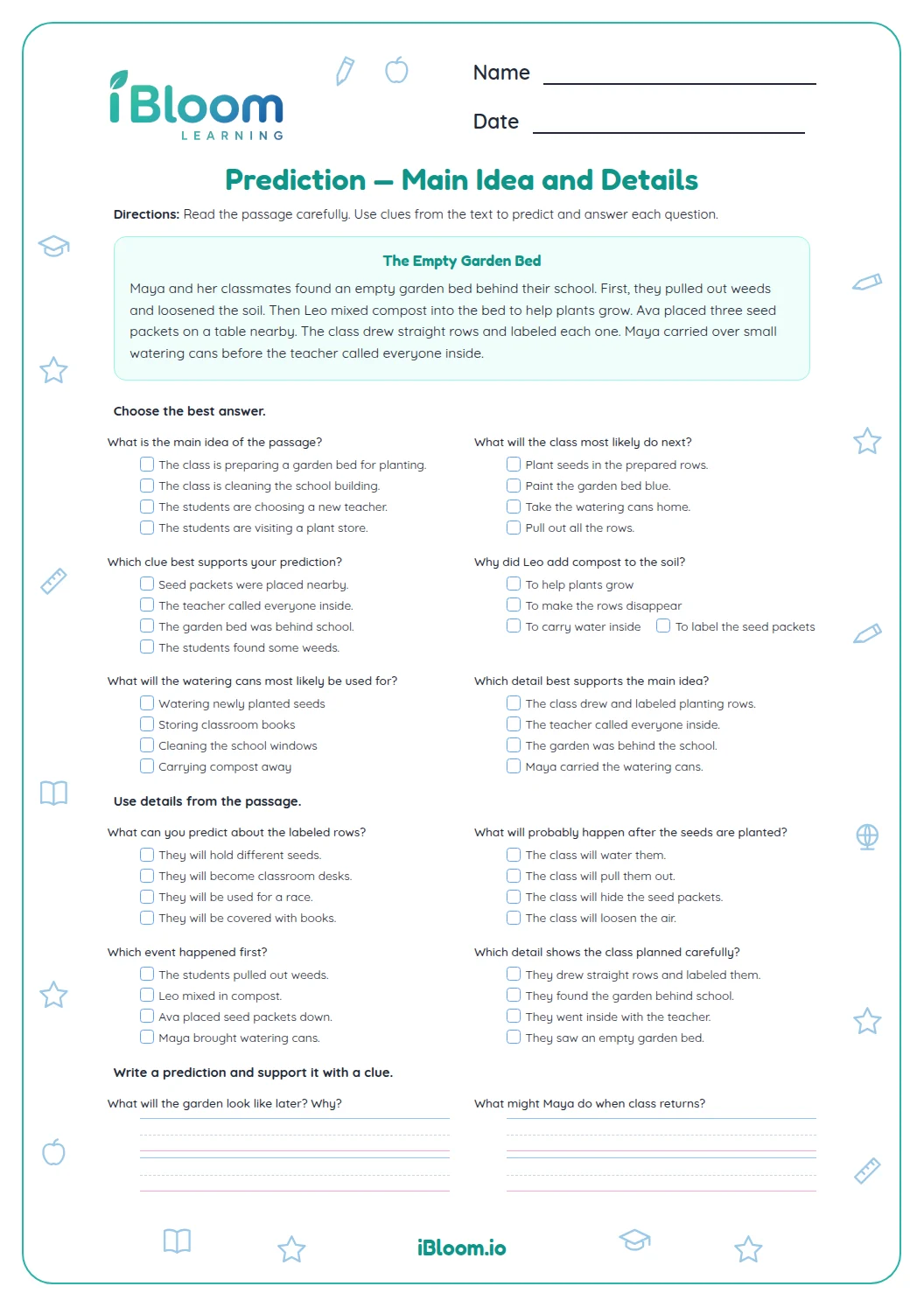
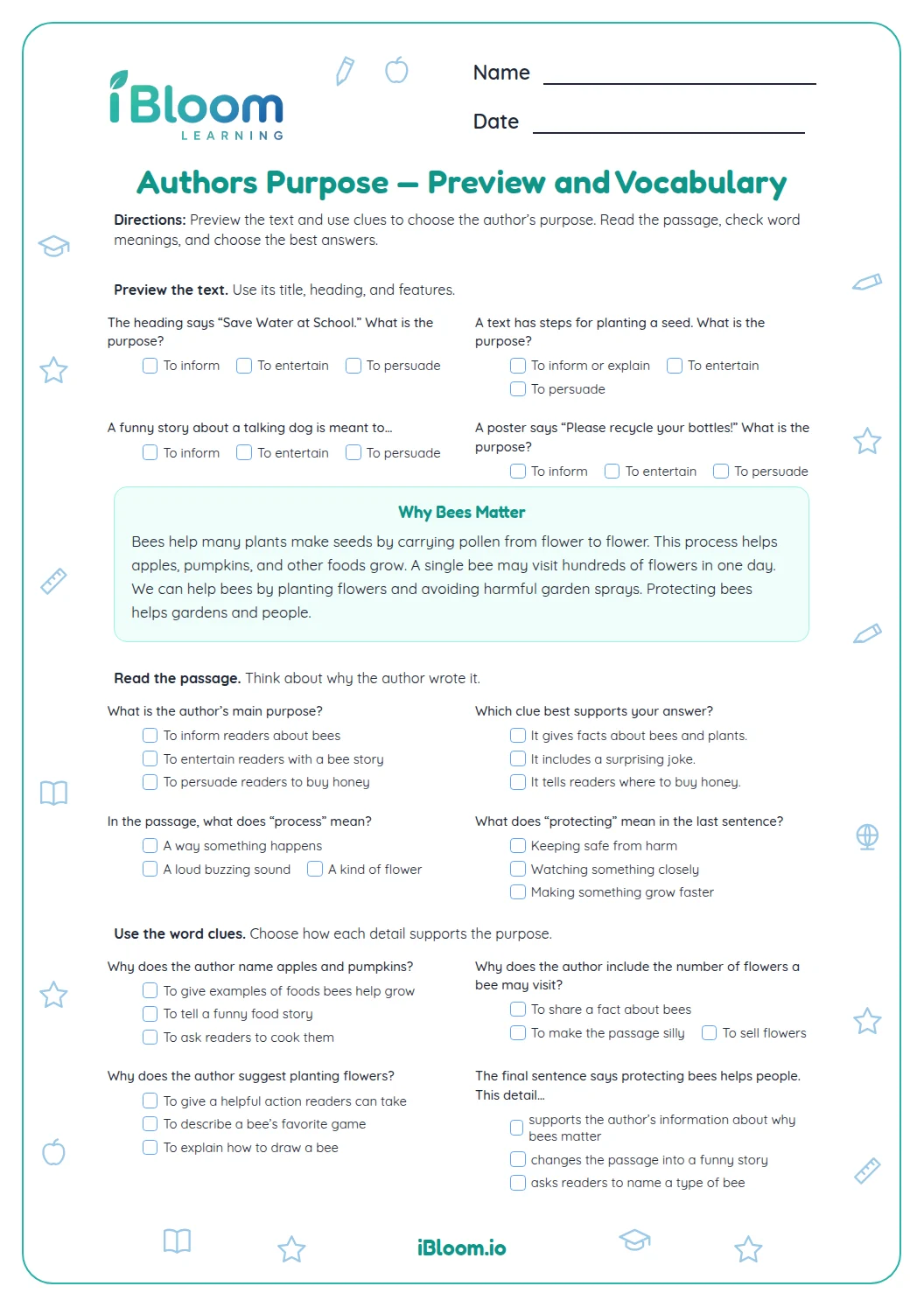
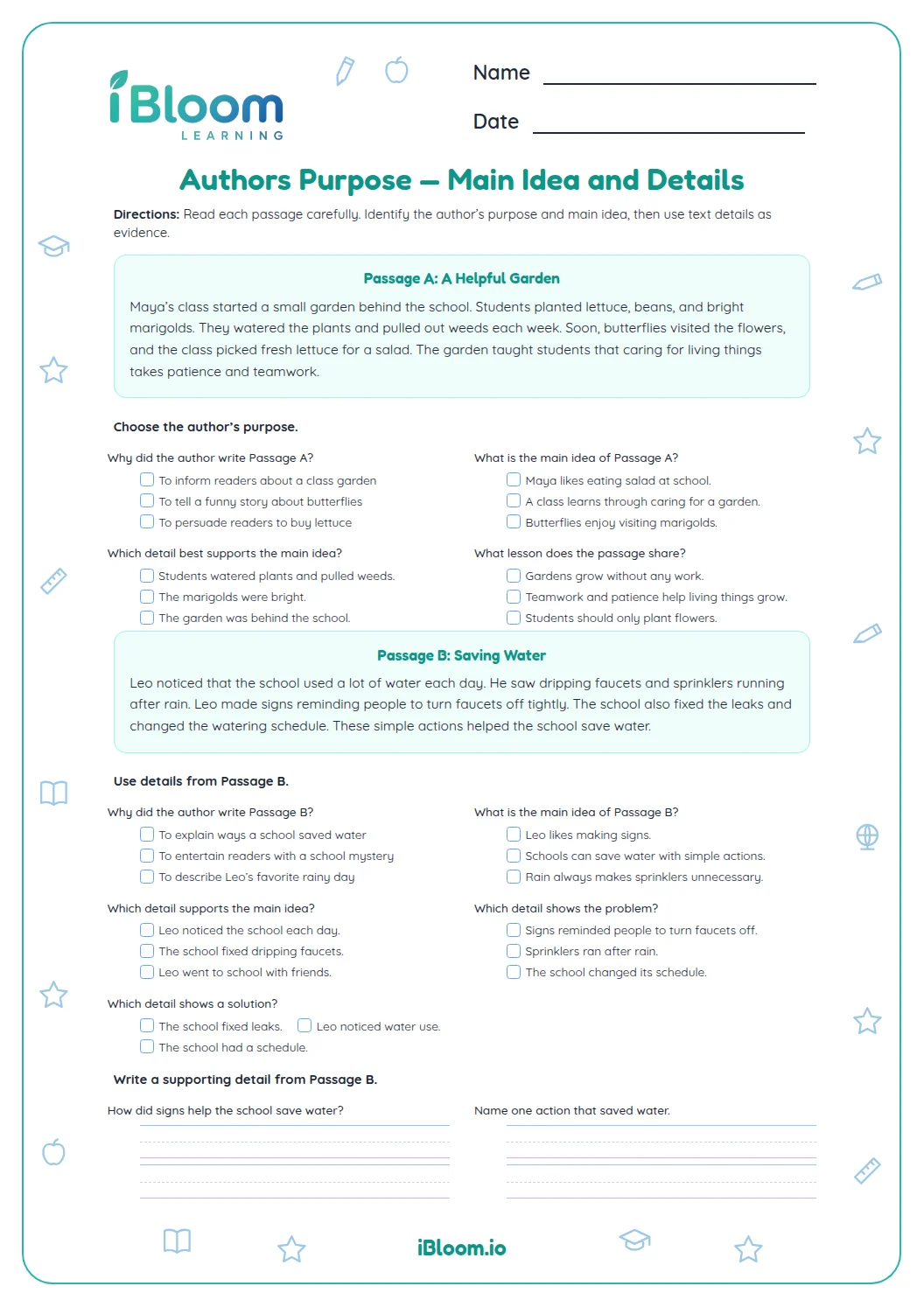
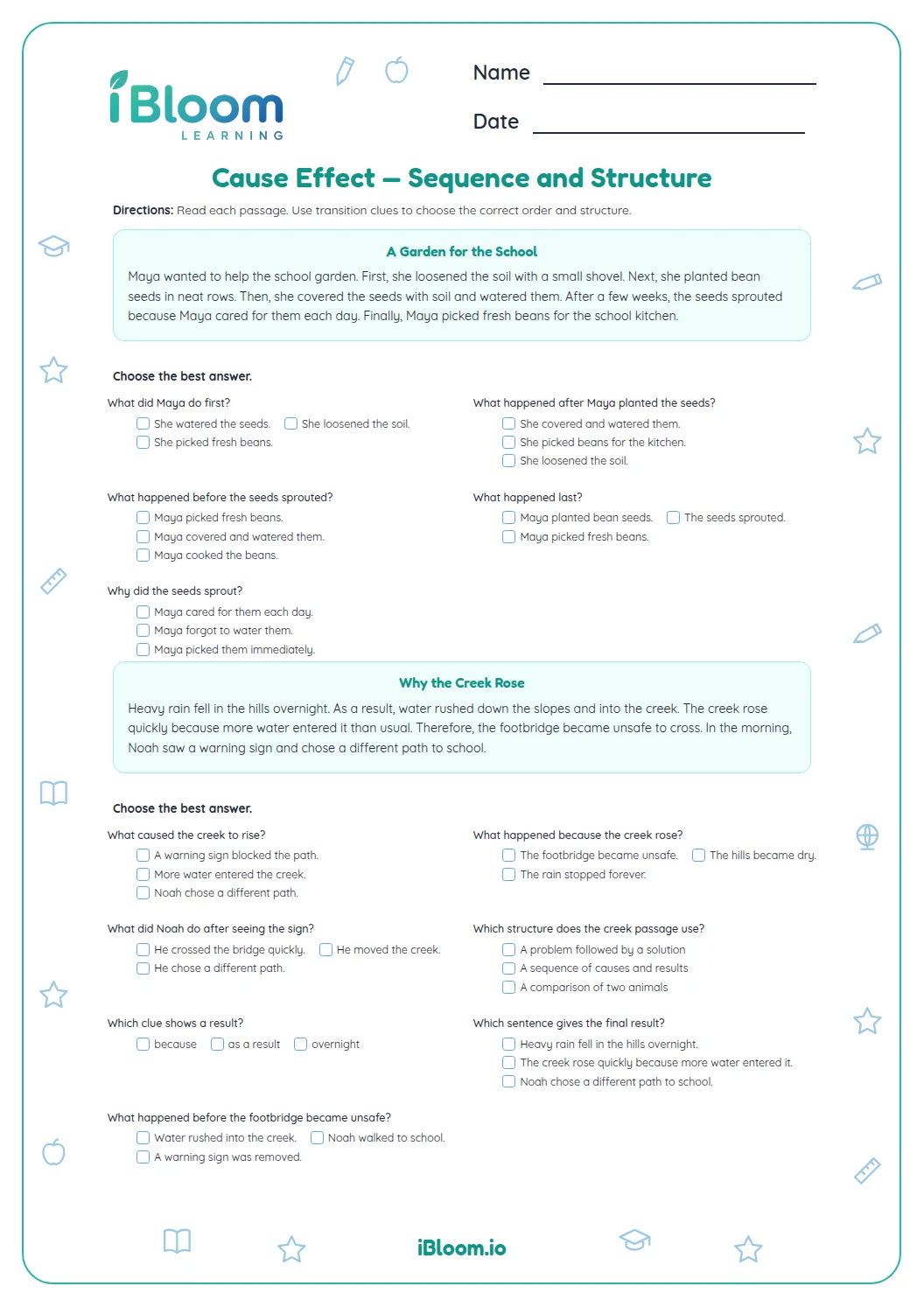
This Grade 4 reading worksheet uses an original passage about Nia and Omar tracking rain near a school garden. Children predict what the students will do next, put events in order, and use text details to explain their thinking. The 10 questions include multiple-choice and written responses across three worksheet pages, with a three-page answer key. CCSS RL.4.1 is practiced through referring to details and examples when answering and making inferences.
Aligned to RL.4.1
How can a reader support a prediction?
In “The Rain Gauge Project,” the students plan to compare future measurements with their notebook. The final paragraph says this directly, so the best prediction is that they will compare new readings with the notebook.
How do I identify the sequence of events?
Look for what happened before and after each change. Nia first notices the low branch, then Omar suggests moving the gauge, and the students later check the nearly empty gauge.
What does the passage structure help explain?
The passage follows a problem and response: a branch could affect the readings, so the children move the gauge. Later details explain why the gauge is nearly empty without blaming the move.
How to use this worksheet
- 1Read the passage once to understand the project.
- 2For a prediction, combine a passage clue with what is likely to happen next.
- 3For sequence questions, locate the events in the text and order them.
- 4Choose evidence stated in the passage rather than a tempting guess.
- 5Answer written questions with a detail and your reasoning.
Mistakes to watch for
The mistake
Guessing without using a text clue.
The fix
Point to the sentence or detail that supports the prediction.
The mistake
Mixing up the order of events.
The fix
Reread the paragraphs and track what happened first, next, and later.
The mistake
Treating an inference as a quoted fact.
The fix
Separate the passage detail from what you conclude from it.
Use details from a passage to support predictions and answers.
On this sheet: Students predict and explain answers by citing clues from the passage.
Show the official wordingHide the official wording
Refer to details and examples in a text when explaining what the text says explicitly and when drawing inferences from the text.
What to practice next
Make more practice
Further reading
Questions parents and teachers ask
What is “The Rain Gauge Project” about?
Nia and Omar measure rain by checking a gauge near their school garden. They notice that a branch could affect readings and move the gauge. The passage is followed by 10 questions over three pages and a matching three-page key.
How many questions are included?
The worksheet has 10 questions across three pages and a separate three-page key. Most questions are multiple choice; two ask children to explain an answer using passage details. Read “The Rain Gauge Project” carefully before answering each item.
How should a child make a prediction?
A strong prediction combines a passage clue with what is likely to happen next. The students say they plan to compare next week’s measurements, which supports that choice. A guess about moving the gauge has no support in the ending.
What does the sequence practice involve?
Children track what happened first, next, and later: Nia notices the branch, the students move the gauge, and then they check its next reading. Rereading the passage helps keep those events in order and answer the question accurately.
How can the answer key support reading?
After answering, use the key to find a passage detail that supports each response. The written-response examples are models; children may phrase an answer differently when their explanation is supported by the text. Ask them to point to a clue.