






About this worksheet
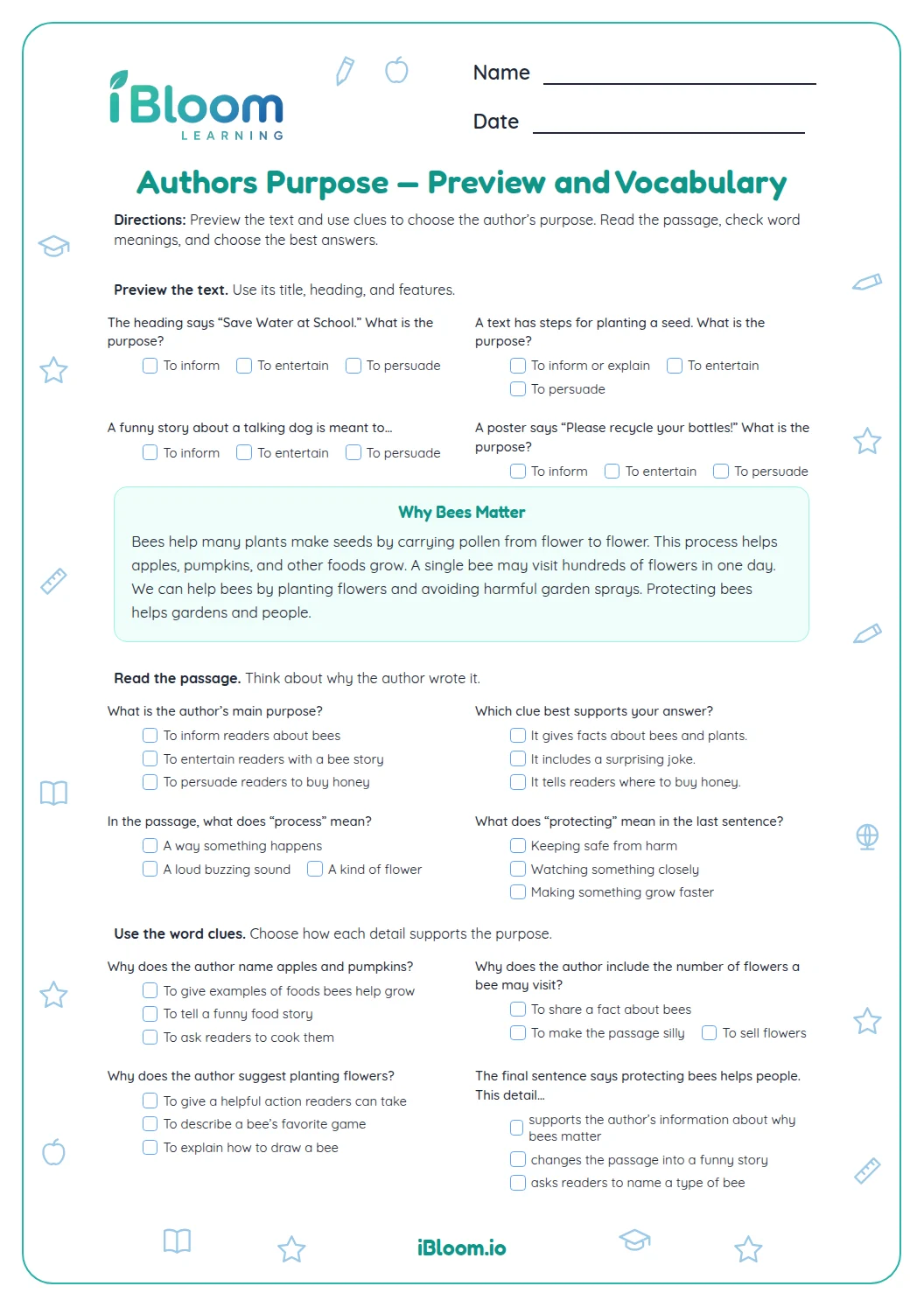
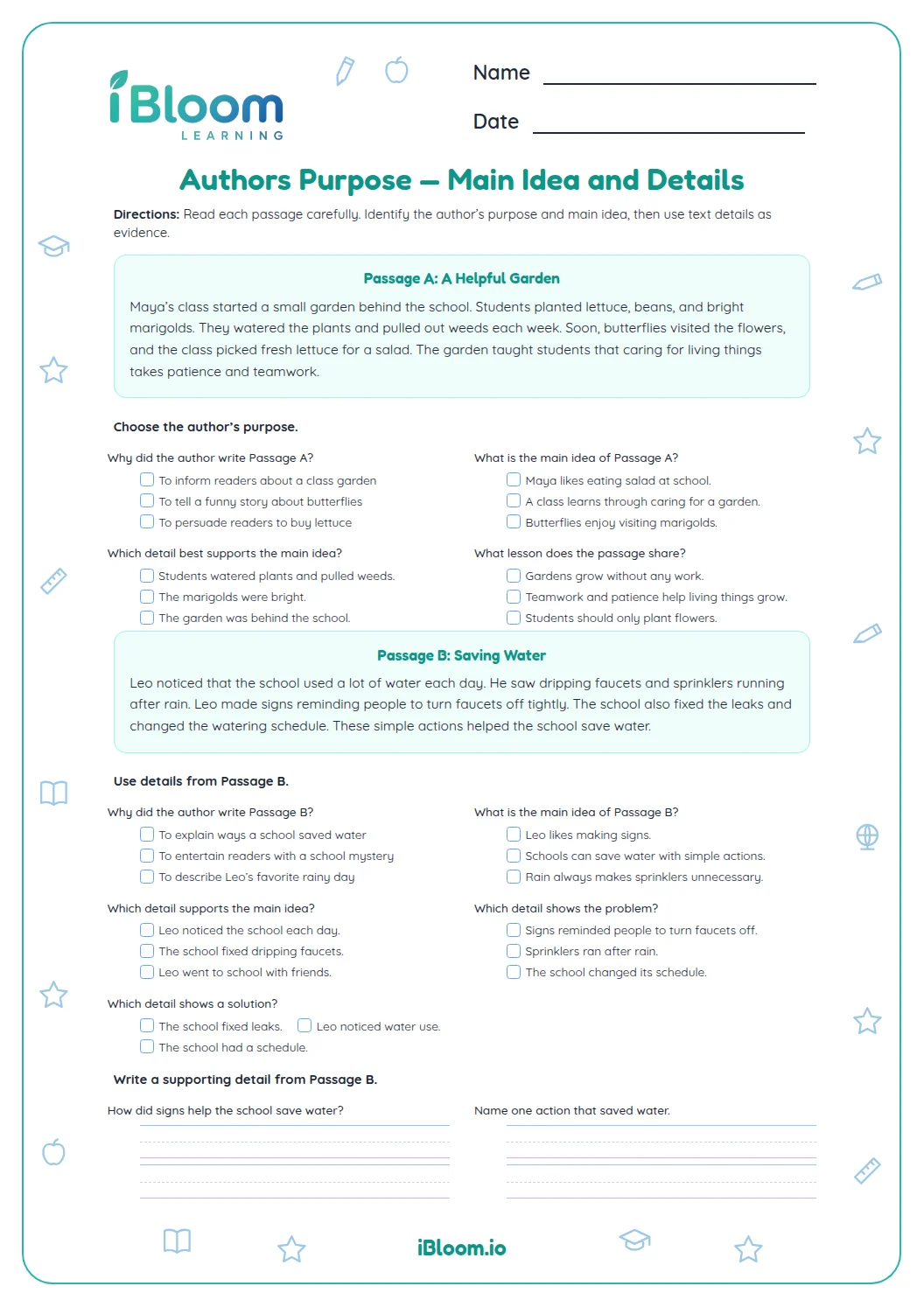
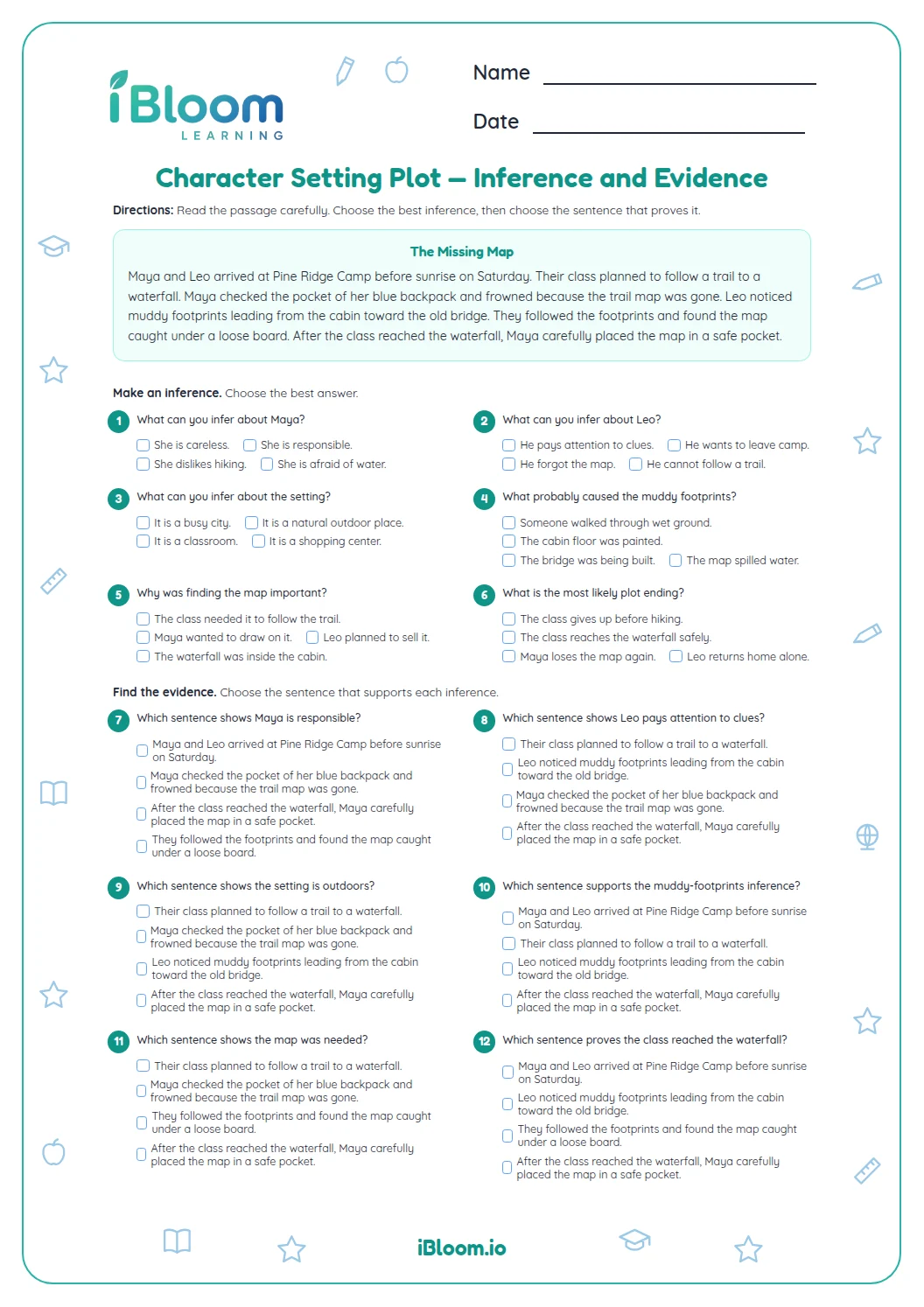
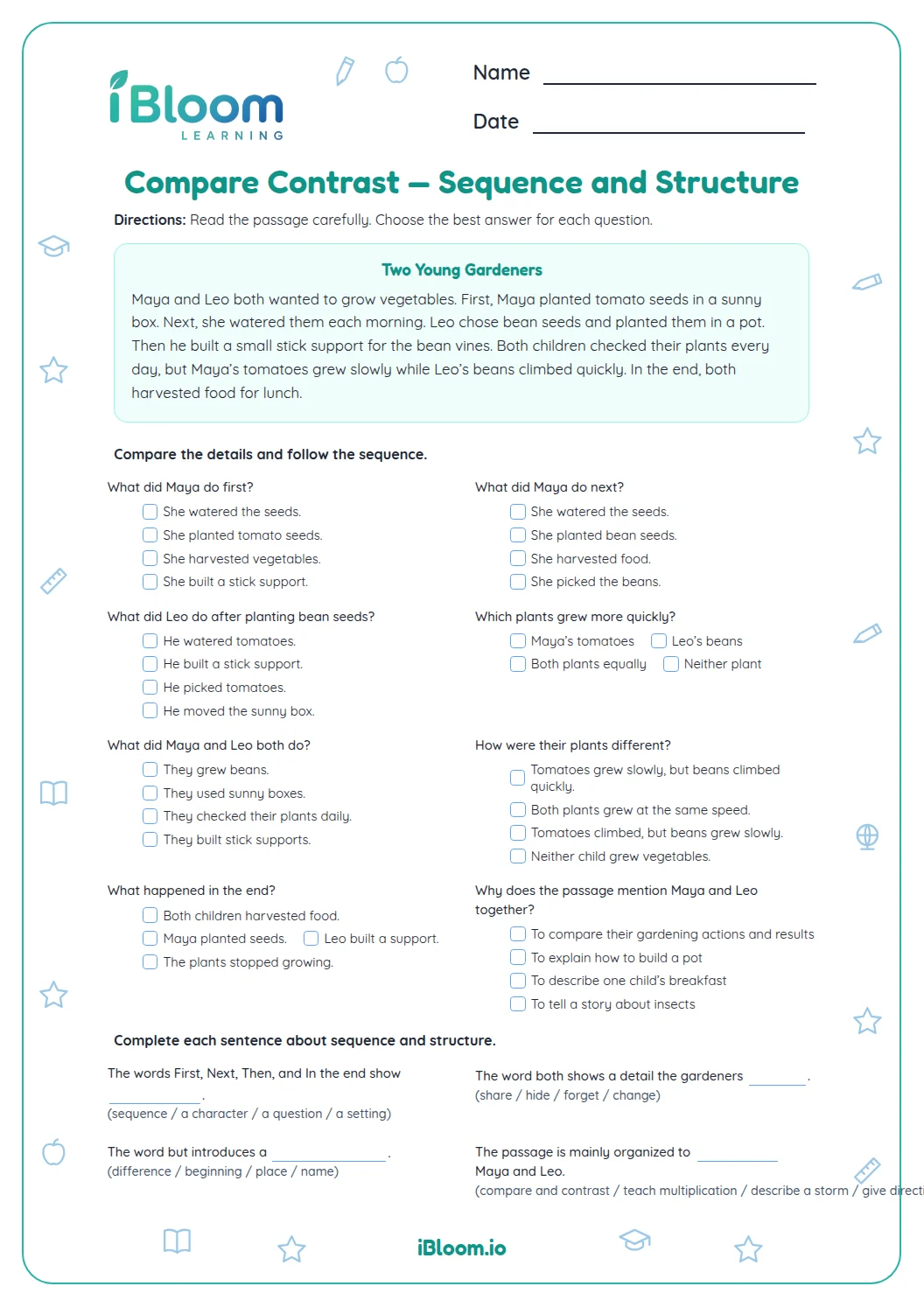
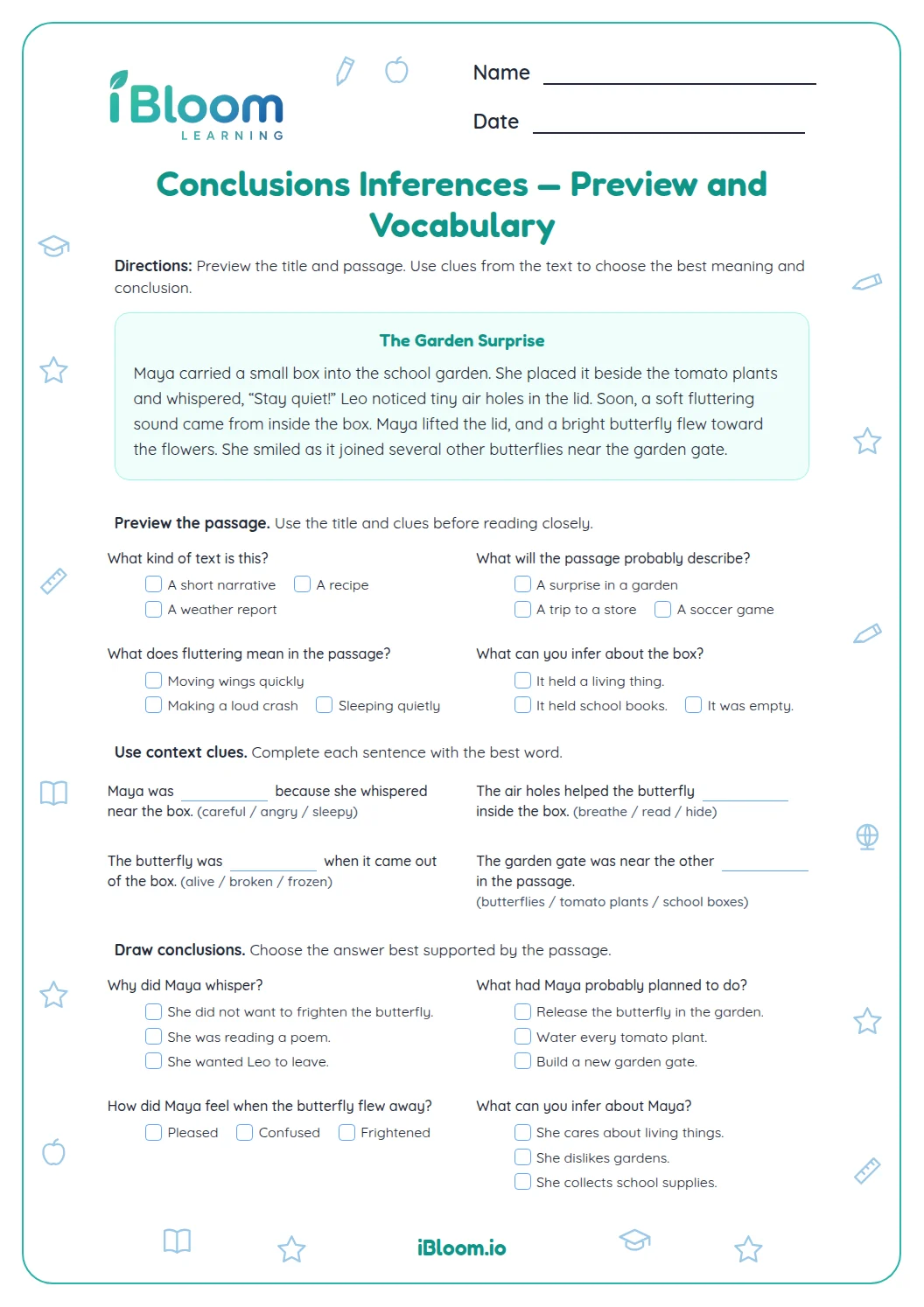
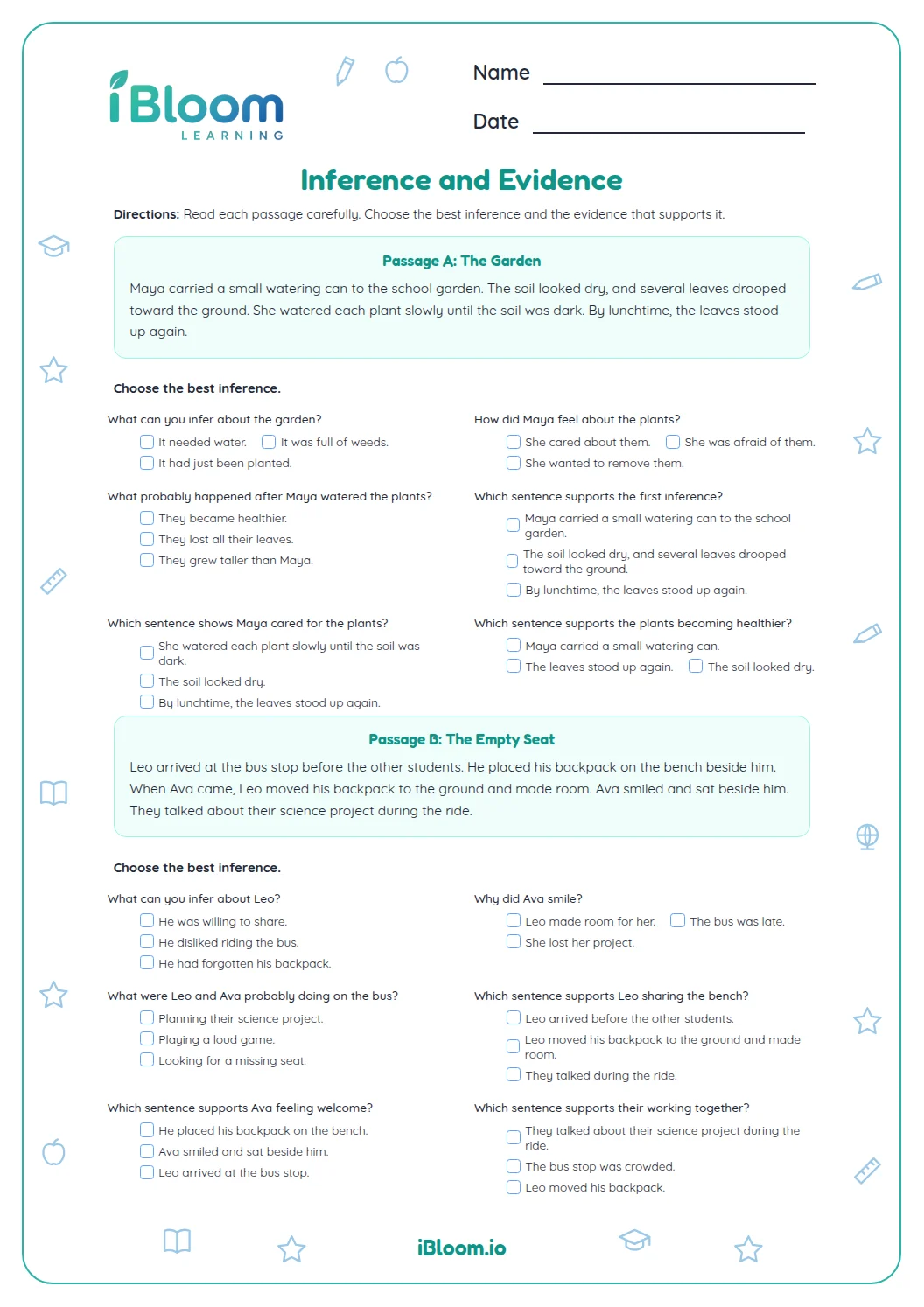
This Grade 4 comprehension worksheet pairs an original informational passage about a school rain-barrel project with 14 multiple-choice questions. Readers identify the author’s purpose, distinguish stated details from inferences, and choose evidence that supports their thinking. It practices CCSS RI.4.1 as students refer to details when explaining explicit information and drawing inferences.
Aligned to RI.4.1
How do readers identify an author’s purpose?
Ask what the author mainly wants readers to do: learn or understand, enjoy a story, or consider an opinion. Then check the whole passage, since a single detail may not represent the author’s purpose.
How does evidence support an inference?
An inference combines a clue stated in the passage with what a reader already understands. The clue about a screen over the barrel supports the inference that it keeps unwanted material out; the passage never states that exact reason outright.
- 1Clue: the barrel has a screen.
- 2Inference: it keeps debris out.
What does this passage help students practice?
The school rain-barrel passage gives students a problem, a proposed solution, and results to examine. Questions ask about purpose, evidence, inferences, vocabulary, organization, and summary.
How to use this worksheet
- 1Read the passage once to understand the project.
- 2For each question, find the relevant sentence or paragraph.
- 3Decide whether the answer is stated or inferred.
- 4For purpose, consider the whole passage rather than one detail.
- 5Check that the selected choice matches evidence in the text.
Mistakes to watch for
The mistake
Choosing an inference that has no passage clue.
The fix
Ask, “Which exact sentence gave me that idea?”
The mistake
Calling every passage detail the author’s purpose.
The fix
State the passage’s main goal in one phrase, then see whether the whole text supports it.
The mistake
Confusing an inference with a directly stated fact.
The fix
Mark what the text says and what the reader concludes in separate words.
Common Core alignment
This worksheet gives focused practice with the listed Common Core skill.
Use passage details to explain facts and draw inferences.
On this sheet: Questions require text details for explicit answers and inferences.
Show the official wordingHide the official wording
Refer to details and examples in a text when explaining what the text says explicitly and when drawing inferences from the text.
What to practice next
Make more practice
Further reading
Questions parents and teachers ask
What is the passage about?
The original passage follows students who collect rain in a barrel to water a school garden. The questions ask readers to identify the author’s purpose, locate stated details, make reasonable inferences, and select evidence that supports an answer.
How many questions are included?
The worksheet includes 14 multiple-choice questions after an original informational passage. They address purpose, supporting details, inference, vocabulary, organization, and summary, with the answers listed on a separate key page. The passage and questions are designed for Grade 4 readers to work through together or independently.
Can students answer from the passage alone?
The passage supplies the evidence for each answer. For inference questions, students connect a stated clue with a reasonable conclusion; they should be able to point to the detail that supports their choice. Students can underline the relevant sentence before comparing the answer choices.
What is the difference between a detail and an inference?
A detail is stated directly, such as students carrying cans from the sink. An inference is a conclusion supported by a clue, such as the barrel screen keeping unwanted material out, even though the text does not state that reason outright. Students should be able to explain which clue supports an inference.
How do students use evidence for an inference?
Students connect a passage clue to a reasonable idea and then select the sentence that supports it. For example, a screen over the rain barrel suggests that the students want to keep debris out. The key identifies the best evidence choice for each question.