



About this worksheet
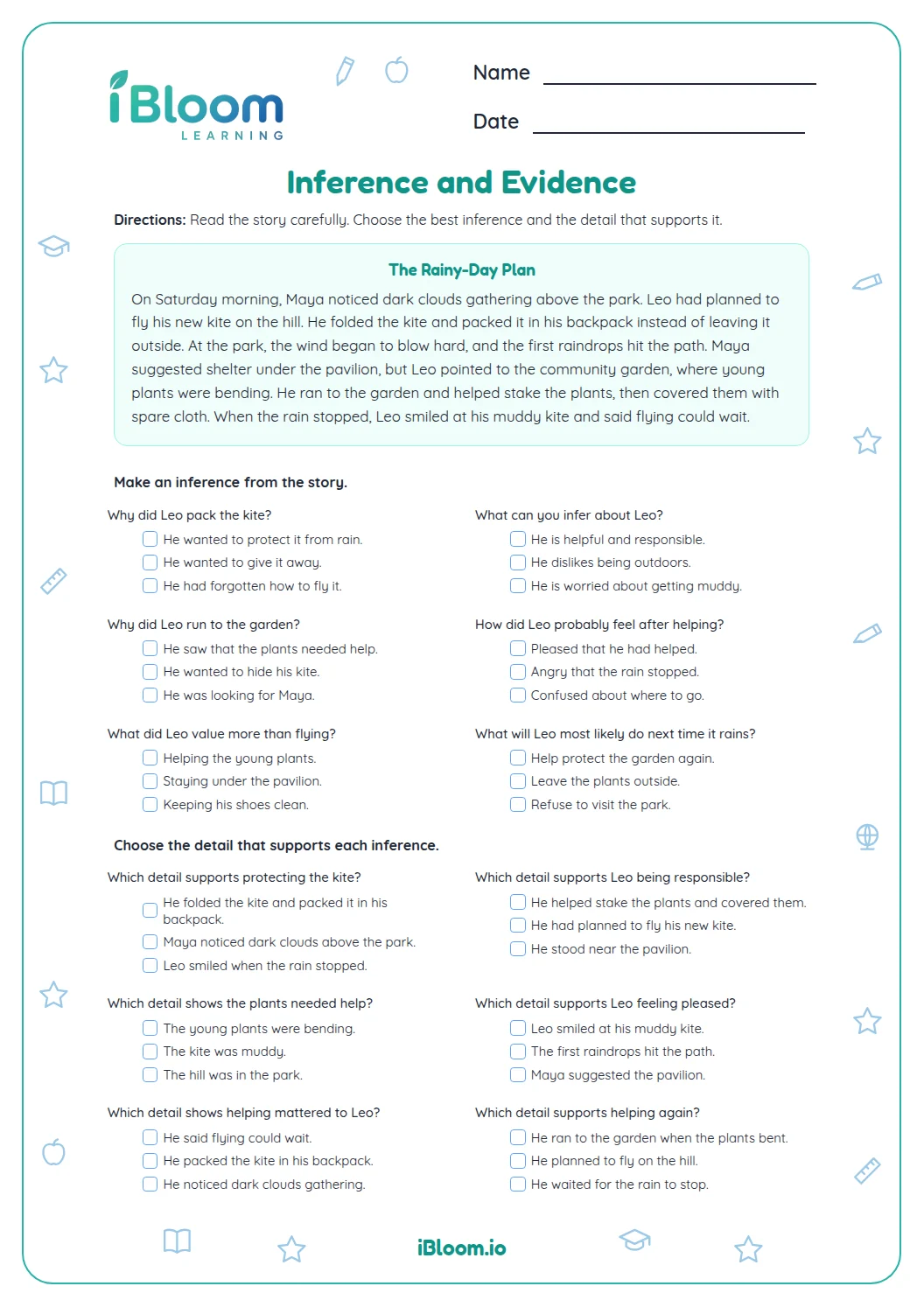
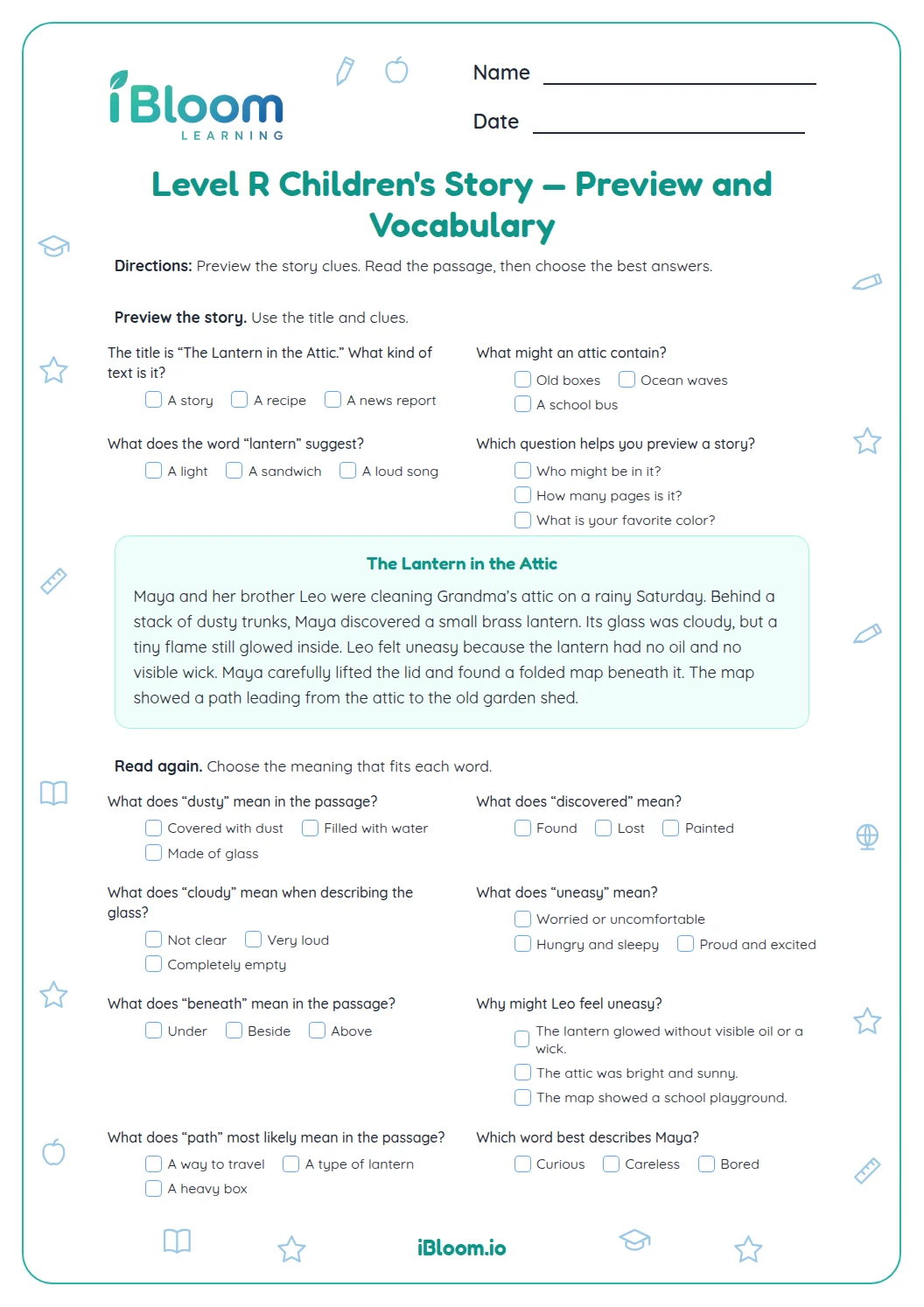
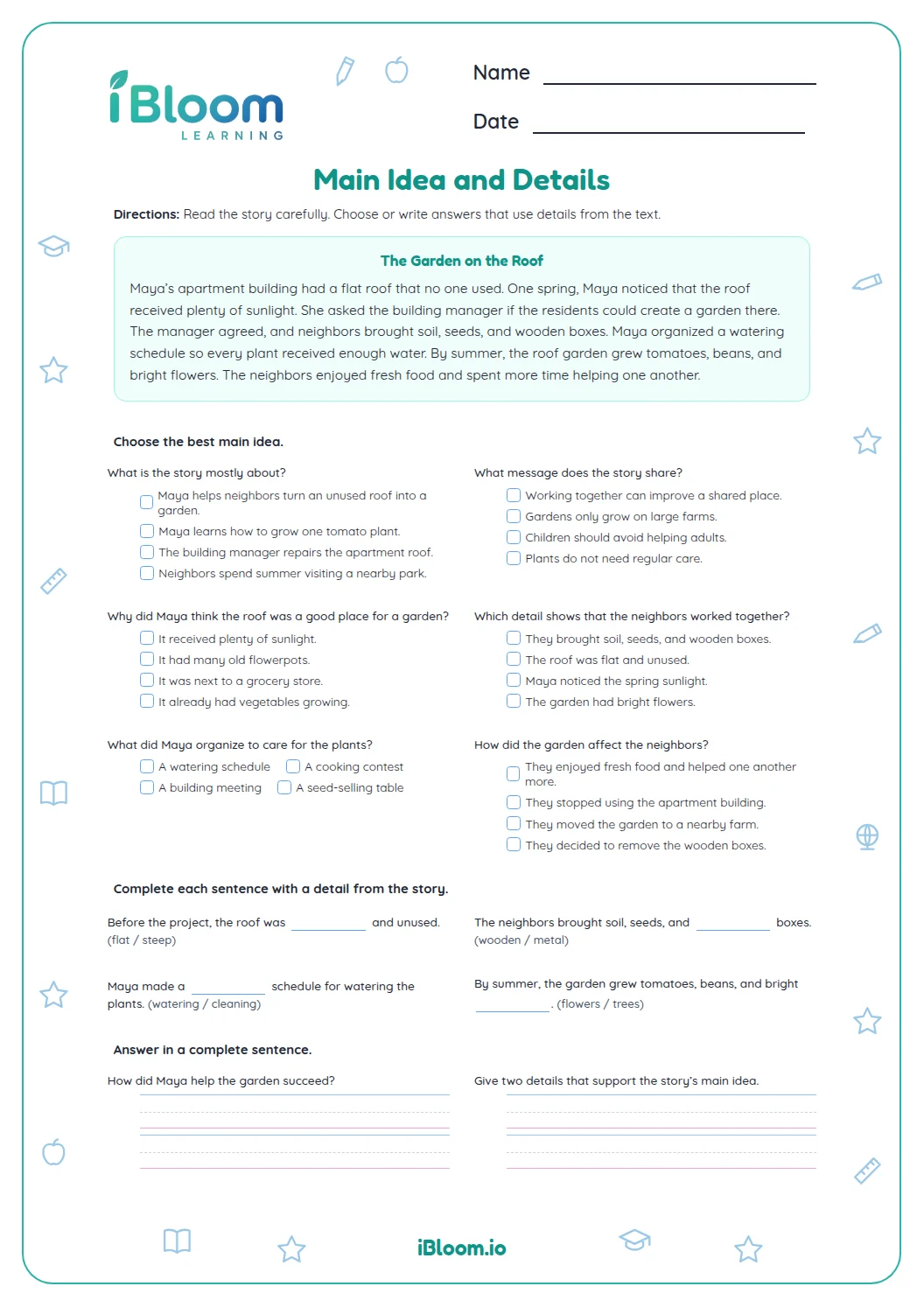
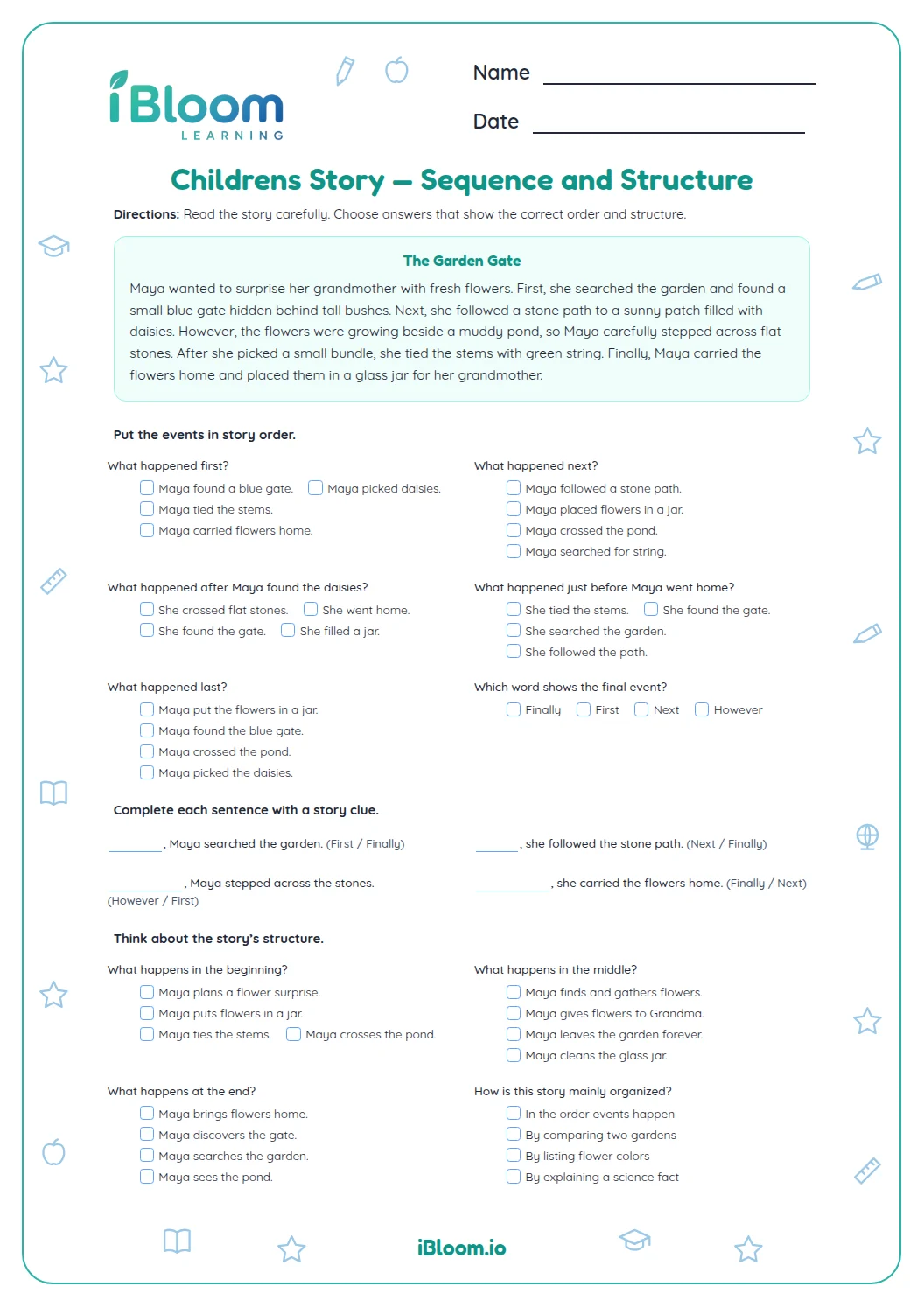
This Level S story worksheet gives Grade 4 readers an original narrative and 15 questions. Children use clues to choose inferences and evidence. It includes an answer key and practices the cited Common Core reading standard.
Aligned to RL.4.1
How do readers make an inference?
An inference is a reasonable idea that the author does not state directly. A reader connects a detail in the story with what makes sense. Question 2 asks what Leo’s frown suggests when the map is missing.
What does this story worksheet practice?
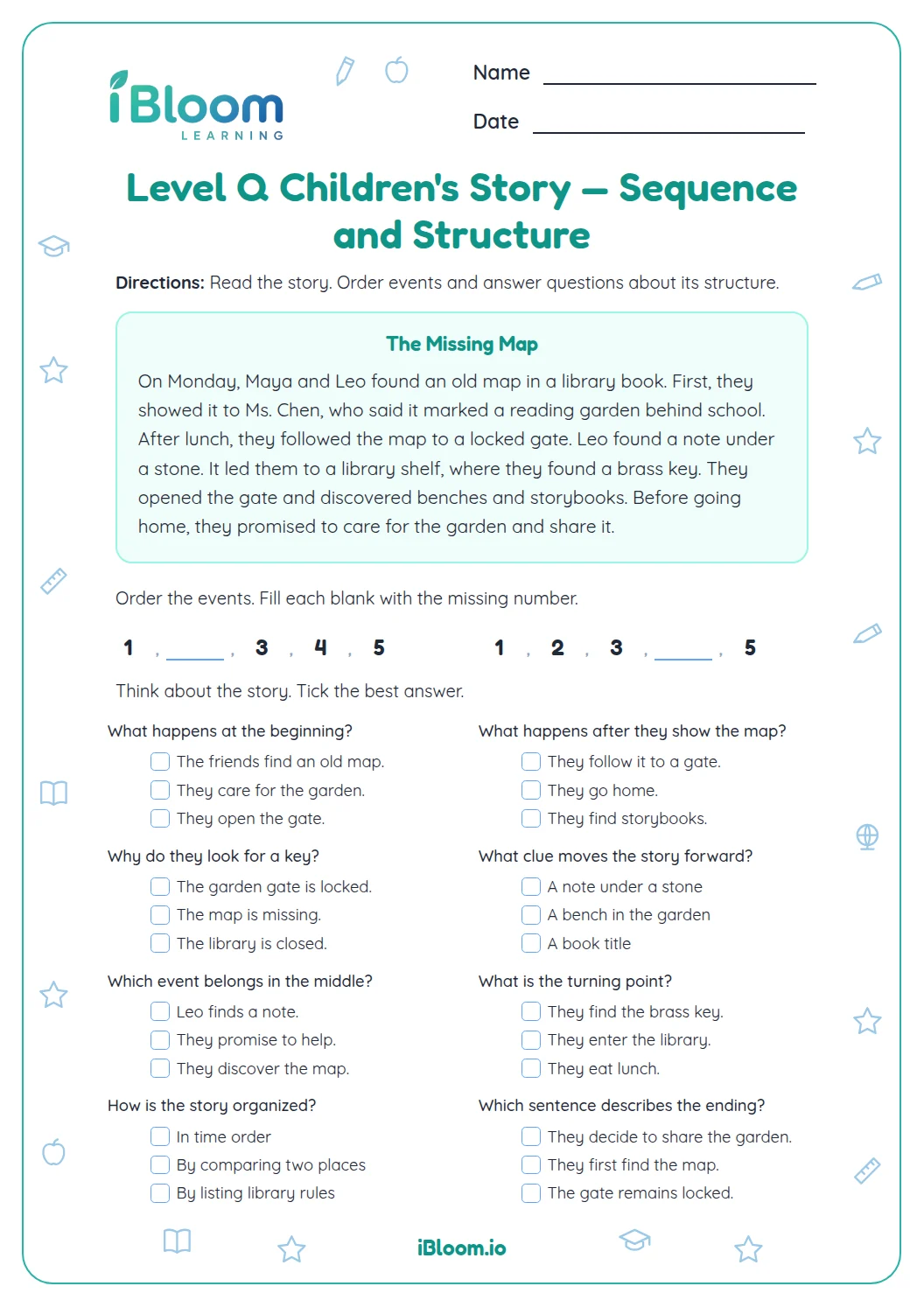
The Missing Map story follows Maya and Leo as they search for a misplaced trail map. Questions ask readers to infer feelings and motives, identify supporting details, and connect events.
- Part A: choose inferences from story clues (5 questions)
- Part B: match clues to ideas (5 questions)
- Part C: connect details and events (5 questions)
How to use this worksheet
- 1Read the story once for the events, then reread when a question asks for a clue.
- 2For inference questions, ask: “What words gave you that idea?”
- 3Have your child underline the detail before choosing an answer.
- 4For written responses, accept different wording when it includes a sensible clue.
- 5Use the answer key to check whether each inference is supported by the story.
Common reading slips
The mistake
Choosing an answer that sounds possible but has no story clue.
The fix
Ask the reader to point to the sentence that supports the choice.
The mistake
Repeating a detail without explaining what it suggests.
The fix
Add a thought: “This detail suggests ___ because ___.”
The mistake
Retelling what happened without answering what a clue suggests.
The fix
State the inference first, then name the sentence or event that supports it.
Common Core alignment
This worksheet practices using text evidence and making inferences while reading a literary text.
Refer to details and examples when explaining a text and making inferences.
On this sheet: Questions ask readers to connect an inference to a specific detail in the story.
Show the official wordingHide the official wording
Refer to details and examples in a text when explaining what the text says explicitly and when drawing inferences from the text.
What to practice next
Make more practice
Further reading
Questions parents and teachers ask
What is an inference?
An inference is a reasonable idea a reader draws from clues rather than a sentence that states the idea directly. In this story, Leo opens his backpack and frowns after the map is missing, which supports the inference that he is worried.
How can my child use evidence?
Ask your child to point to the sentence that led to an answer. For example, the story says Maya suggests checking the picnic table where they ate lunch. That detail supports the idea that she remembers where the map might be.
How can my child explain a multiple-choice answer?
Ask your child to point to the story detail behind the selected answer. For example, Leo frowns after the map is missing, which supports the choice that he feels worried. Naming the clue helps make the reasoning clear even when the worksheet response is a selected choice.
What happens in the Missing Map story?
Maya and Leo lose track of their trail map, return to the picnic table where they ate lunch, and find it beneath a folded jacket. Maya checks the route in her notebook, and they agree to take turns carrying the map before following the blue trail markers.
What skill does Part B practice?
Part B asks children to identify an inference and the story clue that supports it. One question asks how Leo probably felt when the map was missing; the frown in the passage supports the answer that he was worried.
Is there an answer key?
Yes. A separate answer key lists the correct choice for each of the 15 questions. Children can check a choice against the story and point to the clue that supports an inference, such as Leo’s frown when he discovers the map is missing.